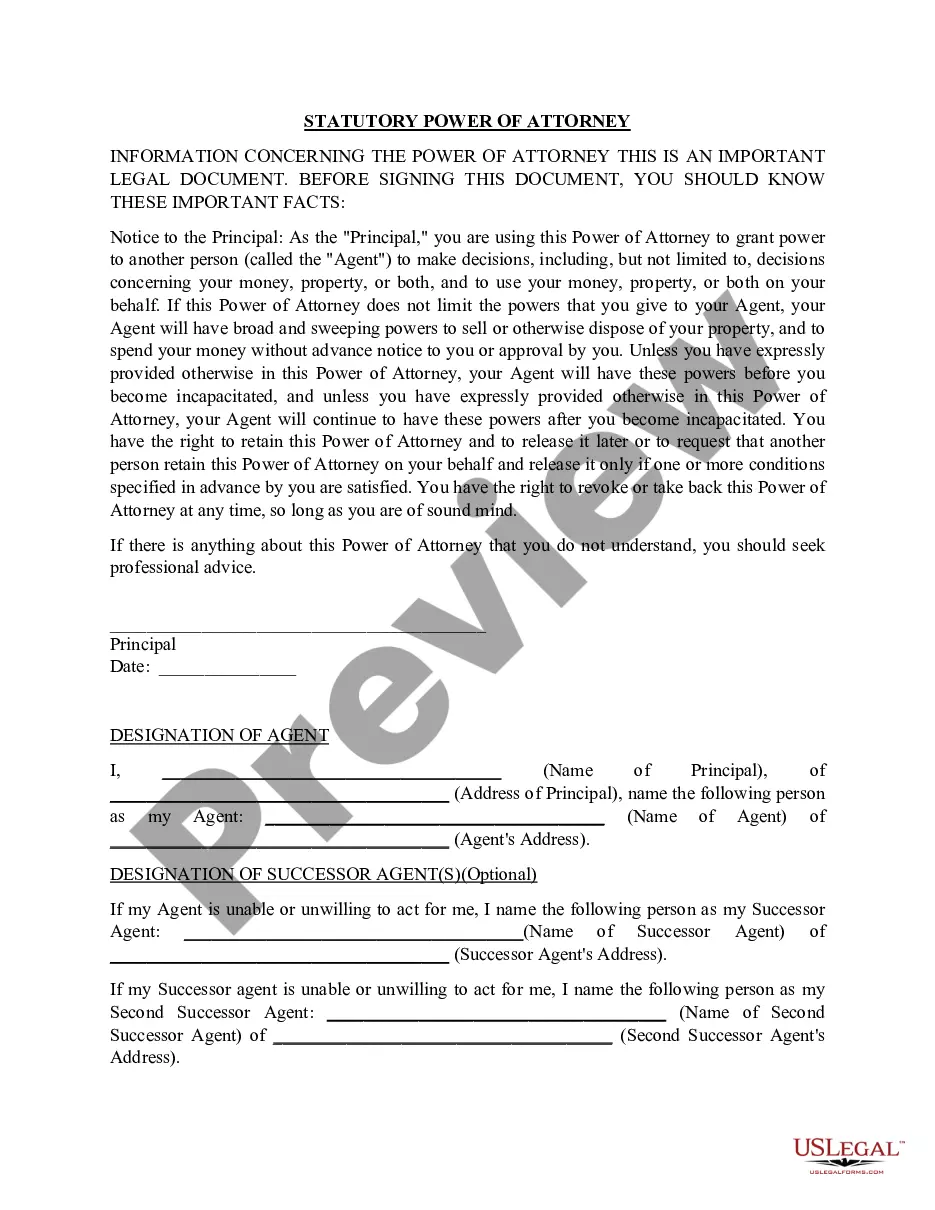
Disability Services Contract - Self-Employed
What this document covers
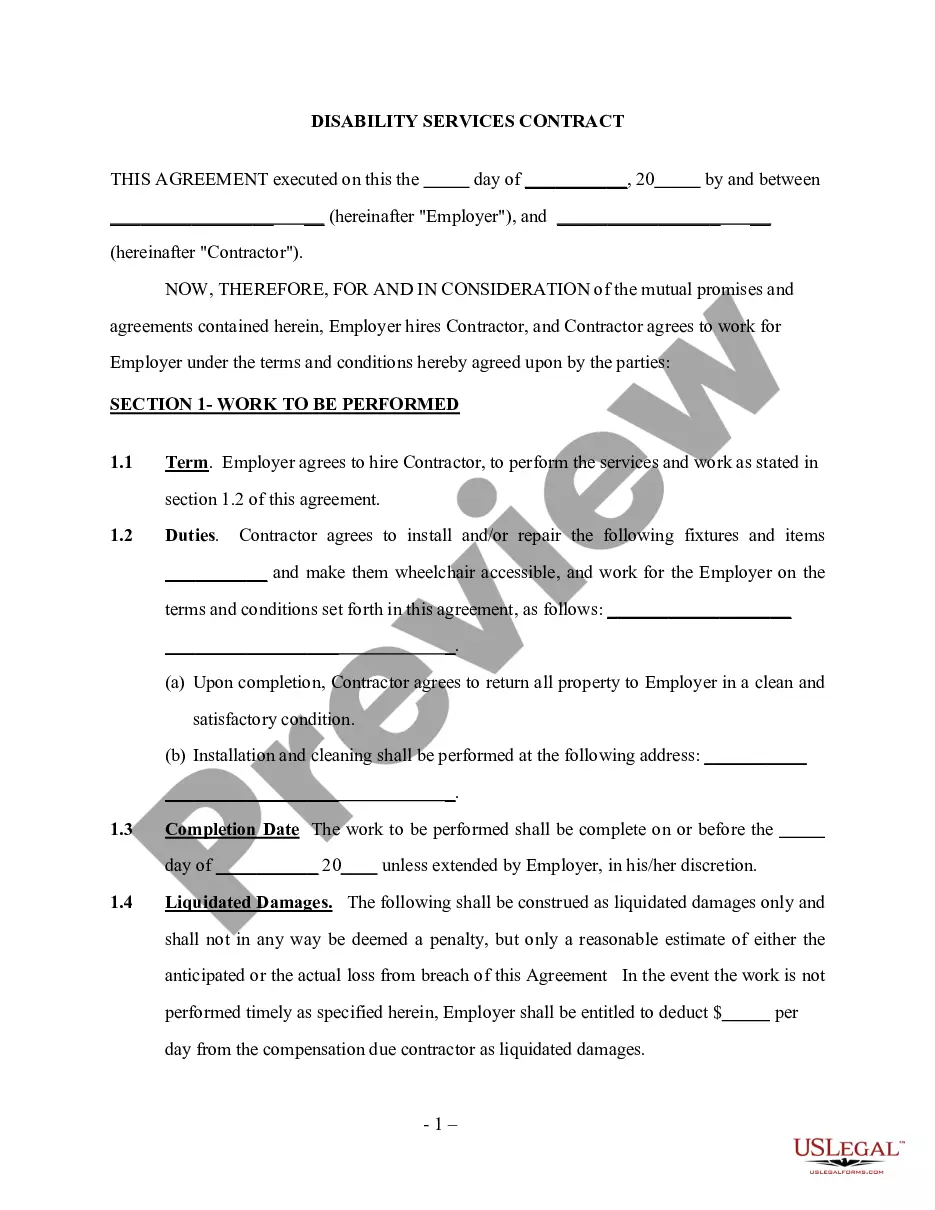
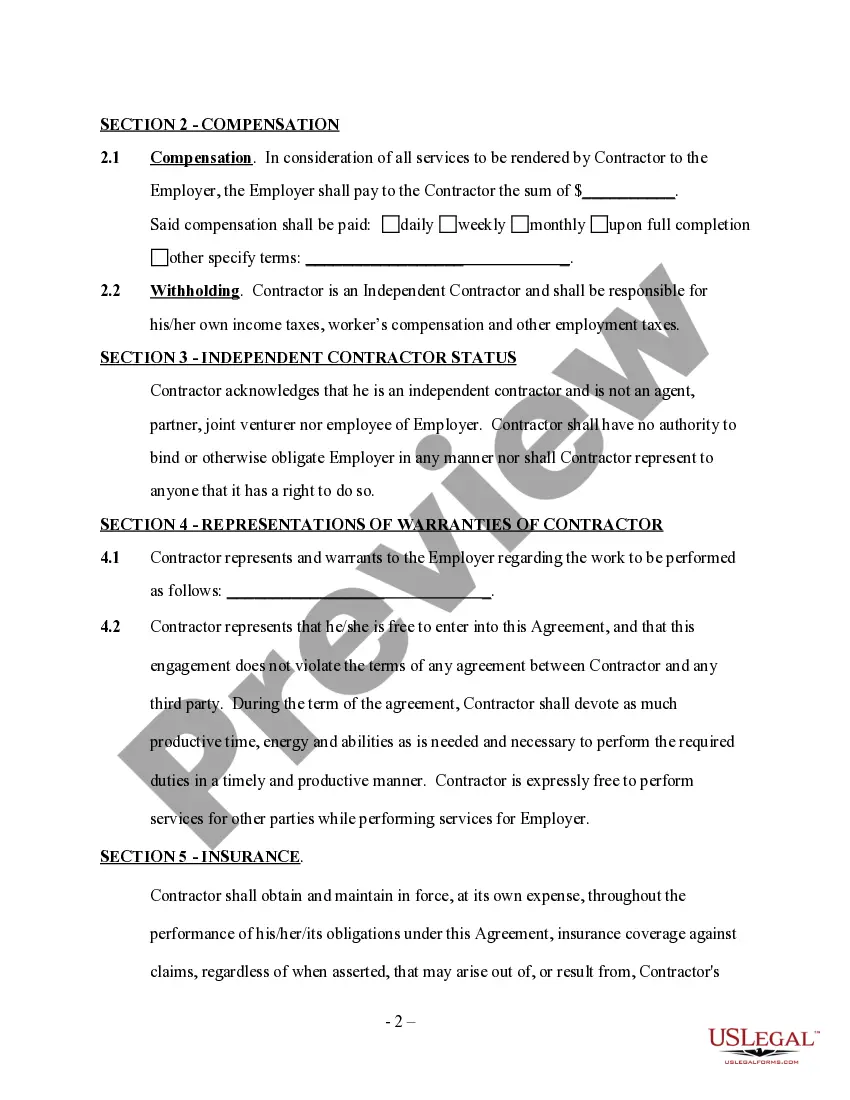
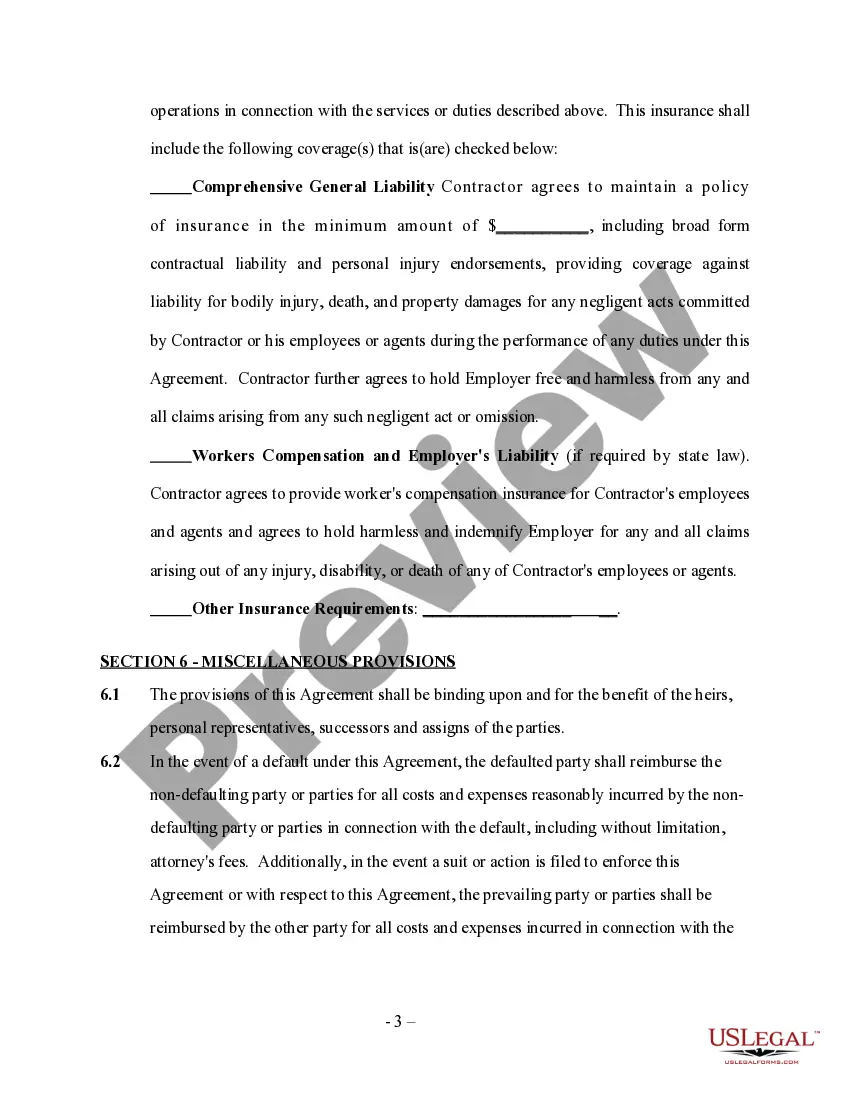
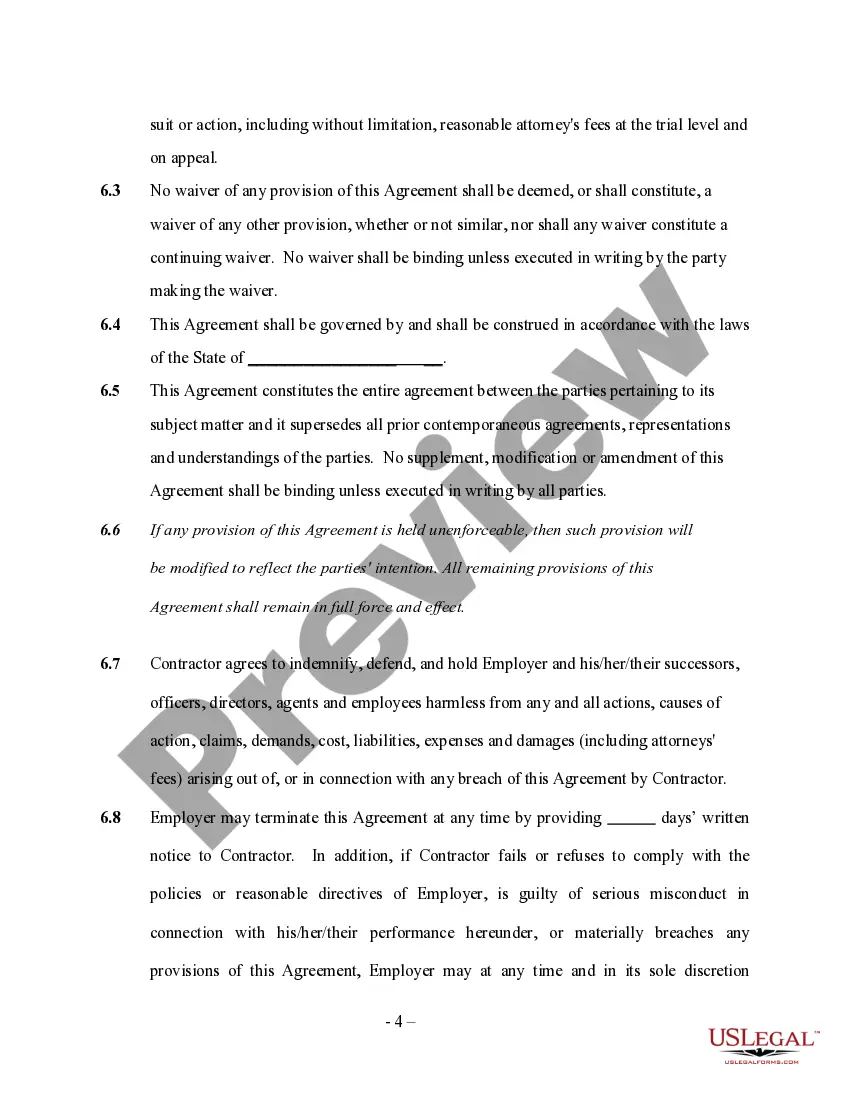
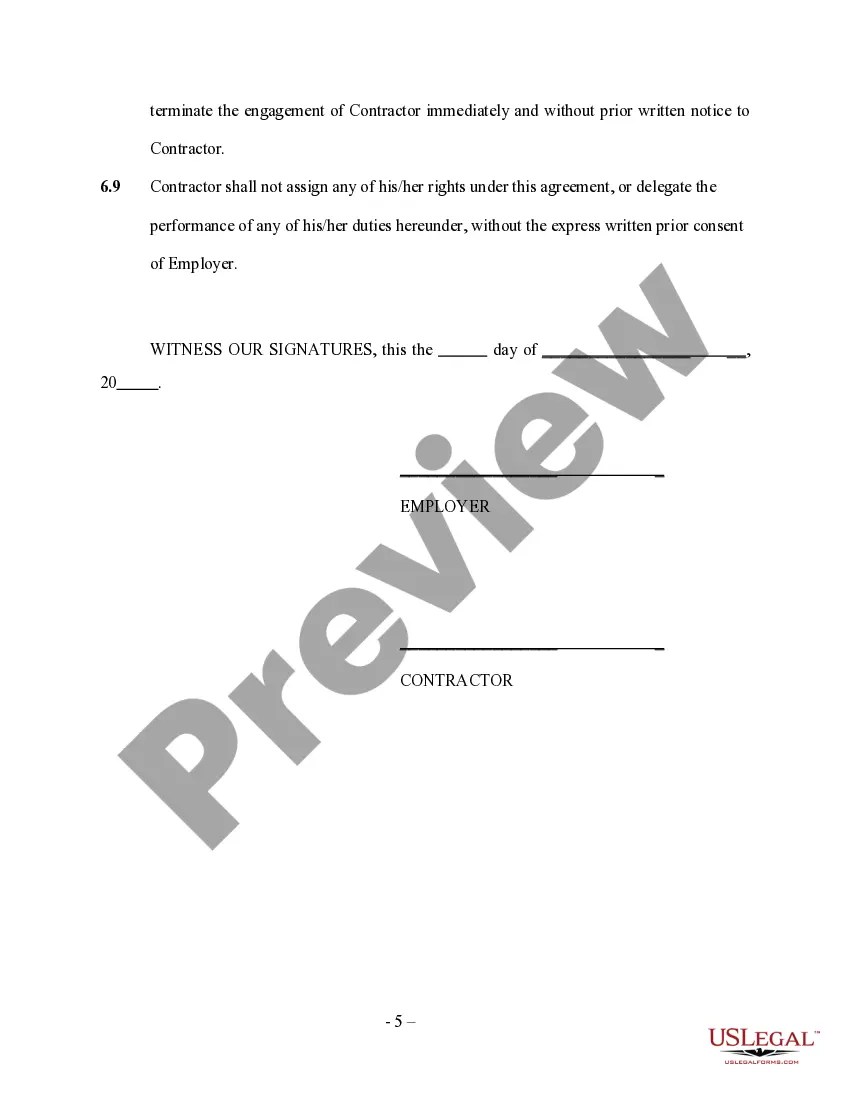
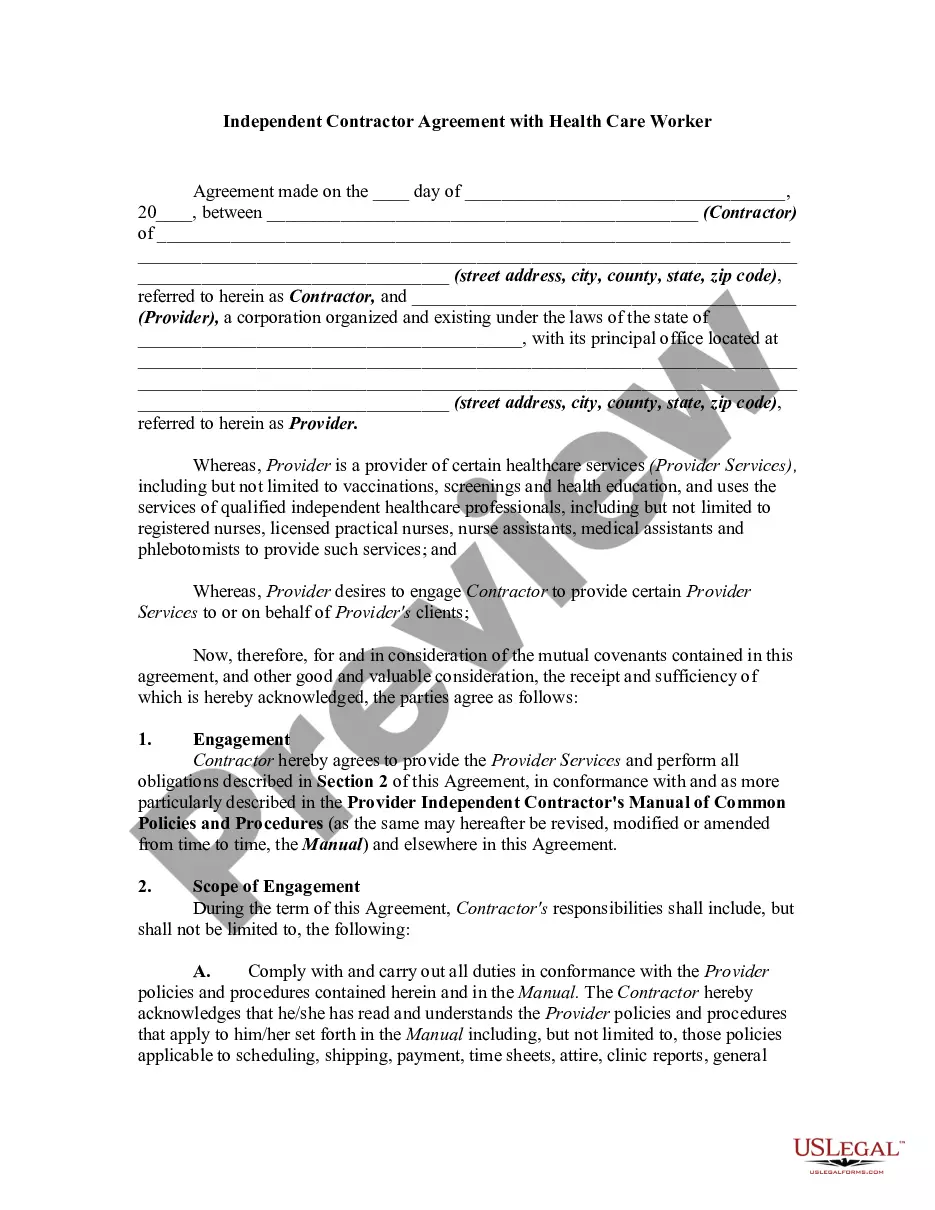
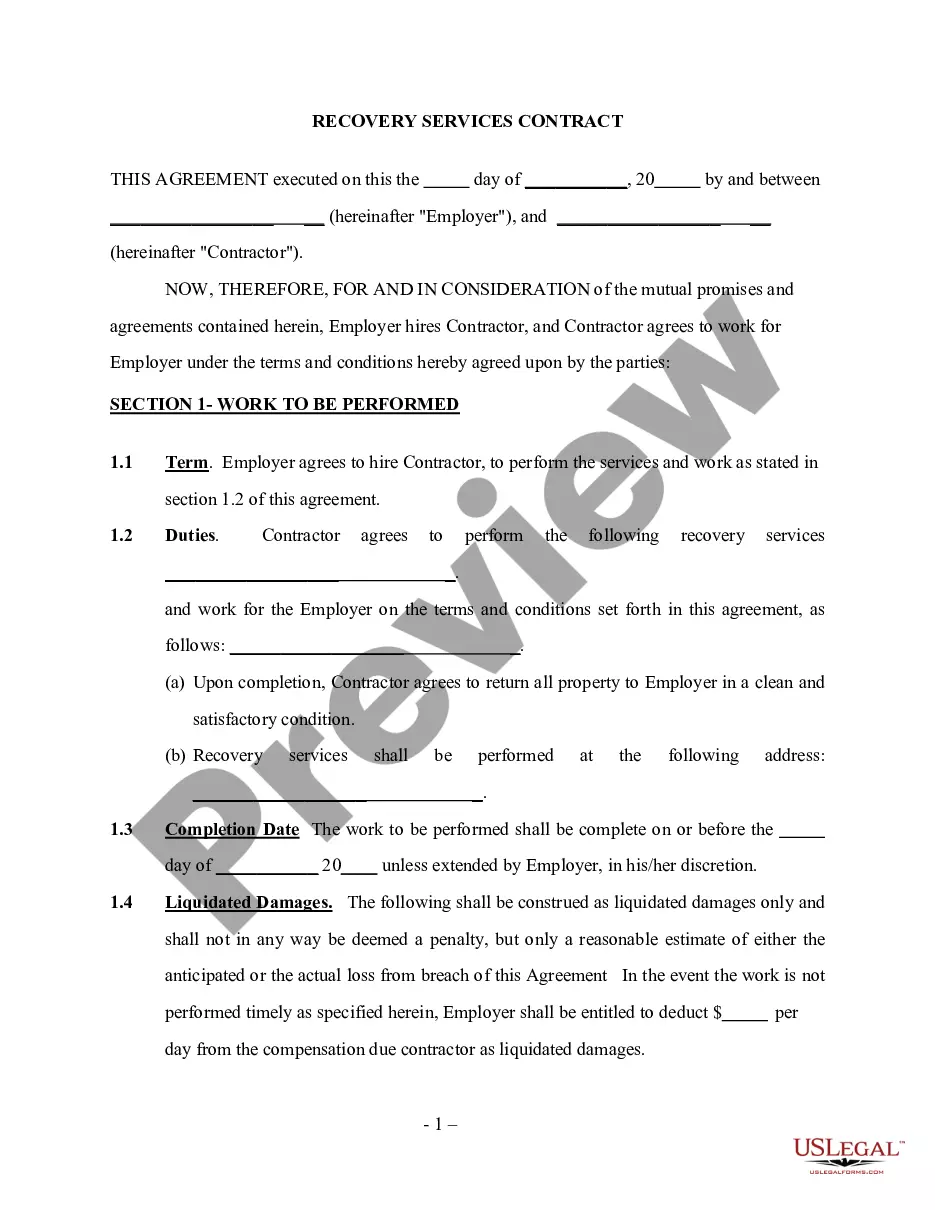
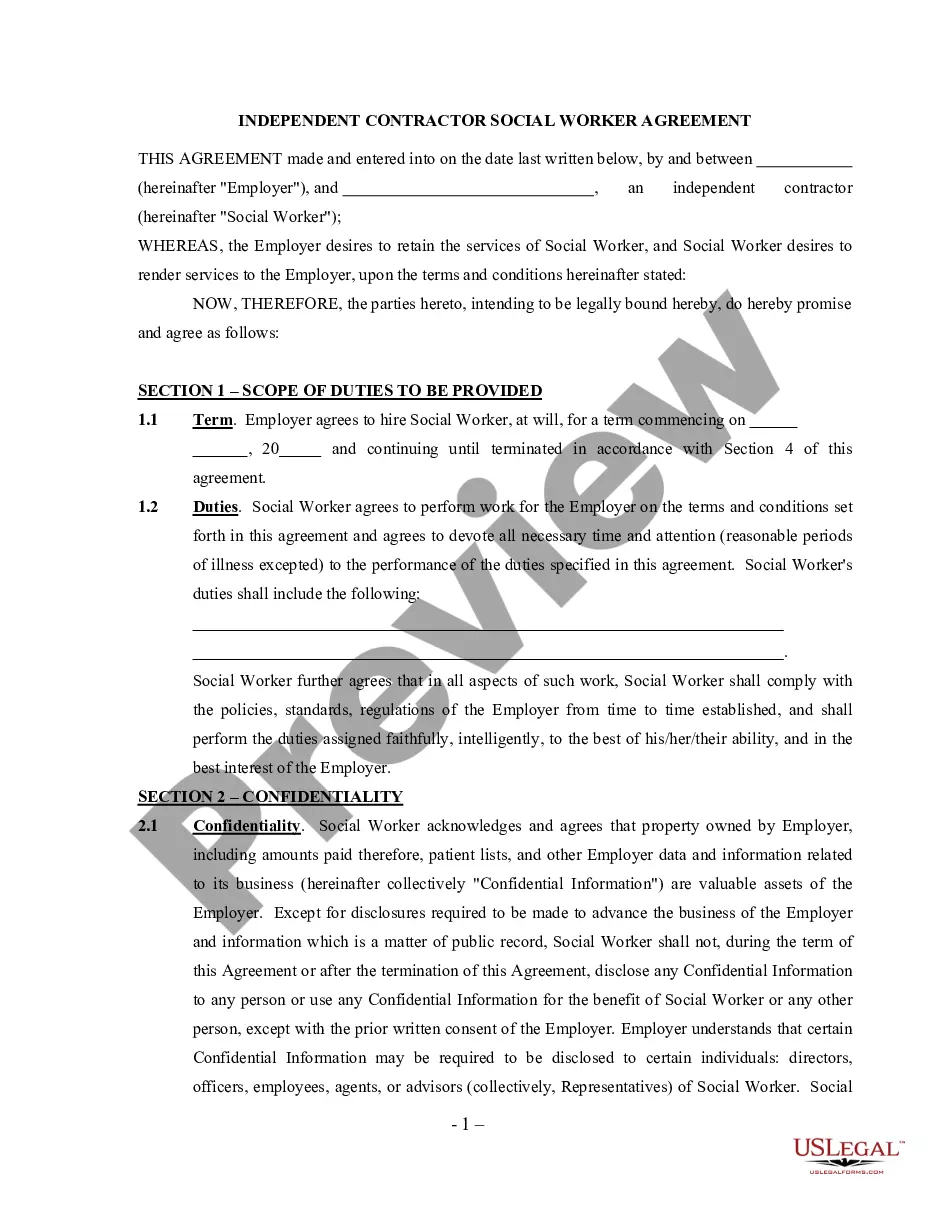
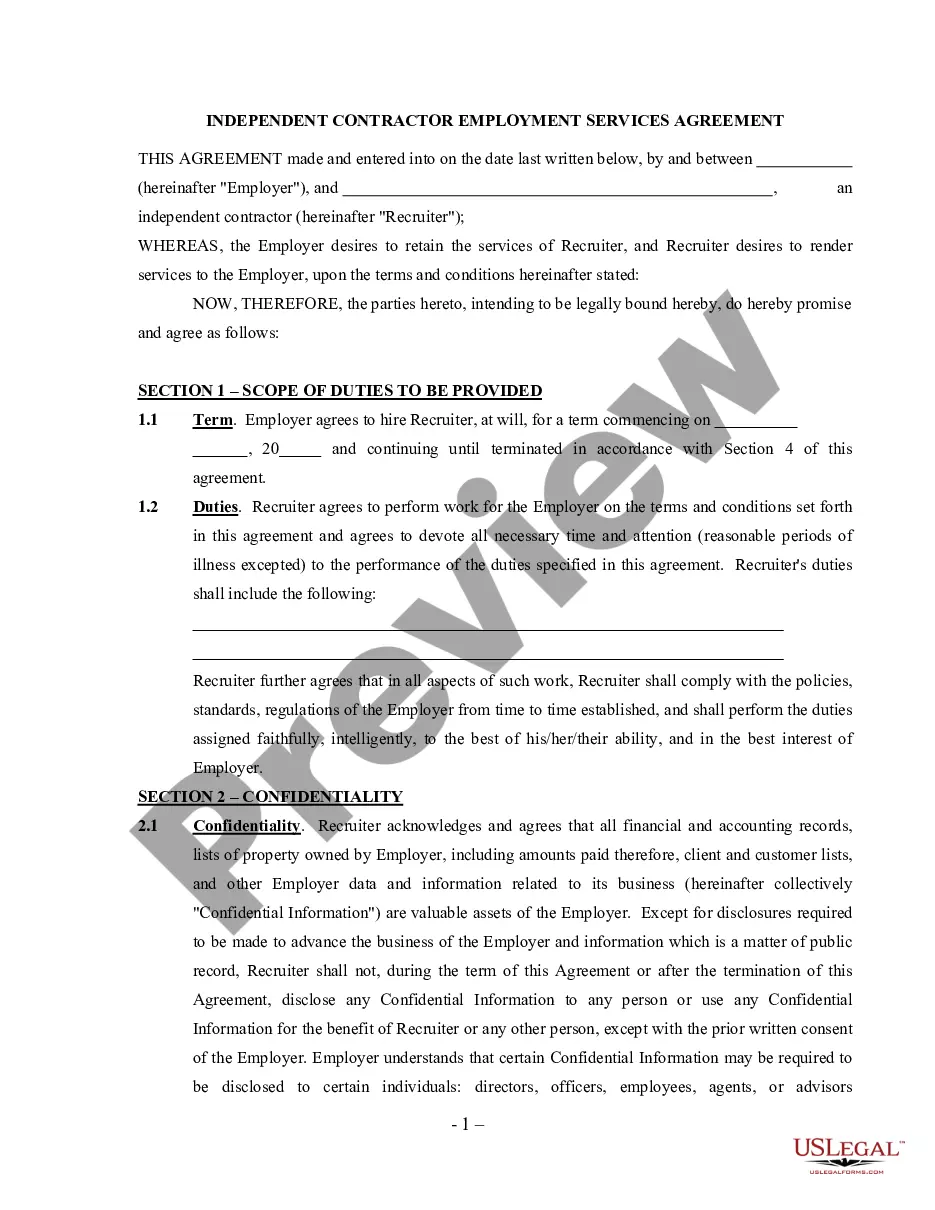
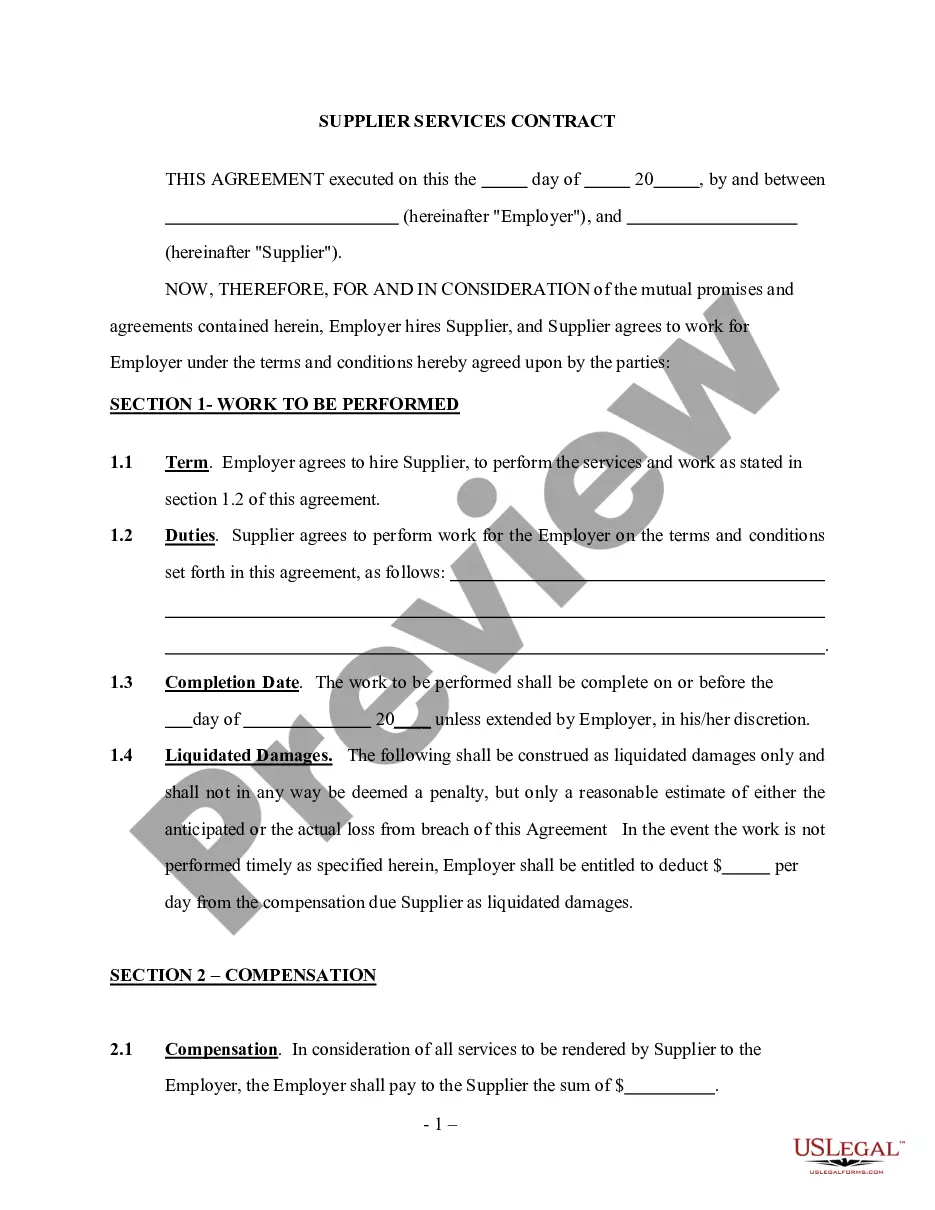
The Disability Services Contract - Self-Employed is a legal document that formalizes the relationship between an employer and an independent contractor who provides disability services. This contract outlines the specific services to be performed, such as installation or repair work to make premises wheelchair accessible. Unlike other employment contracts, this form clearly establishes the independent contractor status, ensuring that the contractor is not treated as an employee, which has implications for taxes and liabilities.
What’s included in this form
- Parties involved: Identifies the Employer and Contractor.
- Work to be performed: Clearly specifies the duties and services required.
- Independent contractor status: Clarifies the legal standing of the Contractor.
- Compensation details: Outlines how and when the Contractor will be paid.
- Insurance requirements: States the Contractor's obligation to maintain adequate insurance coverage.
- Termination provisions: Describes what happens in the event of a default under the agreement.
Common use cases
This form is crucial when an employer hires an independent contractor to provide disability-related services. It is particularly necessary for businesses or individuals needing to ensure compliance with federal disability laws when making public spaces accessible. Use this contract to clearly define expectations and responsibilities in scenarios such as remodeling, providing assistive technologies, or making modifications to existing facilities.
Who should use this form
- Employers contracting with independent contractors for disability services.
- Independent contractors who provide installation or repair services to aid accessibility.
- Business owners looking to formalize the terms of service with contractors.
Completing this form step by step
- Identify the parties: Fill in the names and addresses of both the Employer and the Contractor.
- Specify services: Clearly describe the work to be performed, including details about making spaces wheelchair accessible.
- Outline compensation: Indicate how and when the Contractor will receive payment.
- Include insurance policies: Document the required types of insurance the Contractor must maintain.
- Sign and date: Both parties should sign and date the contract to make it legally binding.
Does this form need to be notarized?
Notarization is generally not required for this form. However, certain states or situations might demand it. You can complete notarization online through US Legal Forms, powered by Notarize, using a verified video call available anytime.
Get your form ready online
Our built-in tools help you complete, sign, share, and store your documents in one place.
Make edits, fill in missing information, and update formatting in US Legal Forms—just like you would in MS Word.
Download a copy, print it, send it by email, or mail it via USPS—whatever works best for your next step.
Sign and collect signatures with our SignNow integration. Send to multiple recipients, set reminders, and more. Go Premium to unlock E-Sign.
If this form requires notarization, complete it online through a secure video call—no need to meet a notary in person or wait for an appointment.
We protect your documents and personal data by following strict security and privacy standards.

Make edits, fill in missing information, and update formatting in US Legal Forms—just like you would in MS Word.

Download a copy, print it, send it by email, or mail it via USPS—whatever works best for your next step.

Sign and collect signatures with our SignNow integration. Send to multiple recipients, set reminders, and more. Go Premium to unlock E-Sign.

If this form requires notarization, complete it online through a secure video call—no need to meet a notary in person or wait for an appointment.

We protect your documents and personal data by following strict security and privacy standards.
Common mistakes
- Failing to clearly describe the services to be performed.
- Not specifying payment terms and conditions.
- Neglecting to include required insurance coverage.
- Inadequately understanding the implications of independent contractor status.
Why complete this form online
- Convenience: Easily downloadable and editable to suit specific business needs.
- Reliability: Form templates drafted by licensed attorneys ensure clarity and legal compliance.
- Time-efficient: Quick access and completion without the need for in-person appointments.
Legal use & context
- This contract serves as legally binding documentation of the relationship between the employer and the independent contractor.
- It provides protections and clarifications for both parties, particularly concerning liabilities and responsibilities.
- Being well-drafted helps in reducing misunderstandings and potential legal disputes.
Quick recap
- The Disability Services Contract - Self-Employed formalizes the hiring of a contractor for disability services.
- It's essential to clearly outline the services, payment terms, and insurance requirements.
- Use this form to protect the rights and responsibilities of both the employer and contractor.
Looking for another form?

Form popularity
FAQ
Any self-employed person, independent contractor, or general partner who meets the requirements can apply for Disability Insurance Elective Coverage (DIEC).They are considered employees and are subject to the mandatory provisions of the California Unemployment Insurance Code.
If you are self-employed, you will need to consider whether you need short term coverage, long term coverage, or both. Short term disability insurance is typically for temporary, less serious injuries that limit the ability to work, but that people generally recover from.
For adults, medical conditions that automatically qualify you for social security disability compensation include:Mental disorders, such as depression, anxiety, schizophrenia, autism, or intellectual disability. Immune system disorders, such as HIV/AIDS, lupus, rheumatoid arthritis, and kidney disease.
For Small Business Owners, Self-Employed and Independent Contractors. Any self-employed person, independent contractor, or general partner who meets the requirements can apply for Disability Insurance Elective Coverage (DIEC). It is not required that all active general partners be included in the application.
Self-employed individuals are only covered by the SDI program if they have enrolled in Disability Insurance Elective Coverage with EDD and paid the premiums. Usually you become eligible for benefits after six months of elective coverage.
Regardless of how Social Security taxes are paid, self-employed people are just as eligible for Social Security disability insurance (SSDI) benefits as if they were employed by another person or company.
Housing Benefit. Working Tax Credit. Income-based Jobseeker's Allowance. Income related Employment and Support Allowance.
SSI itself is not taxed, but if you earn additional income like self-employment, dividends, or interest, you will need to file a tax return. SSDI benefits are also not subject to federal tax.
When determining countable income, Social Security looks at your gross income before any deductions. However, if you are an independent contractor or self- employed, your income may not be the amount of any check you receive but a lower amount.