Dietitian Agreement - Self-Employed Independent Contractor
Overview of this form
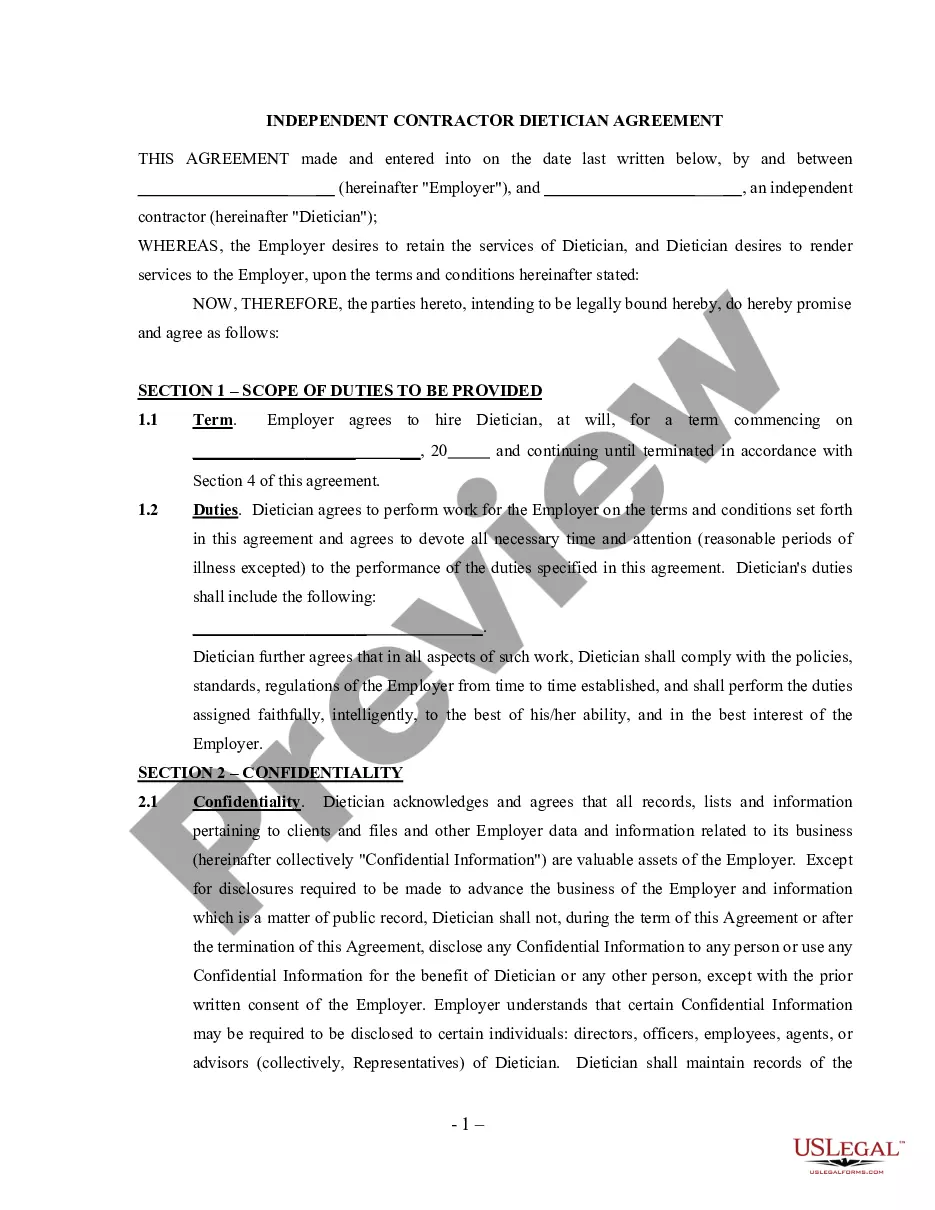
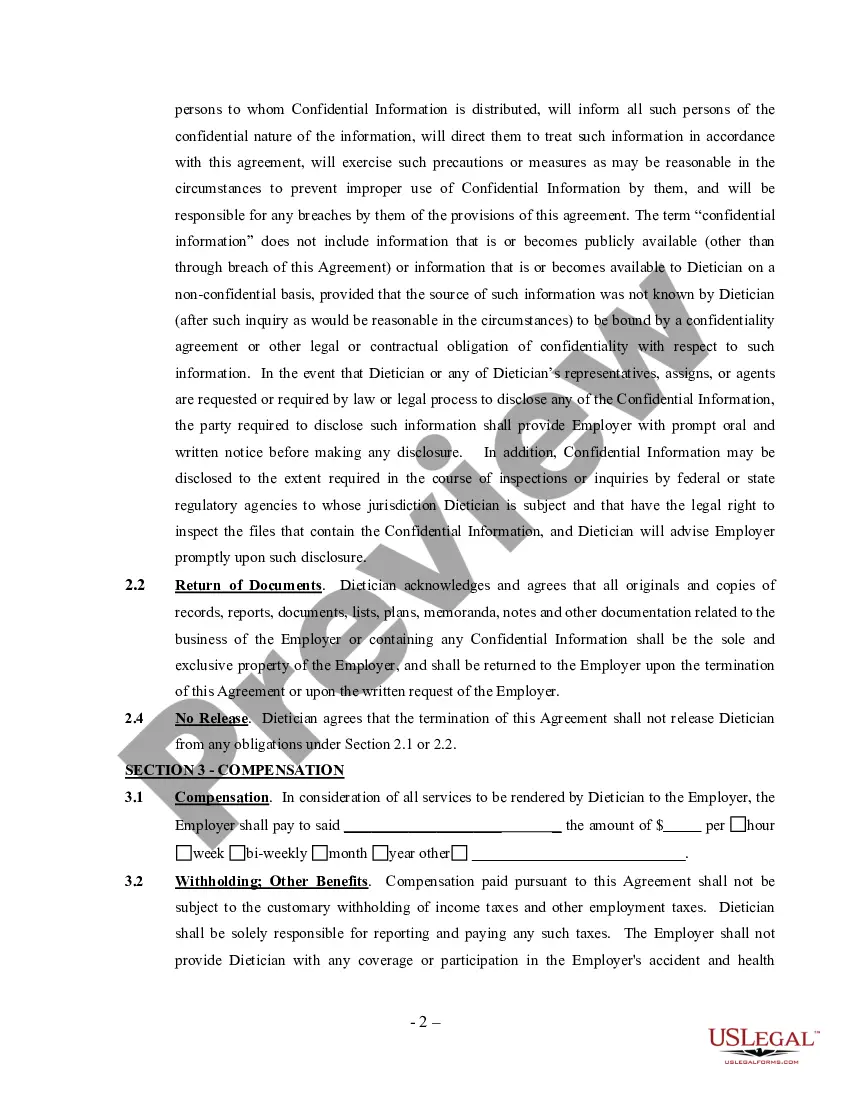
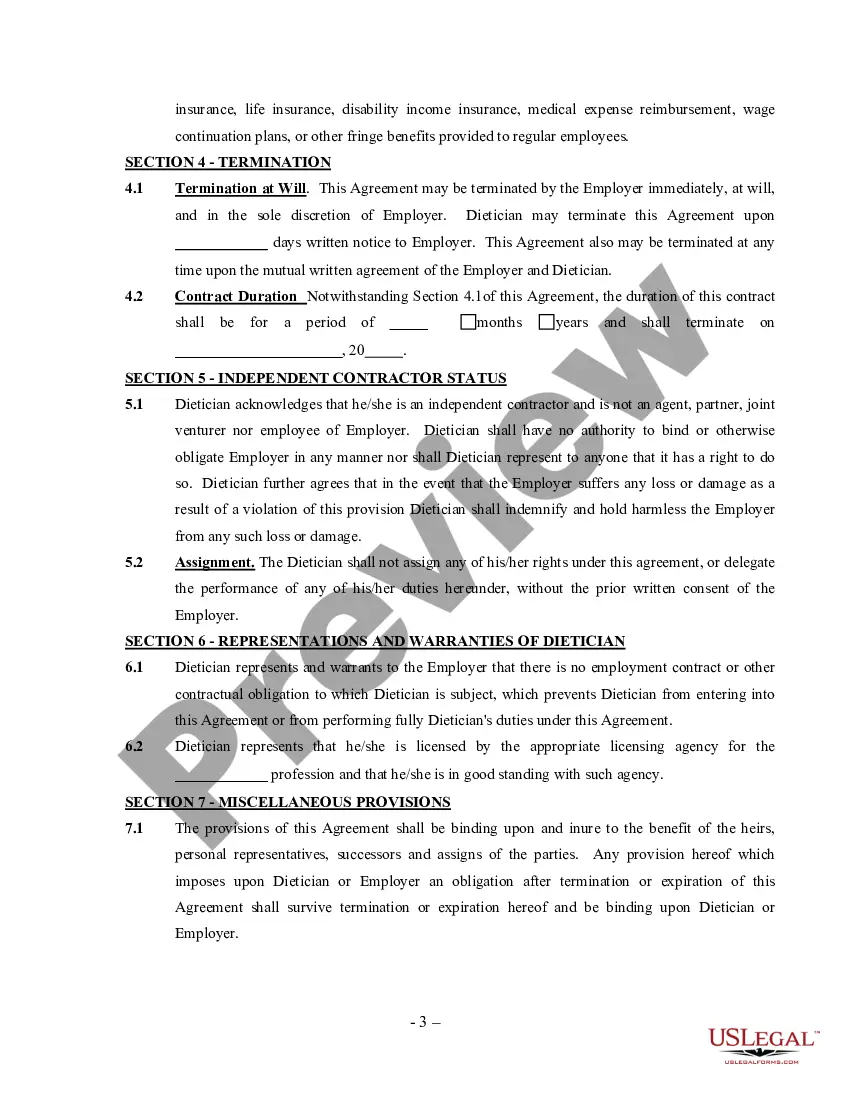
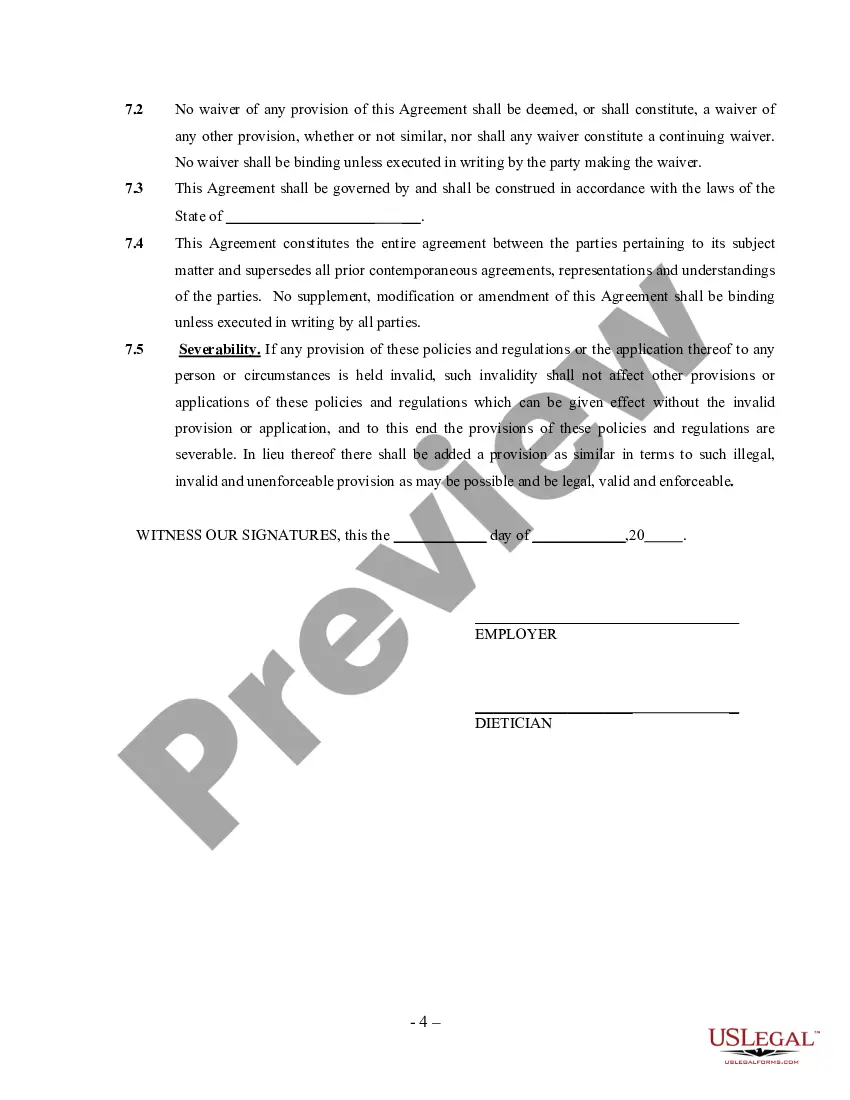
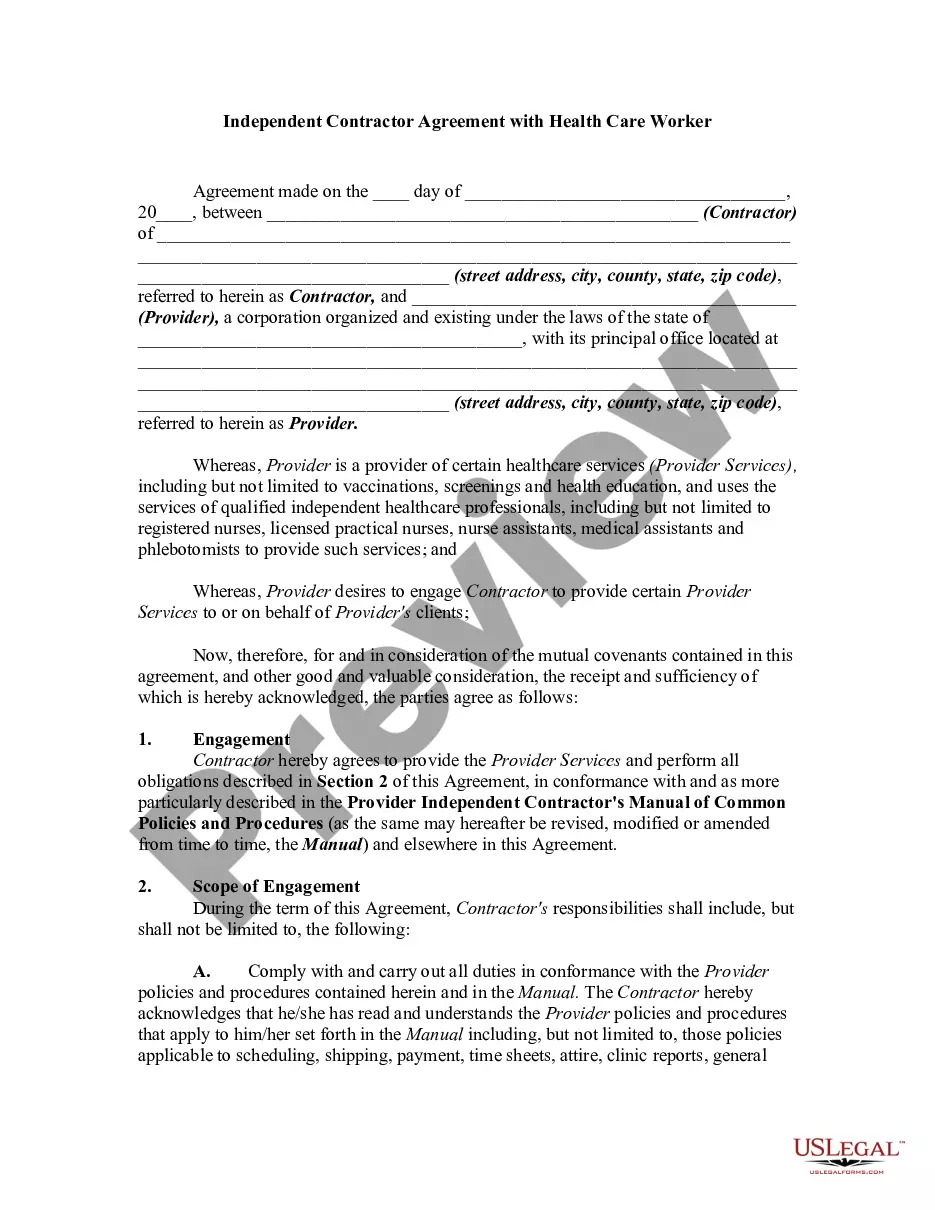
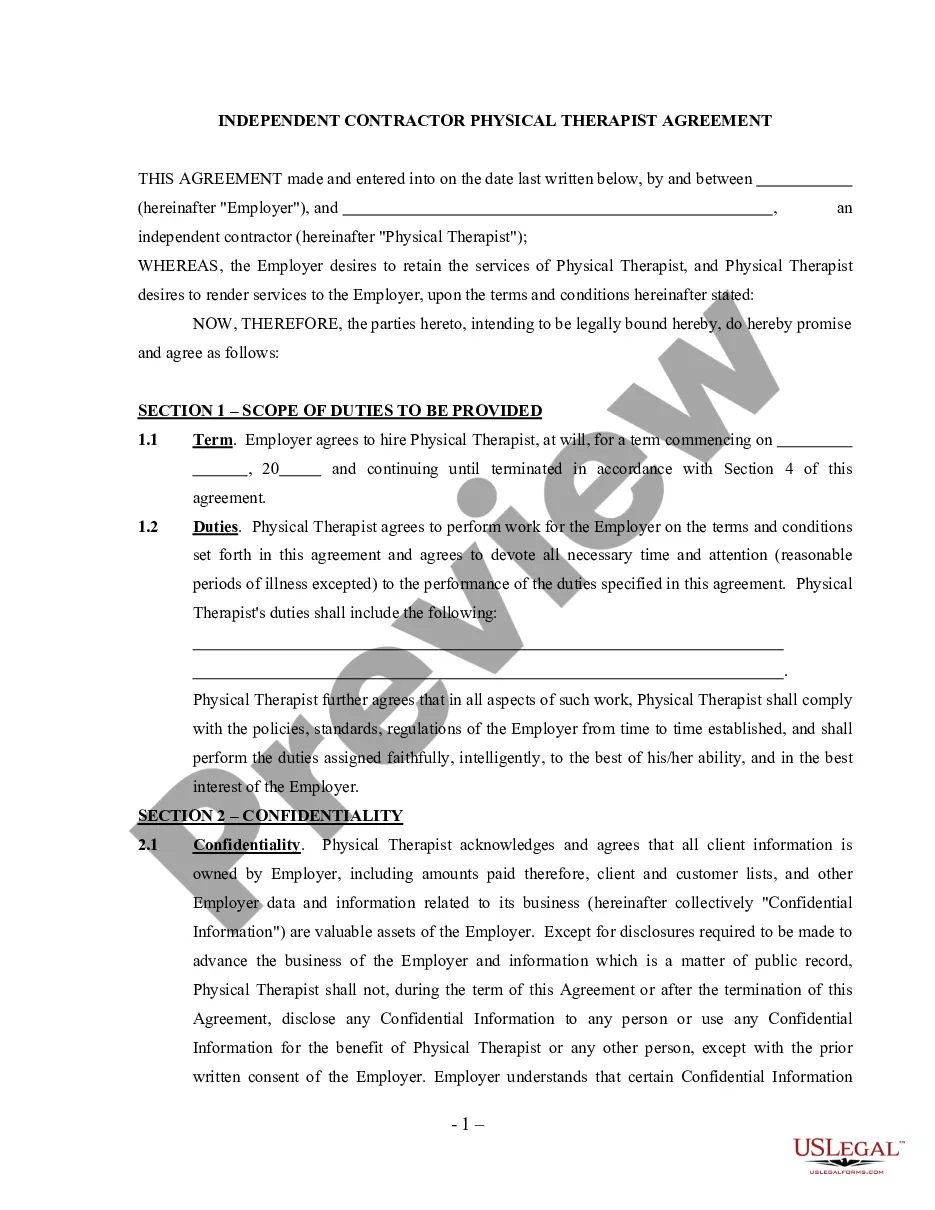
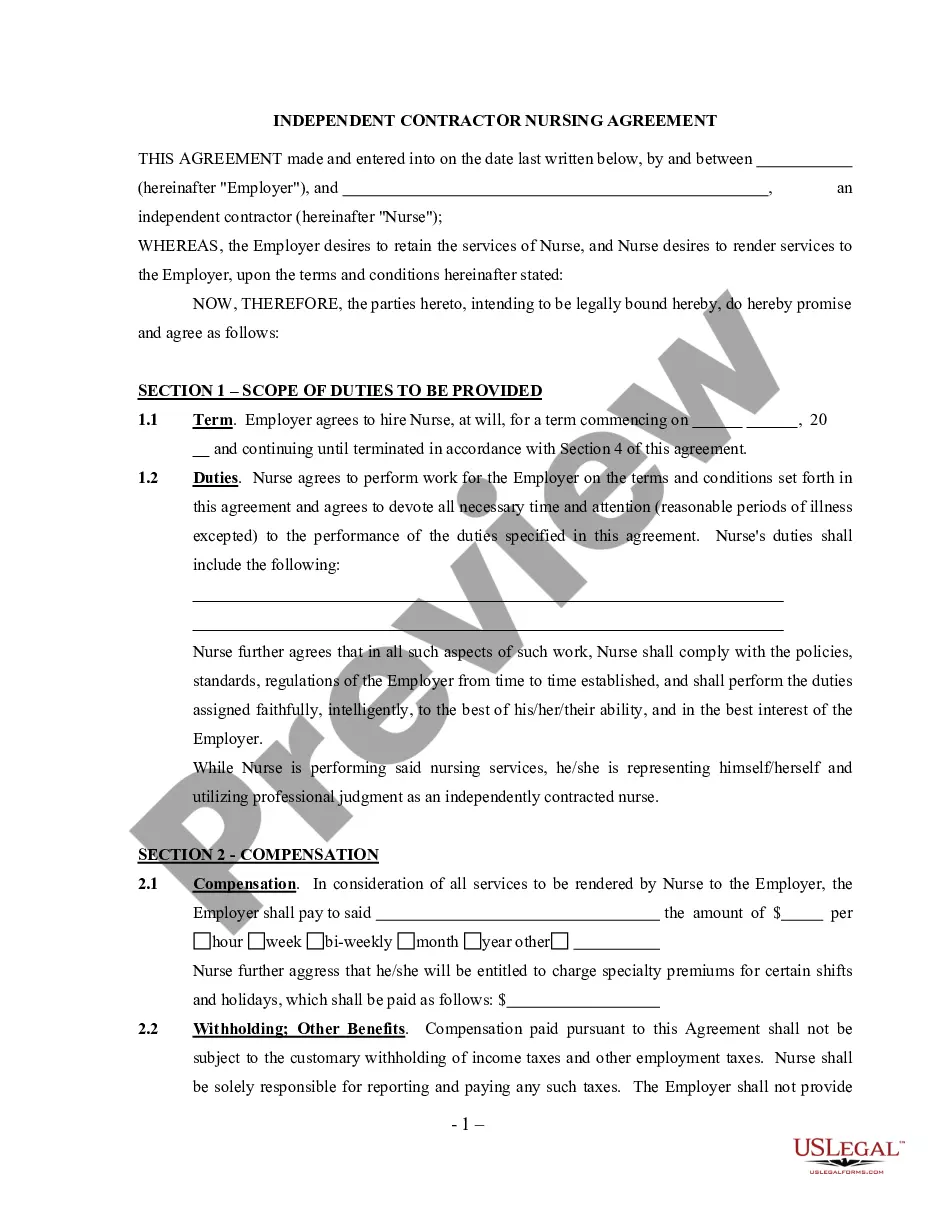
The Dietitian Agreement - Self-Employed Independent Contractor is a legal document used to establish a working relationship between an employer and a registered dietitian acting as an independent contractor. This agreement outlines the dietitian's duties, confidentiality of client information, compensation, and terms for termination. It differs from traditional employment contracts as it clearly defines the independent nature of the dietitian's role, making it ideal for those who provide dietetic services without being employees.
Key parts of this document
- Duties: Specifies the dietitian's responsibilities and required compliance with employer policies.
- Confidentiality: Stipulates how the dietitian must handle confidential client information and documentation.
- Compensation: Details the payment terms and tax responsibilities of the dietitian.
- Termination: Outlines the conditions under which either party may terminate the agreement.
- Independent contractor status: Confirms that the dietitian is not an employee and has no authority to bind the employer legally.
- Representations and warranties: Ensures the dietitian is licensed and free from conflicting obligations.
When to use this document
This agreement should be used when an employer seeks to hire a registered dietitian as an independent contractor to provide specific dietetic services to clients. It is appropriate for private practices, clinics, or any health-related business that requires professional dietary advice without establishing traditional employee relationships.
Who this form is for
- Employers looking to engage a dietitian on an independent contractor basis.
- Registered dietitians seeking to formalize their working relationships with employers.
- Health clinics, wellness centers, or private practices that need dietetic services without hiring permanent staff.
Instructions for completing this form
- Identify the parties: Fill in the names of the employer and the dietitian.
- Specify the duties: Clearly outline the dietitian's responsibilities in the designated section.
- Detail compensation: Indicate payment terms and any tax responsibilities.
- Set termination conditions: Fill in the required notice period for termination.
- Sign the agreement: Both parties must sign and date the document to finalize the agreement.
Is notarization required?
Notarization is not commonly needed for this form. However, certain documents or local rules may make it necessary. Our notarization service, powered by Notarize, allows you to finalize it securely online anytime, day or night.
Get your form ready online
Our built-in tools help you complete, sign, share, and store your documents in one place.
Make edits, fill in missing information, and update formatting in US Legal Forms—just like you would in MS Word.
Download a copy, print it, send it by email, or mail it via USPS—whatever works best for your next step.
Sign and collect signatures with our SignNow integration. Send to multiple recipients, set reminders, and more. Go Premium to unlock E-Sign.
If this form requires notarization, complete it online through a secure video call—no need to meet a notary in person or wait for an appointment.
We protect your documents and personal data by following strict security and privacy standards.

Make edits, fill in missing information, and update formatting in US Legal Forms—just like you would in MS Word.

Download a copy, print it, send it by email, or mail it via USPS—whatever works best for your next step.

Sign and collect signatures with our SignNow integration. Send to multiple recipients, set reminders, and more. Go Premium to unlock E-Sign.

If this form requires notarization, complete it online through a secure video call—no need to meet a notary in person or wait for an appointment.

We protect your documents and personal data by following strict security and privacy standards.
Common mistakes to avoid
- Failing to specify all duties and responsibilities of the dietitian.
- Not detailing payment terms and tax liabilities correctly.
- Omitting confidentiality clauses or not adhering to them.
- Assuming that verbal agreements are sufficient; all terms should be in writing.
- Not considering state-specific independent contractor laws.
Why complete this form online
- Convenient access: Download and fill out the form anytime, anywhere.
- Editability: Easily make changes to suit specific needs or situations.
- Reliability: Ensure compliance with current legal standards and requirements.
- Time-saving: Quickly create a professional legal document without the need for costly legal fees.
Looking for another form?



Form popularity
FAQ
Terms. This is the first section of any agreement or contract and states the names and locations of the parties involved. Responsibilities & Deliverables. Payment-Related Details. Confidentiality Clause. Contract Termination. Choice of Law.
1. Not Having a Written Contract.The taxing, labor and employment, and insurance authorities expect a written contract that states that the worker is an independent contractor and will be paid as such with no tax withholding, no benefits, etc.
Statement of Relationship. Project Description. Payment and Billing Terms. Responsibilities of Each Party. Project Timeline and Deadlines. Termination Conditions. Nondisclosure Terms, and Confidentiality and Non-Compete Clauses. 10 Predictions for the Future of Work.
Do employers need to complete employment verification checks for independent contractors? No.However, it is important to note that businesses and individuals may not hire independent contractors if they are aware that the independent contractor is not authorized to work in the United States.
A self employed person will not usually have a contract of employment; they will usually be hired for a certain amount of time. The contract that exists between the self employed person and the person or company supplying the work will have a number of rules or conditions set down within it.
Do not designate someone as a 1099 Employee if: Company provides training on a certain method of job performance. Tools and materials are provided. Employees must follow set schedule. You provide benefits such as vacation, overtime pay, etc.
An Independent Contractor Agreement is a written contract that spells out the terms of the working arrangement between a contractor and client, including: A description of the services provided. Terms and length of the project or service. Payment details (including deposits, retainers, and other billing details)
For most types of projects you hire an independent contractor (IC) to do, the law does not require you to put anything in writing. You can meet with the IC, agree on the terms of your arrangement, and have an oral contract or agreement that is legally binding. Just because you can doesn't mean you should, however.
An independent contractor agreement is a document that an employer uses to hire a freelancer for a specific job. By extension, it distinguishes the independent contractor from an employee of the business for legal and tax purposes.