Fireplace Contractor Agreement - Self-Employed
What this document covers
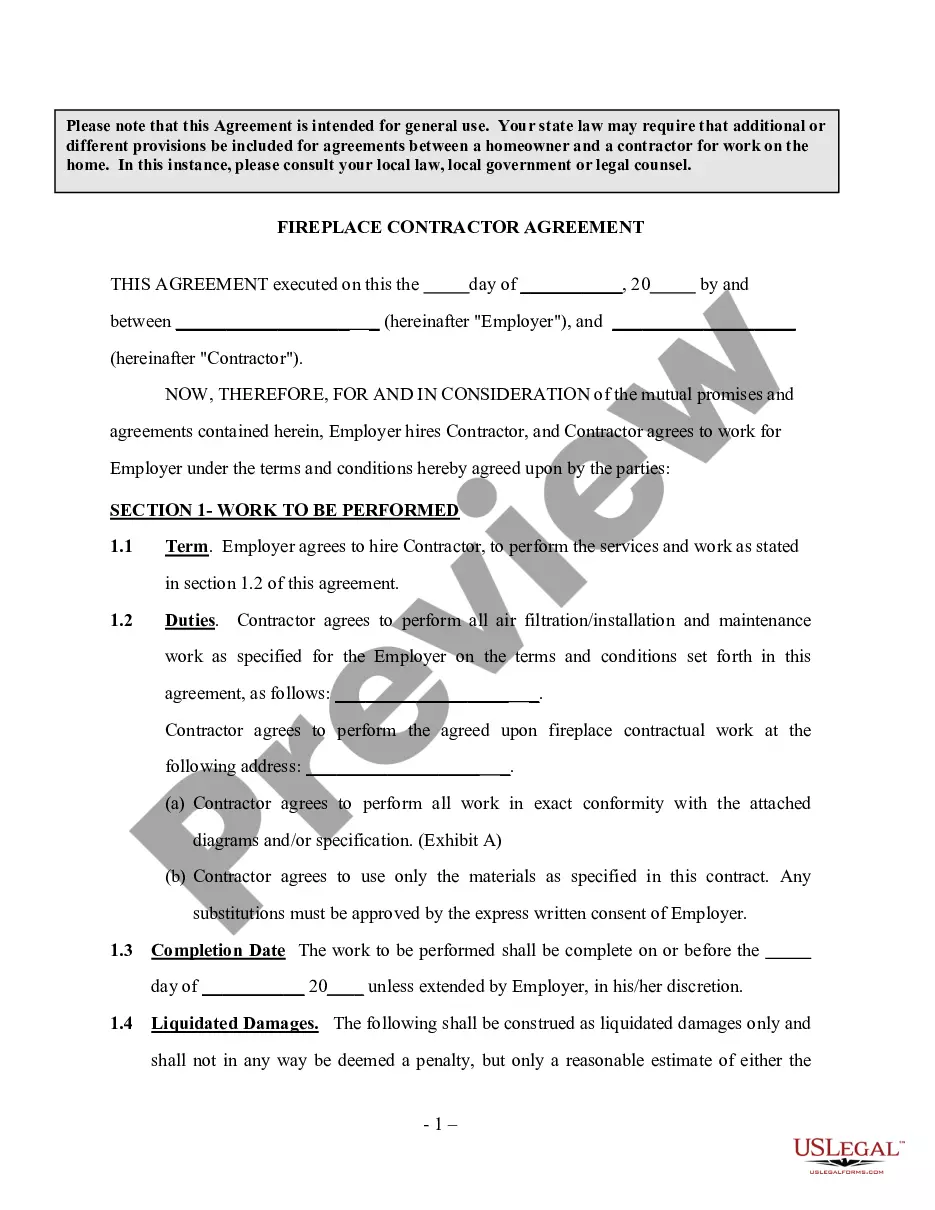
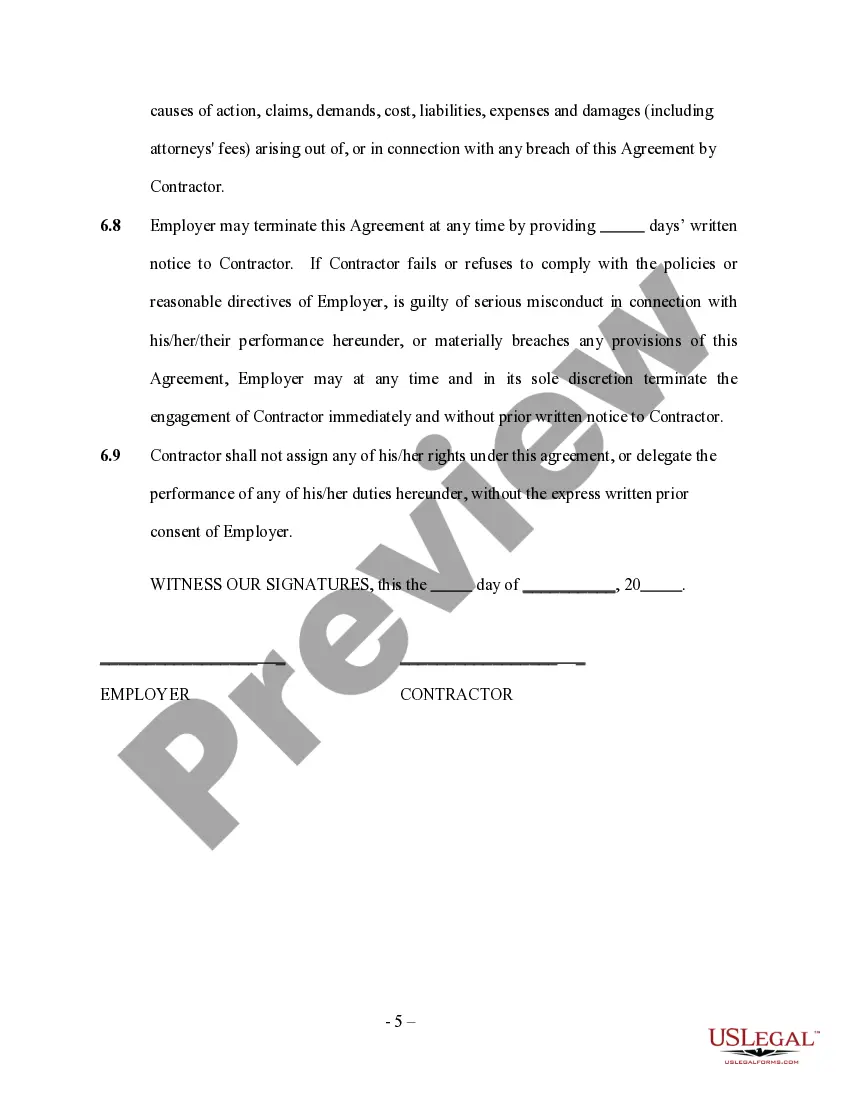
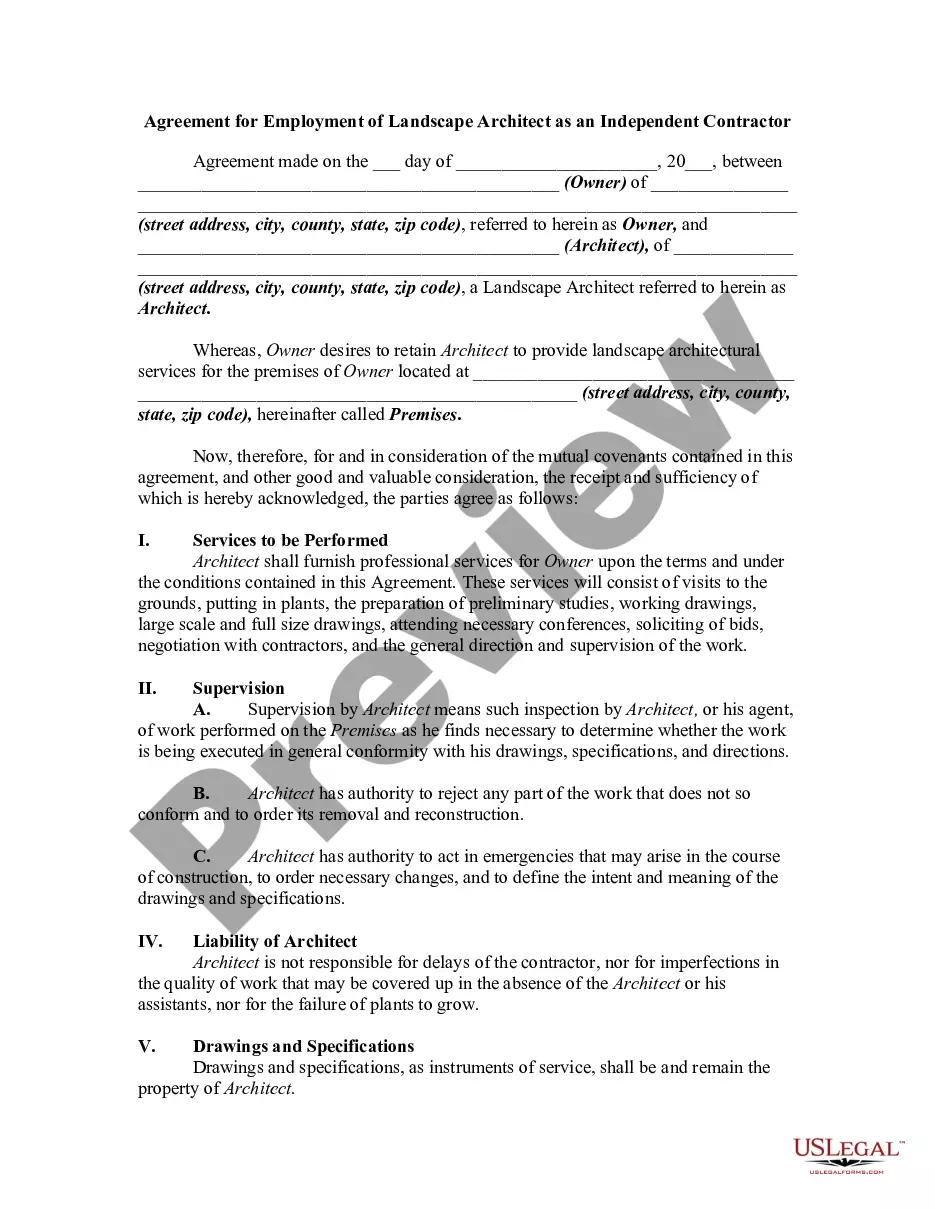
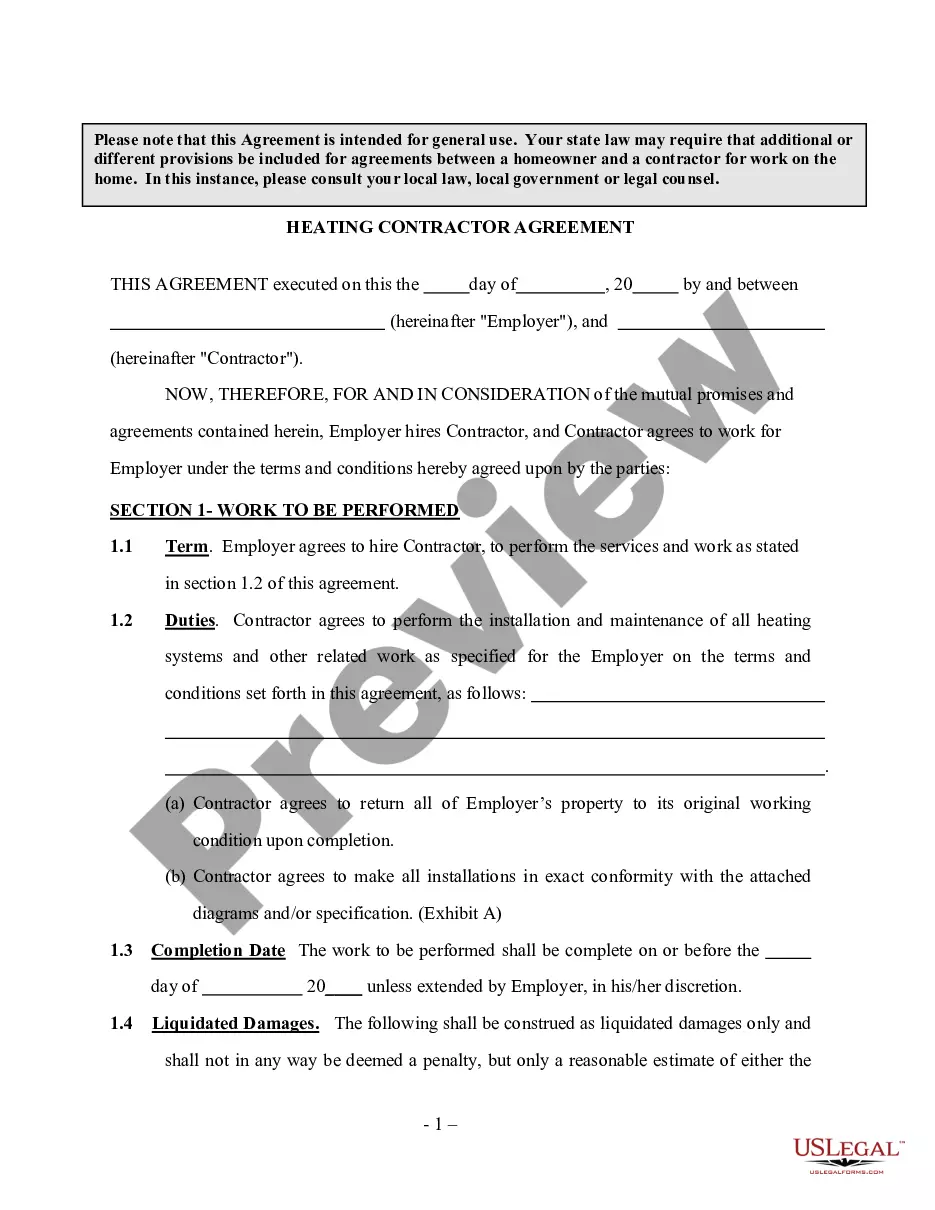
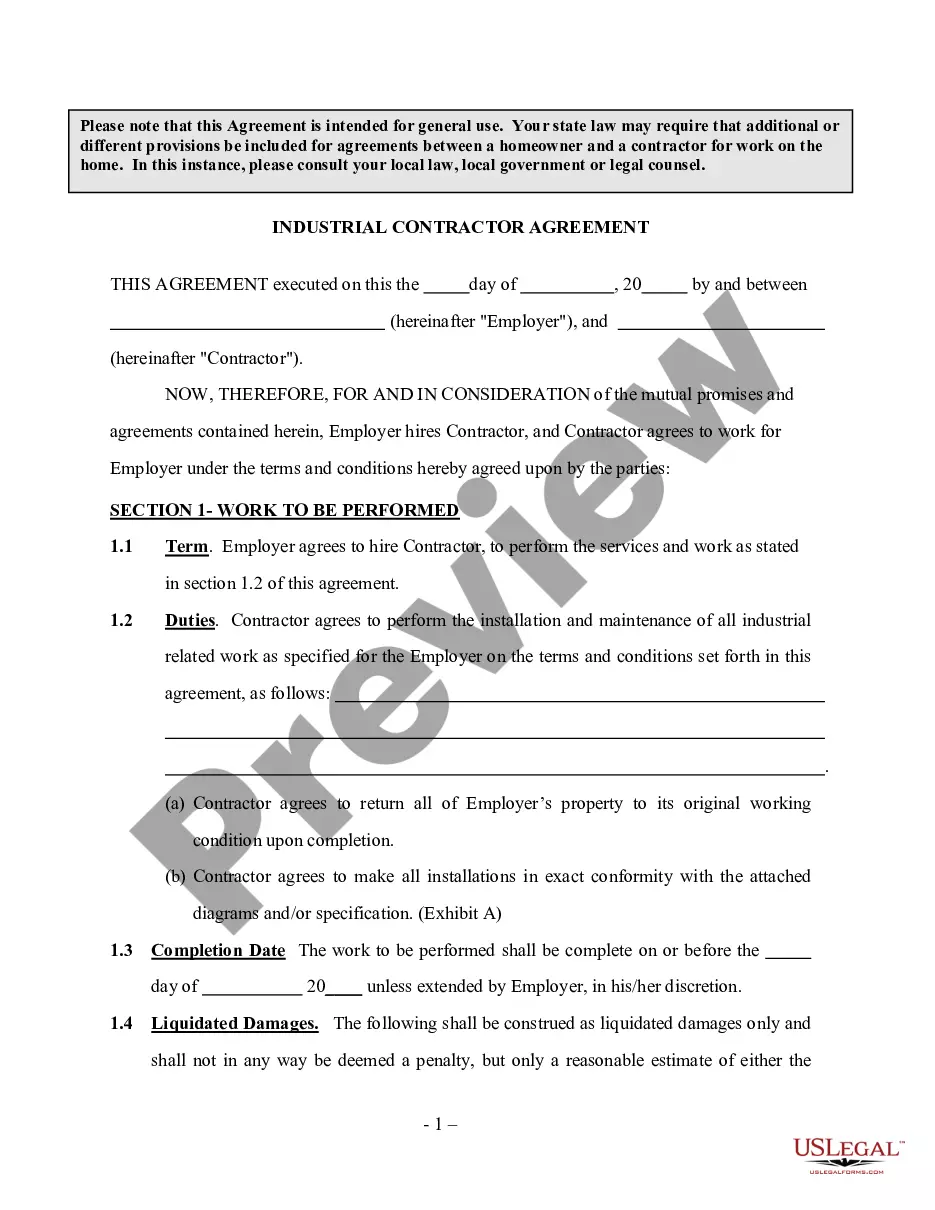
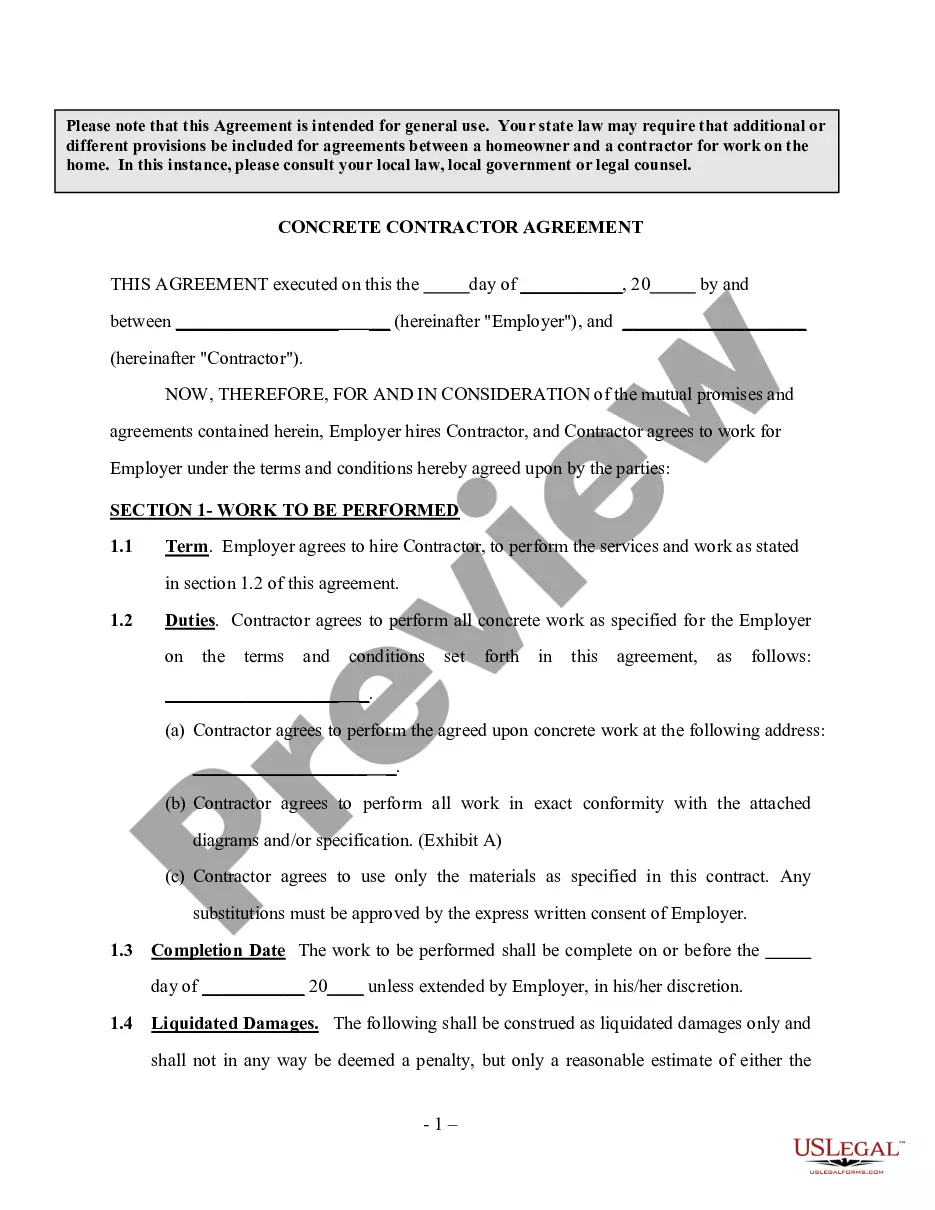
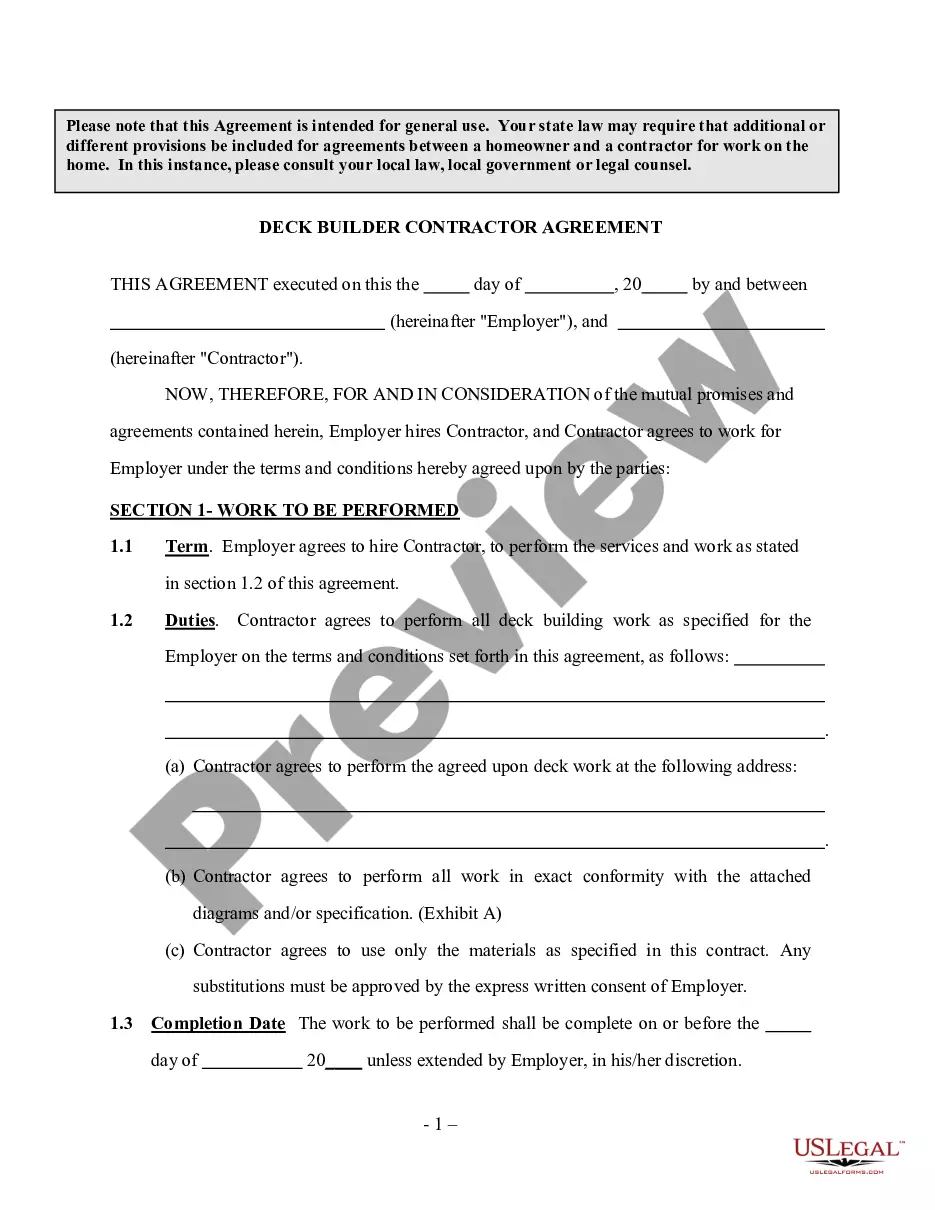
The Fireplace Contractor Agreement - Self-Employed is a contract between a homeowner and an independent contractor who specializes in fireplace construction and installation. This agreement outlines the terms under which the contractor will perform specific work related to fireplaces. It is crucial to note that this form serves as a general template; local laws may impose additional requirements, so users should verify compliance with their state regulations.
Key parts of this document
- Section 1 - Work to Be Performed: Details the specific duties and performance requirements for the contractor.
- Section 3 - Independent Contractor Status: Clarifies that the contractor is not an employee of the employer.
- Section 4 - Representations and Warranties: Includes assurances the contractor agrees to regarding the work to be completed.
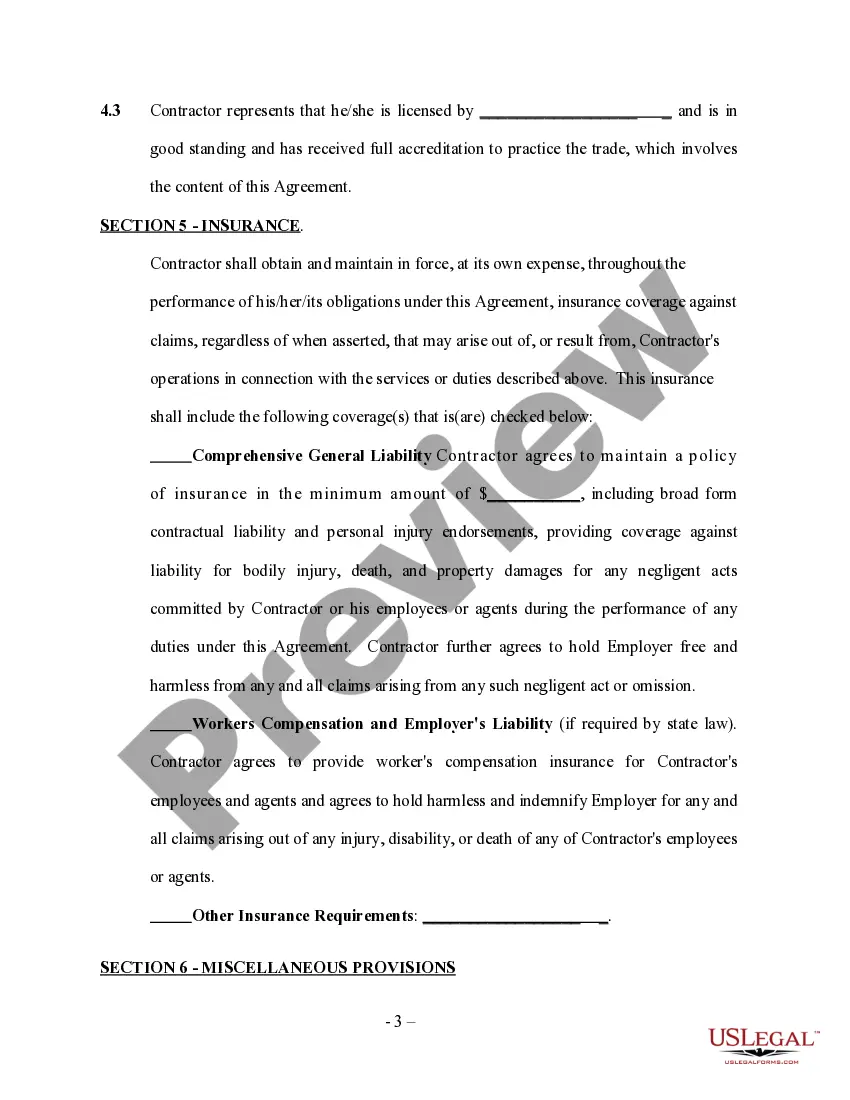
- Section 5 - Insurance: Stipulates insurance coverage requirements for the contractor during the project.
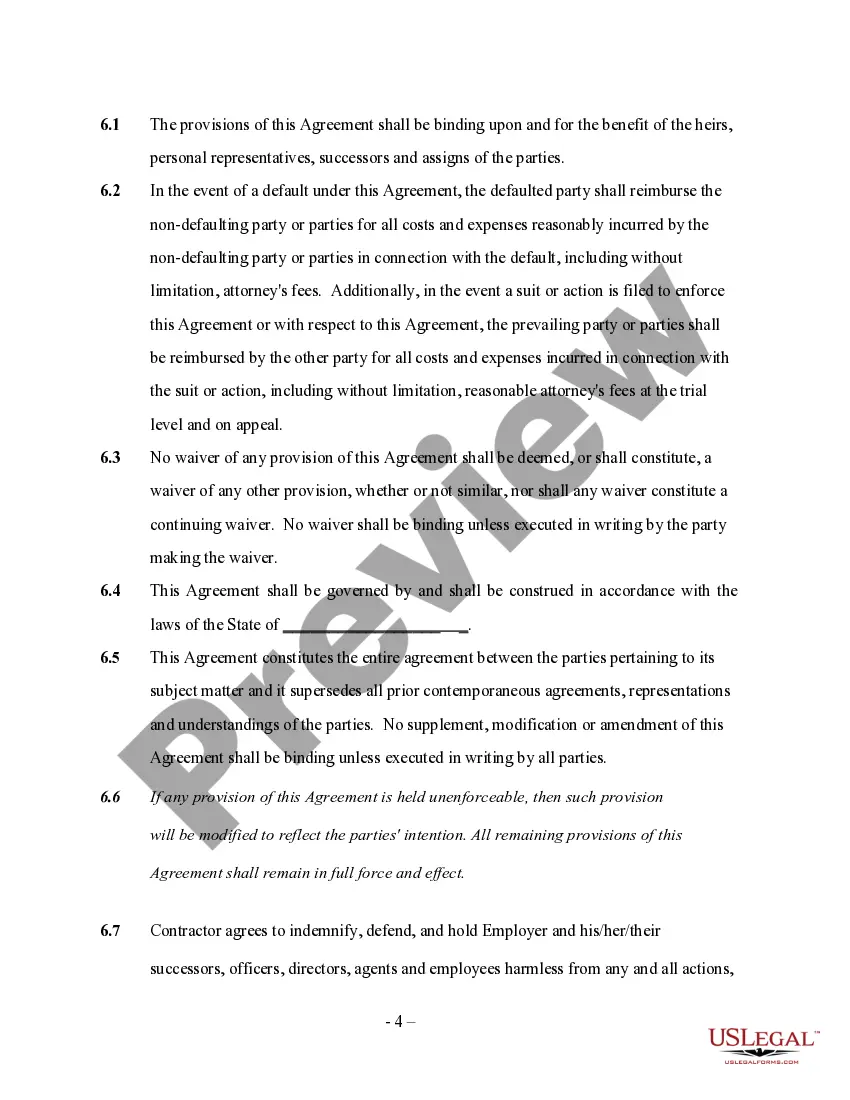
- Indemnification clause: Outlines the responsibilities of the contractor in case of legal claims related to their work.

When to use this form
This form should be used when a homeowner wishes to hire an independent contractor for specific fireplace-related services, such as construction or installation. It is beneficial when clarity about each party's responsibilities, financial terms, and compliance with state regulations is necessary.
Who needs this form
- Homeowners looking to hire independent contractors for fireplace work.
- Independent contractors specializing in fireplace construction and installation.
- Individuals or businesses seeking a written agreement to outline terms of service and protect their interests.
Instructions for completing this form
- Identify the parties: Enter the names and addresses of the homeowner (Employer) and the independent contractor.
- Specify the work: Clearly outline the fireplace installation or construction tasks to be performed.
- Include the term: State the duration of the agreement and any important deadlines.
- Address insurance requirements: Indicate the type of insurance coverage the contractor needs to maintain.
- Signatures: Ensure both parties sign and date the agreement to make it legally binding.
Does this form need to be notarized?
This form usually doesn’t need to be notarized. However, local laws or specific transactions may require it. Our online notarization service, powered by Notarize, lets you complete it remotely through a secure video session, available 24/7.
Get your form ready online
Our built-in tools help you complete, sign, share, and store your documents in one place.
Make edits, fill in missing information, and update formatting in US Legal Forms—just like you would in MS Word.
Download a copy, print it, send it by email, or mail it via USPS—whatever works best for your next step.
Sign and collect signatures with our SignNow integration. Send to multiple recipients, set reminders, and more. Go Premium to unlock E-Sign.
If this form requires notarization, complete it online through a secure video call—no need to meet a notary in person or wait for an appointment.
We protect your documents and personal data by following strict security and privacy standards.

Make edits, fill in missing information, and update formatting in US Legal Forms—just like you would in MS Word.

Download a copy, print it, send it by email, or mail it via USPS—whatever works best for your next step.

Sign and collect signatures with our SignNow integration. Send to multiple recipients, set reminders, and more. Go Premium to unlock E-Sign.

If this form requires notarization, complete it online through a secure video call—no need to meet a notary in person or wait for an appointment.

We protect your documents and personal data by following strict security and privacy standards.
Mistakes to watch out for
- Failing to include a detailed description of the work to be performed.
- Not specifying the duration of the agreement.
- Neglecting to verify or document insurance coverage details.
- Leaving out signatures, which can invalidate the agreement.
Why complete this form online
- Immediate access to a professionally drafted legal template.
- Easy customization to fit the specific project and parties involved.
- Secure storage and retrieval of the form once completed.
- Ability to download and print the form for physical signatures.
Looking for another form?










Form popularity
FAQ
Usually, independent contractors cannot be fired at-will like employees can because they have contracts that outline termination.
People who work for themselves or who own their own company are sometimes alternately referred to as self-employed or independent contractors, though there is a difference between the two. In general, all independent contractors are self-employed, but not all self-employed people are independent contractors.
Simply put, being an independent contractor is one way to be self-employed. Being self-employed means that you earn money but don't work as an employee for someone else. An independent contractor is someone who provides a service on a contractual basis.
As an independent contractor, you have the right to market your services to other businesses and can work with more than one client at a time. Even if you have a long-term contract with a particular client, you can choose to work on additional projects as well.
Independent contractors are self-employed workers who provide services for an organisation under a contract for services. Independent contractors are not employees and are typically highly skilled, providing their clients with specialist skills or additional capacity on an as needed basis.
Make sure you really qualify as an independent contractor. Choose a business name (and register it, if necessary). Get a tax registration certificate (and a vocational license, if required for your profession). Pay estimated taxes (advance payments of your income and self-employment taxes).
As an independent contractor, you can sue for wrongful termination, and particularly the employer misclassifies you as an independent contractor, yet you are an employee. The California law considers any person rendering services to another person to be an employee.
An independent contractor cannot be fired so long as he or she produces a result that meets the specifications of the contract. Training. An employee may be trained to perform services in a particular manner. However, independent contractors ordinarily use their own methods and receive no training from the employer.
Protect your social security number. Have a clearly defined scope of work and contract in place with clients. Get general/professional liability insurance. Consider incorporating or creating a limited liability company (LLC).