Insulation Services Contract - Self-Employed
What is this form?
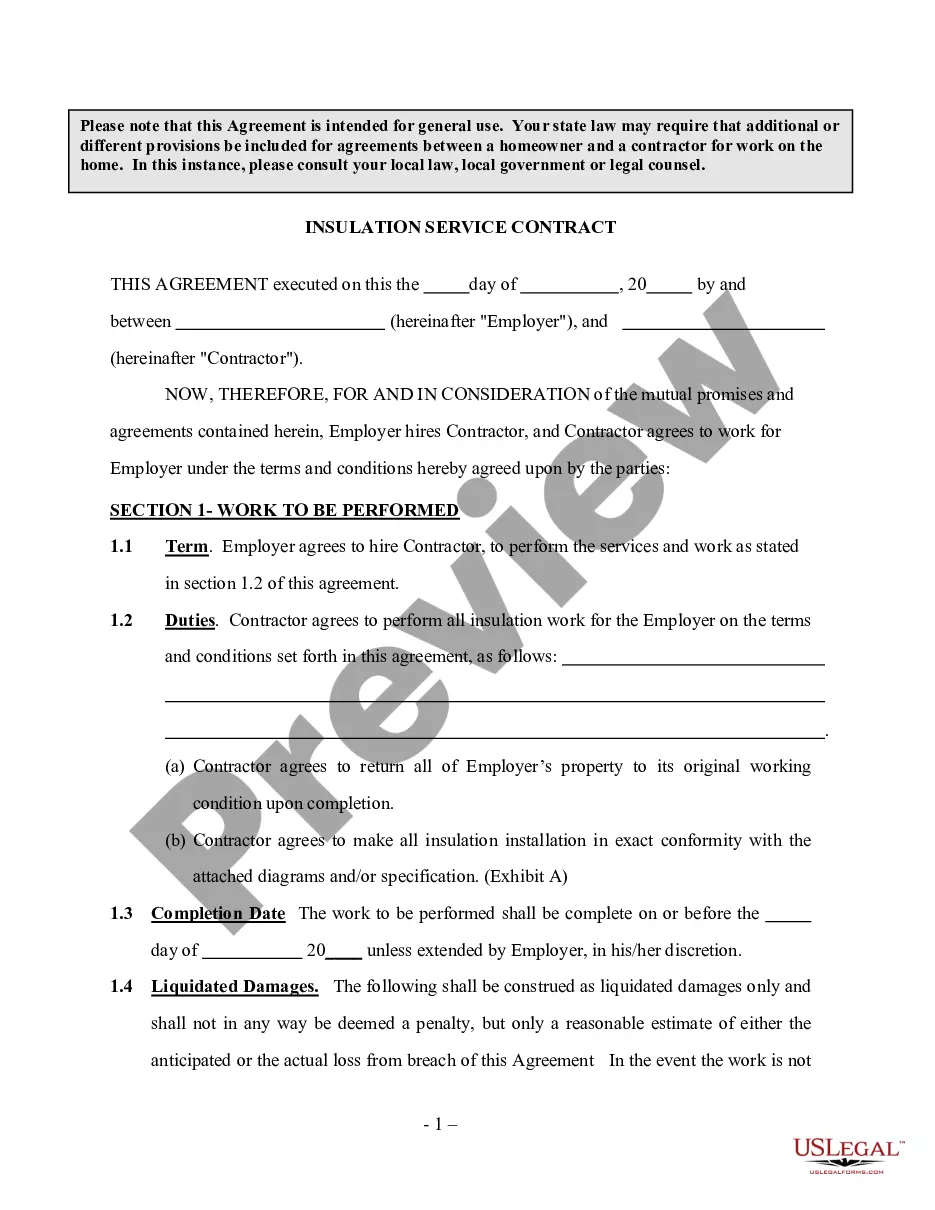
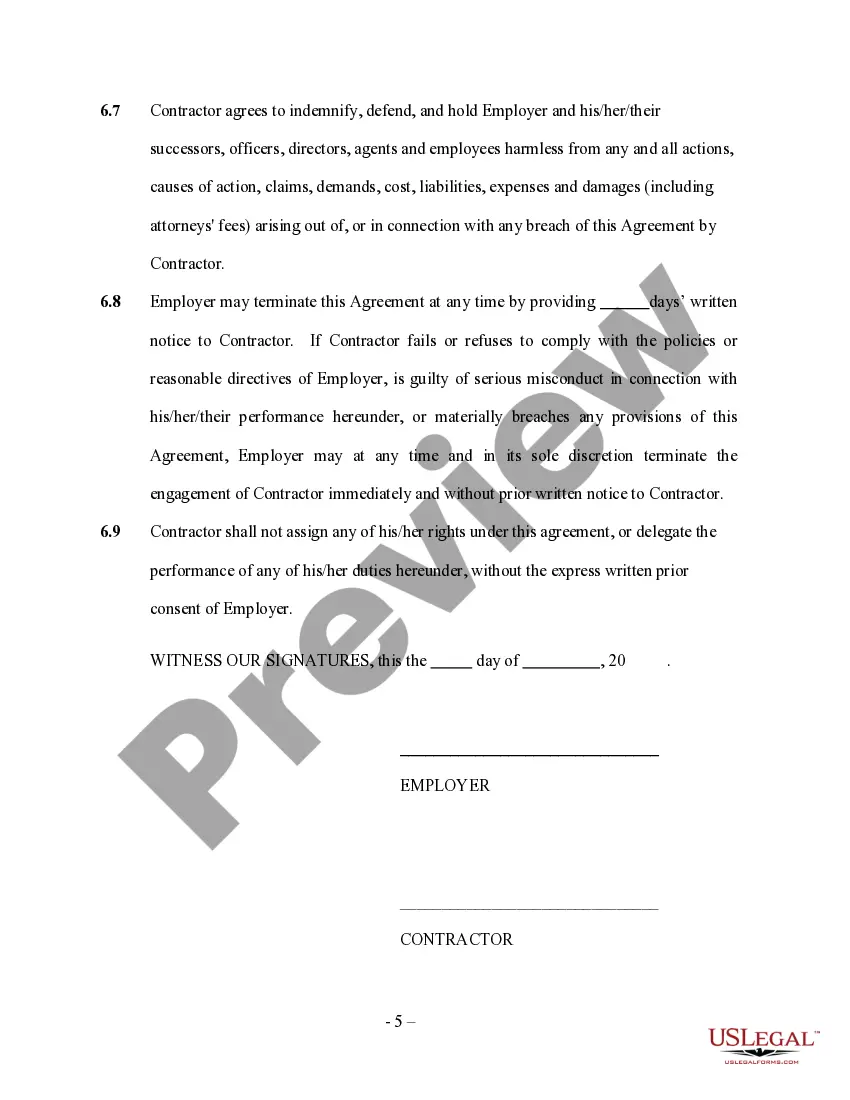
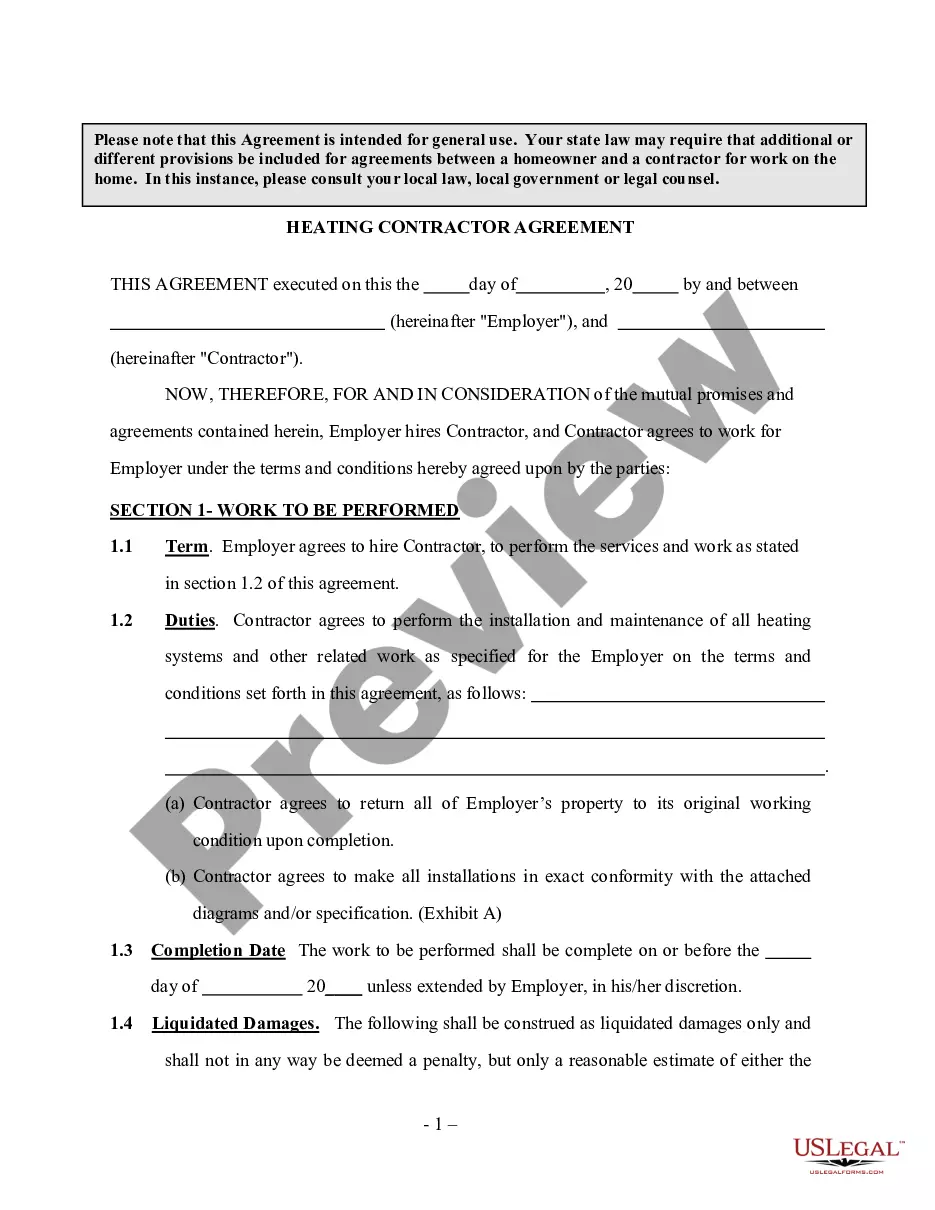
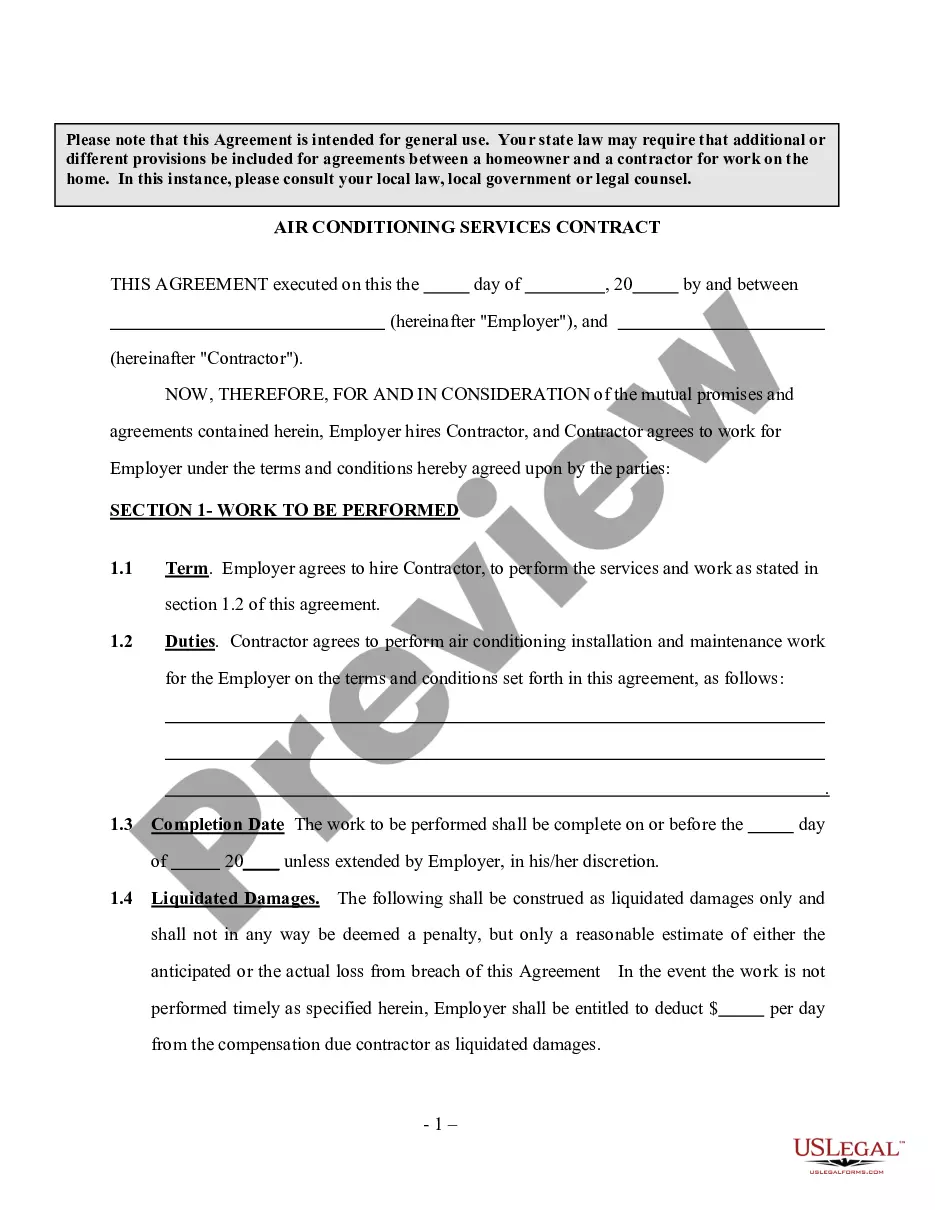
The Insulation Services Contract for self-employed contractors is a legal agreement between an employer and an independent contractor. This form outlines the terms under which the contractor will provide and install insulation as specified in the contract. Unlike standard employment contracts, this agreement clarifies the contractor's status as an independent entity, helping both parties understand their rights and obligations. It is essential for establishing a clear scope of work and responsibilities for insulation installation projects.
Key parts of this document
- Identification of the parties involved (Employer and Contractor).
- Detailed description of the work to be performed, including the terms and specifics of the insulation services.
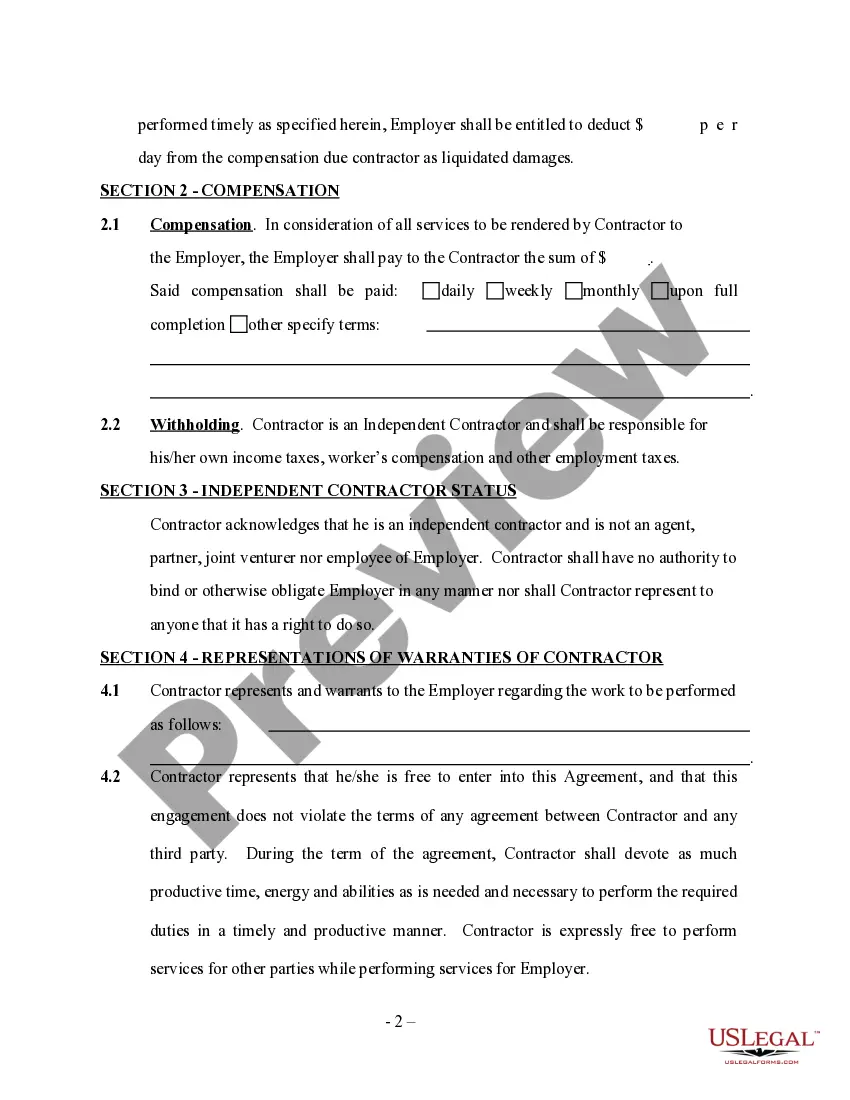
- Clauses outlining the independent contractor status, affirming that the contractor is not an employee of the employer.
- Provisions for payment and invoicing for services rendered.
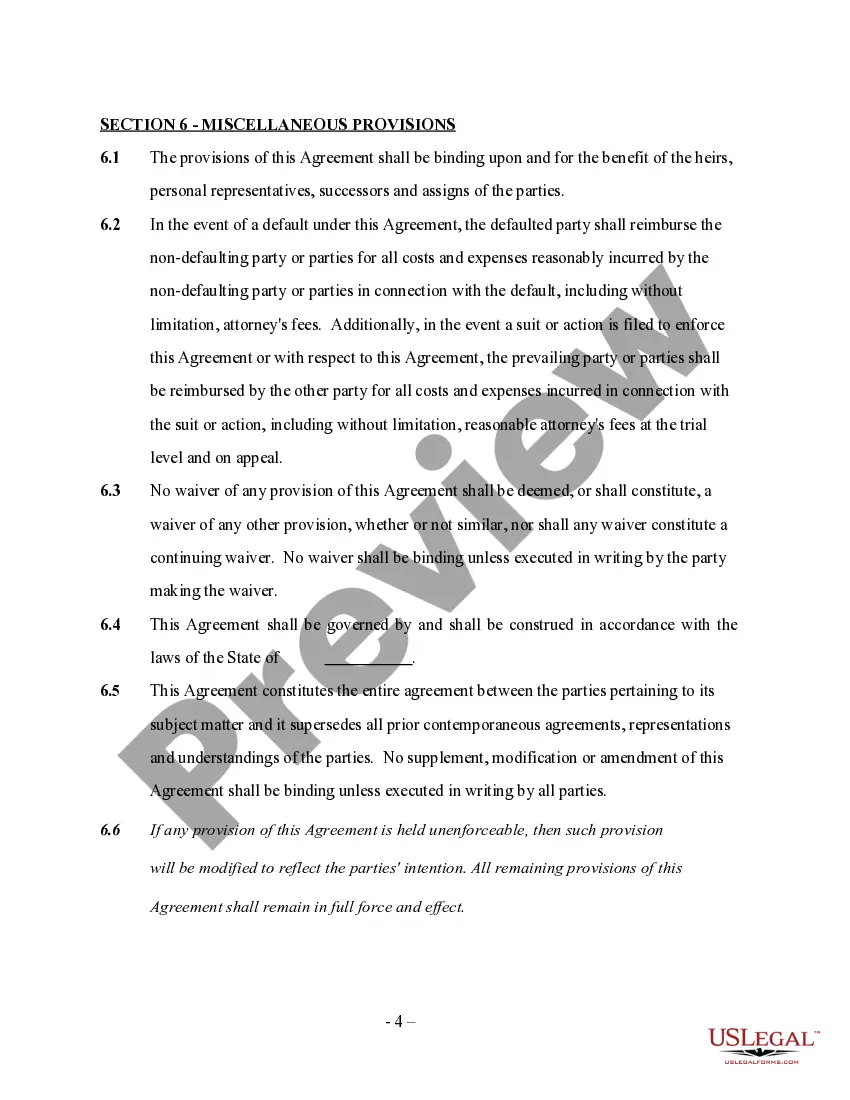
- Termination clauses and conditions under which the contract can be ended.

Common use cases
This form is best used when a homeowner or business needs to hire an independent contractor for insulation installation. It applies in situations where insulation is required for new construction, home renovations, or energy efficiency upgrades. Using this contract helps ensure that both parties are clear on project details, payment terms, and legal protections.
Who should use this form
- Homeowners seeking insulation installation services.
- Independent contractors who specialize in insulation services.
- Businesses needing to hire contractors for insulation in commercial spaces.
- Property managers coordinating insulation work in rental properties.
Steps to complete this form
- Identify and enter the names and addresses of the Employer and Contractor.
- Clearly define the scope of work to be performed, including types of insulation and installation details.
- Determine and specify the payment structure, including rates and due dates.
- Include clauses related to termination and any necessary warranties for the work performed.
- Ensure both parties sign and date the agreement to finalize the contract.
Is notarization required?
Notarization is not commonly needed for this form. However, certain documents or local rules may make it necessary. Our notarization service, powered by Notarize, allows you to finalize it securely online anytime, day or night.
Get your form ready online
Our built-in tools help you complete, sign, share, and store your documents in one place.
Make edits, fill in missing information, and update formatting in US Legal Forms—just like you would in MS Word.
Download a copy, print it, send it by email, or mail it via USPS—whatever works best for your next step.
Sign and collect signatures with our SignNow integration. Send to multiple recipients, set reminders, and more. Go Premium to unlock E-Sign.
If this form requires notarization, complete it online through a secure video call—no need to meet a notary in person or wait for an appointment.
We protect your documents and personal data by following strict security and privacy standards.

Make edits, fill in missing information, and update formatting in US Legal Forms—just like you would in MS Word.

Download a copy, print it, send it by email, or mail it via USPS—whatever works best for your next step.

Sign and collect signatures with our SignNow integration. Send to multiple recipients, set reminders, and more. Go Premium to unlock E-Sign.

If this form requires notarization, complete it online through a secure video call—no need to meet a notary in person or wait for an appointment.

We protect your documents and personal data by following strict security and privacy standards.
Common mistakes to avoid
- Failing to specify the exact scope of work can lead to misunderstandings.
- Neglecting to outline payment terms clearly may cause disputes over compensation.
- Not including a termination clause can create challenges if either party wants to end the agreement.
- Forgetting to sign the contract, making it unenforceable.
Benefits of using this form online
- Immediate access to a legally vetted contract template.
- Easy to edit and customize for specific needs.
- Reliability and assurance that the document is drafted by licensed attorneys.
Looking for another form?
Form popularity
FAQ
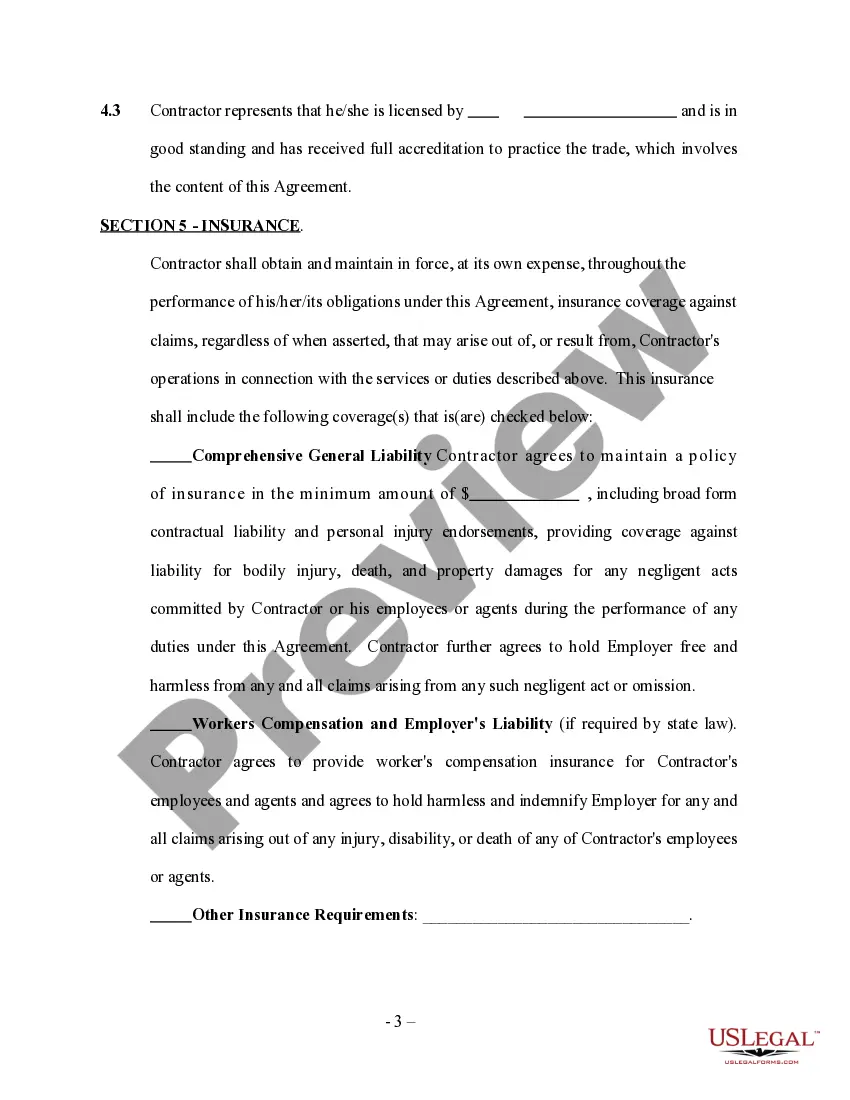
Are you a licensed installer? Can I speak with your references? What warranty or guarantee do you provide for your insulation? What personal protective equipment do you require for your workers? Do you carry liability insurance and workers comp insurance? What type of insulation products do you offer?
The most common types of materials used for loose-fill insulation include cellulose, fiberglass, and mineral (rock or slag) wool. All of these materials are produced using recycled waste materials. Cellulose is primarily made from recycled newsprint. Most fiberglass products contain 40% to 60% recycled glass.
Generally, insulators charge about $50 to $80 per hour. To help you calculate the cost of insulation, consider the size of the installation, the shape of the ceiling and additional services incurred. For accurate pricing, have a professional insulation installer take measurements and provide cost estimates.
According to Energy Star, an insulation contractor is a specialized contractor who installs thermal insulation. They can specialize in one type of insulation, such as fiberglass, cellulose, or spray foam, or install more than one type.
A rough estimate for hiring someone to blow insulation into a flat roof, cathedral ceiling or wall cavities is $2-$3.50 a square foot, or $1,000-$3,500 for filling 1,000 square feet of empty wall or roof space.
Cost: The average cost per square foot is between $0.64 - $1.19. So, for a 500 square foot area, your estimate will vary between $145 to $200, if you do it yourself. For a professional job, add between $150 to $300 for labor, and you're looking at around $300 to $500 for 6 hours of work.
Insulation used in buildings works as a barrier to hinder the movement of heat in or out of the living areas. By reducing heat flow, insulation helps keep the living spaces in your home cooler in summer and warmer in winter, reducing the need for artificial heating and cooling.
An insulation contractor is a type of contractor who is specialized in installing thermal insulation. These are contractors who work on residential, commercial, or industrial projects and coordinate with heating, plumbing, and mechanical construction workers.
Insulation workers, also called insulators, install and replace the materials used to insulate buildings or mechanical systems.