USLegal Guide to Advance Directives for Health Care
Overview of this form
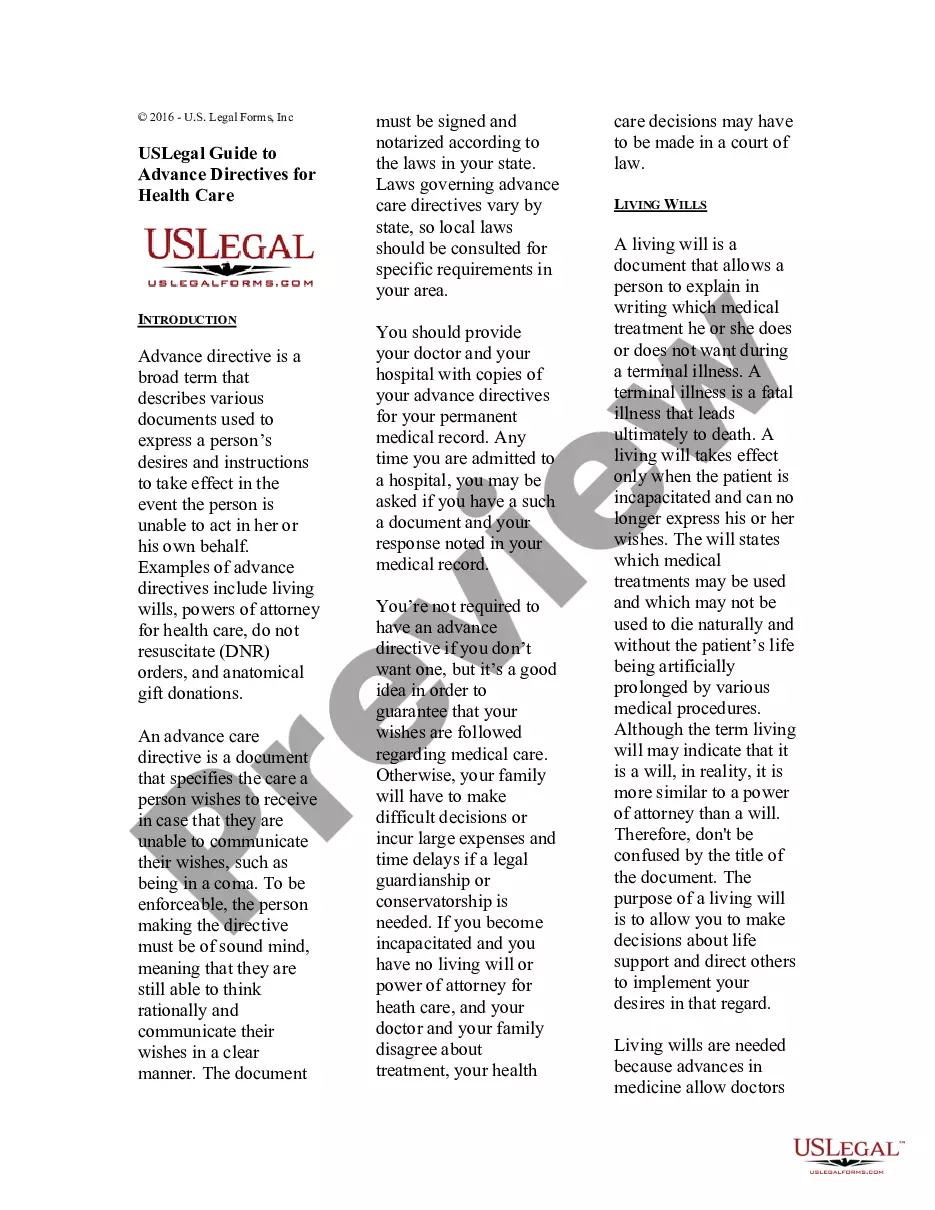
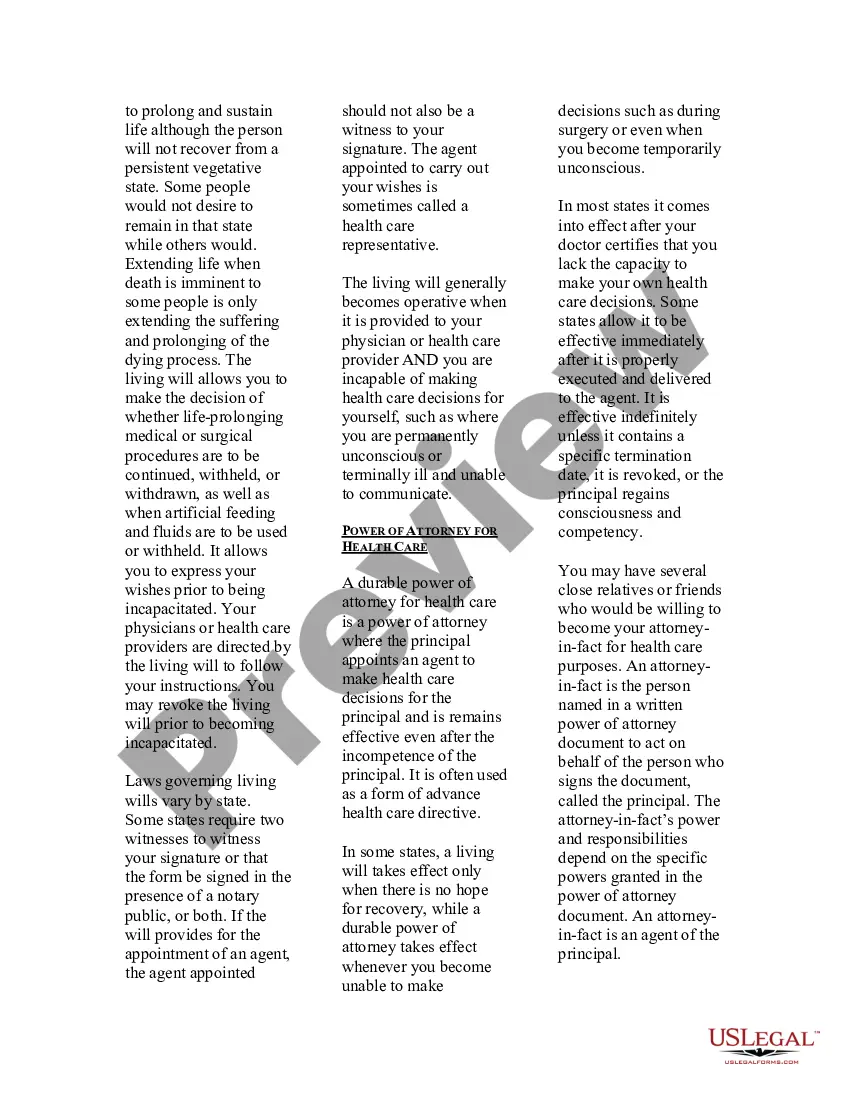
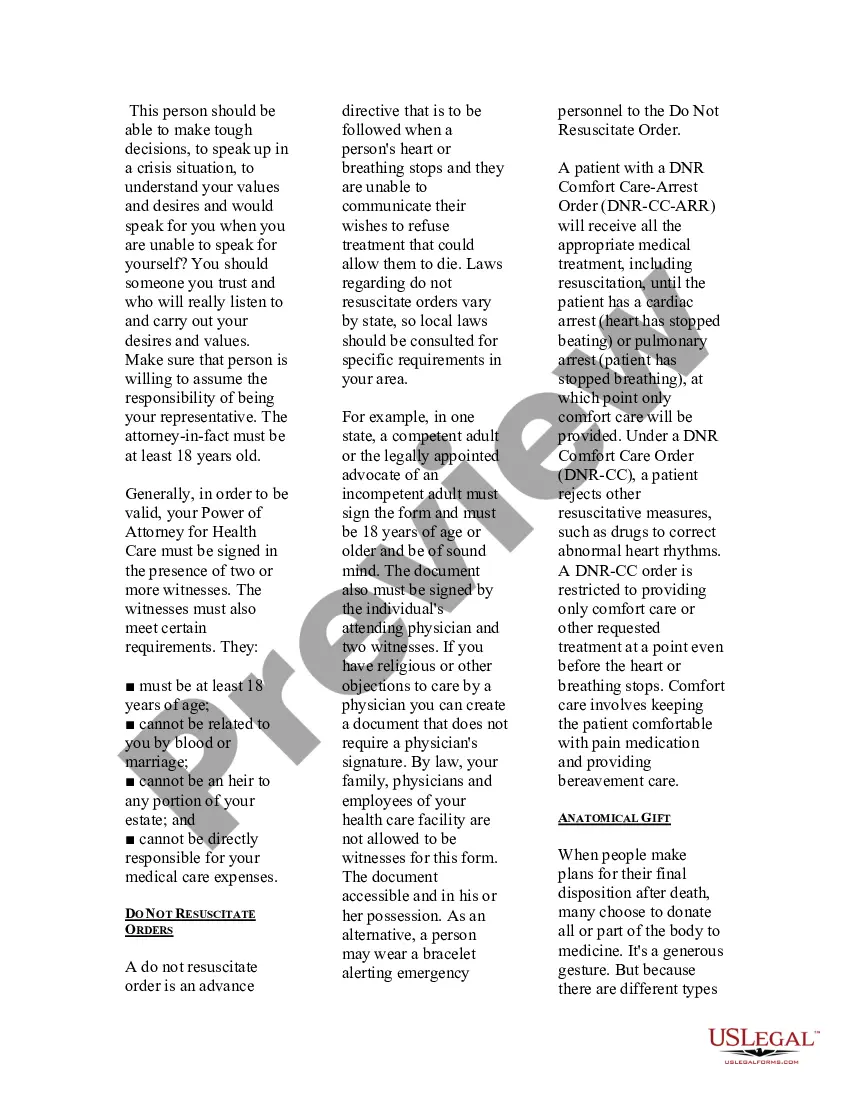
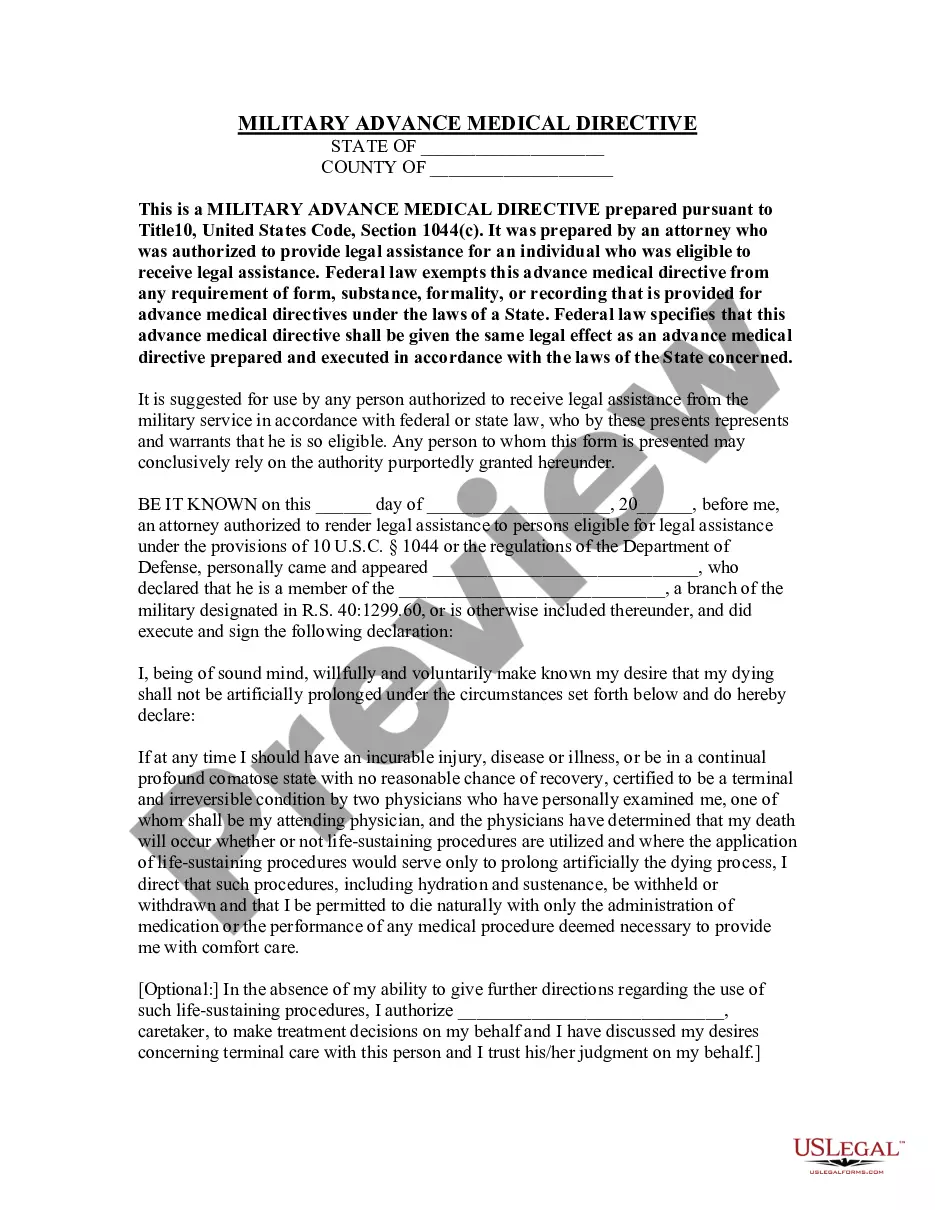
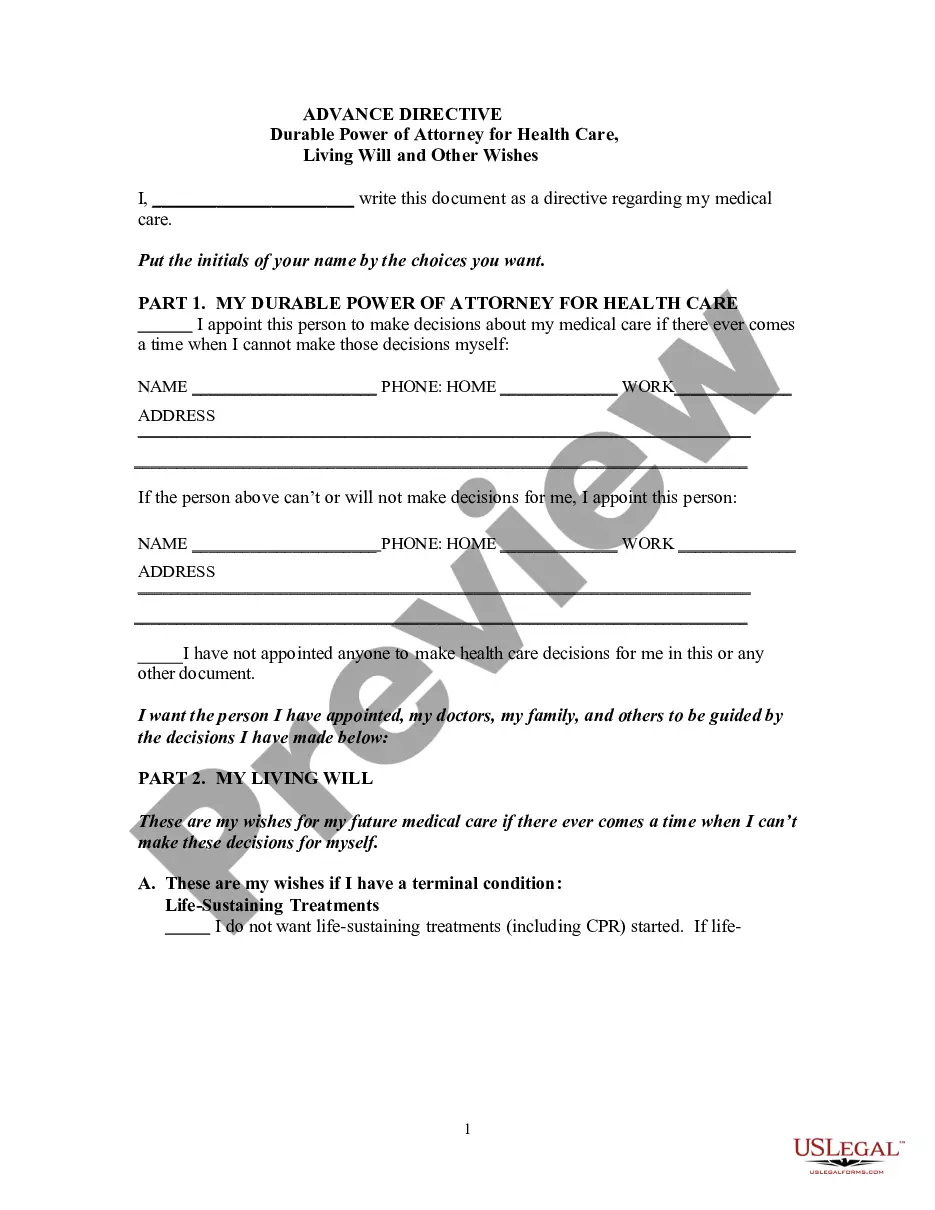
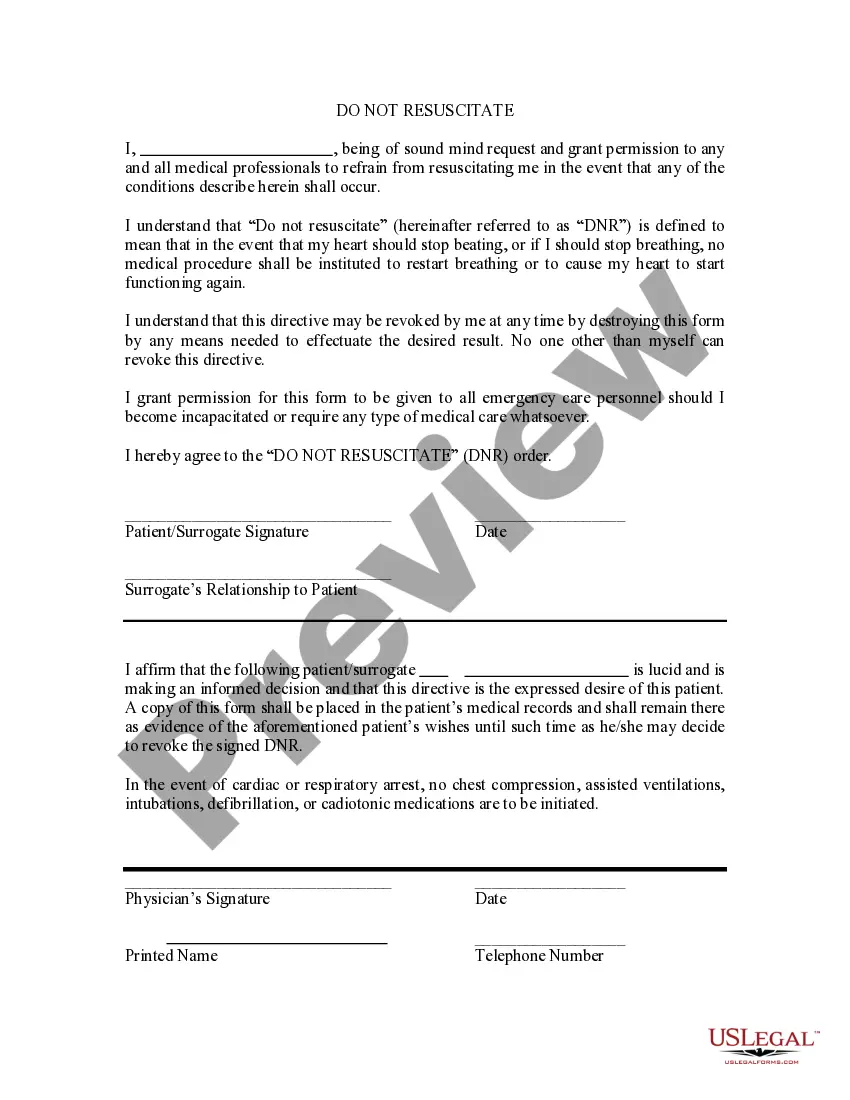
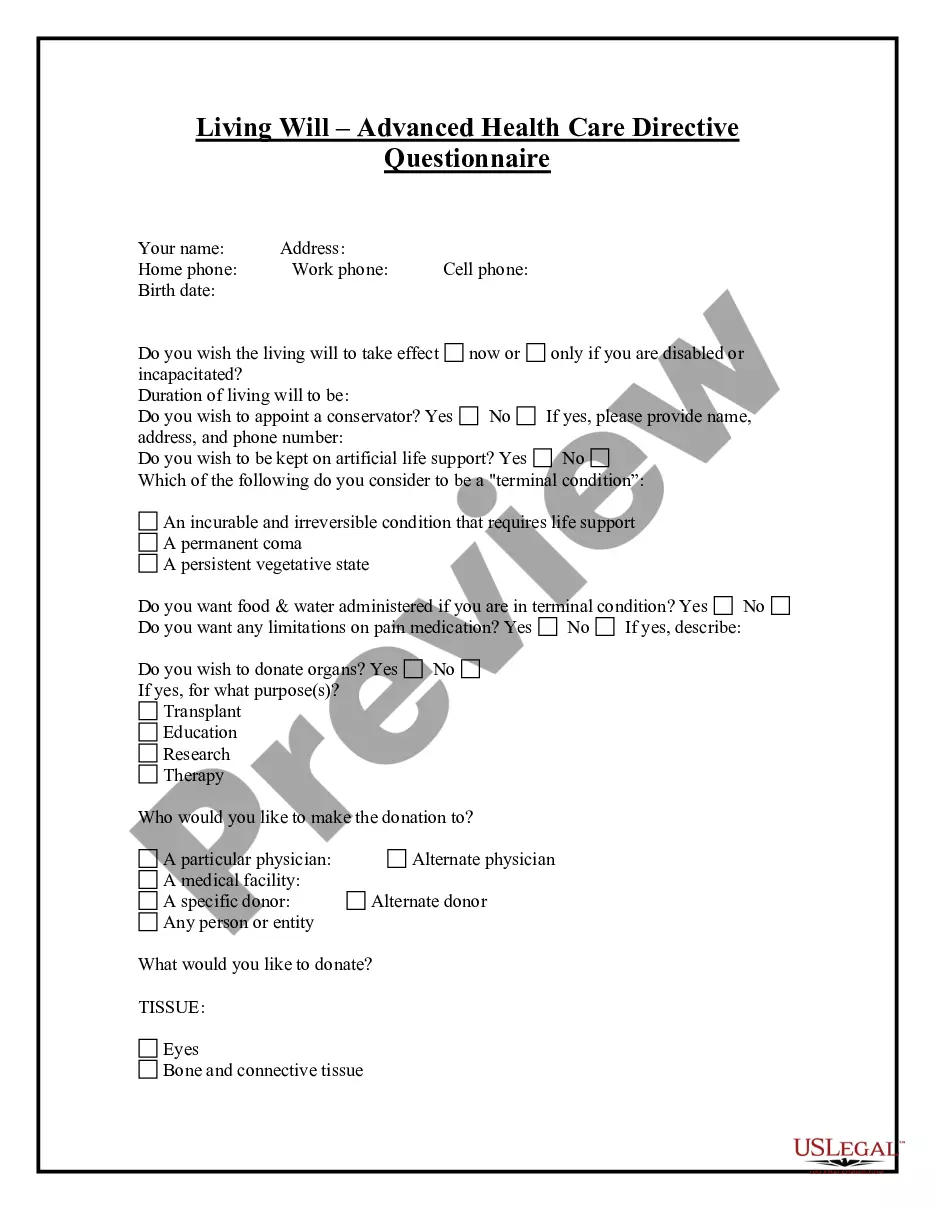
The USLegal Guide to Advance Directives for Health Care provides essential information on various documents that express a person's healthcare preferences when they can no longer communicate. This guide covers key elements such as living wills, durable powers of attorney for health care, do not resuscitate orders, and anatomical gift donations, helping users ensure their wishes are honored in critical medical situations.
Key components of this form
- Living wills: Outline preferences for medical treatment during terminal illness.
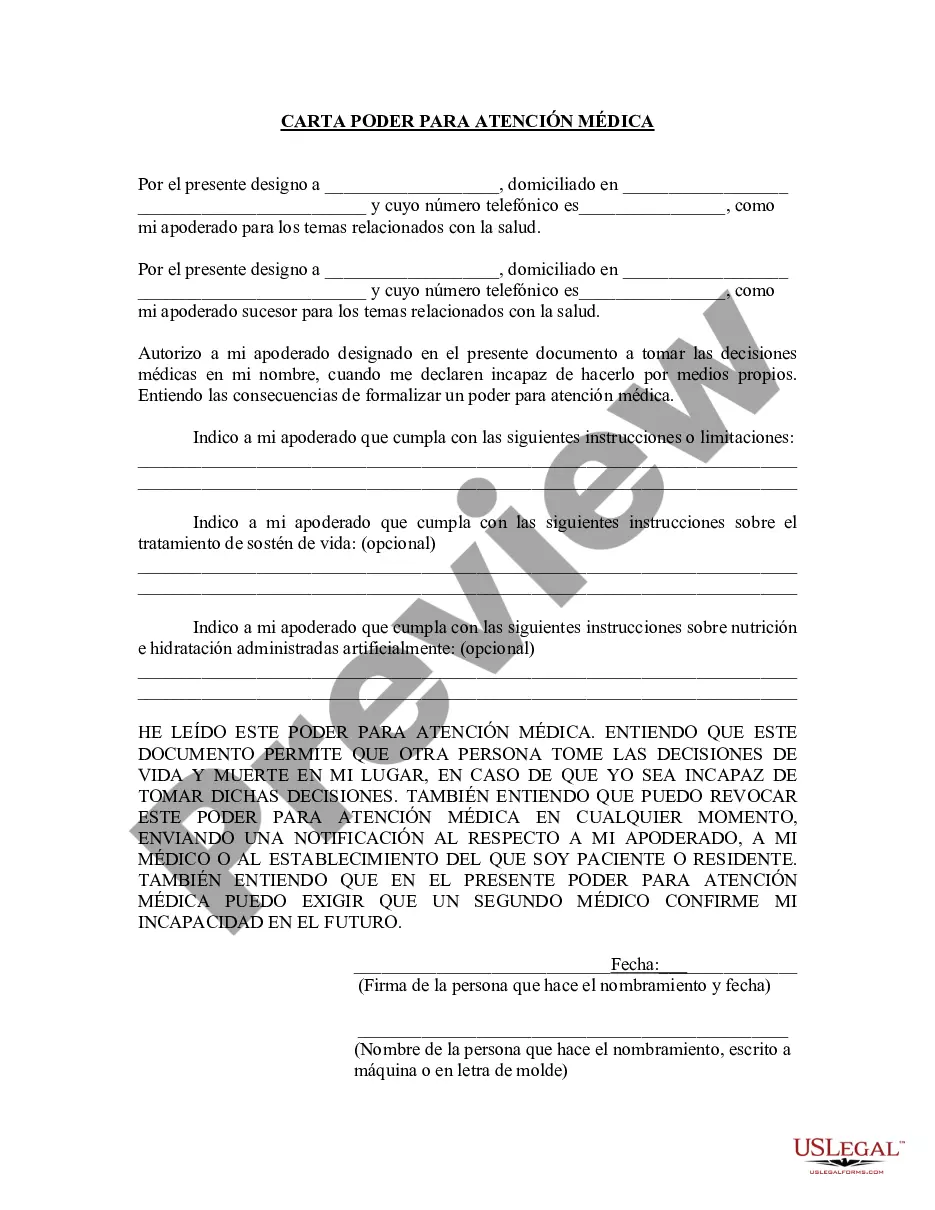
- Powers of attorney for health care: Appoint a trusted individual to make health care decisions on your behalf.
- Do not resuscitate orders: Specify your wishes regarding resuscitation efforts.
- Anatomical gifts: Outline your decisions regarding organ donation and body donation for medical research.
When to use this document
This guide is useful when you want to make your healthcare preferences known in the event of incapacitation. It is particularly important in scenarios involving terminal illness, serious injuries, or medical emergencies where you may be unable to speak for yourself. Having these documents in place can alleviate stress for family members and health care providers during difficult times.
Who should use this form
- Adults who want to make informed decisions about their medical care.
- Individuals with specific healthcare wishes who may face end-of-life situations.
- Those who wish to appoint a representative to make health care decisions on their behalf.
- Anyone interested in organ or body donation after death.
How to prepare this document
- Decide on your healthcare preferences and discuss them with loved ones.
- Fill out the appropriate advance directive forms clearly outlining your wishes.
- Appoint a trusted individual as your agent if using a power of attorney.
- Sign the documents in accordance with your stateâs laws, often requiring witnesses or notarization.
- Distribute copies of your advance directives to your healthcare provider and family members.
Does this form need to be notarized?
This form does not typically require notarization unless specified by local law. However, it's important to check your stateâs requirements, as some states may require notarization or witness signatures for certain advance directives.
Get your form ready online
Our built-in tools help you complete, sign, share, and store your documents in one place.
Make edits, fill in missing information, and update formatting in US Legal Forms—just like you would in MS Word.
Download a copy, print it, send it by email, or mail it via USPS—whatever works best for your next step.
Sign and collect signatures with our SignNow integration. Send to multiple recipients, set reminders, and more. Go Premium to unlock E-Sign.
If this form requires notarization, complete it online through a secure video call—no need to meet a notary in person or wait for an appointment.
We protect your documents and personal data by following strict security and privacy standards.

Make edits, fill in missing information, and update formatting in US Legal Forms—just like you would in MS Word.

Download a copy, print it, send it by email, or mail it via USPS—whatever works best for your next step.

Sign and collect signatures with our SignNow integration. Send to multiple recipients, set reminders, and more. Go Premium to unlock E-Sign.

If this form requires notarization, complete it online through a secure video call—no need to meet a notary in person or wait for an appointment.

We protect your documents and personal data by following strict security and privacy standards.
Common mistakes to avoid
- Not discussing your healthcare preferences with family members.
- Filling out forms that do not comply with state laws.
- Failing to include copies of directives in your medical records.
- Not updating forms as your wishes or circumstances change.
Why complete this form online
- Convenience of accessing and filling out legal forms from home at any time.
- Ability to edit and customize documents to fit personal needs and preferences.
- Reliable resources created by licensed attorneys to ensure legal compliance.
Legal use & context
- The guide helps ensure that individualsâ healthcare decisions are respected when they can no longer communicate.
- Advance directives are legally binding documents in most states when executed in accordance with local laws.
- Choosing a health care proxy and specifying wishes can prevent potential legal battles among family members in a medical crisis.
Key takeaways
- Advance directives are critical documents for ensuring your healthcare preferences are followed.
- Consult with a legal professional or trusted advisor to understand your rights and options.
- Ensure that your advance directives are up to date and accessible to healthcare providers.
Looking for another form?






Form popularity
FAQ
Advance directiveA written document (form) that tells what a person wants or doesn't want if he/she in the future can't make his/her wishes known about medical treatment. Artificial nutrition and hydrationWhen food and water are fed to a person through a tube.
The name and contact information of your healthcare agent/proxy. Answers to specific questions about your preferences for care if you become unable to speak for yourself. Names and signatures of individuals who witness your signing your advance directive, if required.
The name and contact information of your healthcare agent/proxy. Answers to specific questions about your preferences for care if you become unable to speak for yourself. Names and signatures of individuals who witness your signing your advance directive, if required.
Review and complete the Advance Health Care Planning: Making Your Wishes Known Booklet. Complete An Advance Health Care Directive Form. Give a copy to your doctor, power of attorney and family. If necessary, complete a Provider Orders for Life Sustaining Treatment (POLST) Form.
The living will. Durable power of attorney for health care/Medical power of attorney. POLST (Physician Orders for Life-Sustaining Treatment) Do not resuscitate (DNR) orders. Organ and tissue donation.
Talk to your agent. Talk to the person or persons you want to make decisions for you so they: Write your personal directive. You have 2 options: Sign it. You and a witness have to sign the personal directive to make it a legal document. Give out copies.
Tips for Starting the Conversation Even talking about the death of someone you know can help get you started. Talk about your values what makes your life worth living and what you consider quality of life. Approach the conversation wanting to share your wishes before you ask someone else to share their own wishes.
Advance directives are legal documents that allow you to plan and make your own end-of- life wishes known in the event that you are unable to communicate. Advance directives consist of (1) a living will and (2) a medical (healthcare) power of attorney. A living will describes your wishes regarding medical care.