Affirmative Action EEO Form to Disclose Ethnic Background
What this document covers
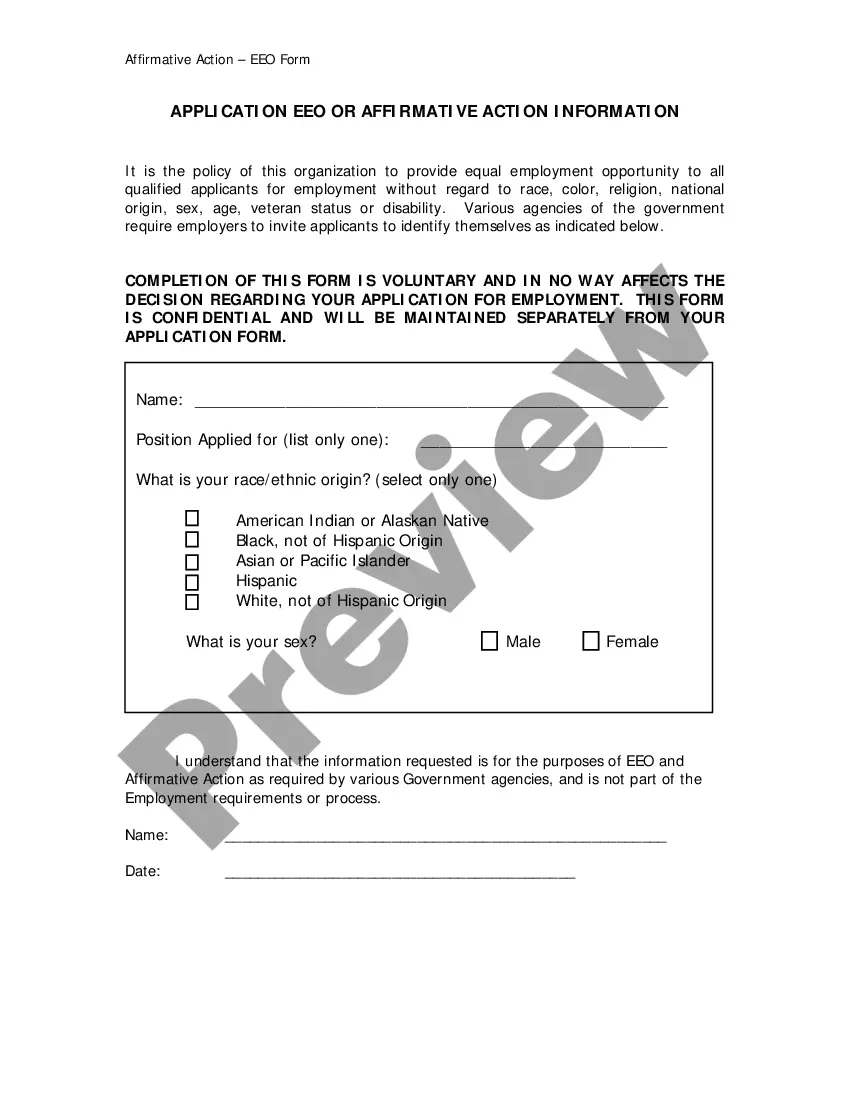
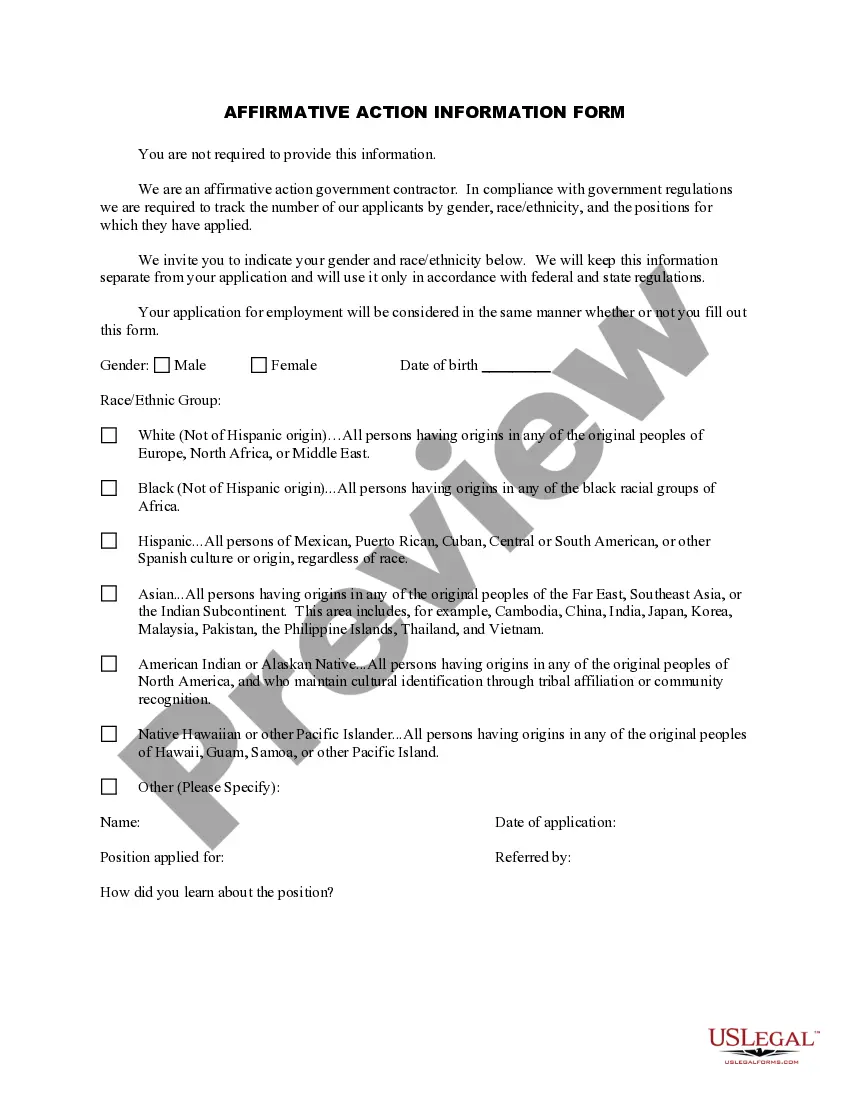
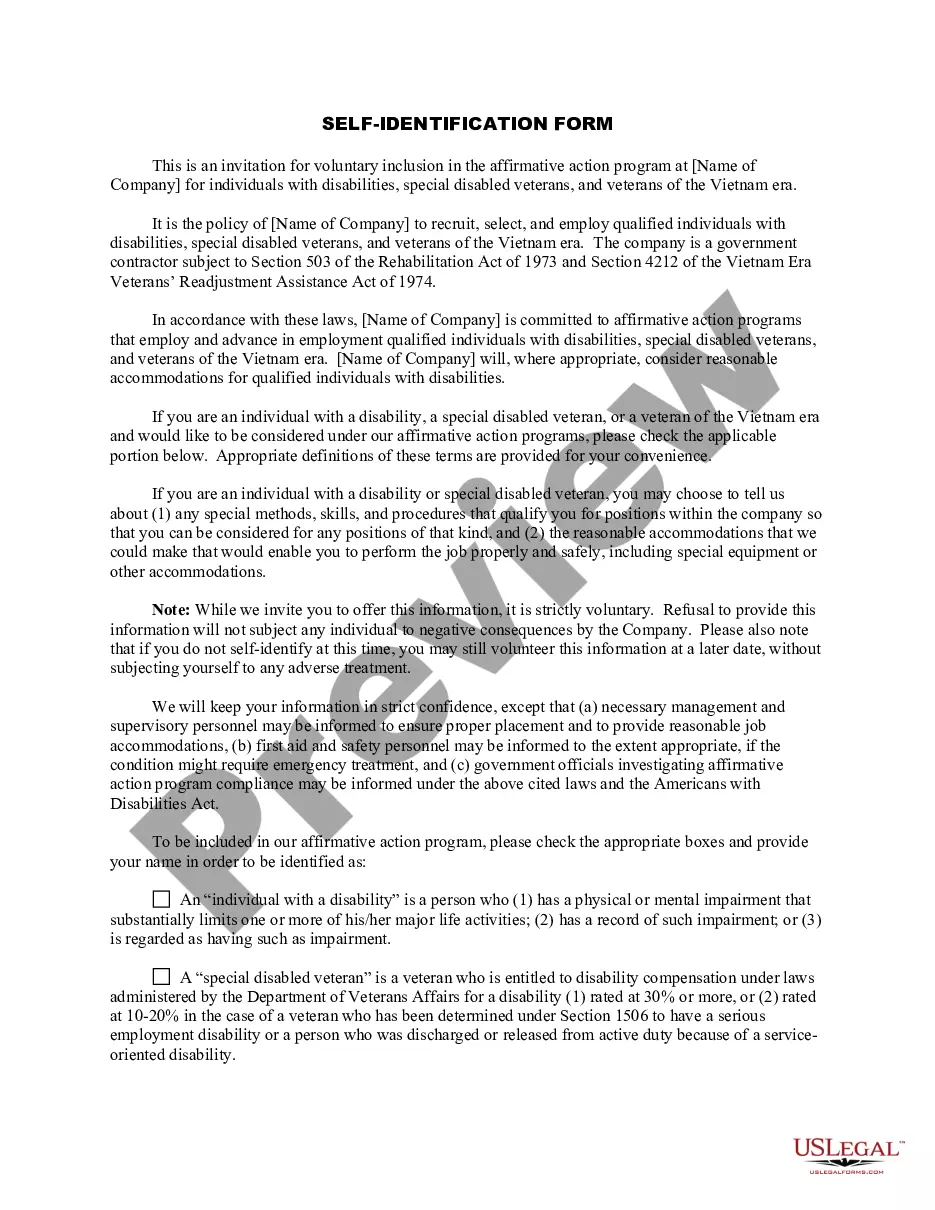
The Affirmative Action EEO Form to Disclose Ethnic Background is a critical document used by employers to gather demographic information from job applicants. This form is intended to support equal employment opportunity (EEO) and affirmative action efforts by allowing employers to monitor their hiring practices and comply with federal reporting requirements. Unlike other employment forms that focus on personal qualifications, this form specifically targets the collection of demographic data for statistical analysis and compliance purposes.
Form components explained
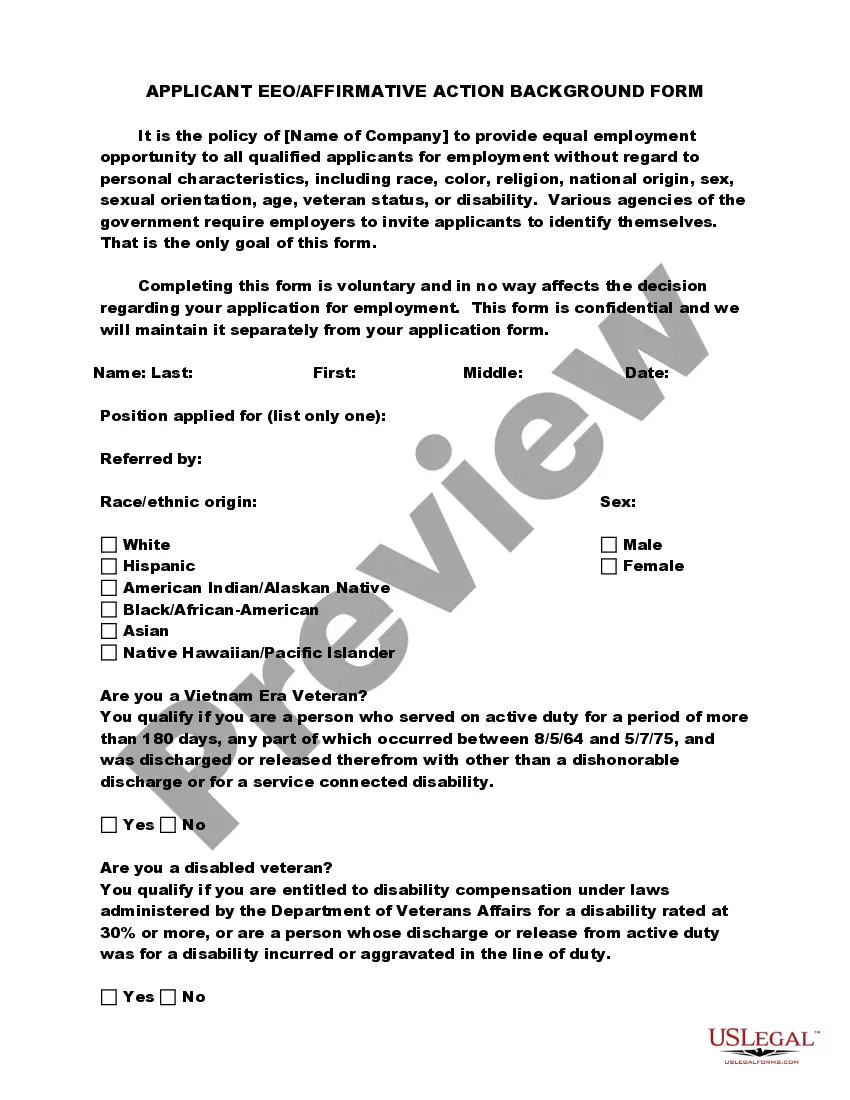
- Voluntary completion: Applicants are informed that filling out the form is optional and does not impact their job application.
- Confidentiality clause: The form notes that the information provided will be maintained separately from the application and kept confidential.
- Applicant identification: Space is provided for the applicant's name, position applied for, and the date of submission.
- Demographic information: Sections to identify race/ethnic origin and gender are included, with specific options listed for selection.

When to use this form
This form should be utilized by organizations during the hiring process when collecting information to evaluate their commitment to diversity and inclusion. It is applicable when employers are required by law to report on their recruitment practices or wish to enhance efforts toward affirmative action initiatives. This helps them analyze their applicant pool in relation to previous hiring benchmarks and compliance requirements.
Who this form is for
- Employers seeking to comply with federal and state EEO regulations.
- Organizations implementing affirmative action policies in hiring.
- HR professionals responsible for recruitment and maintaining diversity data.
- Job applicants who want to provide demographic information for equal opportunity processing.
Steps to complete this form
- Provide your full name in the designated space at the top of the form.
- Enter the date of submission next to your name.
- Specify the position you are applying for by listing it in the provided field.
- Choose one option to indicate your racial or ethnic background from the list provided.
- Select your gender by checking either âMaleâ or âFemale.â
- Return the completed form according to the employer's application instructions.
Notarization requirements for this form
This form does not typically require notarization unless specified by local law. It is used solely for demographic data collection and is handled separately from the main employment application.
Get your form ready online
Our built-in tools help you complete, sign, share, and store your documents in one place.
Make edits, fill in missing information, and update formatting in US Legal Forms—just like you would in MS Word.
Download a copy, print it, send it by email, or mail it via USPS—whatever works best for your next step.
Sign and collect signatures with our SignNow integration. Send to multiple recipients, set reminders, and more. Go Premium to unlock E-Sign.
If this form requires notarization, complete it online through a secure video call—no need to meet a notary in person or wait for an appointment.
We protect your documents and personal data by following strict security and privacy standards.

Make edits, fill in missing information, and update formatting in US Legal Forms—just like you would in MS Word.

Download a copy, print it, send it by email, or mail it via USPS—whatever works best for your next step.

Sign and collect signatures with our SignNow integration. Send to multiple recipients, set reminders, and more. Go Premium to unlock E-Sign.

If this form requires notarization, complete it online through a secure video call—no need to meet a notary in person or wait for an appointment.

We protect your documents and personal data by following strict security and privacy standards.
Typical mistakes to avoid
- Failing to complete all sections of the form, particularly the identification and demographic parts.
- Not understanding that providing this information is voluntary and does not affect hiring decisions.
- Submitting the form with incorrect or outdated personal information.
Advantages of online completion
- Convenience: Download the form easily and complete it at your pace.
- Editability: Fill out the form electronically to ensure clarity and accuracy.
- Reliability: Access forms created by licensed attorneys, providing assurance of their legal validity.
Main things to remember
- The Affirmative Action EEO Form is essential for employers to collect demographic data to support equal employment initiatives.
- Completion of the form is voluntary and confidential, ensuring no impact on employment decisions.
- It aids organizations in meeting federal compliance requirements and fostering diversity in hiring practices.
Looking for another form?

Form popularity
FAQ
0 - Not Hispanic or Latino. 1 - Hispanic or Latino. 1 - White. 2 - Black or African American. 3 - Asian. 4 - American Indian or Alaska Native. 5 - Native Hawaiian or Other Pacific Islander. 6 - Multiple Categories Reported.
Employers who have at least 100 employees and federal contractors who have at least 50 employees are required to complete and submit an EEO-1 Report (a government form that requests information about employees' job categories, ethnicity, race, and gender) to EEOC and the U.S. Department of Labor every year.
Equal Employment Opportunity prohibits discrimination against anyone.As for Affirmative Action, it is a remedy to address past practices of discrimination. Affirmative Action was designed to level the playing field for females, individuals with disabilities and minorities.
An Employment Information Report (EEO1), also known as a Standard Form 100, is filed annually with the EEO-1 Joint Reporting Committee and provides a demographic breakdown of the employer's work force by race and gender.
EEO-1 data reports must include employment data from a "workforce snapshot period," which is any pay period from October through December. When counting employees to determine if an employer is required to submit EEO-1 data, only employees on the payroll during the workforce snapshot period are counted.
American Indian or Alaska Native. Asian. Black or African American. Native Hawaiian or Other Pacific Islander. White.
DEFINITIONS. EEO Ethnicity and Race Categories. White (Not Hispanic or Latino) Native Hawaiian or Other Pacific Islander (Not Hispanic or Latino) American Indian or Native Alaskan (Not Hispanic or Latino) Asian (Not Hispanic or Latino) Hispanic or Latino. Black or African American (Not Hispanic or Latino) Veteran Status.
Federal law does not prohibit employers from asking you about your national origin.For example, your employer may need information about your ethnicity for affirmative action purposes or to comply with government laws that require the reporting of ethnicity information.
Step 1: Determine whether you need to file an EEO-1 report. Step 2: Learn the basics of the EEO statement. Step 3: Register as a first-time filer. Step 4: Collect the data for your EEO-1 report. Step 5: Prepare and submit the EEO-1 report. Step 6: Track changes in EEO-1 reporting requirements.