AO-440 Summons in a Civil Action
Overview of this form
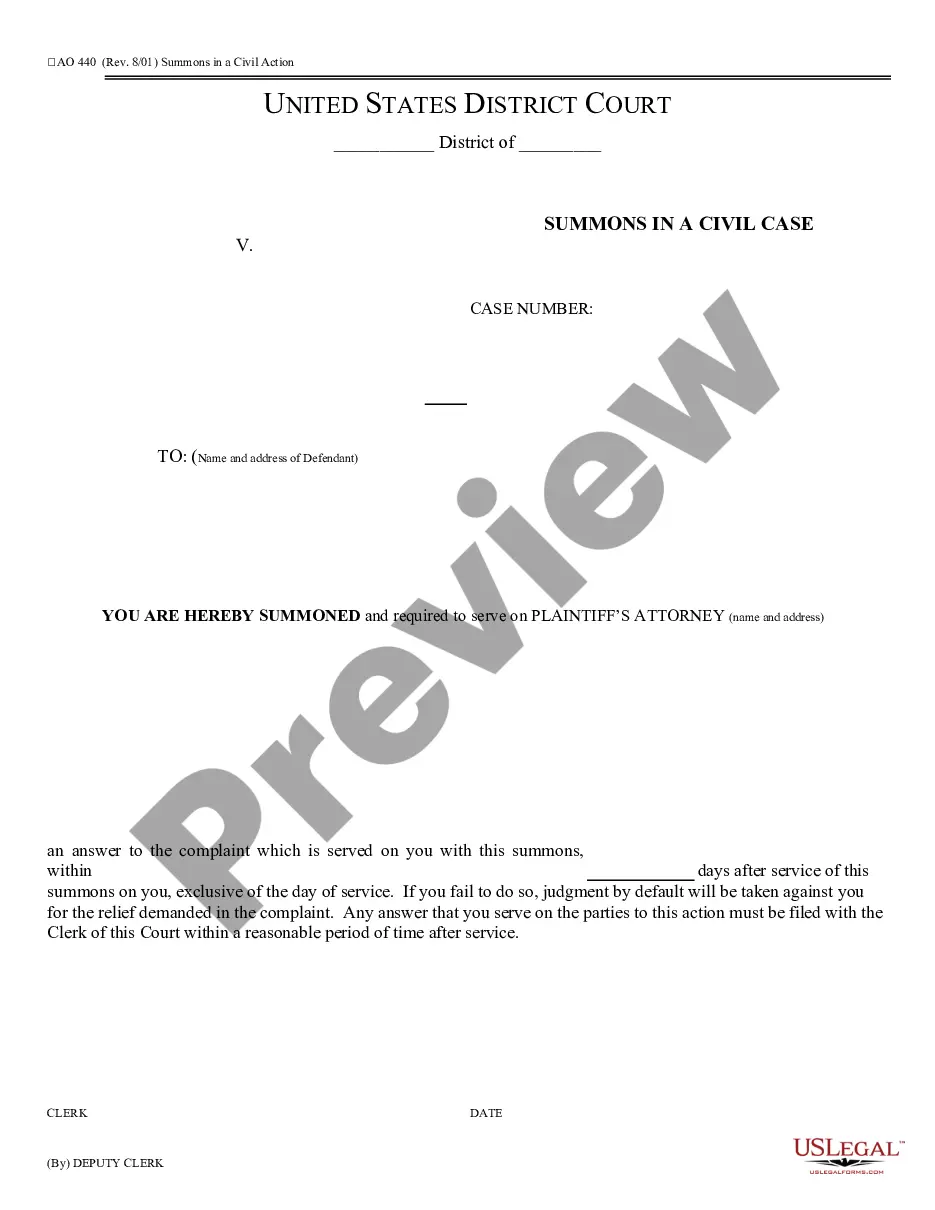
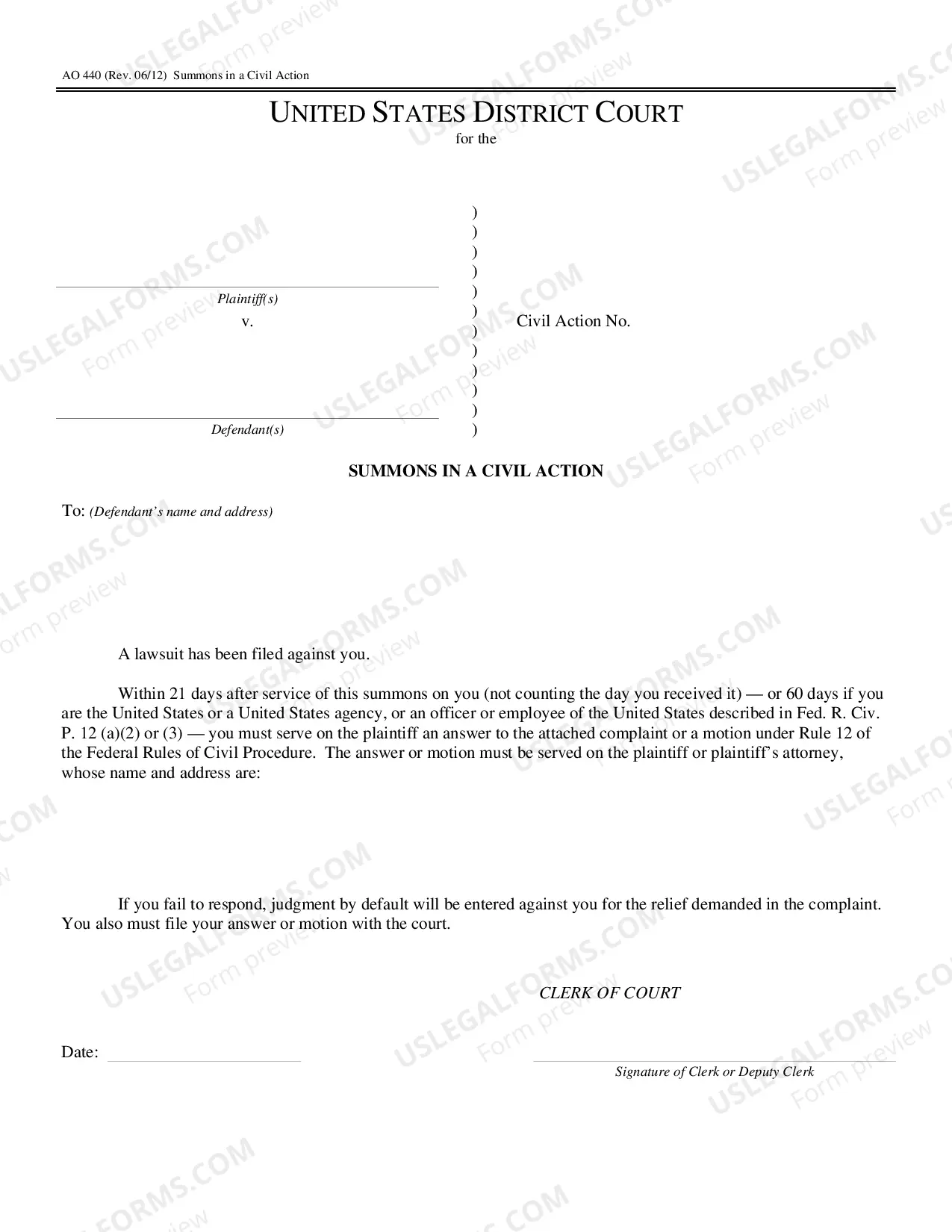
The AO-440 Summons in a Civil Action is a legal form used in federal court proceedings to formally notify a defendant that a lawsuit has been filed against them. It serves to inform the defendant about the nature of the claims and to compel them to respond. Unlike other forms that may apply in state courts or different contexts, this summons is specifically designed for federal civil actions and outlines the defendantâs obligations under federal law.
Main sections of this form
- Caption: Contains the title of the court, names of the parties, and case number.
- Notice to defendant: Informs the defendant of the legal action and their required response time.
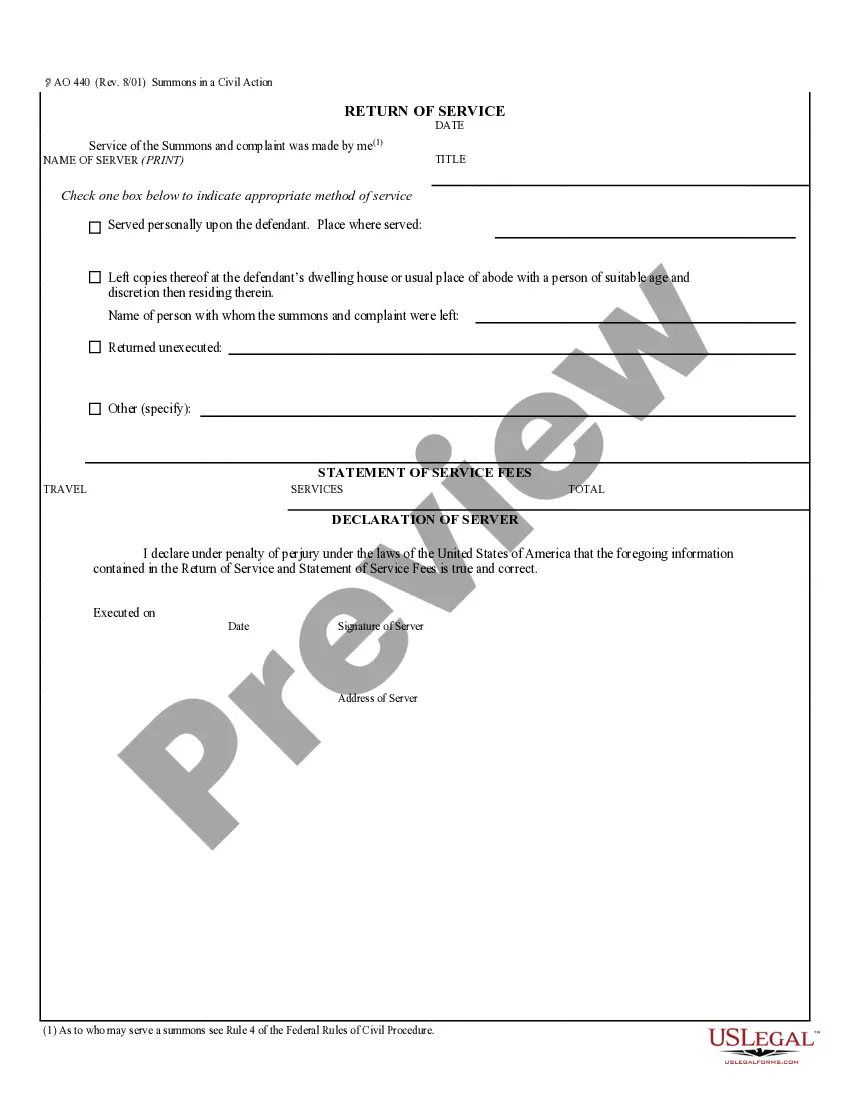
- Instructions for service: Guidelines on how the summons should be delivered to the defendant.
- Signature block: Requires the signature of the clerk of court to authenticate the summons.
- Return of service section: To confirm that the summons has been served on the defendant.
Situations where this form applies
This form is needed when initiating a civil lawsuit in federal court. It is typically used after the complaint has been filed and served to officially notify the defendant of the proceedings against them. Situations may include disputes over contracts, civil rights violations, or other matters arising under federal law.
Who needs this form
Individuals or entities involved in a federal civil lawsuit should use this form, including:
- Plaintiffs filing a complaint in federal court.
- Attorneys representing clients in federal civil matters.
- Parties who need to ensure formal notice is given to the opposing side.
How to prepare this document
Follow these steps to complete the AO-440 Summons in a Civil Action:
- Identify the caption: Fill in the court name, parties' names, and case number.
- Specify the defendant: Clearly mention the name and address of the defendant.
- Detail the service instructions: Indicate how the summons should be served.
- Add the clerkâs information: The form needs to be signed and dated by the court clerk.
- Complete the return of service: Include this section to confirm that the summons has been served.
Does this document require notarization?
This form does not typically require notarization unless specified by local law. Ensure that the completed summons is filed correctly with the court and served to the appropriate parties according to federal rules.
Get your form ready online
Our built-in tools help you complete, sign, share, and store your documents in one place.
Make edits, fill in missing information, and update formatting in US Legal Forms—just like you would in MS Word.
Download a copy, print it, send it by email, or mail it via USPS—whatever works best for your next step.
Sign and collect signatures with our SignNow integration. Send to multiple recipients, set reminders, and more. Go Premium to unlock E-Sign.
If this form requires notarization, complete it online through a secure video call—no need to meet a notary in person or wait for an appointment.
We protect your documents and personal data by following strict security and privacy standards.

Make edits, fill in missing information, and update formatting in US Legal Forms—just like you would in MS Word.

Download a copy, print it, send it by email, or mail it via USPS—whatever works best for your next step.

Sign and collect signatures with our SignNow integration. Send to multiple recipients, set reminders, and more. Go Premium to unlock E-Sign.

If this form requires notarization, complete it online through a secure video call—no need to meet a notary in person or wait for an appointment.

We protect your documents and personal data by following strict security and privacy standards.
Mistakes to watch out for
- Failing to include all partiesâ names in the caption.
- Incorrectly stating the time frame for the defendantâs response.
- Omitting the clerkâs signature, rendering the summons invalid.
- Not providing adequate instructions for service of the summons.
Benefits of completing this form online
- Convenience of downloading and printing the form at any time.
- Editability allows you to personalize the form according to your case.
- Reliability of forms drafted by licensed attorneys ensures legal compliance.
Quick recap
- The AO-440 Summons in a Civil Action is essential for notifying defendants in federal lawsuits.
- Correct completion is crucial for the enforceability of the summons.
- Always check for common mistakes to avoid delays in your case.
Looking for another form?


Form popularity
FAQ
1feff In civil lawsuits, a summons is issued to the defendant in the lawsuit, requiring his or her presence to defend a case. For example, if someone sues you in small claims court, the court sends out a summons requiring you as the defendant to attend the hearing at a specific place and time.
A civil summons is a serious matter. It is "notice" that you have been served with a lawsuit and that if you do not answer the summons and complaint (also served upon you at the time the summons was served) within the stated period of time, a default and default judgment could be entered against you in that matter.
Contact the clerk's office of the court where the lawsuit was filed. You'll find a phone number and address for the clerk's office on your summons. The clerk will be able to tell you exactly what documents you should file with your answer and whether any filing fee is required.
WHAT HAPPENS AFTER I FILE MY ANSWER? Your Answer will go into the court's file. You have to keep one copy and send a copy of it to the attorney on the other side. The Clerk will then give you a date to come back to court or tell you that you will get a date in the mail.
The summons is a written document that identifies the court in which the lawsuit will be heard, contains the signature and seal of the clerk and the court, and identifies the parties involved in the lawsuit.
Read the summons and make sure you know the date you must answer by. Read the complaint carefully. Write your answer. Sign and date the answer. Make copies for the plaintiff and yourself. Mail a copy to the plaintiff. File your answer with the court by the date on the summons.
A summons is a paper issued by a court informing a person that a complaint has been filed against her. It may be served by a sheriff or other authorized person for service of process, called a process server.