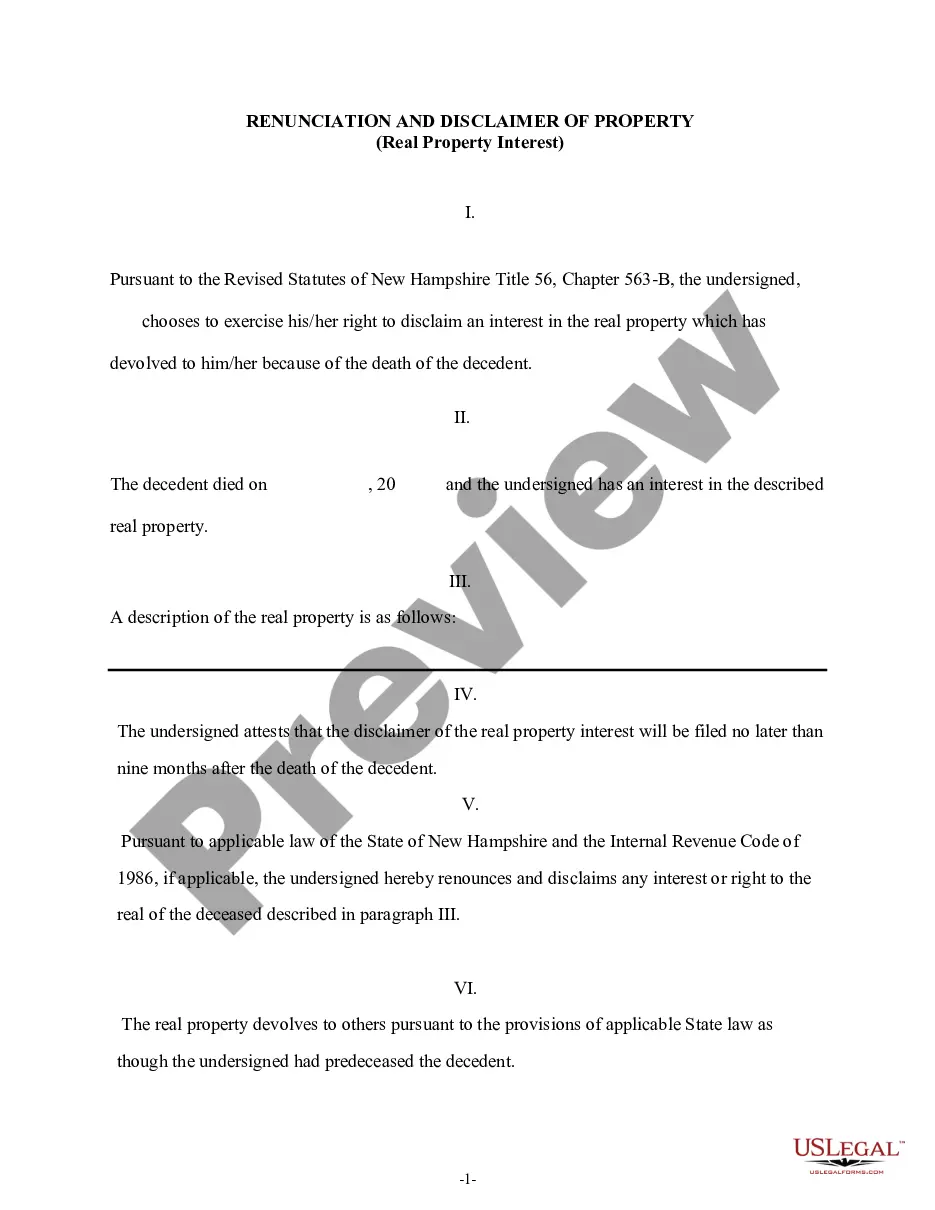
Federal Consumer Leasing Act Disclosure Form
Understanding this form
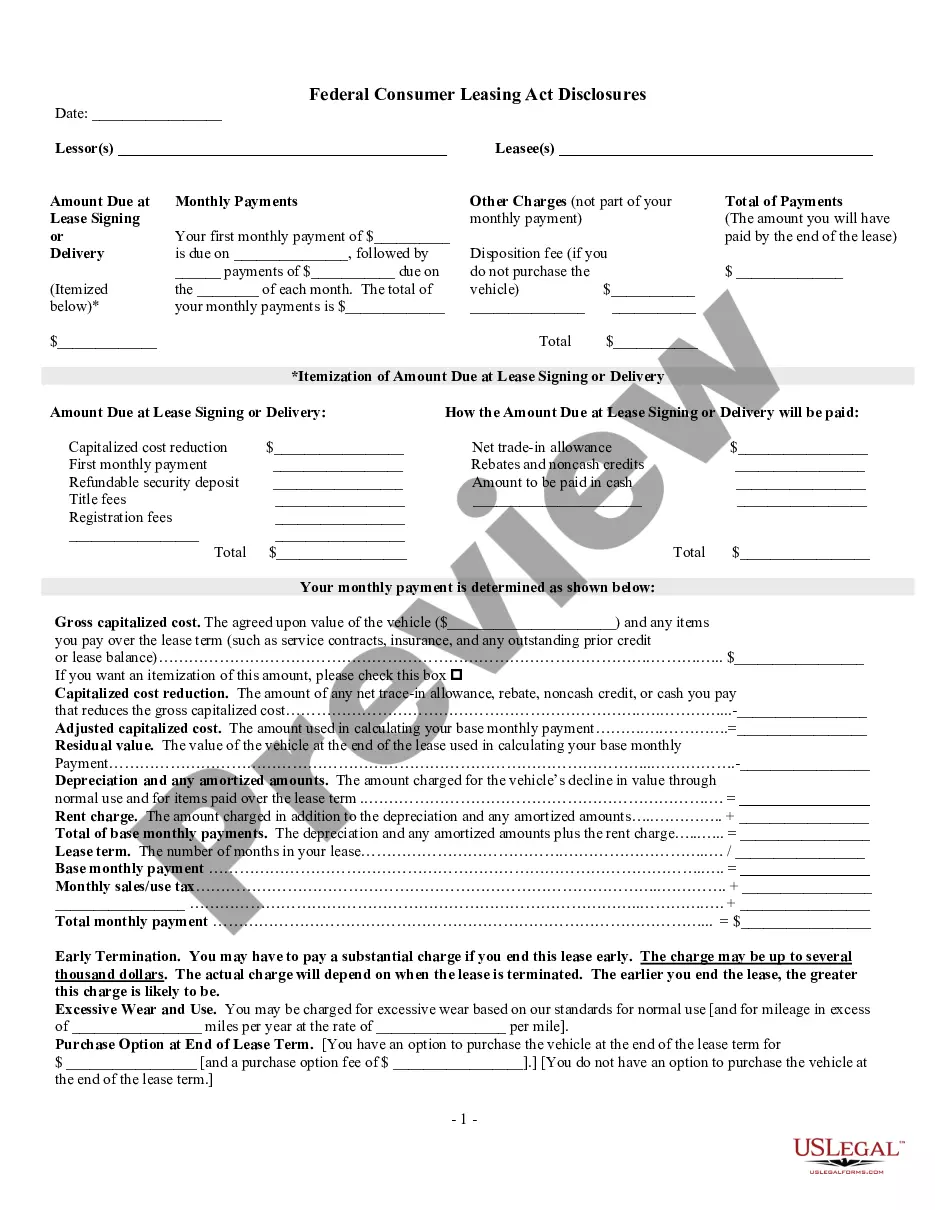
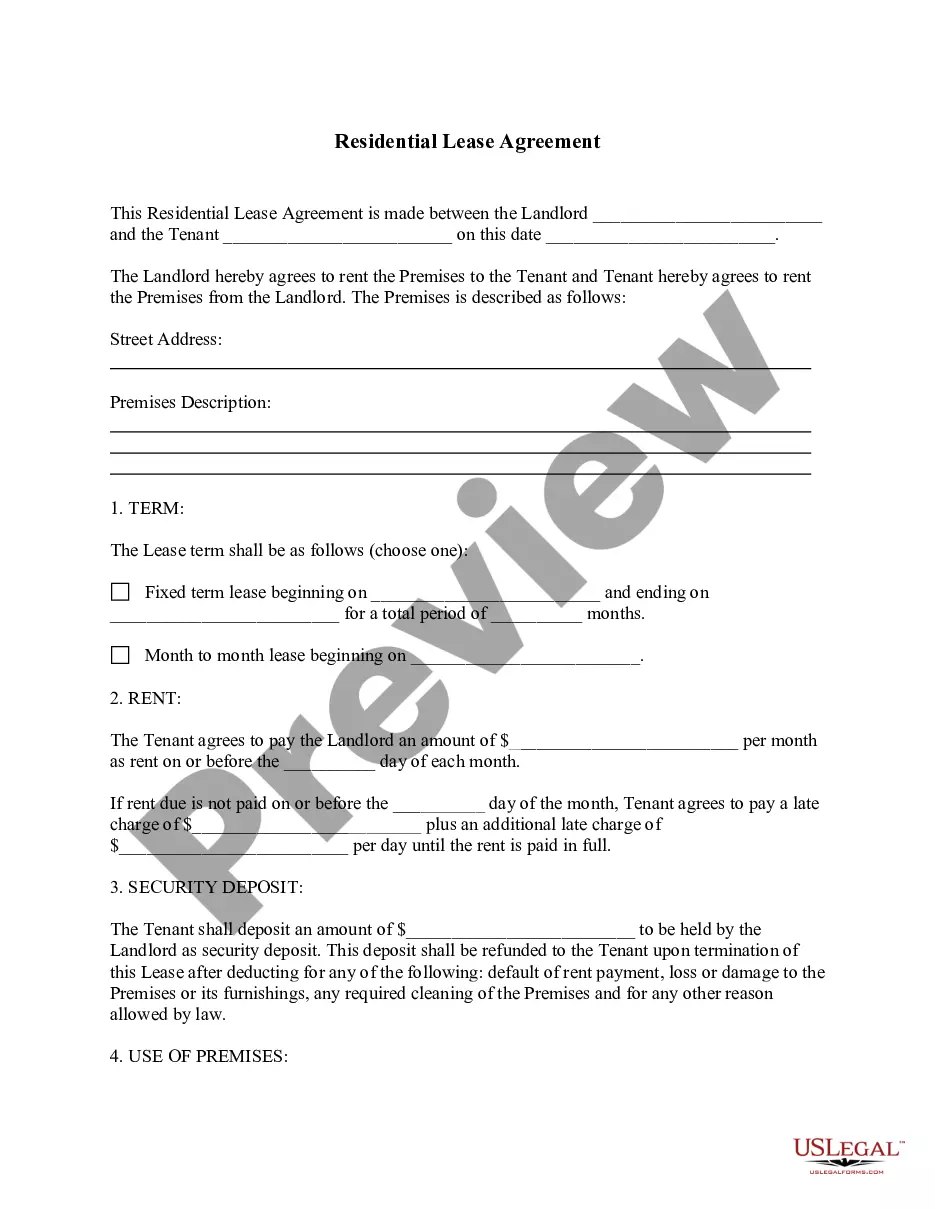
The Federal Consumer Leasing Act Disclosure Form is a legal document used to outline the terms and conditions of a vehicle lease. This form ensures that the lessor and lessee understand their rights and responsibilities by providing necessary disclosures required by federal law. Unlike other lease agreement forms, this specific disclosure form focuses on consumer leasing practices, including payment schedules, fees, and conditions surrounding early termination and vehicle return.
What’s included in this form
- Date of lease agreement
- Details of lessor and leasee
- Itemized amounts due at lease signing
- Monthly payment structure
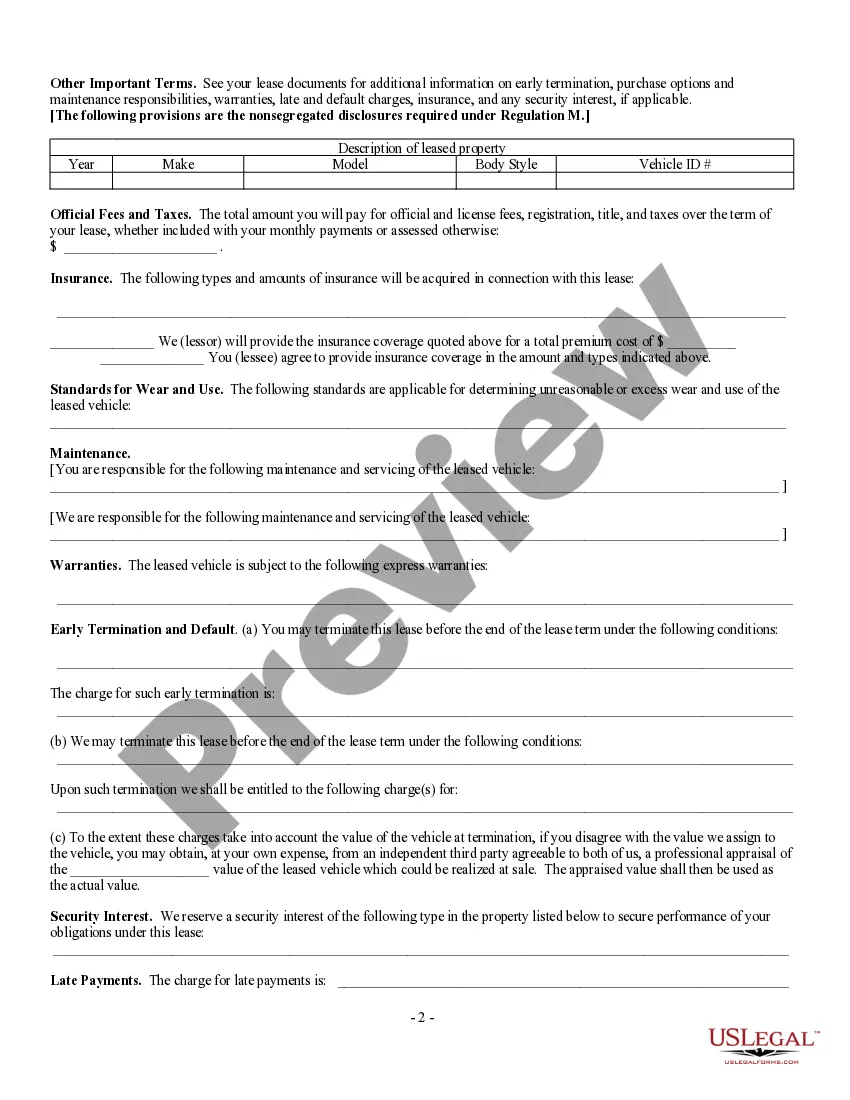
- Charges for early termination and excessive wear
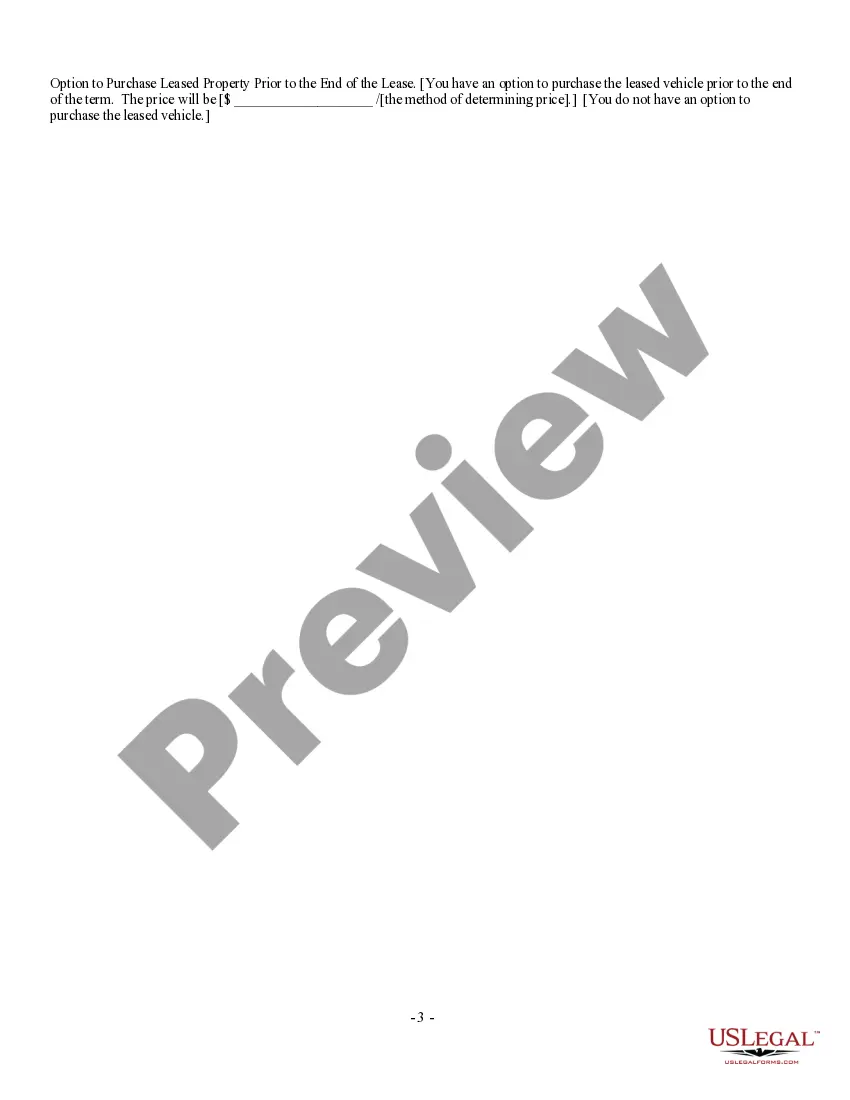
- Option to purchase vehicle at lease end
- Insurance requirements and maintenance responsibilities
Common use cases
This form should be used when entering into a lease agreement for a vehicle. It is particularly important when leasing a car or truck where transparency regarding the total cost and obligations is required. Use this form to comply with federal regulations and to ensure that both parties have a clear understanding of the leasing terms before signing the agreement.
Who should use this form
- Individuals leasing a vehicle
- Businesses leasing vehicles for corporate use
- Lessors needing to provide specific disclosures under federal law
- Consumers wanting clarity on lease terms and obligations
How to complete this form
- Enter the date of the lease agreement at the top of the form.
- Provide the names and contact information for both the lessor and leasee.
- Detail the itemized amounts due at the time of lease signing, including any capitalized cost reductions and security deposits.
- Outline the payment structure, noting the first monthly payment due date and the total number of payments.
- Specify any additional charges, including early termination fees and excessive wear costs.
- Review and confirm insurance and maintenance responsibilities stated in the lease.
Does this document require notarization?
This form usually doesn’t need to be notarized. However, local laws or specific transactions may require it. Our online notarization service, powered by Notarize, lets you complete it remotely through a secure video session, available 24/7.
Get your form ready online
Our built-in tools help you complete, sign, share, and store your documents in one place.
Make edits, fill in missing information, and update formatting in US Legal Forms—just like you would in MS Word.
Download a copy, print it, send it by email, or mail it via USPS—whatever works best for your next step.
Sign and collect signatures with our SignNow integration. Send to multiple recipients, set reminders, and more. Go Premium to unlock E-Sign.
If this form requires notarization, complete it online through a secure video call—no need to meet a notary in person or wait for an appointment.
We protect your documents and personal data by following strict security and privacy standards.

Make edits, fill in missing information, and update formatting in US Legal Forms—just like you would in MS Word.

Download a copy, print it, send it by email, or mail it via USPS—whatever works best for your next step.

Sign and collect signatures with our SignNow integration. Send to multiple recipients, set reminders, and more. Go Premium to unlock E-Sign.

If this form requires notarization, complete it online through a secure video call—no need to meet a notary in person or wait for an appointment.

We protect your documents and personal data by following strict security and privacy standards.
Common mistakes to avoid
- Failing to accurately calculate and disclose all fees associated with the lease.
- Neglecting to review insurance requirements that may leave lessees underinsured.
- Not understanding the terms for vehicle return and charges for excessive wear.
- Omitting clear definitions of payment structures and due dates.
Benefits of completing this form online
- Convenient access and downloadable format for easy management.
- Editable fields allow users to personalize information quickly.
- Ensures compliance with federal regulations, reducing legal risks.
- Simplifies the process of leasing a vehicle by clarifying key financial obligations.
What to keep in mind
- Always use the Federal Consumer Leasing Act Disclosure Form to ensure compliance and transparency in vehicle leasing.
- Clearly outline and understand all financial obligations before signing the lease.
- Address insurance and maintenance responsibilities to avoid future disputes.
- Review state-specific regulations if applicable.
Key terms explained
- Lessor: The party that leases the vehicle to the lessee.
- Lessee: The individual or business leasing the vehicle.
- Capitalized Cost: The agreed-upon price of the leased vehicle, which may include additional items that affect lease payments.
- Residual Value: The expected value of the vehicle at the end of the lease term.
Looking for another form?








Form popularity
FAQ
Regulation M, Consumer Leasing, implements the Consumer Leasing Act (15 USC 1667 et seq.), which was enacted in 1976. A major purpose of the act is to ensure that consumers receive meaningful and accurate disclosure of the terms of a lease before entering into a contract to lease personal property.
"Mineral rights" entitle a person or organization to explore and produce the rocks, minerals, oil and gas found at or below the surface of a tract of land. The owner of mineral rights can sell, lease, gift or bequest them to others individually or entirely.
The OCC regulation treats a lease as a loan or extension of credit, and paragraph (iii)(A) is intended to cover most credit transactions.
A mineral interest owner also possesses the right to receive lease bonuses, delay rental payments, shut-in payments and royalties. A royalty interest, on the other hand, is the property interest created that entitles the owner to receive a share of the production.
Selling means that you can receive a large cash payment upfront, regardless of minerals found on your land. A company who leases your land may deplete the mineral supply substantially before returning the land back to you. Selling reduces overall risk of handling mineral rights.
A mineral lease is a property conveyance because the mineral owner grants a transfer of possession, easements or other property rights through the document.
Leases are contracts in which the property/asset owner allows another party to use the property/asset in exchange for money or other assets. The two most common types of leases in accounting are operating and financing (capital leases). Advantages, disadvantages, and examples. Lessor vs Lessee.
A consumer lease is a lease contract where someone (a lessee) is leasing goods for personal use and either has an option to purchase the leased goods, or the term of the lease is over 1 year.
Mineral Leasing Act of 1920, as amended (30 U.S.C. 181 et seq.) authorizes and governs leasing of public lands for development of deposits of coal, oil, gas and other hydrocarbons, sulphur, phosphate, potassium and sodium.