License and Development Agreement for Online Game Site
What is this form?
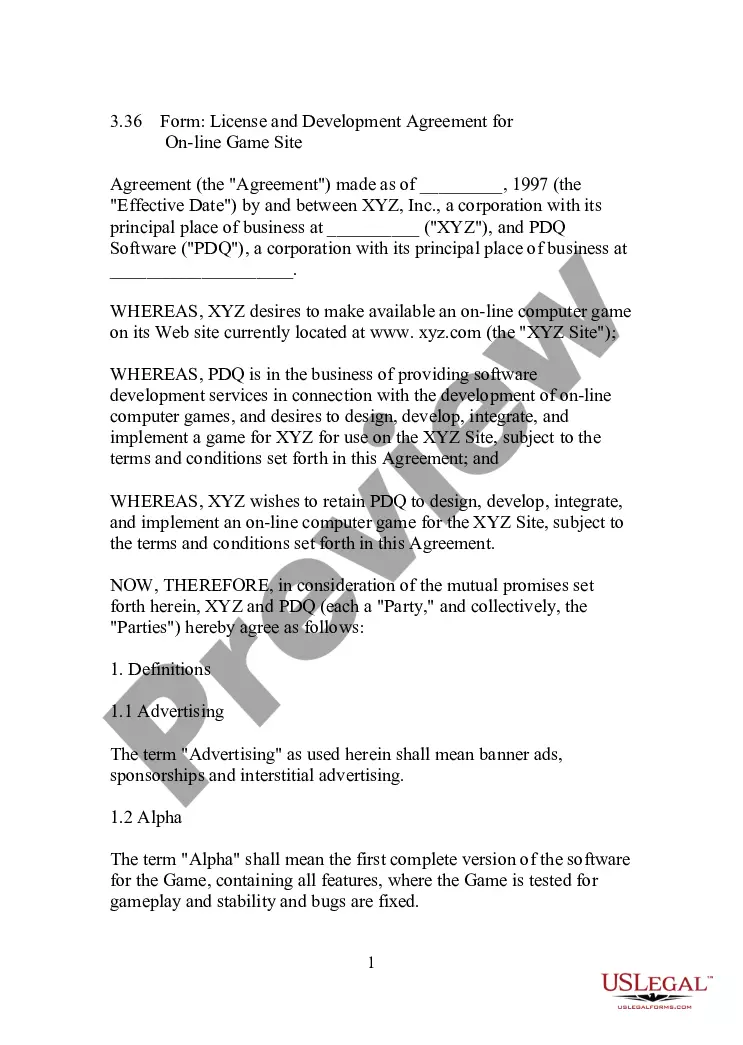
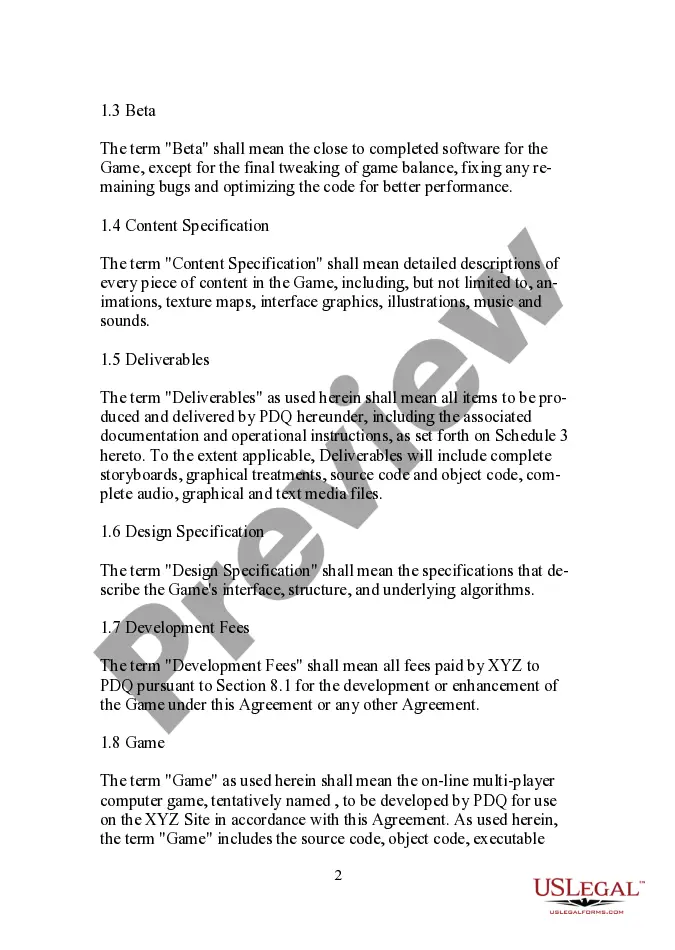
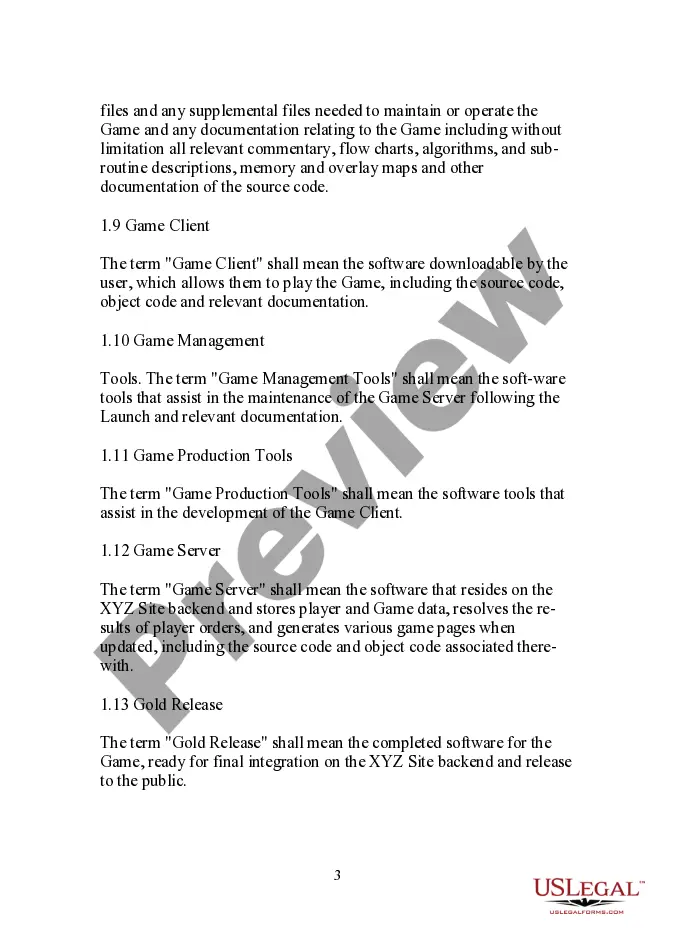
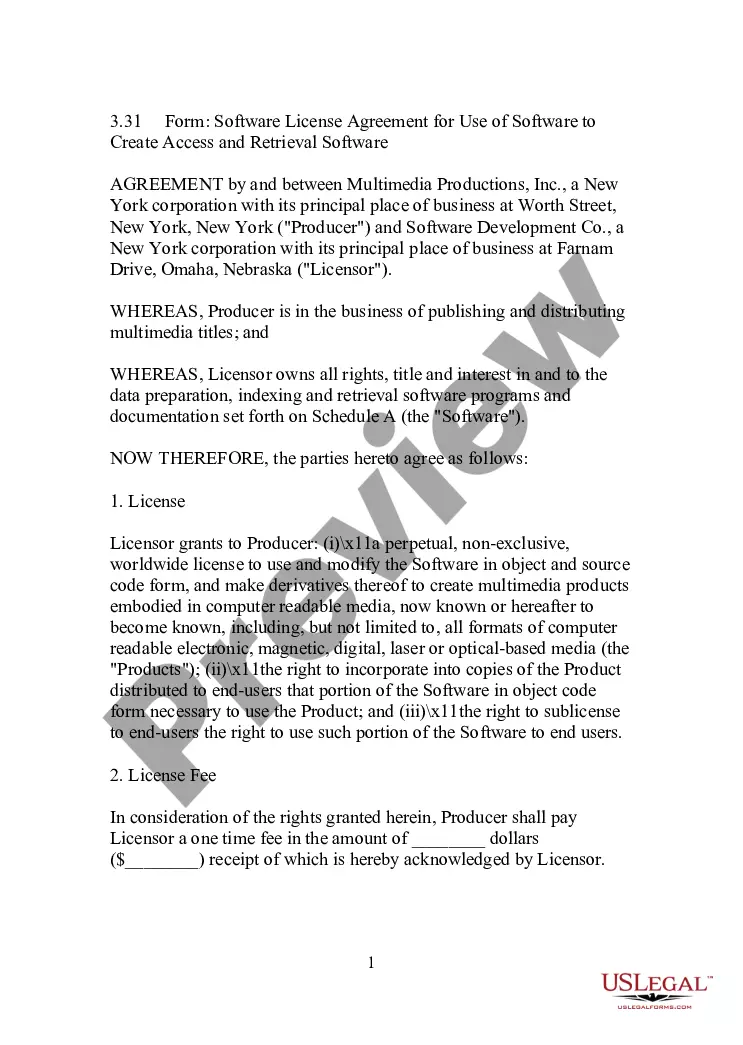
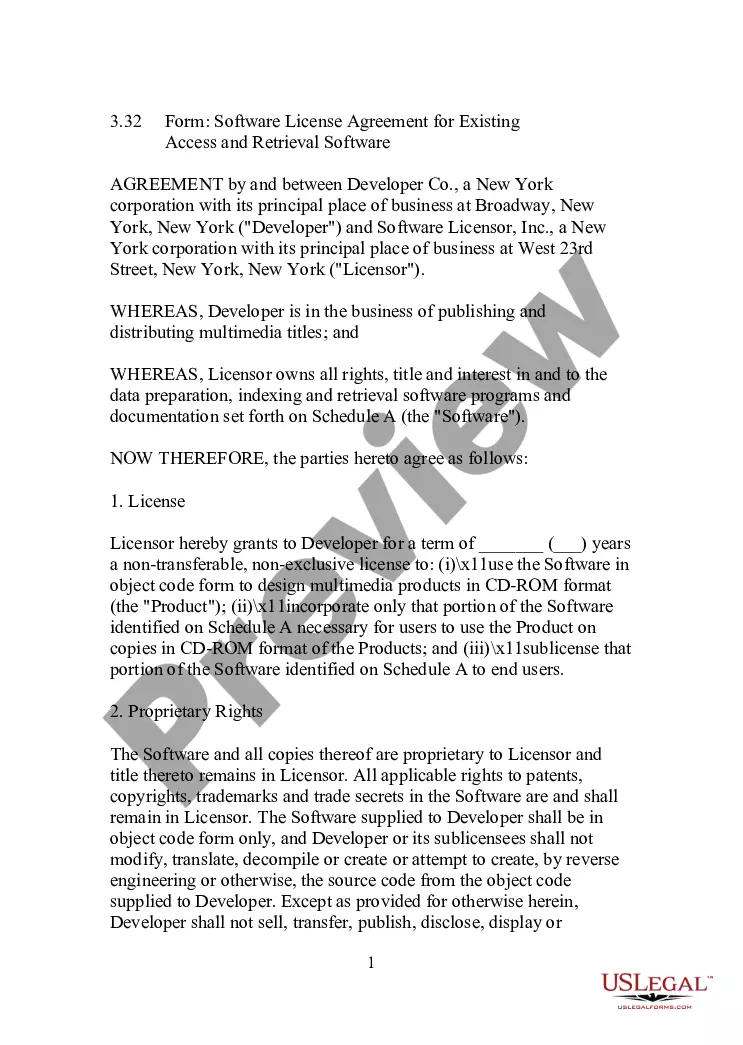
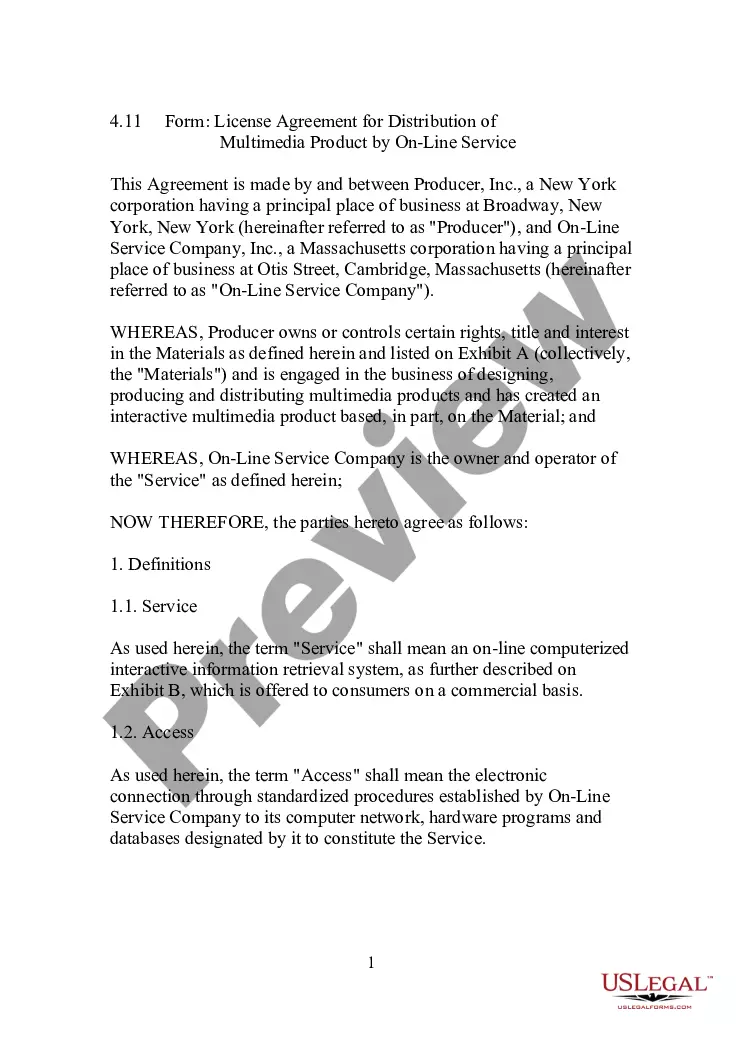
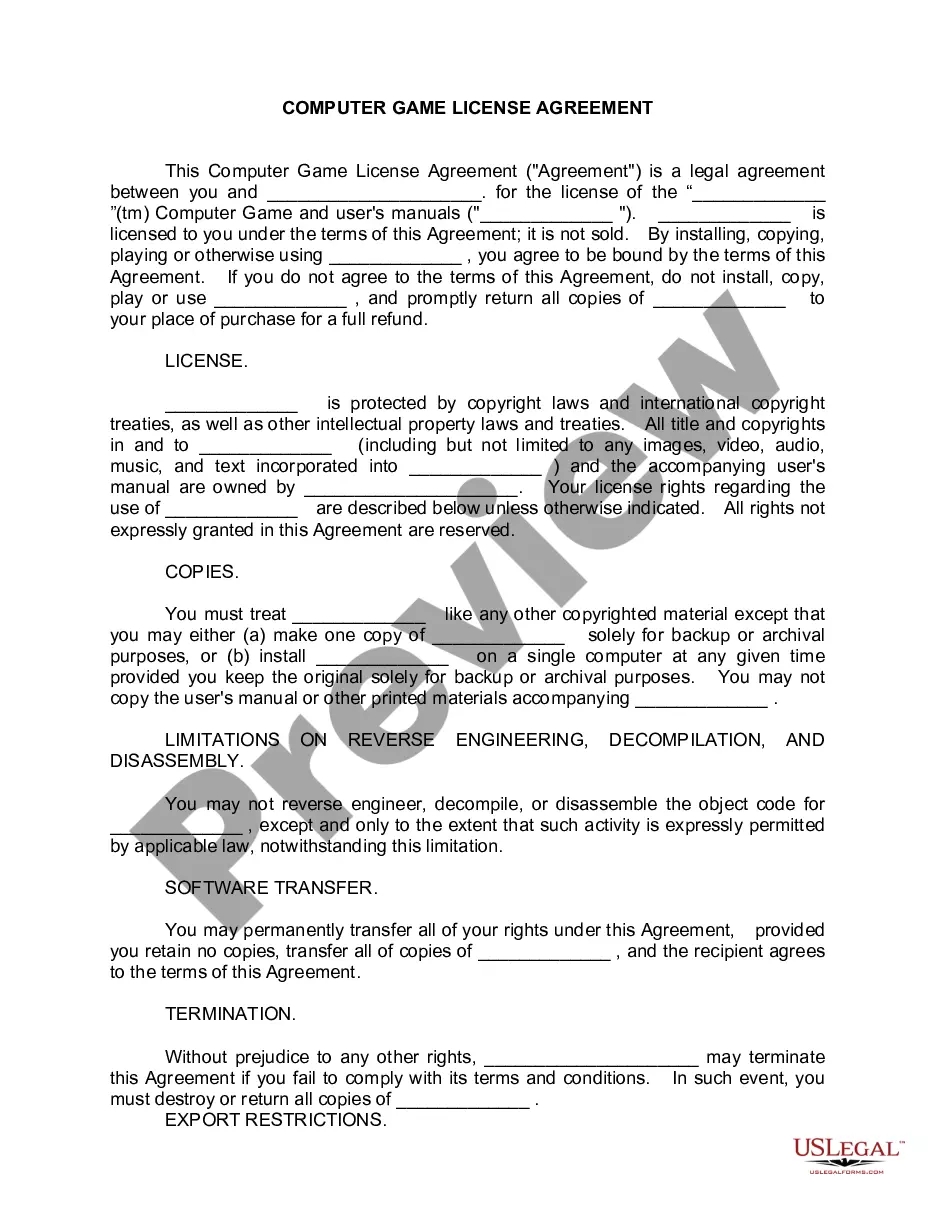
The License and Development Agreement for Online Game Site is a legal document outlining the terms under which a corporation licenses software development services for an online gaming platform. This form establishes the rights and responsibilities of both parties involved, ensuring that they are clear about the developmental process, ownership terms, and any compensation involved. Unlike generic contracts, this agreement is specifically tailored for the gaming industry and addresses unique components such as game development milestones and technical specifications.
Key parts of this document
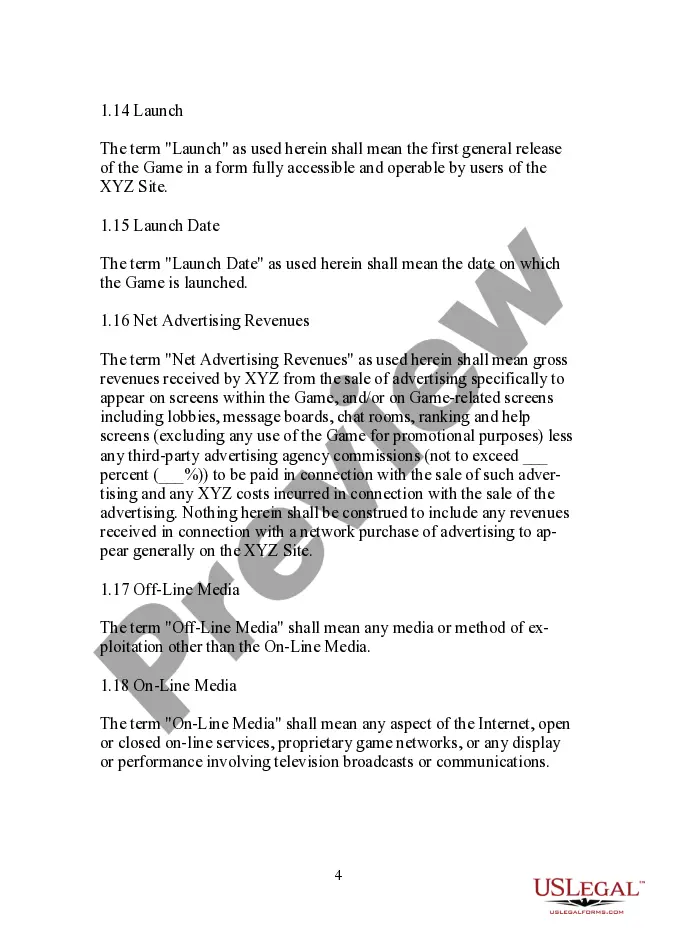
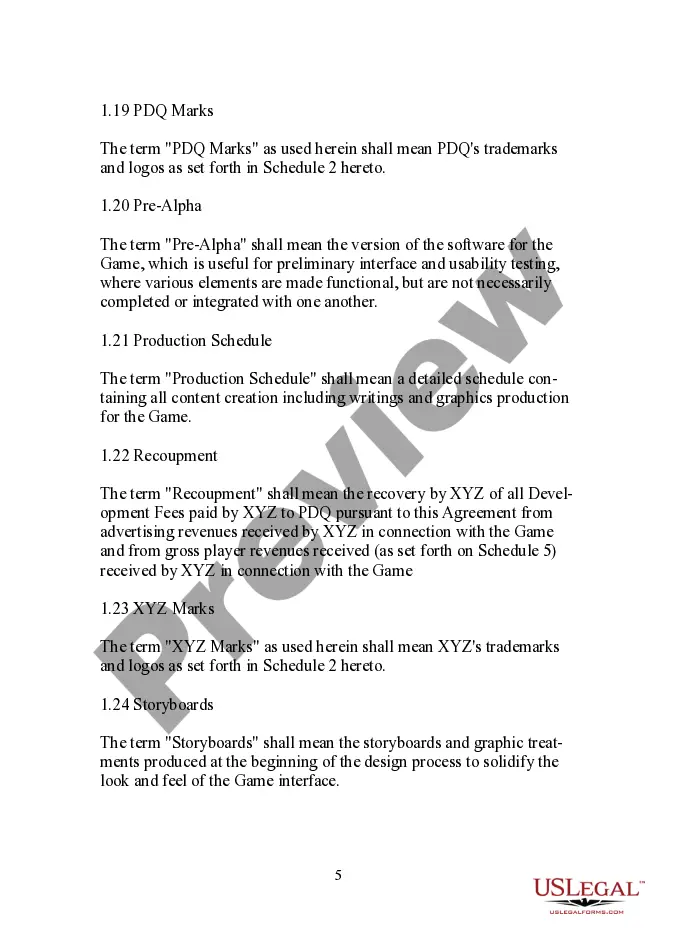
- Definitions: Key defined terms relevant to the agreement, including "Game," "Deliverables," and "Development Fees."
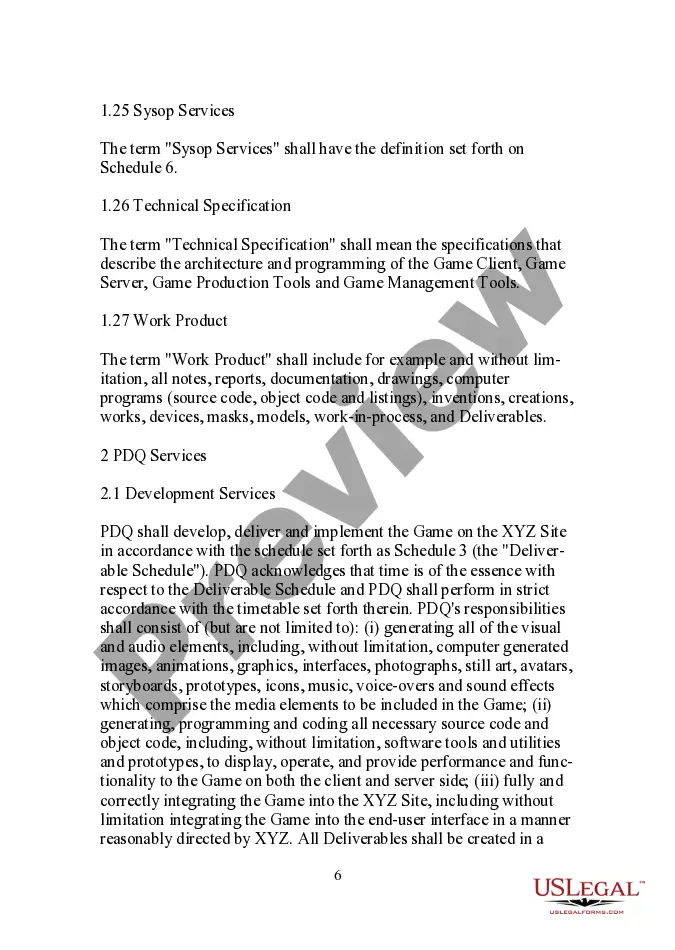
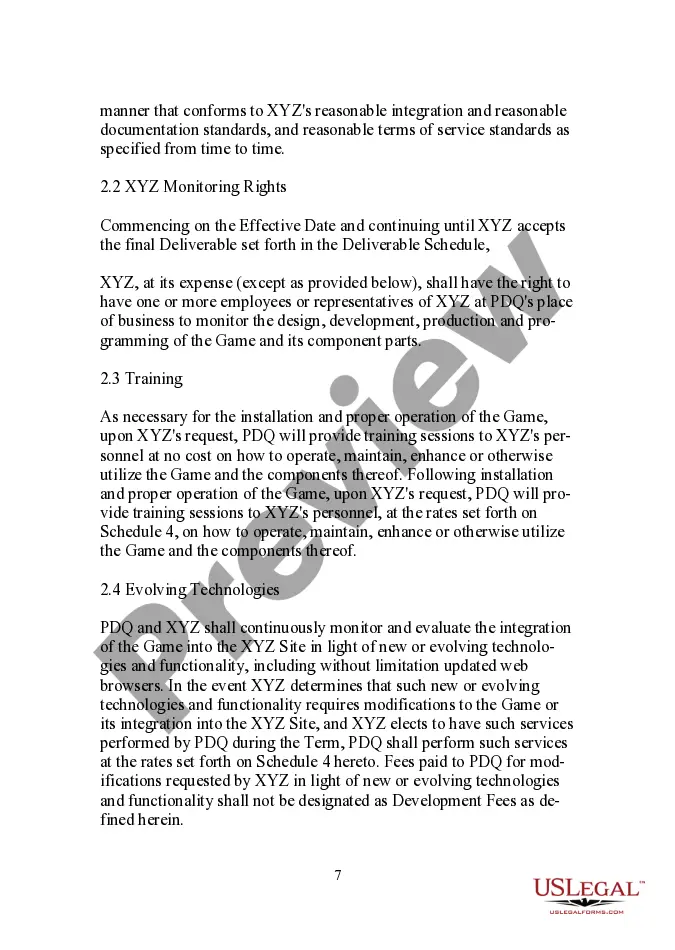
- PDQ Services: Outlines the responsibilities of the developer, including the creation and integration of the game into the host's site.
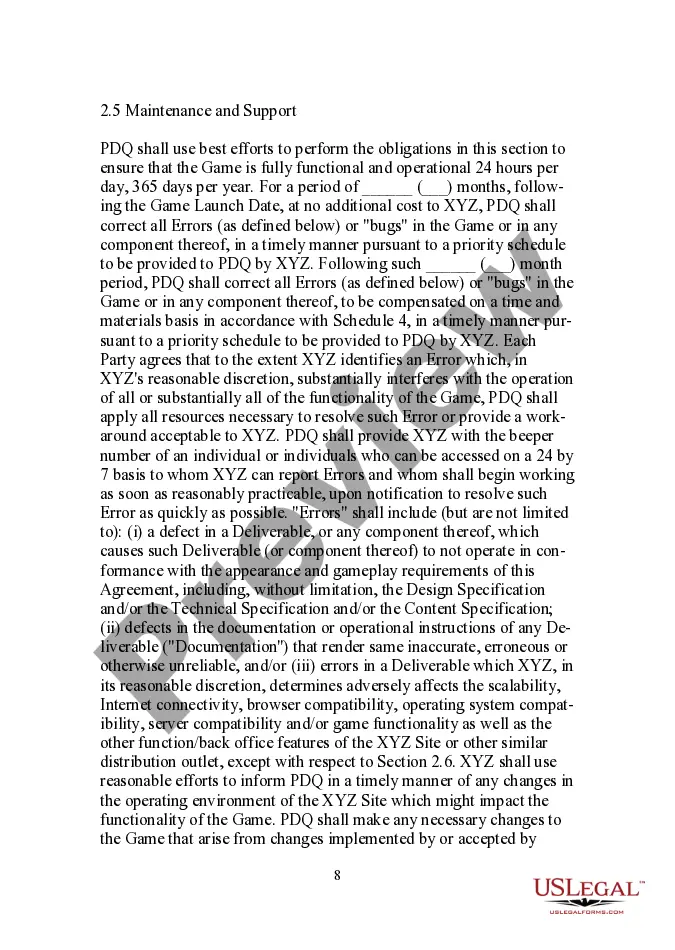
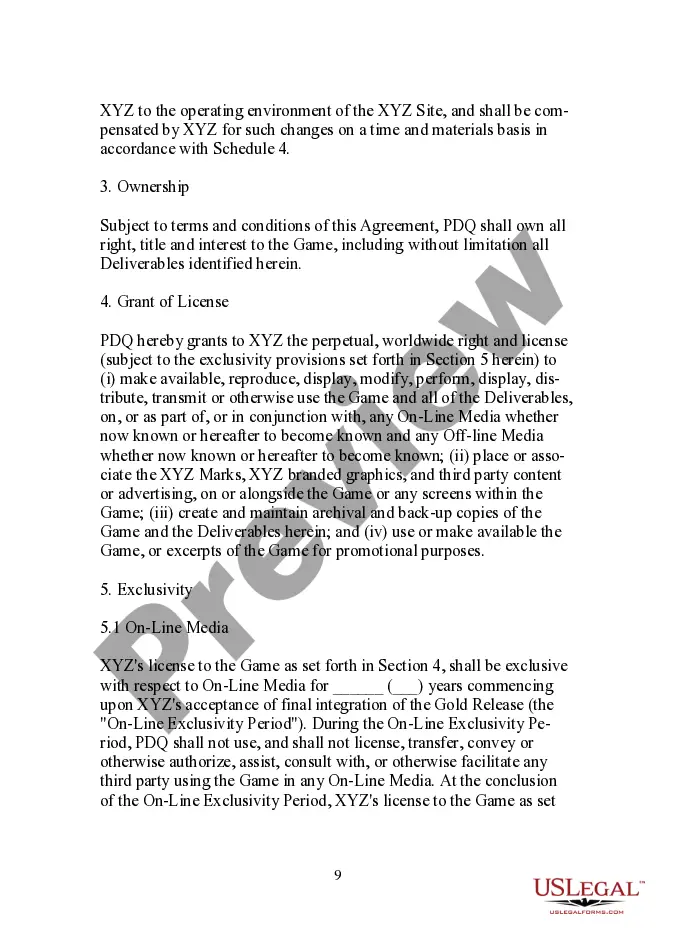
- Ownership Rights: States that PDQ retains ownership of the developed game, while granting licenses to XYZ for its use.
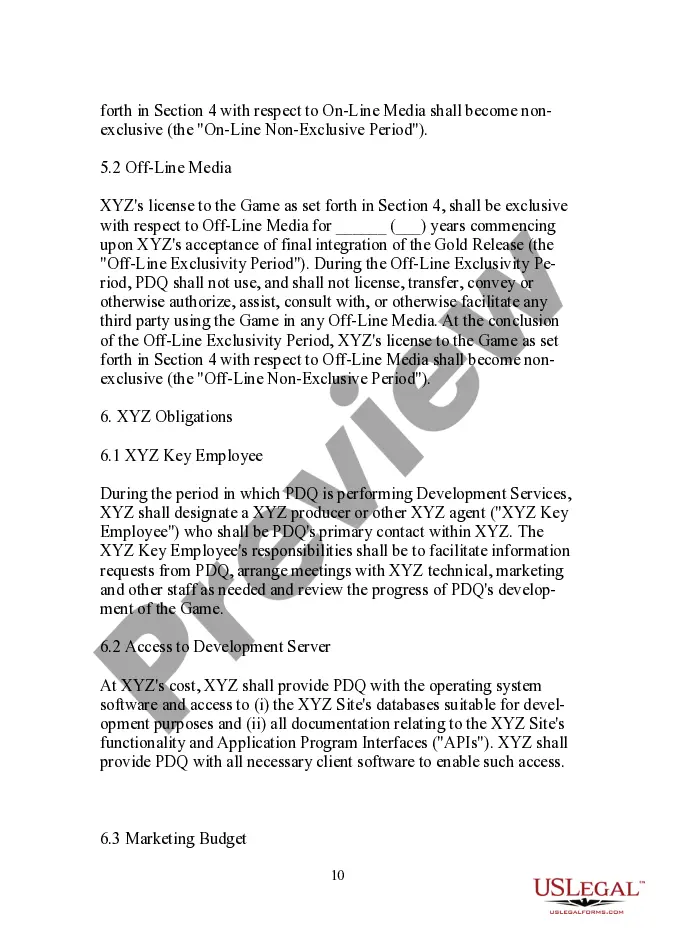
- Exclusivity Clauses: Details the exclusivity period regarding the use of the game in online and offline media.
- Fees and Payment Structure: Specifies development fees, marketing budgets, and revenue-sharing agreements regarding advertising income.
- Termination Conditions: Conditions under which the agreement can be terminated, including breach of contract provisions.

When to use this document
This form is essential when a company, intending to host or develop an online game, seeks to formalize a partnership with a software developer. Use this agreement to set clear expectations and legal frameworks for projects involving game design, development, marketing, and revenue sharing. It is applicable in scenarios such as launching a new online gaming platform, upgrading an existing game, or collaborating on a new gaming project with a development firm.
Who this form is for
- Gaming companies looking to partner with software developers for creating online games.
- Software development firms that specialize in game design and are entering contracts with gaming companies.
- Entrepreneurs in the gaming industry seeking to outline their business relationships with developers clearly.
- Marketing teams involved in the promotion and monetization strategies for online gaming platforms.
Steps to complete this form
- Identify the parties involved, including the legal names and business addresses of both XYZ, Inc., and PDQ Software.
- Specify the details of the online game project, including the expected deliverables and timelines.
- Outline the financial terms, including development fees, marketing budgets, and revenue-sharing percentages.
- Review and insert any specific clauses pertaining to exclusivity periods and termination conditions that fit your needs.
- Sign and date the form to signify agreement from both parties, ensuring that it is stored securely for future reference.
Does this form need to be notarized?
This form usually doesn’t need to be notarized. However, local laws or specific transactions may require it. Our online notarization service, powered by Notarize, lets you complete it remotely through a secure video session, available 24/7.
Get your form ready online
Our built-in tools help you complete, sign, share, and store your documents in one place.
Make edits, fill in missing information, and update formatting in US Legal Forms—just like you would in MS Word.
Download a copy, print it, send it by email, or mail it via USPS—whatever works best for your next step.
Sign and collect signatures with our SignNow integration. Send to multiple recipients, set reminders, and more. Go Premium to unlock E-Sign.
If this form requires notarization, complete it online through a secure video call—no need to meet a notary in person or wait for an appointment.
We protect your documents and personal data by following strict security and privacy standards.

Make edits, fill in missing information, and update formatting in US Legal Forms—just like you would in MS Word.

Download a copy, print it, send it by email, or mail it via USPS—whatever works best for your next step.

Sign and collect signatures with our SignNow integration. Send to multiple recipients, set reminders, and more. Go Premium to unlock E-Sign.

If this form requires notarization, complete it online through a secure video call—no need to meet a notary in person or wait for an appointment.

We protect your documents and personal data by following strict security and privacy standards.
Typical mistakes to avoid
- Failing to clearly define deliverables and timelines, which can lead to misunderstandings and disputes.
- Not including an exclusivity clause, potentially resulting in conflicts over the use of developed content.
- Neglecting to specify payment terms, leading to delays in compensation or incomplete financial agreements.
- Assuming verbal agreements or implied understandings hold legal weight without written documentation.
Why complete this form online
- Convenient access to a ready-to-use template that can be quickly modified to fit your needs.
- Editability allows for easy adjustments to the terms and conditions as negotiations proceed.
- Reliable format ensures compliance with general licensing and software development standards.
Legal use & context
- This agreement serves as a legally binding contract detailing the obligations of both parties in relation to game development.
- Both parties must adhere to the terms outlined to avoid breach of contract claims.
- Consideration of local laws is critical, especially regarding intellectual property and digital rights management.
Looking for another form?
Form popularity
FAQ
A license agreement is a business contract between two parties. The licensor (the seller of the license) owns the asset being licensed and the licensee (the buyer) pays for the right to use the license. The licensee pays royalties to the owner in exchange for the right to sell the product or use the technology.
The 3 P's of collegiate licensing are protection, promotion, and profit.
A license agreement is a business contract between two parties. The licensor (the seller of the license) owns the asset being licensed and the licensee (the buyer) pays for the right to use the license. The licensee pays royalties to the owner in exchange for the right to sell the product or use the technology.
Download a template for a licensing agreement. Choose your role as the licensor or licensee. Define the license(s) in the agreement. Decide whether the license is exclusive or not. Settle the matter of fees and payment schedule. Add a renewal date and rules.
An example of a licensing agreement is a contract between the copyright holders of software and another company, allowing the latter to use the computer software for their daily business operations.
What is a Licensing Agreement? A licensing agreement is a contract between two parties (the licensor and licensee) in which the licensor grants the licensee the right to use the brand name, trademark, patented technology, or ability to produce and sell goods owned by the licensor.
The data license must also establish who is permitted to use the licensed data. For example, the license agreement may identify the people who are permitted to use the data or the devices on which the data may be used or may specify the maximum number of such users or devices.
Exclusive or non-exclusive. In an exclusive license, the intellectual property holder is licensing the work only to one person, for that particular use/territory. Territory. Use. Attribution. Derivative works. Confidentiality. Time frame. Termination.