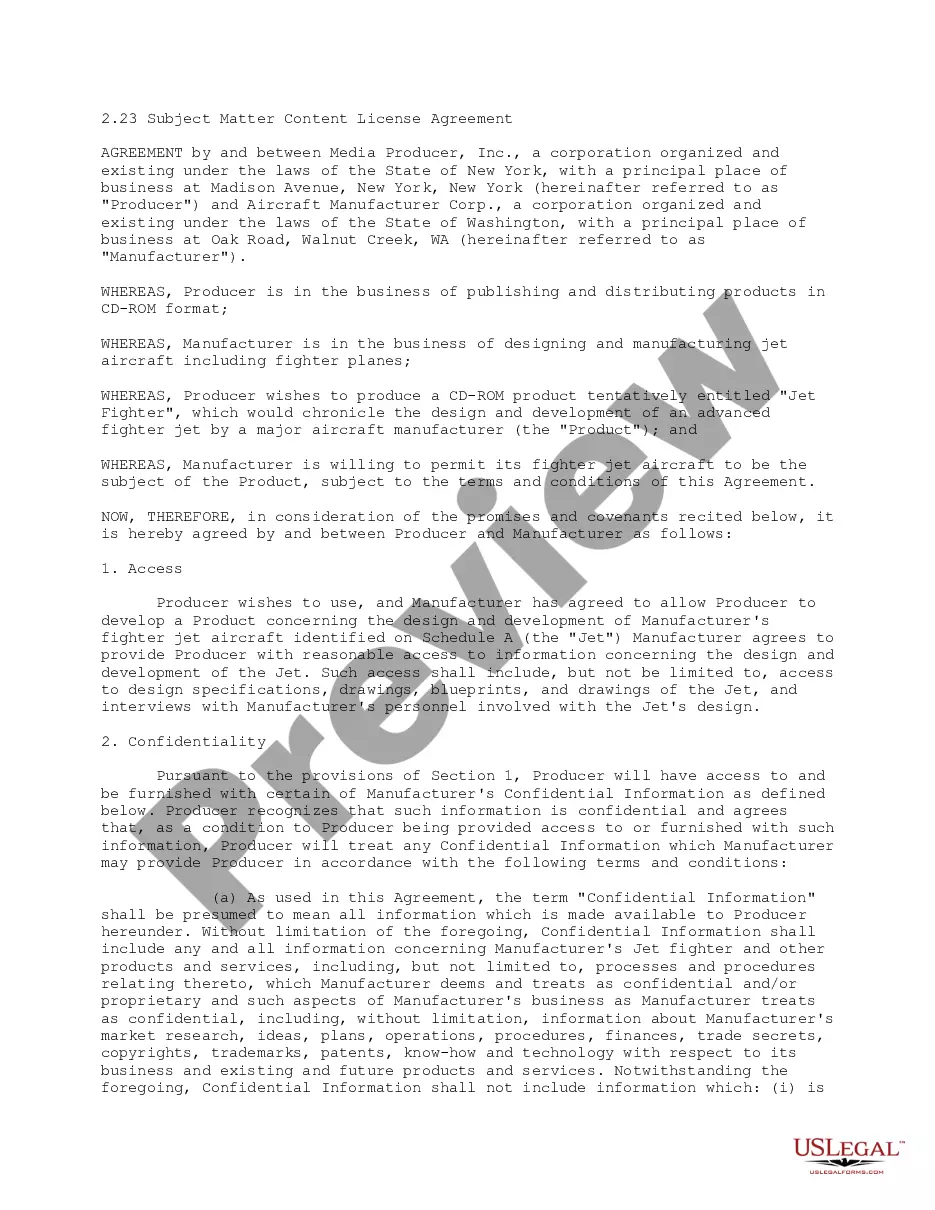
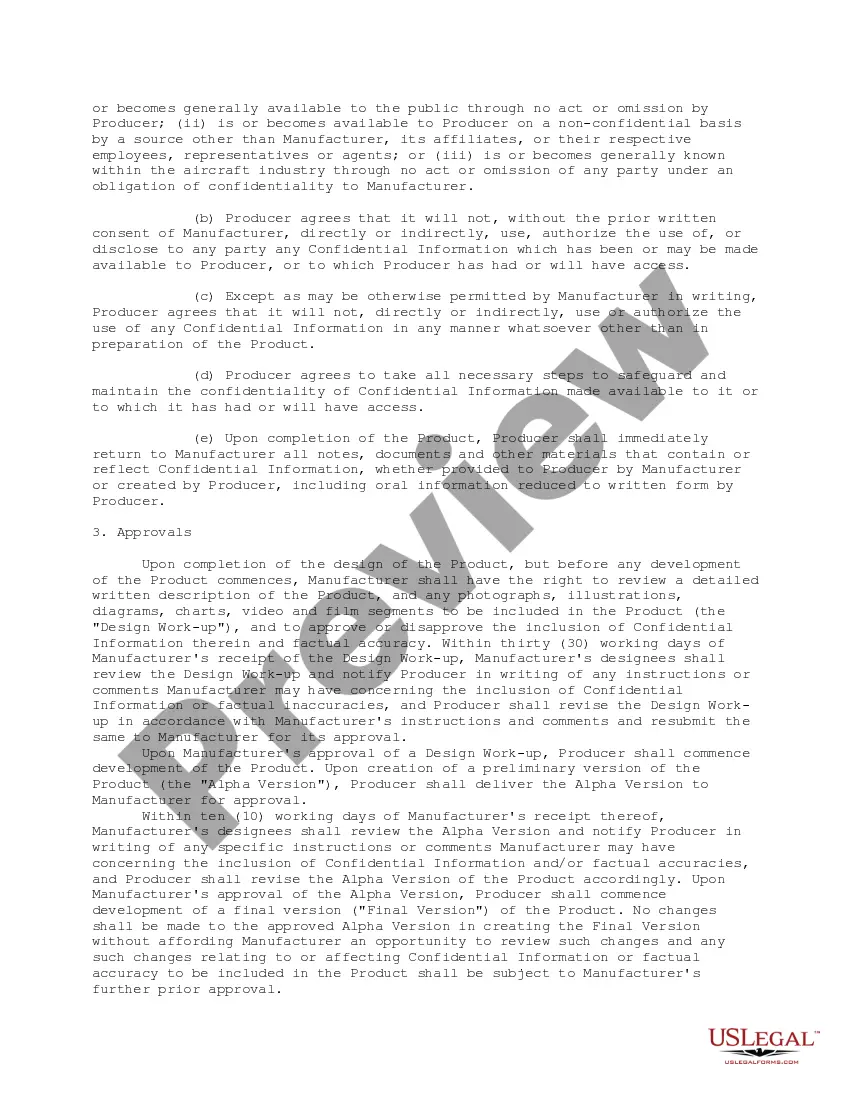
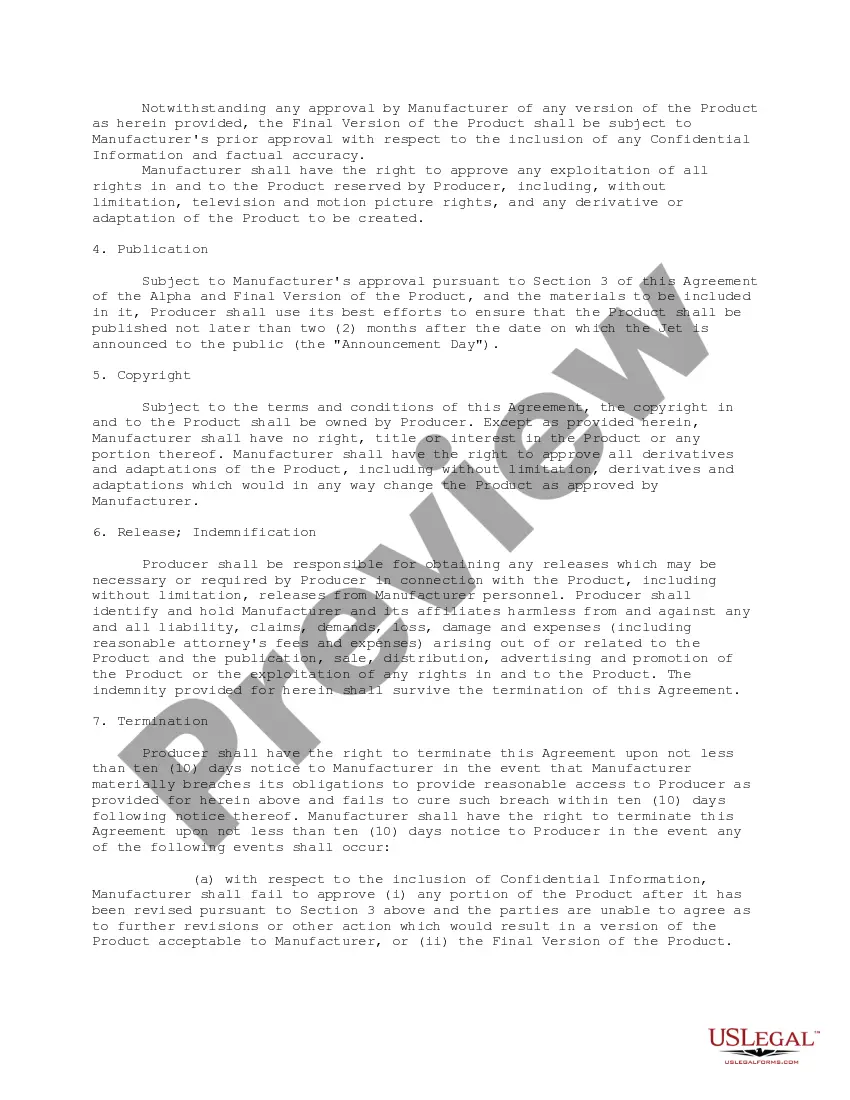
Subject Matter Content License Agreement
Understanding this form
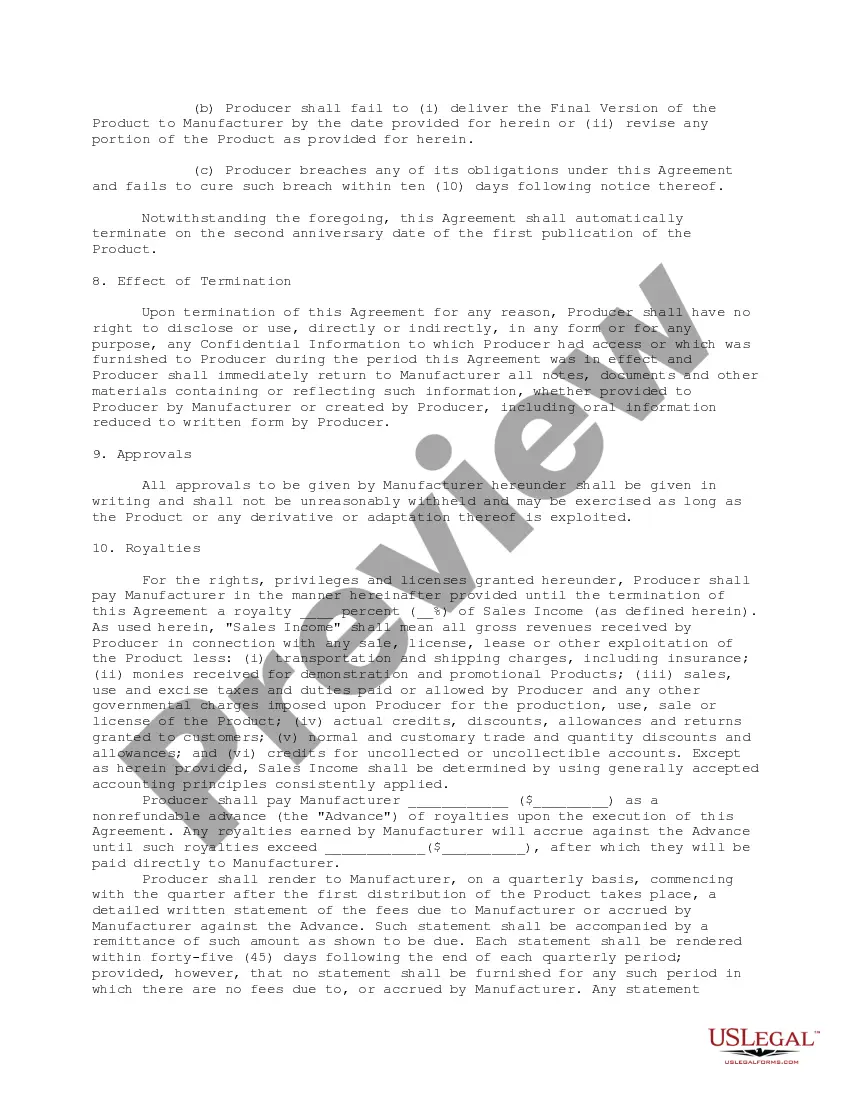
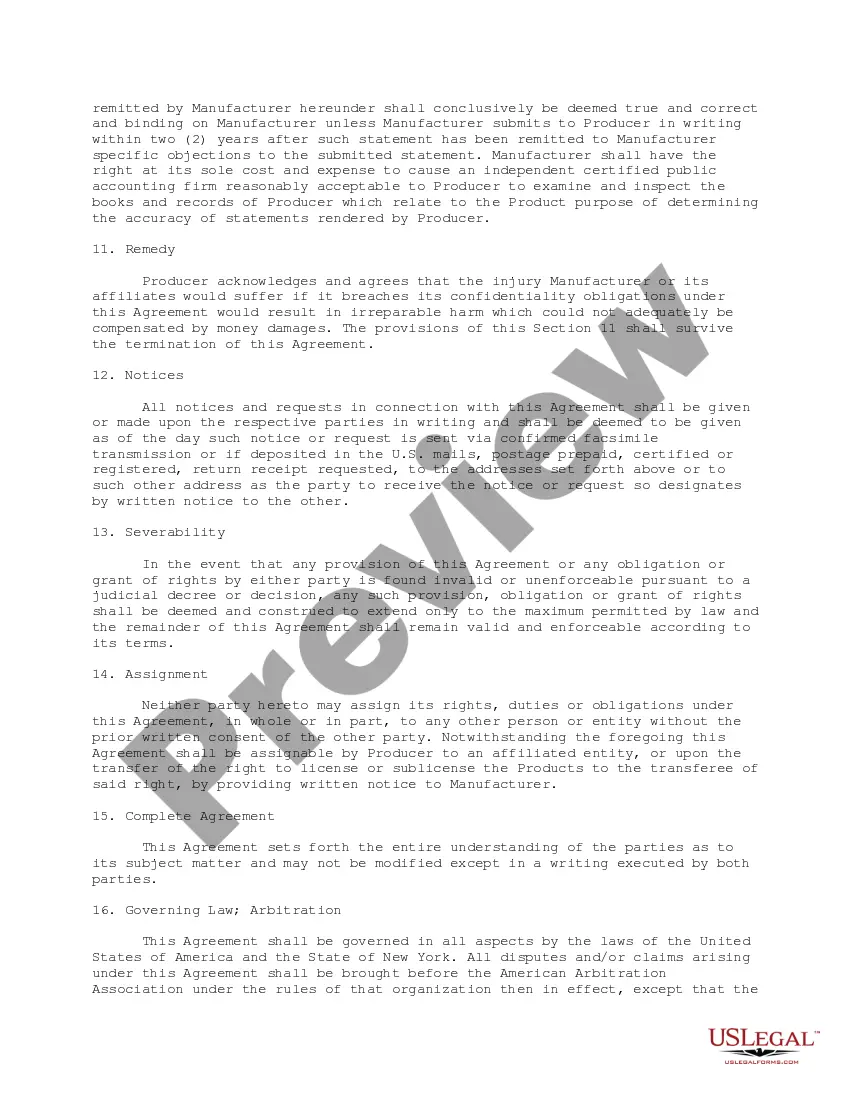
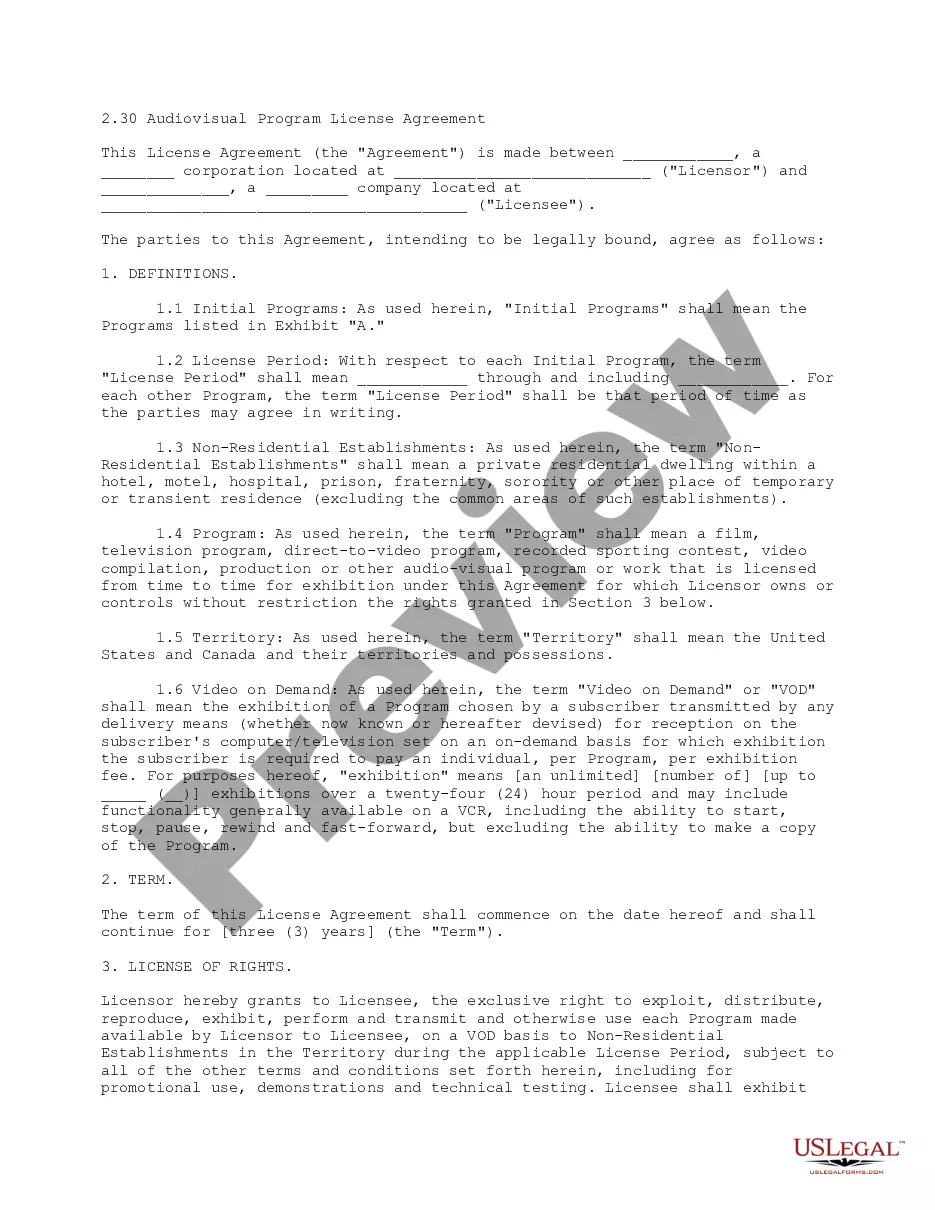
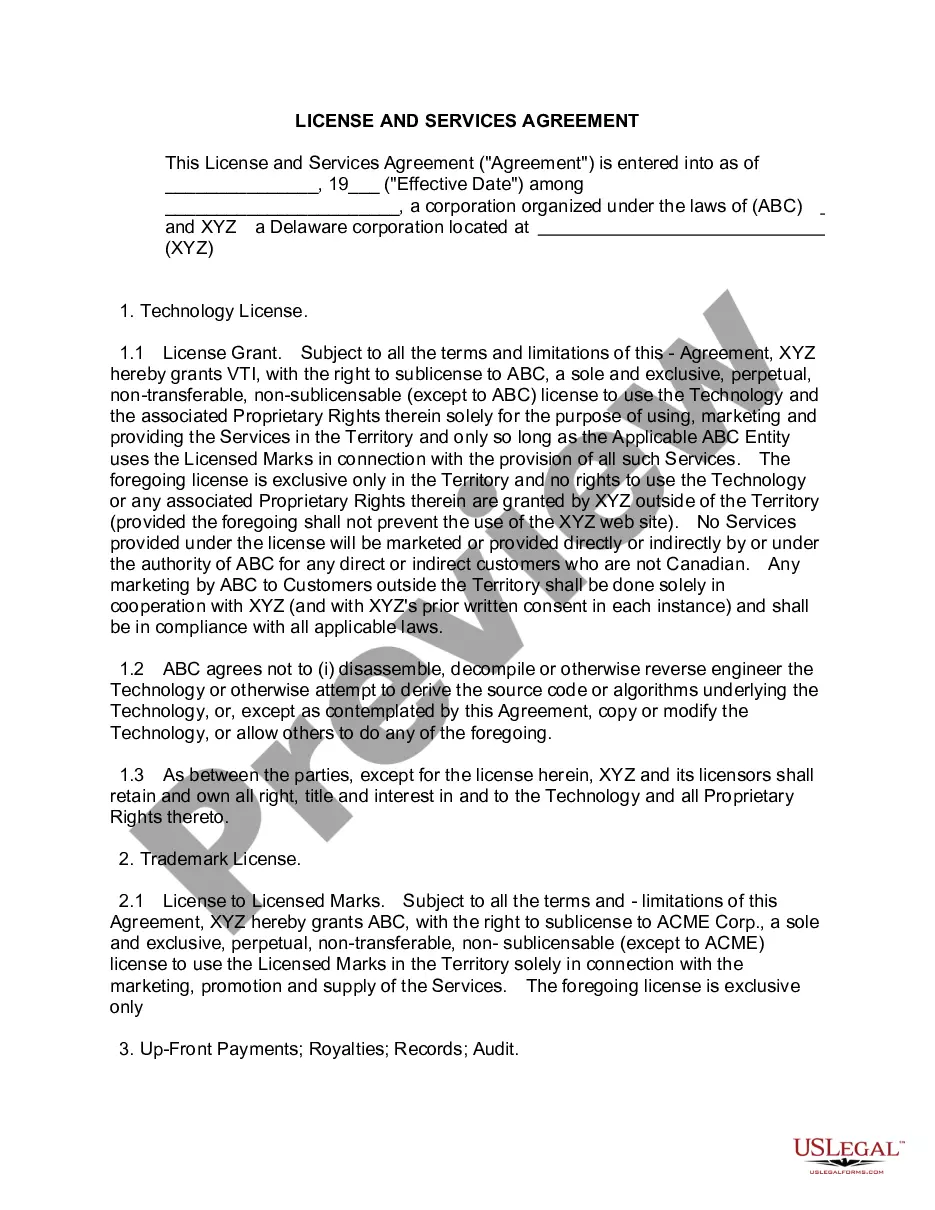
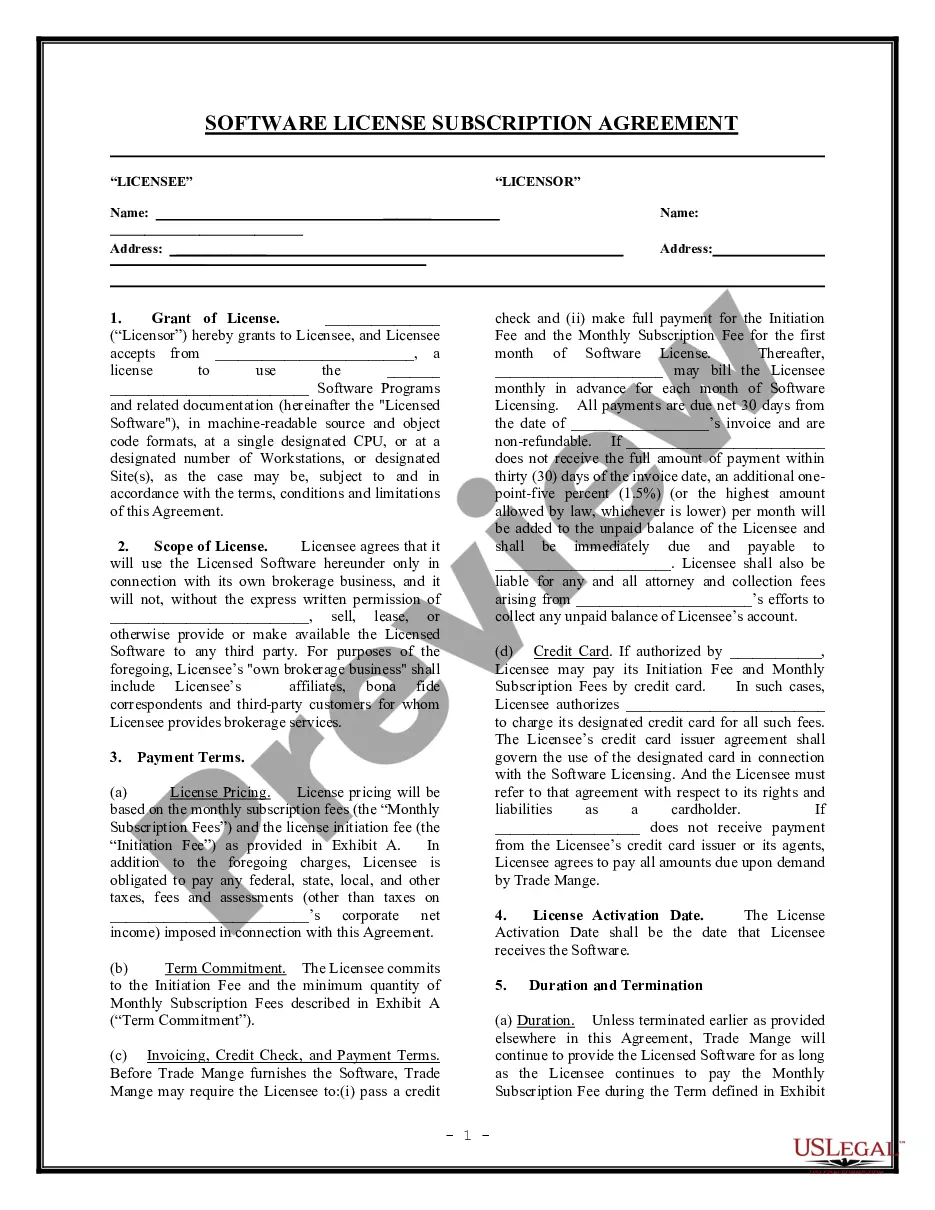
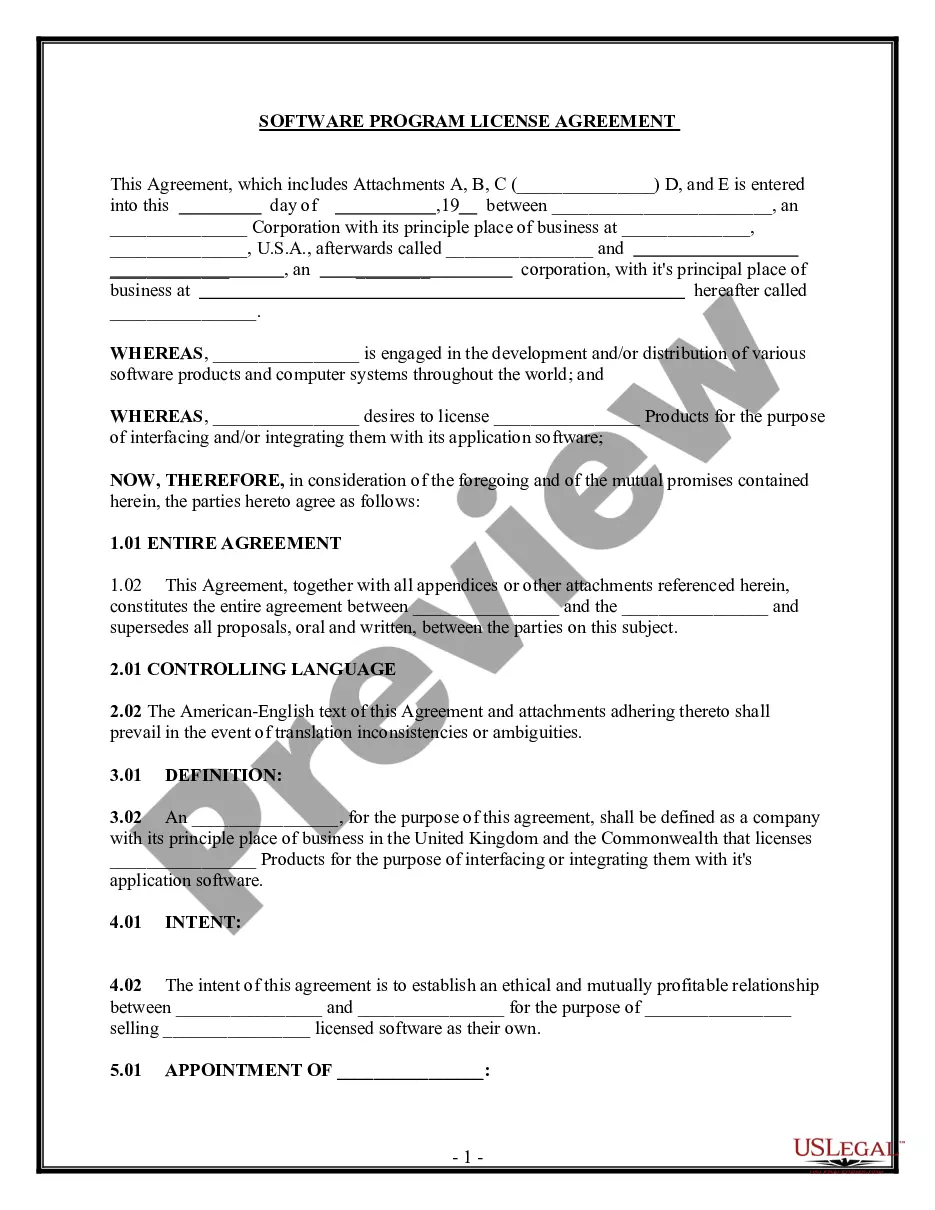
The Subject Matter Content License Agreement is a legal document that establishes the terms under which a producer can license specific content from a manufacturer. This agreement is essential for digital content distribution and provides clarity on rights, responsibilities, and confidentiality between the parties involved. It differs from other licensing agreements by focusing specifically on the original content to be produced and the necessary permissions from the content owner or manufacturer.
Key parts of this document
- Identification of the parties involved: Producer and Manufacturer.
- Access to confidential information necessary for product development.
- Approval process for design work-up and content inclusion.
- Copyright ownership details for the product created.
- Payment terms, including royalties based on sales income.
- Termination conditions and the effects of termination on confidentiality.
When to use this document
This form is necessary when a producer intends to develop a digital content product that involves licensed material from a manufacturer. Common scenarios include creating a multimedia presentation, educational software, or any digital publication that requires the repurposing of proprietary designs or technologies. Using this agreement helps ensure that all legal rights are secured before production begins, minimizing future disputes.
Who should use this form
This agreement is suitable for:
- Media producers looking to create products using proprietary information.
- Manufacturers who want to monetize their designs and technologies.
- Businesses engaged in digital content creation and distribution.
- Individuals and organizations ensuring compliance with copyright laws.
Completing this form step by step
- Identify and enter the names and addresses of both the Producer and the Manufacturer.
- Clearly define the subject matter and limitations of the licensed content.
- Outline the terms of access to confidential information for the Producer.
- Specify the approval process for any materials and content developed.
- Detail the royalties to be paid to the Manufacturer based on sales income.
- Ensure all parties sign and date the agreement to confirm their understanding and acceptance.
Is notarization required?
Notarization is generally not required for this form. However, certain states or situations might demand it. You can complete notarization online through US Legal Forms, powered by Notarize, using a verified video call available anytime.
Get your form ready online
Our built-in tools help you complete, sign, share, and store your documents in one place.
Make edits, fill in missing information, and update formatting in US Legal Forms—just like you would in MS Word.
Download a copy, print it, send it by email, or mail it via USPS—whatever works best for your next step.
Sign and collect signatures with our SignNow integration. Send to multiple recipients, set reminders, and more. Go Premium to unlock E-Sign.
If this form requires notarization, complete it online through a secure video call—no need to meet a notary in person or wait for an appointment.
We protect your documents and personal data by following strict security and privacy standards.

Make edits, fill in missing information, and update formatting in US Legal Forms—just like you would in MS Word.

Download a copy, print it, send it by email, or mail it via USPS—whatever works best for your next step.

Sign and collect signatures with our SignNow integration. Send to multiple recipients, set reminders, and more. Go Premium to unlock E-Sign.

If this form requires notarization, complete it online through a secure video call—no need to meet a notary in person or wait for an appointment.

We protect your documents and personal data by following strict security and privacy standards.
Typical mistakes to avoid
- Failing to clearly define the scope of the licensed content.
- Not outlining the confidentiality obligations adequately.
- Omitting the payment structure or terms for royalties.
- Neglecting to include an approval process for the materials created.
- Forgetting to date and sign the agreement, which may lead to disputes over acceptance.
Why use this form online
- Easy access to legally binding templates drafted by licensed attorneys.
- Immediate downloads allow for quick use and implementation.
- Forms are customizable to fit specific needs and scenarios.
- Reduces the risk of legal disputes with clear terms and conditions.
Legal use & context
- This agreement is legally binding upon execution by both parties.
- It provides protections for both the Producer and the Manufacturer regarding the use of proprietary information.
- Properly executed agreements can help enforce the confidentiality and licensing terms in legal disputes.
Looking for another form?
Form popularity
FAQ
An example of a licensing agreement is a contract between the copyright holders of software and another company, allowing the latter to use the computer software for their daily business operations.
An example of a licensing agreement is a contract between the copyright holders of software and another company, allowing the latter to use the computer software for their daily business operations.
Exclusive or non-exclusive. In an exclusive license, the intellectual property holder is licensing the work only to one person, for that particular use/territory. Territory. Use. Attribution. Derivative works. Confidentiality. Time frame. Termination.
A license agreement is a business contract between two parties. The licensor (the seller of the license) owns the asset being licensed and the licensee (the buyer) pays for the right to use the license. The licensee pays royalties to the owner in exchange for the right to sell the product or use the technology.
Download a template for a licensing agreement. Choose your role as the licensor or licensee. Define the license(s) in the agreement. Decide whether the license is exclusive or not. Settle the matter of fees and payment schedule. Add a renewal date and rules.
In a typical licensing agreement, the licensor agrees to provide the licensee with intellectual property rights such as the licensor's technology, brand name, or product creation know-how.
The 3 P's of collegiate licensing are protection, promotion, and profit.