Bylaws of VIA Net.Works, Inc.
Overview of this form
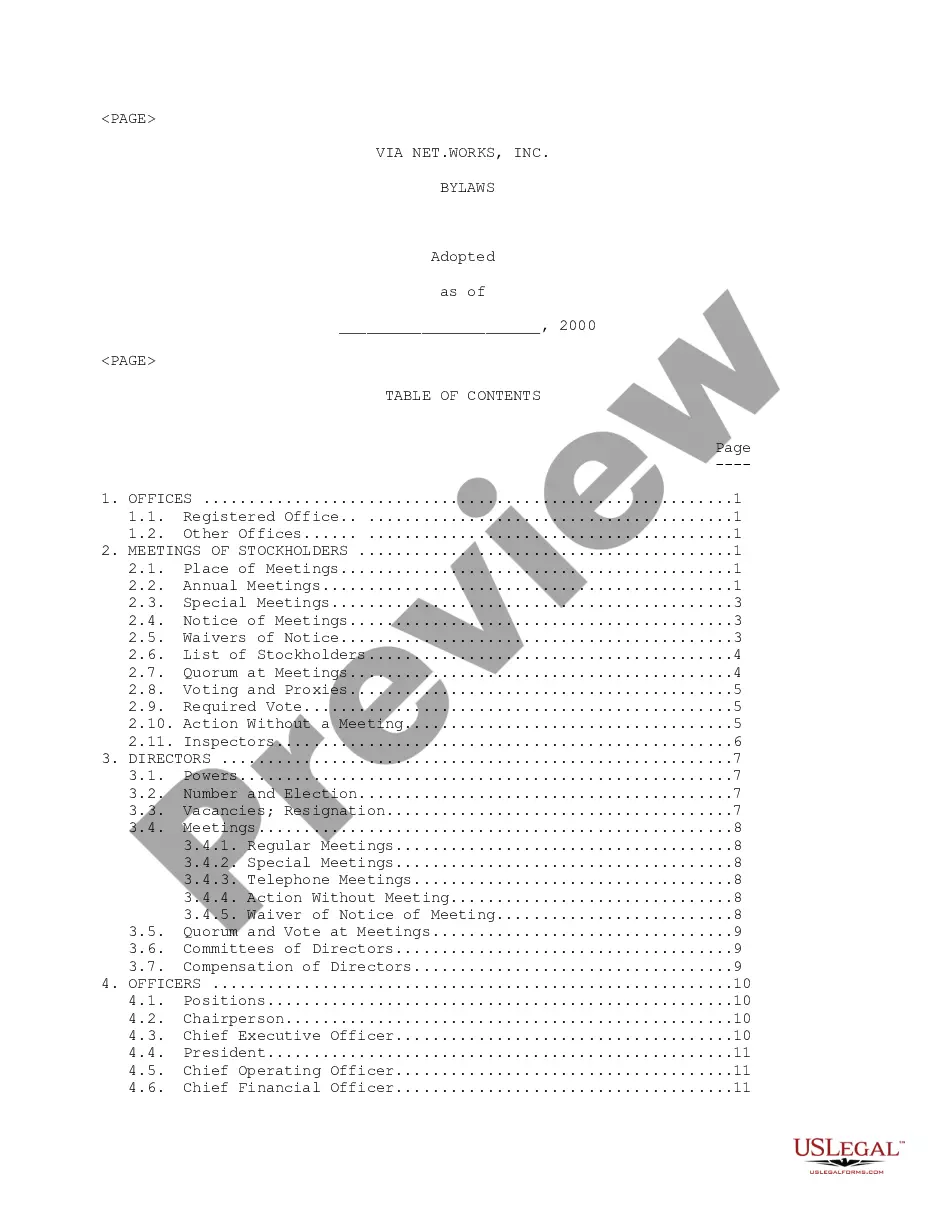
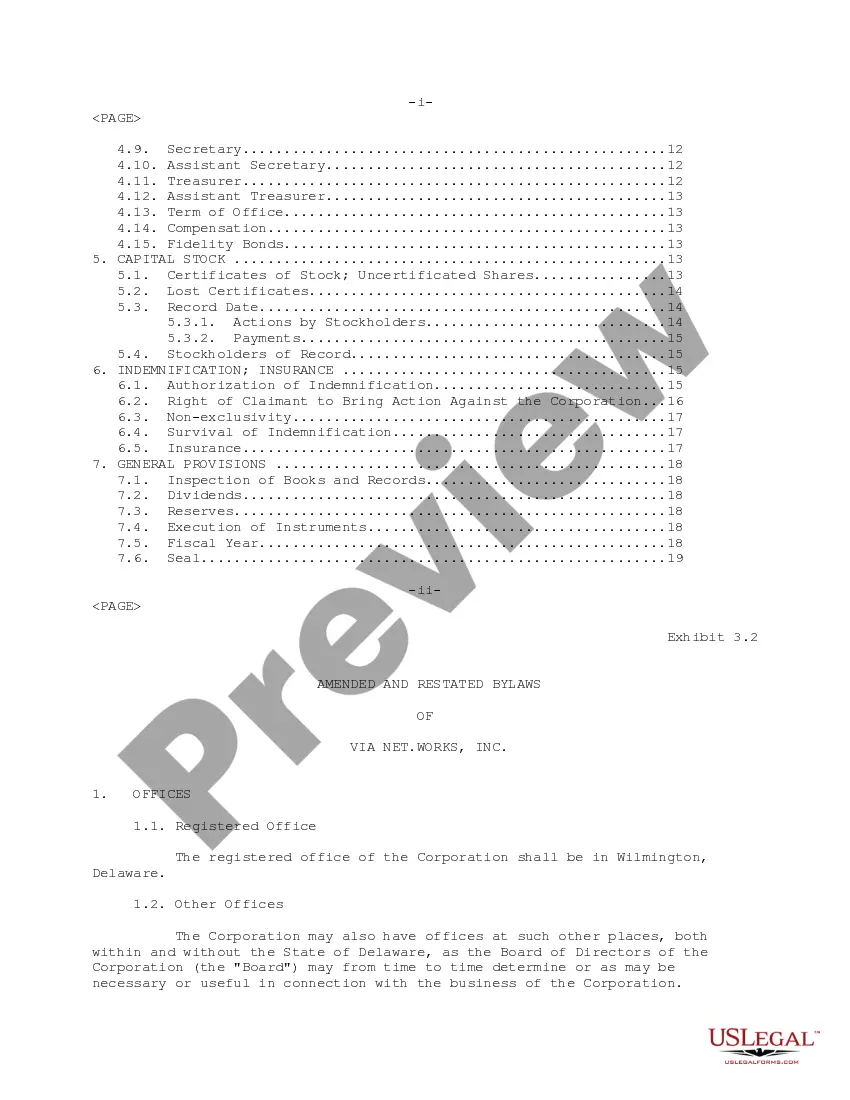
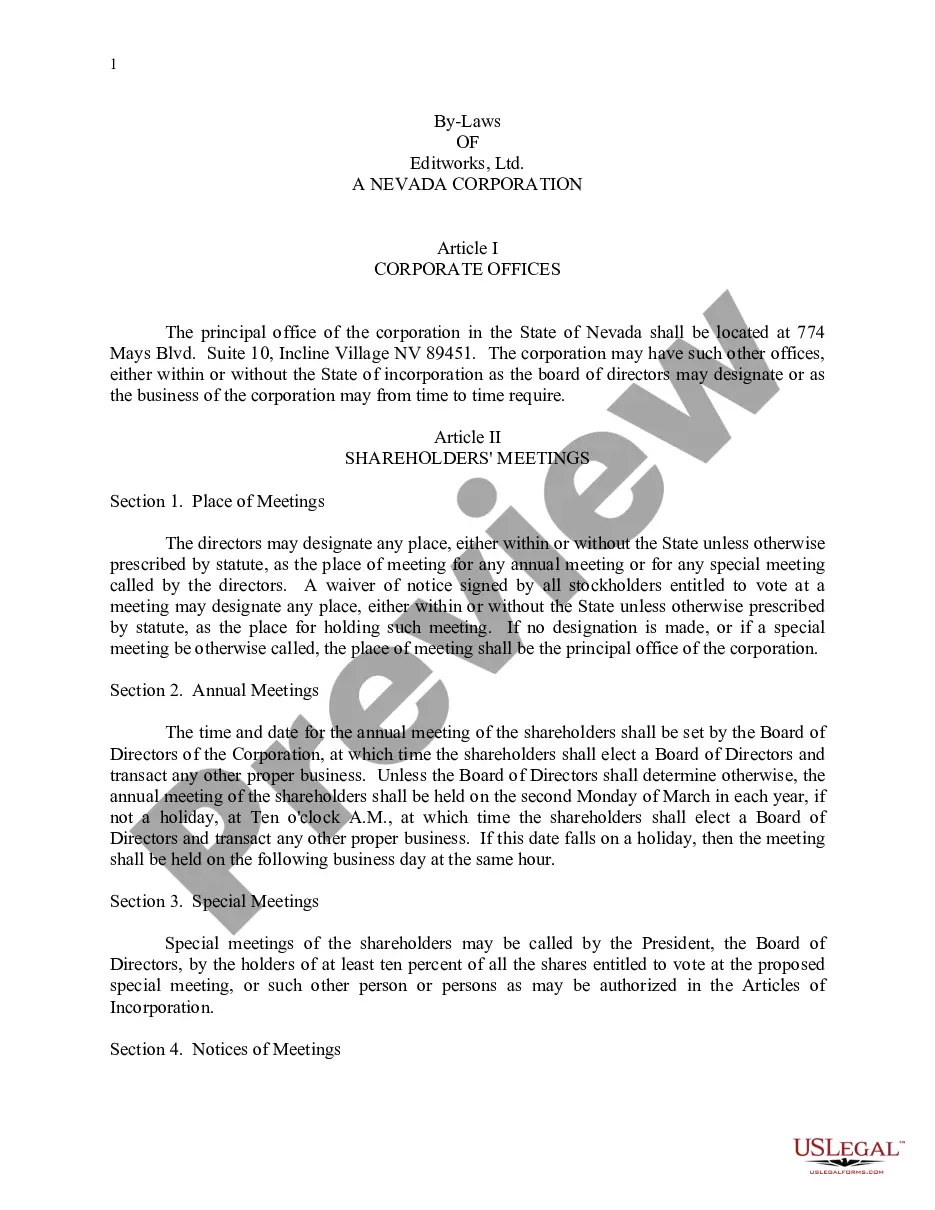
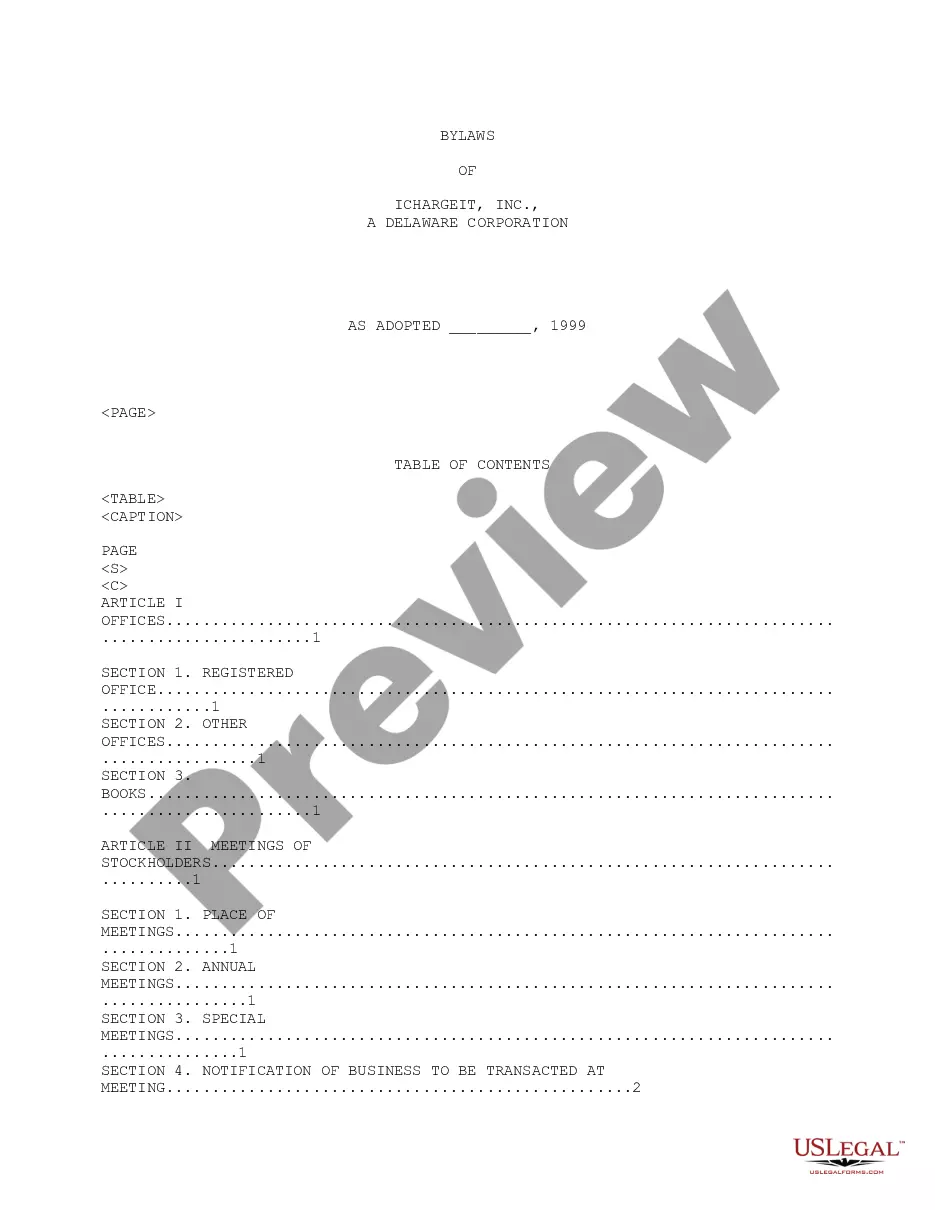
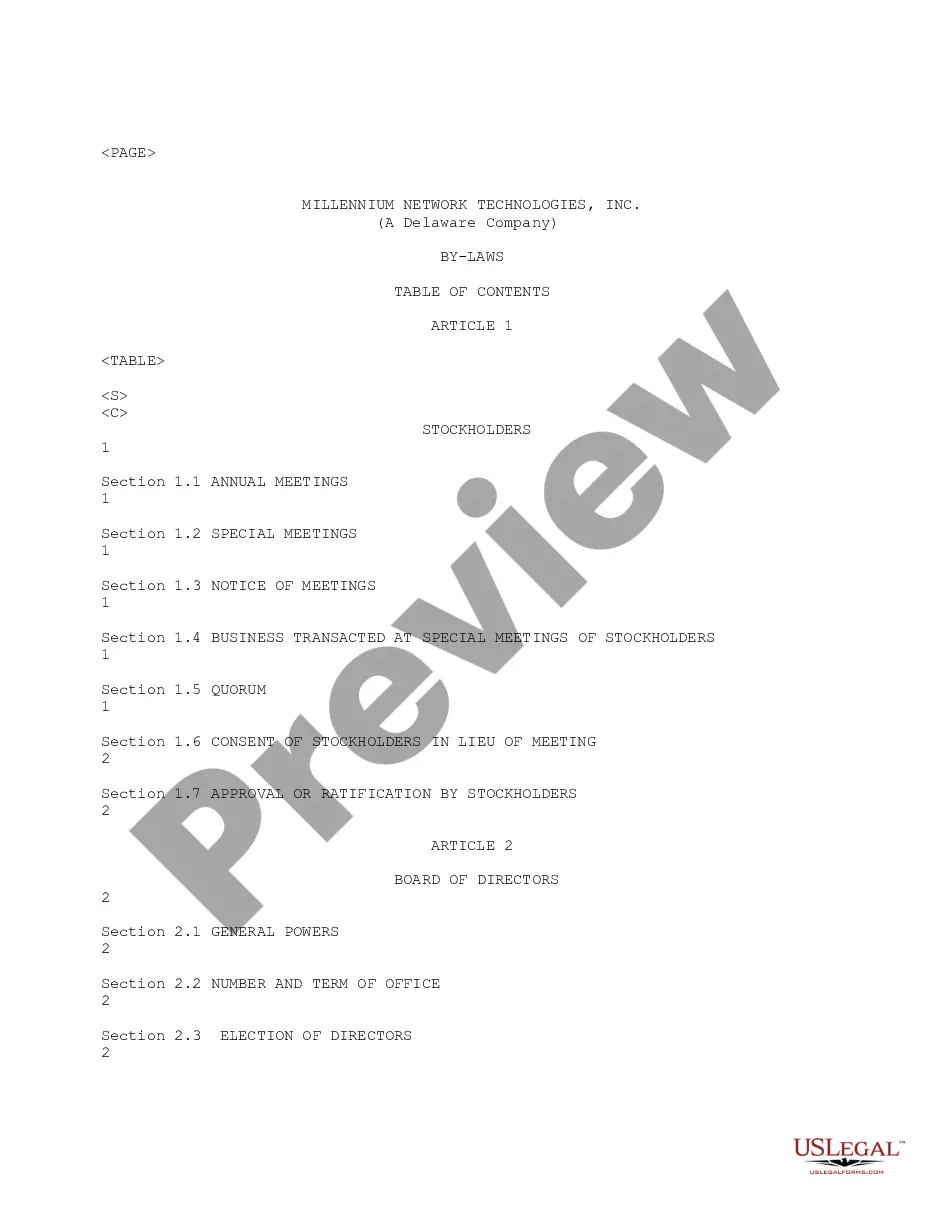
The Bylaws of VIA Net.Works, Inc. outline the internal rules and procedures for the governance of the corporation. They serve as a framework for the organization, detailing the roles and responsibilities of directors and officers, as well as the mechanics of shareholder meetings. Unlike articles of incorporation, which establish the company as a legal entity, bylaws cover operational guidelines specific to the organization. This form is essential for ensuring that the corporation operates smoothly and in compliance with state laws.
Key components of this form
- Sections detailing corporate offices, including registered and other locations.
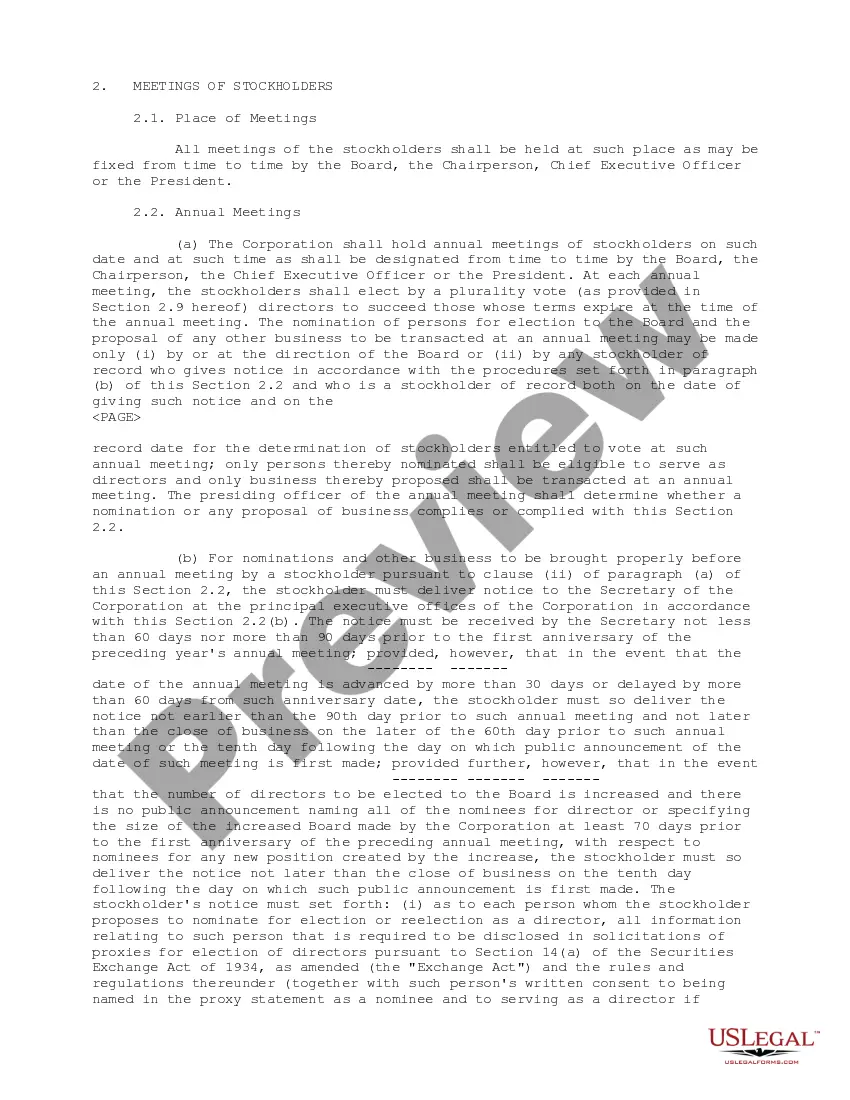
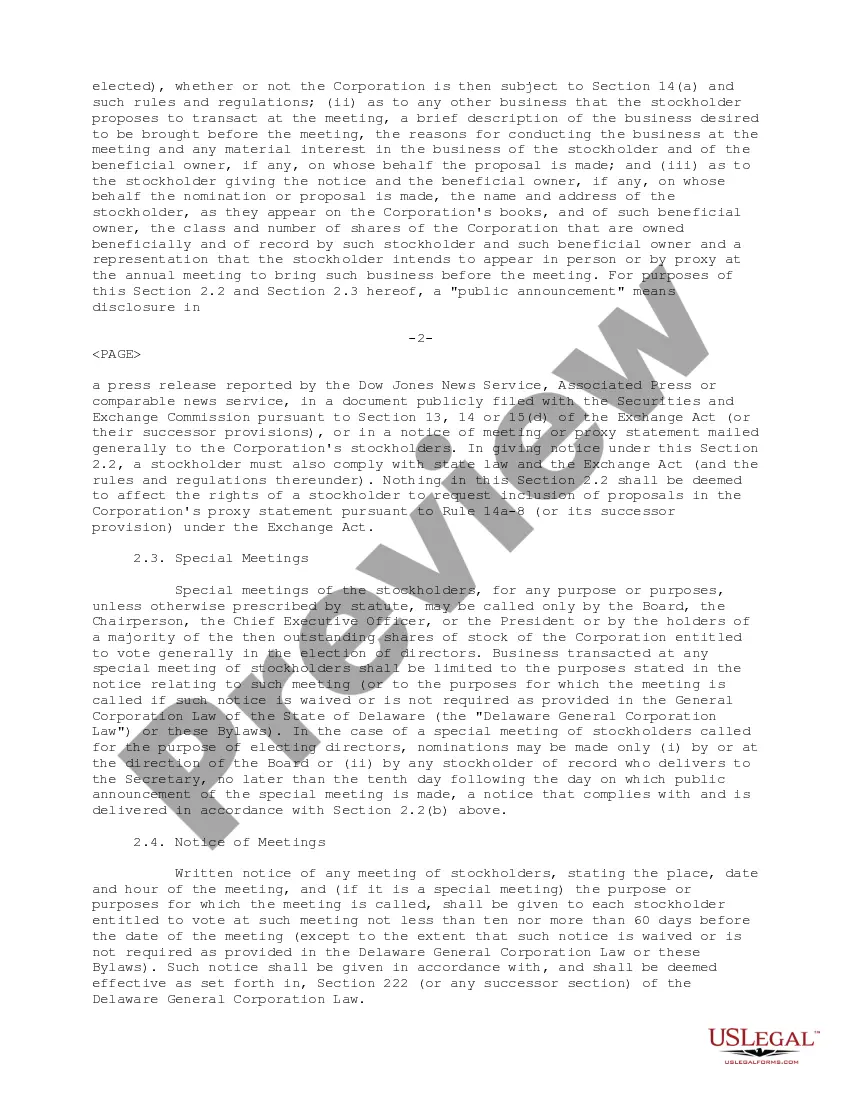
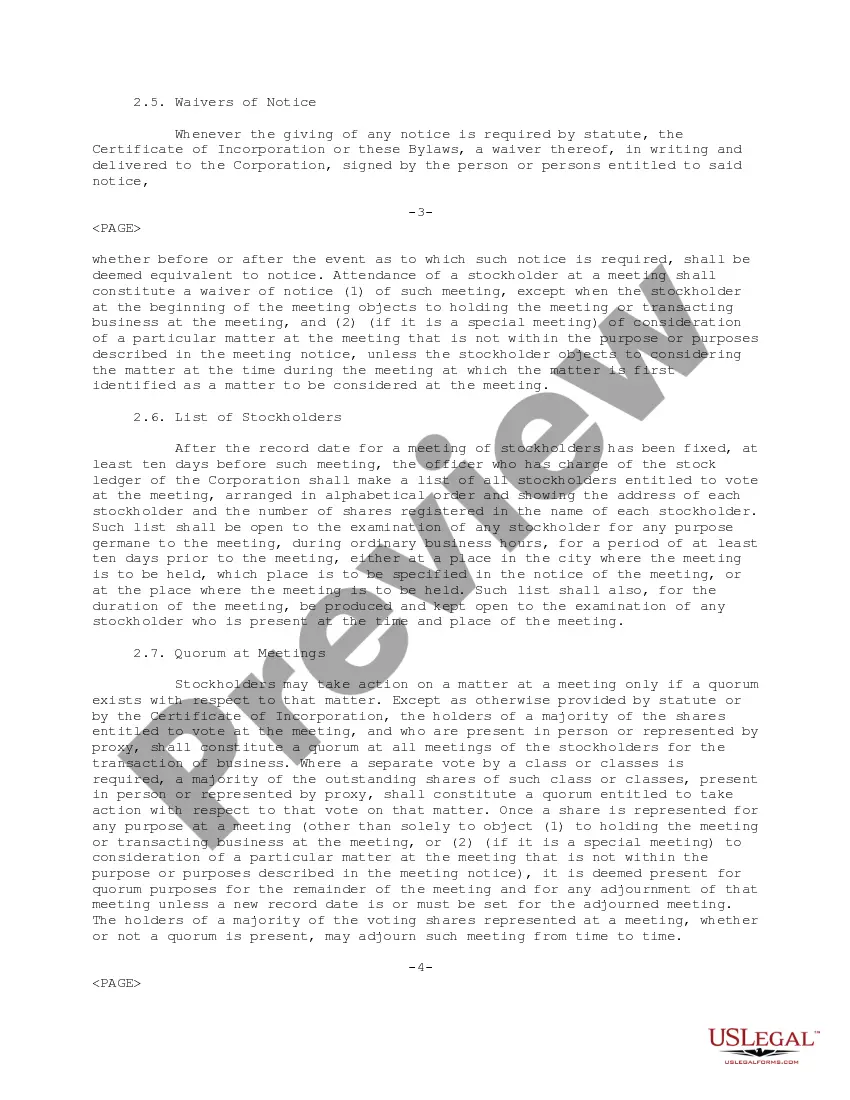
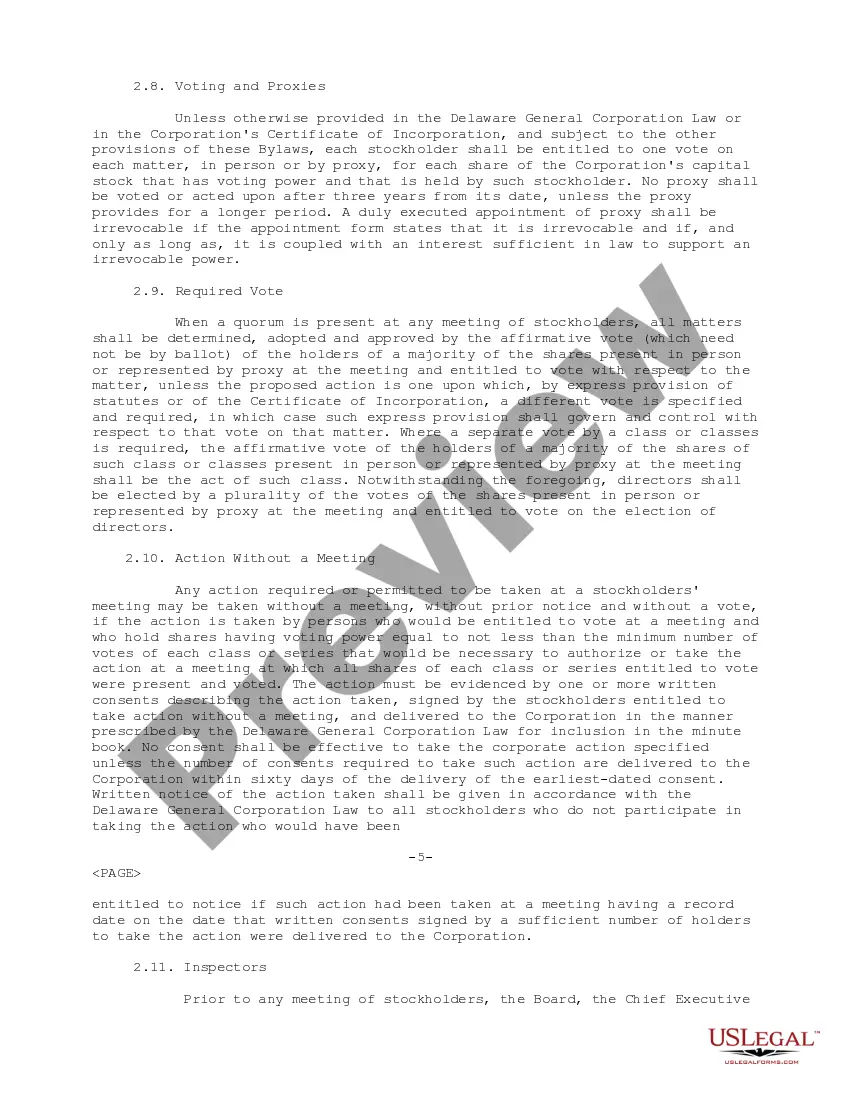
- Procedures for meetings of stockholders, including notice requirements and quorum specifics.
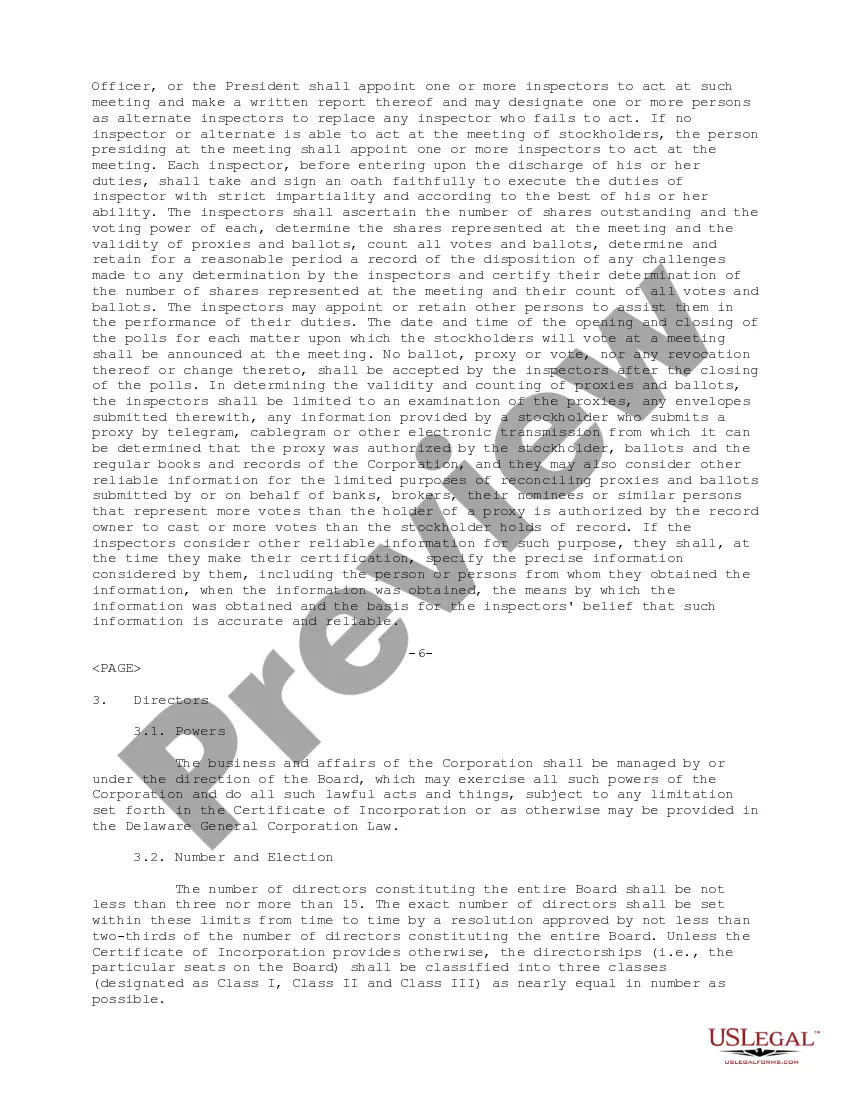
- Rules governing the election and duties of the Board of Directors.
- Regulations regarding corporate officers, their roles, responsibilities, and appointment processes.
- Provisions for capital stock, including stock certificates and lost stock procedures.
- Indemnification clauses for protection of directors and officers against liability.

When to use this document
This form should be utilized by corporations to establish their foundational operating procedures. It is particularly important when a corporation is formed and needs a clear guideline for its internal processes, including governance structure, decision-making, and operational management. Use this document when holding meetings, making major business decisions, and addressing corporate compliance with state regulations.
Intended users of this form
- Corporation founders who need to create bylaws for their newly formed company.
- Current corporate officers and directors looking to formalize or update existing bylaws.
- Shareholders seeking clarity on governance and procedural operations of their corporation.
- Legal professionals assisting corporations with compliance issues.
How to prepare this document
- Identify the corporation's registered office and any additional offices serving business functions.
- Establish the protocols for stockholders' meetings, including date, notice, and voting procedures.
- Specify the structure and election process for the Board of Directors, including number and classification.
- Outline the officers of the corporation and their respective duties and authority levels.
- Include provisions for stock management, along with indemnification rights for directors and officers.
Does this document require notarization?
In most cases, this form does not require notarization. However, some jurisdictions or signing circumstances might. US Legal Forms offers online notarization powered by Notarize, accessible 24/7 for a quick, remote process.
Get your form ready online
Our built-in tools help you complete, sign, share, and store your documents in one place.
Make edits, fill in missing information, and update formatting in US Legal Forms—just like you would in MS Word.
Download a copy, print it, send it by email, or mail it via USPS—whatever works best for your next step.
Sign and collect signatures with our SignNow integration. Send to multiple recipients, set reminders, and more. Go Premium to unlock E-Sign.
If this form requires notarization, complete it online through a secure video call—no need to meet a notary in person or wait for an appointment.
We protect your documents and personal data by following strict security and privacy standards.

Make edits, fill in missing information, and update formatting in US Legal Forms—just like you would in MS Word.

Download a copy, print it, send it by email, or mail it via USPS—whatever works best for your next step.

Sign and collect signatures with our SignNow integration. Send to multiple recipients, set reminders, and more. Go Premium to unlock E-Sign.

If this form requires notarization, complete it online through a secure video call—no need to meet a notary in person or wait for an appointment.

We protect your documents and personal data by following strict security and privacy standards.
Common mistakes to avoid
- Failing to include a complete list of officers and their responsibilities.
- Not outlining procedures for stockholder meetings clearly, leading to confusion.
- Overlooking state-specific requirements which could invalidate the bylaws.
- Neglecting to specify voting rights and processes for board elections.
- Forgetting to update bylaws after major changes in corporate structure or law.
Advantages of online completion
- Convenient access and instant downloads ensure that you can start using the bylaws immediately.
- Editable templates allow for customization to fit the specific needs of your corporation.
- Reliability of the forms is supported by legal experts who craft them to comply with current laws.
- Reduced legal costs by providing a DIY approach to forming and managing corporate governance documents.
Legal use & context
- Bylaws are legally binding documents that govern internal corporate operations.
- Failure to adhere to the established bylaws may result in disputes among directors and shareholders.
- Properly drafted bylaws help ensure compliance with state laws and protect the interests of all stakeholders.
Summary of main points
- The Bylaws of VIA Net.Works, Inc. are essential for defining governance structure and operational procedures.
- Understanding who should utilize this form is crucial for effective corporate management.
- Compliance with state-specific laws is necessary to validate the bylaws.
Looking for another form?
Form popularity
FAQ
Bylaws. In the early years of the industry, developer lawyers used by laws or by-laws. Now it is a single word without spaces or hyphens: bylaws. The word is not capitalized if used generically.
Like the Constitution, your bylaws should deal with only the highest level of governing issues such as: Organizational purpose, board structure, officer position descriptions and responsibilities, terms of board service, officer/board member succession and removal, official meeting requirements, membership provisions,
Policies are usually longer than bylaws. While policies pertain to the details, the bylaws are high-level. Bylaws take precedent over policies, and policies must be in harmony (not conflict) with the bylaws. State policies should be written and shared with your Board of Directors.
The basic difference is pretty simple. Articles of Incorporation are public records, Bylaws are not.For a corporation, this document is called Articles of Incorporation and Articles of Organization for a Limited Liability Company (LLC).
Step One: Choose a Name for your Nonprofit. Step Two: File Articles of Incorporation. Step Three: Prepare Your Bylaws. Step Four: Hold Your First Nonprofit Meeting. Step Five: Create Your Corporate Binder. Step Six: 501.c.3 Tax Exemption.
Basic Corporate Information. The bylaws should include your corporation's formal name and the address of its main place of business. Board of Directors. Officers. Shareholders. Committees. Meetings. Conflicts of Interest. Amendment.
The official name of your nonprofit. the organization's principal address (the location where you will store your corporate records) the organization's purpose (more below) an outline of the board structure (minimum and maximum number of directors)
Article I. Name and purpose of the organization. Article II. Membership. Article III. Officers and decision-making. Article IV. General, special, and annual meetings. Article V. Board of Directors.
Corporate bylaws commonly include information that specifies, for example, the number of directors the corporation has, how they will be elected, their qualification, and the length of their terms. It can also specify when, where, and how your board of directors can call and conduct meetings, and voting requirements.