Stock Option Agreement of Intraware, Inc.
Understanding this form
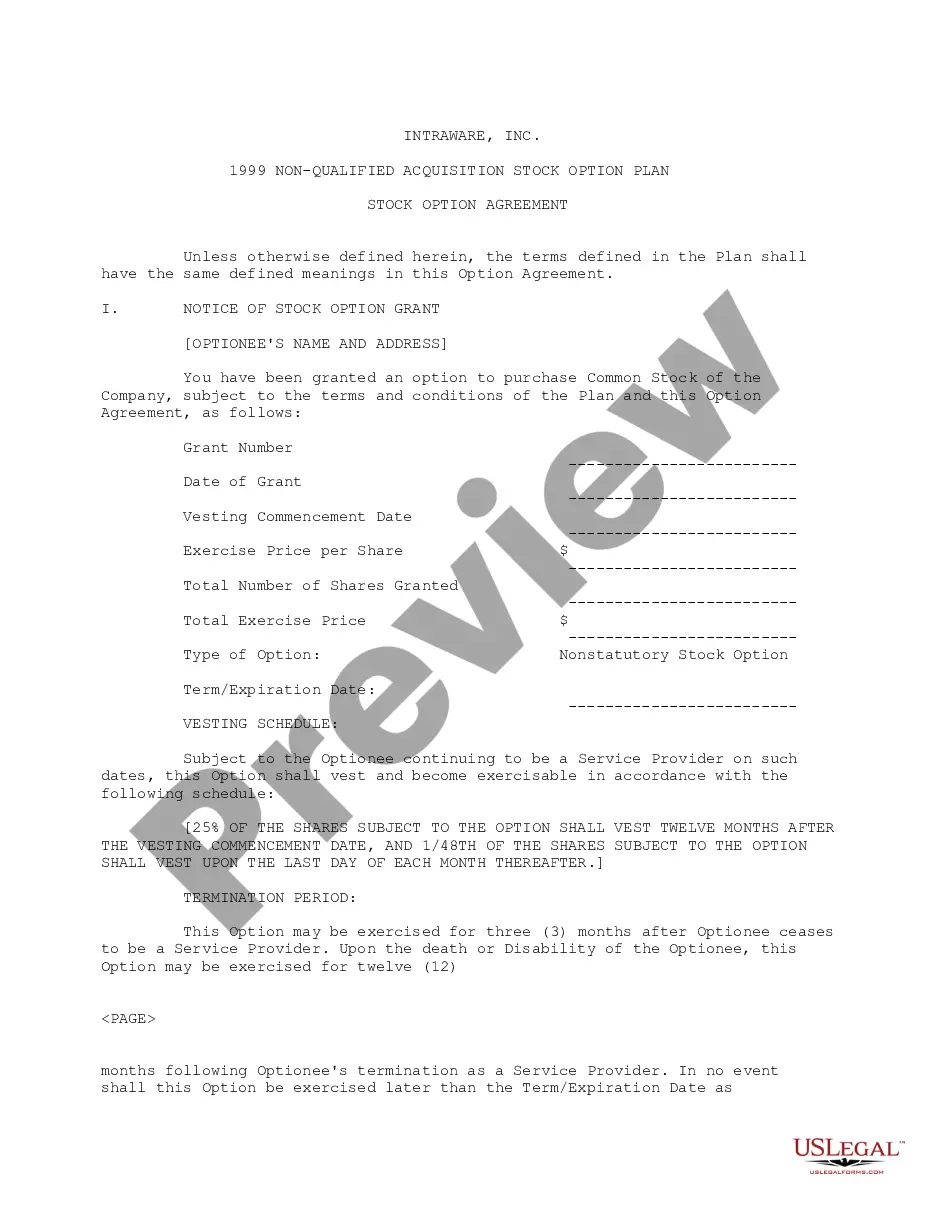
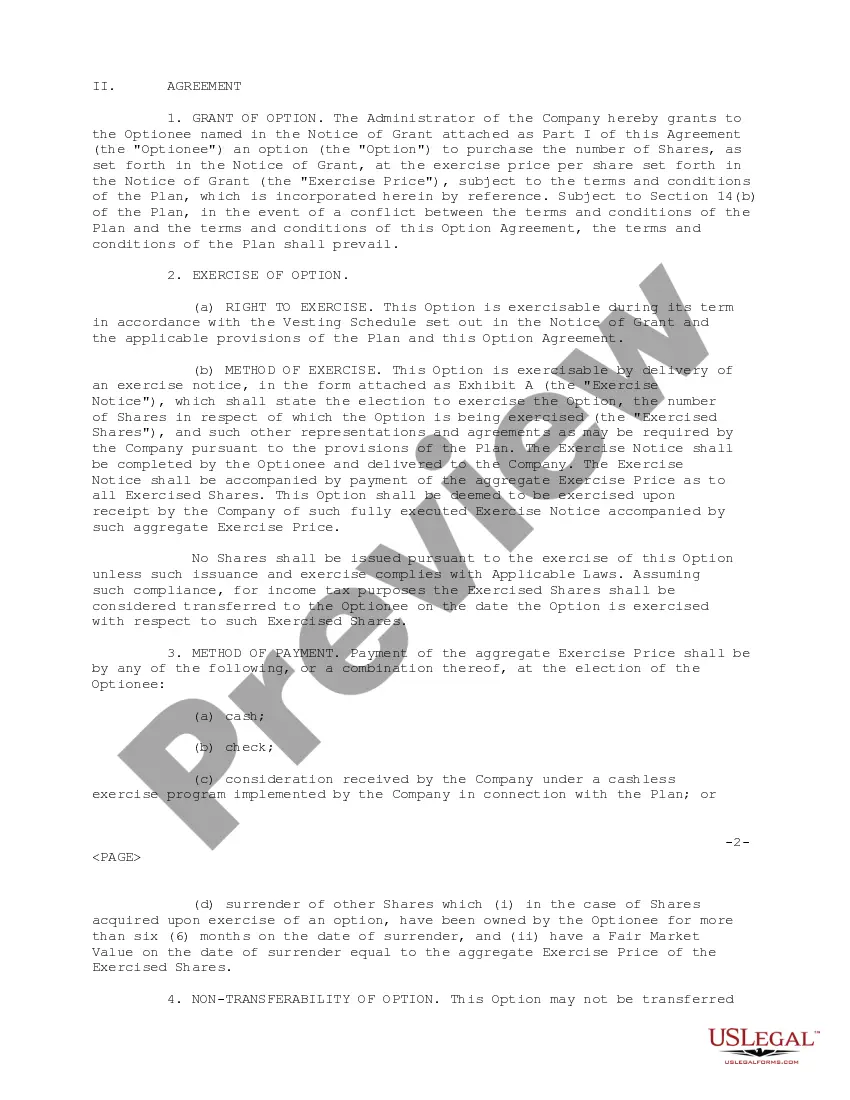
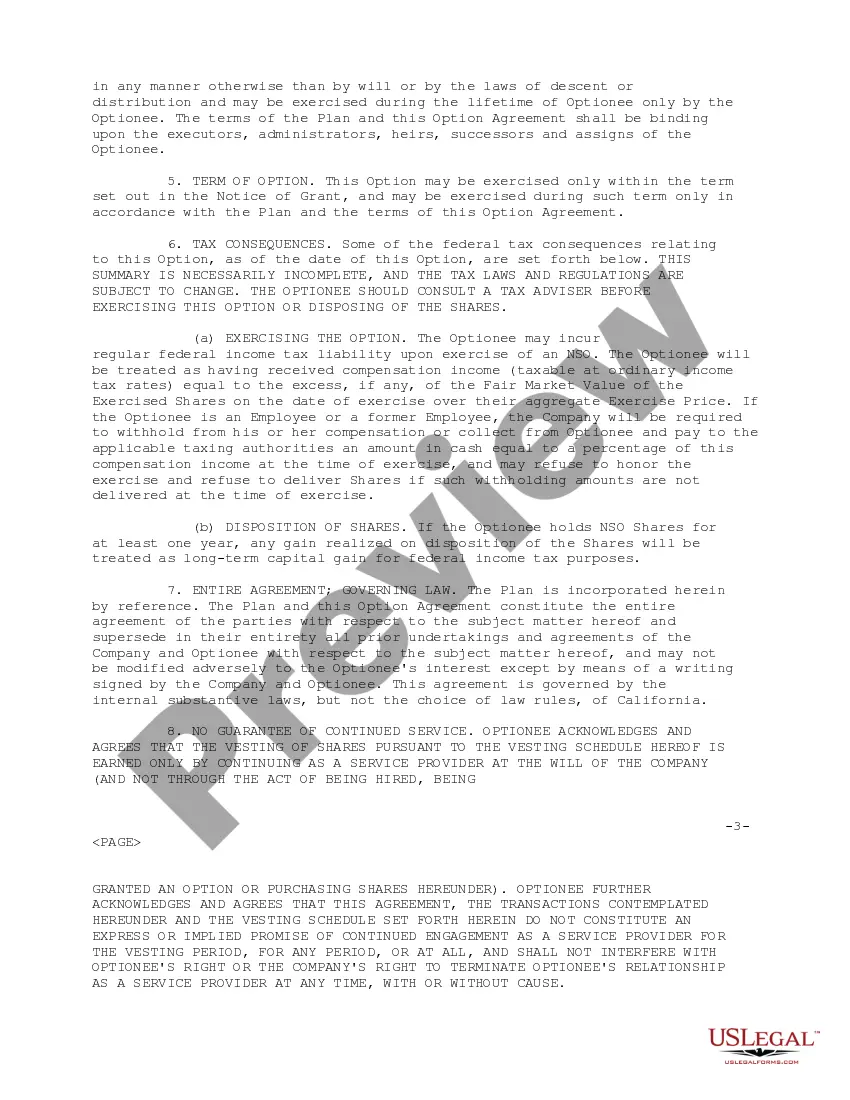
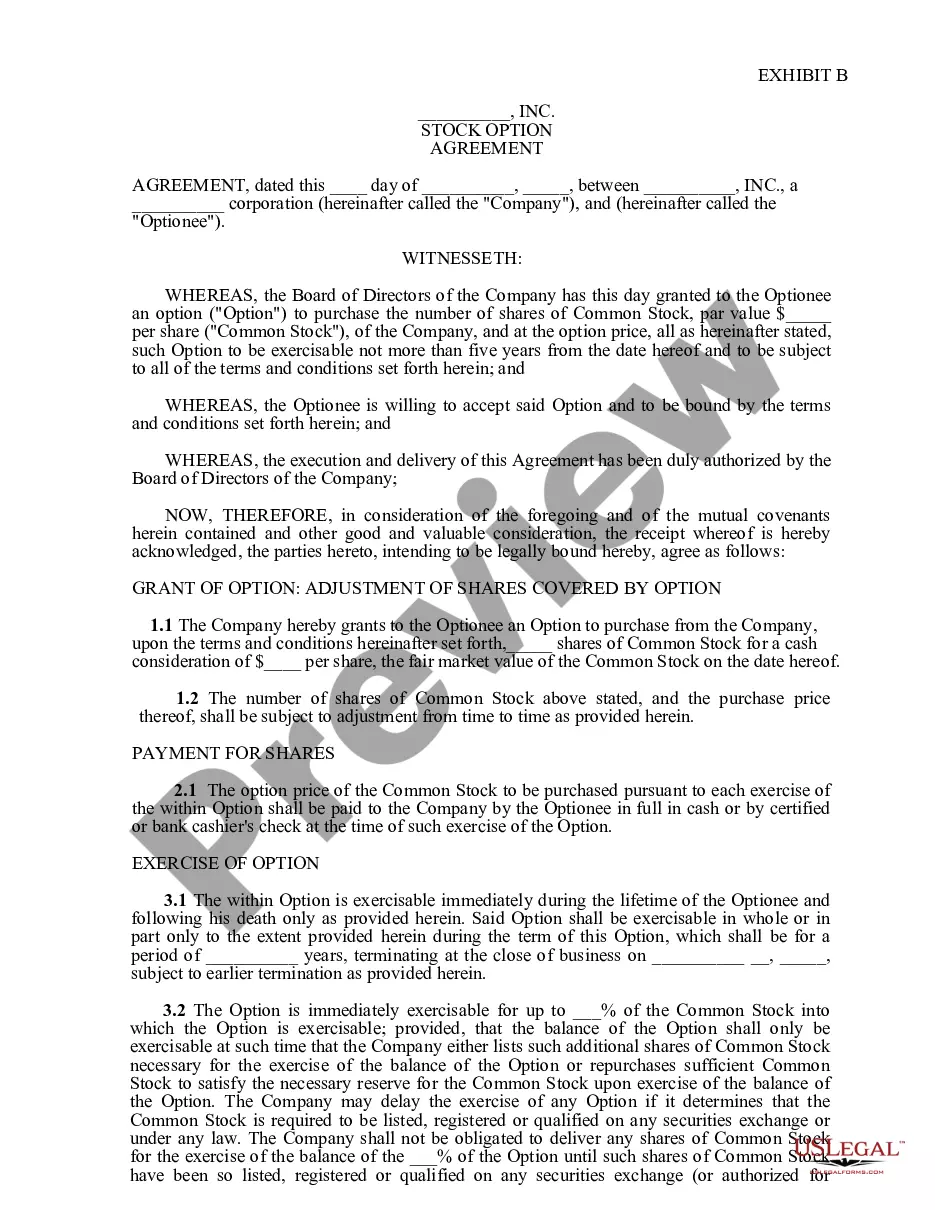
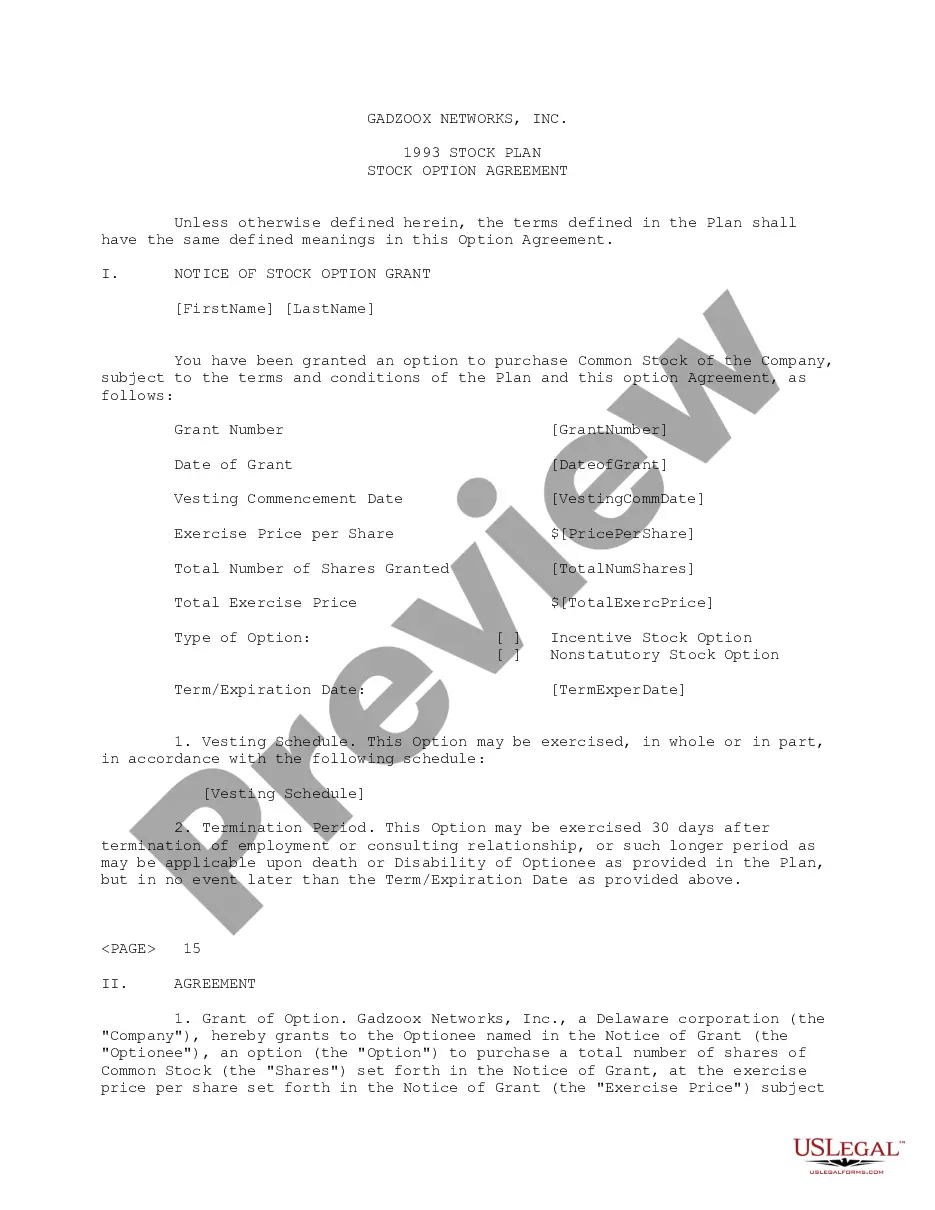
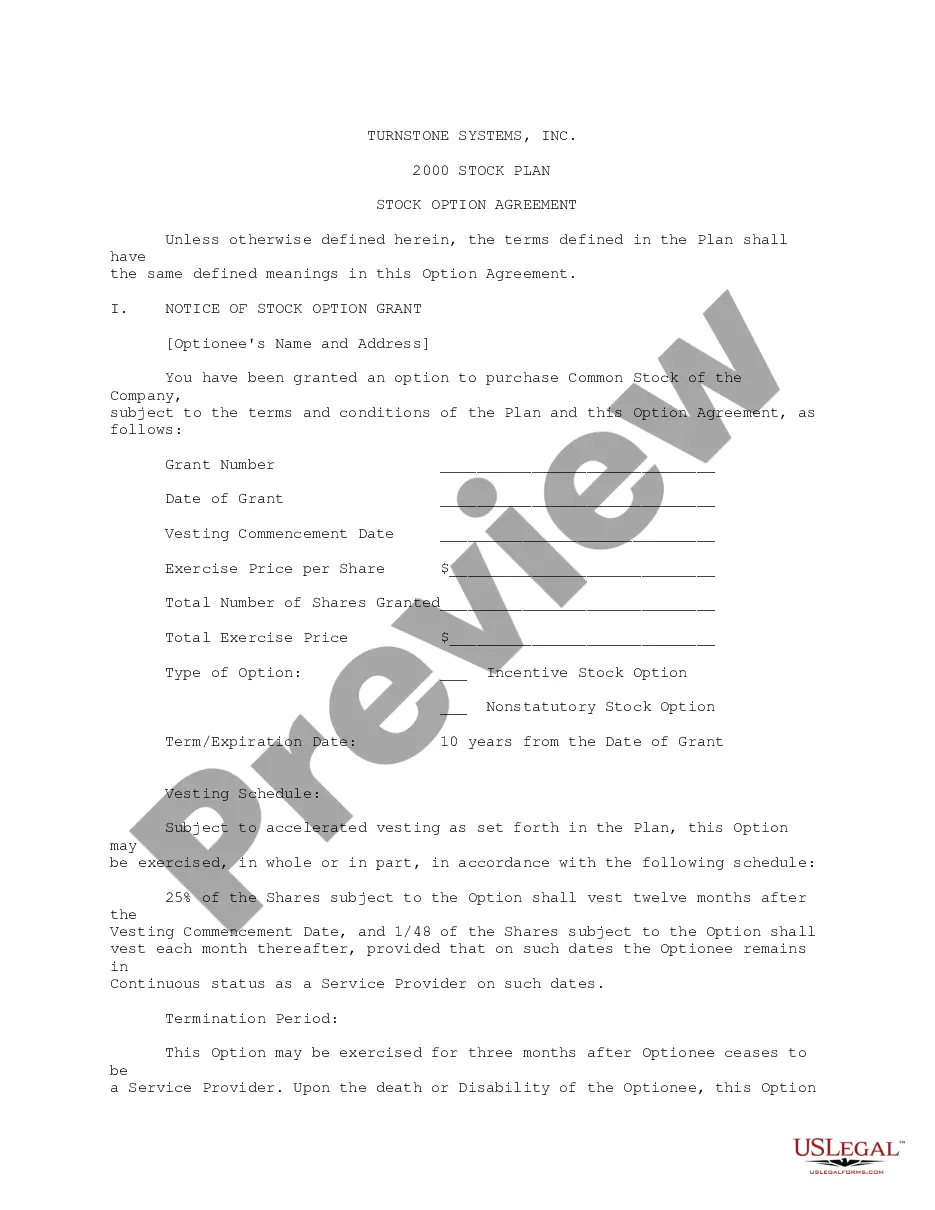
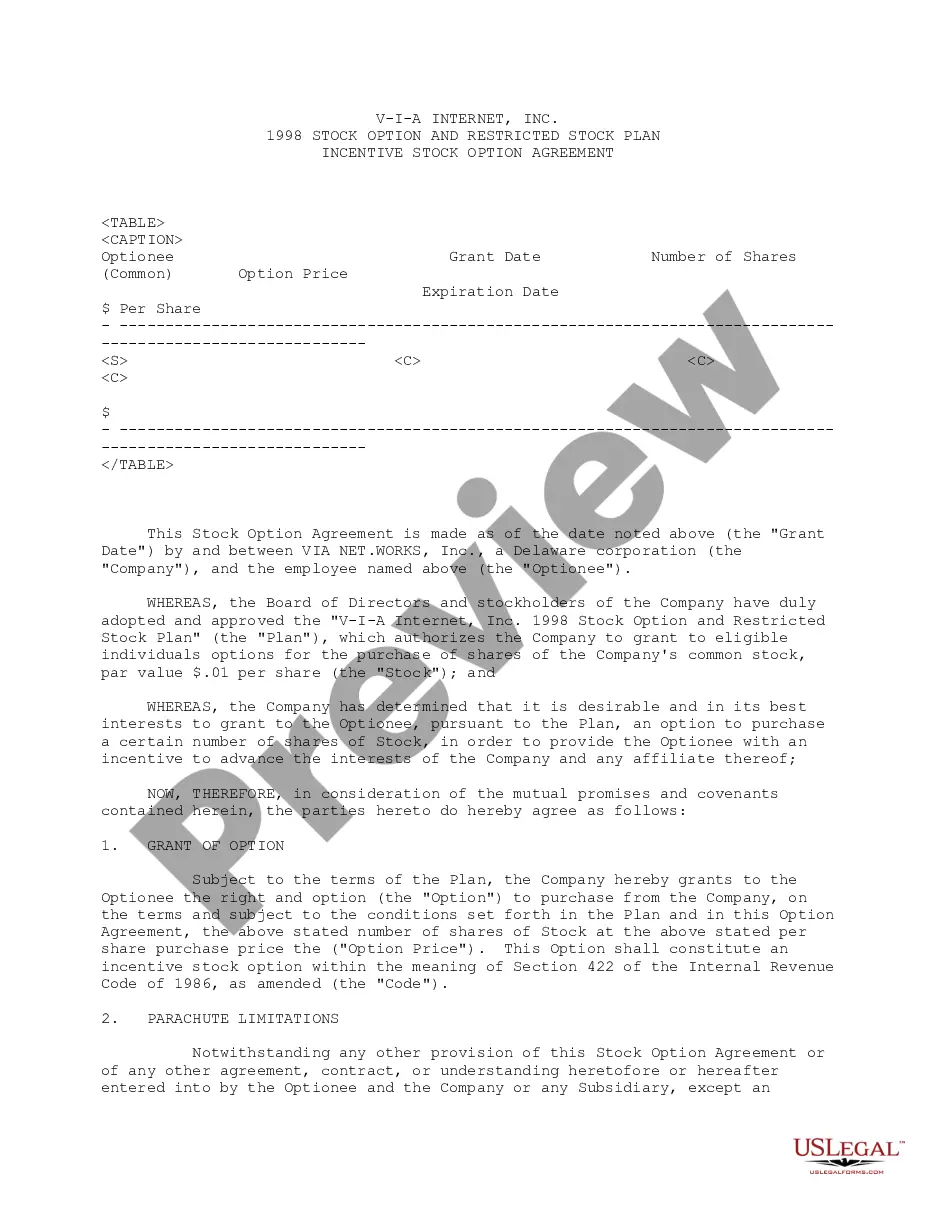
The Stock Option Agreement of Intraware, Inc. is a legal document that outlines the terms under which an employee (the Optionee) can purchase shares of Common Stock from Intraware, Inc. This non-qualified acquisition stock option plan allows employees to buy shares at a predetermined price over a specified period. It is distinct from other stock options as it does not qualify for special tax treatment under the Internal Revenue Code.
Key components of this form
- Grant of Option: Details the number of shares granted and the exercise price.
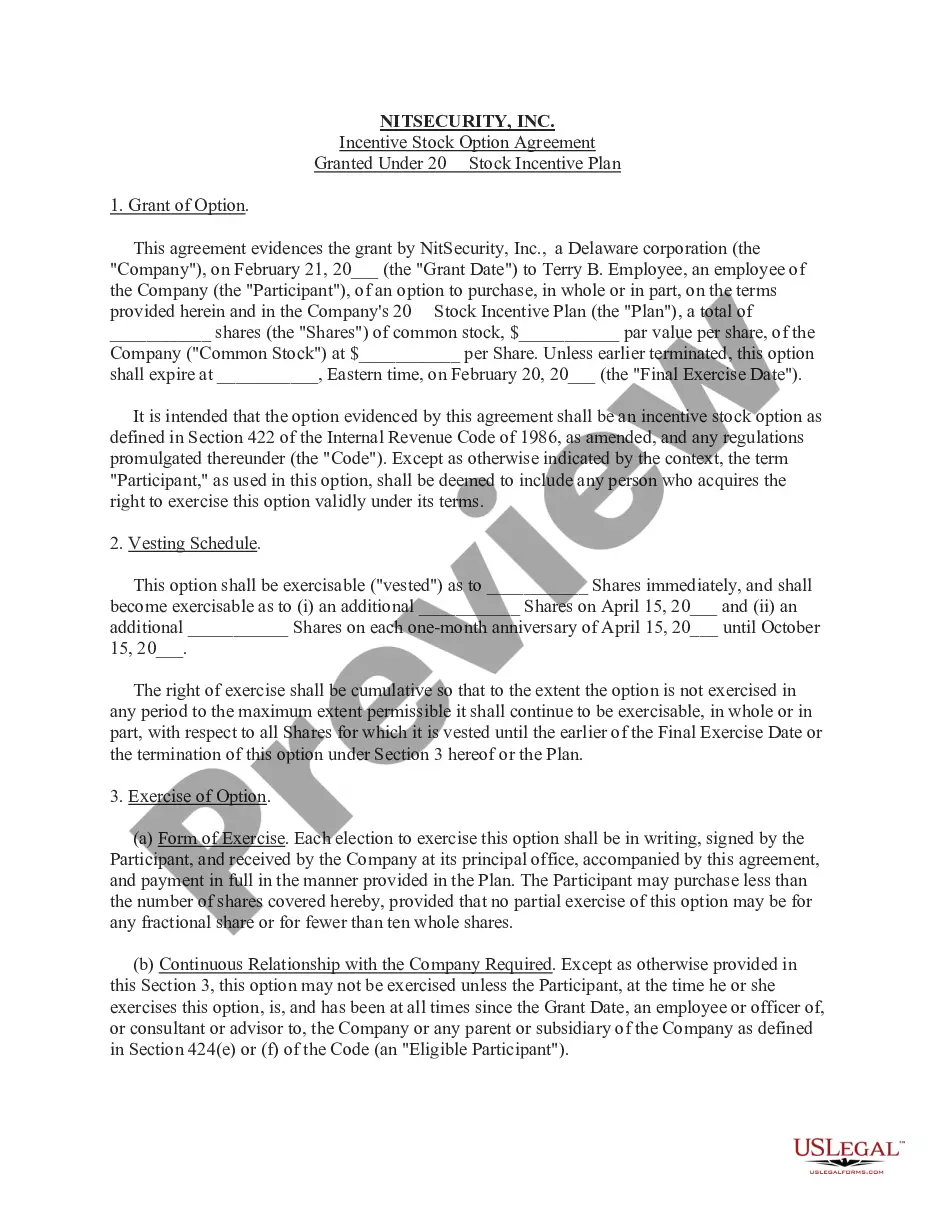
- Vesting Schedule: Specifies when the shares will become available for purchase.
- Method of Exercise: How the Optionee can exercise their option to purchase shares.
- Tax Consequences: Outlines potential tax implications of exercising the option.
- Non-Transferability: States that the option cannot be transferred except under certain conditions.
Common use cases
This form is typically used when a company grants stock options to employees as part of their compensation package. It is relevant during employment or at the time of negotiating benefits, ensuring clarity on share purchase rights and obligations.
Intended users of this form
This agreement is designed for:
- Employees receiving stock options as part of their compensation from Intraware, Inc.
- Human Resources departments responsible for communicating these benefits.
- Legal advisors aiding in the compliance and understanding of stock option plans.
Instructions for completing this form
To complete the Stock Option Agreement, follow these steps:
- Identify the parties involved, including the Optionee and Intraware, Inc.
- Complete the grant details like grant number, date of grant, and exercise price per share.
- Fill in the total number of shares granted and the total exercise price.
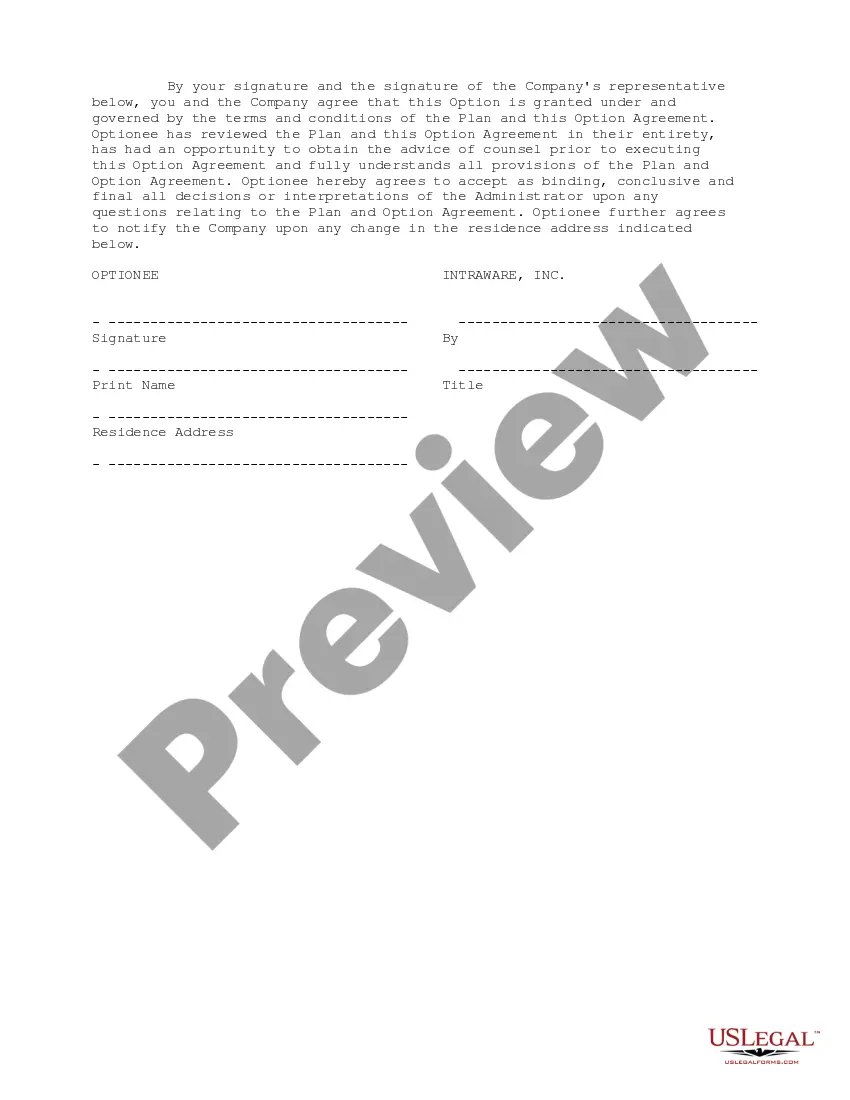
- Sign and date the agreement to finalize and make it binding.
- Provide any additional required information such as residency address.
Notarization guidance
This form does not typically require notarization unless specified by local law.
Get your form ready online
Our built-in tools help you complete, sign, share, and store your documents in one place.
Make edits, fill in missing information, and update formatting in US Legal Forms—just like you would in MS Word.
Download a copy, print it, send it by email, or mail it via USPS—whatever works best for your next step.
Sign and collect signatures with our SignNow integration. Send to multiple recipients, set reminders, and more. Go Premium to unlock E-Sign.
If this form requires notarization, complete it online through a secure video call—no need to meet a notary in person or wait for an appointment.
We protect your documents and personal data by following strict security and privacy standards.

Make edits, fill in missing information, and update formatting in US Legal Forms—just like you would in MS Word.

Download a copy, print it, send it by email, or mail it via USPS—whatever works best for your next step.

Sign and collect signatures with our SignNow integration. Send to multiple recipients, set reminders, and more. Go Premium to unlock E-Sign.

If this form requires notarization, complete it online through a secure video call—no need to meet a notary in person or wait for an appointment.

We protect your documents and personal data by following strict security and privacy standards.
Mistakes to watch out for
- Failing to complete the vesting schedule accurately.
- Not confirming the exercise price prior to exercising the option.
- Ignoring state-specific regulations regarding stock options.
- Overlooking the tax implications associated with exercising the option.
Why use this form online
- Convenient access to a comprehensive and legally sound stock option agreement.
- Editable templates allow for customization to fit specific employee agreements.
- Reliability in utilizing forms prepared by licensed attorneys.
- The Stock Option Agreement serves to clarify the rights of the Optionee and the company.
- This agreement is enforceable as long as it complies with state and federal employment and tax laws.
- It is essential to consult the Plan for any conflicts with the agreement.
Main things to remember
- The Stock Option Agreement is essential for understanding stock purchase rights.
- Correct completion ensures compliance with terms and helps avoid common mistakes.
- Users should be aware of tax implications when exercising their options.
Looking for another form?
Form popularity
FAQ
The stock option compensation is an expense of the business and is represented by the debit to the expense account in the income statement. The other side of the entry is to the additional paid in capital account (APIC) which is part of the total equity of the business.
Rule 701 of the Securities Act of 1933 exempts stock options from federal registration if grants are made pursuant to a written plan established by the issuer for the benefit of its employees or employees of a subsidiary, but there are limitations on the number of securities issuable.
After your options vest, you can exercise them that is, pay for the stock and own it.It may be couched in language such as company repurchase rights, redemption or forfeiture. But what it means is that the company can claw back your vested stock options before they become valuable.
It can provide significant financial benefits The key to stock options and grants is they provide optionality.If the stock value increases, you could make significant financial gainsbut only if you've exercised (purchased) your options. And you can only do that if you've accepted your grant.
About Stock Option Agreements When a company offers employees stock options, they do so through a special contract called a stock option agreement.The option agreement dictates all the terms of the offer -- including vesting schedule, time limits for exercise once vested and any other special conditions.
Mandated by US tax rules, unexercised employee stock options expire 10 years from date of grant and are absorbed back into the company. Historically, this was never a problem because the incentive stock model familiar to everyone was designed when companies aimed to go public as soon as they viably could.
RSUs are generally always worth something versus stock options, which can expire worthless if the stock price is below the strike price. Additionally, with RSUs you don't have to come up with the cash to exercise the options if your company doesn't offer some sort of cashless exercise option.
A stock option is the right to buy a specific number of shares of company stock at a pre-set price, known as the exercise or strike price, for a fixed period of time, usually following a predetermined waiting period, called the vesting period. Most vesting periods span follow three to five years, with a certain