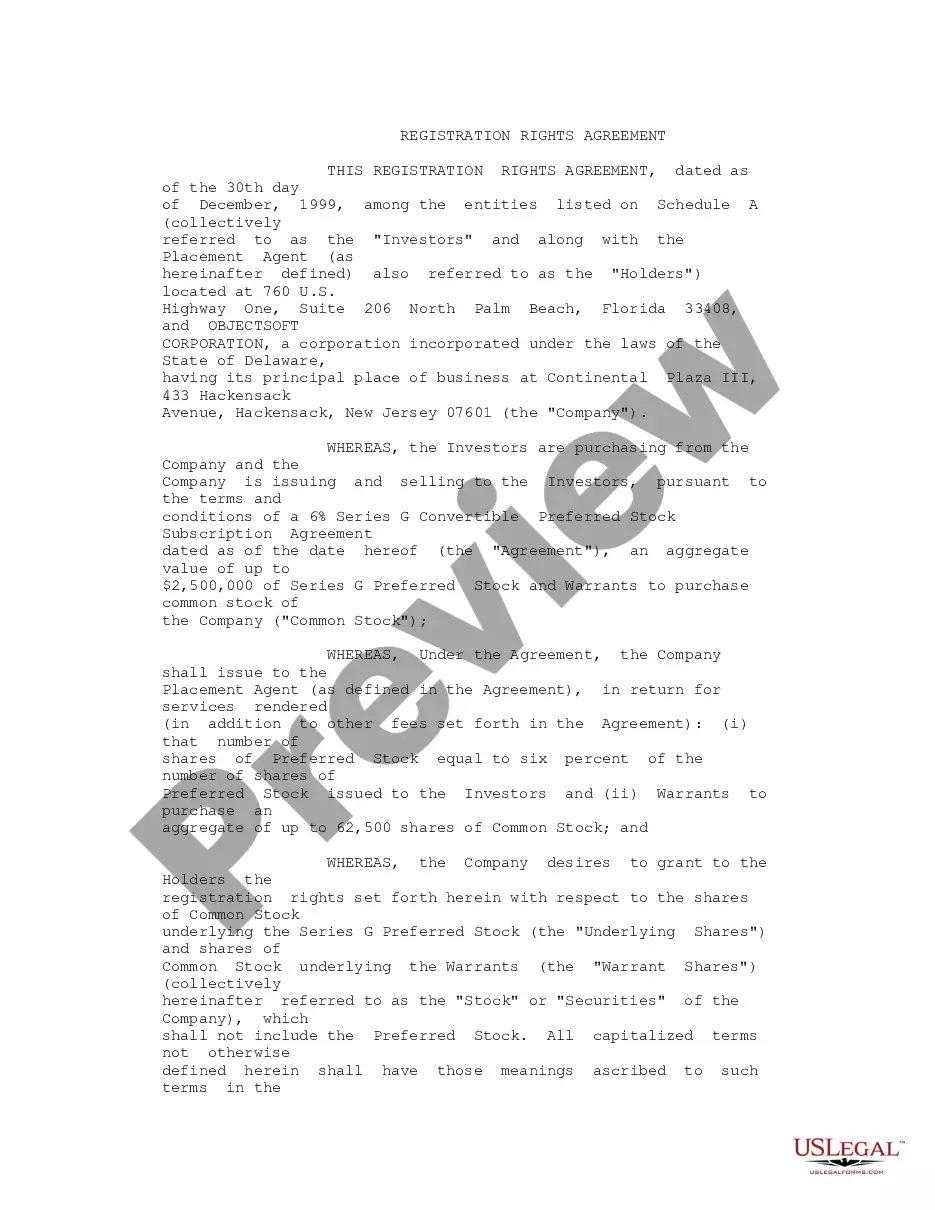
Subscription Agreement - 6% Series G Convertible Preferred Stock - between ObjectSoft Corp. and Investors regarding issuance and sale of preferred stock
What this document covers
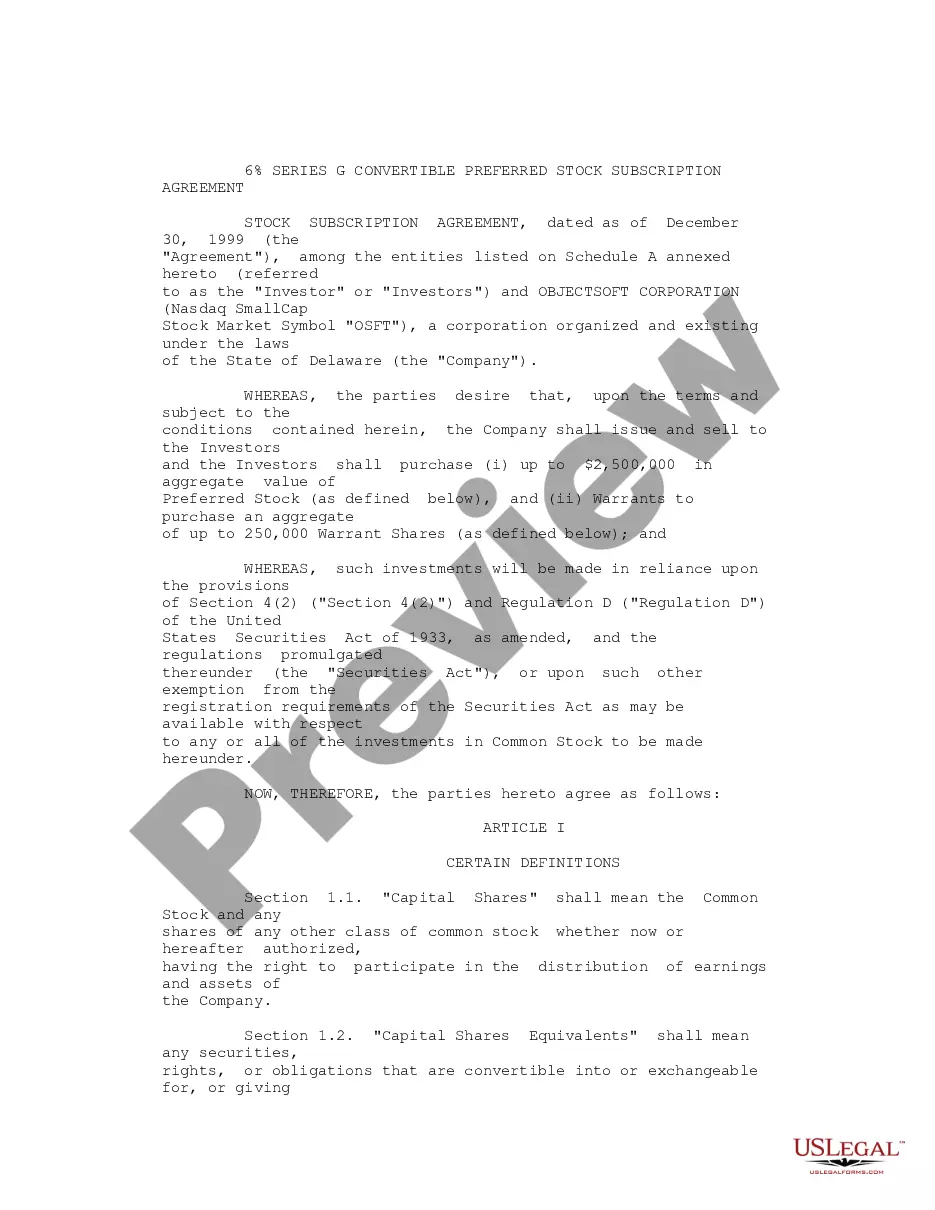
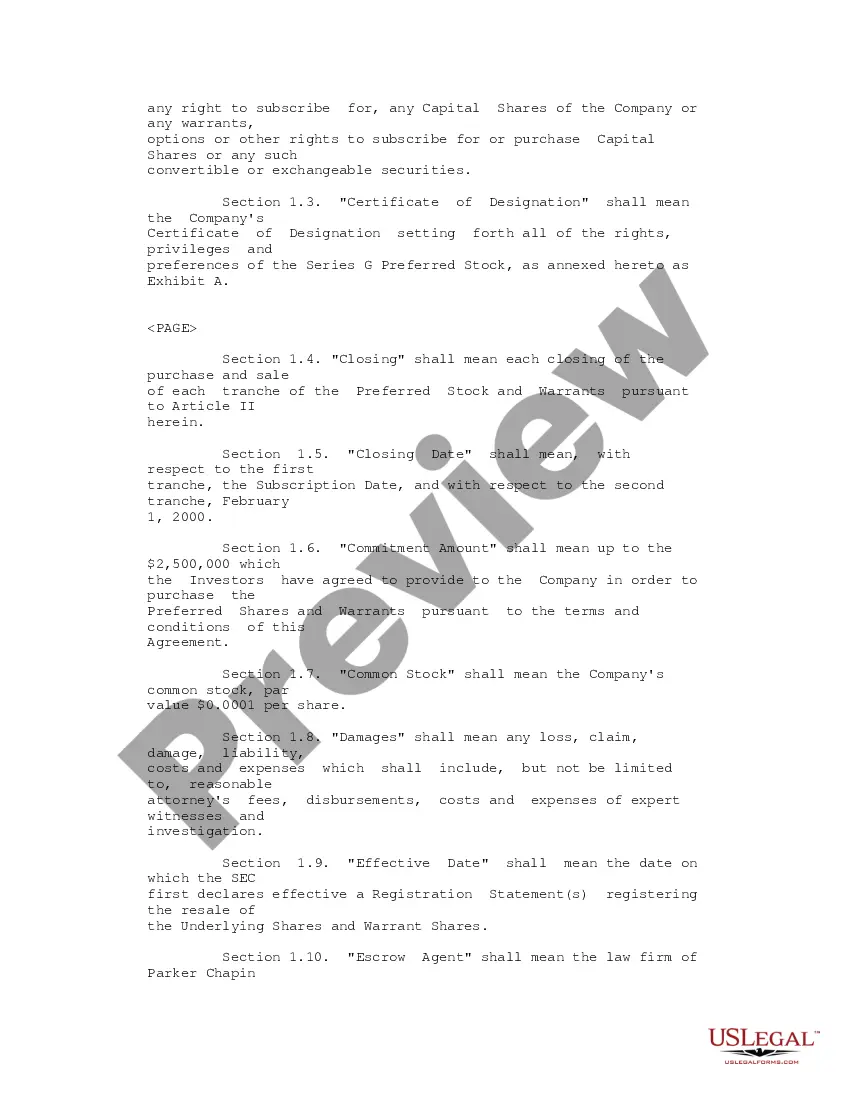
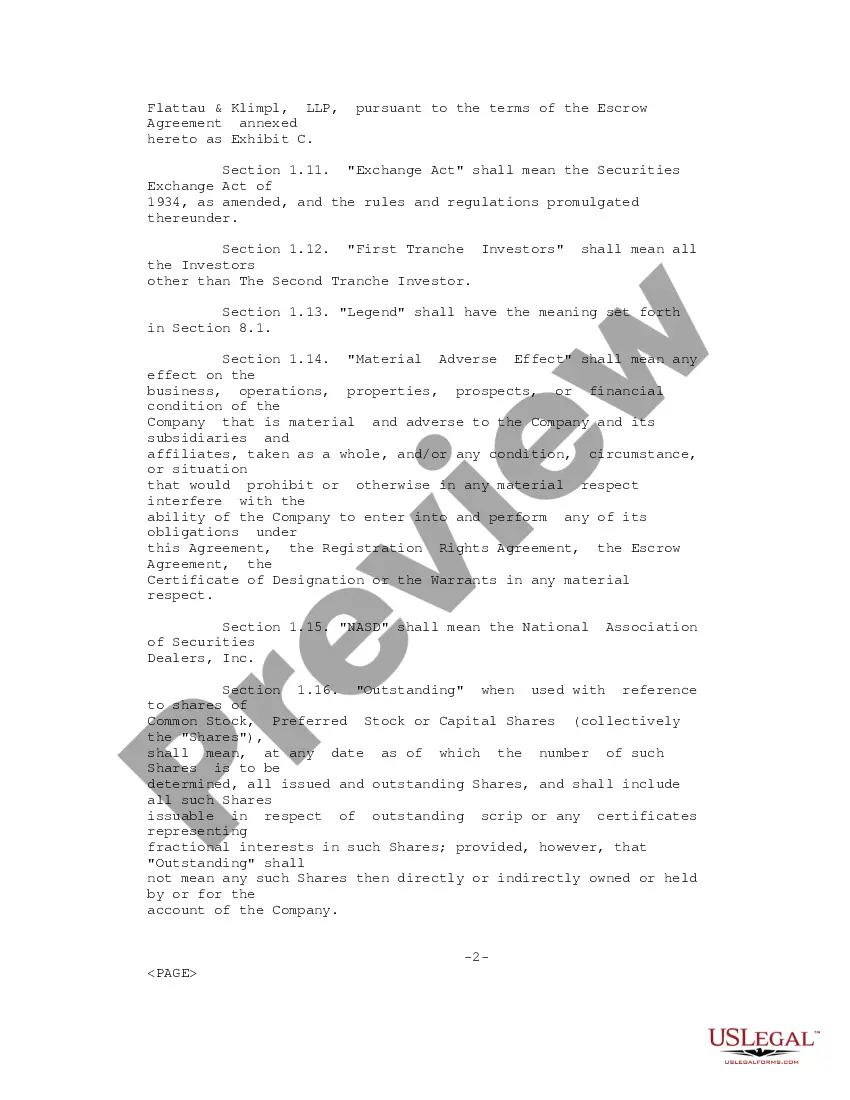
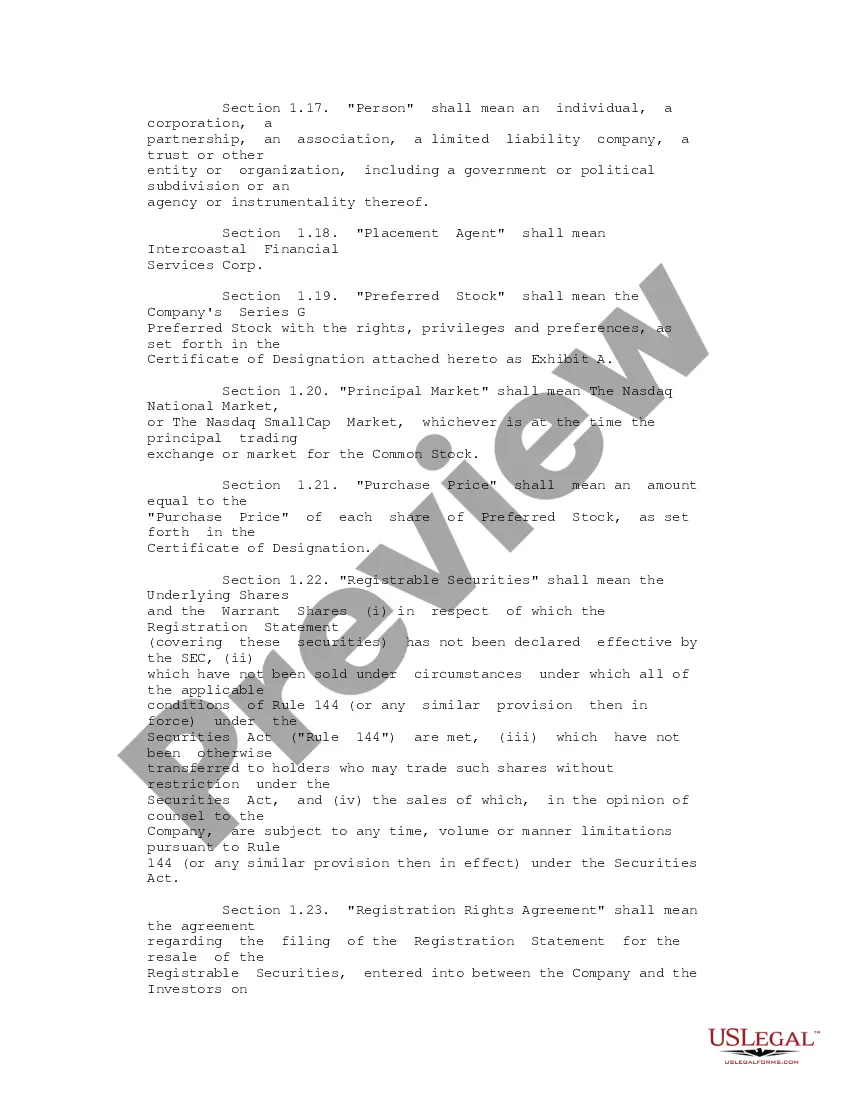
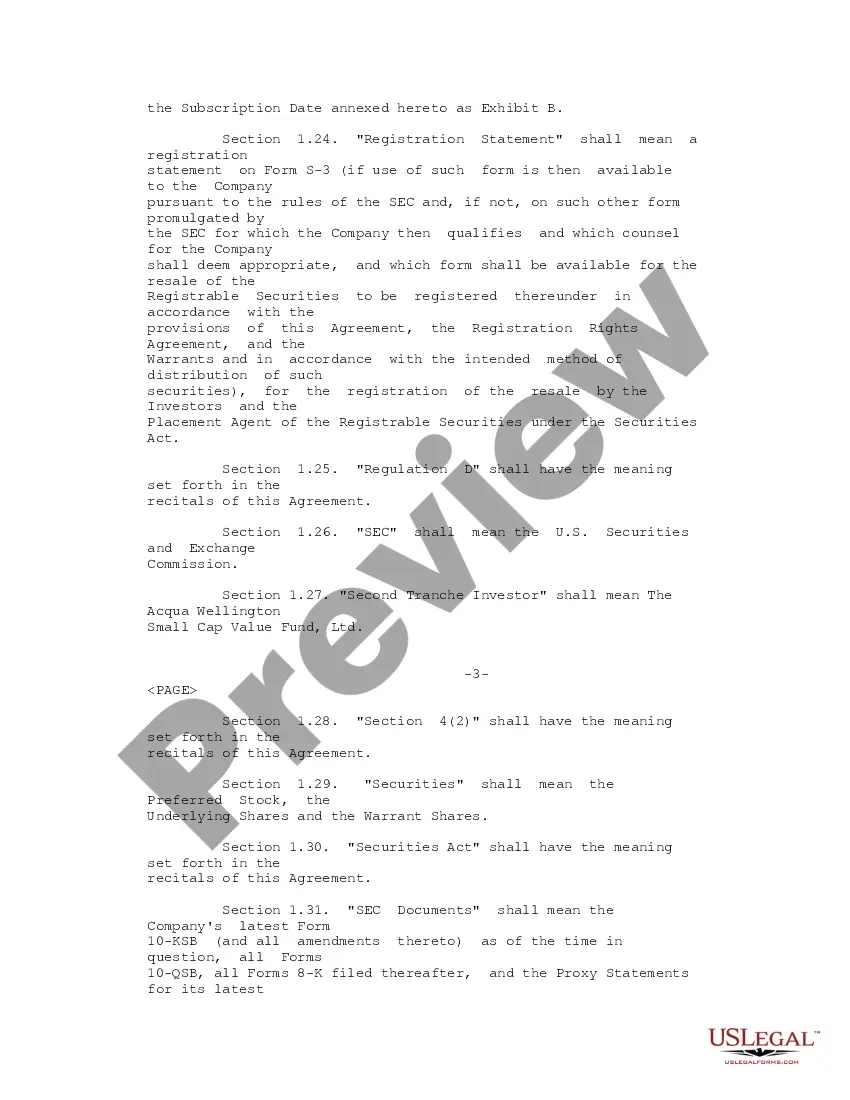
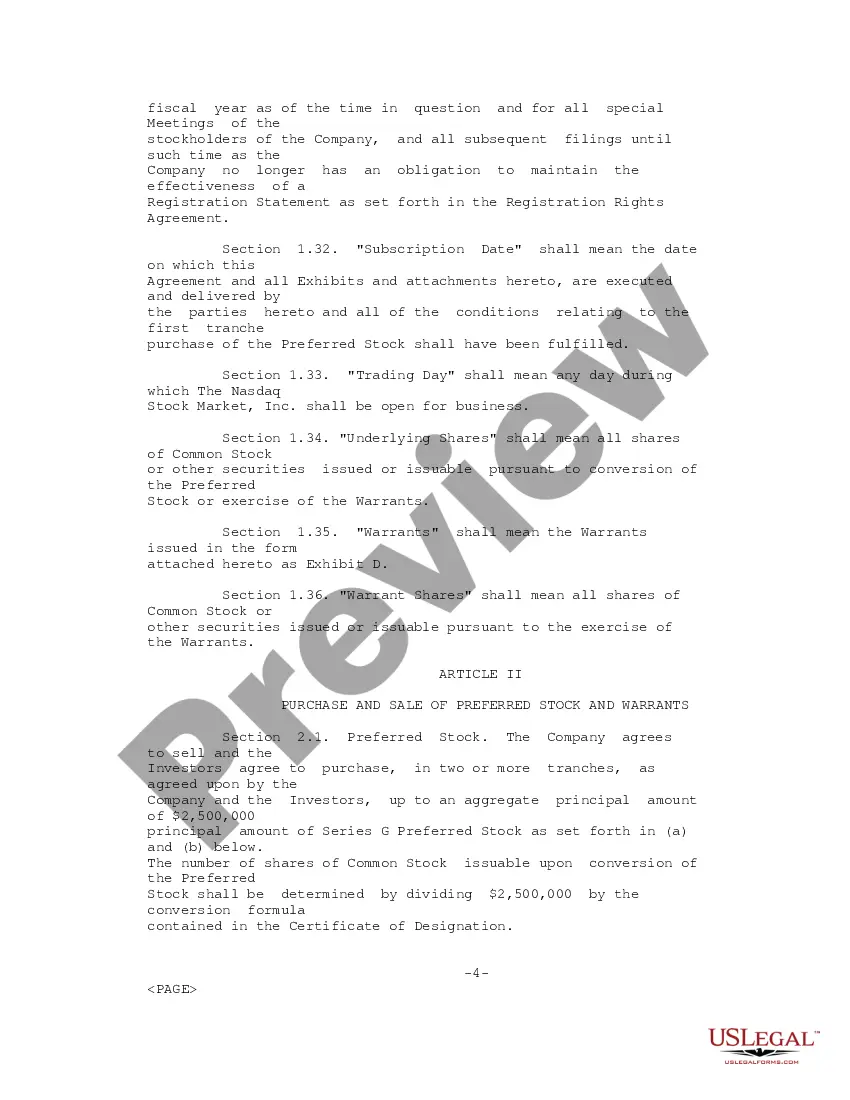
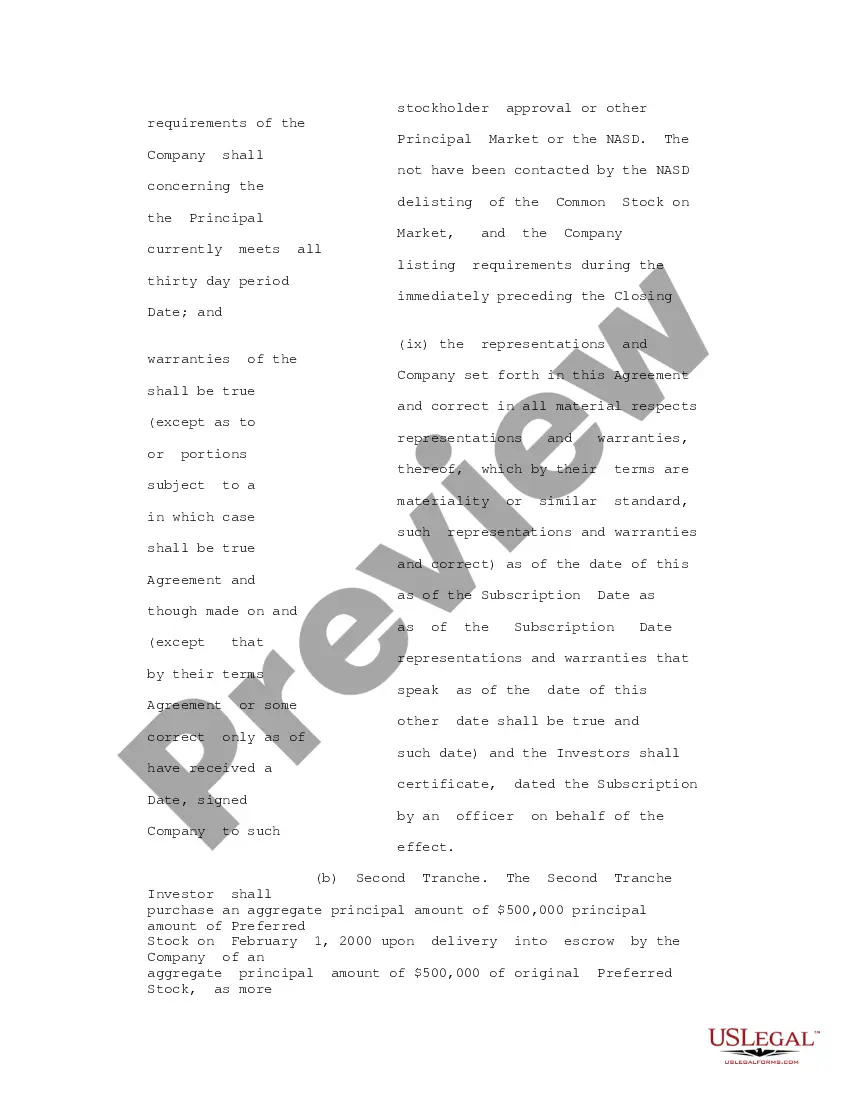
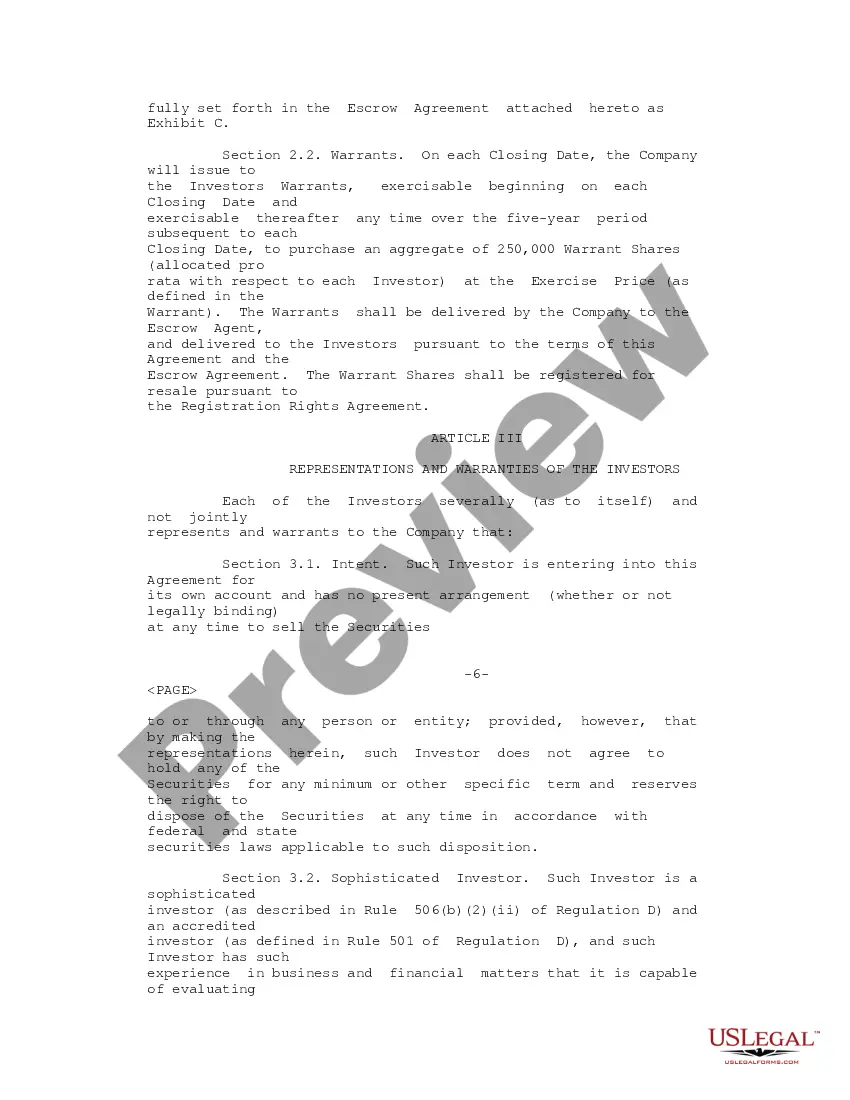
The Subscription Agreement for 6% Series G Convertible Preferred Stock is a legal document used to outline the terms under which ObjectSoft Corporation and its investors engage in the issuance and sale of preferred stock. This agreement is important for establishing the rights and responsibilities of both parties involved in the transaction, particularly concerning the conversion of preferred stock into common stock and the issuance of warrants. Unlike other stock agreements, it specifically addresses the terms tied to the Series G Convertible Preferred Stock and assures compliance with federal securities regulations.
Key components of this form
- Definitions of key terms such as Preferred Stock, Warrant Shares, and Capital Shares.
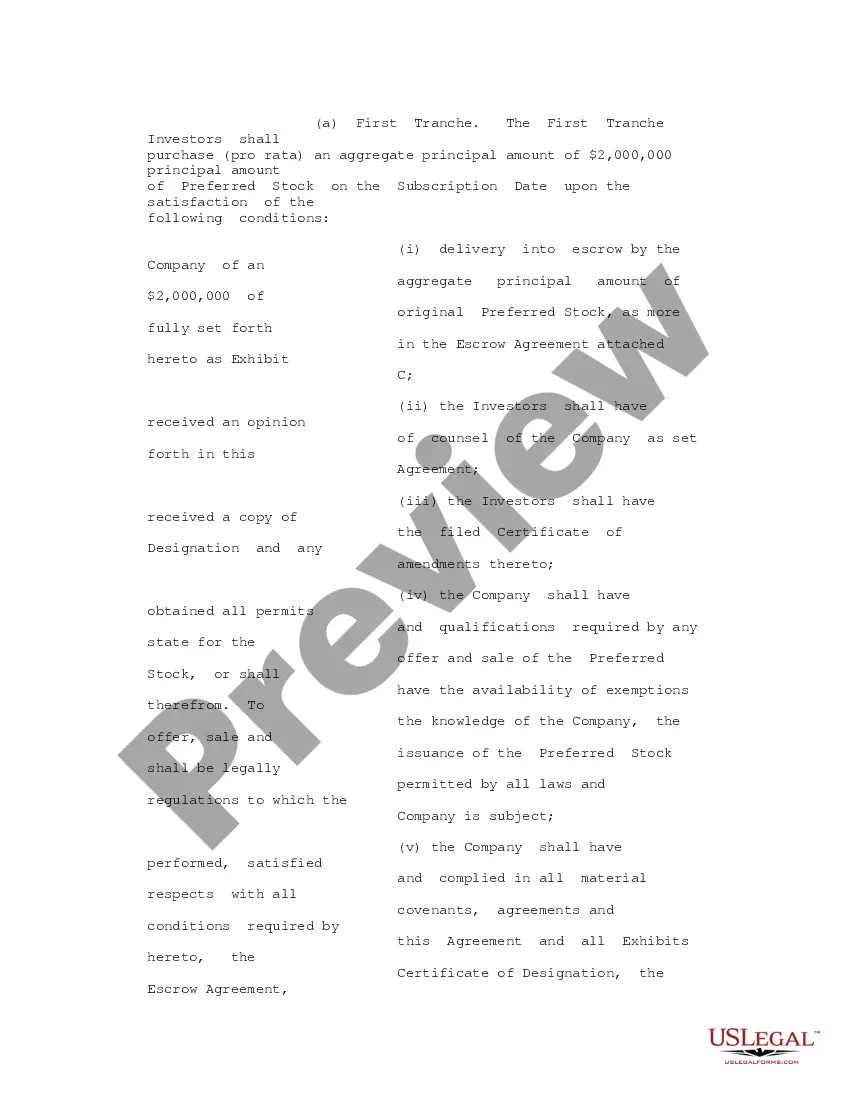
- Details regarding the purchase and sale of the Preferred Stock in multiple tranches.
- Warrant provisions outlining the rights to purchase additional shares of common stock.
- Representations and warranties made by both the investors and the company.
- Covenants and commitments regarding compliance with securities laws and registration of shares.


When this form is needed
This Subscription Agreement should be used when investors wish to purchase 6% Series G Convertible Preferred Stock from ObjectSoft Corporation. It is appropriate in situations involving private placements of stock, where specific terms are necessary to protect the interests of both the company and the investors. This form is essential when the transaction needs to comply with exemptions from registration requirements under the Securities Act.
Who should use this form
- Investors looking to acquire shares of preferred stock in ObjectSoft Corporation.
- Corporate lawyers assisting in private placement transactions.
- Company executives responsible for corporate financing and compliance.
- Individuals familiar with securities transactions who wish to formalize an investment.
Instructions for completing this form
- Identify the parties involved, including the company and investors.
- Specify the number of shares to be purchased and the purchase price.
- Complete the sections defining the rights and privileges associated with the preferred stock.
- Review and sign the agreement, ensuring that all parties understand their rights and obligations.
- Obtain any necessary legal opinions and file with relevant authorities as required.
Does this form need to be notarized?
This form does not typically require notarization unless specified by local law. It is advisable to check state-specific regulations to determine if notarization is necessary for your jurisdiction.
Get your form ready online
Our built-in tools help you complete, sign, share, and store your documents in one place.
Make edits, fill in missing information, and update formatting in US Legal Forms—just like you would in MS Word.
Download a copy, print it, send it by email, or mail it via USPS—whatever works best for your next step.
Sign and collect signatures with our SignNow integration. Send to multiple recipients, set reminders, and more. Go Premium to unlock E-Sign.
If this form requires notarization, complete it online through a secure video call—no need to meet a notary in person or wait for an appointment.
We protect your documents and personal data by following strict security and privacy standards.

Make edits, fill in missing information, and update formatting in US Legal Forms—just like you would in MS Word.

Download a copy, print it, send it by email, or mail it via USPS—whatever works best for your next step.

Sign and collect signatures with our SignNow integration. Send to multiple recipients, set reminders, and more. Go Premium to unlock E-Sign.

If this form requires notarization, complete it online through a secure video call—no need to meet a notary in person or wait for an appointment.

We protect your documents and personal data by following strict security and privacy standards.
Mistakes to watch out for
- Failing to properly define key terms or the structure of the stock offering.
- Not including all necessary details about the terms of conversion and warrants.
- Overlooking compliance with state regulations in addition to federal laws.
- Neglecting to obtain required legal opinions or documentation prior to execution.
Advantages of online completion
- Convenience of accessing and downloading the form at any time.
- Easy customization to fit specific transaction details.
- Ensured compliance with current legal standards and formatting.
- Time-saving features for electronic signing, reducing paperwork and delays.
Legal use & context
- The agreement establishes a binding relationship between the company and its investors.
- It is important to ensure the form is filled out accurately to minimize legal risks.
- Investors should be aware of their rights and obligations under the agreement.
Looking for another form?

Form popularity
FAQ
Because convertible bonds have a maturity of greater than one year, they appear under the long-term liabilities section of the balance sheet.
A convertible security is an investment that can be changed into another form. The most common convertible securities are convertible bonds and convertible preferred stock, which can be converted into common stock.
Convertible bondholders are creditors of the corporation.advantage to convert the bonds into common stock, the bonds will sell at a price based on their inherent value as bonds, regardless of the convertible feature.
By this logic, the convertible bond allows the issuer to sell common stock indirectly at a price higher than the current price. From the buyer's perspective, the convertible bond is attractive because it offers the opportunity to obtain the potentially large return associated with stocks, but with the safety of a bond.
A convertible bond is a fixed-income corporate debt security that yields interest payments, but can be converted into a predetermined number of common stock or equity shares. The conversion from the bond to stock can be done at certain times during the bond's life and is usually at the discretion of the bondholder.
Companies issue convertible bonds to lower the coupon rate on debt and to delay dilution. A bond's conversion ratio determines how many shares an investor will get for it. Companies can force conversion of the bonds if the stock price is higher than if the bond were to be redeemed.
What is the accounting for issued convertible bond? Bondholders exchange their convertible bonds for ordinary shares. The carrying amount of these bonds was lower than market value but greater than the par value of the ordinary shares issued.
The equity & liability portion for the convertible bonds can be calculated using the Residual Approach. This approach assumes that the value of the equity portion is equal to the difference between the total amount received from the proceeds of the bonds and the present value of future cash flows from the bonds.
A "convertible security" is a securityusually a bond or a preferred stockthat can be converted into a different securitytypically shares of the company's common stock. In most cases, the holder of the convertible determines whether and when to convert.