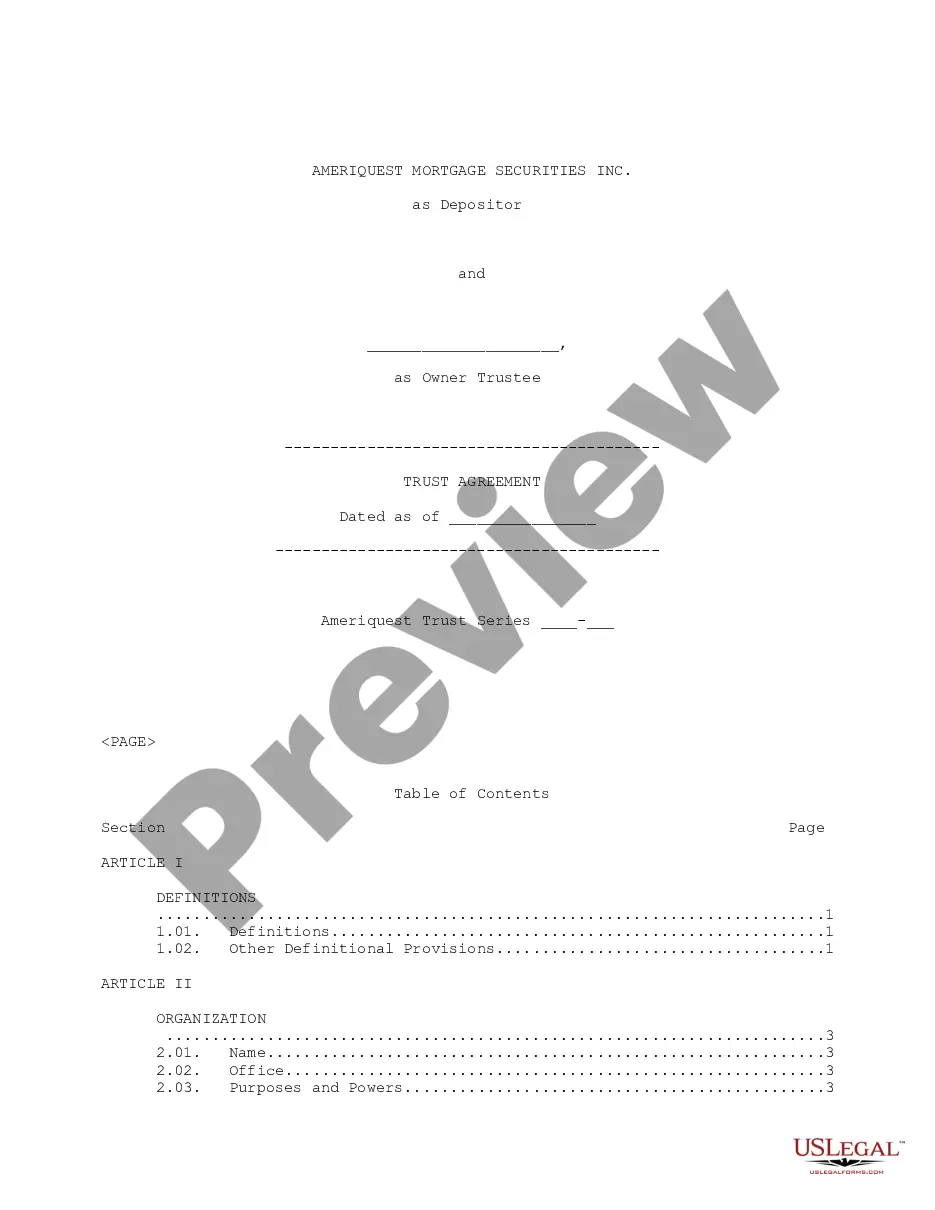
Trust Agreement of Ameriquest Mortgage Securities, Inc.
What this document covers
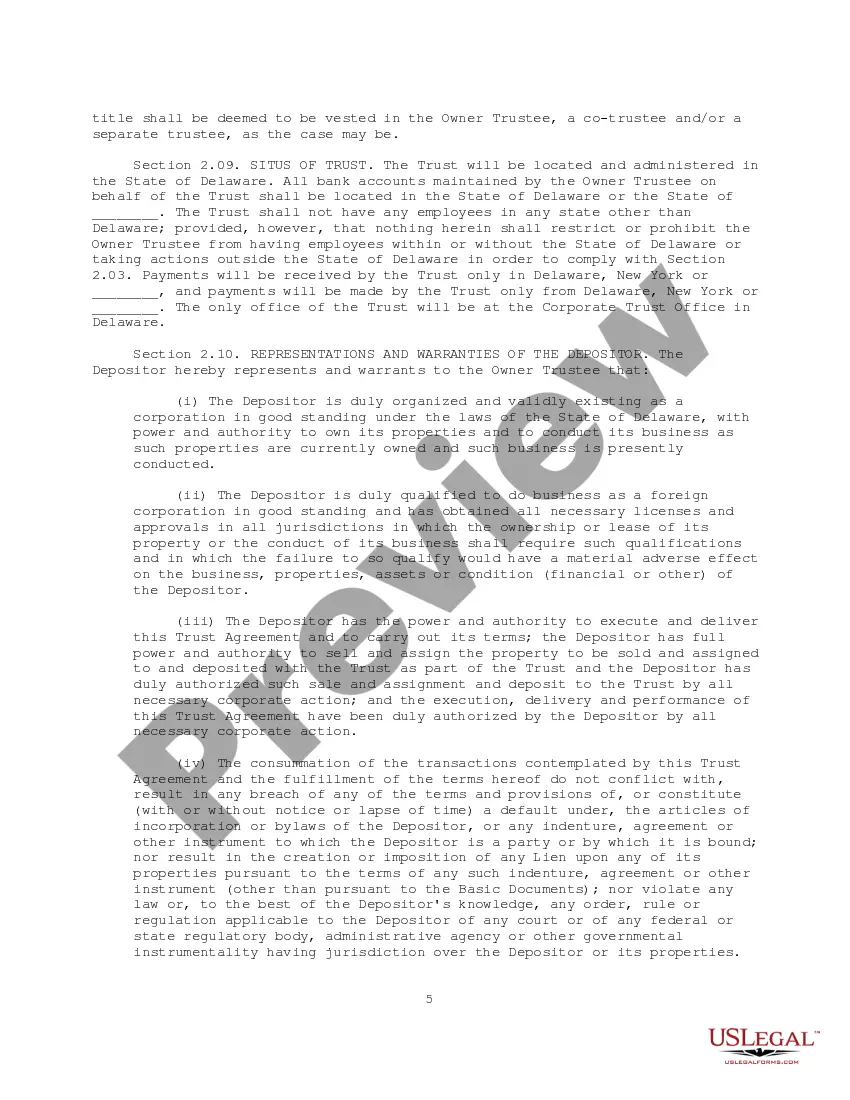
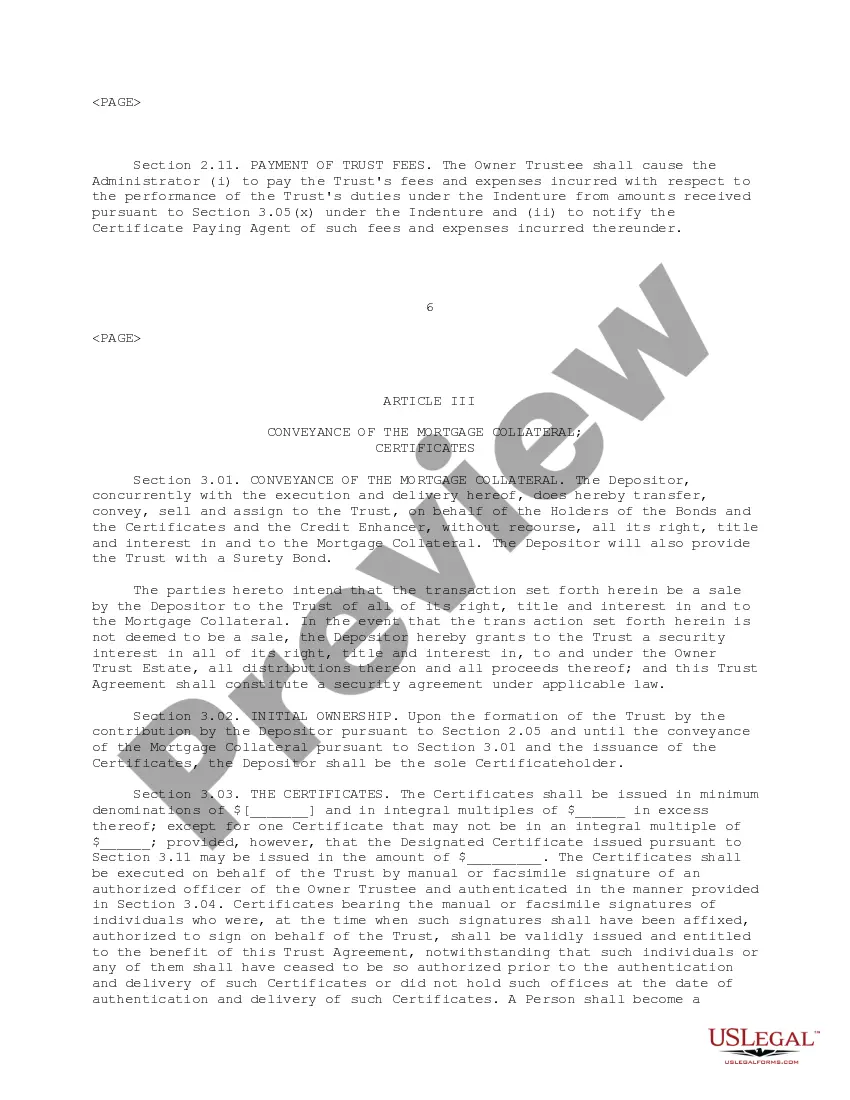
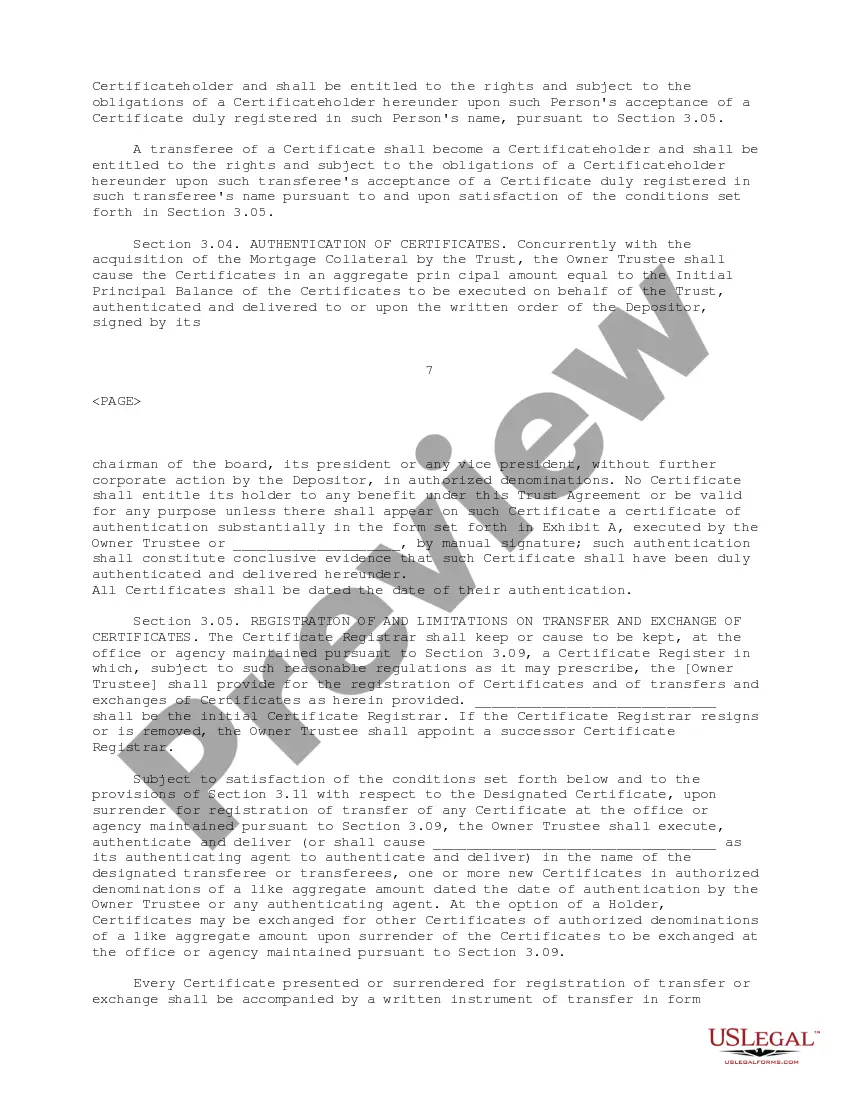
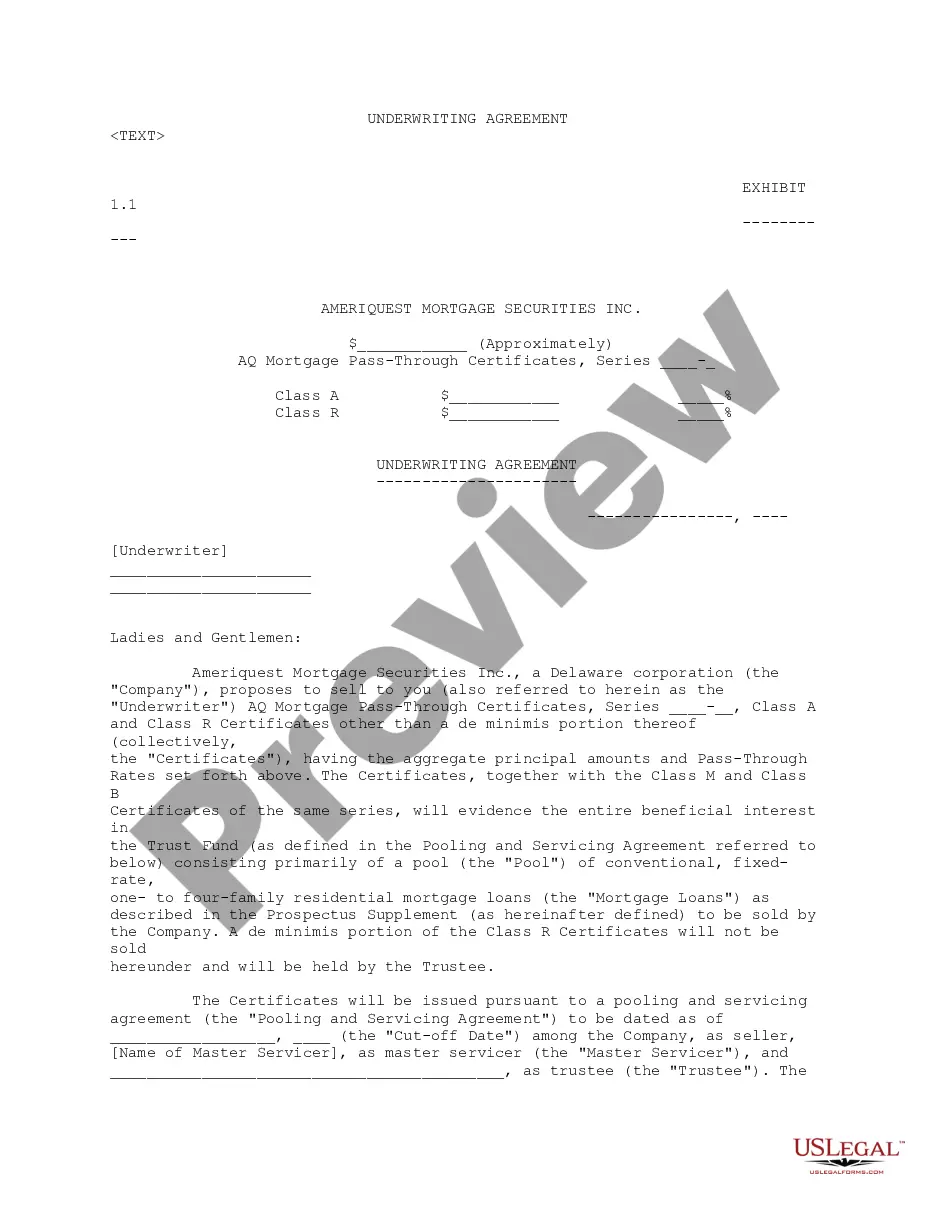
The Trust Agreement of Ameriquest Mortgage Securities, Inc. is a legal document that establishes a trust for the purpose of managing and distributing mortgage-backed securities. This form details the responsibilities of the Owner Trustee and the rights of the Certificateholders, distinguishing it from other types of trust agreements that may not involve multiple parties or financial instruments.
What’s included in this form
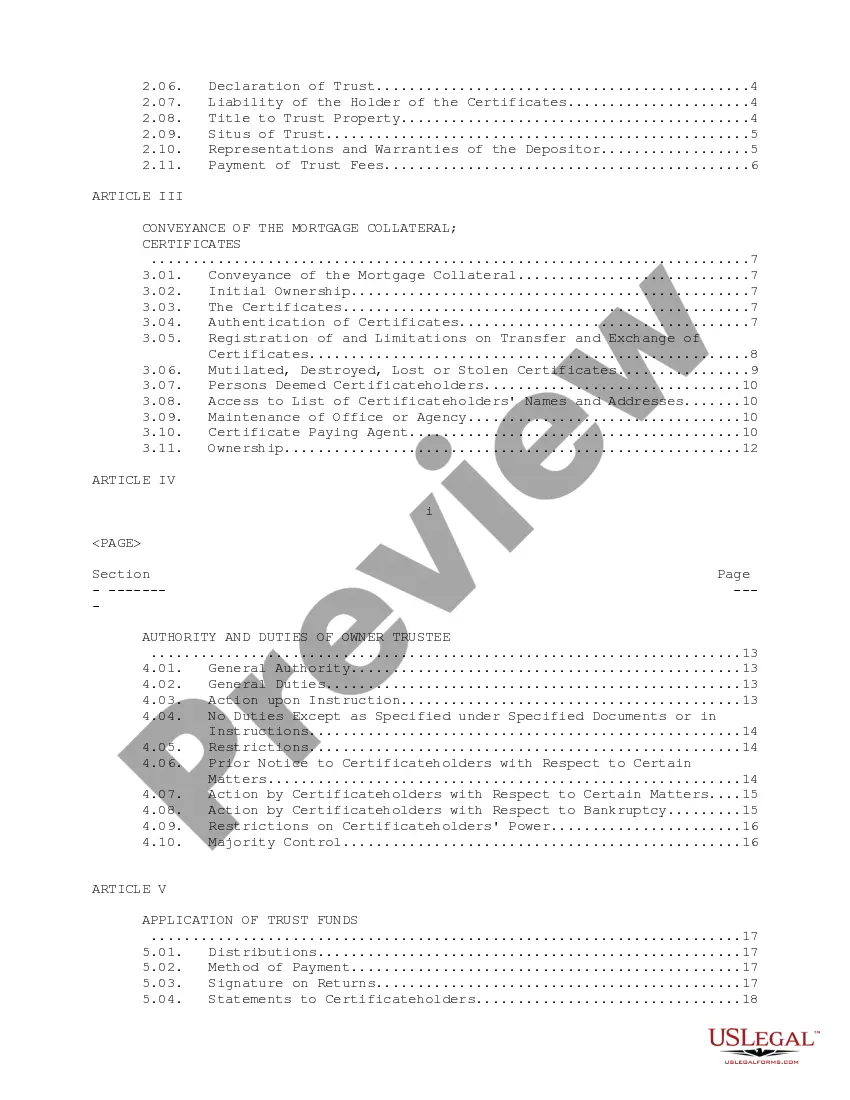
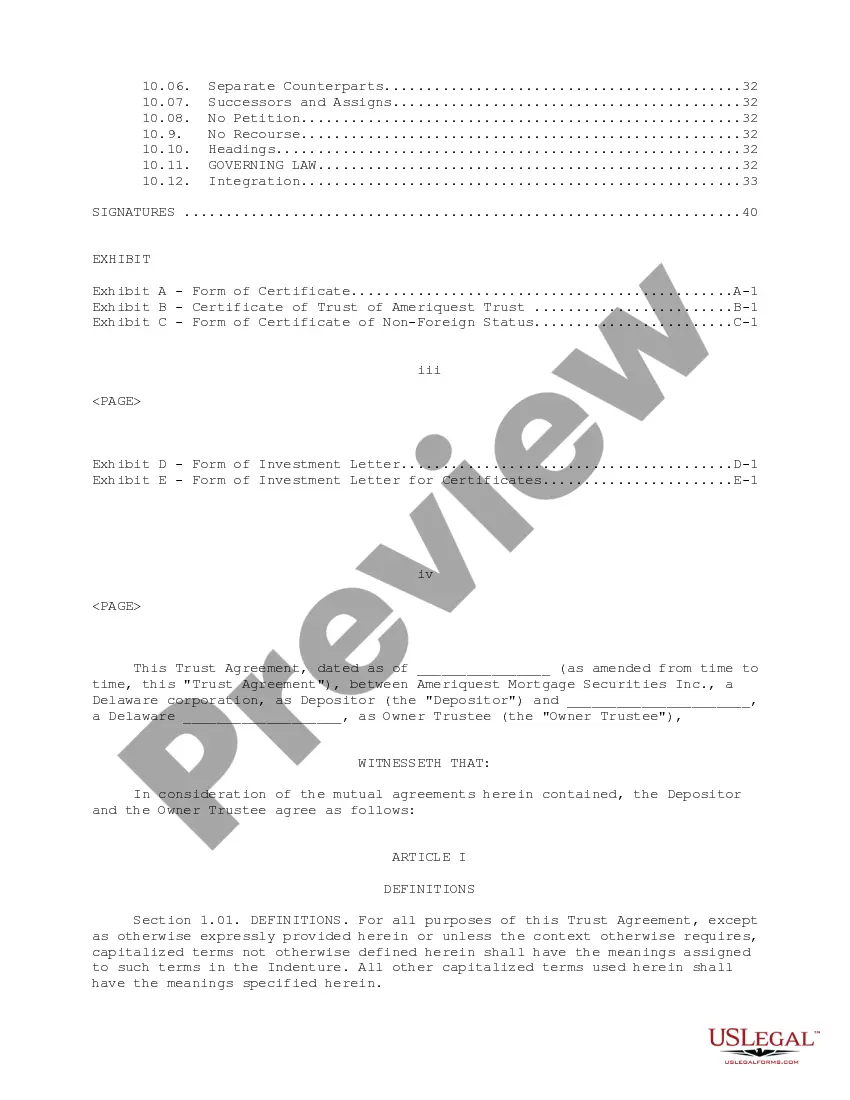
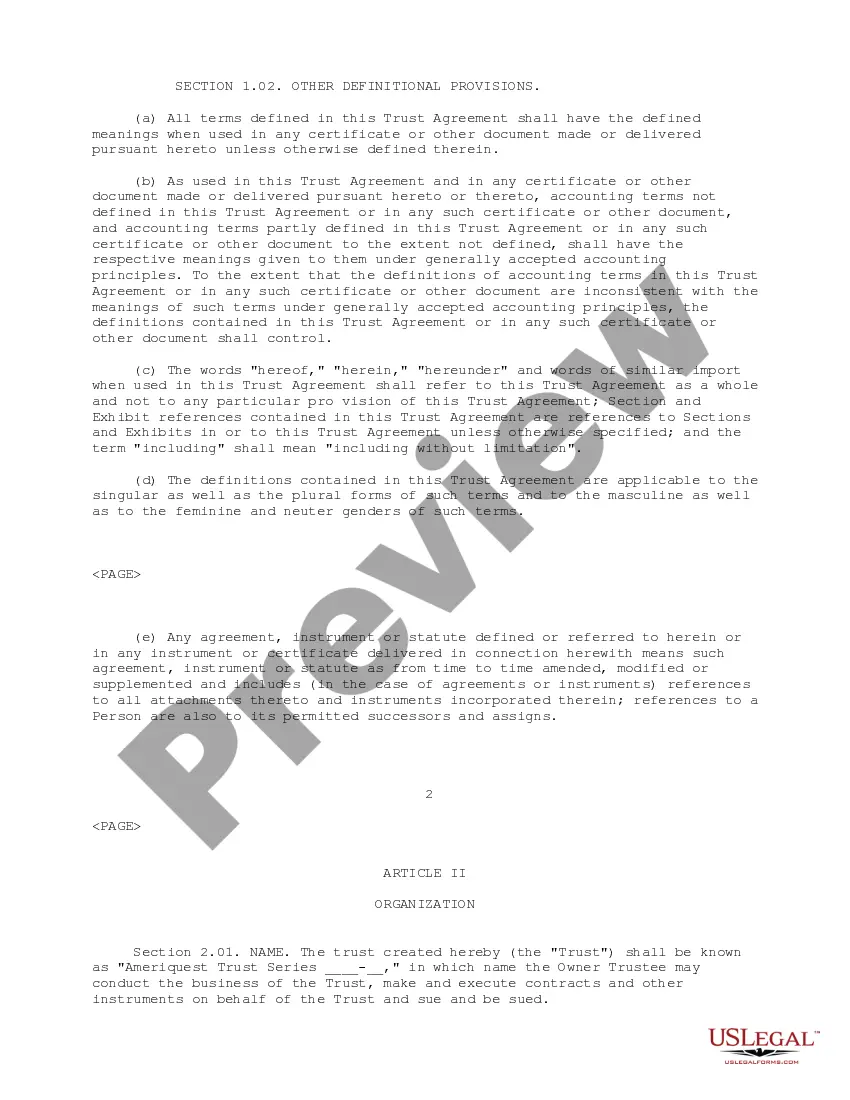
- Definitions: Clarifies key terms used throughout the agreement.
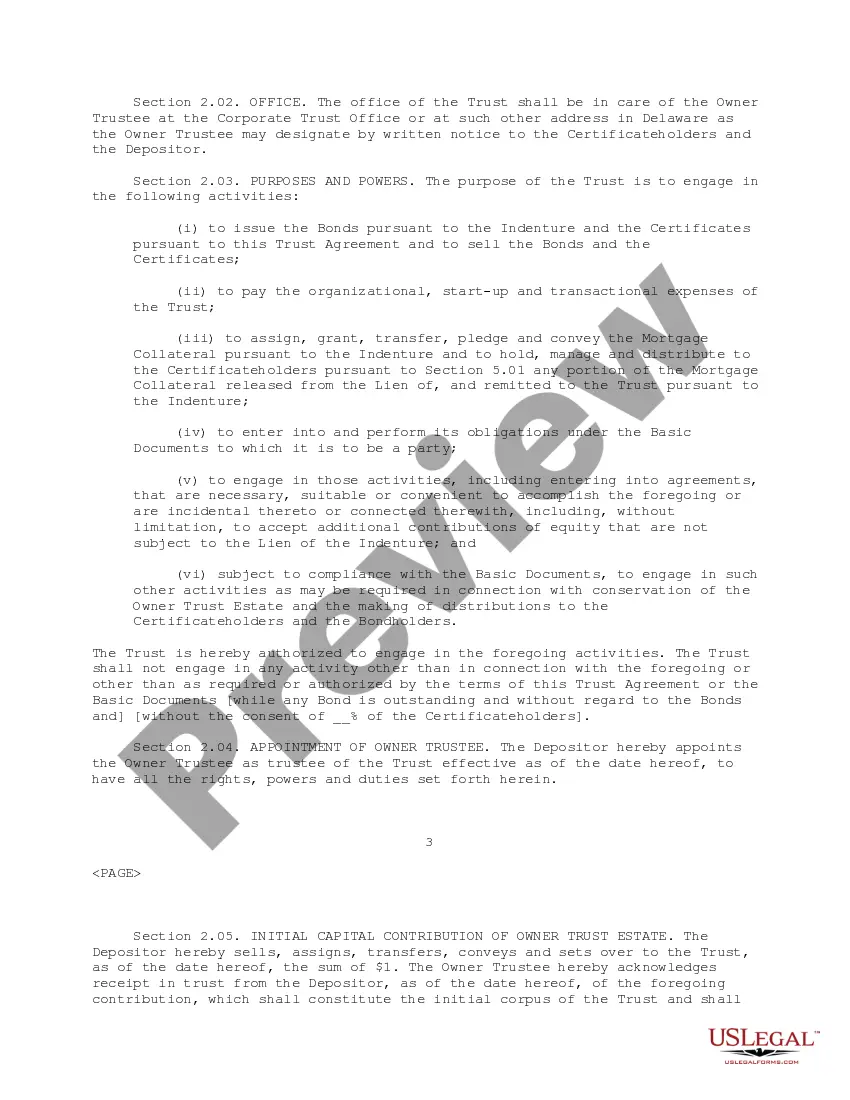
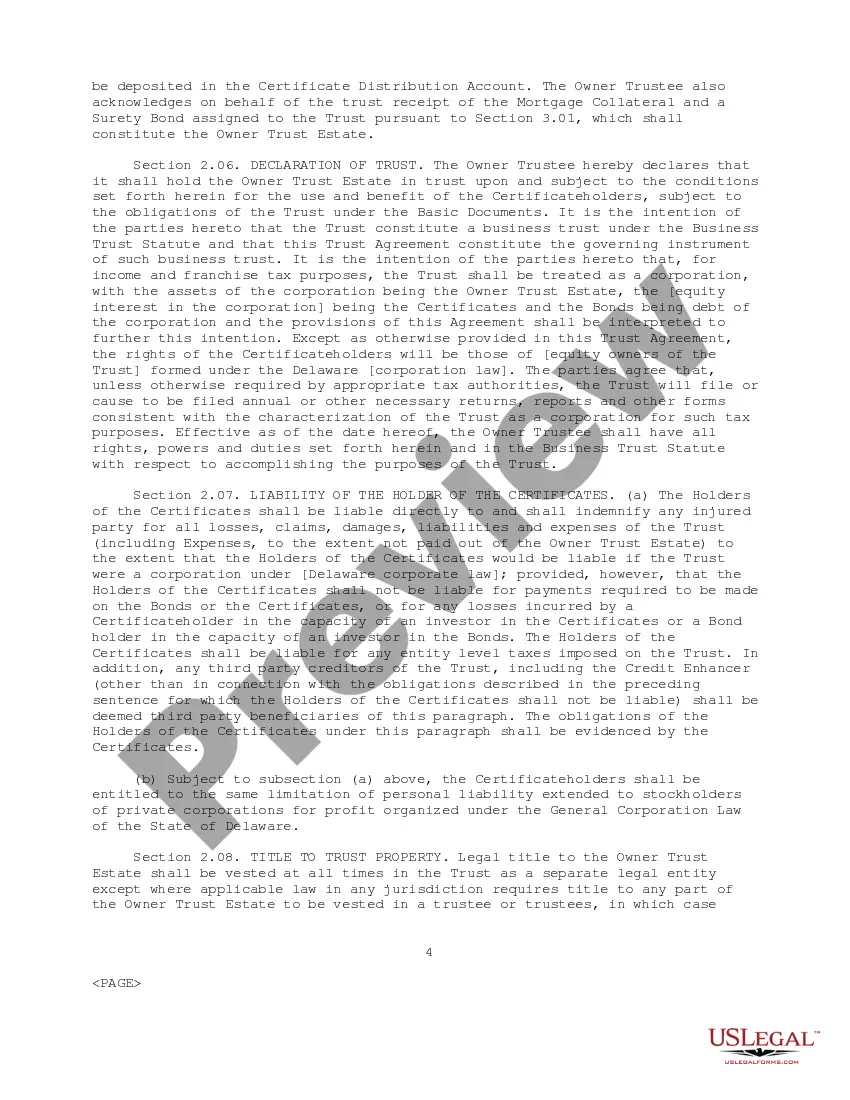
- Organization: Outlines the structure and operational powers of the trust.
- Conveyance of Mortgage Collateral: Details the transfer of mortgage instruments into the trust.
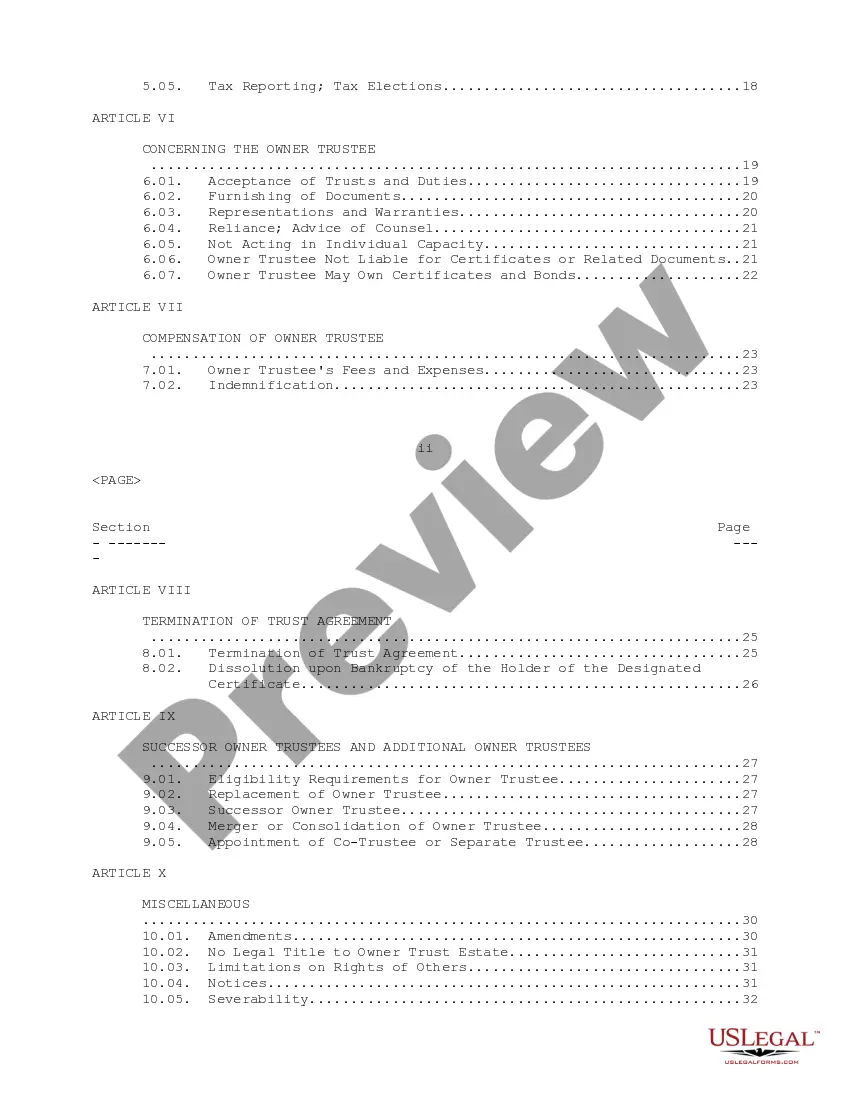
- Authority and Duties of Owner Trustee: Specifies the powers and responsibilities of the trustee.
- Application of Trust Funds: Explains how distributions are made to Certificateholders.
- Termination of Trust Agreement: Defines the conditions under which the trust may be dissolved.

When this form is needed
This trust agreement is essential when establishing a trust for managing mortgage-backed securities in order to provide structured investments to Certificateholders. It is particularly beneficial when pooling loans and ensuring proper management and distribution of the collateralized assets. This form is commonly used by financial institutions and trust companies involved in mortgage securities transactions.
Who this form is for
- Financial institutions acting as depositors in a mortgage-backed securities transaction.
- Trustee corporations responsible for managing the trust assets.
- Investors looking to obtain ownership stakes through Certificates issued under the trust.
- Legal professionals assisting in the setup of financial trusts for clients.
How to prepare this document
- Identify the parties involved, including the Depositor and the Owner Trustee.
- Specify the name of the trust and its initial capital contribution in the designated sections.
- Detail the mortgage collateral being transferred to the trust, including any relevant identifiers.
- Enter the effective date of the trust agreement and include necessary signatures from the parties.
- Ensure all applicable certificates and documents are attached as exhibits to the agreement.
Notarization requirements for this form
This form does not typically require notarization unless specified by local law. Always check state laws to ensure compliance with specific requirements.
Get your form ready online
Our built-in tools help you complete, sign, share, and store your documents in one place.
Make edits, fill in missing information, and update formatting in US Legal Forms—just like you would in MS Word.
Download a copy, print it, send it by email, or mail it via USPS—whatever works best for your next step.
Sign and collect signatures with our SignNow integration. Send to multiple recipients, set reminders, and more. Go Premium to unlock E-Sign.
If this form requires notarization, complete it online through a secure video call—no need to meet a notary in person or wait for an appointment.
We protect your documents and personal data by following strict security and privacy standards.

Make edits, fill in missing information, and update formatting in US Legal Forms—just like you would in MS Word.

Download a copy, print it, send it by email, or mail it via USPS—whatever works best for your next step.

Sign and collect signatures with our SignNow integration. Send to multiple recipients, set reminders, and more. Go Premium to unlock E-Sign.

If this form requires notarization, complete it online through a secure video call—no need to meet a notary in person or wait for an appointment.

We protect your documents and personal data by following strict security and privacy standards.
Common mistakes to avoid
- Failing to accurately define key terms, leading to ambiguity in the agreement.
- Not properly identifying all parties involved, which can complicate future transactions.
- Omitting signatures or failing to date the agreement, rendering it invalid.
- Neglecting to properly attach required exhibits, which can impact legal enforceability.
Benefits of using this form online
- Convenience of completing the form at any time, from any location.
- Editability allows users to customize the document to their specific situation.
- Access to expert legal resources and templates enhances reliability and accuracy.
Looking for another form?

Form popularity
FAQ
A deed of trust has a crucial advantage over a mortgage from the lender's point of view. If the borrower defaults on the loan, the trustee has the power to foreclose on the property on behalf of the beneficiary.
A trust agreement is a document that spells out the rules that you want followed for property held in trust for your beneficiaries. Common objectives for trusts are to reduce the estate tax liability, to protect property in your estate, and to avoid probate.
Whether you have a deed of trust or a mortgage, they both serve to assure that a loan is repaid, either to a lender or an individual person. A mortgage only involves two parties the borrower and the lender. A deed of trust adds an additional party, a trustee, who holds the home's title until the loan is repaid.
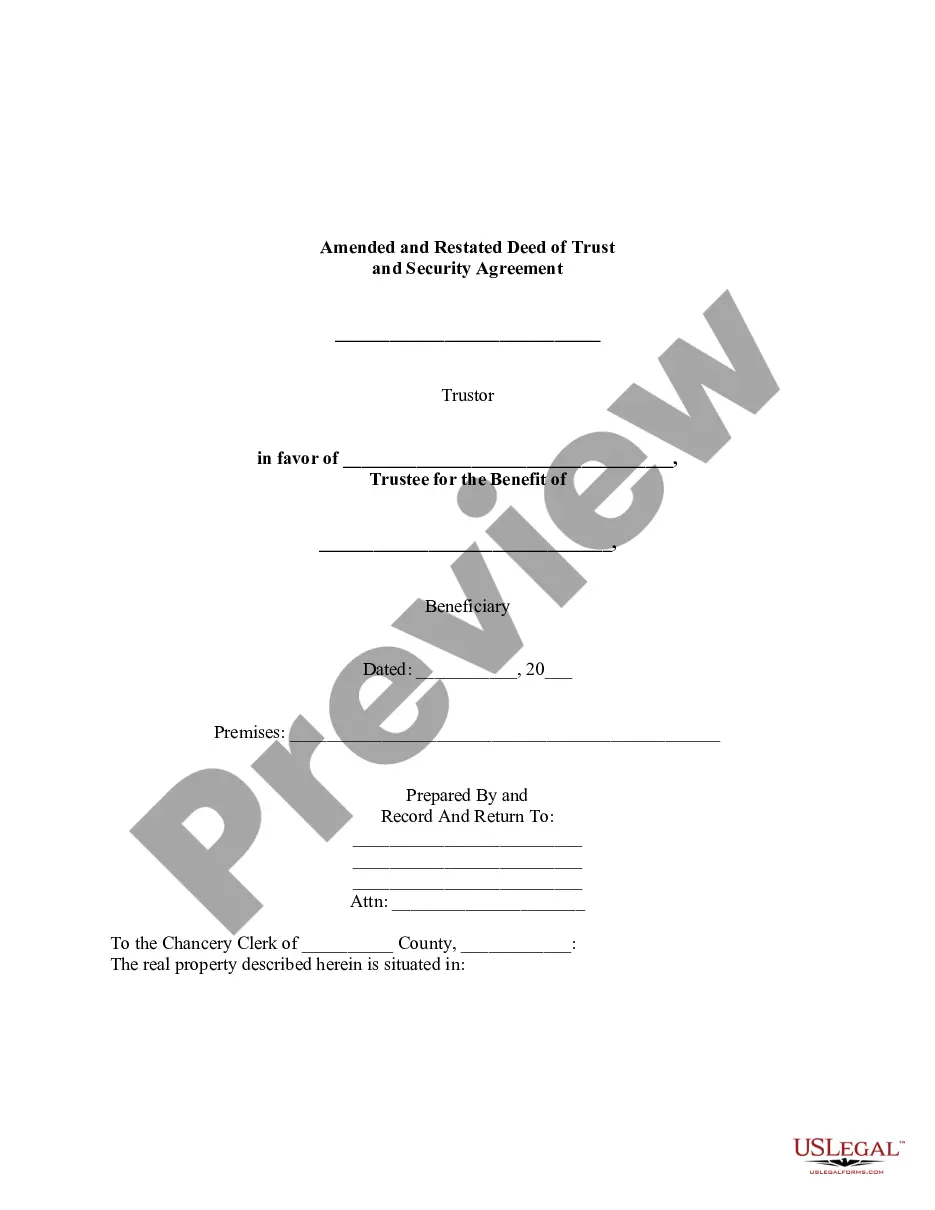
What Is A Deed Of Trust? A deed of trust is an agreement between a home buyer and a lender at the closing of a property. It states that the home buyer will repay the loan and that the mortgage lender will hold the legal title to the property until the loan is fully paid.
A trust deed is a legally binding arrangement and covers unsecured debts only, such as credit cards and personal loans. It does not therefore apply to your mortgage or any hire purchase agreements.
A mortgage trust can function as an investment account. In this case, investors put funds in the trust account, and the trustee of the account invests these funds by directly buying mortgage securities, or investment instruments that pool mortgages together and provide a rate of return.
Deed: This is the document that proves ownership of a property. It transfers ownership of the property to the grantee, also known as the buyer.Mortgage: This is the document that gives the lender a security interest in the property until the Note is paid in full.
In financed real estate transactions, trust deeds transfer the legal title of a property to a third partysuch as a bank, escrow company, or title companyto hold until the borrower repays their debt to the lender. Trust deeds are used in place of mortgages in several states.
A trust agreement is a document that allows you (the trustor) to legally transfer the ownership of specific assets to another person (trustee) to be held for the trustor's beneficiaries.Assets controlled in the trust.