General Code of Executive Ethics for all Corporate Executives and Members of the Board of Directors and Committees
Understanding this form
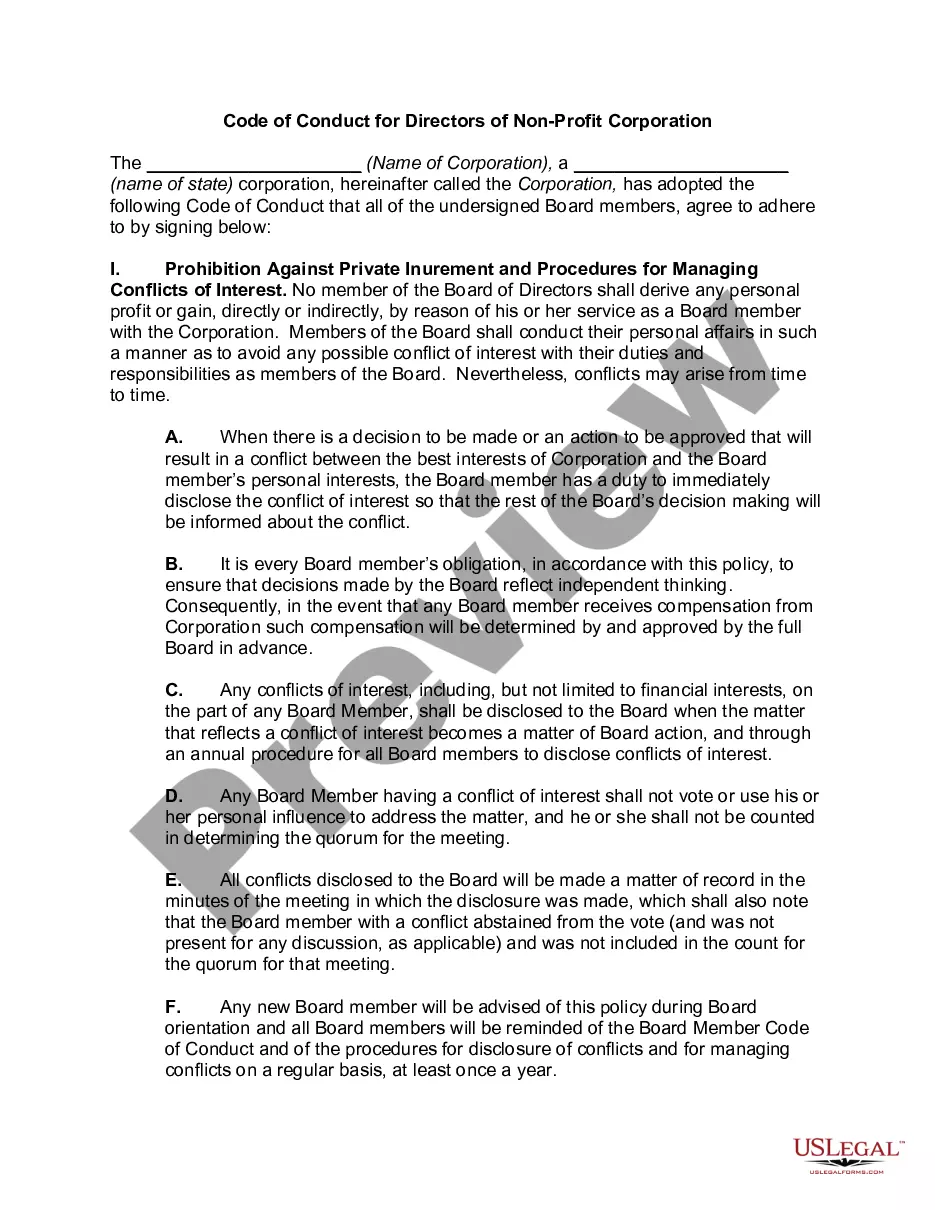
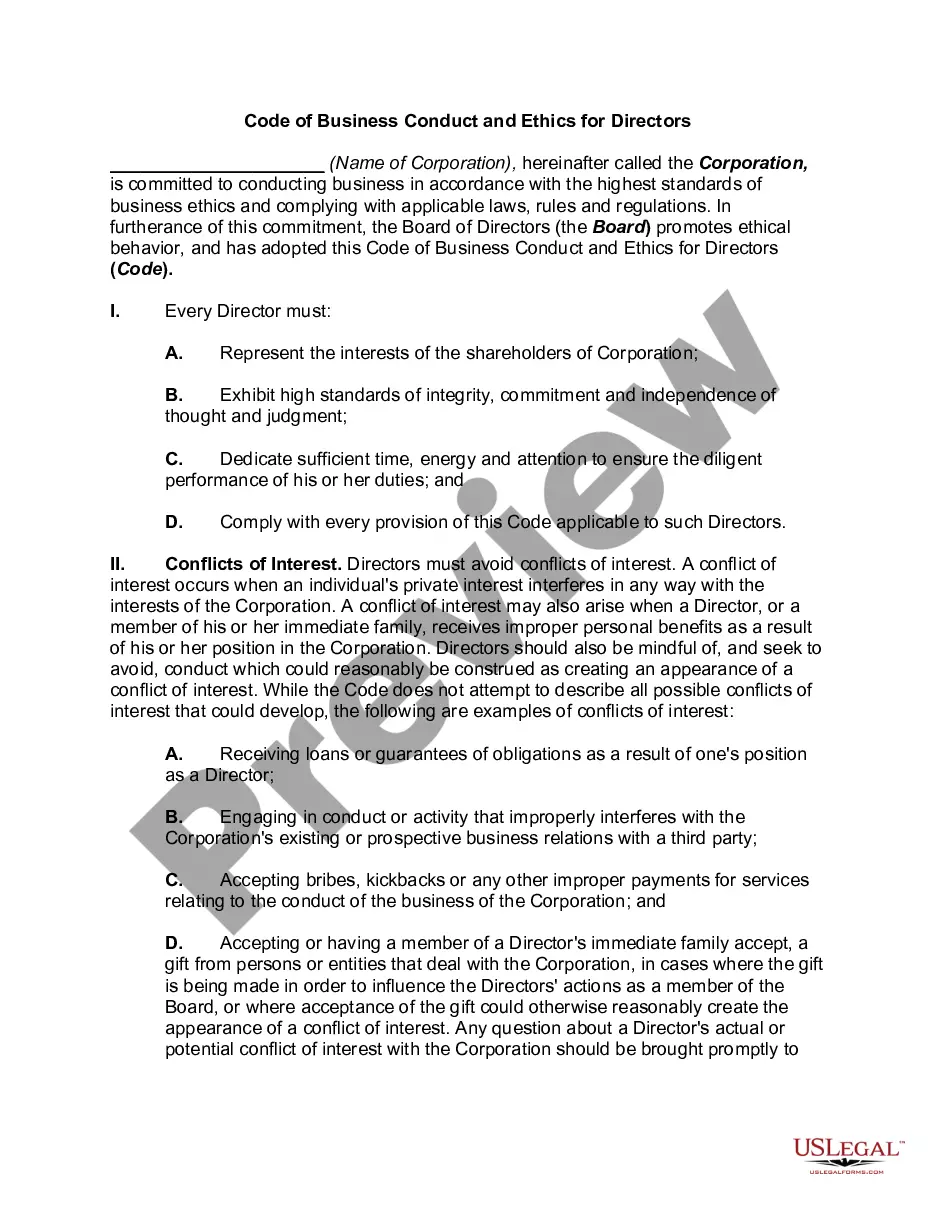
The General Code of Executive Ethics for all Corporate Executives and Members of the Board of Directors and Committees sets forth the ethical standards expected of corporate executives and board members. This form aims to ensure accountability and integrity within corporate governance, distinguishing it from general employee conduct guidelines. It underscores the company's commitment to ethical practices and outlines the responsibilities and expectations for corporate leaders, promoting transparency and accountability at the highest levels of the organization.
Key components of this form
- Overview of ethical conduct for corporate executives and board members.
- Requirements for safeguarding company confidential information.
- Guidelines on avoiding conflicts of interest.
- Regulations regarding the acceptance of gifts or services.
- Reporting practices for directors and executive officers.
- Commitment to compliance with applicable laws and regulations.
- Provisions for whistleblower protection and reporting non-compliance.




Common use cases
This form is typically used when a company needs to establish clear ethical standards for its executives and board members. Companies should implement this code during organizational transitions, after significant personnel changes, or when revising their current ethical policies to enhance corporate governance and compliance with applicable laws. Additionally, it may be necessary when preparing for public scrutiny or internal audits, ensuring that directors and officers understand their obligations under the company's ethical framework.
Who should use this form
This form is intended for:
- Corporate executives, including the Chief Executive Officer and Chief Financial Officer.
- Members of the board of directors and their committees.
- Human resources personnel responsible for compliance with ethical standards.
- Corporate legal counsel ensuring adherence to governance policies.
How to prepare this document
- Identify the corporate entity adopting the ethics code and insert the company name.
- Review each section carefully to ensure all provisions reflect the company's values and compliance requirements.
- Assign responsibility for updates and contact information to a specific individual within the organization.
- Obtain necessary approvals from the board of directors for any deviations from the established code.
- Distribute the finalized code to all executives and board members, ensuring understanding and adherence.
Notarization guidance
This form usually doesn’t need to be notarized. However, local laws or specific transactions may require it. Our online notarization service, powered by Notarize, lets you complete it remotely through a secure video session, available 24/7.
Get your form ready online
Our built-in tools help you complete, sign, share, and store your documents in one place.
Make edits, fill in missing information, and update formatting in US Legal Forms—just like you would in MS Word.
Download a copy, print it, send it by email, or mail it via USPS—whatever works best for your next step.
Sign and collect signatures with our SignNow integration. Send to multiple recipients, set reminders, and more. Go Premium to unlock E-Sign.
If this form requires notarization, complete it online through a secure video call—no need to meet a notary in person or wait for an appointment.
We protect your documents and personal data by following strict security and privacy standards.

Make edits, fill in missing information, and update formatting in US Legal Forms—just like you would in MS Word.

Download a copy, print it, send it by email, or mail it via USPS—whatever works best for your next step.

Sign and collect signatures with our SignNow integration. Send to multiple recipients, set reminders, and more. Go Premium to unlock E-Sign.

If this form requires notarization, complete it online through a secure video call—no need to meet a notary in person or wait for an appointment.

We protect your documents and personal data by following strict security and privacy standards.
Avoid these common issues
- Failing to regularly update the code to reflect any legal changes or organizational shifts.
- Not effectively communicating the code to all executives and board members.
- Neglecting to document deviations or exceptions as required by the code.
- Overlooking the importance of involving legal counsel in the drafting process.
Advantages of online completion
- Convenient access to the latest version of the form, ensuring compliance with current legal standards.
- Editable format allows for easy customization to meet specific corporate needs.
- Quick download enables immediate implementation within the organization's ethics policy.
Legal use & context
The General Code of Executive Ethics is enforceable as part of the corporate governance policies of an organization. It serves to uphold ethical standards and can help mitigate legal risks. Non-compliance may lead to disciplinary action, including reprimand or termination, ensuring that all executives are accountable to the standards set forth in this document.
What to keep in mind
- The General Code of Executive Ethics is essential for establishing ethical standards for corporate leaders.
- All executives must understand and adhere to the outlined responsibilities.
- Failure to comply could result in significant consequences for individuals and the organization.
- This form supports corporate accountability and integrity.
Looking for another form?








Form popularity
FAQ
It is based on the underlying principles of all good governance: accountability, transparency, probity and focus on the sustainable success of an entity over the longer term. 5. The Code has been enduring, but it is not immutable.
The Governance Code was a resource that was developed to assist community, voluntary and charity (CVC) organisations develop their overall capacity in terms of how they run their organisation.
The pillars of successful corporate governance are: accountability, fairness, transparency, assurance, leadership and stakeholder management.
The corporate report should include a statement of disclosure of the company's governance procedures and compliance. It should also disclose the principles and codes that guide the company's procedures. Disclosure statements usually detail the distribution of powers between the board chair and the CEO.
The Revised Clause 49 of the listing agreement effective from 1st October, 2014, provides that audit committee of listed company shall have minimum three directors as members. Two-thirds of the members of audit committee shall be independent directors.The Company Secretary shall act as the secretary to the committee.
Governance codes are established to 'address deficiencies in the corporate governance system by recommending a comprehensive set of norms on the role and composition of the board of directors, relationships with shareholders and top management, auditing and information disclosure, and the selection, remuneration, and
Five to seven board members is ideal. Up to 15 board members is acceptable on the high end to account for unusual circumstances. Besides looking at numbers, boards need to consider several other factors in choosing board directors: Diversity.
Five Pillars of Good Corporate Governance Make Up the Corporate Governance Code. Much like the pillars of good corporate governance in the United States, the Corporate Governance Code in the United Kingdom comprises the pillars of leadership, effectiveness, accountability, remuneration and shareholder relationships.
While there is no set number of members for a board, most range from 3 to 31 members. Some analysts believe the ideal size is seven.