Periodic Diligence Memorandum
Overview of this form
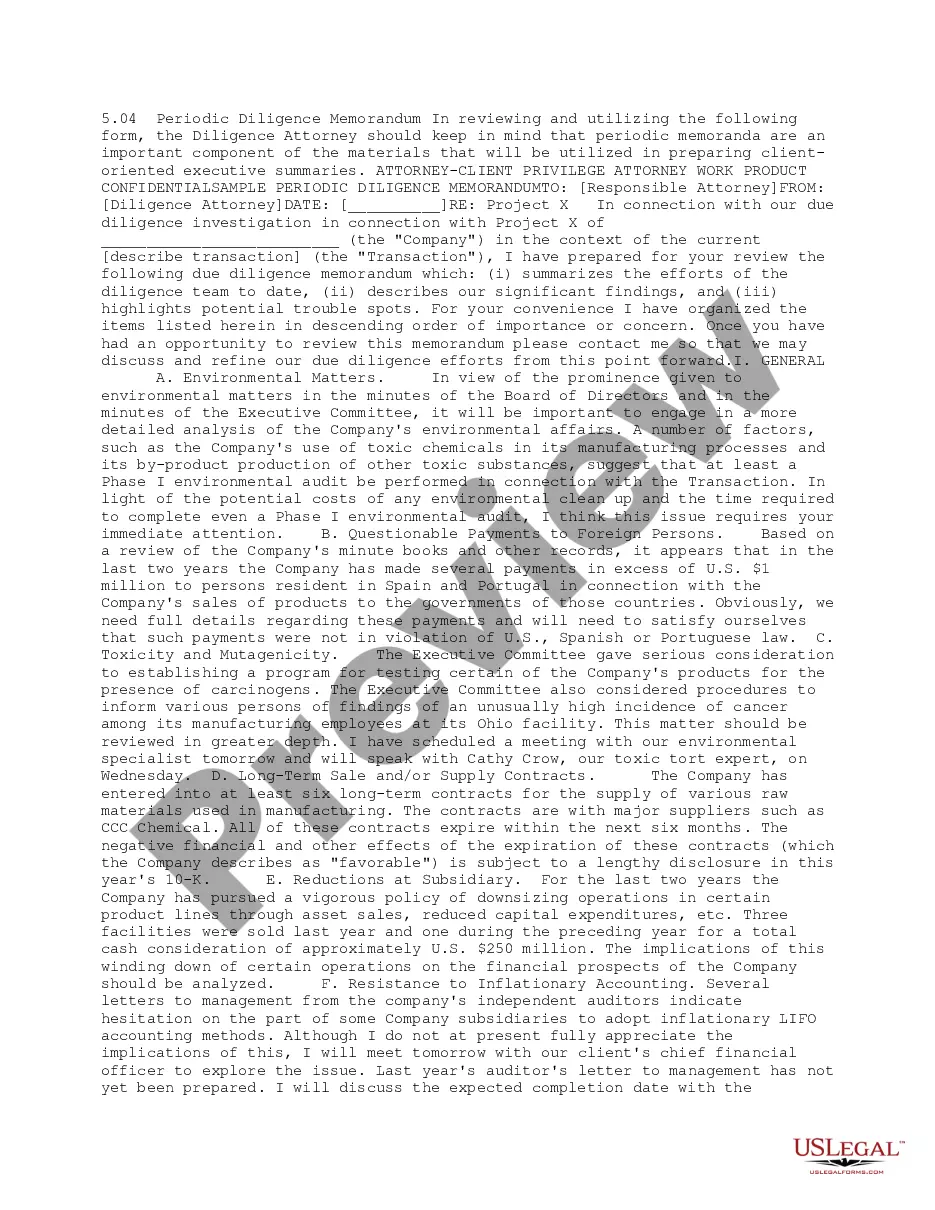
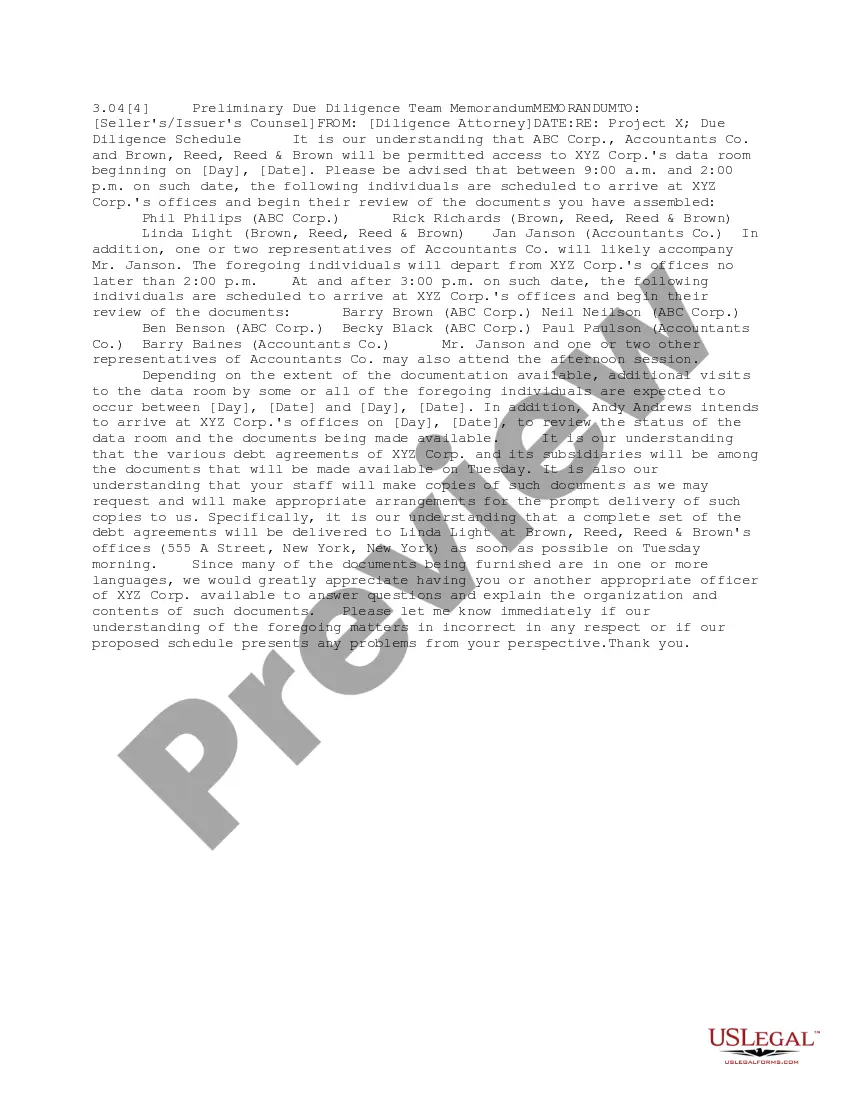
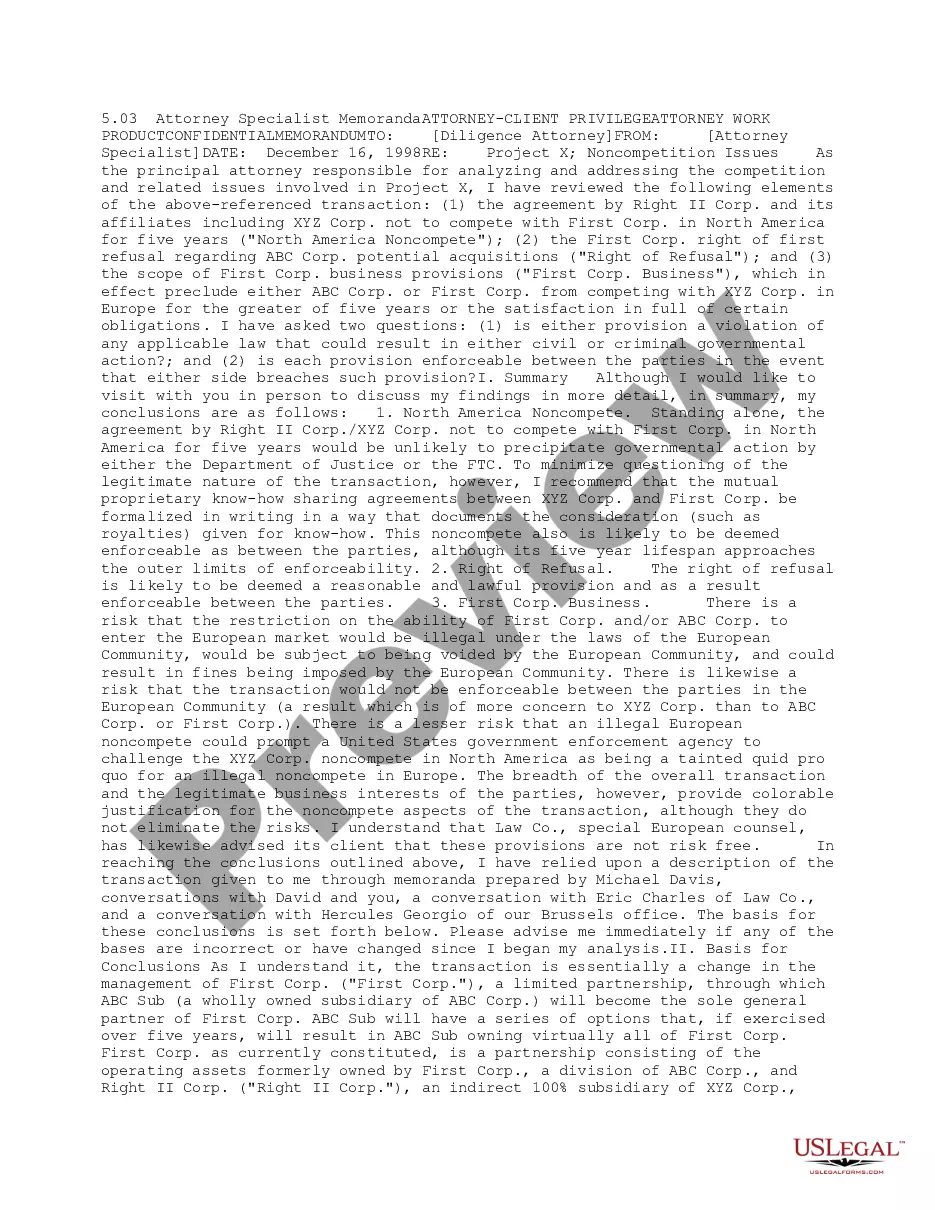
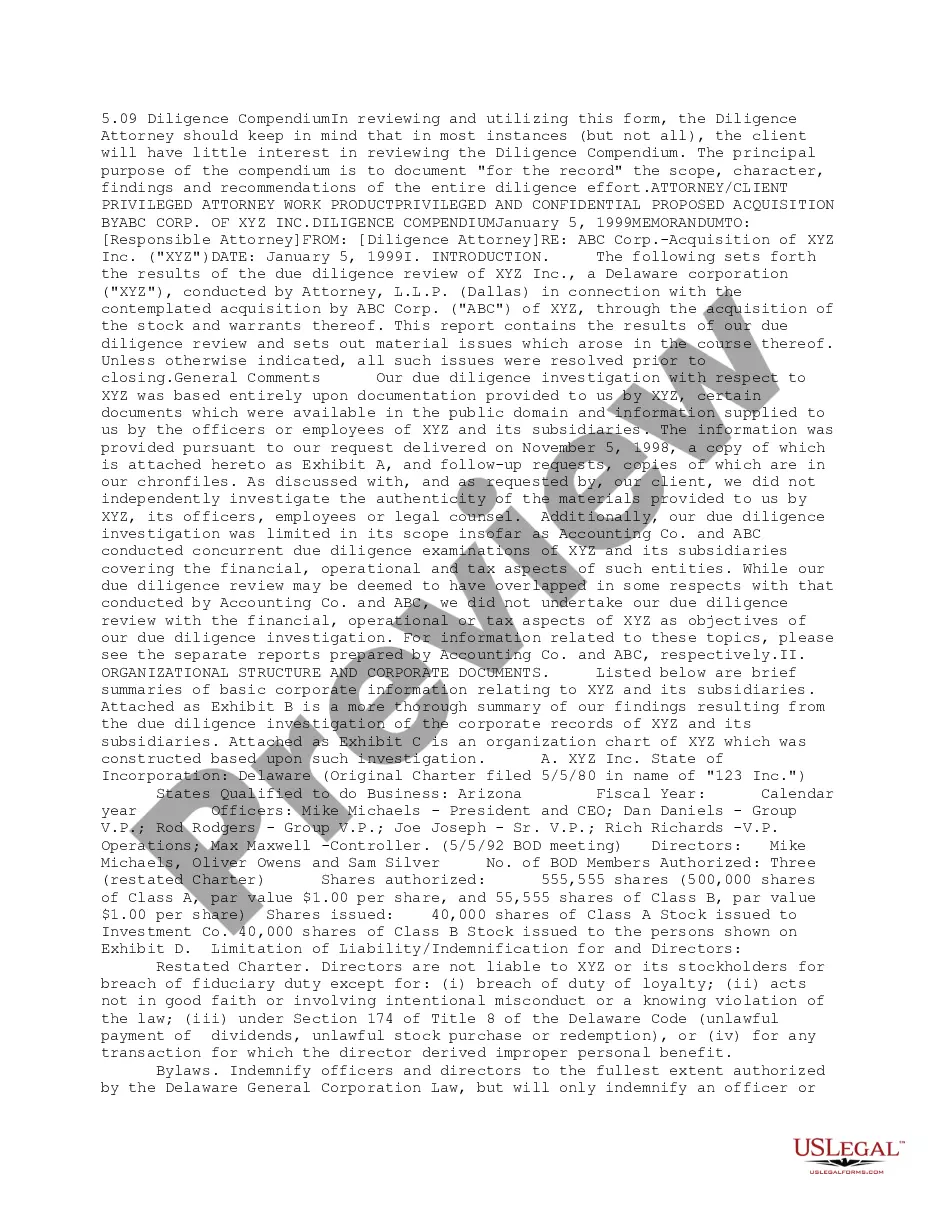
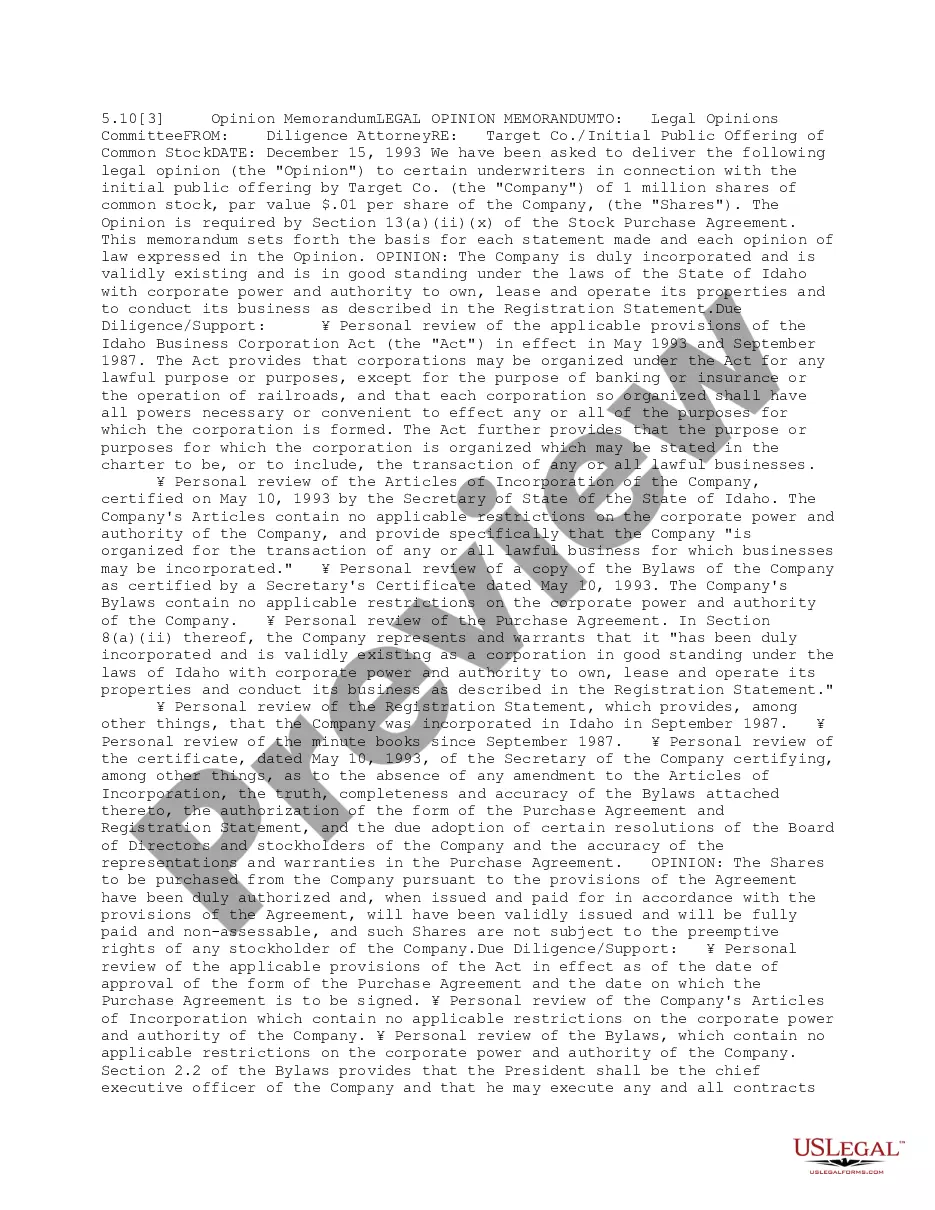
The Periodic Diligence Memorandum is a legal document prepared by a diligence attorney to summarize findings and ongoing efforts in a due diligence investigation. This form serves a crucial role in creating client-oriented executive summaries, providing a structured way to document significant discoveries, concerns, and the status of the review process. It is distinct from other diligence forms as it focus on ongoing activities and observations rather than just transactional details.
Key parts of this document
- Memorandum header with lawyer and project details.
- Summary of due diligence efforts and significant findings.
- Identification of potential trouble spots within the corporation.
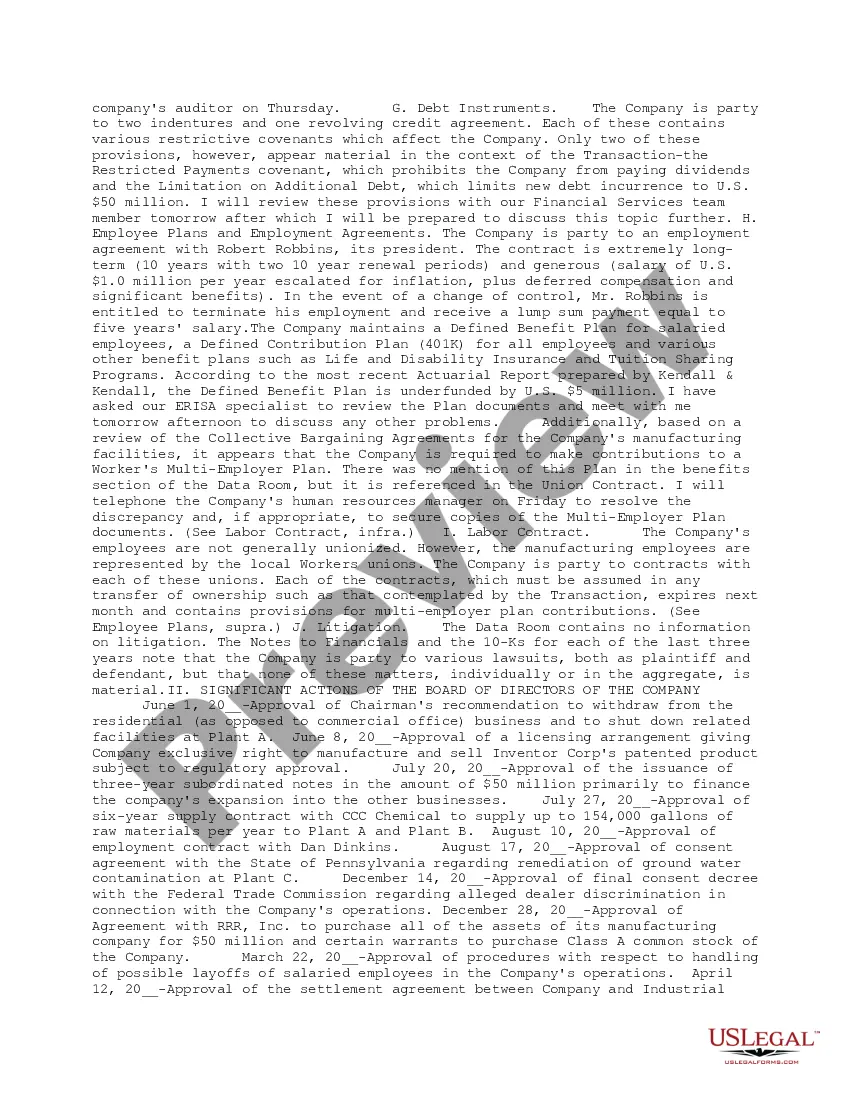
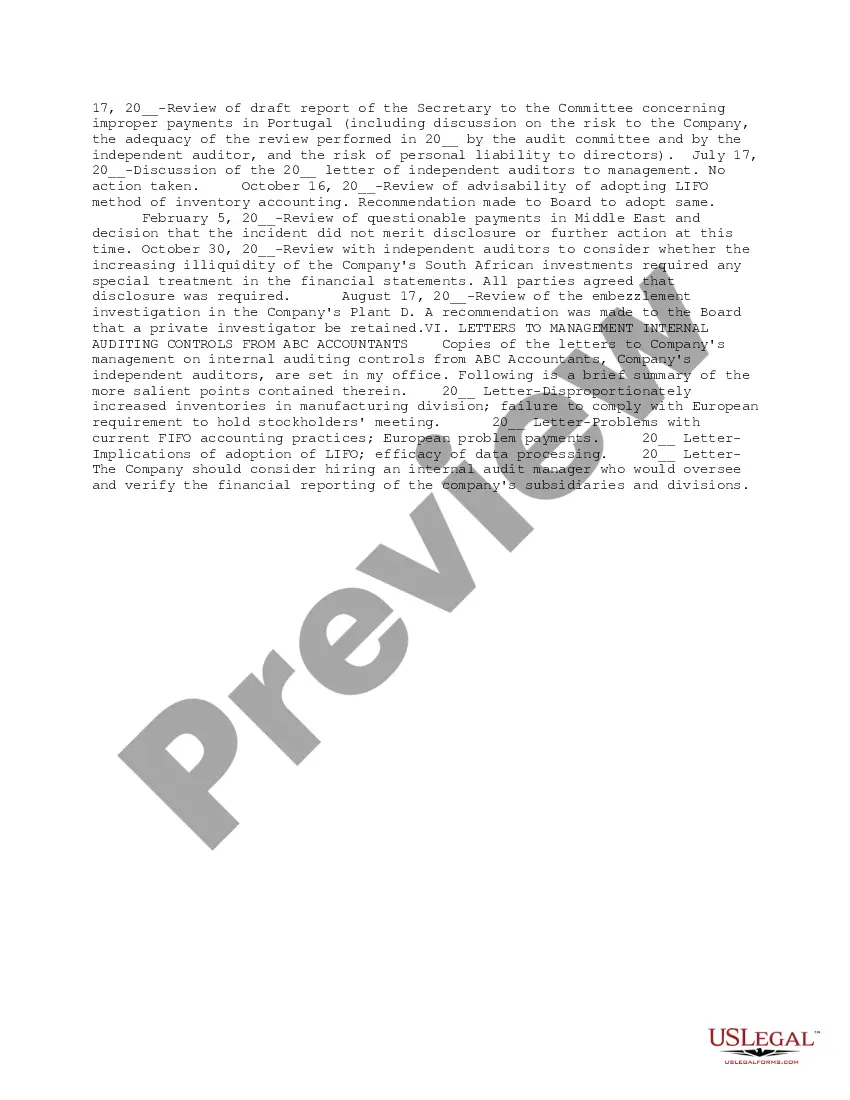
- Sections for environmental matters, questionable payments, and employee plans.
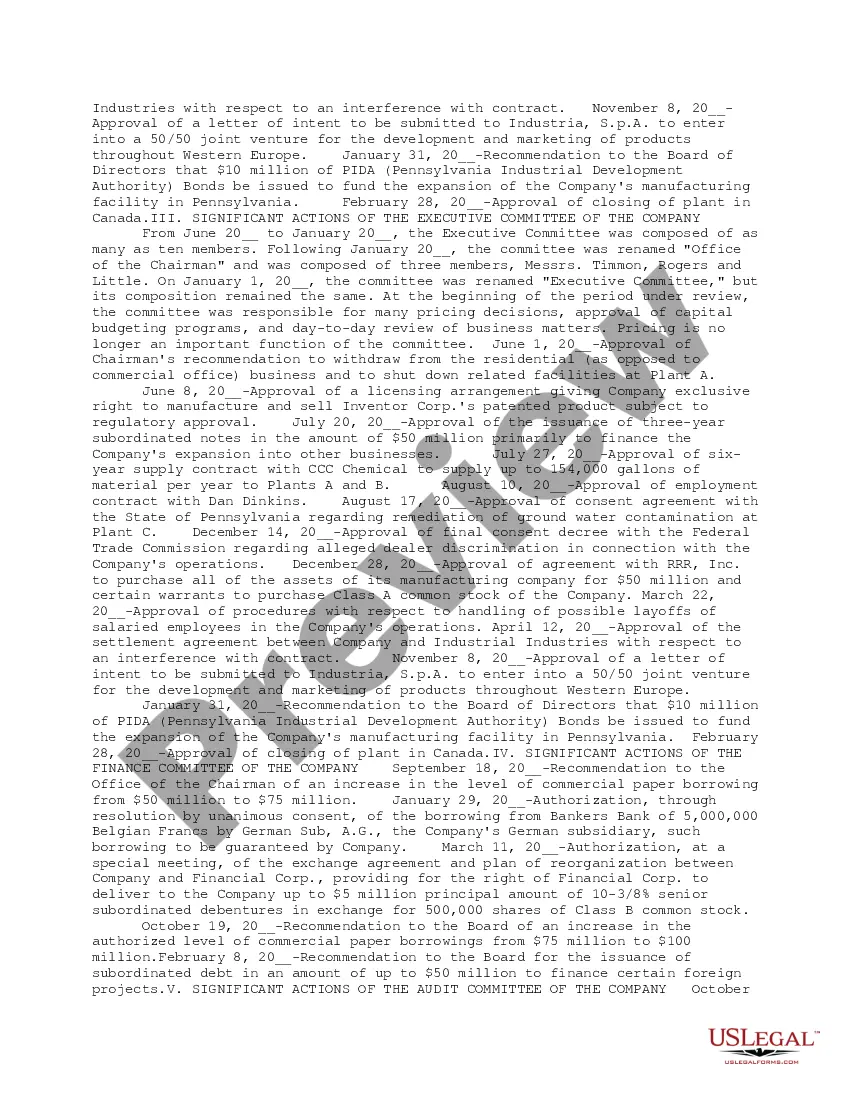
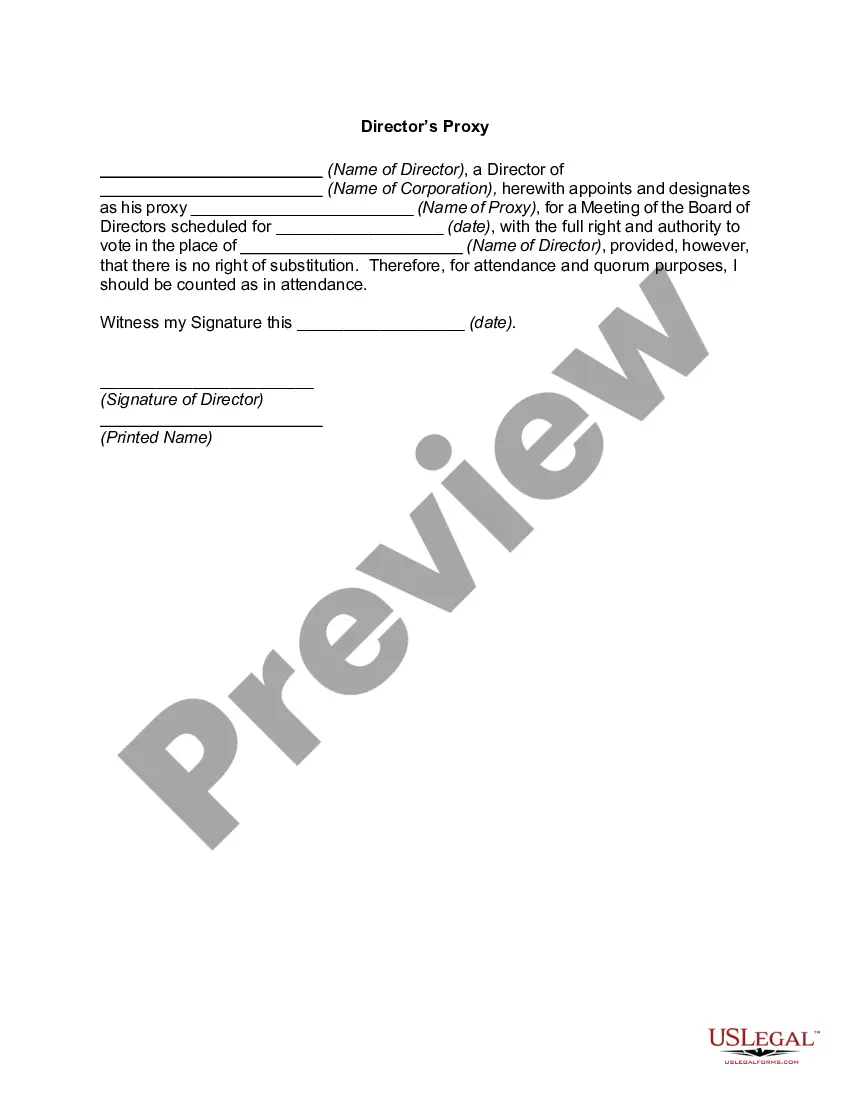
- Important actions and decisions made by the Board of Directors and Committees.
Common use cases
This form is essential when conducting due diligence for a business transaction, especially in complex contexts such as mergers and acquisitions, or when potential legal issues may arise. It helps document ongoing investigation efforts and provides strategic insights for decision-makers. Utilize this memorandum when significant findings need to be recorded to inform future discussions and negotiations.
Intended users of this form
This form is intended for:
- Diligence attorneys overseeing due diligence investigations.
- Legal teams involved in mergers and acquisitions.
- Corporate executives needing a summary of due diligence status.
- Business consultants assisting their clients in understanding corporate risks.
Completing this form step by step
To complete the Periodic Diligence Memorandum:
- Identify the involved parties, including the diligence attorney and responsible attorney.
- Fill in the date and project details accurately.
- Summarize the due diligence findings in a clear and organized manner.
- Highlight any significant trouble spots that require immediate attention.
- Include important actions and decisions from the Board of Directors and Executive Committee.
Does this document require notarization?
This form does not typically require notarization unless specified by local law. Ensure compliance with any particular jurisdictional requirements when using this memorandum.
Get your form ready online
Our built-in tools help you complete, sign, share, and store your documents in one place.
Make edits, fill in missing information, and update formatting in US Legal Forms—just like you would in MS Word.
Download a copy, print it, send it by email, or mail it via USPS—whatever works best for your next step.
Sign and collect signatures with our SignNow integration. Send to multiple recipients, set reminders, and more. Go Premium to unlock E-Sign.
If this form requires notarization, complete it online through a secure video call—no need to meet a notary in person or wait for an appointment.
We protect your documents and personal data by following strict security and privacy standards.

Make edits, fill in missing information, and update formatting in US Legal Forms—just like you would in MS Word.

Download a copy, print it, send it by email, or mail it via USPS—whatever works best for your next step.

Sign and collect signatures with our SignNow integration. Send to multiple recipients, set reminders, and more. Go Premium to unlock E-Sign.

If this form requires notarization, complete it online through a secure video call—no need to meet a notary in person or wait for an appointment.

We protect your documents and personal data by following strict security and privacy standards.
Avoid these common issues
- Failing to organize findings by importance or concern.
- Omitting critical environmental matters or financial details.
- Neglecting to update the memorandum with new findings regularly.
- Not involving relevant specialists when highlighting potential trouble spots.
Why use this form online
- Convenience of having a structured template for documentation.
- Ability to edit and customize the memorandum for specific transactions.
- Provides a reliable way to convey complex findings in a clear format.
- Enhances communication between legal and corporate teams by formalizing discussions.
- The Periodic Diligence Memorandum serves as a formal record of due diligence findings.
- It substantiates compliance efforts during business transactions.
- May provide legal protection under attorney-client privilege and work product doctrine.
What to keep in mind
- The Periodic Diligence Memorandum is crucial for documenting due diligence investigations.
- It assists legal teams in presenting clear, structured findings to clients.
- Properly completed, it serves as a protective legal record and resource for strategic planning.
Looking for another form?

Form popularity
FAQ
Due Diligence is a process of estimating the commercial potential of an entity, comprehensive evaluation of the financial viability of the entity concerning its assets and liabilities, and; an examination and verification of the operations and material facts in relation to a proposed transaction.
Due Diligence Examples Conducting thorough inspections on a property before buying it in order to make sure that it is a good investment. An underwriter auditing an issuer's business and operations prior to selling it.
Write for the target audience. Focus on the report objectives. Limit the report to information that has material impact to your company. Structure the information to be used as valuable reference material later.
A Statement describing the subject of research. Documents in support of the research such as corporate reports, legal documents, transaction copies, market research, etc. SWOT Analysis i.e. an overview of the strengths, weaknesses, opportunities, and threats linked with the proposal.
Legal due diligence is the process of collecting, understanding and assessing all the legal risks associated during a M&A process. During due diligence, the acquirer reviews all the documents pertaining to a target company and interviews people associated with it.
Reviewing and auditing financial statements. Scrutinizing projections for future performance. Analyzing the consumer market. Seeking operating redundancies that can be eliminated. Reviewing potential or ongoing litigation. Reviewing antitrust considerations.
The report will include a list of key findings and valid recommendations, as well as a reasoned conclusion with a financial analysis explaining the feasibility of our recommendations, and its impact on the company.
A due diligence checklist is an organized way to analyze a company that you are acquiring through sale, merger, or another method. By following this checklist, you can learn about a company's assets, liabilities, contracts, benefits, and potential problems.