Notice of Violation of Fair Debt Act - Improper Document Appearance
Understanding this form
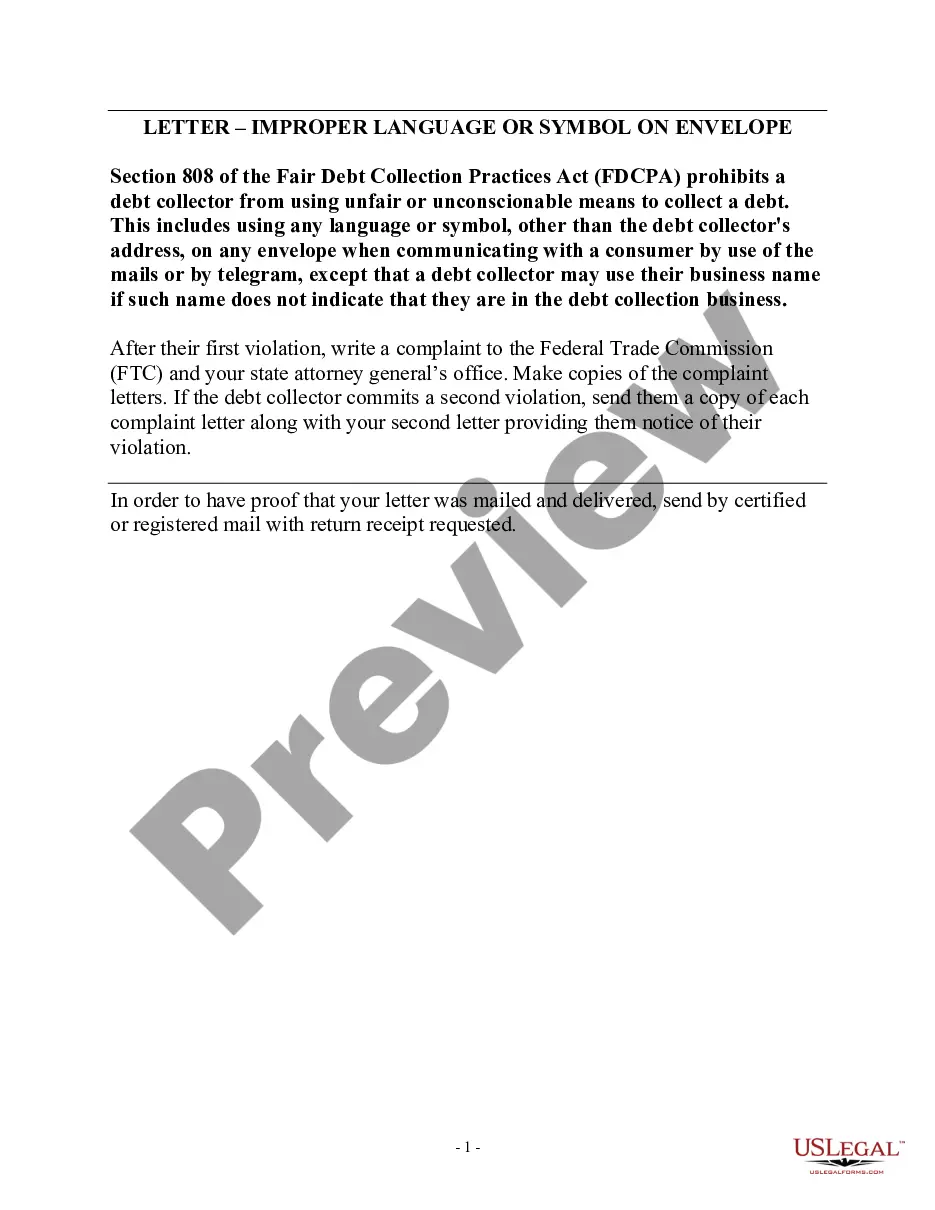
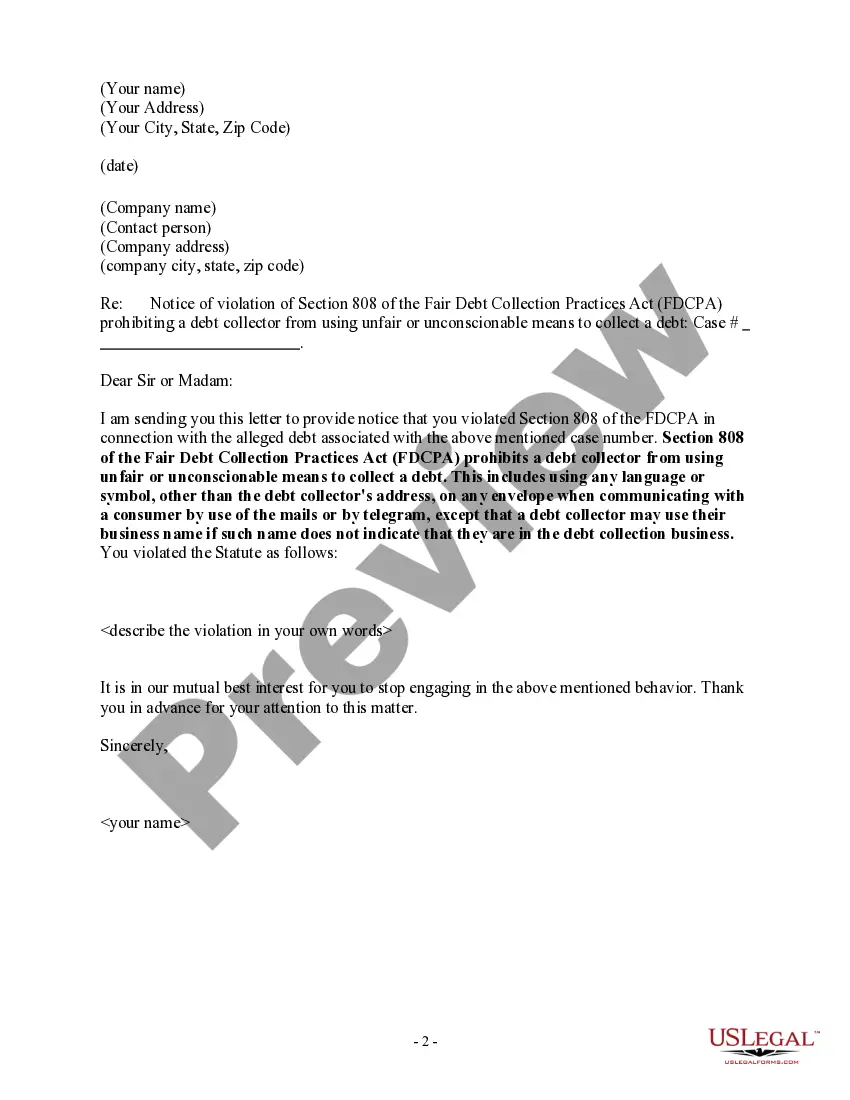
The Notice of Violation of Fair Debt Act - Improper Document Appearance is a legal document designed for debtors who have experienced unfair collection practices. This form asserts a violation under Section 808 of the Fair Debt Collection Practices Act (FDCPA), specifically regarding the improper appearance of documents used by debt collectors. It is essential for protecting consumer rights and facilitating compliance with fair debt collection laws.
Form components explained
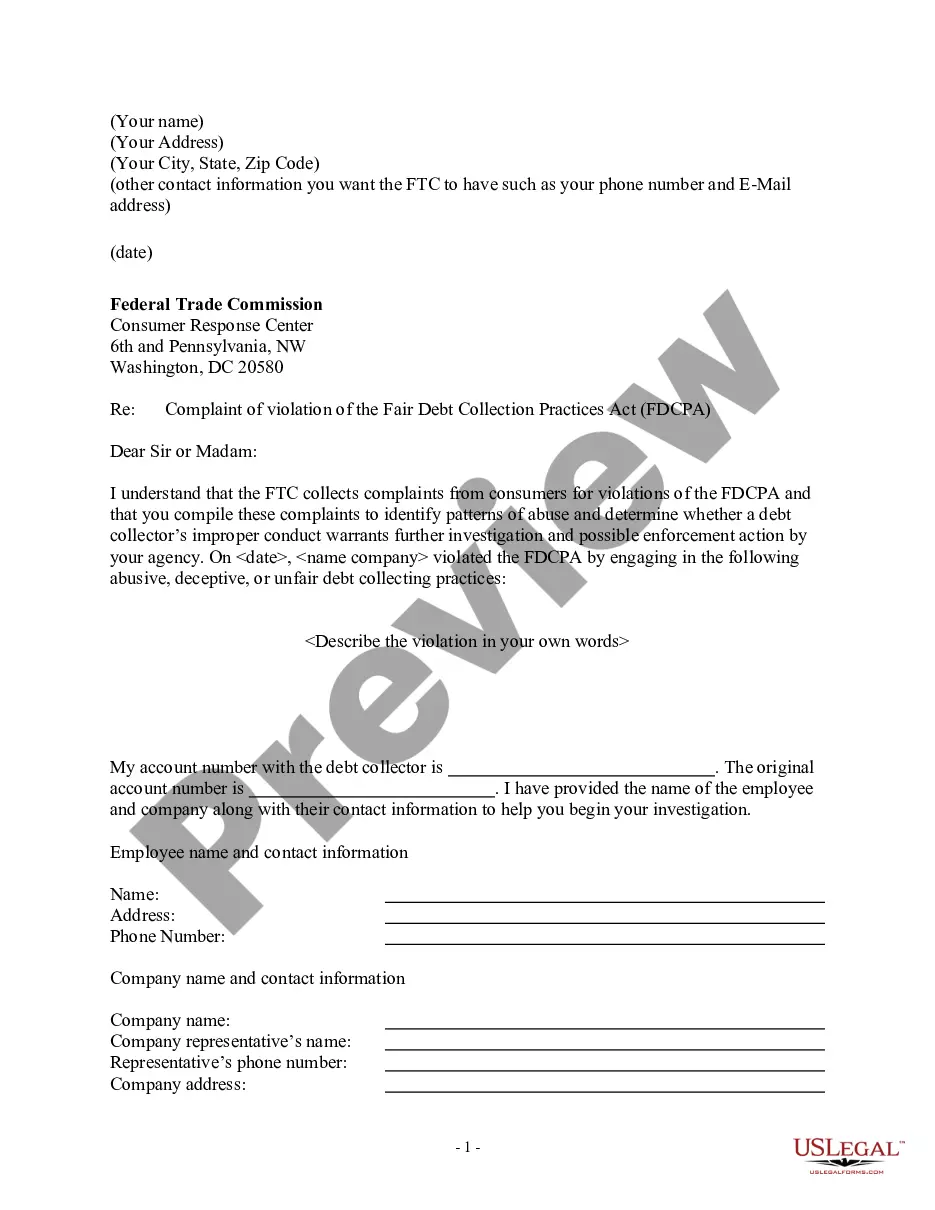
- Debtor's information: Name and address of the individual issuing the notice.
- Debt collector's information: Details about the company or individual attempting to collect the debt.
- Case number: Reference number associated with the alleged debt.
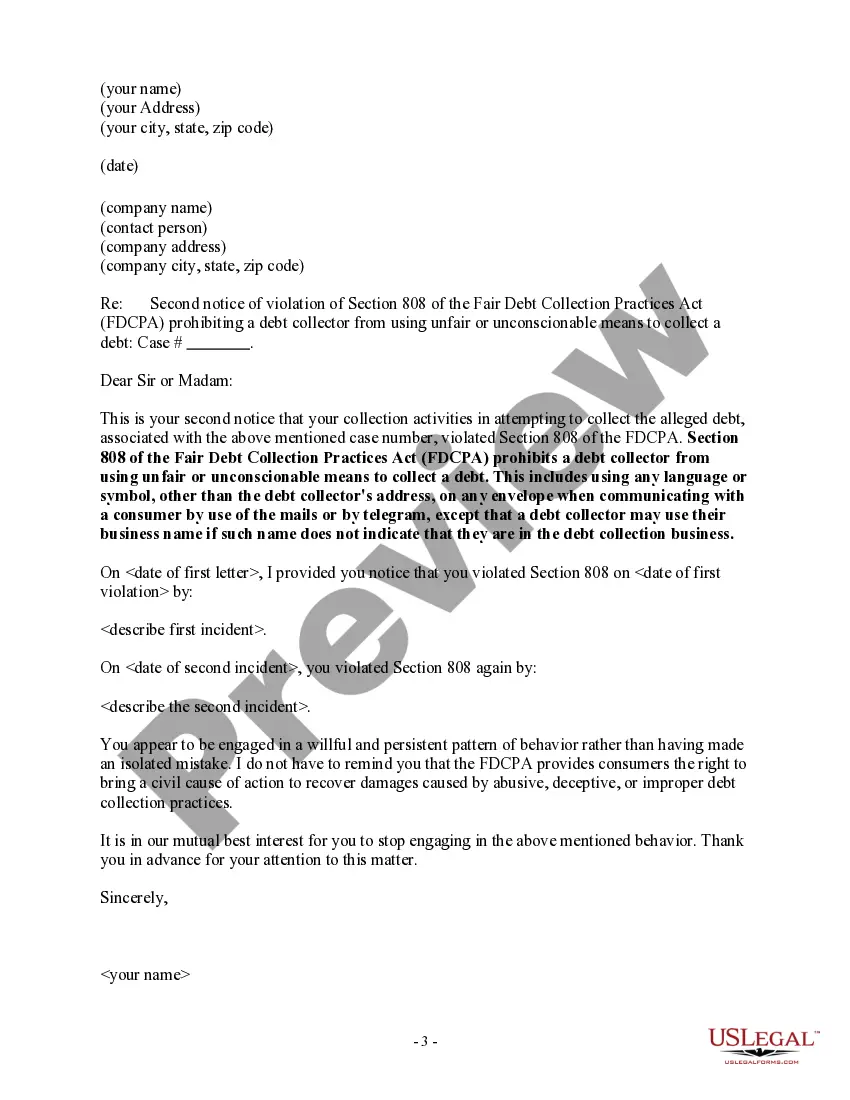
- Description of the violation: Clear statement detailing how the debt collector has violated the FDCPA.
- Request for cease of unfair practices: A demand for the debt collector to stop the specified actions.
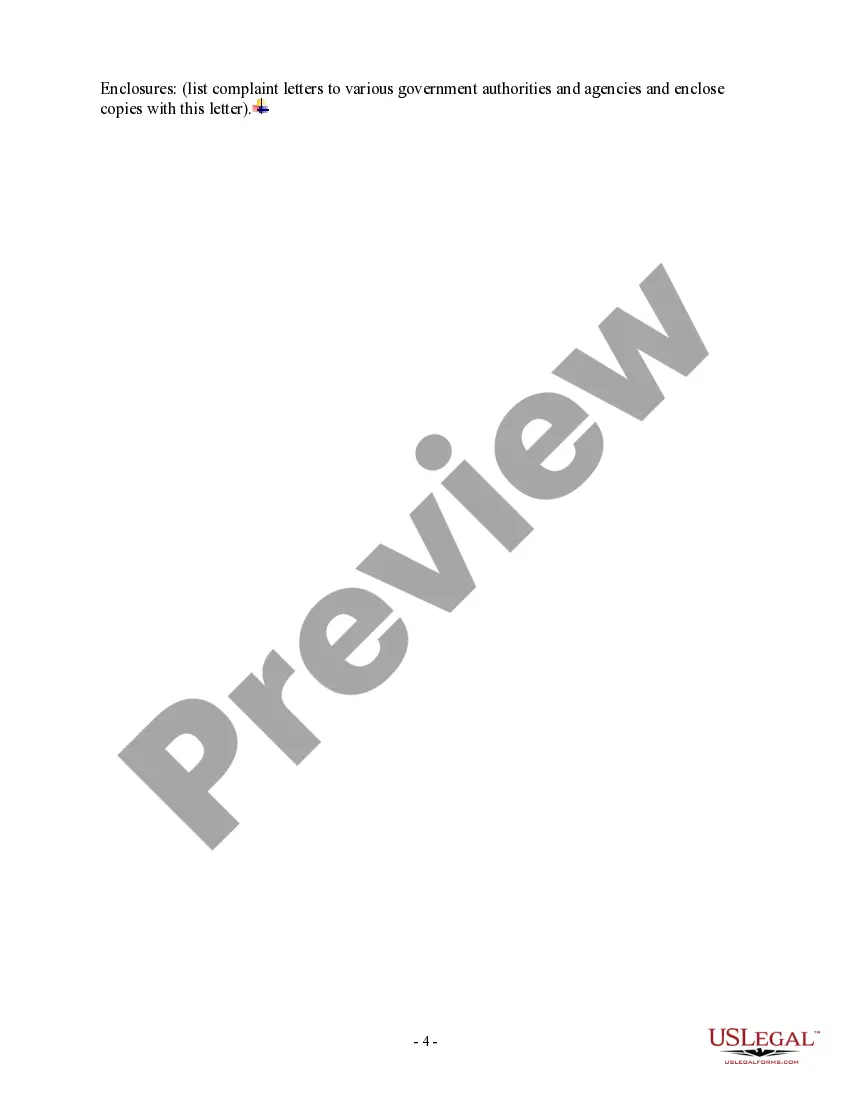
- Enclosures list: Space to include copies of any complaints sent to government authorities.
Situations where this form applies
This form should be used when a debtor believes that a debt collector has violated the FDCPA by using improper documentation or language in their communications. Situations may include instances where a debt collector marked an envelope with misleading symbols or language that indicates debt collection, which is against the law.
Who should use this form
This form is intended for:
- Individuals who have received unfair or misleading communications from debt collectors.
- Debtors seeking to assert their rights under the Fair Debt Collection Practices Act.
- Consumers looking to document their complaints regarding improper collection practices.
Steps to complete this form
- Identify yourself by entering your name and address in the designated sections.
- Fill in the debt collector's information, including their name and address.
- Enter the case number associated with the alleged debt.
- Provide a clear description of how the debt collector violated Section 808.
- Include a statement requesting that the debt collector cease their unfair practices.
- Attach copies of any related complaint letters submitted to governmental entities.
Is notarization required?
Notarization is not commonly needed for this form. However, certain documents or local rules may make it necessary. Our notarization service, powered by Notarize, allows you to finalize it securely online anytime, day or night.
Get your form ready online
Our built-in tools help you complete, sign, share, and store your documents in one place.
Make edits, fill in missing information, and update formatting in US Legal Forms—just like you would in MS Word.
Download a copy, print it, send it by email, or mail it via USPS—whatever works best for your next step.
Sign and collect signatures with our SignNow integration. Send to multiple recipients, set reminders, and more. Go Premium to unlock E-Sign.
If this form requires notarization, complete it online through a secure video call—no need to meet a notary in person or wait for an appointment.
We protect your documents and personal data by following strict security and privacy standards.

Make edits, fill in missing information, and update formatting in US Legal Forms—just like you would in MS Word.

Download a copy, print it, send it by email, or mail it via USPS—whatever works best for your next step.

Sign and collect signatures with our SignNow integration. Send to multiple recipients, set reminders, and more. Go Premium to unlock E-Sign.

If this form requires notarization, complete it online through a secure video call—no need to meet a notary in person or wait for an appointment.

We protect your documents and personal data by following strict security and privacy standards.
Common mistakes
- Failing to provide complete and accurate information about the debt collector.
- Not including a clear description of the violation.
- Neglecting to send the notice via certified mail for proof of delivery.
- Overlooking the need to attach copies of filed complaints.
Benefits of using this form online
- Convenient access: Download the form anytime and anywhere you have internet access.
- Editability: Easily customize the form to fit your specific situation before printing.
- Reliable templates: Use templates drafted by licensed attorneys to ensure legal compliance.
Legal use & context
- The form serves as a key document for consumers to assert their rights under the FDCPA.
- Proper completion and delivery of this notice can help protect consumers from ongoing unfair collection practices.
- Submitting this notice can initiate a complaint process with federal and state authorities.
Main things to remember
- The Notice of Violation of Fair Debt Act addresses improper document appearances by debt collectors.
- It is essential for asserting rights under the Fair Debt Collection Practices Act.
- Complete the form accurately and send it via certified mail for proof of delivery.
Looking for another form?
Form popularity
FAQ
If you pay the collection agency directly, the debt is removed from your credit report in six years from the date of payment. If you don't pay, it purges six years from the last activity date, but you may be at risk for wage garnishment.
Debt collectors cannot harass or abuse you. They cannot swear, threaten to illegally harm you or your property, threaten you with illegal actions, or falsely threaten you with actions they do not intend to take. They also cannot make repeated calls over a short period to annoy or harass you.
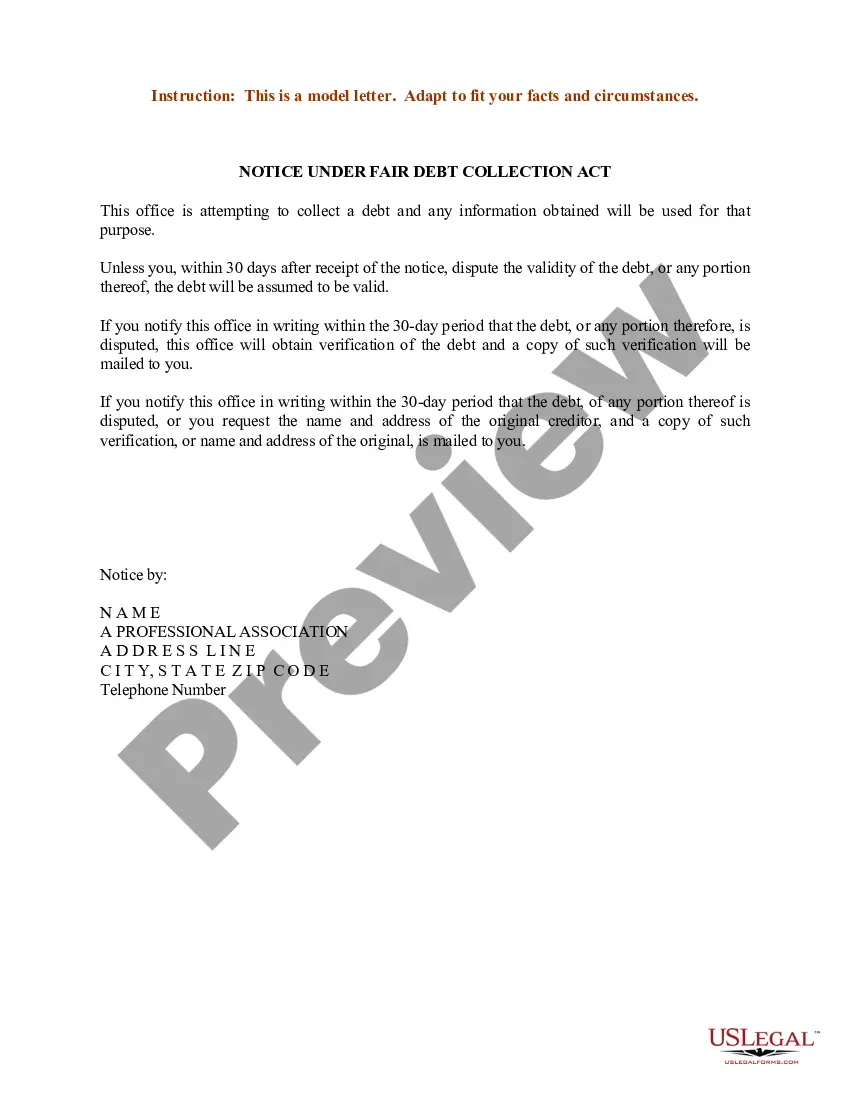
The Fair Debt Collection Practices Act (FDCPA) is the main federal law that governs debt collection practices. The FDCPA prohibits debt collection companies from using abusive, unfair or deceptive practices to collect debts from you.
Debt collectors must be truthful The Fair Debt Collection Practices Act states that debt collectors cannot use any false, deceptive or misleading representation to collect the debt. Along with other restrictions, debt collectors cannot misrepresent: The amount of the debt. Whether it's past the statute of limitations.
The law makes it illegal for debt collectors to harass debtors in other ways, including threats of bodily harm or arrest. They also cannot lie or use profane or obscene language. Additionally, debt collectors cannot threaten to sue a debtor unless they truly intend to take that debtor to court.
Improve Your Credit Score After seven years, collection accounts drop off your credit report, even if you never pay them. 1 But if the accounts are less than seven years old and not approaching the credit reporting time limit, a paid collection is better for your credit score than an unpaid one.
Harassment of the debtor by the creditor More than 40 percent of all reported FDCPA violations involved incessant phone calls in an attempt to harass the debtor.