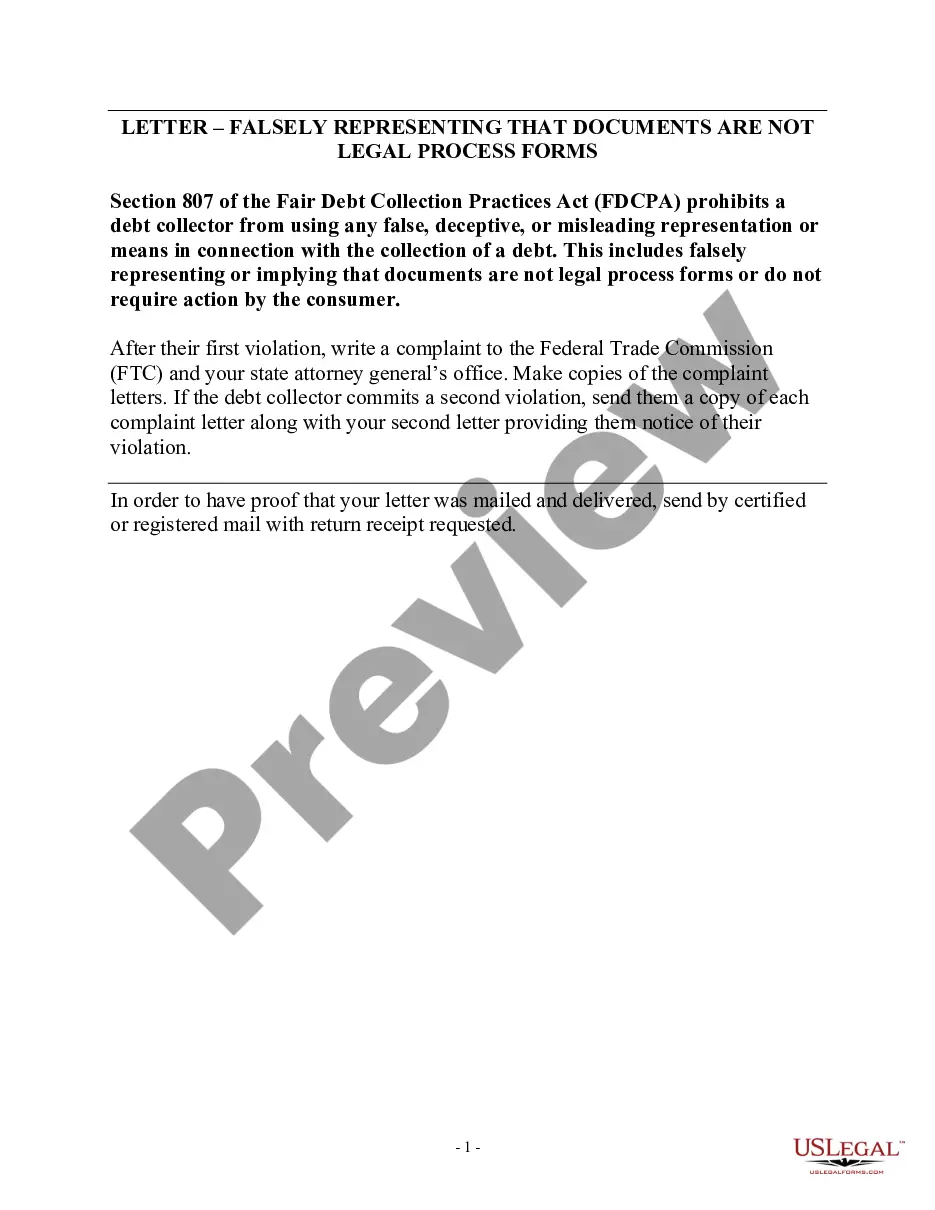
Notice to Debt Collector - Falsely Representing a Document is Legal Process
What this document covers
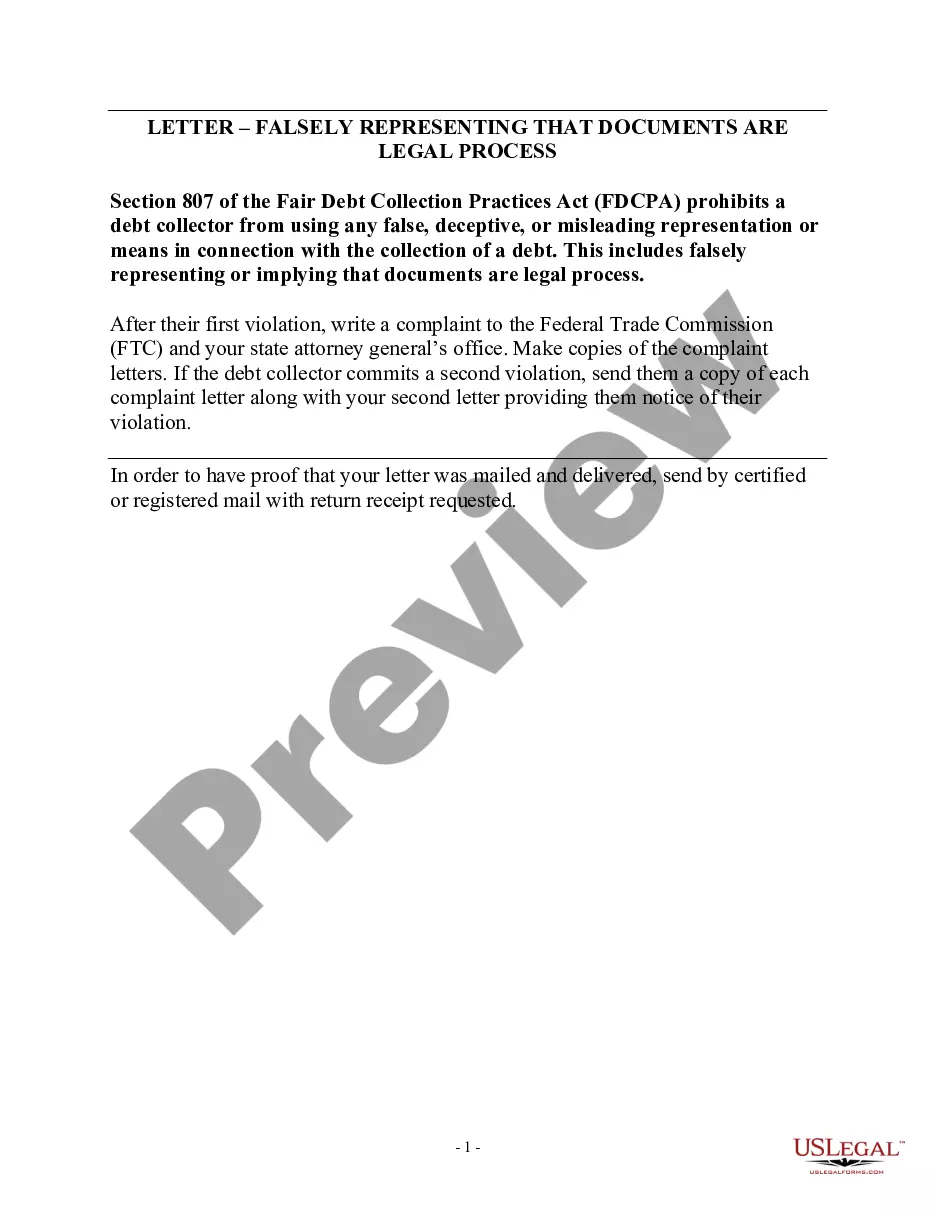
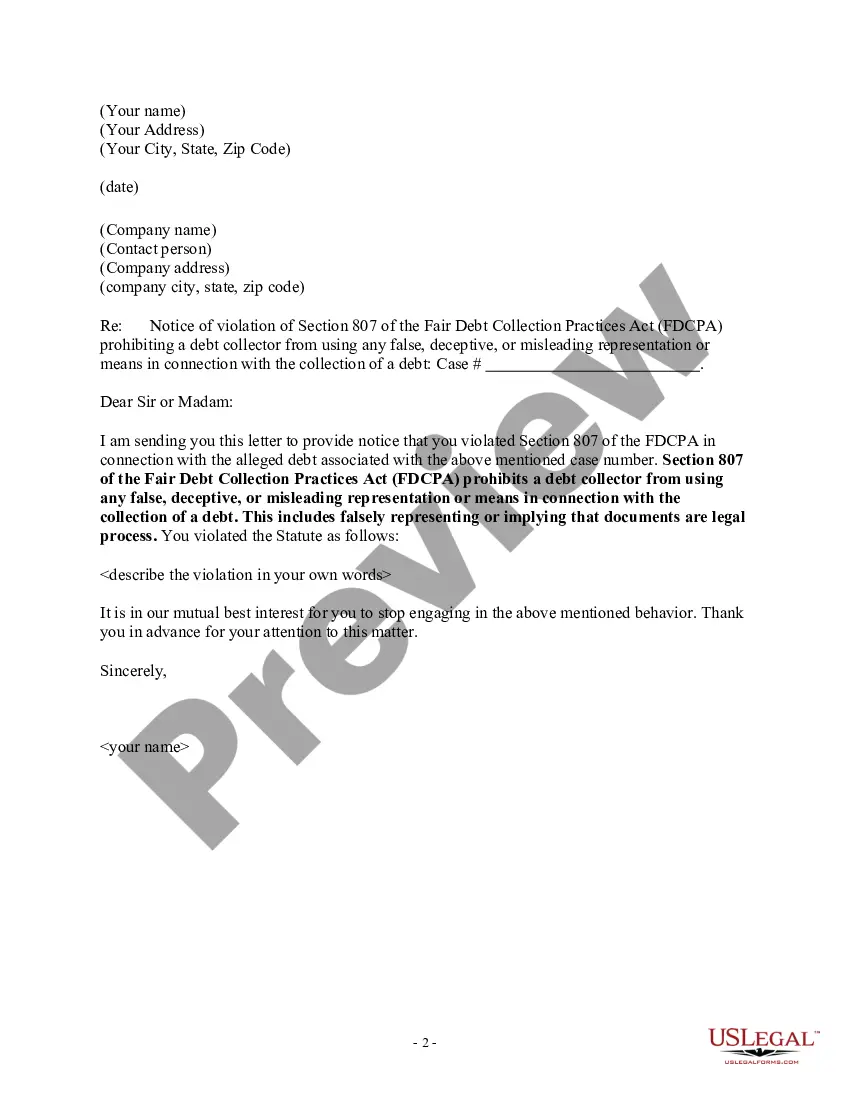
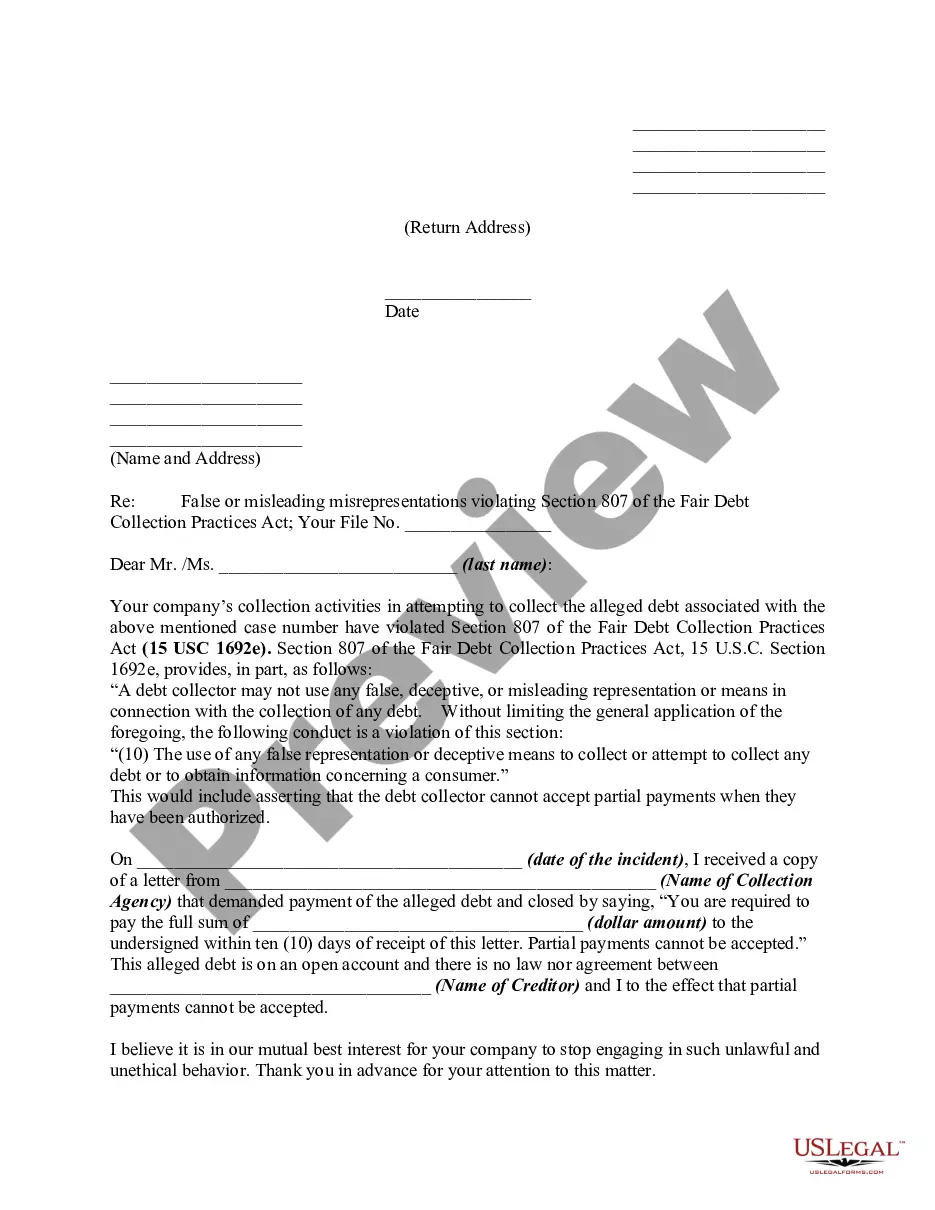
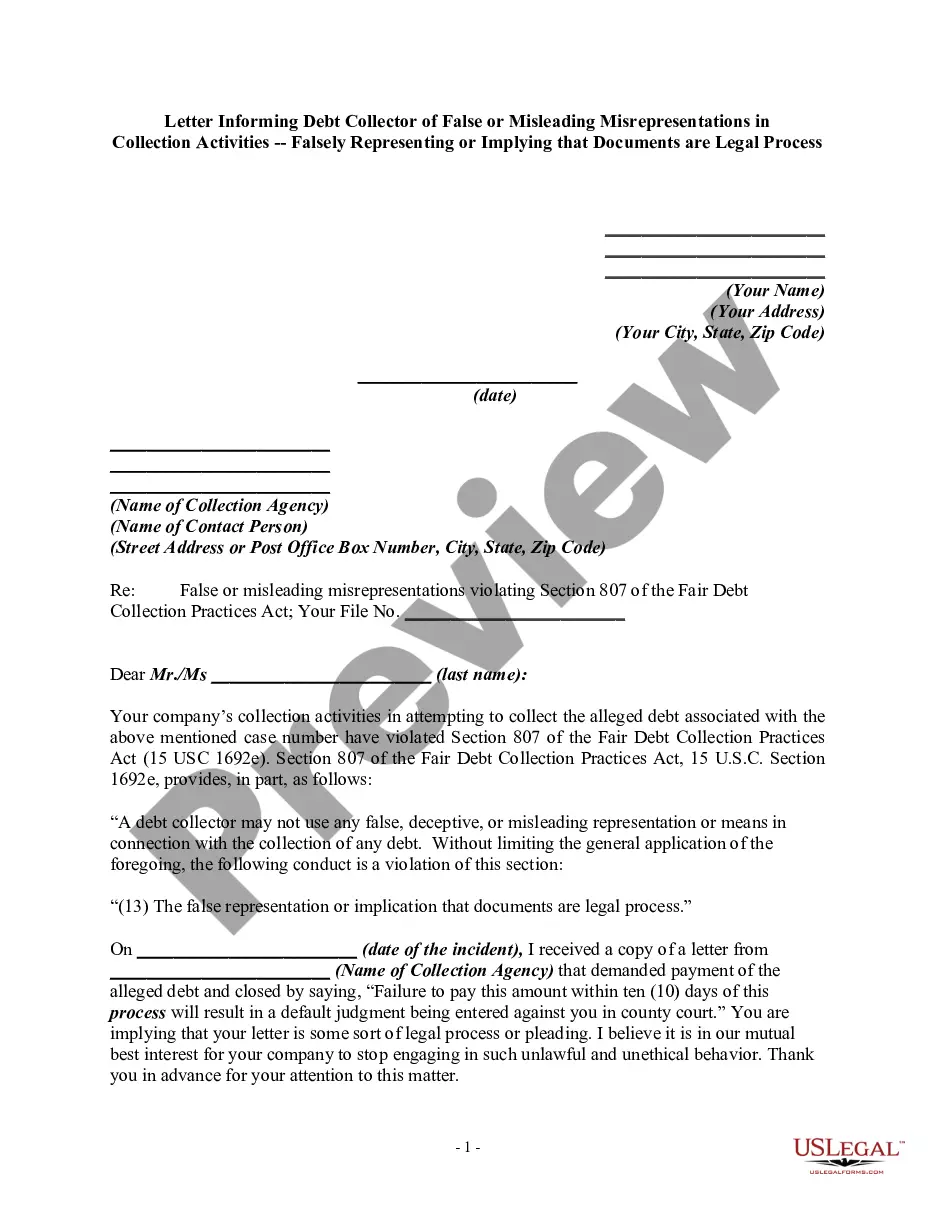
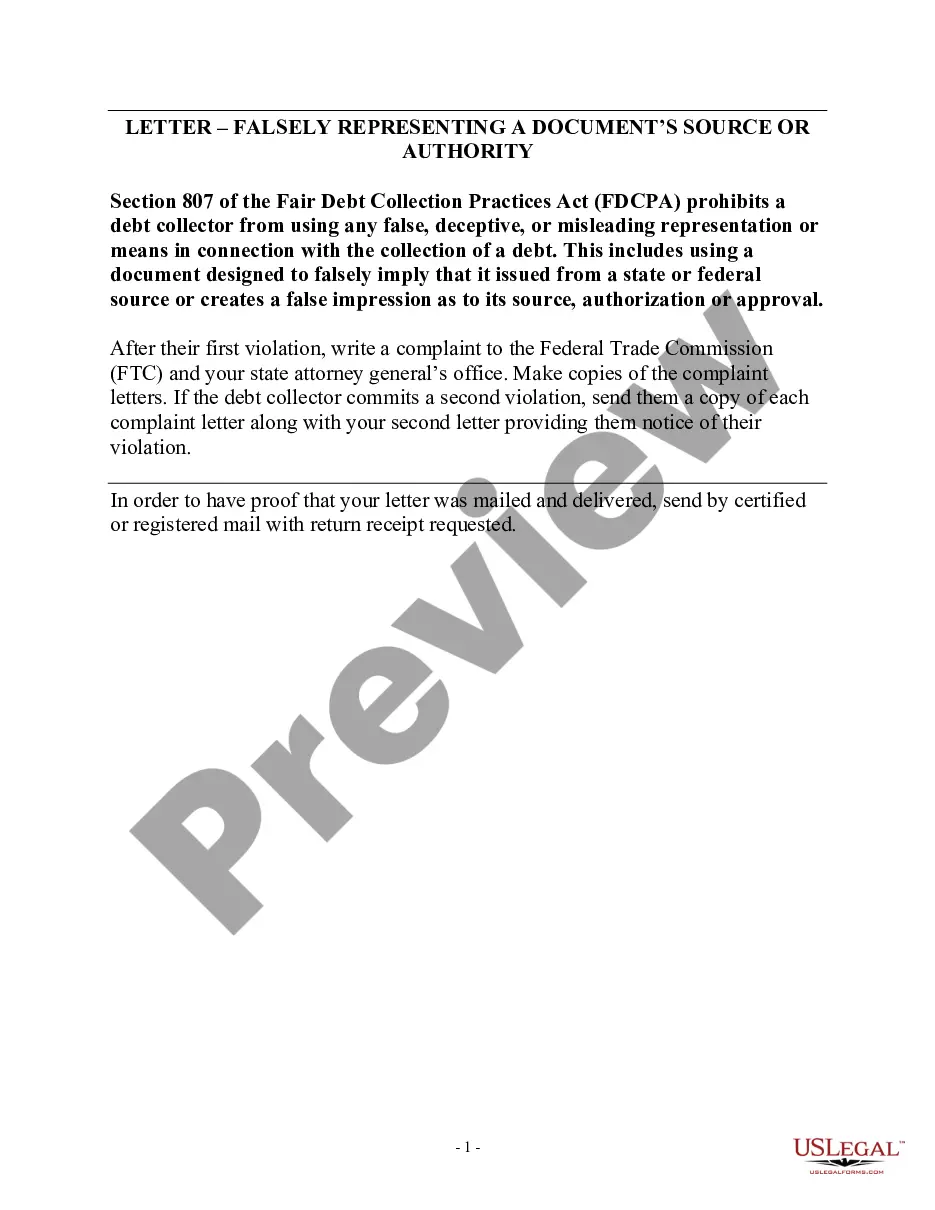
The Notice to Debt Collector - Falsely Representing a Document as Legal Process is a legal document that serves to inform a debt collector of their violation of the Fair Debt Collection Practices Act (FDCPA). This form notifies the collector that they have engaged in false, deceptive, or misleading practices while attempting to collect a debt. By using this notice, consumers can encourage compliance with the FDCPA and potentially use it as evidence in future actions if compliance does not occur.
Main sections of this form
- Your name and contact information
- Debt collector's name and contact information
- Specific details of the alleged debt
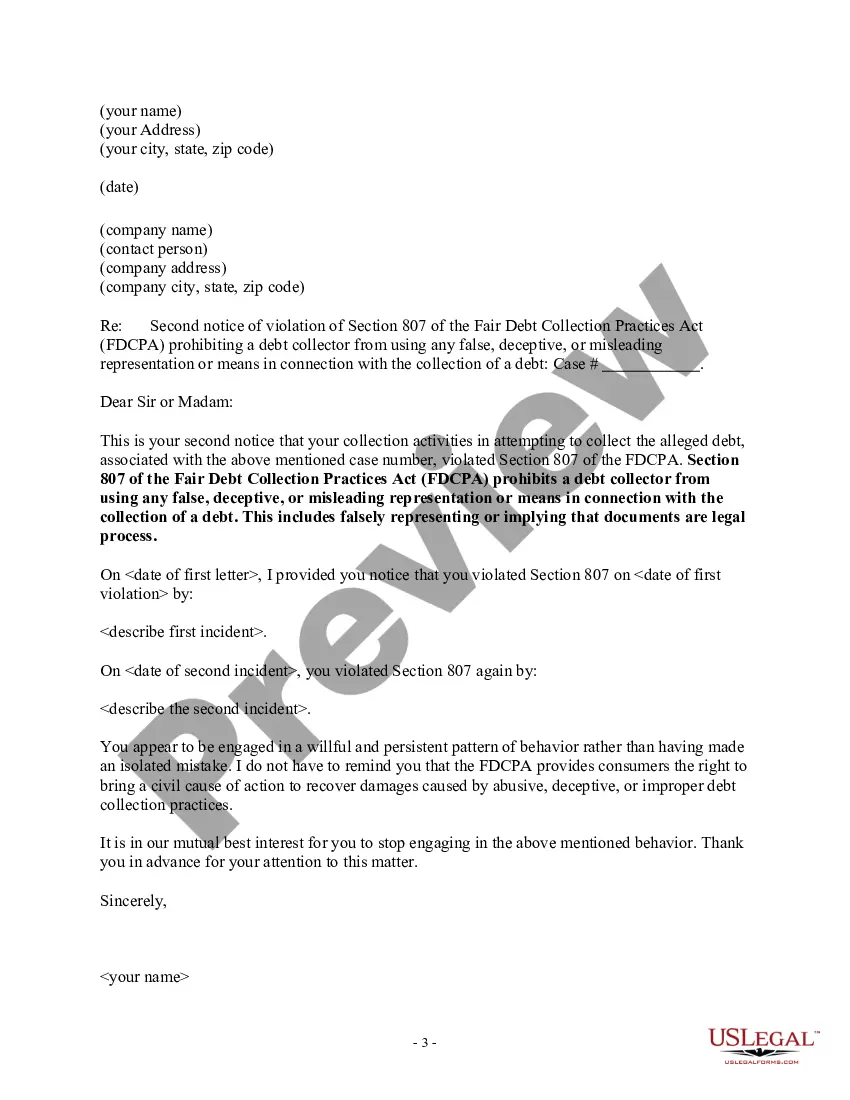
- Description of the violation of Section 807 of the FDCPA
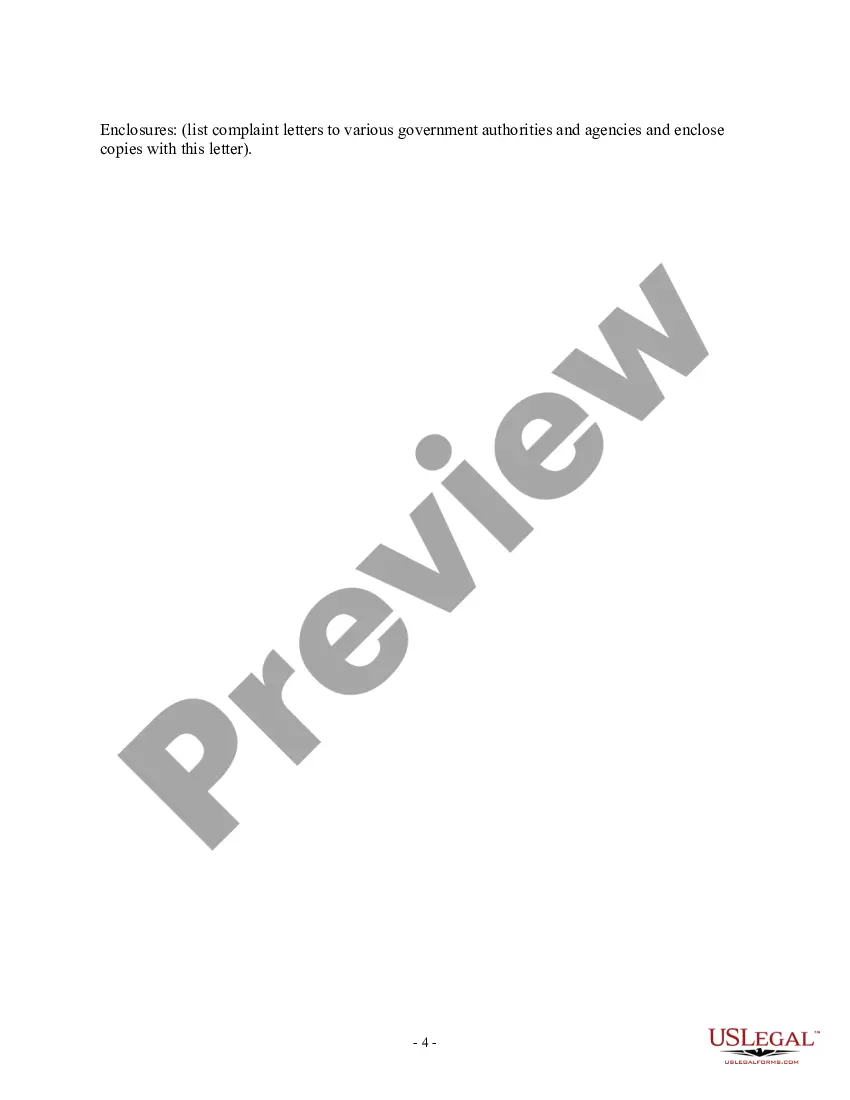
- Reference to prior complaints sent to authorities
- Signature and date of the notice
When to use this document
This form should be used when you have received communication from a debt collector that includes false, deceptive, or misleading representations. If you believe a debt collector is incorrectly implying that certain documents are legal processes, or if they have violated the FDCPA in another way, this notice is an important step to assert your rights and address the violation legally.
Who can use this document
- Individuals who have been contacted by a debt collector.
- Consumers who believe their rights under the FDCPA have been violated.
- Those seeking to formally document a debt collector's misleading practices.
How to complete this form
- Identify yourself by entering your name and address at the top of the form.
- Add the debt collector's name and contact information in the designated area.
- Describe the violation you are addressing, including specifics about misleading representations.
- Reference any prior complaints made to authorities about their practices.
- Sign and date the notice before sending it to the debt collector.
Does this document require notarization?
Notarization is not commonly needed for this form. However, certain documents or local rules may make it necessary. Our notarization service, powered by Notarize, allows you to finalize it securely online anytime, day or night.
Get your form ready online
Our built-in tools help you complete, sign, share, and store your documents in one place.
Make edits, fill in missing information, and update formatting in US Legal Forms—just like you would in MS Word.
Download a copy, print it, send it by email, or mail it via USPS—whatever works best for your next step.
Sign and collect signatures with our SignNow integration. Send to multiple recipients, set reminders, and more. Go Premium to unlock E-Sign.
If this form requires notarization, complete it online through a secure video call—no need to meet a notary in person or wait for an appointment.
We protect your documents and personal data by following strict security and privacy standards.

Make edits, fill in missing information, and update formatting in US Legal Forms—just like you would in MS Word.

Download a copy, print it, send it by email, or mail it via USPS—whatever works best for your next step.

Sign and collect signatures with our SignNow integration. Send to multiple recipients, set reminders, and more. Go Premium to unlock E-Sign.

If this form requires notarization, complete it online through a secure video call—no need to meet a notary in person or wait for an appointment.

We protect your documents and personal data by following strict security and privacy standards.
Avoid these common issues
- Failing to include specific details about the debt collector's misleading representations.
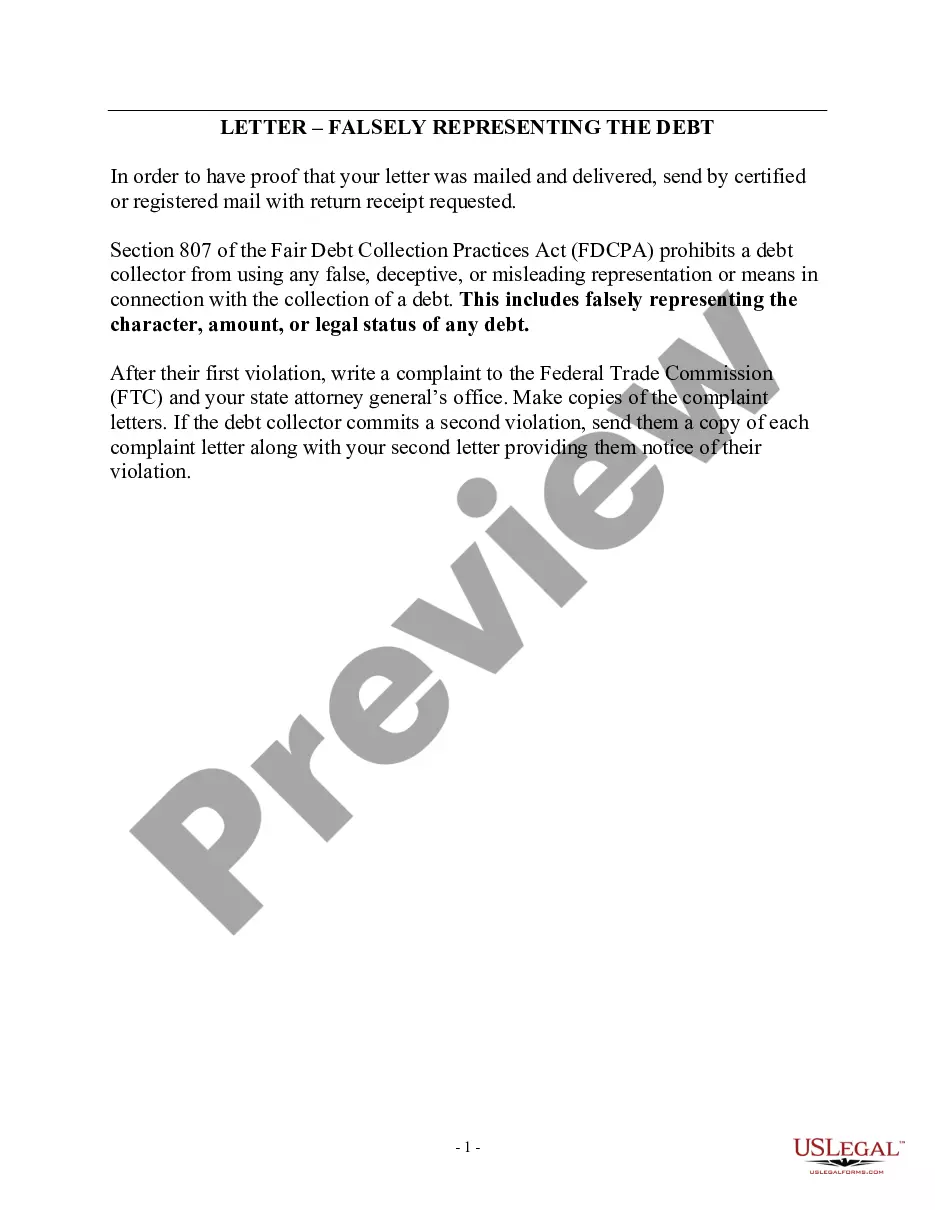
- Not sending the notice via certified mail, which is essential for proof of delivery.
- Neglecting to keep copies of the notice and any accompanying documents for your records.
Advantages of online completion
- Immediate access to a professionally drafted legal document.
- Convenient download and editing options to customize the form to your situation.
- Peace of mind knowing the form meets legal standards required by the FDCPA.
Legal use & context
- This notice is a critical tool for consumers to defend against unlawful debt collection practices.
- Sending this notice can create a record of the debt collector's misconduct, supporting potential future legal actions.
- Understanding your rights under the FDCPA can empower you to effectively challenge deceptive practices.
Main things to remember
- The Notice to Debt Collector is an important tool for consumers experiencing FDCPA violations.
- Filling out the form correctly can help protect your rights and facilitate compliance from debt collectors.
- Always keep a copy of your correspondence for your records and use certified mail for delivery verification.
Looking for another form?









Form popularity
FAQ
Reach out to the company the collector says is the original creditor. They might help you figure out if the debt is legitimate and if this collector has the right to collect the debt. Also, get your free, annual credit report online or at 877-322-8228 and see if the debt shows up there. Dispute the debt in writing.
Challenging the debt: You have a right to dispute the debt. If you challenge the debt within 30 days of first contact, the collector cannot ask for payment until the dispute is settled. After 30 days you can still challenge the debt, but the collector can seek payment while the dispute is being investigated.
No. Debt collectors are prohibited from deceiving or misleading you while trying to collect a debt. Debt collectors are generally prohibited under federal law from using any false, deceptive, or misleading misrepresentation in collecting a debt.
Debt collectors cannot harass or abuse you. They cannot swear, threaten to illegally harm you or your property, threaten you with illegal actions, or falsely threaten you with actions they do not intend to take. They also cannot make repeated calls over a short period to annoy or harass you.
Can You Sue a Company for Sending You to Collections? Yes, the FDCPA allows for legal action against certain collectors that don't comply with the rules in the law. If you're sent to collections for a debt you don't owe or a collector otherwise ignores the FDCPA, you might be able to sue that collector.
That's right, you read that sentence correctly absolutely nothing can be safely placed on the envelope, except for the collector's address. A collector cannot even put its own name on the envelope, unless the collector is certain the name does not indicate that the company is in the debt collection business.
Your dispute should be made in writing to ensure that the debt collector has to send you verification of the debt. If you're having trouble with debt collection, you can submit a complaint with the CFPB online or by calling (855) 411-CFPB (2372).
Write a letter disputing the debt. You have 30 days after receiving a collection notice to dispute a debt in writing. Dispute the debt on your credit report. Lodge a complaint. Respond to a lawsuit. Hire an attorney.
Your dispute should be made in writing to ensure that the debt collector has to send you verification of the debt. If you're having trouble with debt collection, you can submit a complaint with the CFPB online or by calling (855) 411-CFPB (2372).