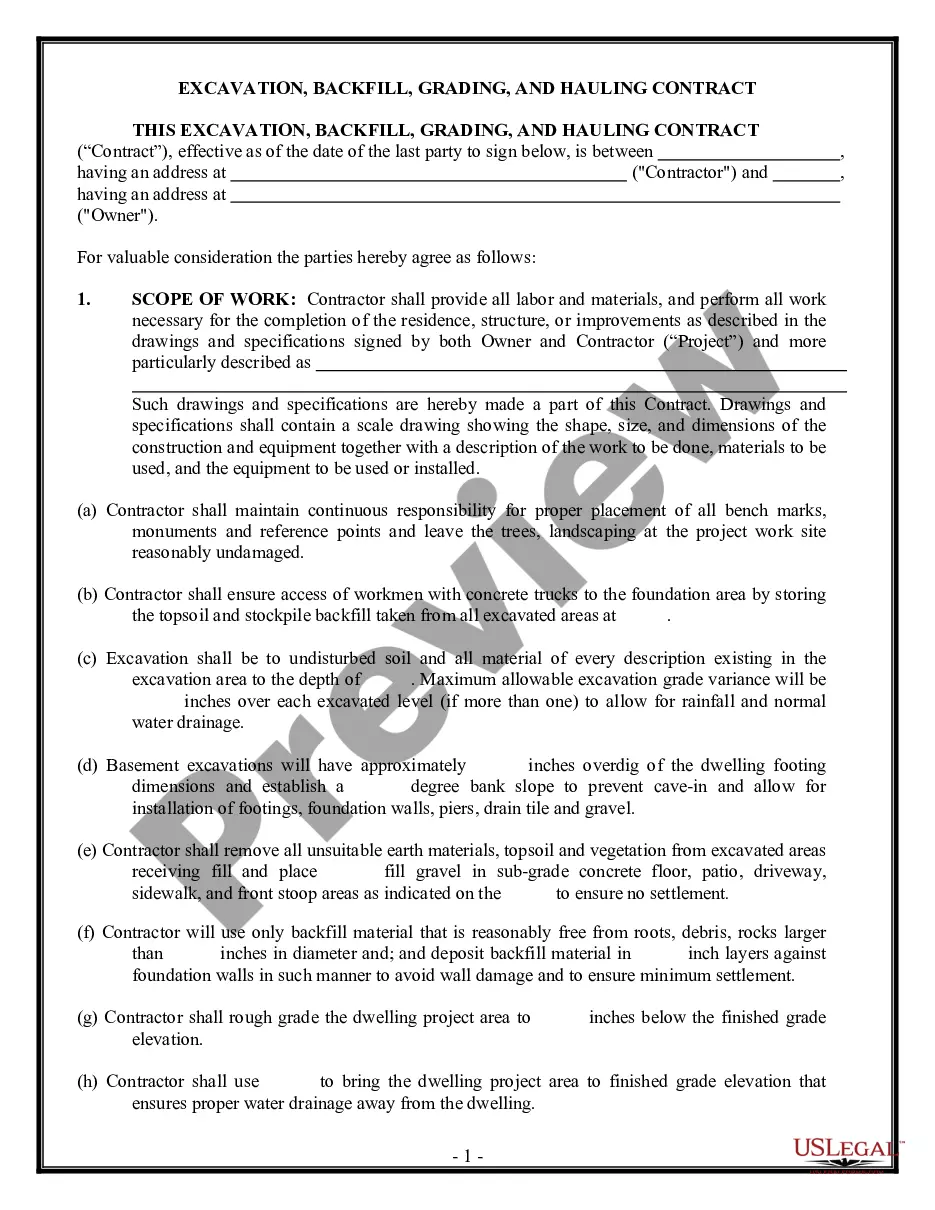
Letter Informing Debt Collector of False or Misleading Misrepresentations in Collection Activities - False Representation or Implication that the Debt Collector is Vouched for, Bonded by, or Affiliated with the United States
What this document covers
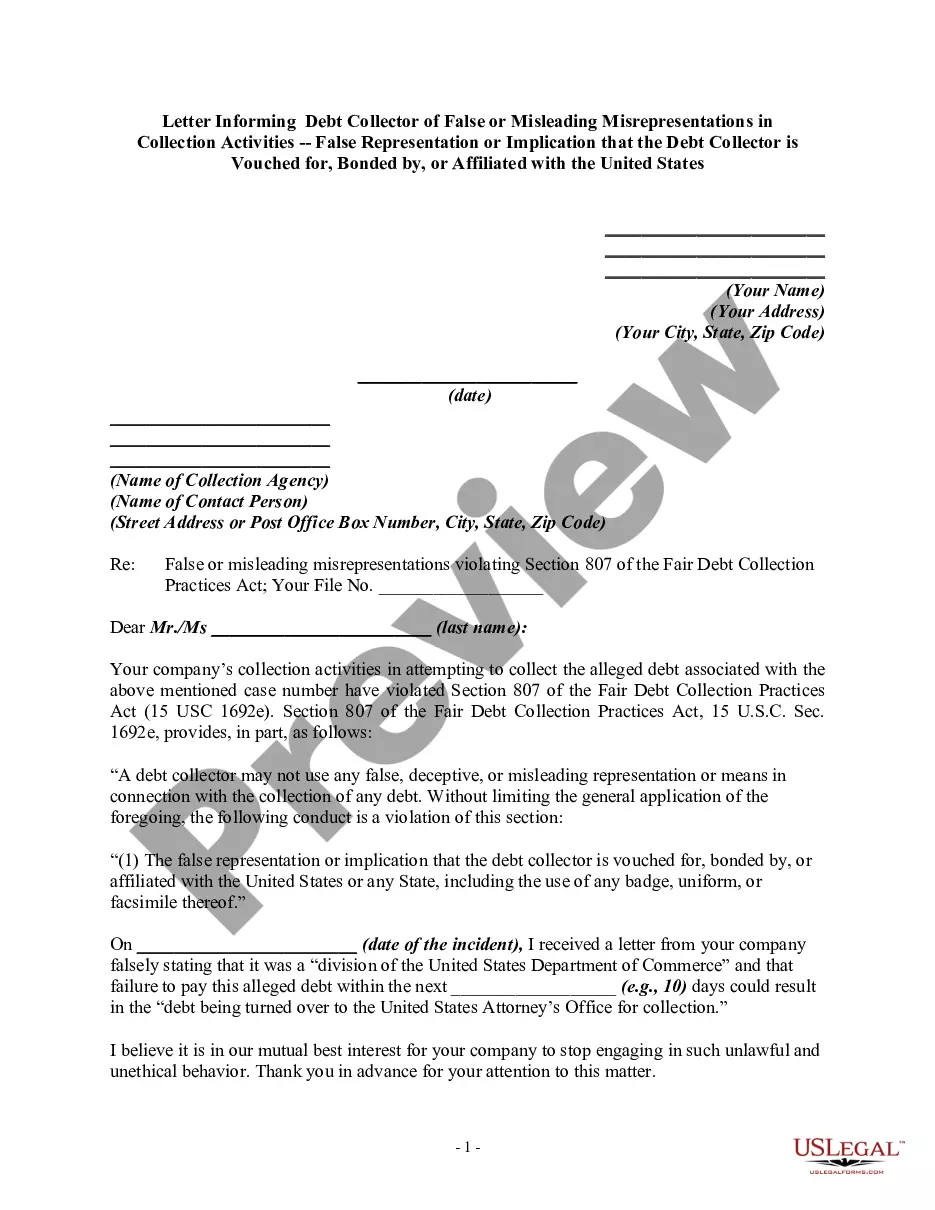
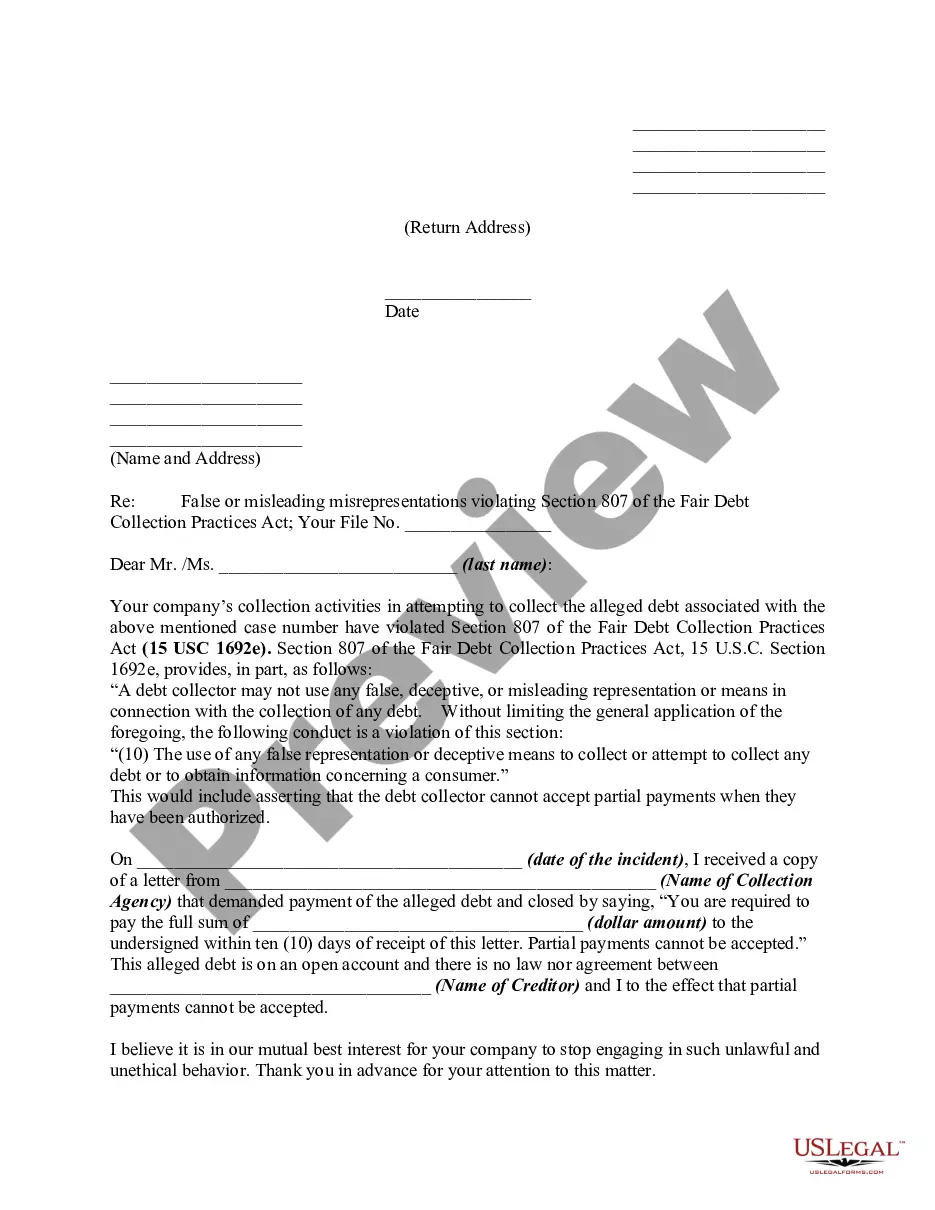
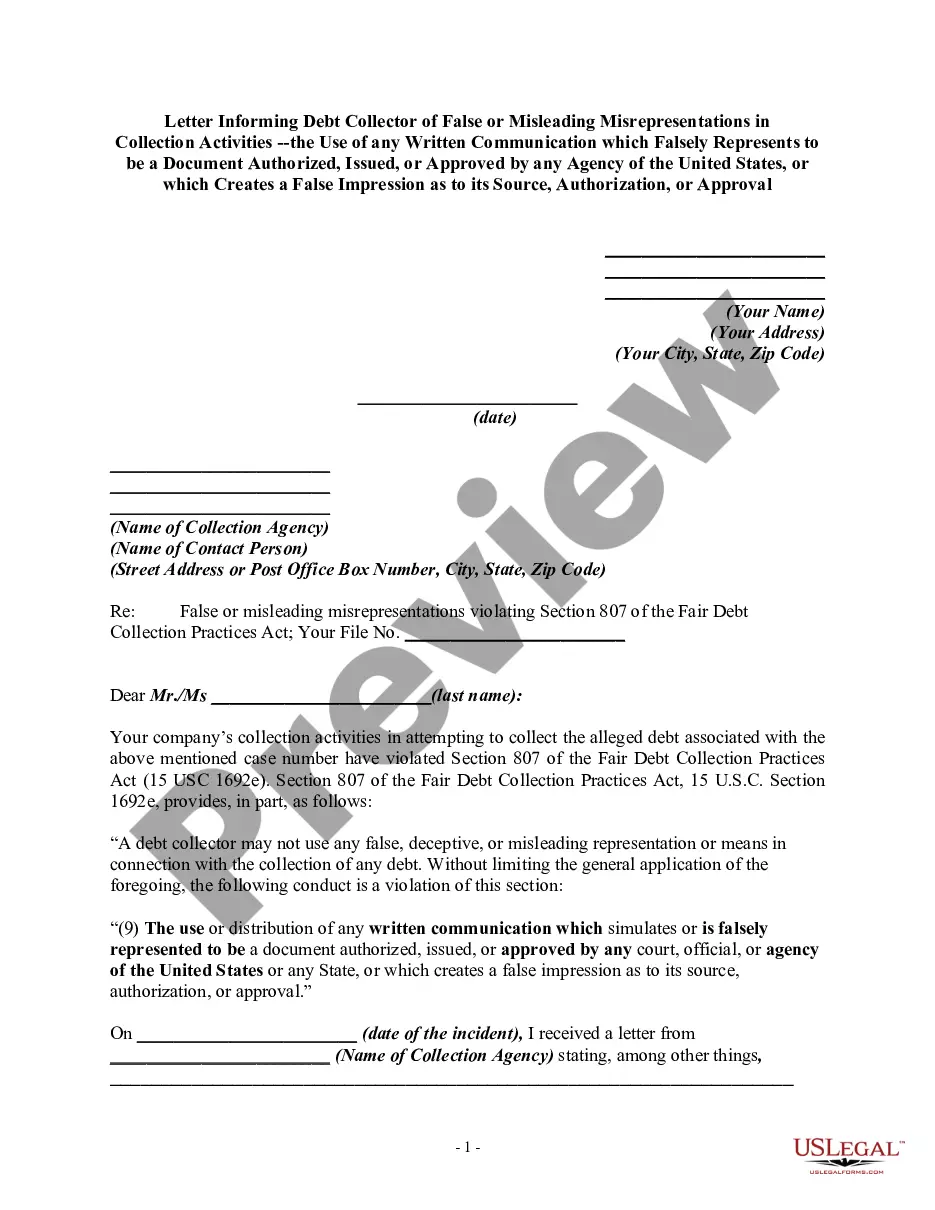
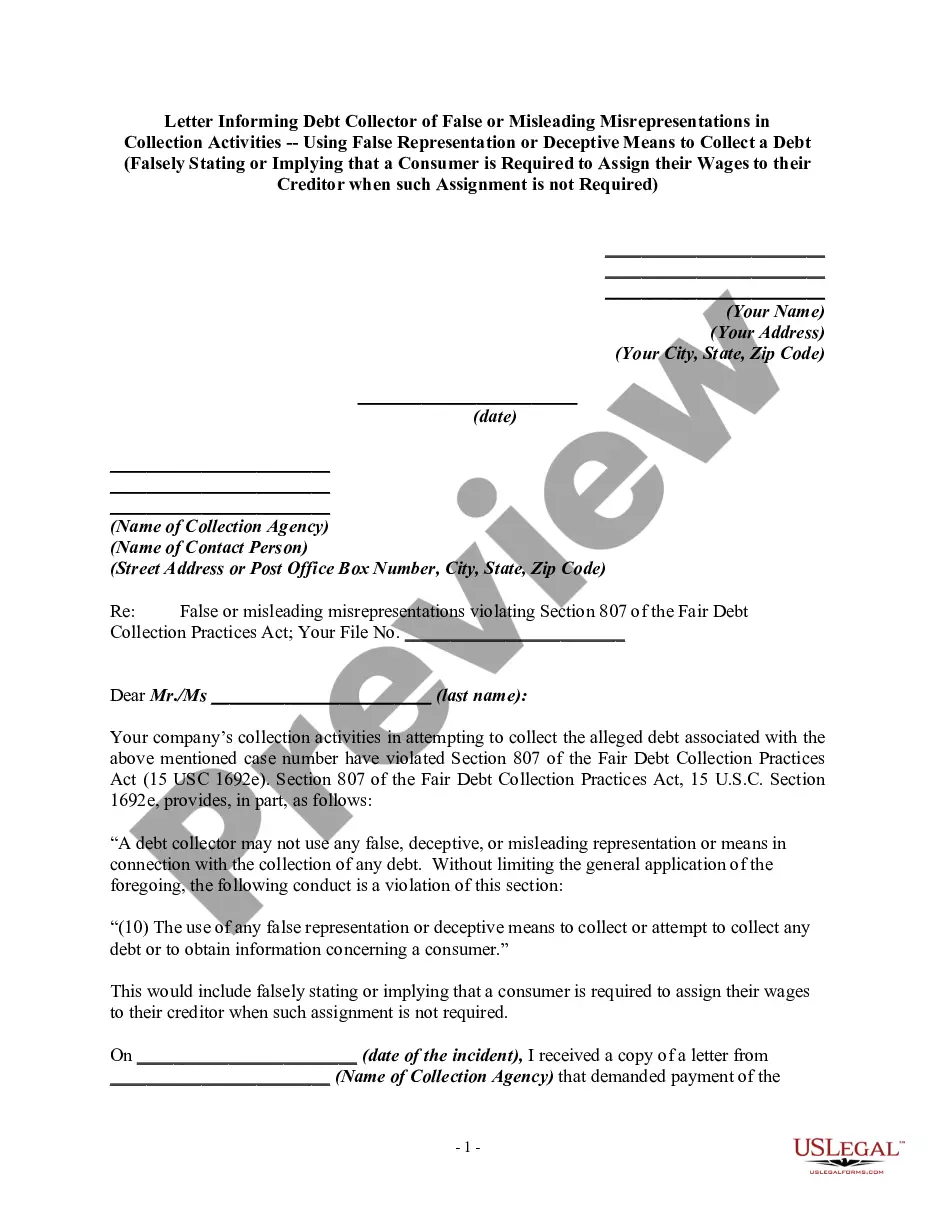
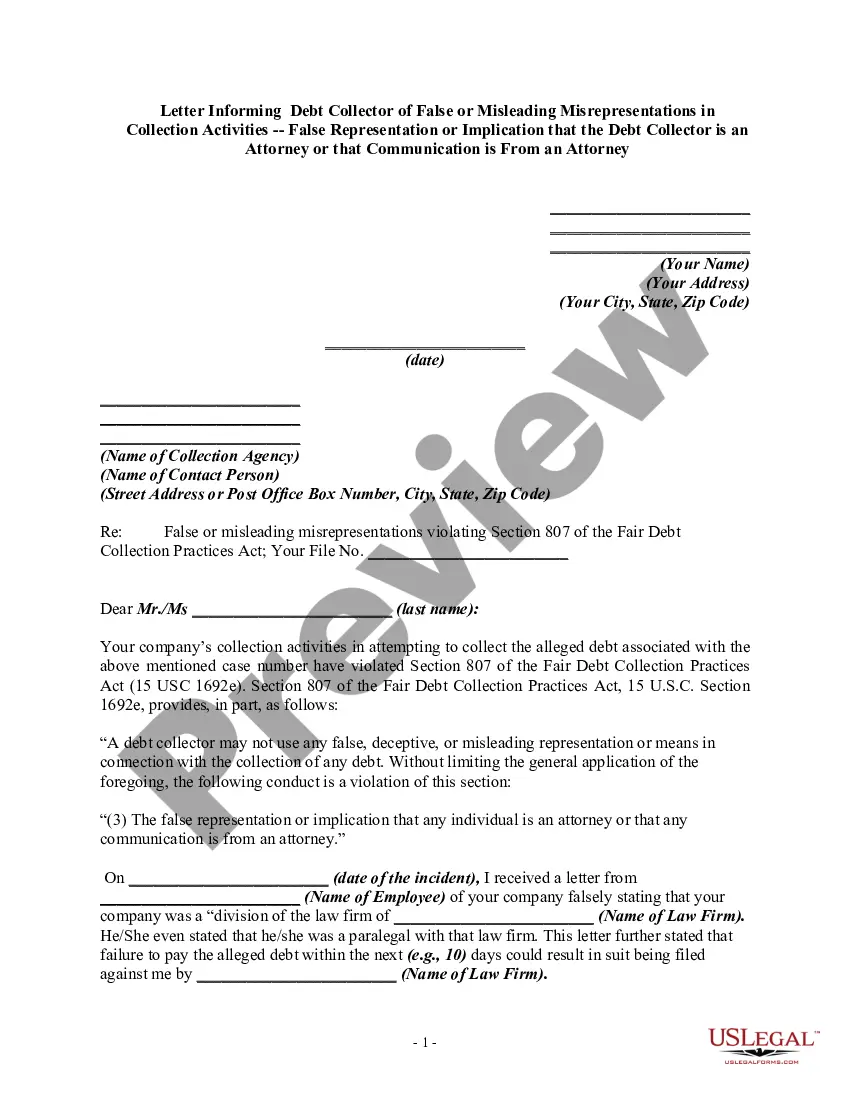
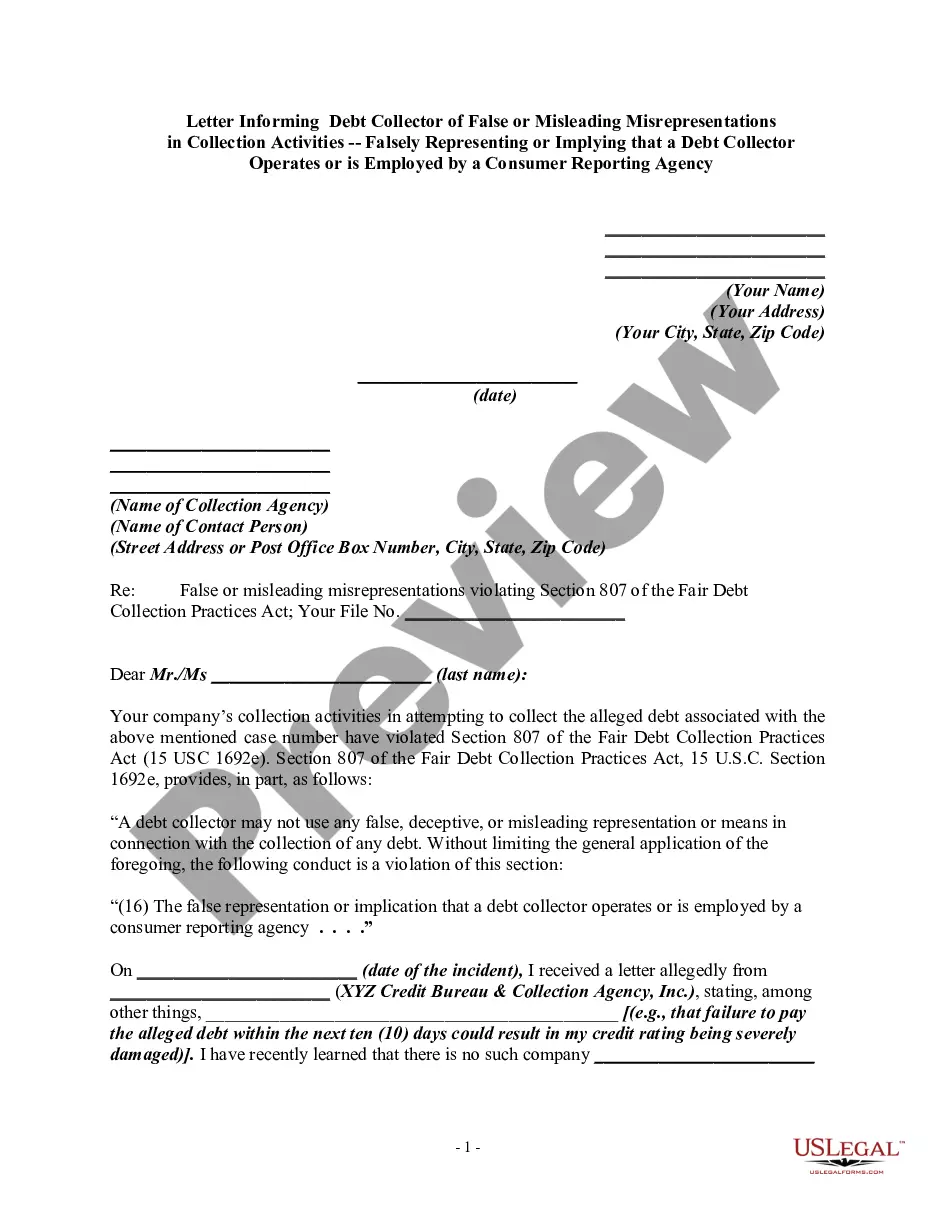
The Letter Informing Debt Collector of False or Misleading Misrepresentations in Collection Activities is a legal document used to address improper or deceptive collection practices by debt collectors. This form specifically targets allegations that a collector falsely implies affiliation with the United States government or misrepresents its authority in a threatening manner. By using this form, individuals can formally notify debt collectors of their unethical practices as prohibited under Section 807 of the Fair Debt Collection Practices Act.
Key parts of this document
- Your identification: Name and contact information.
- Date of the incident where false representation occurred.
- Details of the collection agency and contact person.
- Specific allegations stating the misrepresentation by the debt collector.
- Your request for the collection agency to cease such activities.
- Signature for verification and record-keeping.
Common use cases
This form should be used when you believe a debt collector has made false or misleading claims during their collection efforts, particularly implying that they are affiliated with or endorsed by the United States government. Situations may include receiving threatening communication that falsely states legal ramifications tied to non-payment or claims of government affiliation. Sending this letter notifies the collector of their unlawful actions and protects your rights under the Fair Debt Collection Practices Act.
Who can use this document
- Individuals who have received inappropriate or misleading communications from debt collectors.
- Consumers wishing to protect their rights under the Fair Debt Collection Practices Act.
- Anyone who feels threatened or misled about their debt obligations due to a collector's actions.
Instructions for completing this form
- Enter your name and contact details at the top of the letter.
- Specify the date when you send the letter to the collection agency.
- Provide the name and address of the debt collector or agency.
- Clearly state your complaint regarding the misleading representation.
- Request that the collection agency cease the unlawful practices.
- Add your signature and printed name at the bottom of the letter.
Does this form need to be notarized?
In most cases, this form does not require notarization. However, some jurisdictions or signing circumstances might. US Legal Forms offers online notarization powered by Notarize, accessible 24/7 for a quick, remote process.
Get your form ready online
Our built-in tools help you complete, sign, share, and store your documents in one place.
Make edits, fill in missing information, and update formatting in US Legal Forms—just like you would in MS Word.
Download a copy, print it, send it by email, or mail it via USPS—whatever works best for your next step.
Sign and collect signatures with our SignNow integration. Send to multiple recipients, set reminders, and more. Go Premium to unlock E-Sign.
If this form requires notarization, complete it online through a secure video call—no need to meet a notary in person or wait for an appointment.
We protect your documents and personal data by following strict security and privacy standards.

Make edits, fill in missing information, and update formatting in US Legal Forms—just like you would in MS Word.

Download a copy, print it, send it by email, or mail it via USPS—whatever works best for your next step.

Sign and collect signatures with our SignNow integration. Send to multiple recipients, set reminders, and more. Go Premium to unlock E-Sign.

If this form requires notarization, complete it online through a secure video call—no need to meet a notary in person or wait for an appointment.

We protect your documents and personal data by following strict security and privacy standards.
Typical mistakes to avoid
- Failing to include specific details about the misleading representation.
- Not keeping a copy of the letter for your records.
- Sending the letter without a signature.
- Assuming the collector will stop without following up.
Benefits of completing this form online
- Convenient access from anywhere at any time.
- Easy editing capabilities to customize the information.
- Pre-drafted by licensed attorneys to ensure legal compliance.
- Quick download to facilitate timely communication.
Legal use & context
- The form is based on federal law, specifically the Fair Debt Collection Practices Act.
- Using this form serves as a formal response to alleged unlawful collection practices.
- Documentation of such complaints may be used in any future legal proceedings.
Looking for another form?




Form popularity
FAQ
Debt validation is your federal right granted under the Fair Debt Collection Practices Act (FDCPA). To request debt validation, you must send a written request to the debt collector within 30 days of being contacted by the collection agency.
The debt dispute letter should include your personal identifying information; verification of the amount of debt owed; the name of the creditor for the debt; and a request that the debt not be reported to credit reporting agencies until the matter is resolved or have it removed from the report, if it already has been
In the letter, reference the date of the initial contact and the method, for example, "a phone call received from your agency on April 25, 2019." You also need to provide a statement that you're requesting validation of the debt. Do not admit to owing the debt or make any reference to payment.
Under the Fair Debt collection Practices Act (FDCPA), I have the right to request validation of the debt you say I owe you. I am requesting proof that I am indeed the party you are asking to pay this debt, and there is some contractual obligation that is binding on me to pay this debt.
No. Debt collectors are prohibited from deceiving or misleading you while trying to collect a debt. Debt collectors are generally prohibited under federal law from using any false, deceptive, or misleading misrepresentation in collecting a debt.
Write and Mail a Letter State that you're requesting validation of the debt or removal of the debt from your credit report. Then mail the letter and request a return receipt so you have proof that you sent it and that the collection agency received it.
A debt validation letter can be an effective tool for dealing with debt collectors.
Unfair practices are prohibited Deposit or threaten to deposit a postdated check before your intended payment date. Take or threaten to take property if it's not allowed. Collect more than you owe on a debt, which may include fees and interest.
In general, if you want to escalate the issue with the debt collector, you should do so within 30 days of receiving the validation letter. This includes disputing that you owe the debt, requesting additional verification of the debt, or requesting the name and address of the original creditor.