West Virginia Excavator Contract for Contractor
Overview of this form
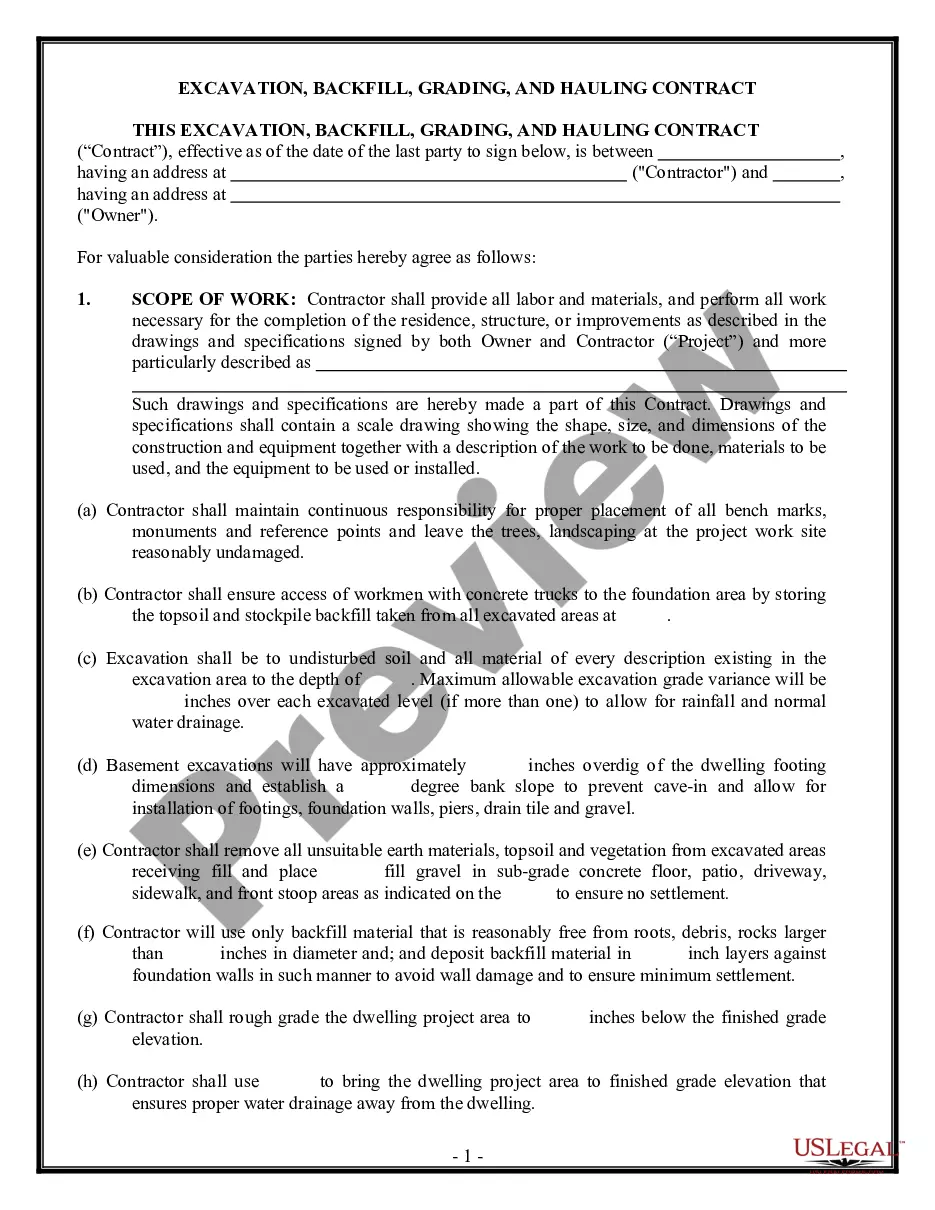
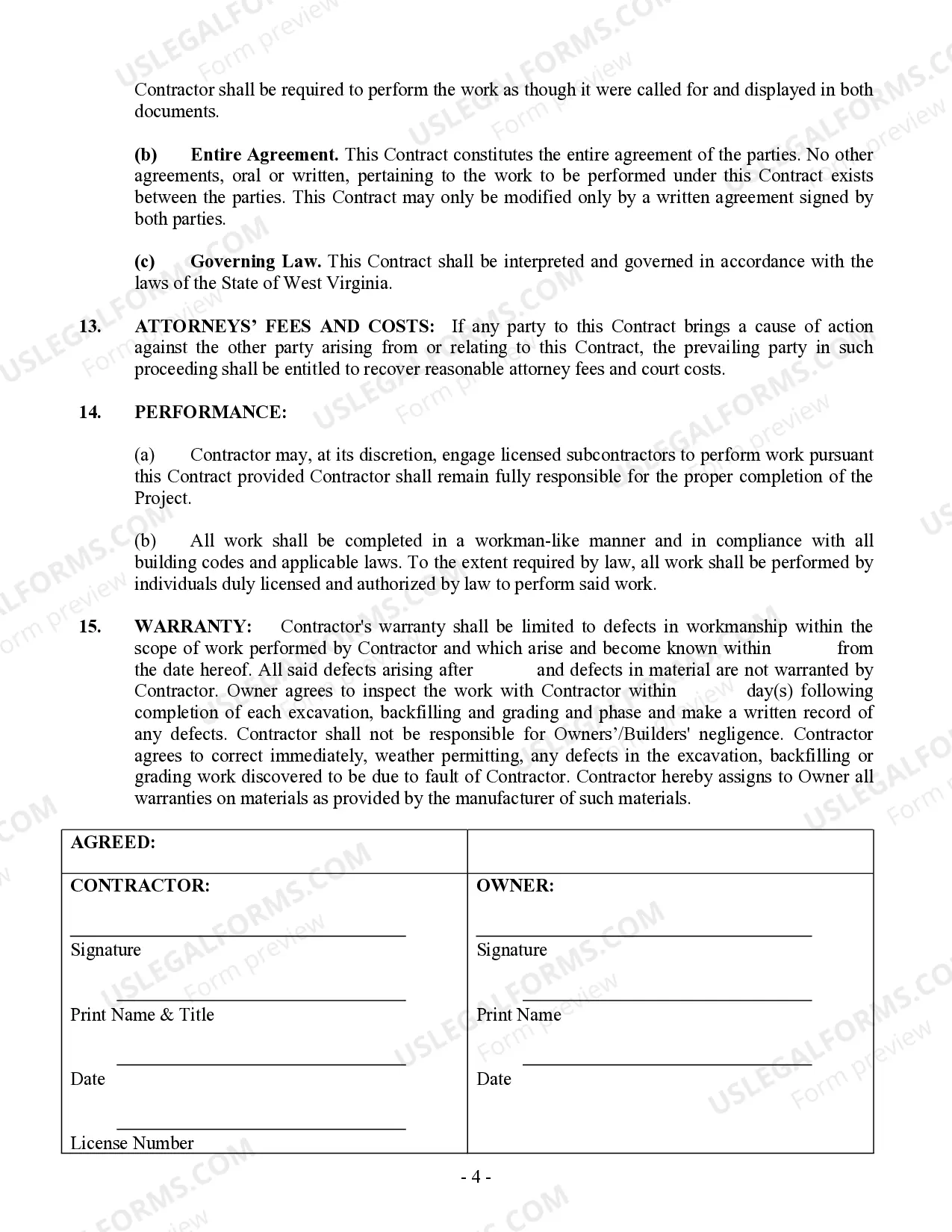
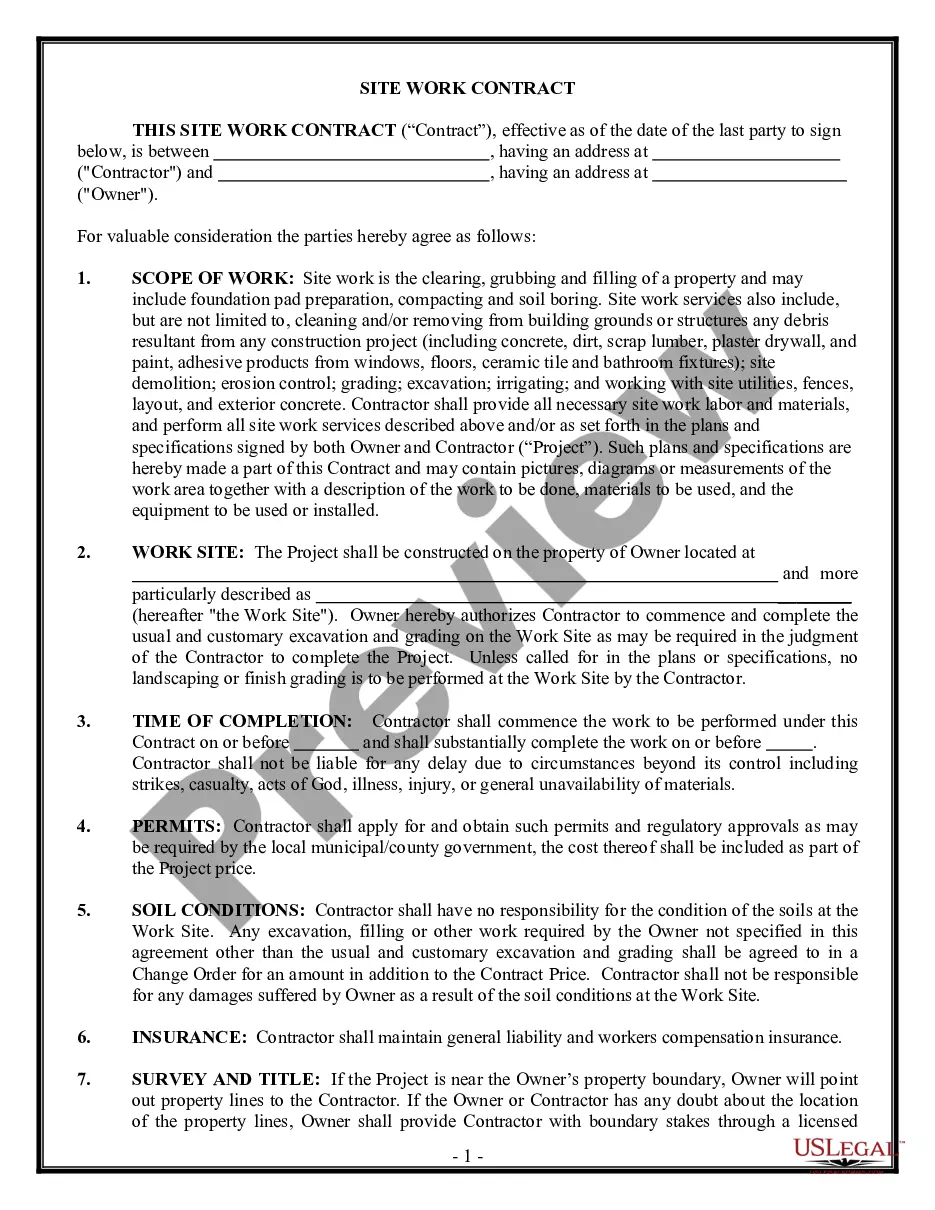
The Excavator Contract for Contractor is a legally binding agreement between excavator contractors and property owners. This form facilitates clear communication regarding project responsibilities, payment arrangements, insurance, and other critical aspects of excavation work. Unlike generic contracts, this form is tailored to comply with the laws of West Virginia, ensuring that all parties are protected under state regulations.
Key components of this form
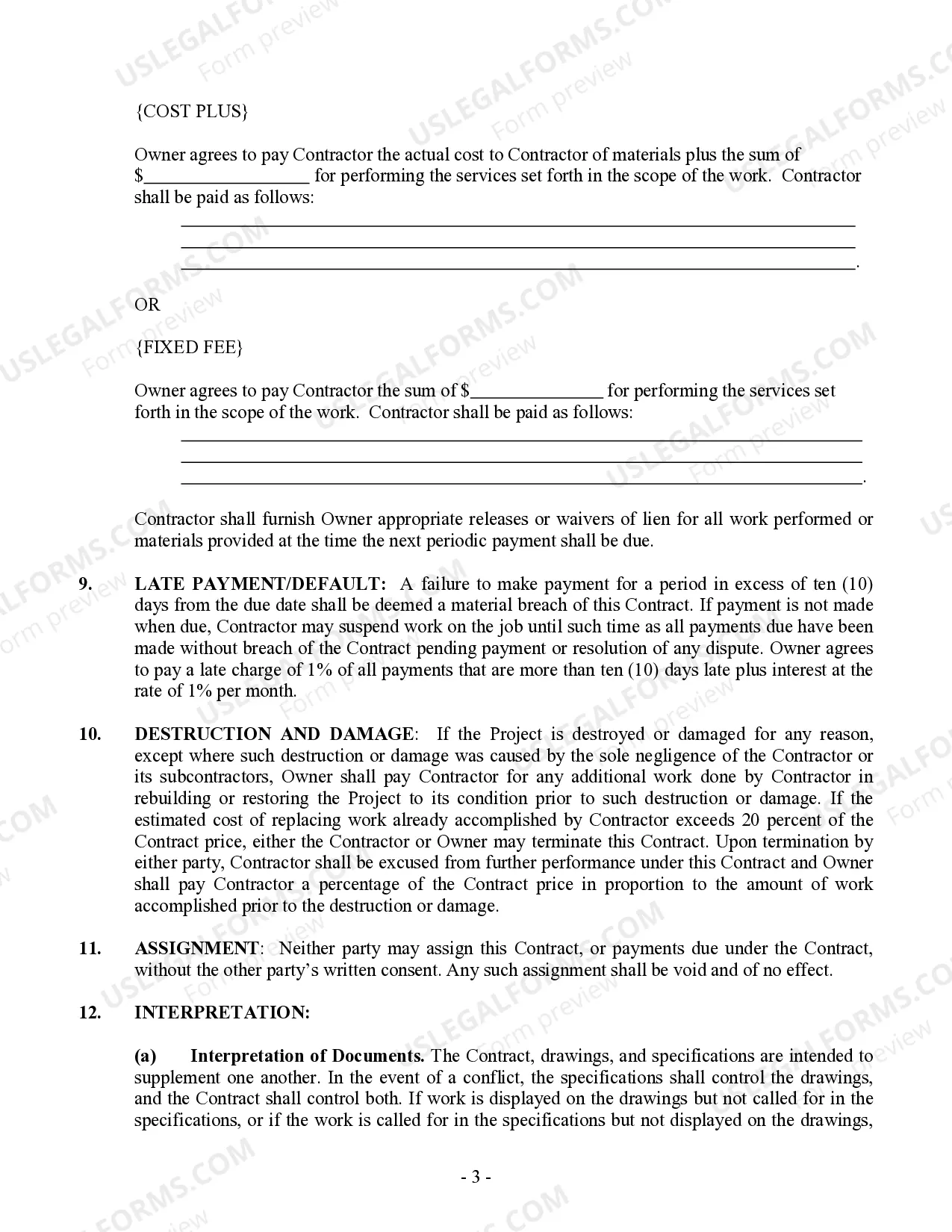
- Payment arrangements: Options for cost plus or fixed fee agreements.
- Owner responsibilities: Details on site protection and labor provision.
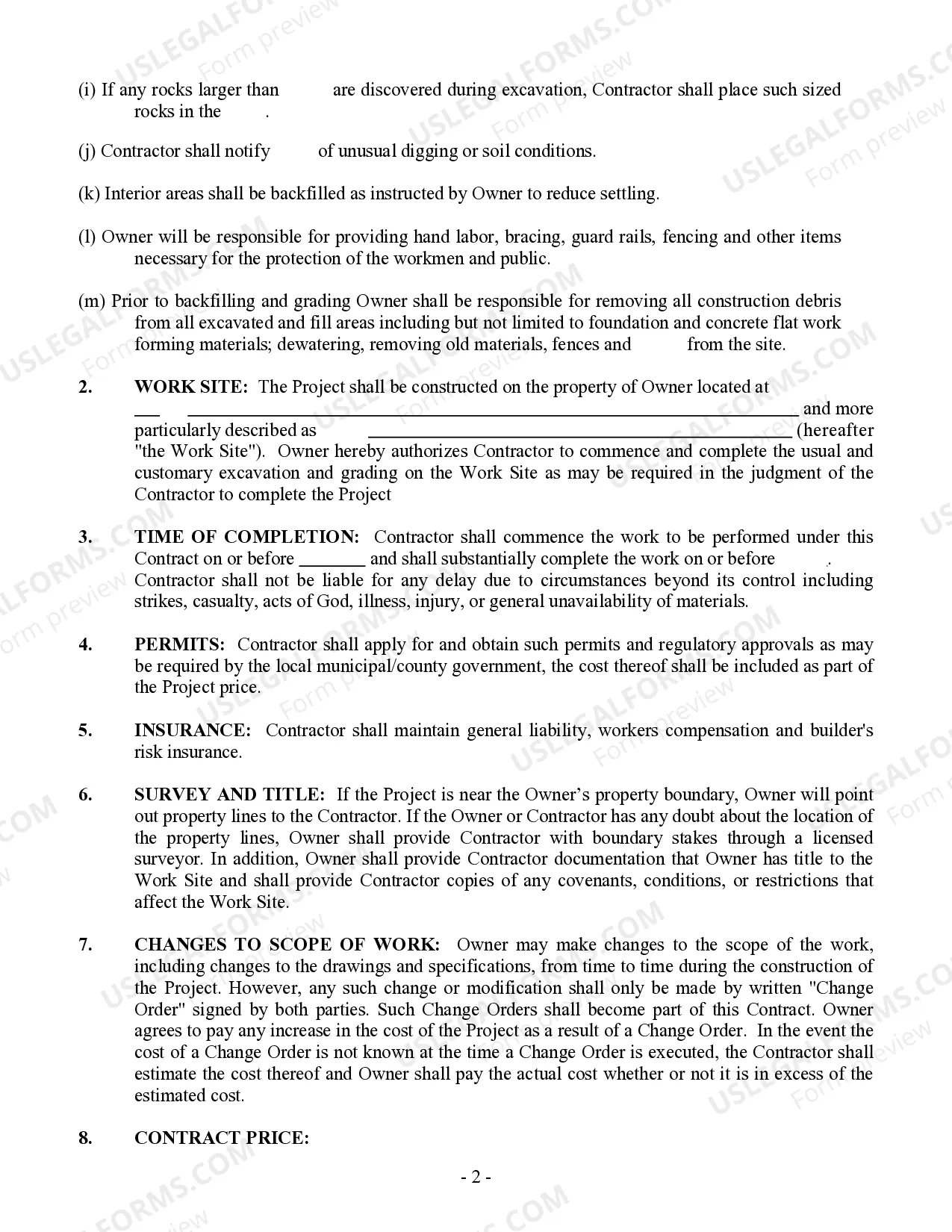
- Permit requirements: Obligations for the contractor to obtain necessary permits.
- Insurance coverage: Stipulations for general liability and worker's compensation.
- Change orders: Procedures for modifications to the project scope and associated costs.
- Termination conditions: Steps to follow if the project faces destruction or damage.


Common use cases
This form should be used when a property owner hires an excavator contractor for a project involving excavation work. It is especially relevant when there is a need for clearly defined roles, responsibilities, and payment terms. Use this contract to address changes in the project scope or to protect both parties in case of unforeseen damages during the excavation process.
Who should use this form
- Excavator contractors seeking to formalize a contract with property owners for excavation projects.
- Property owners planning an excavation and looking for legal protection regarding contractor duties.
- Developers or builders managing excavations for residential or commercial construction.
Completing this form step by step
- Identify the parties involved: Clearly state the names and addresses of the contractor and the property owner.
- Specify the project details: Include information about the work to be performed and any relevant drawings or specifications.
- Determine payment terms: Choose between a cost plus or fixed fee arrangement and outline the payment schedule.
- Enter insurance details: Include information on the required insurance coverage for the project.
- Include change order provisions: State how changes to the project scope will be handled and documented.
Notarization requirements for this form
This form does not typically require notarization unless specified by local law. Ensure to check local regulations to confirm if notarization is needed for your specific circumstances.
Get your form ready online
Our built-in tools help you complete, sign, share, and store your documents in one place.
Make edits, fill in missing information, and update formatting in US Legal Forms—just like you would in MS Word.
Download a copy, print it, send it by email, or mail it via USPS—whatever works best for your next step.
Sign and collect signatures with our SignNow integration. Send to multiple recipients, set reminders, and more. Go Premium to unlock E-Sign.
If this form requires notarization, complete it online through a secure video call—no need to meet a notary in person or wait for an appointment.
We protect your documents and personal data by following strict security and privacy standards.

Make edits, fill in missing information, and update formatting in US Legal Forms—just like you would in MS Word.

Download a copy, print it, send it by email, or mail it via USPS—whatever works best for your next step.

Sign and collect signatures with our SignNow integration. Send to multiple recipients, set reminders, and more. Go Premium to unlock E-Sign.

If this form requires notarization, complete it online through a secure video call—no need to meet a notary in person or wait for an appointment.

We protect your documents and personal data by following strict security and privacy standards.
Typical mistakes to avoid
- Failing to clearly define the scope of work, leading to misunderstandings.
- Not including detailed payment terms or schedules, which can cause payment disputes.
- Neglecting to specify insurance requirements, risking liability for both parties.
Benefits of using this form online
- Convenience of downloading and completing from anywhere, at any time.
- Editability allows for customization to suit specific project needs.
- Reliability ensured by professionally drafted templates meeting legal standards.
Looking for another form?


Form popularity
FAQ
Contact the West Virginia Division of Labor. Register for & take the necessary exams: Business & Law exam, and the Trade exam. Every business must register with the West Virginia Tax Department to get your business registration tax number.
Obtaining A Contractor's License In The State Of West Virginia. Individuals who perform more than $2500 in labor and materials will be required to hold a contractors license in the state of West Virginia. Construction contractors have to be licensed in West Virginia.
All contractor classifications are required to pass both the Business and Law exam and a trade exam. The first step in the licensing process is to pass all required exams. Once the exams are passed, then you submit an application to the State Licensing Board.
Operating without a required contractor's license is a criminal class one misdemeanor. There can be DPOR civil penalties. Operating without a required contractor license would be a violation of the Virginia Consumer Protection Act. This is a very legitimate police power by the state.
Determine the Type of Contractor License You Need In the state of West Virginia, work performed under $2,500 (materials and labor, total contract) does not require a contractor license. However: Electrical Contractor's License - if a project exceeds $1,000.
How to Get a Handyman License in West Virginia. First, determine your license classification by contacting the West Virginia contractor licensing board. Schedule your exam and obtain a tax number and Certificate of Authority. Then, submit your application, wage bond affidavit, and application fee to the licensing board
Residential contractors build and renovate homes or manage such projects from start to finish. The residential contractor typically secures permits, supervises labor and enlists specialized subcontractors such as plumbers and electricians.
Generally speaking, a general contractor is someone who manages a team of subcontractors to help do various types of construction projects in your home. A custom home builder, however, is specialized in building custom homes and is able to complete this specific type of project start to finish on their own.
Who Needs a Contractors License? Anybody who is performing or managing construction, removal, repair, or improvements when the total value of a single project is over $1,000 must obtain a license from DPOR.