Letter Informing Debt Collector of False or Misleading Misrepresentations in Collection Activities - Threatening to Take an Action that Cannot Legally be Taken or That is not Intended to be Taken
What this document covers
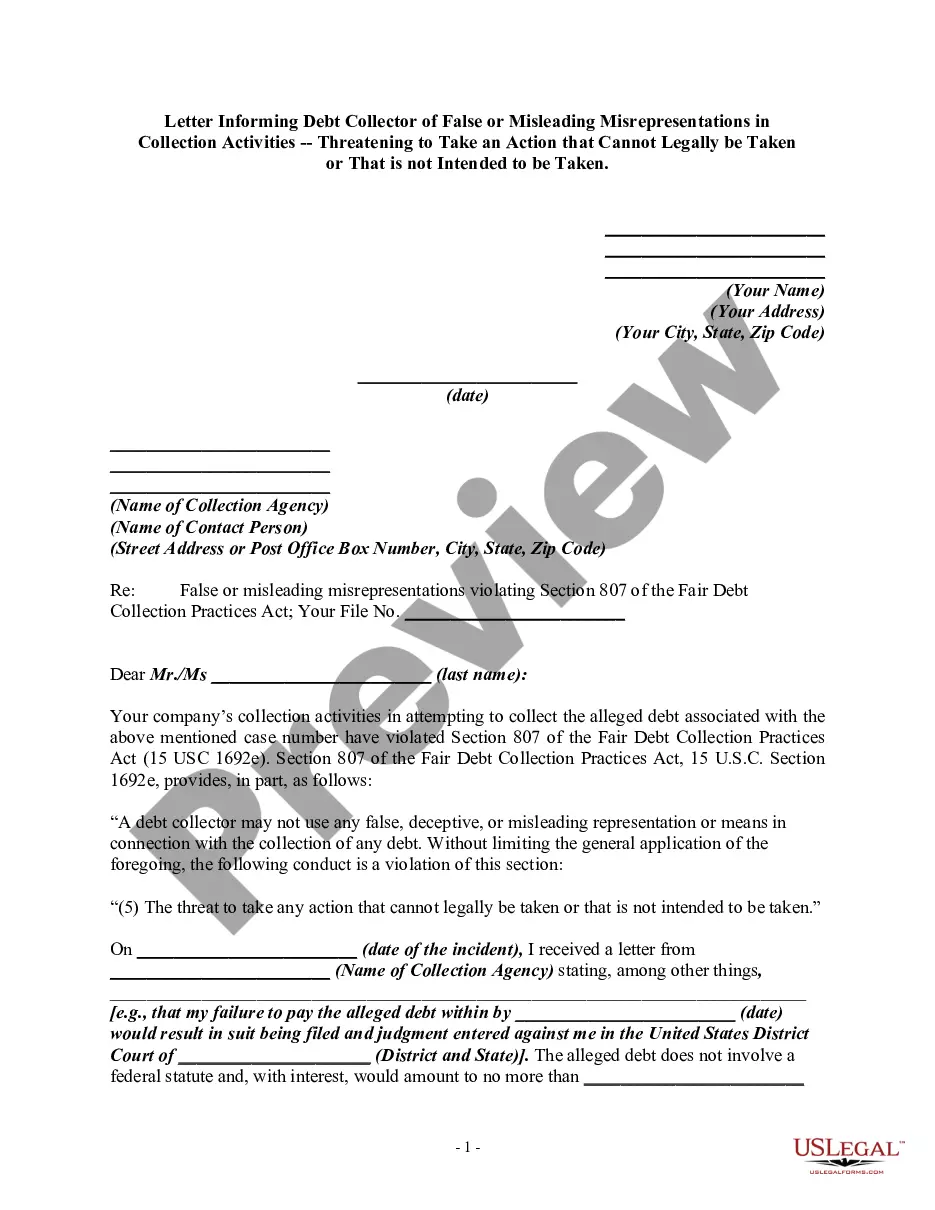
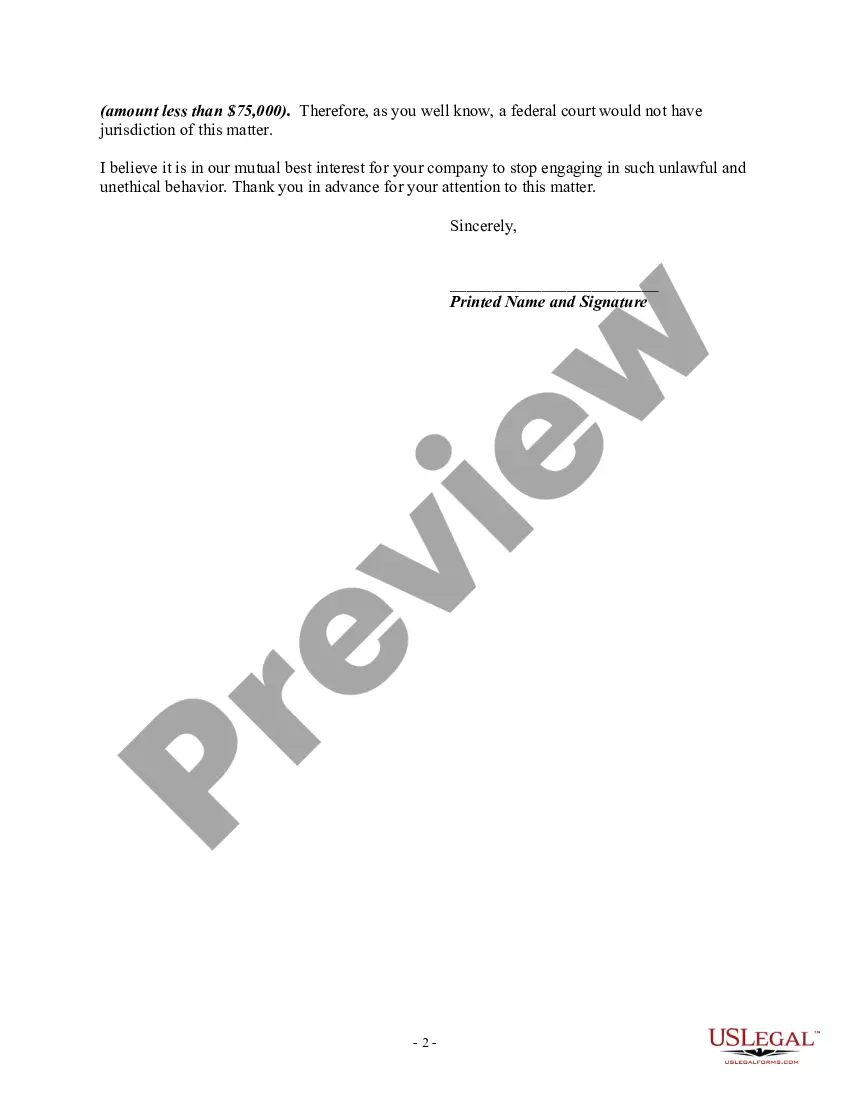
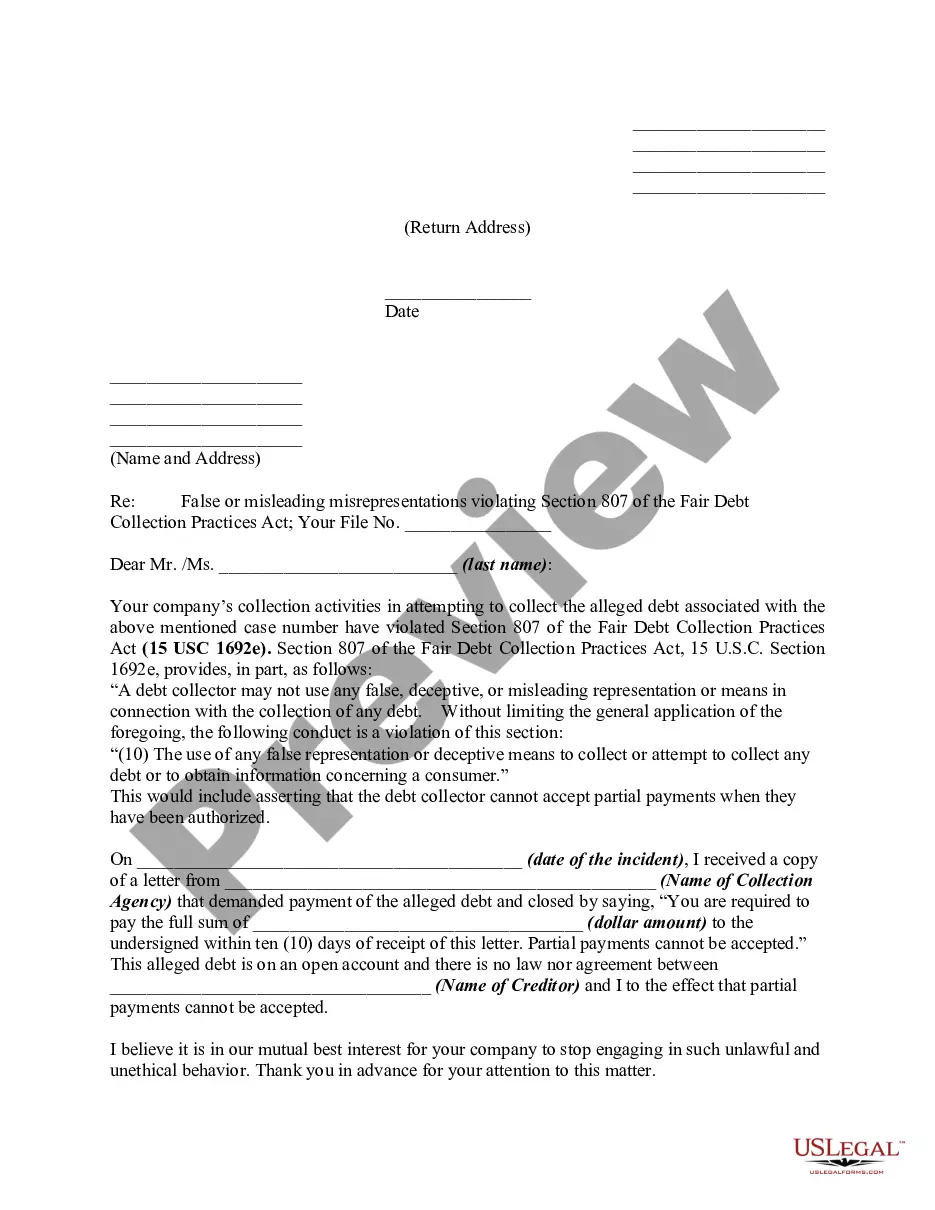
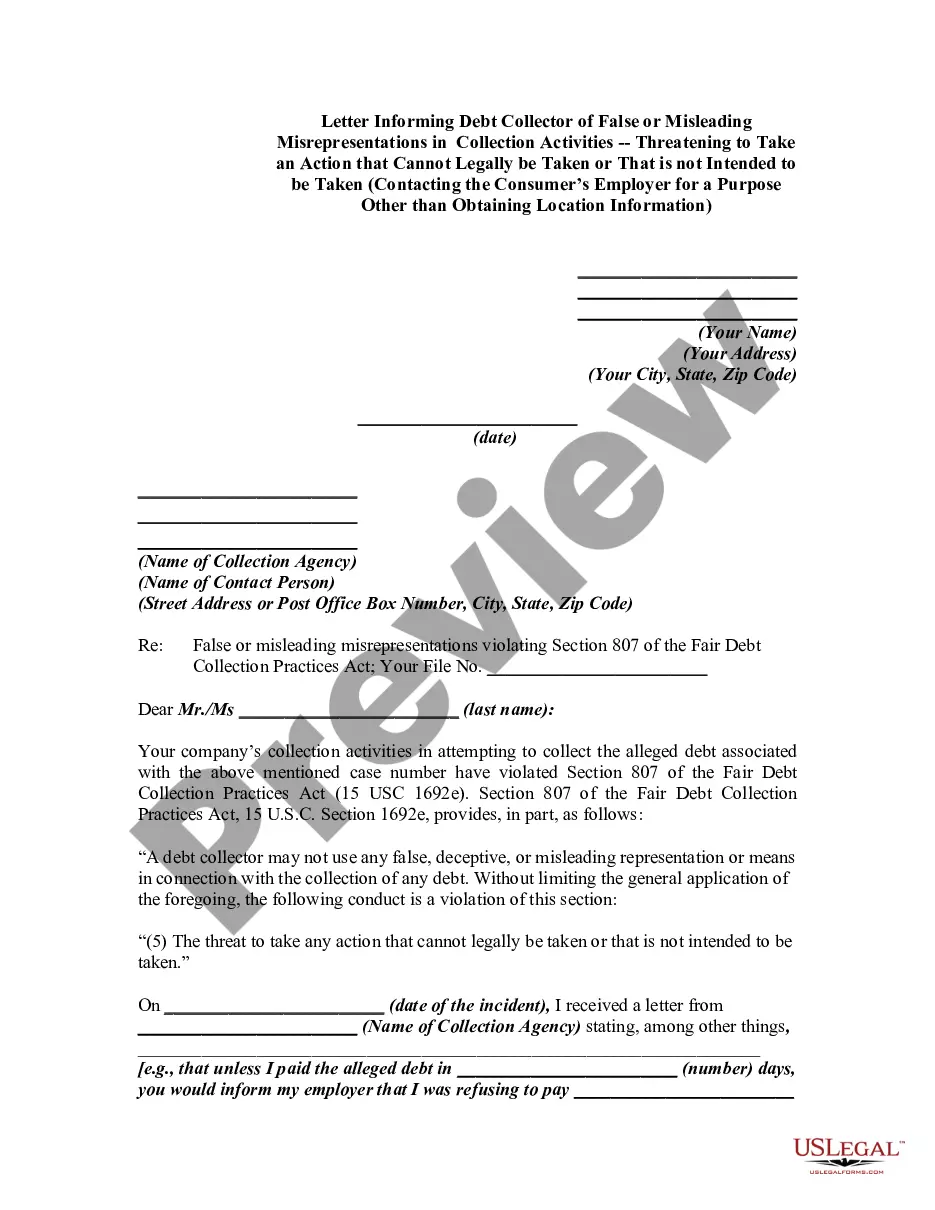
This Letter Informing Debt Collector of False or Misleading Misrepresentations in Collection Activities is a formal document you can use to challenge unethical actions taken by debt collectors. It specifically addresses violations of Section 807 of the Fair Debt Collection Practices Act, which prohibits false, deceptive, or misleading representations in debt collection. This form stands out from similar letters because it specifically targets threats that cannot legally be enforced.
Key components of this form
- Your contact information, including name and address.
- Name and address of the collection agency and contact person.
- Date of the alleged misrepresentation and its details.
- Description of the specific unlawful threat made by the debt collector.
- Your intention for the debt collector to cease unethical practices.
- Your printed name and signature.
Common use cases
This form should be used when you have received communications from a debt collector that include threats of legal action that are not legitimate or enforceable. If you feel that the collector has misrepresented your obligations or the consequences of non-payment, this letter can serve to formally address and document those concerns while seeking resolution.
Intended users of this form
- Individuals who are facing debt collection activities.
- Anyone who has received misleading threats from a debt collector.
- People seeking to document misrepresentations regarding their debts.
Completing this form step by step
- Enter your personal details in the designated fields at the top of the letter.
- Fill in the date of the letter and details about the collection agency.
- Provide the specific date when you received the misleading communication.
- Clearly outline the misleading statement made by the debt collector.
- Sign and date the letter, ensuring you keep a copy for your records.
Does this document require notarization?
This form does not typically require notarization unless specified by local law. However, having it notarized may add an extra layer of credibility when submitting it to the collection agency.
Get your form ready online
Our built-in tools help you complete, sign, share, and store your documents in one place.
Make edits, fill in missing information, and update formatting in US Legal Forms—just like you would in MS Word.
Download a copy, print it, send it by email, or mail it via USPS—whatever works best for your next step.
Sign and collect signatures with our SignNow integration. Send to multiple recipients, set reminders, and more. Go Premium to unlock E-Sign.
If this form requires notarization, complete it online through a secure video call—no need to meet a notary in person or wait for an appointment.
We protect your documents and personal data by following strict security and privacy standards.

Make edits, fill in missing information, and update formatting in US Legal Forms—just like you would in MS Word.

Download a copy, print it, send it by email, or mail it via USPS—whatever works best for your next step.

Sign and collect signatures with our SignNow integration. Send to multiple recipients, set reminders, and more. Go Premium to unlock E-Sign.

If this form requires notarization, complete it online through a secure video call—no need to meet a notary in person or wait for an appointment.

We protect your documents and personal data by following strict security and privacy standards.
Common mistakes
- Failing to provide accurate contact details.
- Not specifying the misleading threat clearly.
- Neglecting to keep a copy of the letter for future reference.
- Overlooking different state laws regarding debt collection.
Why complete this form online
- Easy access to the form allows for quick completion and submission.
- Editable templates can be customized to your specific situation.
- A reliable, attorney-drafted format ensures compliance with the law.
Looking for another form?
Form popularity
FAQ
Report debt collection scams and abuse to the Consumer Financial Protection Bureau (online or at 855-411-2372), the Federal Trade Commission (online or at 877-382-4357) and your state's attorney general.
In the letter, reference the date of the initial contact and the method, for example, "a phone call received from your agency on April 25, 2019." You also need to provide a statement that you're requesting validation of the debt. Do not admit to owing the debt or make any reference to payment.
Your full name and address. The collections agency's name and address. A request for the amount of the debt claimed to be owed. A request for the name of the original creditor. A request for the judgment information (if applicable) A request for proof of the company's license.
If you believe any account information is incorrect, you should dispute the information to have it either removed or corrected. If, for example, you have a collection or multiple collections appearing on your credit reports and those debts do not belong to you, you can dispute them and have them removed.
Social Security number, banking information, and other personal details can be collected and used to steal your identity. Once a crook has your personal info, he can use it to open new credit cards and checking/savings accounts, to write fraudulent checks, or to take out new loans in your name.
Dispute the error with the credit bureau. Report the collections account and ask to have it removed from your credit report. 2feff Provide copies of any evidence you have proving the debt doesn't belong to you. Even if the debt belongs to you, that doesn't mean the collector is legally able to collect from you.
The name 623 dispute method refers to section 623 of the Fair Credit Reporting Act (FCRA). The method allows you to dispute a debt directly with the creditor in question as long as you have already filed your complaint with the credit bureau and completed their process.
Know Your Rights! RIGHT TO DISPUTE THE DEBT: Within 30 DAYS of receiving notice of the debt from the debt collector, you can send a letter to the debt collector disputing the debt and requesting the name and contact information of the original creditor.
The debt dispute letter should include your personal identifying information; verification of the amount of debt owed; the name of the creditor for the debt; and a request that the debt not be reported to credit reporting agencies until the matter is resolved or have it removed from the report, if it already has been