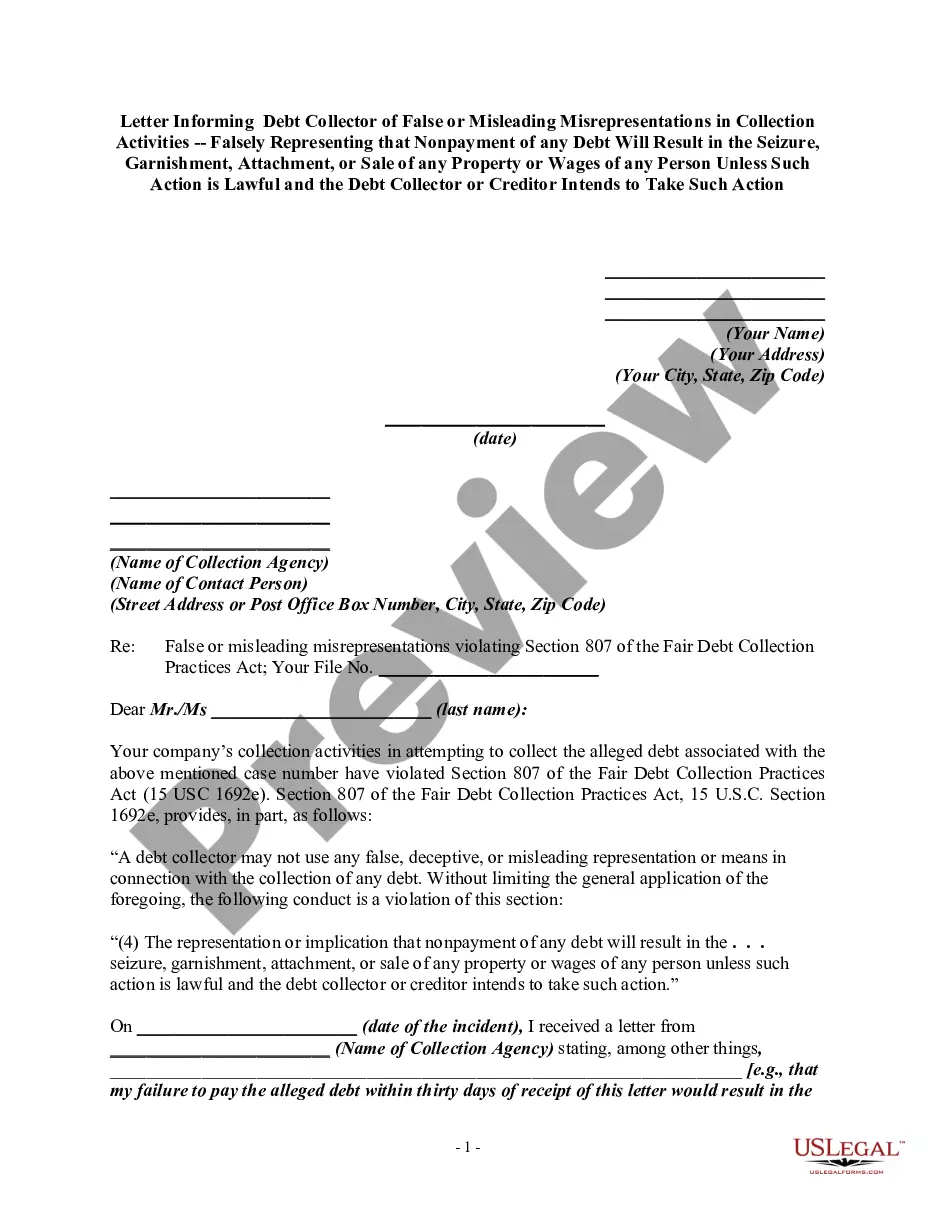
Letter Informing Debt Collector of False or Misleading Misrepresentations in Collection Activities - Falsely Representing that Nonpayment of any Debt Will Result in the Seizure, Garnishment, Attachment, or Sale of any Property or Wages
About this form
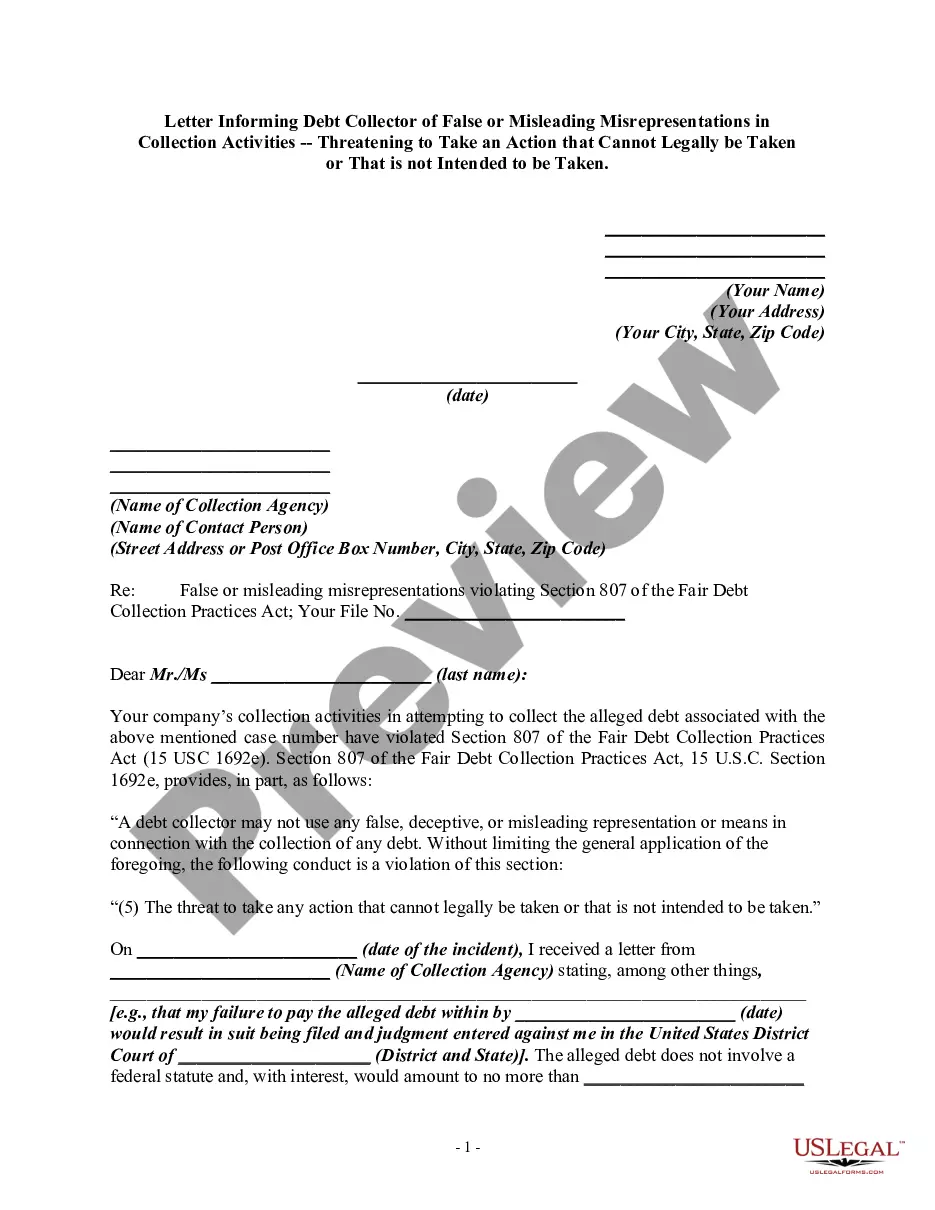
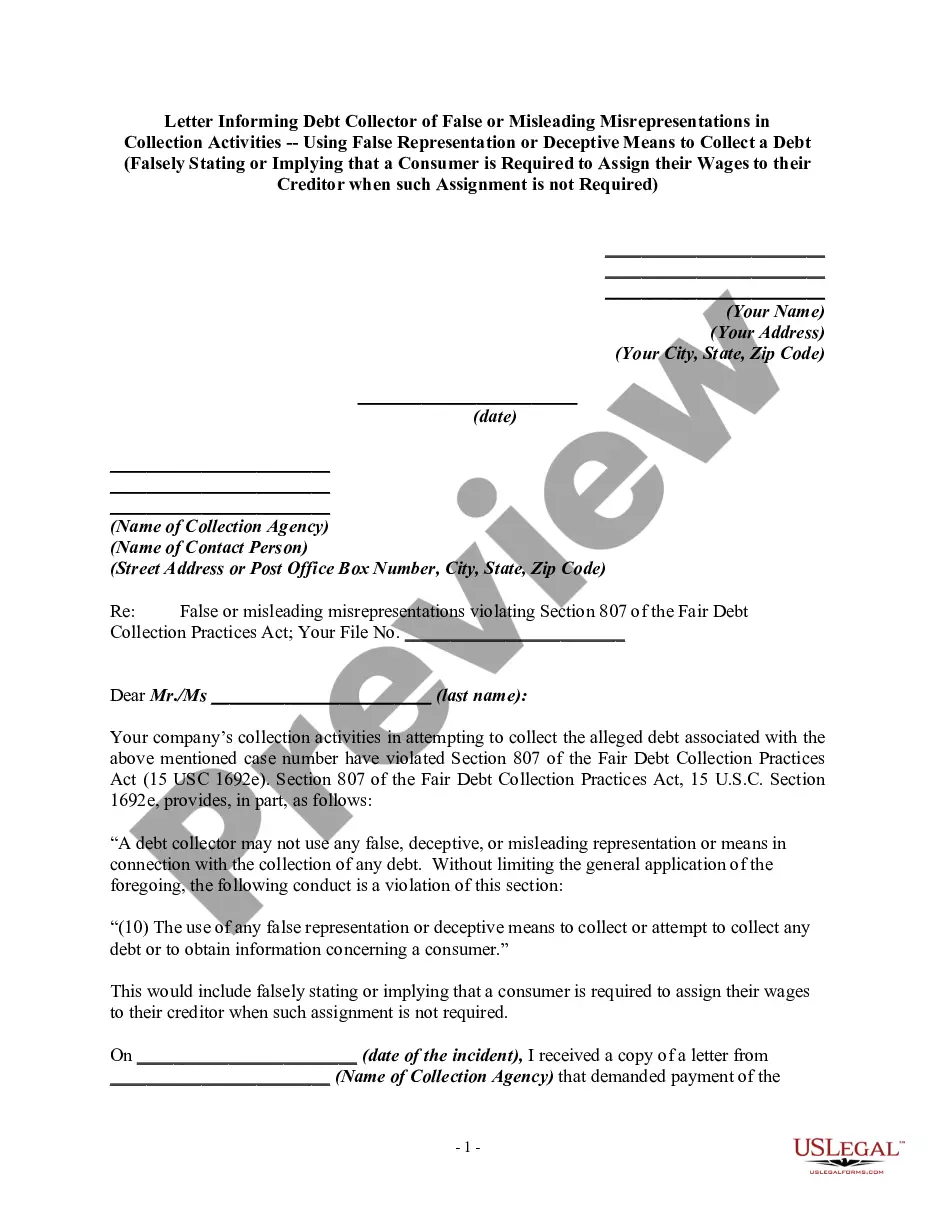
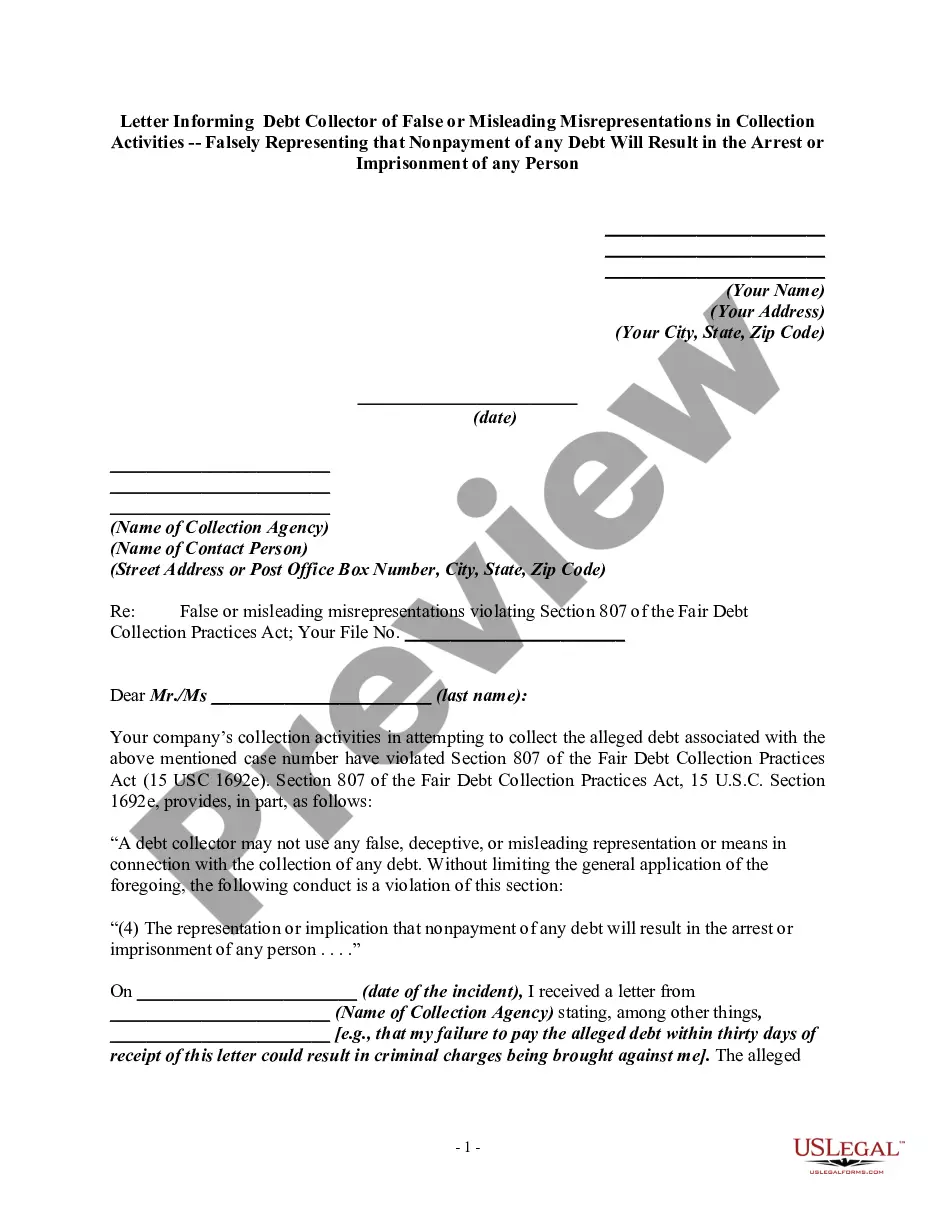
This form is a Letter Informing Debt Collector of False or Misleading Misrepresentations in Collection Activities. It serves as a formal notice to a debt collector when they have violated the Fair Debt Collection Practices Act by falsely representing that nonpayment may lead to the seizure, garnishment, attachment, or sale of property or wages. This form is crucial for protecting your rights against unlawful debt collection practices and is distinct from other legal communication forms as it specifically addresses misleading conduct by debt collectors.
Key parts of this document
- Your personal information: Name, address, and contact details.
- Date of the letter.
- Collection agency's details: Name, contact person, and address.
- Reference to the specific debt and its associated file number.
- Details of the misleading representation made by the debt collector.
- Statement asserting the violation of the Fair Debt Collection Practices Act.
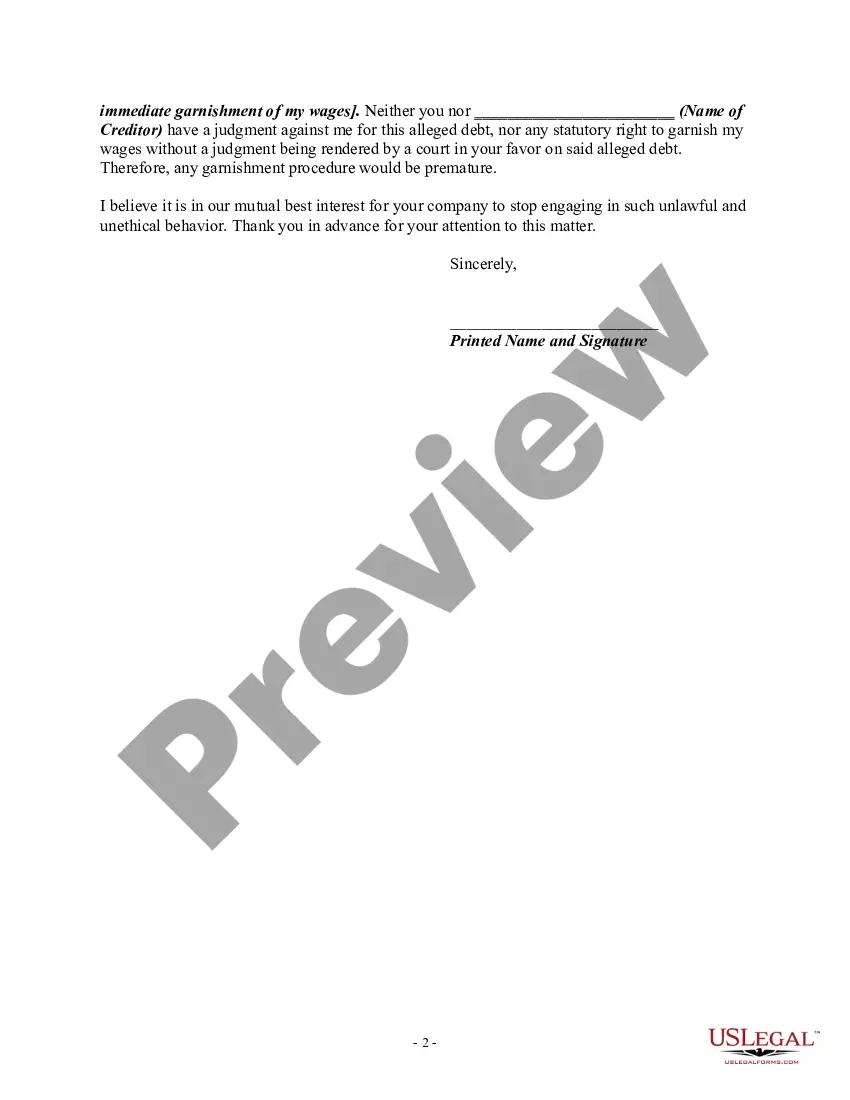
- Your signature and printed name.
Situations where this form applies
This form should be used when you have received communication from a debt collector that includes misleading statements about consequences for nonpayment, such as the threat of wage garnishment without legal basis. It is particularly relevant when you have not received any judgment against you for the alleged debt. Sending this letter notifies the collector of their unlawful practices, potentially stopping further collection actions.
Who needs this form
- Individuals receiving collection notices that contain misleading information.
- Consumers who wish to formally communicate with debt collectors regarding their collection practices.
- Anyone who believes their rights under the Fair Debt Collection Practices Act have been violated.
- People looking to prevent unlawful collection actions against their property or wages.
Steps to complete this form
- Enter your name and contact information at the top of the letter.
- Write the date of the correspondence.
- Fill in the collection agency's details, including the contact person.
- Specify the false representation made by the debt collector regarding nonpayment.
- Clearly state the violation of the Fair Debt Collection Practices Act.
- Sign the letter and print your name at the bottom.
Is notarization required?
This form does not typically require notarization unless specified by local law. However, it is advisable to double-check local regulations to ensure compliance with any additional requirements that may apply.
Get your form ready online
Our built-in tools help you complete, sign, share, and store your documents in one place.
Make edits, fill in missing information, and update formatting in US Legal Forms—just like you would in MS Word.
Download a copy, print it, send it by email, or mail it via USPS—whatever works best for your next step.
Sign and collect signatures with our SignNow integration. Send to multiple recipients, set reminders, and more. Go Premium to unlock E-Sign.
If this form requires notarization, complete it online through a secure video call—no need to meet a notary in person or wait for an appointment.
We protect your documents and personal data by following strict security and privacy standards.

Make edits, fill in missing information, and update formatting in US Legal Forms—just like you would in MS Word.

Download a copy, print it, send it by email, or mail it via USPS—whatever works best for your next step.

Sign and collect signatures with our SignNow integration. Send to multiple recipients, set reminders, and more. Go Premium to unlock E-Sign.

If this form requires notarization, complete it online through a secure video call—no need to meet a notary in person or wait for an appointment.

We protect your documents and personal data by following strict security and privacy standards.
Typical mistakes to avoid
- Failing to include all necessary personal and agency information.
- Not specifying the date when the misleading communication was received.
- Overlooking to mention the specific alleged debt and file number.
- Neglecting to save a copy of the letter for your records.
- Not sending the letter via a traceable method to document receipt.
Advantages of online completion
- Convenience of downloading the form from home at any time.
- Editability allows you to personalize the letter easily.
- Reliability of attorney-drafted materials ensures legal compliance.
- Immediate access to important legal documentation without delay.
Legal use & context
- This form serves as a formal notice to debt collectors about their misleading practices.
- It helps protect consumers under the Fair Debt Collection Practices Act.
- Using this letter can prevent unlawful collection actions if sent properly.
Summary of main points
- The form is essential for addressing misleading information from debt collectors.
- It's important to provide accurate information and details in the letter.
- Using this document can help protect your rights as a consumer.
Looking for another form?


Form popularity
FAQ
Step 1: Keep detailed records of what the debt collector is doing. Step 2: Take action write to the debt collector, complain to an External Dispute Resolution scheme (Ombudsman Service) or VCAT. Step 3: Complain to a Regulator.
Your creditor also has to report your complaint to the Financial Conduct Authority (FCA), even if they respond within 3 business days. If you need help with this, you can phone our debt helpline on 0300 330 1313. We can usually help between 9am and 8pm, Monday to Friday.
The debt validation letter includes:A statement that if you write to dispute the debt or request more information within 30 days, the debt collector will verify the debt by mail. A statement that if you request information about the original creditor within 30 days, the collector must provide it.
In general, if you want to escalate the issue with the debt collector, you should do so within 30 days of receiving the validation letter. This includes disputing that you owe the debt, requesting additional verification of the debt, or requesting the name and address of the original creditor.
In other words, you only have the right to request verification of your debt from companies or law firms collecting the debt or which have purchased the debt from the original creditor. A collector's duty to verify a debt only kicks in if you send a specific, written request for verification.
Reach out to the company the collector says is the original creditor. They might help you figure out if the debt is legitimate and if this collector has the right to collect the debt. Also, get your free, annual credit report online or at 877-322-8228 and see if the debt shows up there. Dispute the debt in writing.
If the collector completely fails to respond to the validation letter, again they have 30 days to do so, then legally they must cease collection efforts, and remove negative items placed by them on your credit report.
Debt validation is your federal right granted under the Fair Debt Collection Practices Act (FDCPA). To request debt validation, you must send a written request to the debt collector within 30 days of being contacted by the collection agency.
Unfair practices are prohibited Deposit or threaten to deposit a postdated check before your intended payment date. Take or threaten to take property if it's not allowed. Collect more than you owe on a debt, which may include fees and interest.