Notice of Violation of Fair Debt Act - Notice to Stop Contact
What this document covers
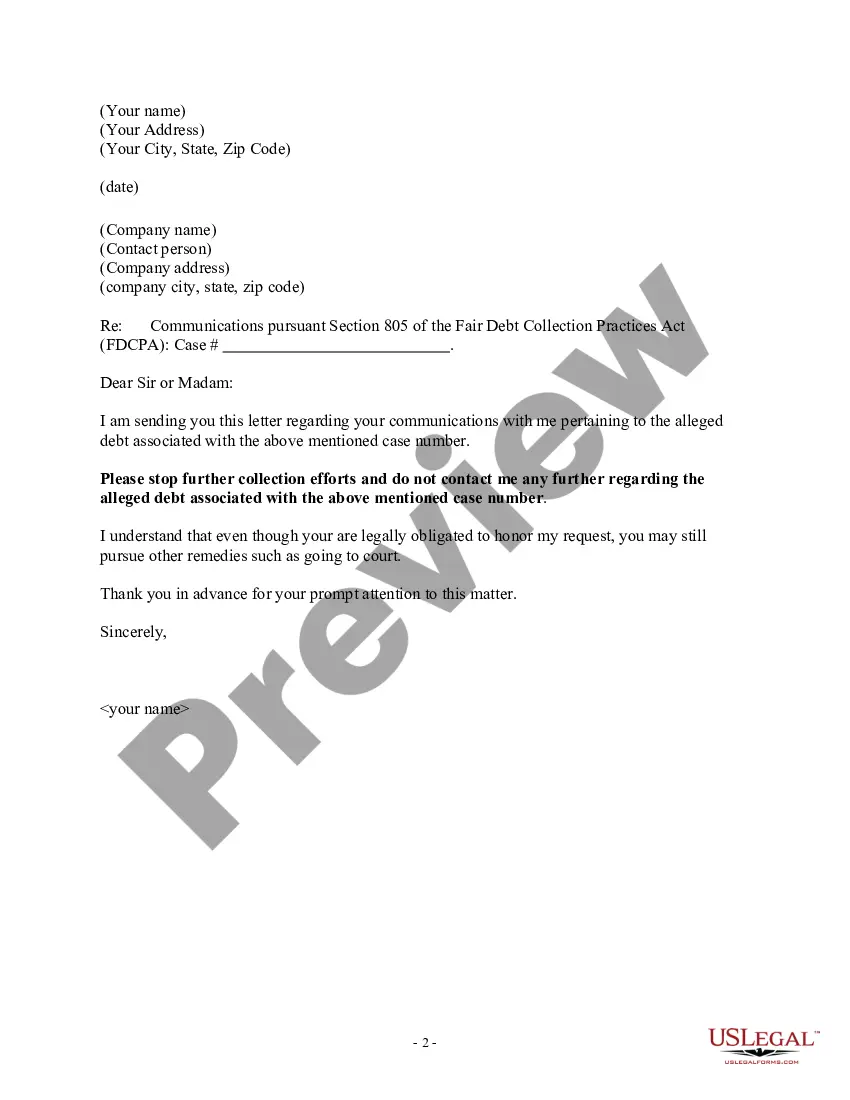
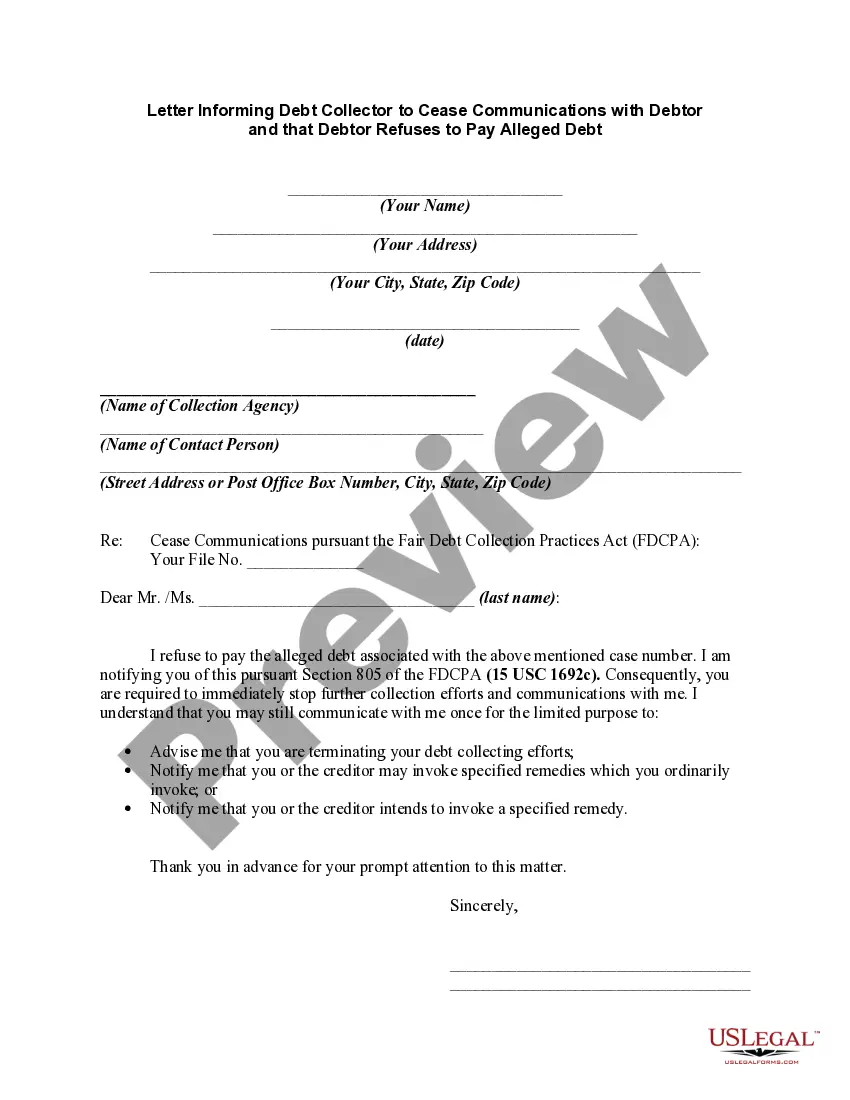
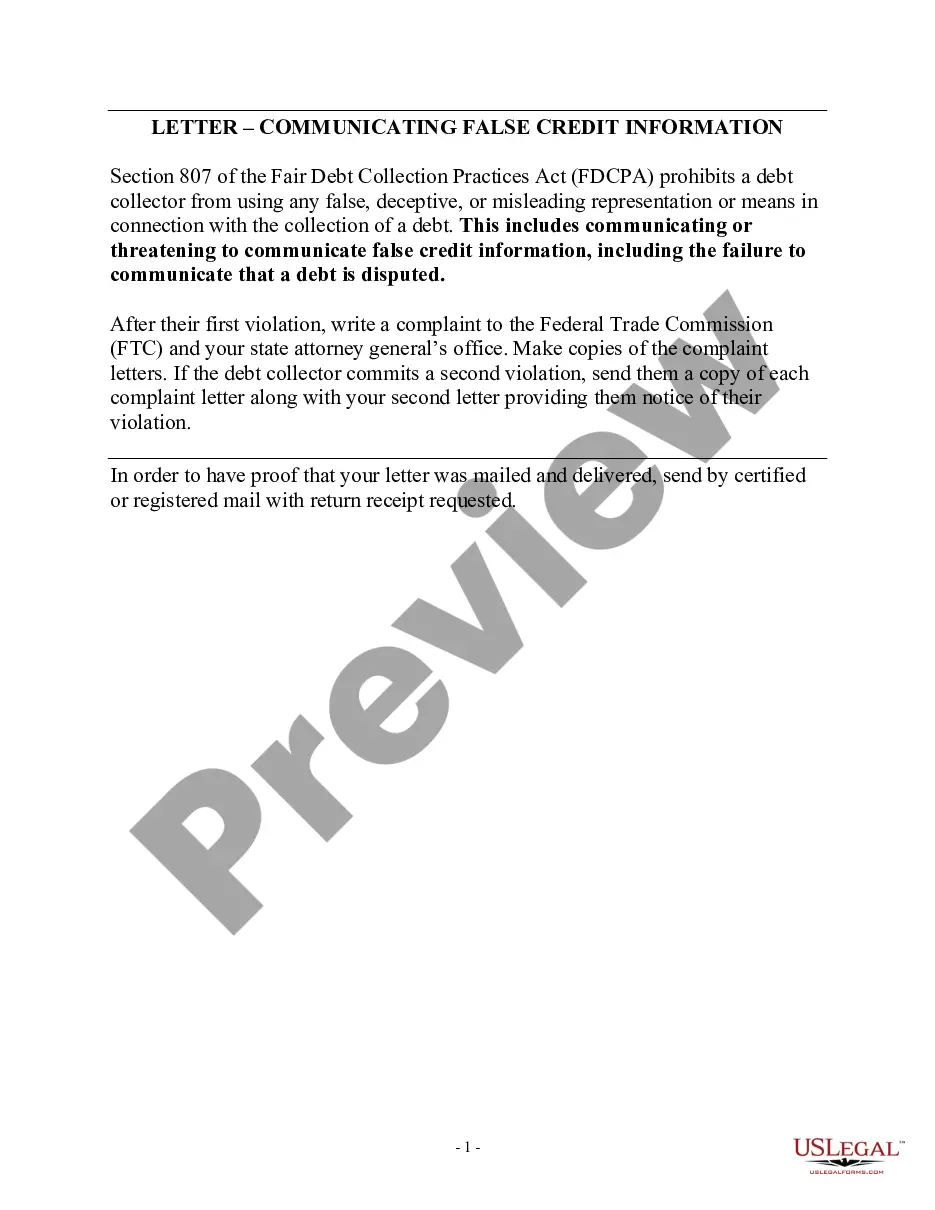
The Notice of Violation of Fair Debt Act - Notice to Stop Contact is a legal document that debtors can use to communicate to debt collectors that they wish to cease all communications regarding a specific debt. This form is designed to enforce your rights under the Fair Debt Collection Practices Act (FDCPA), particularly Section 805. By providing clear, written notice to the debt collector, this form helps protect you from further harassment during unfair collection practices.
Main sections of this form
- Sender's information: Your name and address for identification.
- Recipient's information: The debt collector's name and address for proper delivery.
- Case number: A reference to the specific debt being discussed.
- Clear request to stop contact: An explicit statement instructing the debt collector to cease communication.
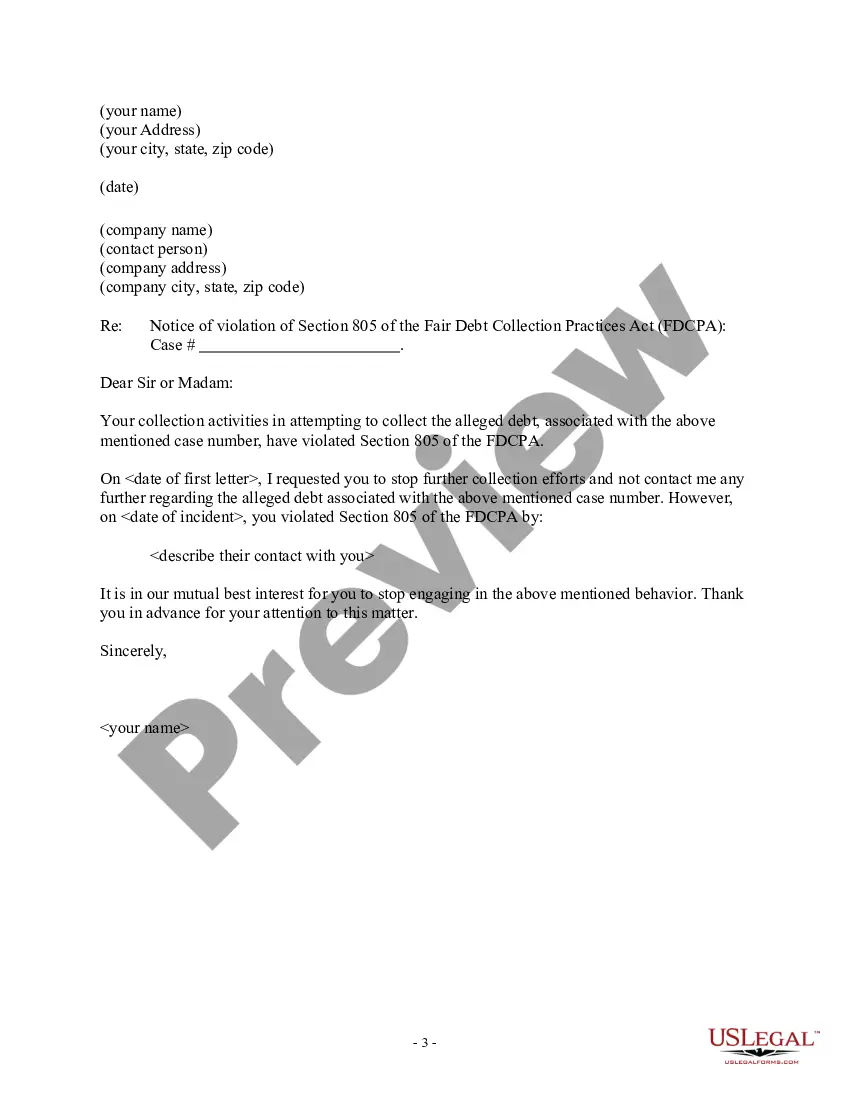
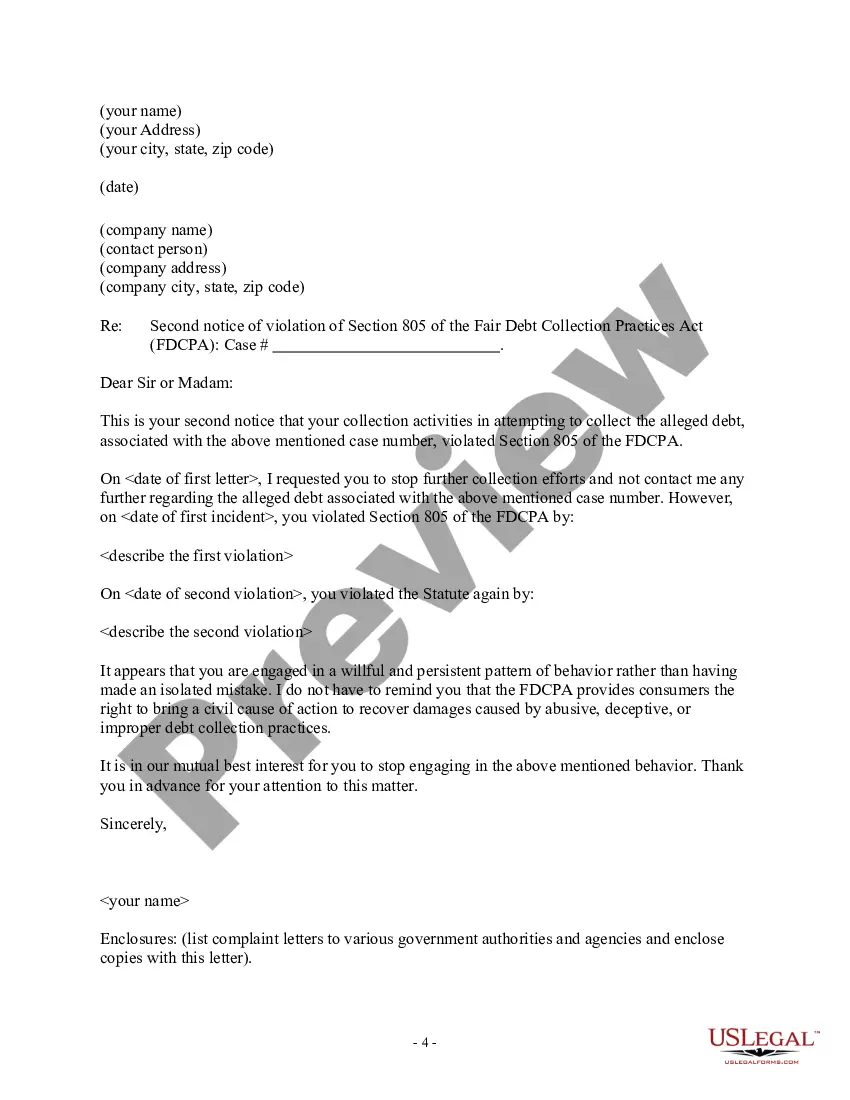
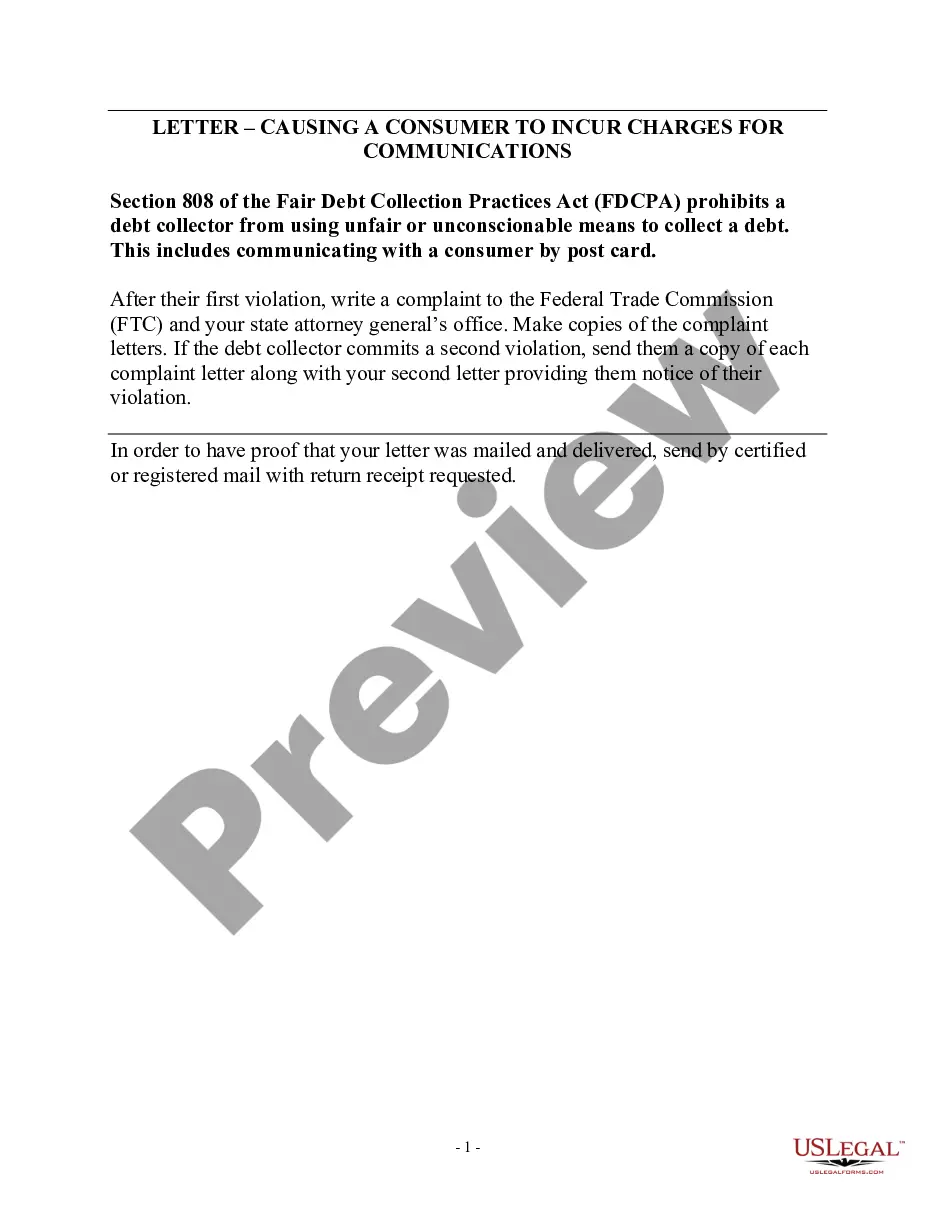
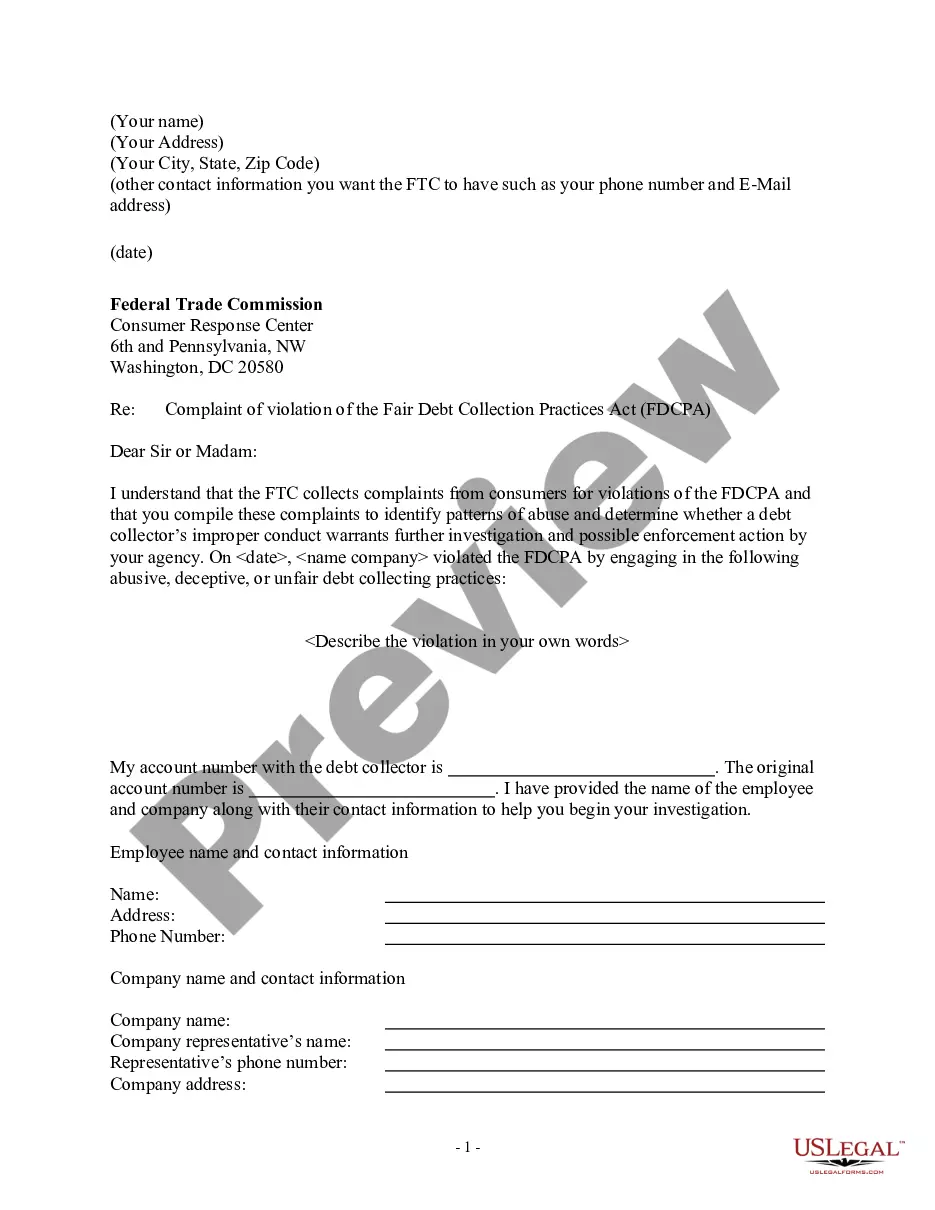
- Notice of violations: Documenting any previous violations by the debt collector under the FDCPA.
- Enclosures: Copies of complaint letters to government authorities.
Situations where this form applies
This form should be used when you have experienced unfair debt collection practices or if you want to formally request that a debt collector stop contacting you. It is particularly relevant if you have received multiple communications from the collector despite having informed them of your wish to cease contact. Sending this notice can also provide a record of your complaint if further legal action is necessary.
Intended users of this form
- Individuals who are being harassed by debt collectors.
- Debtors seeking to enforce their rights under the FDCPA.
- Anyone who has previously requested a debt collector to stop contacting them but continues to receive communication.
- Consumers who have faced unfair collection practices.
How to prepare this document
- Enter your personal information at the top of the form, including your name and address.
- Provide the debt collector's details, including name and address.
- State the relevant case number associated with the alleged debt.
- Clearly write your request for the debt collector to cease contact.
- Document any previous violations by referencing prior communications.
- Sign and date the notice, keeping a copy for your records.
Notarization requirements for this form
In most cases, this form does not require notarization. However, some jurisdictions or signing circumstances might. US Legal Forms offers online notarization powered by Notarize, accessible 24/7 for a quick, remote process.
Get your form ready online
Our built-in tools help you complete, sign, share, and store your documents in one place.
Make edits, fill in missing information, and update formatting in US Legal Forms—just like you would in MS Word.
Download a copy, print it, send it by email, or mail it via USPS—whatever works best for your next step.
Sign and collect signatures with our SignNow integration. Send to multiple recipients, set reminders, and more. Go Premium to unlock E-Sign.
If this form requires notarization, complete it online through a secure video call—no need to meet a notary in person or wait for an appointment.
We protect your documents and personal data by following strict security and privacy standards.

Make edits, fill in missing information, and update formatting in US Legal Forms—just like you would in MS Word.

Download a copy, print it, send it by email, or mail it via USPS—whatever works best for your next step.

Sign and collect signatures with our SignNow integration. Send to multiple recipients, set reminders, and more. Go Premium to unlock E-Sign.

If this form requires notarization, complete it online through a secure video call—no need to meet a notary in person or wait for an appointment.

We protect your documents and personal data by following strict security and privacy standards.
Mistakes to watch out for
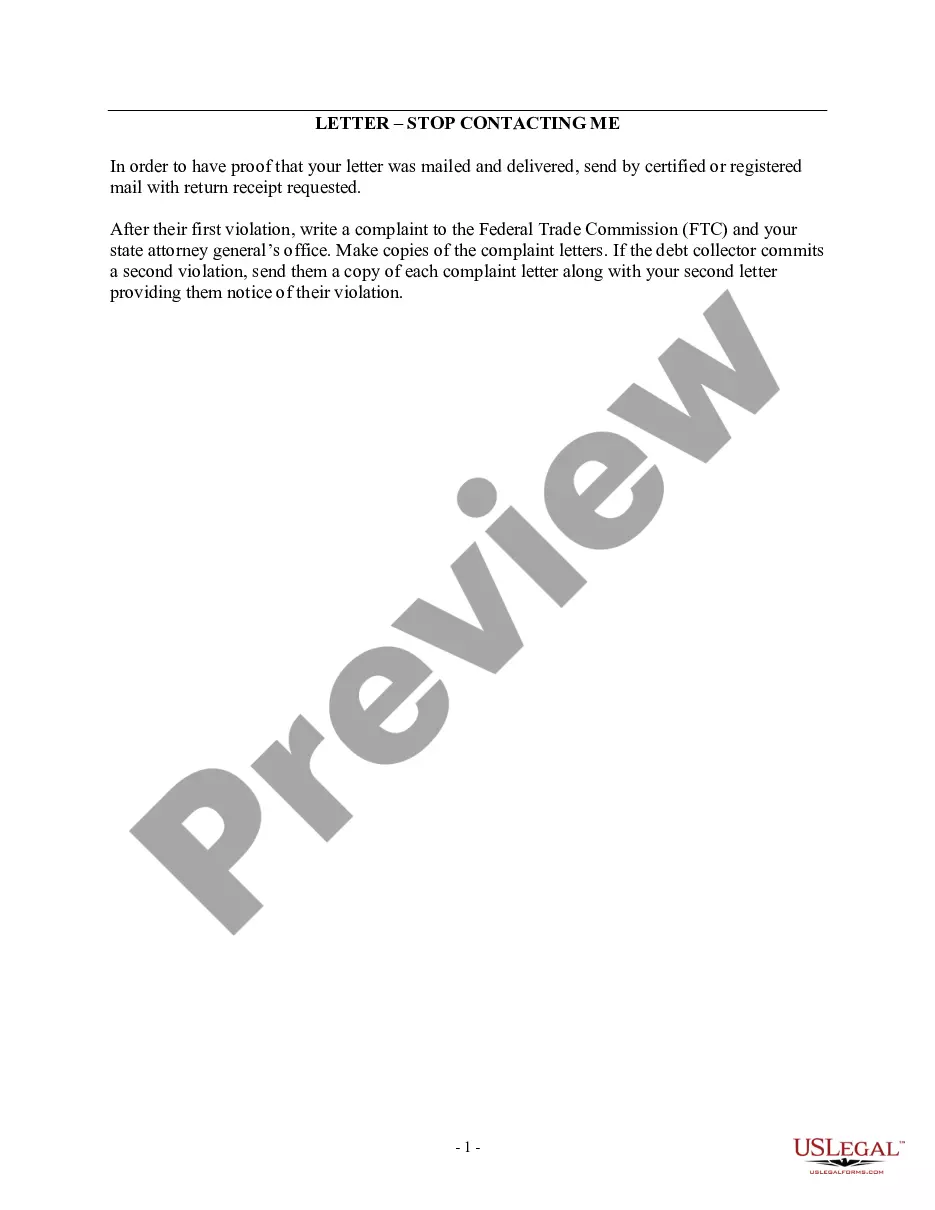
- Failing to send the notice via certified mail, which can impact proof of delivery.
- Not including sufficient details about the debt and prior communication attempts.
- Omitting the case number, which can lead to confusion.
- Addressing the letter incorrectly, leading to non-delivery.
Why complete this form online
- Convenient: Easily downloadable in Word or Rich Text format.
- Editable: Customize the form to fit your specific situation before printing.
- Accessible: Available anytime, allowing you to take action promptly.
Legal use & context
- This form enforces your rights under the FDCPA, aiming to halt unwanted communication from debt collectors.
- Using this form provides a paper trail, establishing your intent to stop contact.
- Failure by the debt collector to comply with your request can lead to legal consequences, allowing you to seek damages.
Quick recap
- The form helps protect against harassment from debt collectors.
- A clear record of your request can be beneficial for any future disputes or legal action.
- Understanding your rights under the FDCPA can empower you in dealing with debt collection issues.
Looking for another form?



Form popularity
FAQ
This is not a good time. Please call back at 6. I don't believe I owe this debt. Can you send information on it? I prefer to pay the original creditor. Give me your address so I can send you a cease and desist letter. My employer does not allow me to take these calls at work.
Can I stop my creditors calling me? If you don't want to receive any phone calls you can ask your creditors to remove your number from their records. We have an example 'stop a creditor from calling' letter (PDF) you can use to ask for this. It's important you still read letters or emails from your creditors.
Answer the phone and explain you're not the person they're looking for. Tell them that the number they're calling is not the right one. Send a cease and desist letter to request that they stop contacting you.
Under the FDCPA, you can tell a debt collector to stop contacting you; but it's not always a good idea. The federal Fair Debt Collection Practices Act (FDCPA) gives you the right to force a debt collector to stop communicating with you.it may (or will) sue you or use another legal remedy to collect the debt.
Never Give Them Your Personal Information. A call from a debt collection agency will include a series of questions. Never Admit That The Debt Is Yours. Even if the debt is yours, don't admit that to the debt collector. Never Provide Bank Account Information.
Since the collector's ultimate goal is to get you to pay your debt, one of the easiest ways to get them to stop contacting your family is to pay the debt. Only do this if you've confirmed that the debt is legitimately yours and you've reviewed your budget to be sure you can afford to pay it.
Can Debt Collectors Call Friends and Family? Debt collectors are legally allowed to call your friends or family to try to locate you. But they cannot call these people to try to collect the payment for the debt, and they are only allowed to call once unless they believe there may be new information to be found.
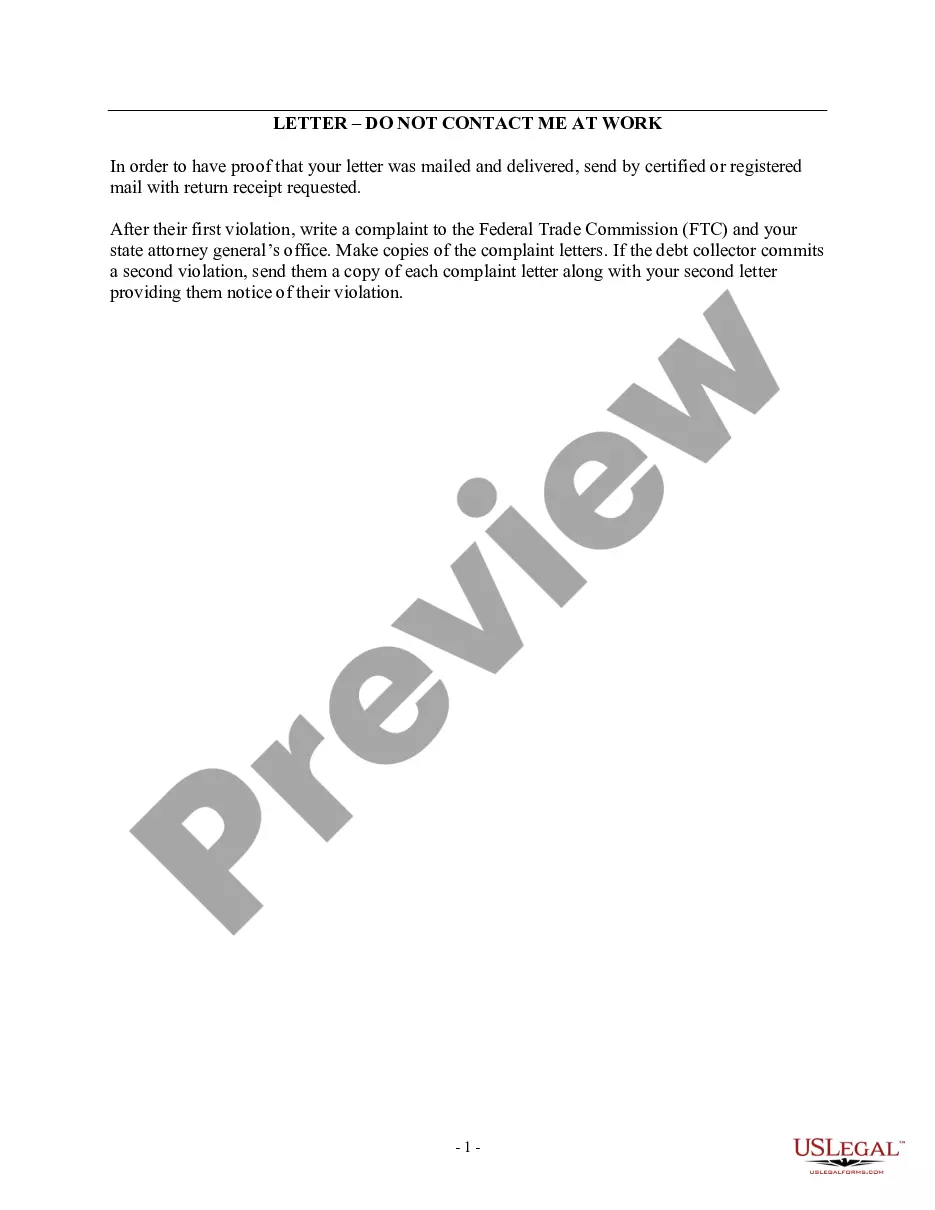
You can stop debt collectors from calling you at work fairly easily. Simply tell the debt collector that your employer doesn't want them calling your job or that you're not allowed to receive personal calls at work.
If debt collectors keep contacting you via letters even after you have told them that the debt is not yours, then you can report them to the Financial Conduct Authority. Again, to reiterate, in the case of a legitimate debt, the best way to stop letters arriving at your home is to simply pay it.