Terms of Use for an Adult Oriented Web Site
What this document covers
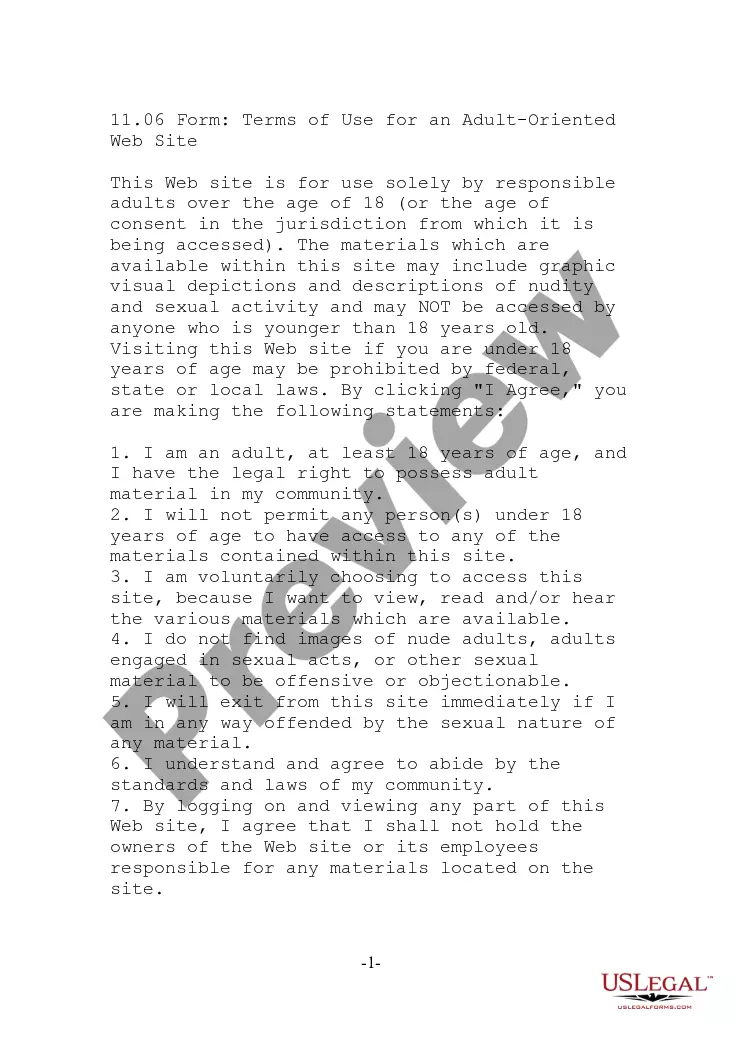
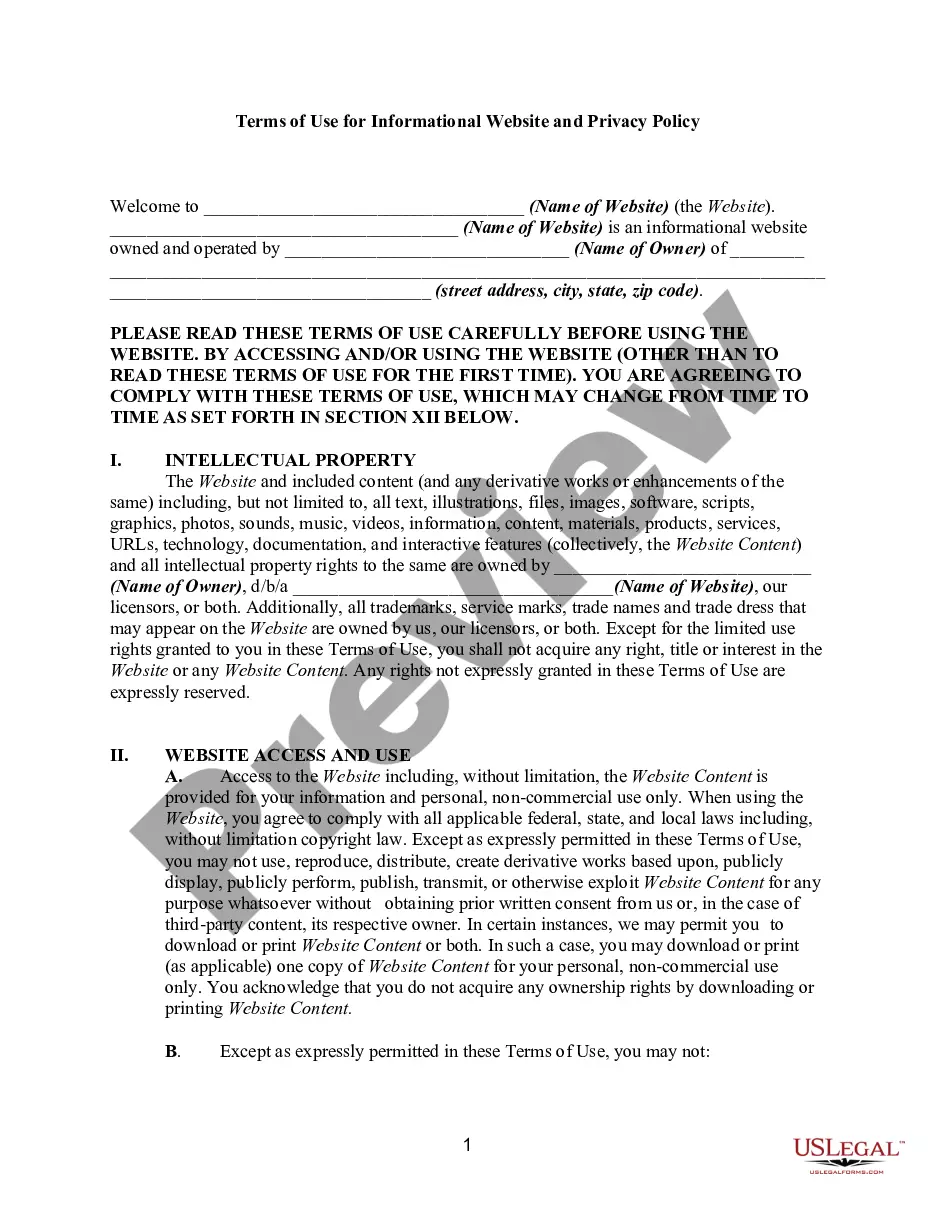
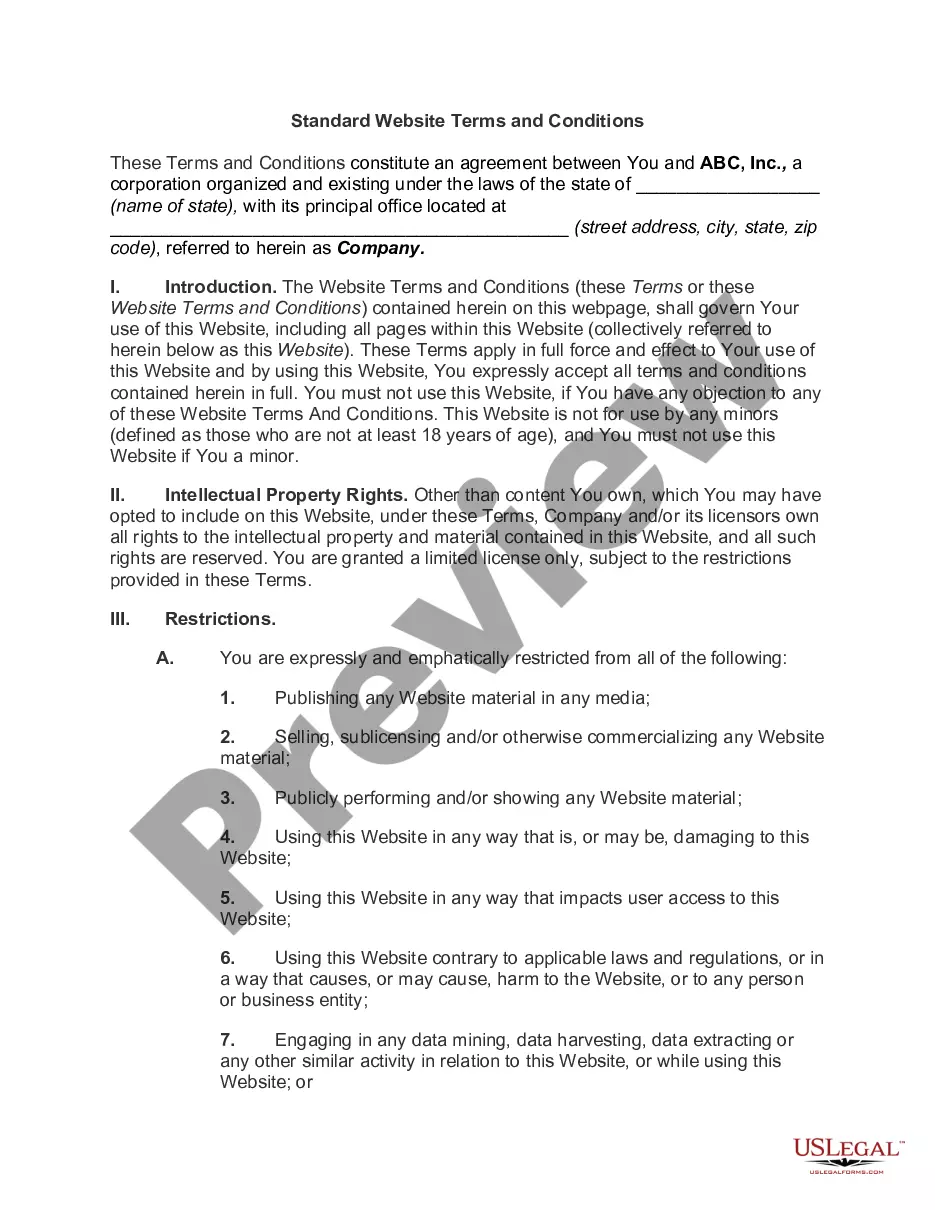
The Terms of Use for an Adult Oriented Web Site form is a legal agreement that outlines the responsibilities and rights of users accessing an adult-oriented website. This document is specifically designed to ensure that only responsible adults, age 18 or older, can view explicit content, thereby differentiating it from general website terms. It sets forth the conditions under which users agree to access sensitive materials and protect the site's owners from legal liability.
Key parts of this document
- User age verification requirements.
- Conditions for accessing explicit materials.
- Disclaimers regarding user responsibility and legal compliance.
- Statements of agreement for viewing and accessing material.
- Exit clause for users who find content offensive.
When to use this form
This form should be used when creating or managing an adult-oriented website that provides access to explicit materials. It is essential for businesses and individuals who want to establish clear legal agreements with their users regarding content access, liability, and community standards. Additionally, it serves to protect the website owners from potential legal repercussions arising from underage access to adult content.
Who this form is for
- Website owners of adult-oriented sites.
- Content creators providing adult materials.
- Businesses offering adult services online.
- Individuals managing adult content platforms.
How to prepare this document
- Confirm that all users are 18 years of age or older.
- Outline the specific content that will be accessible on the site.
- Include disclaimers about user responsibility and legal standards.
- Specify the action users must take to agree to the terms (e.g., clicking 'I Agree').
- Provide a clear exit option for users who do not agree with the terms.
Is notarization required?
This form usually doesn’t need to be notarized. However, local laws or specific transactions may require it. Our online notarization service, powered by Notarize, lets you complete it remotely through a secure video session, available 24/7.
Get your form ready online
Our built-in tools help you complete, sign, share, and store your documents in one place.
Make edits, fill in missing information, and update formatting in US Legal Forms—just like you would in MS Word.
Download a copy, print it, send it by email, or mail it via USPS—whatever works best for your next step.
Sign and collect signatures with our SignNow integration. Send to multiple recipients, set reminders, and more. Go Premium to unlock E-Sign.
If this form requires notarization, complete it online through a secure video call—no need to meet a notary in person or wait for an appointment.
We protect your documents and personal data by following strict security and privacy standards.

Make edits, fill in missing information, and update formatting in US Legal Forms—just like you would in MS Word.

Download a copy, print it, send it by email, or mail it via USPS—whatever works best for your next step.

Sign and collect signatures with our SignNow integration. Send to multiple recipients, set reminders, and more. Go Premium to unlock E-Sign.

If this form requires notarization, complete it online through a secure video call—no need to meet a notary in person or wait for an appointment.

We protect your documents and personal data by following strict security and privacy standards.
Common mistakes to avoid
- Failing to verify the age of users effectively.
- Not clearly outlining the consequences of violating the terms.
- Using vague language that may lead to misunderstandings.
- Neglecting to update the terms to reflect changing laws.
Why use this form online
- Convenience of customizing and downloading the form immediately.
- Accessibility on various devices for quick updates.
- Legal templates drafted by licensed attorneys ensure reliability.
Legal use & context
- This form creates a legally binding agreement between the website operator and the users.
- Failure to comply with the terms may result in legal consequences for users and operators.
- Enforcement of these terms helps protect the site from legal liabilities associated with adult content.
What to keep in mind
- The Terms of Use for an Adult Oriented Web Site is critical for legal protection.
- Ensure all users are aware of their rights and responsibilities when accessing adult content.
- Regularly review and update the form to remain compliant with applicable laws.
- Use this document to foster a safe and responsible environment for accessing adult material.
Looking for another form?
Form popularity
FAQ
Writing Your Terms and Conditions. Start with a statement regarding the acceptance of your terms and conditions. Your very first paragraph should always be an acceptance of terms clause. This clause ensures that your users understand that by using your service they are accepting the terms and conditions.
Ownership and copyright of the website's content. acceptable and unacceptable use of the website and content. registration, password and security procedures. availability of the website. use of cookies. links to other websites.
Use clear and concise language. Try and use language that is friendly and positive and explain the rational for provisions that might otherwise appear too strong. Make sure the information is set out in a well-structured and logical way.
1Use clear and concise language.2Try and use language that is friendly and positive and explain the rational for provisions that might otherwise appear too strong.3Make sure the information is set out in a well-structured and logical way.How To Write Effective Terms And Conditions\nwww.jonathanlea.net > how-to-write-effective-terms-and-conditions
A terms of use is an agreement that a user must agree to and abide by in order to use a website or service. Terms of use (TOU) can go by many other names, including terms of service (TOS) and terms and conditions.
Writing Your Terms and Conditions. Start with a statement regarding the acceptance of your terms and conditions. Your very first paragraph should always be an acceptance of terms clause. This clause ensures that your users understand that by using your service they are accepting the terms and conditions.
Review Competitor Sites. Agreement to be Bound. Prohibited Uses. Service Interruptions and Updates. Term, Termination, and Survival. Subscriber Data and Legal Compliance. Confidential Information. Indemnification and Limitation of Liability.
Introduction. Right to make changes to the agreement. User guidelines (rules, restrictions, requirements) Copyright and intellectual property. Governing law. Warranty disclaimer. Limitation of liability.
A terms of use is an agreement that a user must agree to and abide by in order to use a website or service.Terms of use are often seen on e-commerce websites and social media websites, but it is not limited to those types of websites and should be used with any website that stores personal information of any kind.