General Clause for Updating of Personal
Understanding this form
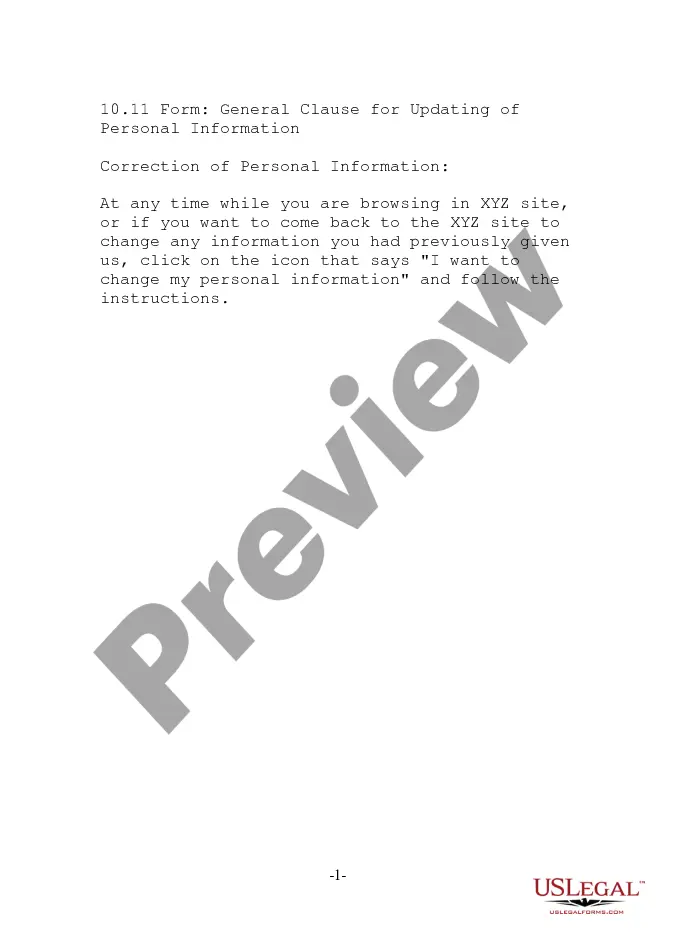
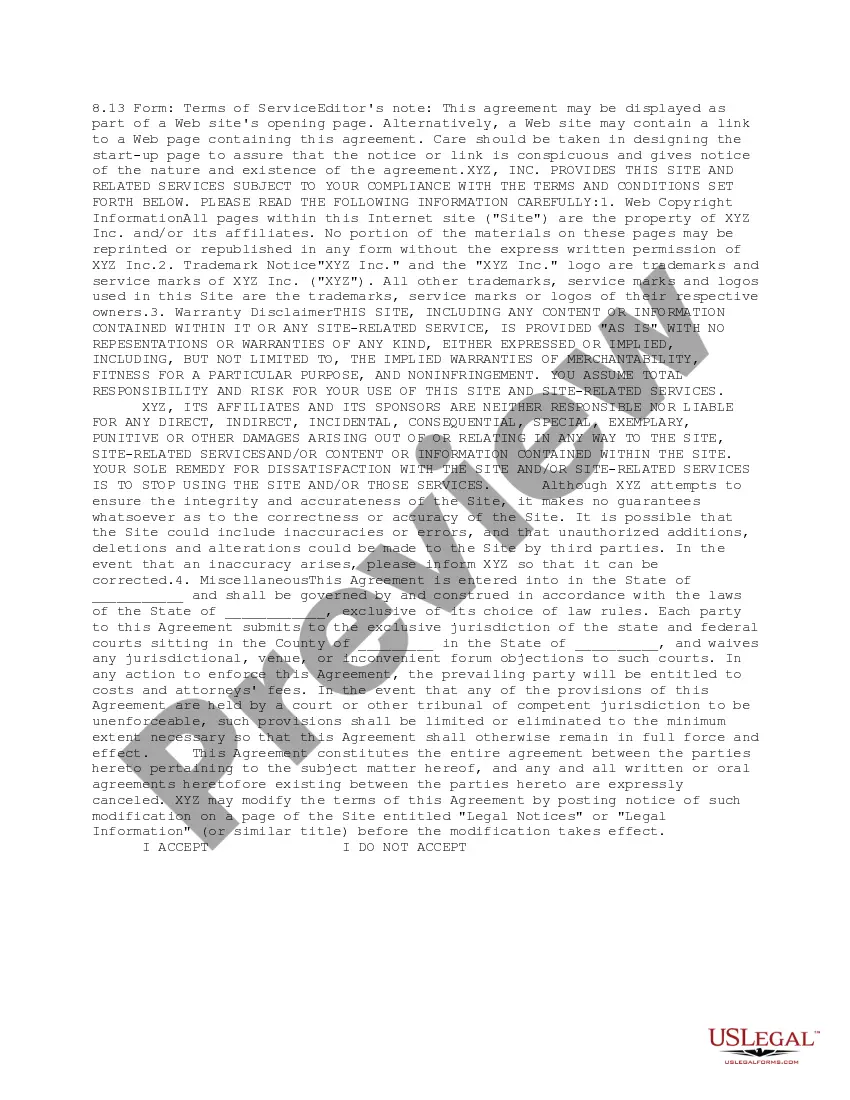
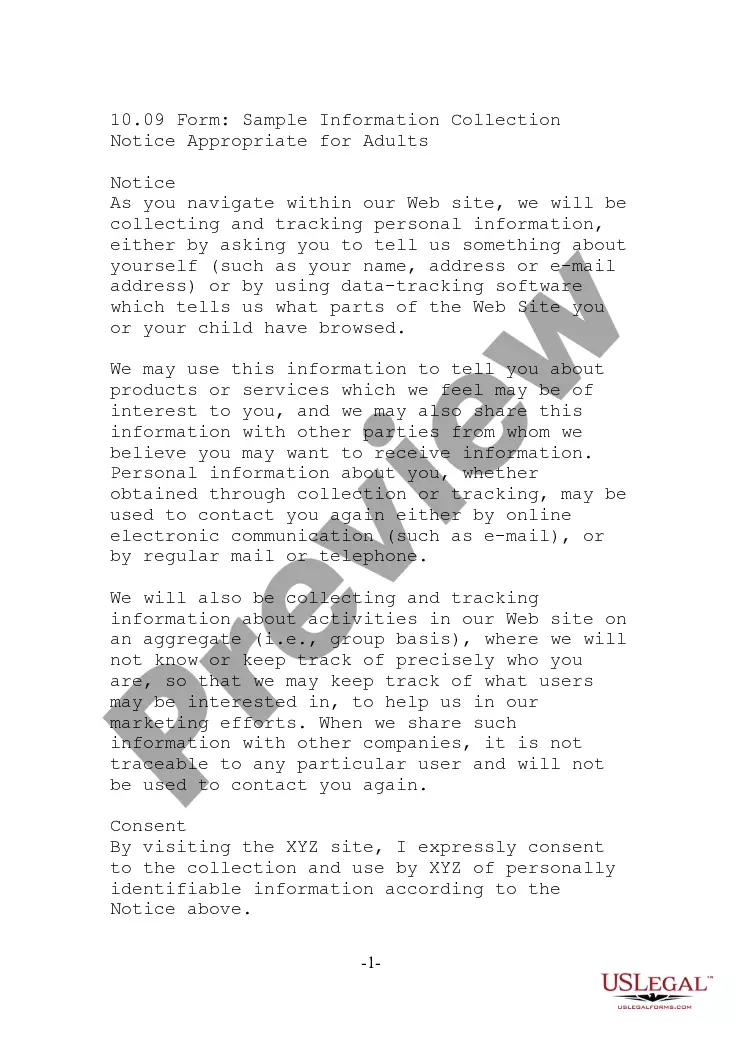
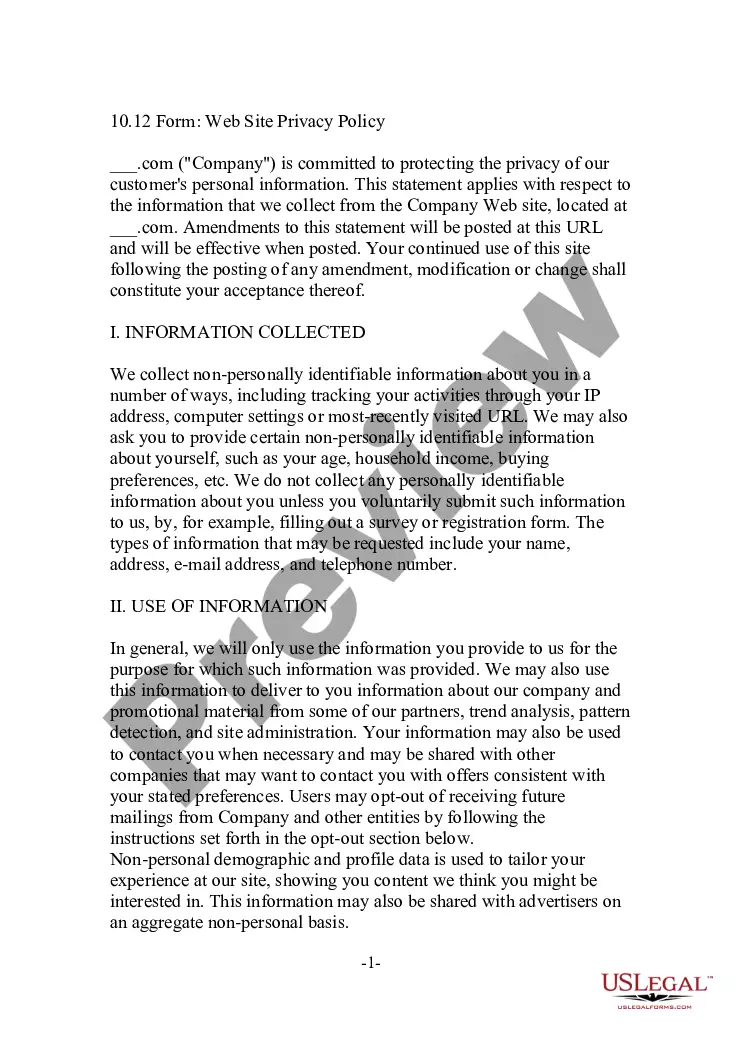
The General Clause for Updating of Personal form is a legally binding document designed for individuals or businesses to specify terms regarding the update of personal information. This form outlines the procedures and responsibilities for amending personal information when necessary, differentiating it from general contracts or service agreements by focusing specifically on personal data management needs.
Main sections of this form
- Correction of personal information procedures
- Identification of parties involved
- Instructions for accessing and updating information
- Details on the data protection measures in place
Situations where this form applies
This form is useful when an individual or business needs to correct or update personal information previously provided. It can be used in situations where users realize discrepancies in their data or when they need to ensure compliance with data privacy regulations.
Who needs this form
- Businesses that collect and maintain personal information of clients
- Contractors who manage personal data for service delivery
- Individuals who need to update their personal information with any service providers
Instructions for completing this form
- Identify the parties involved, including yourself and the organization managing your data.
- Specify the information that needs to be corrected.
- Follow the instructions provided in the form for updating or changing your personal information.
- Ensure all changes comply with applicable data privacy laws.
- Review and sign the form where required.
Does this form need to be notarized?
This form does not typically require notarization to be legally valid. However, some jurisdictions or document types may still require it. US Legal Forms provides secure online notarization powered by Notarize, available 24/7 for added convenience.
Get your form ready online
Our built-in tools help you complete, sign, share, and store your documents in one place.
Make edits, fill in missing information, and update formatting in US Legal Forms—just like you would in MS Word.
Download a copy, print it, send it by email, or mail it via USPS—whatever works best for your next step.
Sign and collect signatures with our SignNow integration. Send to multiple recipients, set reminders, and more. Go Premium to unlock E-Sign.
If this form requires notarization, complete it online through a secure video call—no need to meet a notary in person or wait for an appointment.
We protect your documents and personal data by following strict security and privacy standards.

Make edits, fill in missing information, and update formatting in US Legal Forms—just like you would in MS Word.

Download a copy, print it, send it by email, or mail it via USPS—whatever works best for your next step.

Sign and collect signatures with our SignNow integration. Send to multiple recipients, set reminders, and more. Go Premium to unlock E-Sign.

If this form requires notarization, complete it online through a secure video call—no need to meet a notary in person or wait for an appointment.

We protect your documents and personal data by following strict security and privacy standards.
Common mistakes
- Failing to identify all parties involved in the data update.
- Leaving out crucial personal information that needs correction.
- Not following the instructions adequately, leading to incomplete changes.
Why complete this form online
- Convenience of accessing the form from anywhere at any time.
- Easy to edit and customize to fit your specific data needs.
- Reliability ensured by templates drafted by licensed attorneys.
Legal use & context
- This form is legally binding once completed and submitted, subject to the laws governing data accuracy and personal information management.
- Ensure compliance with relevant privacy regulations when updating personal information.
Summary of main points
- The General Clause for Updating of Personal is essential for keeping personal data accurate.
- Use the form to ensure your information is current with service providers.
- Completing the form correctly helps avoid common issues regarding inaccuracies of personal information.
Looking for another form?
Form popularity
FAQ
There are limitations in issuing General Duty Clause violations, such as requirements that the hazard is serious and a means of feasible abatement exists. Increased use of the General Duty Clause may lead to the promulgation of specific standards.
Commonly known as the General Duty Clause, Section 5(a)(1) of the Occupational Safety and Health Act of 1970 is intended to give OSHA a means to address hazards for which no standard is on the books.
In some situations, yes. It is unlikely that formal agreements can be varied by either party unilaterally, unless this has been expressly agreed to in the contract. Most formal contracts will have a contract variation clause which requires the agreement of both parties before a change can be made.
The General Duty Clause has an important use for workers.Under the General Duty Clause, the employer has an obligation to protect workers from serious and recognized workplace hazards even where there is no standard. Employers must take whatever abatement actions are feasible to eliminate these hazards.
Zweber stated, Section 5(a)(1) of the Occupational Safety and Health Act (the "General Duty Clause") requires an employer to furnish to its employees: "employment and a place of employment which are free from recognized hazards that are causing or are likely to cause death or serious physical harm to his employees..."
The employer failed to keep the workplace free of a hazard to which employees of that employer were exposed; The hazard was recognized; The hazard was causing or was likely to cause death orserious physical harm; and.
Zweber stated, Section 5(a)(1) of the Occupational Safety and Health Act (the "General Duty Clause") requires an employer to furnish to its employees: "employment and a place of employment which are free from recognized hazards that are causing or are likely to cause death or serious physical harm to his employees..."
Zweber stated, Section 5(a)(1) of the Occupational Safety and Health Act (the "General Duty Clause") requires an employer to furnish to its employees: "employment and a place of employment which are free from recognized hazards that are causing or are likely to cause death or serious physical harm to his employees..."