Software License Agreement Involving Third-Party
About this form
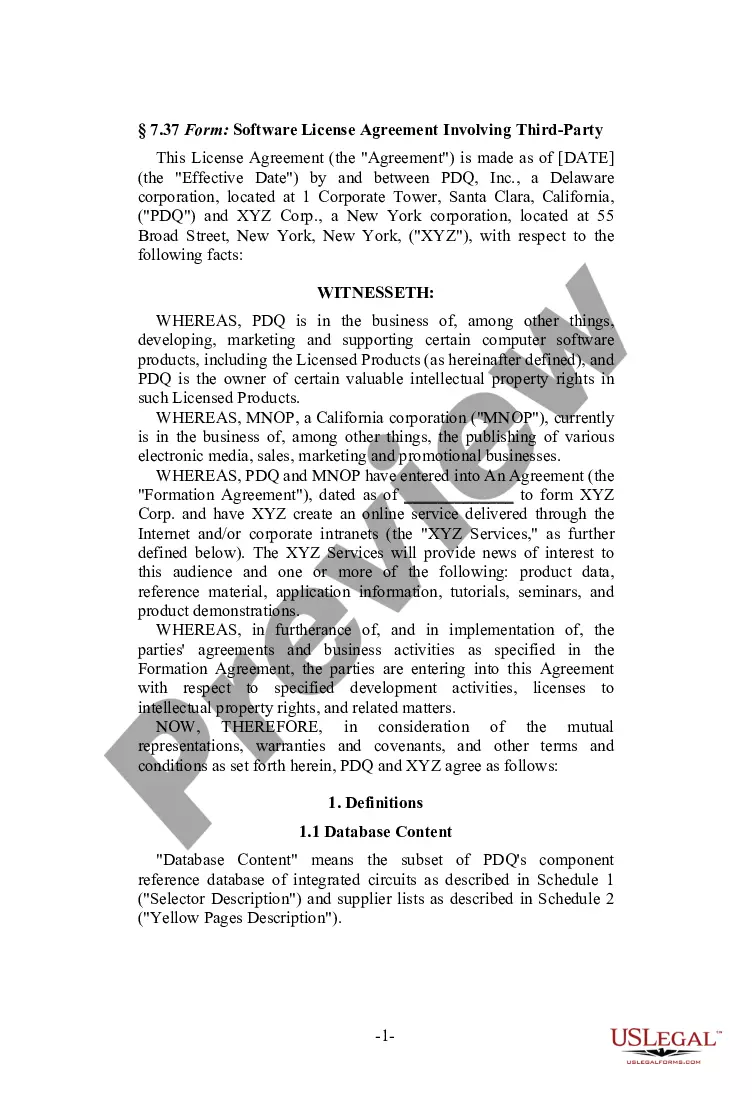
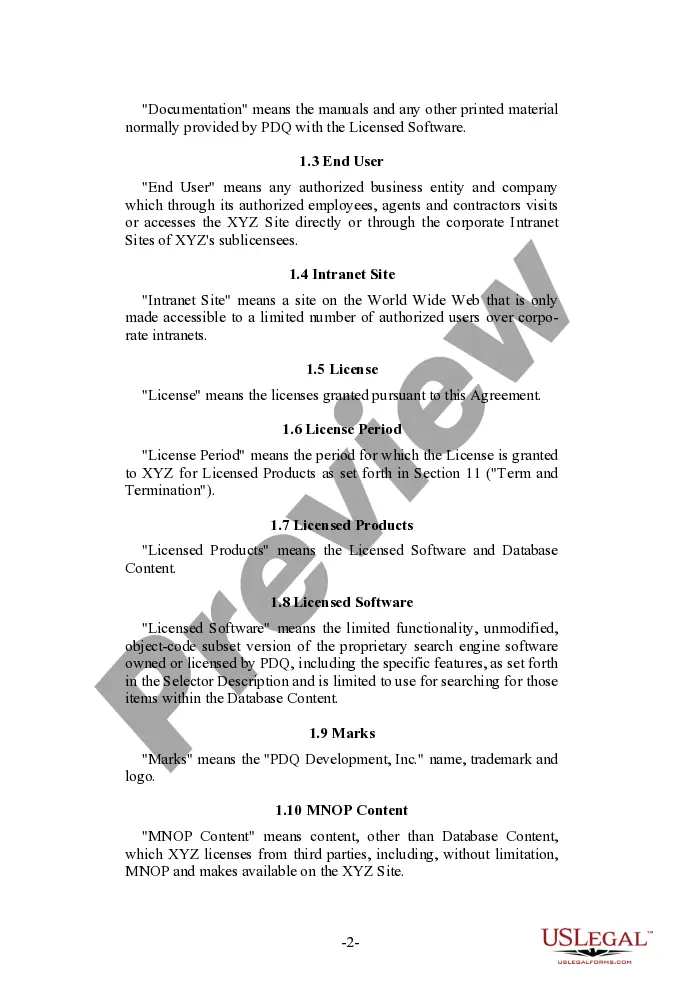
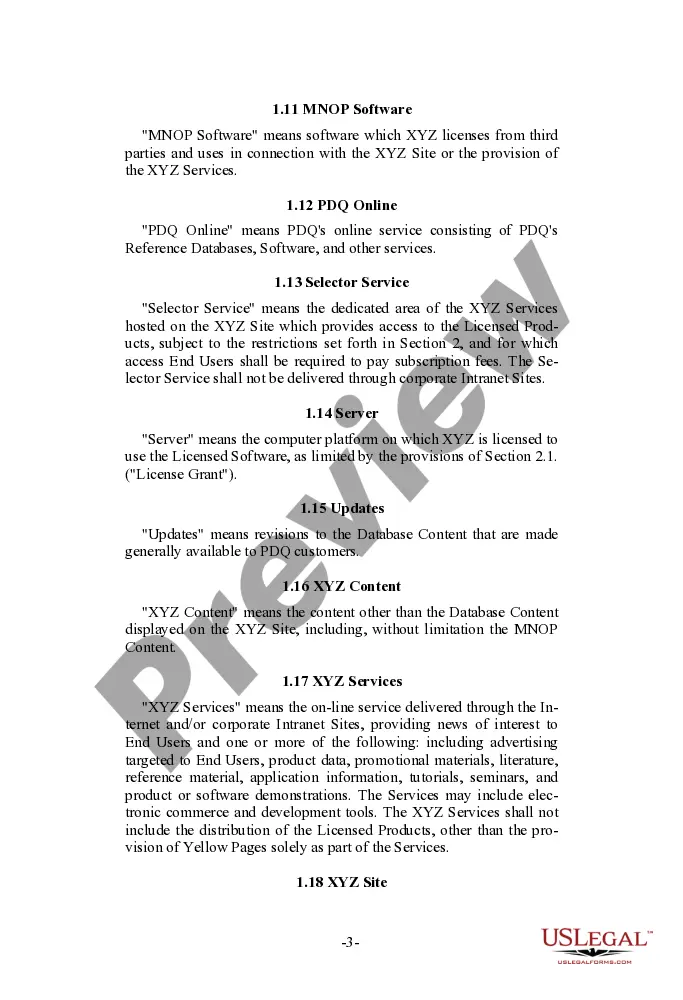
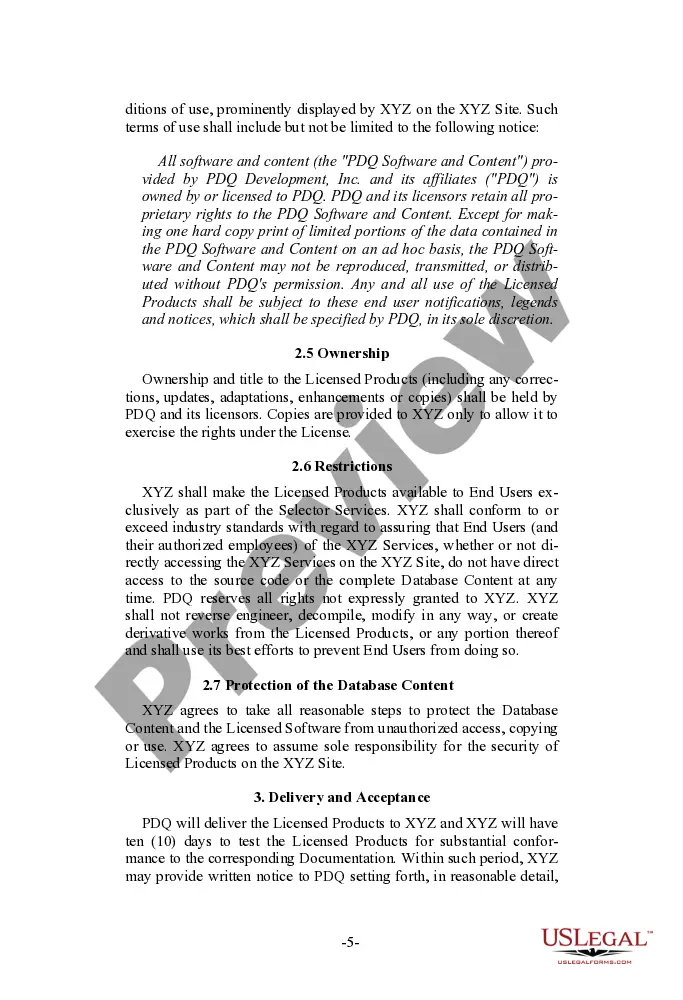
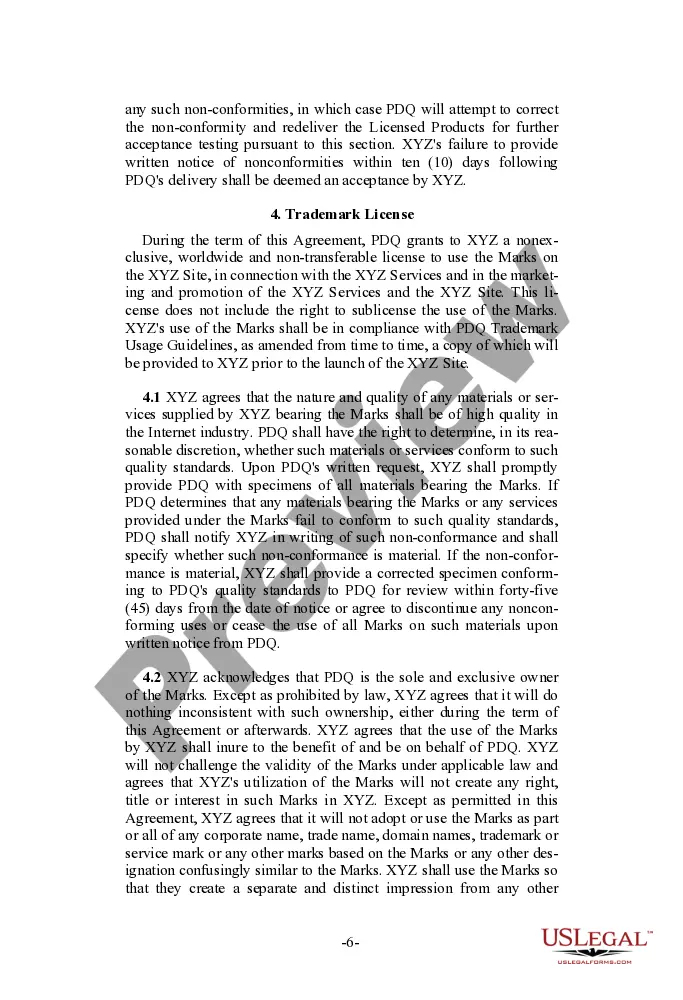
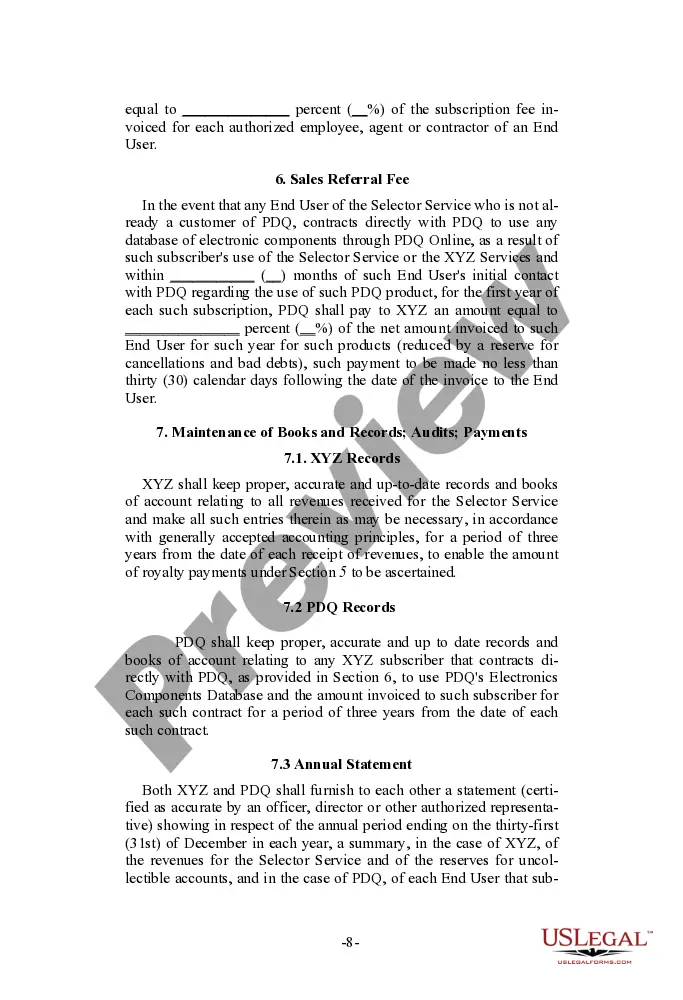
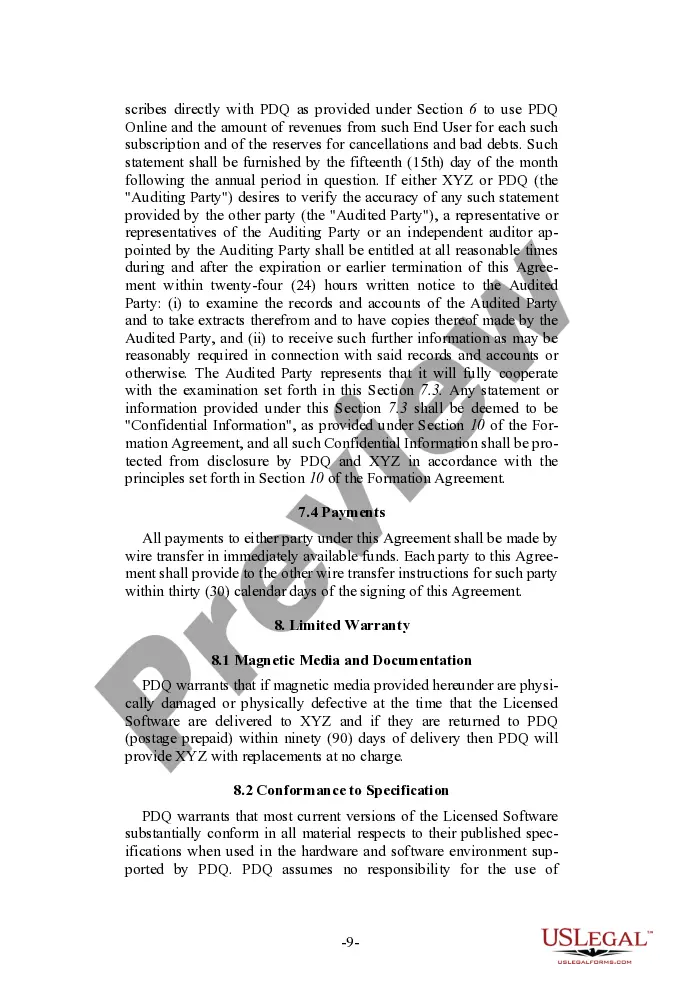
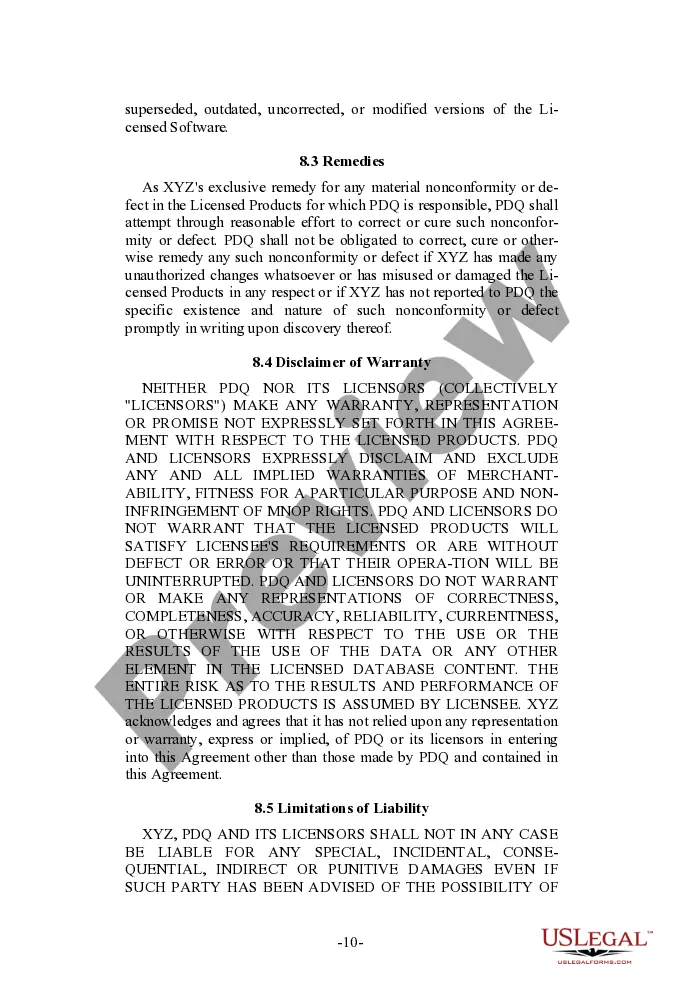
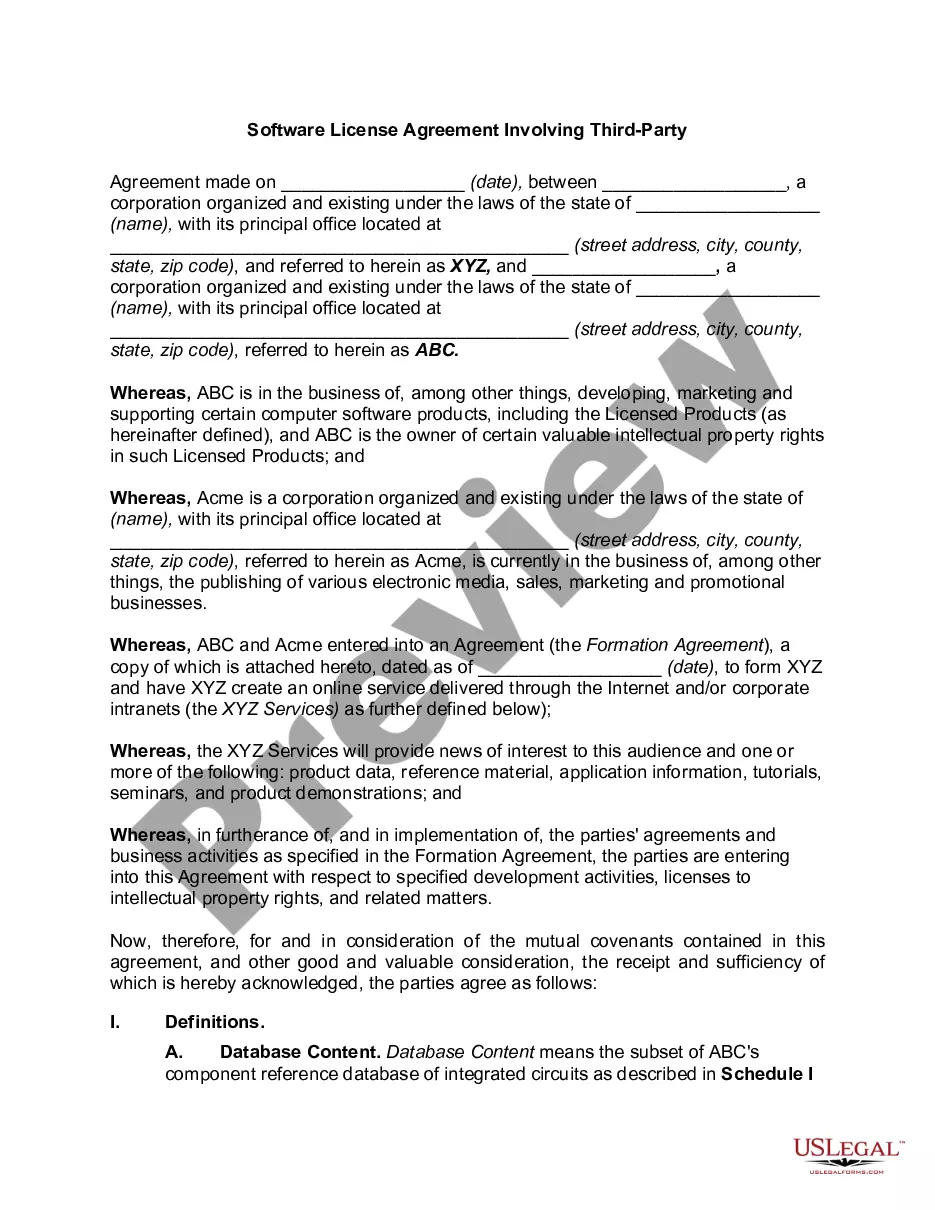
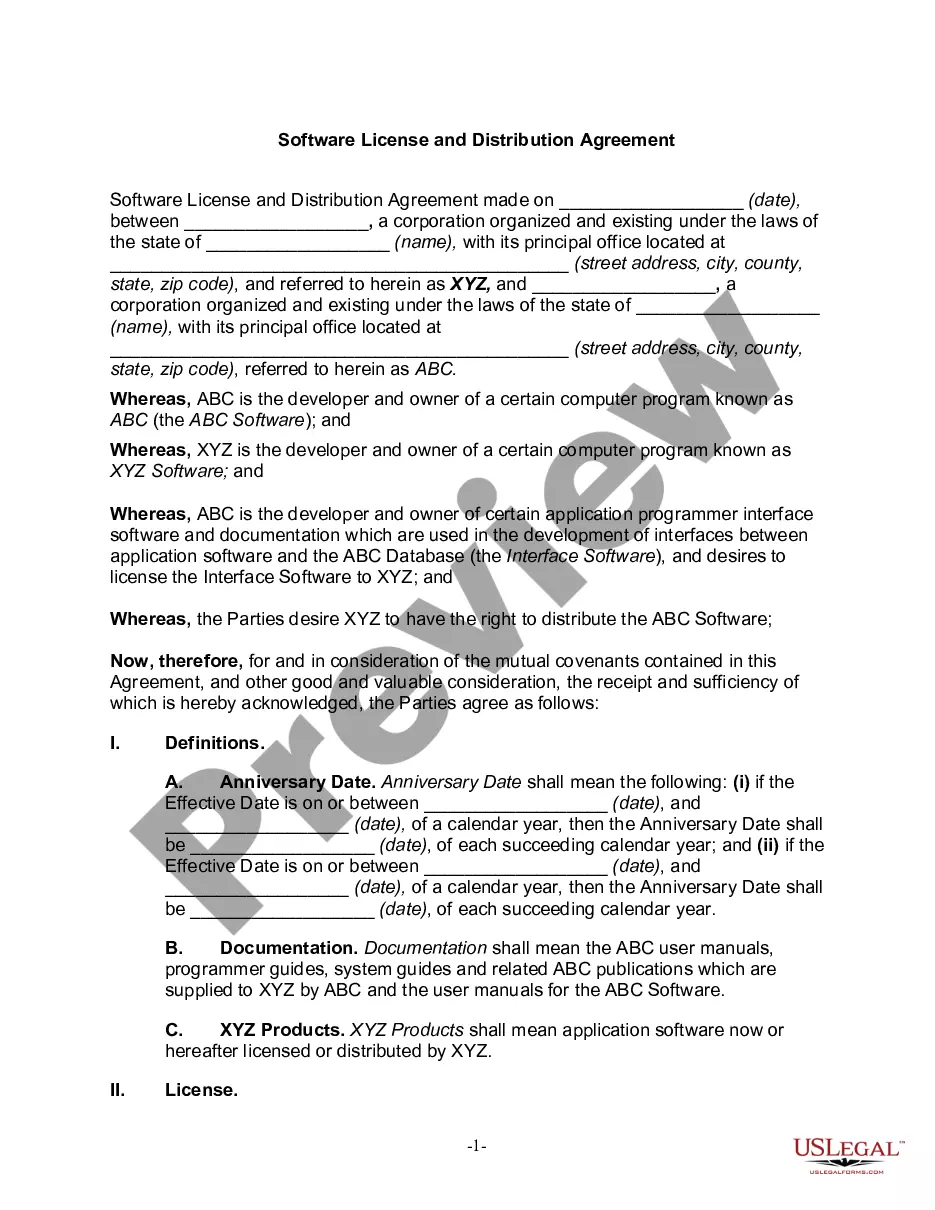
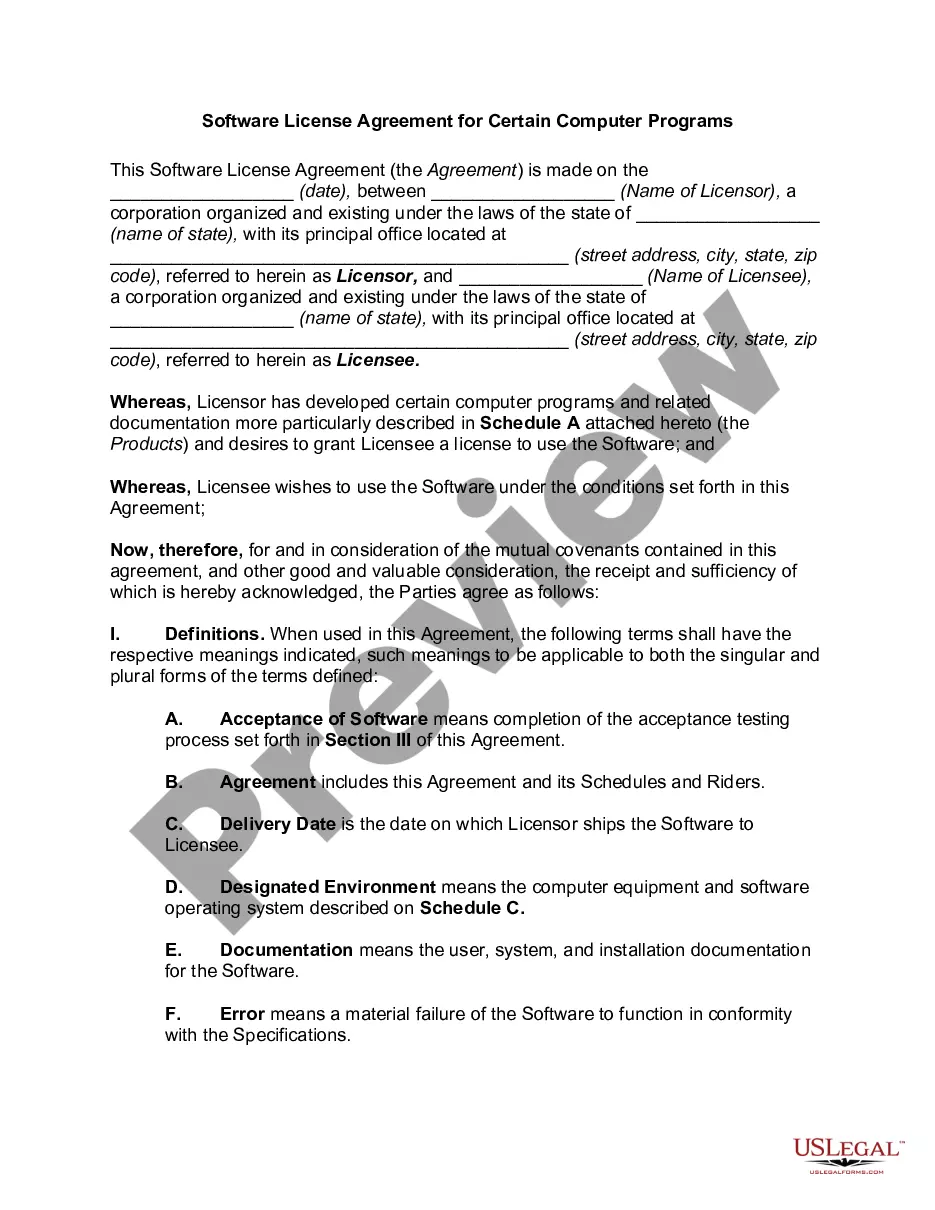
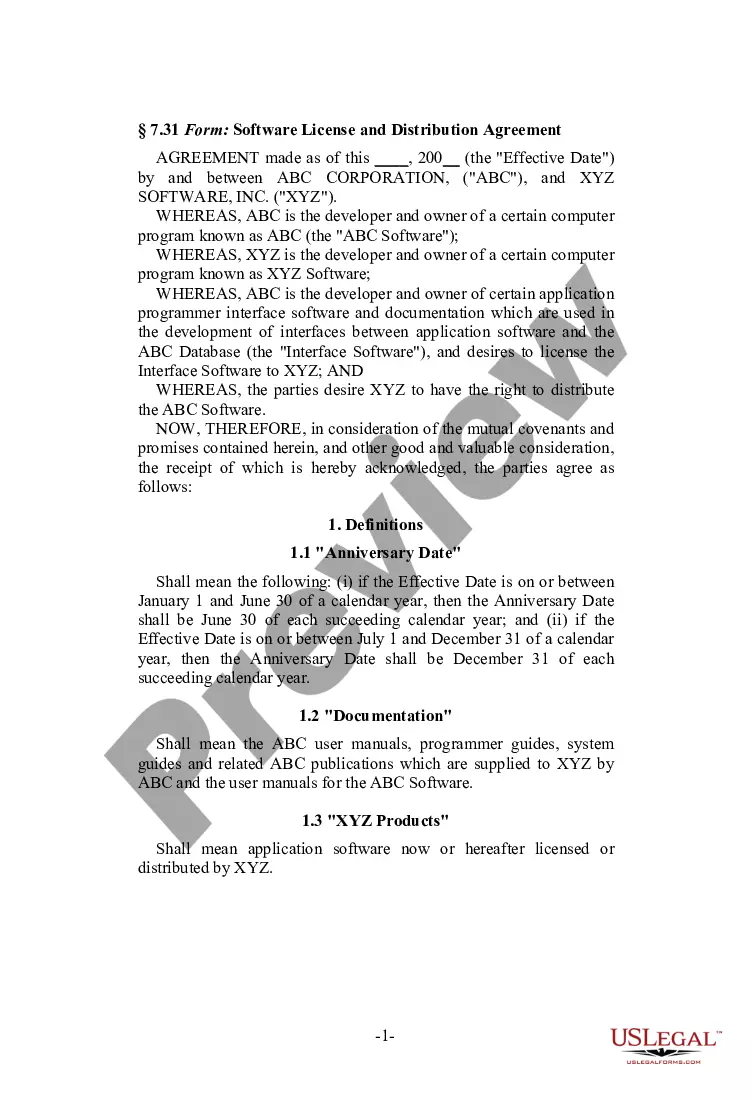
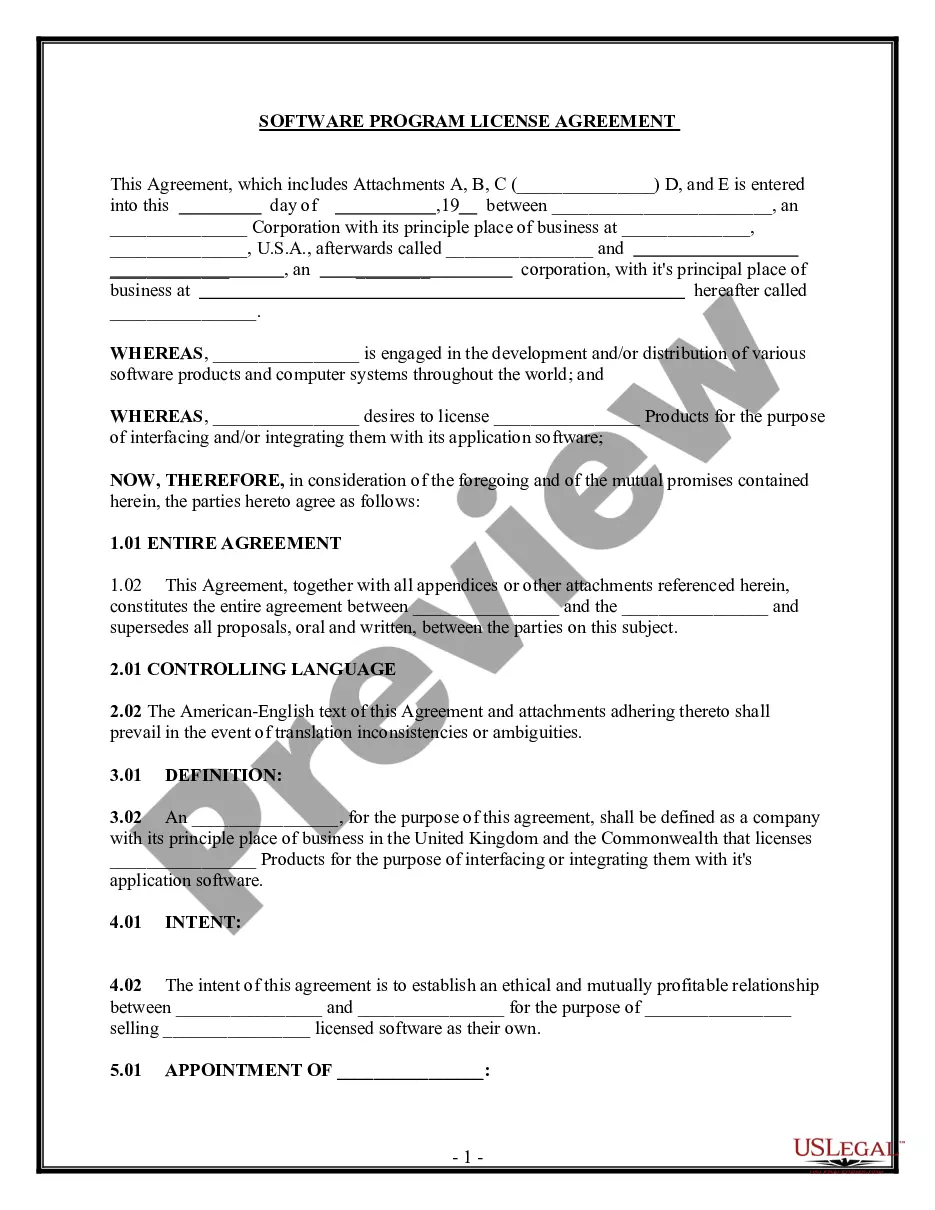
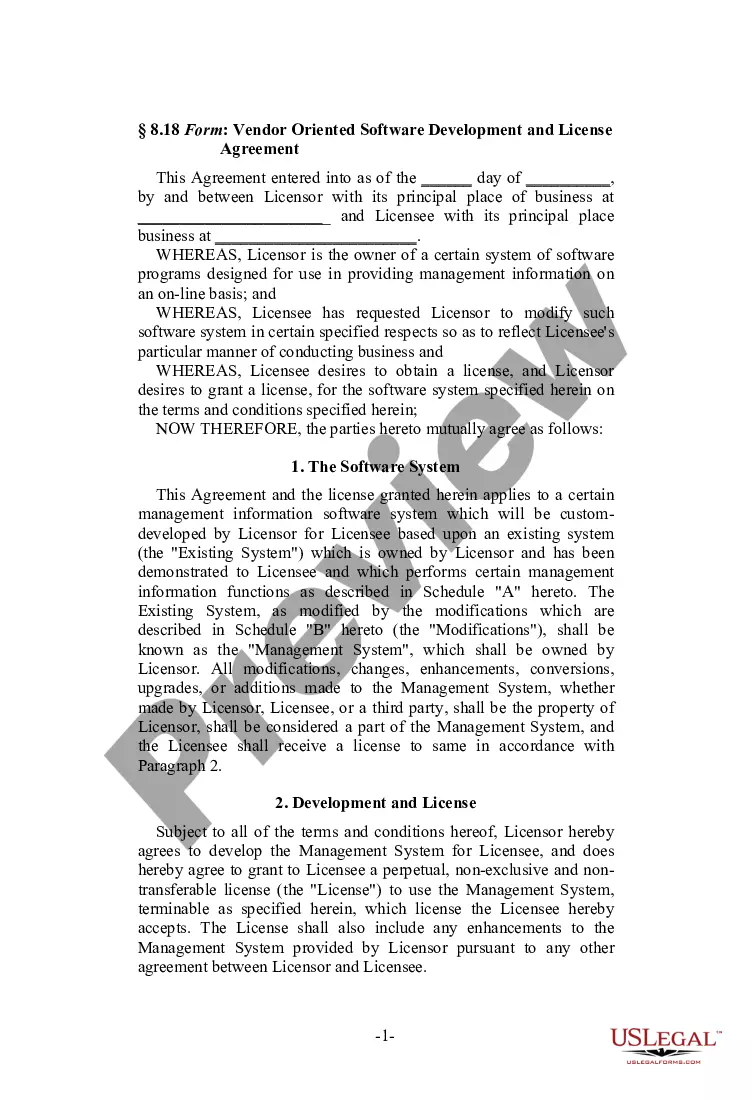
The Software License Agreement Involving Third-Party is a legal contract between two parties concerning the use and distribution of software products. This form outlines the terms under which one party (the licensee) can utilize the proprietary software developed by another party (the licensor), while also considering the involvement of a third-party entity. It is essential for ensuring that intellectual property rights are respected and that the software can be used in an agreed-upon manner, distinguishing it from other types of software agreements, such as simple licensing agreements.
Form components explained
- Definitions: Provides clear definitions of terms such as "Licensed Products," "End User," and "Documentation."
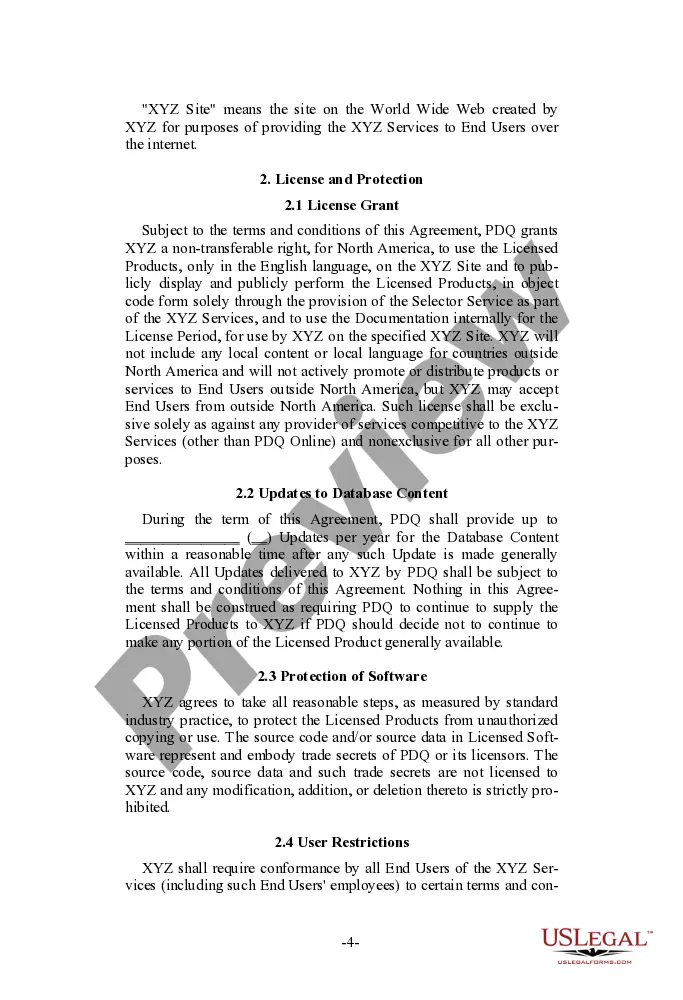
- License Grant: Outlines the specific rights granted to the licensee to use the software.
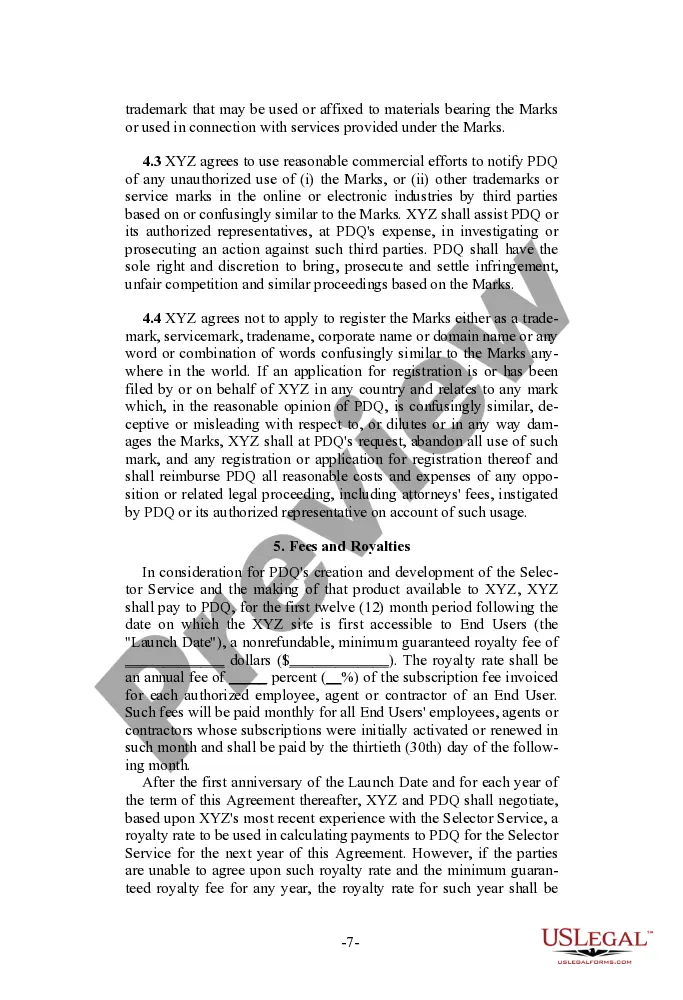
- Fees and Royalties: Details the payment structure, including minimum royalties and revenue sharing.
- Term and Termination: Specifies the duration of the agreement and conditions under which it can be terminated.
- Indemnification: Establishes responsibilities regarding claims and breaches of warranty.

When to use this document
This form is needed when a business or individual contractor intends to license software that involves third-party services or components. It is commonly used when partnering with another company to provide software-related services, such as creating an online platform that integrates various software features, requiring clarity about usage rights and revenue sharing.
Who needs this form
This agreement is suitable for:
- Businesses seeking to license proprietary software from a developer.
- Software developers looking to protect their intellectual property when allowing others to use their software.
- Contractors working on software-related projects that involve third-party content or services.
How to prepare this document
- Identify the parties involved: Specify the names and addresses of the licensor and licensee.
- Define the Licensed Products: Clearly describe the software and associated documentation.
- Enter the License Grant details: Outline the scope and limitations of the license granted to the licensee.
- Specify the Fees and Royalties: Detail any payment obligations, including minimum guarantees and percentages.
- Define the Term and conditions for Termination: Include the duration of the agreement and any conditions for ending the agreement.
Does this document require notarization?
Notarization is generally not required for this form. However, certain states or situations might demand it. You can complete notarization online through US Legal Forms, powered by Notarize, using a verified video call available anytime.
Get your form ready online
Our built-in tools help you complete, sign, share, and store your documents in one place.
Make edits, fill in missing information, and update formatting in US Legal Forms—just like you would in MS Word.
Download a copy, print it, send it by email, or mail it via USPS—whatever works best for your next step.
Sign and collect signatures with our SignNow integration. Send to multiple recipients, set reminders, and more. Go Premium to unlock E-Sign.
If this form requires notarization, complete it online through a secure video call—no need to meet a notary in person or wait for an appointment.
We protect your documents and personal data by following strict security and privacy standards.

Make edits, fill in missing information, and update formatting in US Legal Forms—just like you would in MS Word.

Download a copy, print it, send it by email, or mail it via USPS—whatever works best for your next step.

Sign and collect signatures with our SignNow integration. Send to multiple recipients, set reminders, and more. Go Premium to unlock E-Sign.

If this form requires notarization, complete it online through a secure video call—no need to meet a notary in person or wait for an appointment.

We protect your documents and personal data by following strict security and privacy standards.
Mistakes to watch out for
- Failing to define key terms clearly, leading to misunderstandings.
- Not specifying the geographical limitations of the license.
- Overlooking the need for written amendments and updates to the agreement.
- Neglecting to address termination conditions properly.
Advantages of online completion
- Convenient access to legal templates anytime, allowing for faster document preparation.
- Editability of the form to tailor it to specific needs and circumstances.
- Reliability from using professionally drafted agreements that comply with legal standards.
Legal use & context
- The Software License Agreement is enforceable under contract law, provided all parties adhere to the outlined terms.
- This form helps prevent disputes by establishing clear responsibilities and expectations regarding software use.
- It is advisable to consult with a legal professional before finalizing the agreement to ensure compliance with applicable laws.
What to keep in mind
- The Software License Agreement is crucial for defining the terms of software use between parties.
- Clearly outline scope, royalties, and termination provisions to avoid future conflicts.
- Utilizing a professional template online streamlines the licensing process while ensuring legal validity.
Looking for another form?



Form popularity
FAQ
Definition. A person who is neither a promisor nor promisee in a contractual agreement, but stands to benefit from the contract's performance.
An individual enters into a contract with an insurance company that requires the payment of death benefits to a third party. That third party does not sign the contract and may not even be aware of its existence, yet is entitled to benefit from it.
An example of a third party would be the escrow company in a real estate transaction; the escrow party acts as a neutral agent by collecting the documents and money that the buyer and seller exchange when completing the transaction. A collection agency may be another example of a third party.
A third party is someone who is not one of the main people involved in a business agreement or legal case, but who is involved in it in a minor role. You can instruct your bank to allow a third party to remove money from your account.