Complaint for Breach of Contract, Emotional distress, Misrepresentation of House Condition
What is this form?
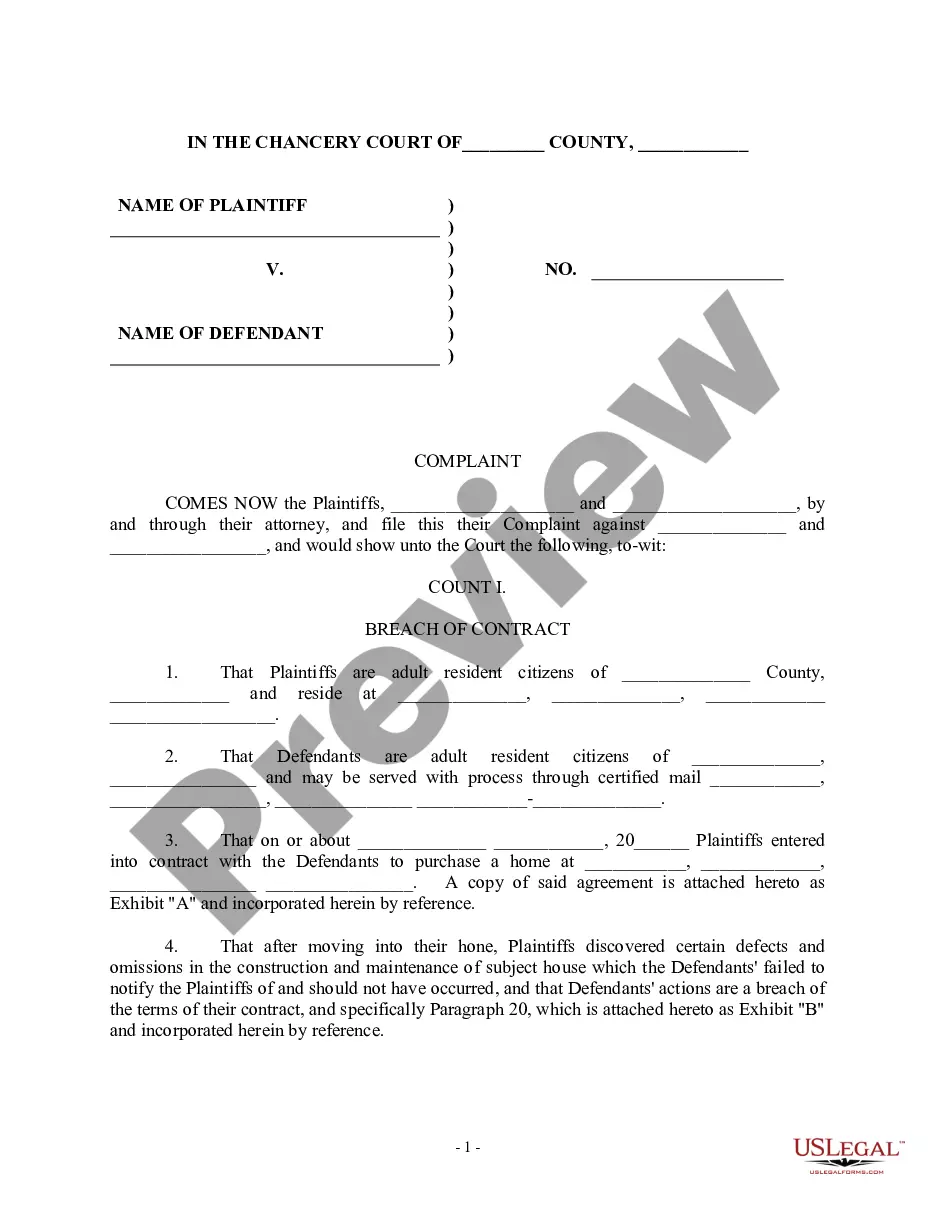
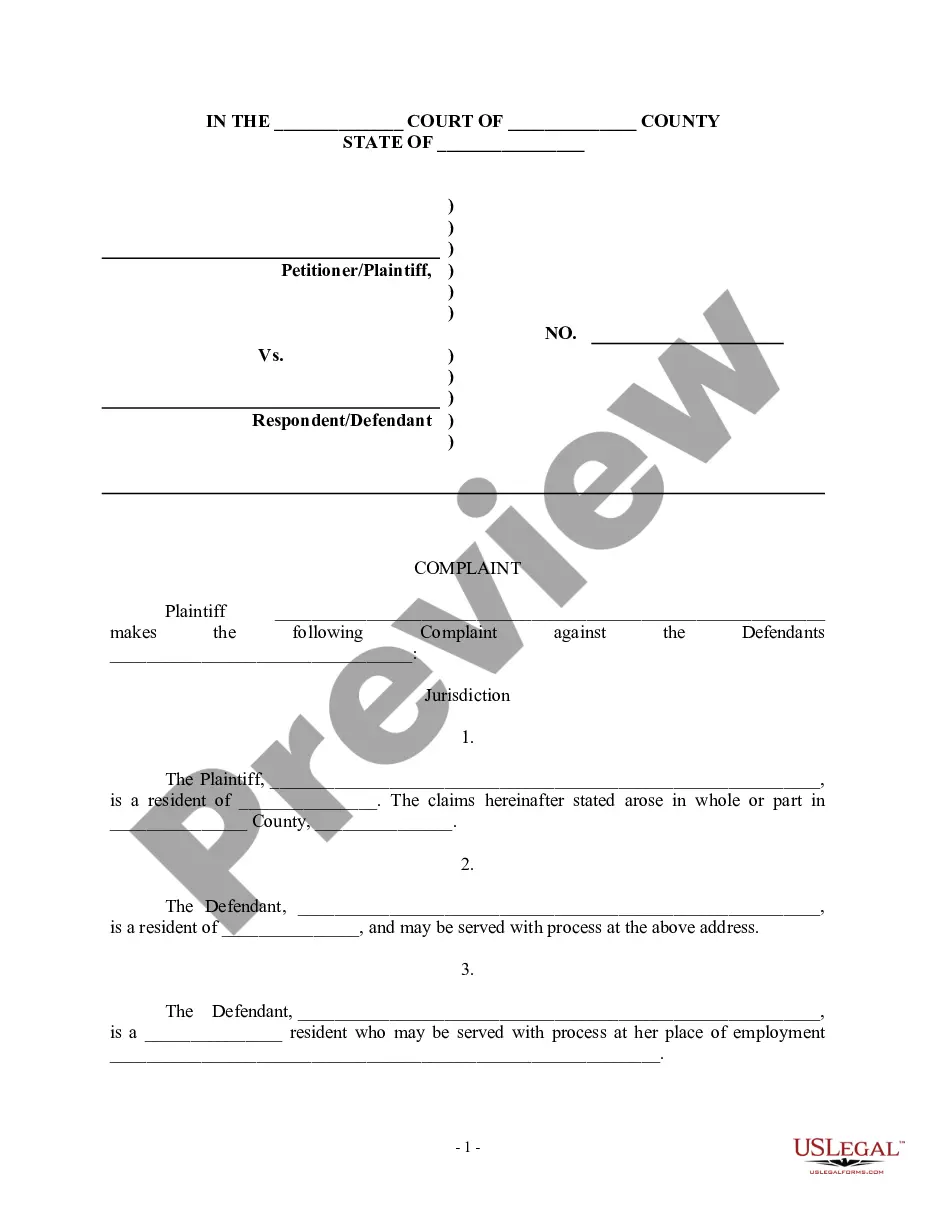
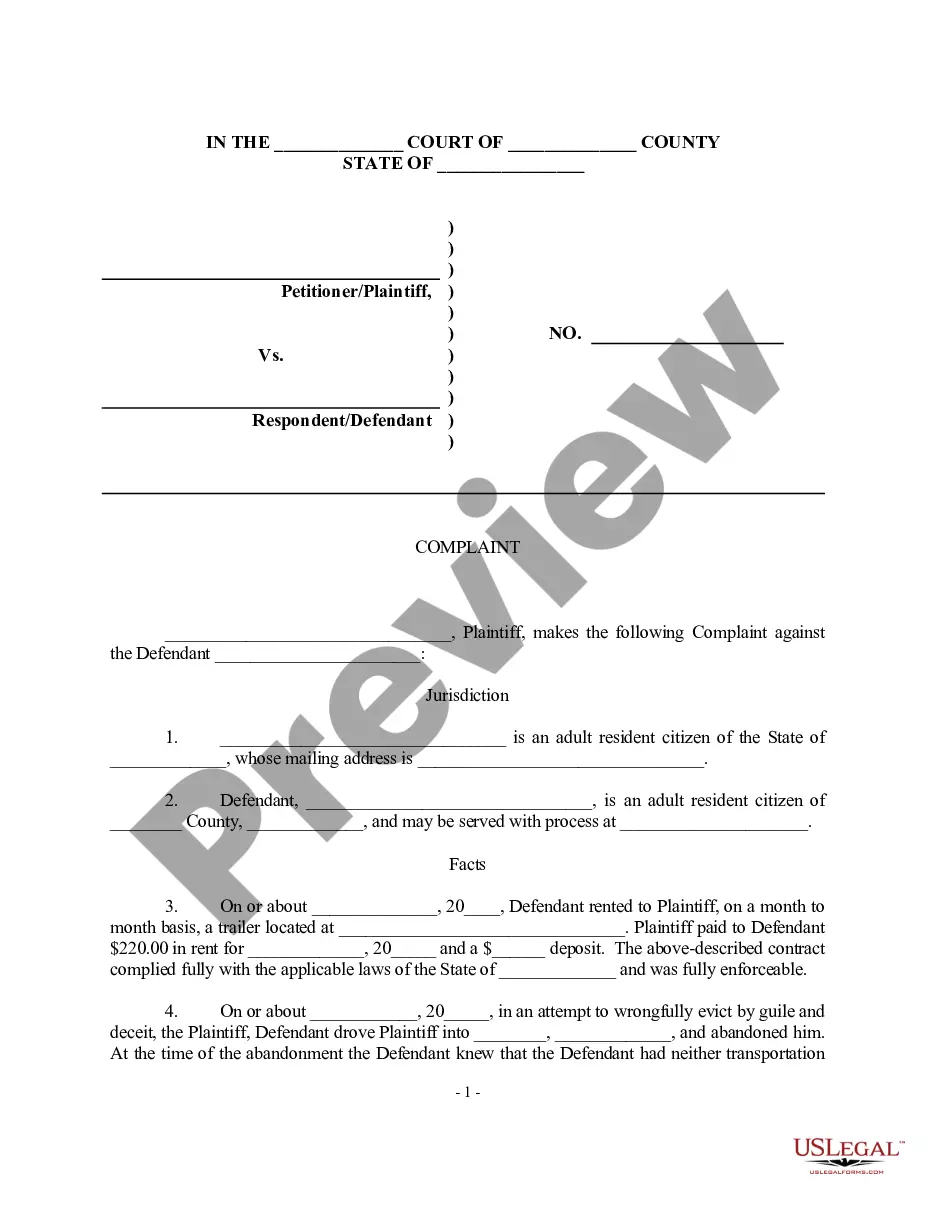
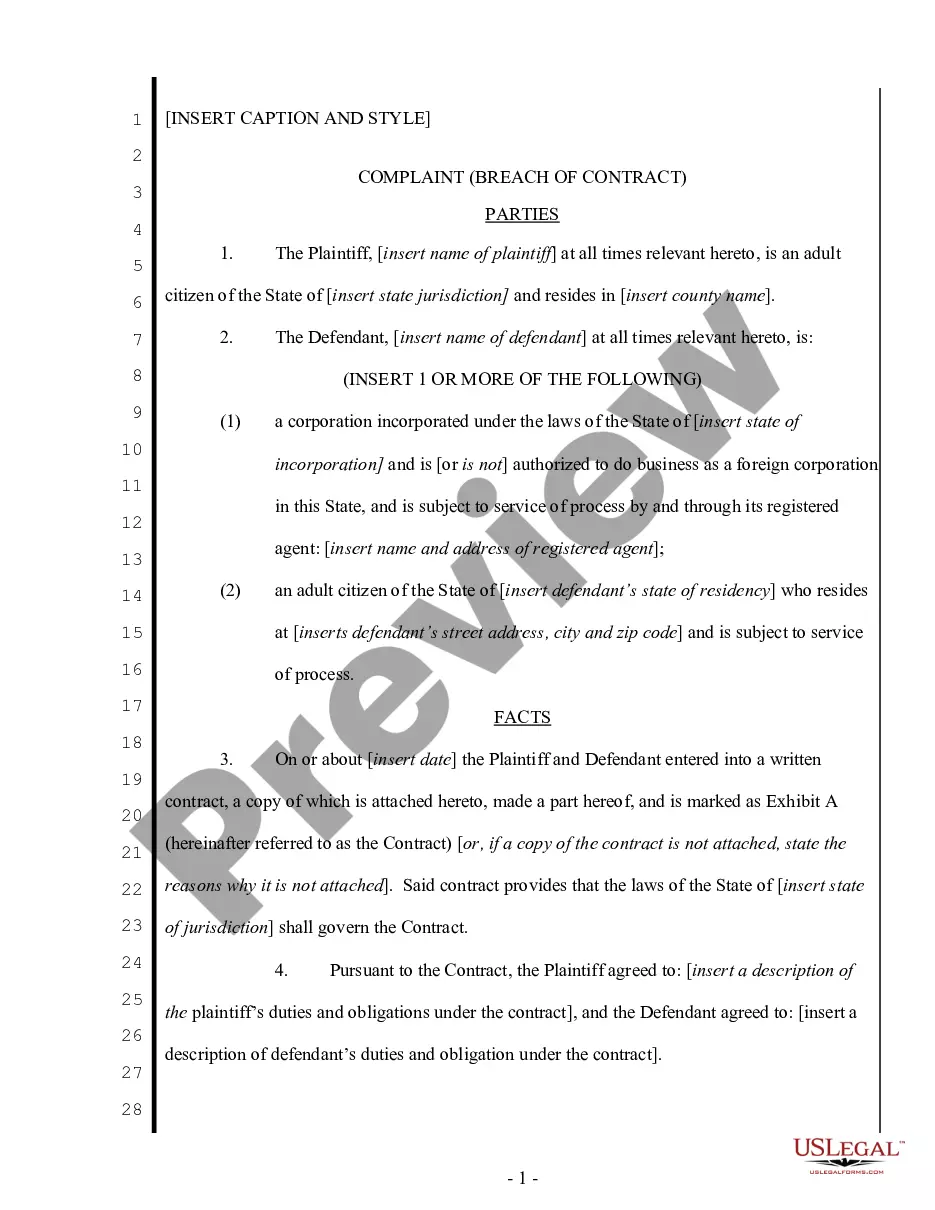
The Complaint for Breach of Contract, Emotional Distress, Misrepresentation of House Condition is a legal document used by individuals alleging that a seller has failed to meet their contractual obligations regarding the sale of a home. This form addresses claims of breach of contract, negligent misrepresentation, and intentional infliction of emotional distress. It outlines the necessary components to formally initiate a lawsuit against the seller in situations where there are undisclosed defects in the home and emotional harm has resulted from the seller's actions or inactions.
Form components explained
- Identification of plaintiffs and defendants, including their addresses.
- Details of the contract for the home purchase and specific breaches.
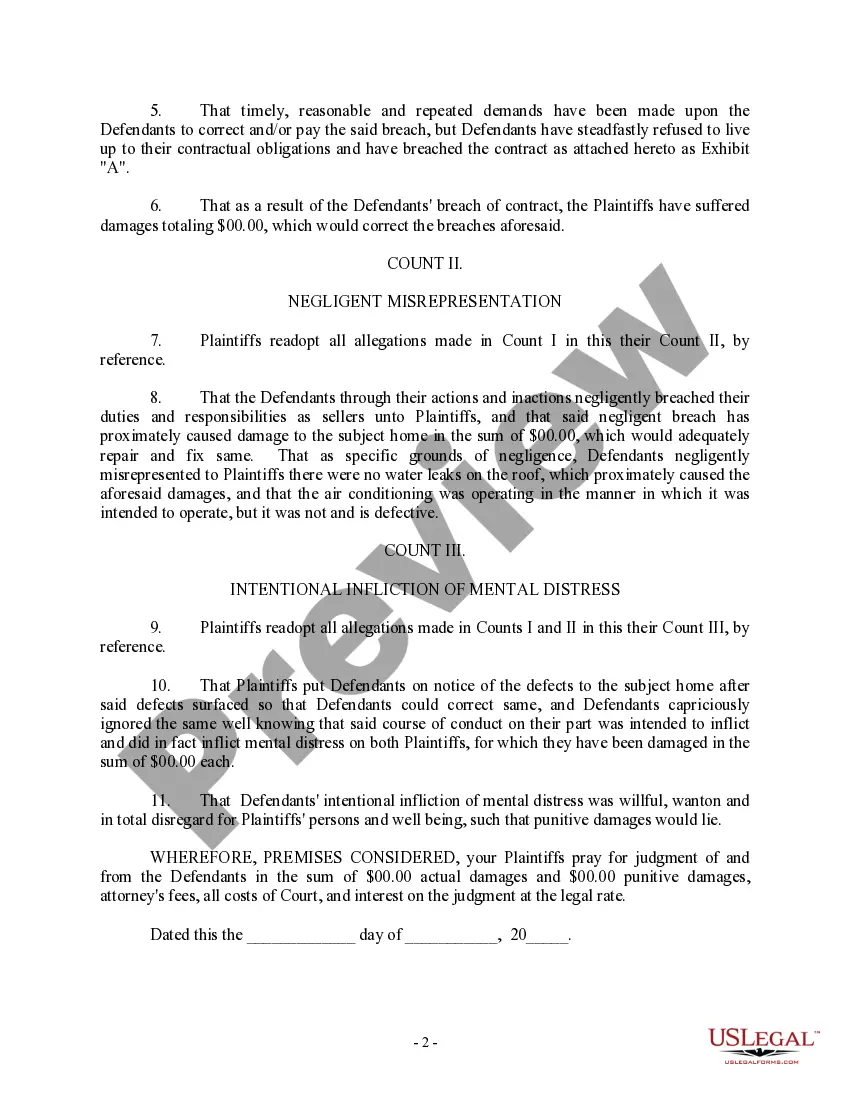
- Claims for negligent misrepresentation regarding the home's condition.
- Allegations of intentional infliction of emotional distress.
- Request for damages, including actual and punitive damages.


When to use this form
This form should be used in situations where a buyer has entered into a contract to purchase a home, but discovers significant defects or issues that the seller failed to disclose. It is appropriate to file this complaint when attempts to resolve the issues have been ignored by the seller, leading to financial losses and emotional distress for the buyer.
Who needs this form
- Homeowners or buyers who believe they have a legal claim against a seller.
- Individuals who have suffered financial loss due to undisclosed home defects.
- Anyone experiencing emotional distress as a result of misrepresentations made by the seller.
How to complete this form
- Identify the plaintiffs and defendants, including their full legal names and addresses.
- Enter the date and details of the home purchase contract, attaching copies as necessary.
- Clearly outline the specific breaches of contract and misrepresentations made by the defendants.
- Calculate and include the damages being sought, both actual and punitive.
- Sign the form and ensure it is correctly dated before filing.
Notarization requirements for this form
In most cases, this form does not require notarization. However, some jurisdictions or signing circumstances might. US Legal Forms offers online notarization powered by Notarize, accessible 24/7 for a quick, remote process.
Get your form ready online
Our built-in tools help you complete, sign, share, and store your documents in one place.
Make edits, fill in missing information, and update formatting in US Legal Forms—just like you would in MS Word.
Download a copy, print it, send it by email, or mail it via USPS—whatever works best for your next step.
Sign and collect signatures with our SignNow integration. Send to multiple recipients, set reminders, and more. Go Premium to unlock E-Sign.
If this form requires notarization, complete it online through a secure video call—no need to meet a notary in person or wait for an appointment.
We protect your documents and personal data by following strict security and privacy standards.

Make edits, fill in missing information, and update formatting in US Legal Forms—just like you would in MS Word.

Download a copy, print it, send it by email, or mail it via USPS—whatever works best for your next step.

Sign and collect signatures with our SignNow integration. Send to multiple recipients, set reminders, and more. Go Premium to unlock E-Sign.

If this form requires notarization, complete it online through a secure video call—no need to meet a notary in person or wait for an appointment.

We protect your documents and personal data by following strict security and privacy standards.
Mistakes to watch out for
- Failing to provide accurate addresses for all parties involved.
- Not attaching required exhibits or documentation supporting the claims.
- Neglecting to specify the exact damages being sought.
- Missing signatures or incorrect dating on the complaint form.
Benefits of using this form online
- Convenient access to legal forms that can be downloaded and completed at your own pace.
- Editability allows users to customize the form to their specific situation seamlessly.
- Reliable templates drafted by licensed attorneys ensure the necessary legal language is present.
Key takeaways
- This form is essential for homeowners seeking legal recourse for contract breaches by sellers.
- Clearly document all claims and supporting evidence to enhance the likelihood of success.
- Understanding when to use this form can help mitigate emotional and financial distress related to home purchases.
Looking for another form?

Form popularity
FAQ
Individual Grievances. When an individual employee grieves against a management action like demotion based on bias, non payment of salary, workplace harassment etc. Group Grievances. Union Grievances.
Bullying and harassment. Discrimination. Workplace health and safety. Work environment. Relationships in the workplace. Organisational changes. Terms and conditions of employment.
The purpose of grievance procedures is to help management identify problems in the organization before they affect employee satisfaction. These procedures also provide employees with a communication channel to management.
Grievance Top 8 Types: Visible Grievances or Hidden Grievances, Real or Imaginary, Expressed or Implied, Oral or Written and a Few Other Types. It is an uphill task to give clear-cut boundaries of types of grievances. However on the basis of nature of the grievances different types of grievances can be possible.
Reasons for filing a grievance in the workplace can be as a result of, but not limited to, a breach of the terms and conditions of an employment contract, raises and promotions, or lack thereof, as well as harassment and employment discrimination.
Individual Grievances. When an individual employee grieves against a management action like demotion based on bias, non payment of salary, workplace harassment etc. Group Grievances. Union Grievances.
Medical Grievances When a grievance is filed that is specific to medical care or treatment, the Grievance Committee Chairman will review the complaint with the Medical Director who will appoint staff members with expertise in the area of concern to review and investigate the complaint and advise the committee on a
Before you can sue, you must file a claim with the National Labor Relations Board (NLRB) and/or federal courts to prove that the union failed in their duty of representation. Only after the court or NLRB approves your claim can you move forward with a civil suit.
A grievance is a formal complaint that is raised by an employee towards an employer within the workplace.A grievance between an employee and employer can be dealt with either informally or formally, and sometimes both approaches are taken in search of a resolution.