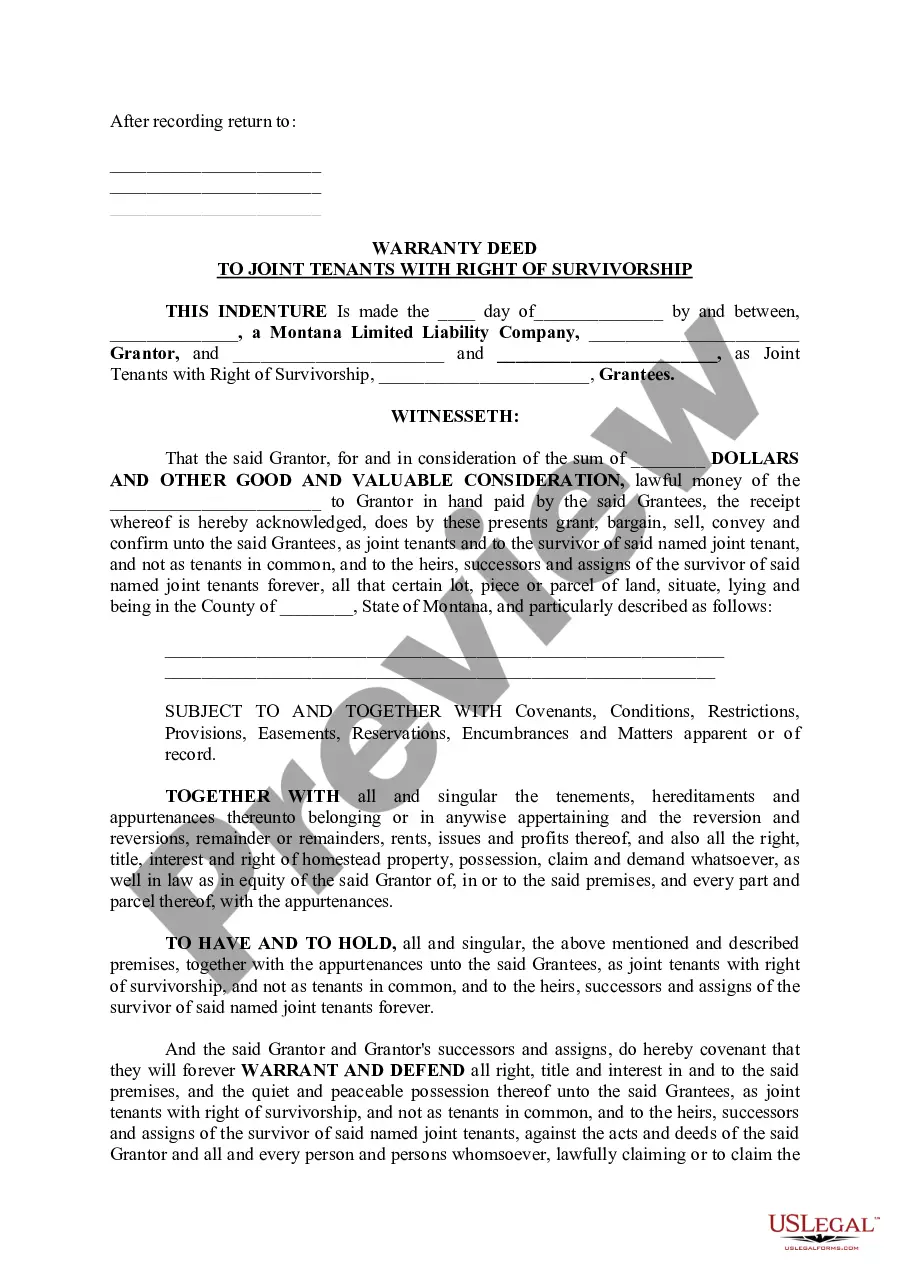
Petition for Removal of Minority - Emancipation
What is this form?
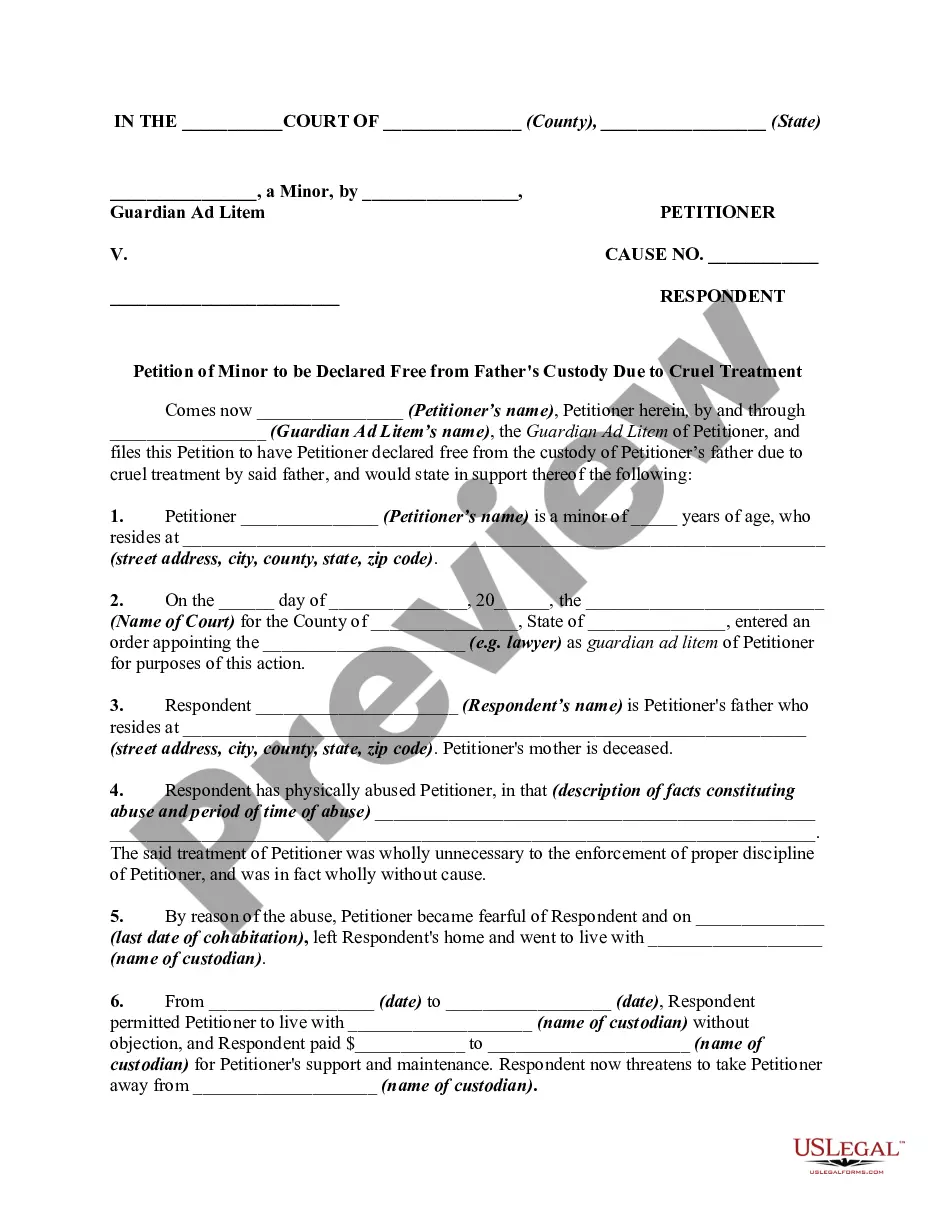
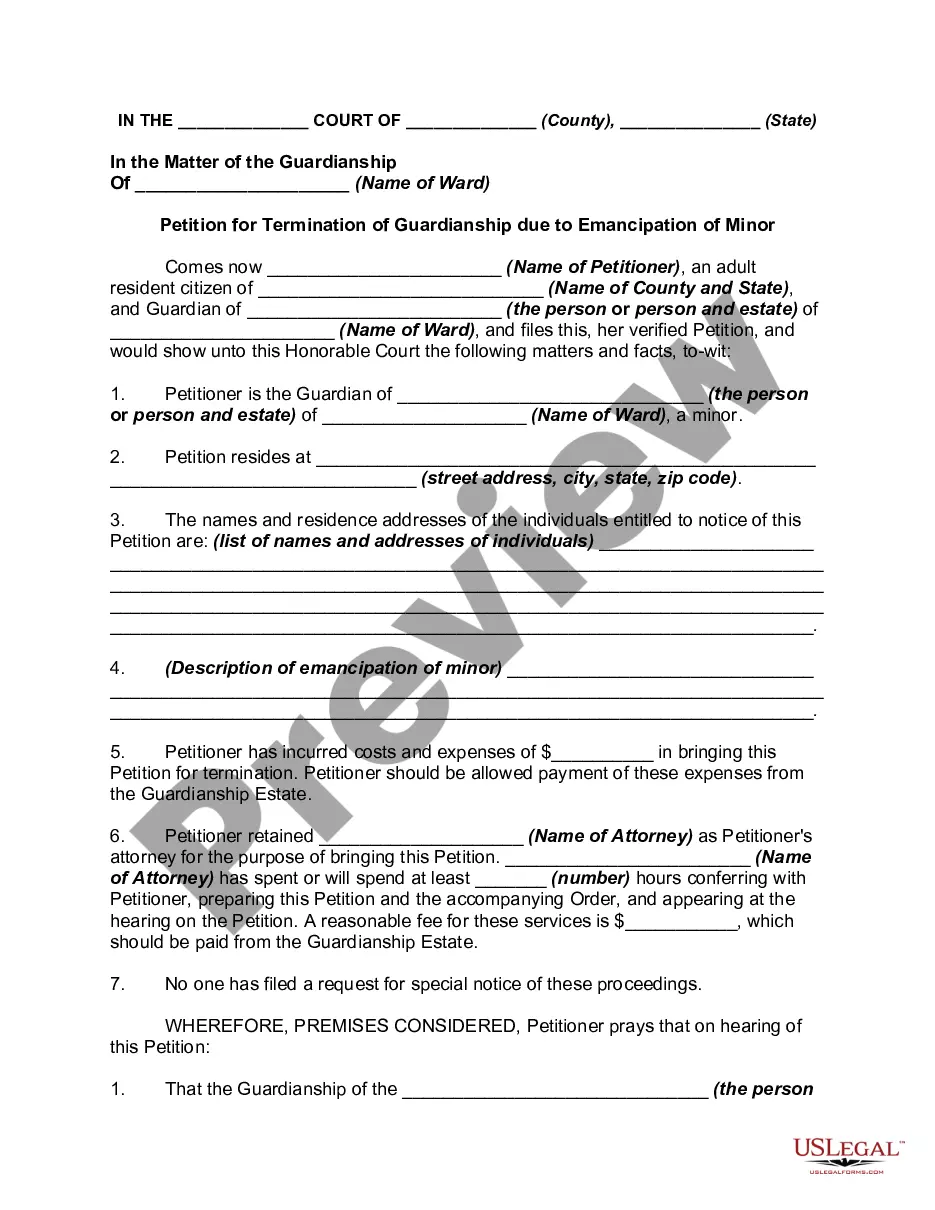
The Petition for Removal of Minority - Emancipation is a legal document that allows a minor to gain certain adult rights before reaching the age of majority. It is used to legally remove the minority status of a young adult, thereby enabling them to make decisions, enter into contracts, and manage their own financial affairs. This form specifically caters to situations where the minor is approaching adulthood and requires legal independence for purposes such as purchasing real estate or obtaining financing.
Key components of this form
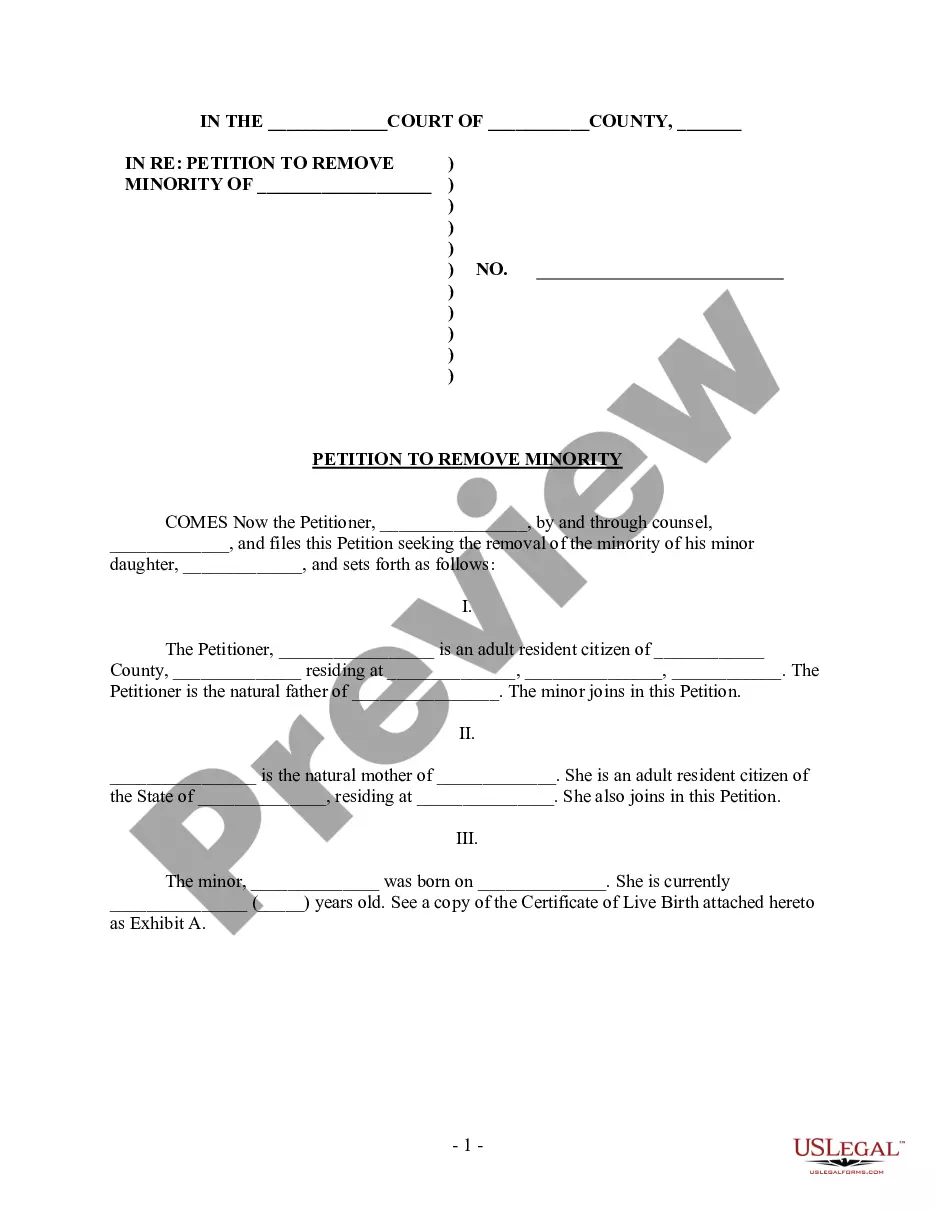
- Preamble identifying the petitioner and the minor seeking emancipation.
- Details of the petitioner's residency and relationship to the minor.
- Information about the minor, including age and birth details.
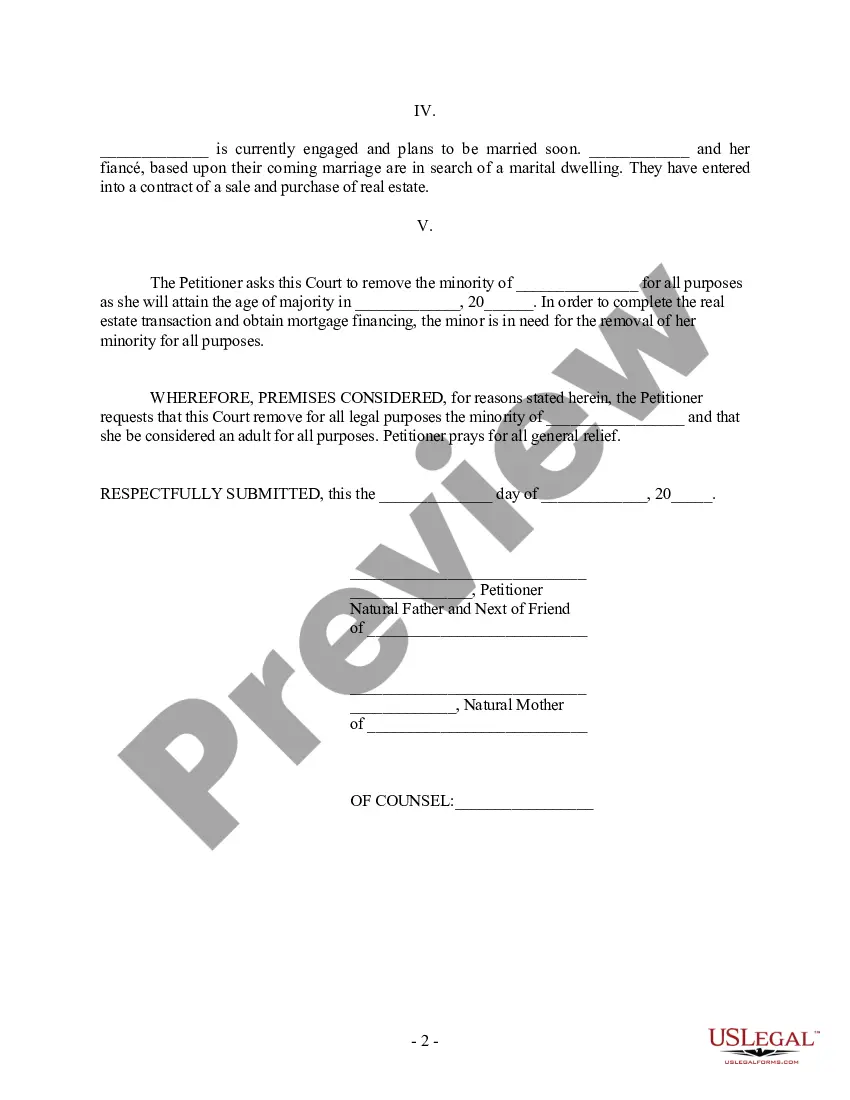
- Statement of intent to marry and the need for emancipation to proceed with a real estate purchase.
- Prayer for relief, requesting the court to grant removal of the minor's status.
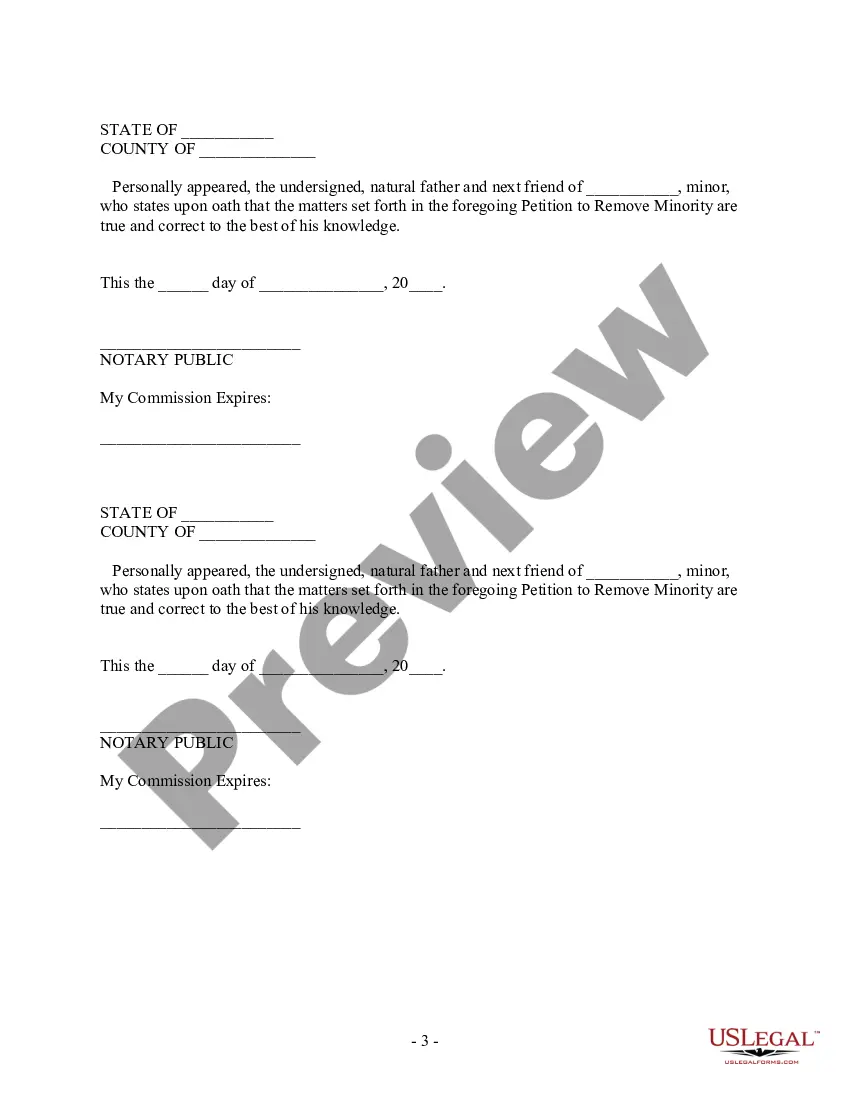
- Notary acknowledgment to validate the information provided in the petition.

Situations where this form applies
This form should be used in situations where a minor is close to reaching adulthood but requires legal recognition of their adult status for specific purposes, such as entering into contracts related to real estate or marriage. It is commonly utilized when a minor intends to engage in significant legal transactions that necessitate adult status.
Who can use this document
- Minors approaching the age of majority who wish to remove their minority status.
- Parents or legal guardians seeking emancipation on behalf of their children.
- Individuals planning to marry or enter into legal contracts prior to reaching adulthood.
Steps to complete this form
- Identify the parties involved, including the petitioner and the minor.
- Specify the minor's current age and provide a copy of their birth certificate as an exhibit.
- Describe the reasons for the request, including any upcoming marriage or real estate contracts.
- Enter the date and signatures of both parents or guardians, as well as the minor.
- Ensure the form is notarized to confirm the authenticity of the signatures.
Notarization requirements for this form
To make this form legally binding, it must be notarized. Our online notarization service, powered by Notarize, lets you verify and sign documents remotely through an encrypted video session.
Get your form ready online
Our built-in tools help you complete, sign, share, and store your documents in one place.
Make edits, fill in missing information, and update formatting in US Legal Forms—just like you would in MS Word.
Download a copy, print it, send it by email, or mail it via USPS—whatever works best for your next step.
Sign and collect signatures with our SignNow integration. Send to multiple recipients, set reminders, and more. Go Premium to unlock E-Sign.
If this form requires notarization, complete it online through a secure video call—no need to meet a notary in person or wait for an appointment.
We protect your documents and personal data by following strict security and privacy standards.

Make edits, fill in missing information, and update formatting in US Legal Forms—just like you would in MS Word.

Download a copy, print it, send it by email, or mail it via USPS—whatever works best for your next step.

Sign and collect signatures with our SignNow integration. Send to multiple recipients, set reminders, and more. Go Premium to unlock E-Sign.

If this form requires notarization, complete it online through a secure video call—no need to meet a notary in person or wait for an appointment.

We protect your documents and personal data by following strict security and privacy standards.
Avoid these common issues
- Failing to include necessary signatures from both parents or legal guardians.
- Not attaching required documentation, such as the minor's birth certificate.
- Leaving out key details regarding the minor's age or residency information.
Benefits of using this form online
- Convenient access to downloadable templates that can be filled out at your own pace.
- Editability allows for customization to fit individual circumstances.
- Reliable legal information drafted by licensed attorneys ensures the form meets legal standards.
Looking for another form?

Form popularity
FAQ
How can a minor become legally emancipated in Texas? A minor who wishes to have the legal capacity of an adult can petition a Texas court for the removal of disabilities of minority. This process is also known as emancipation.
Once a child is emancipated, his or her parents do not have custody or control of him or her anymore. Emancipation is usually forever. But the court can cancel the emancipation if the minor asking for the emancipation lies to the court or is no longer able to support himself or herself.
Your parents or legal guardian must have consented or acquiesced to your living away from them. Parental consent is generally required for a teen to become emancipated.
If you will be 18 in six months or less, there isn't time to complete the court process which takes four to six months. If you decide emancipation is the right option for you, you must go through some specific court procedures.
Additionally, emancipation can be revoked or canceled by court order. For example, emancipation may be revoked when the minor is convicted of a crime or is revealed to have lied to the court during their emancipation hearing.
If you will be 18 in six months or less, there isn't time to complete the court process which takes four to six months. If you decide emancipation is the right option for you, you must go through some specific court procedures.
To pursue emancipation through court decree, you can file for a declaration of emancipation without your parent's permission. If you need assistance with the process, you can contact a local or state legal aid organization.
In California, for example, minors as young as 14 may become emancipated. States that allow for judicial emancipation will consider whether it serves the minor's best interests.
Once you reach 16, although you cannot do everything that an adult can do, there are decisions you can make that your parents cannot object to, as well as certain things that you can only do with parental consent. You can leave home with or without your parents' consent as long as your welfare is not at risk.