Nonqualified Stock Option Plan of MNX Carriers, Inc.
Overview of this form
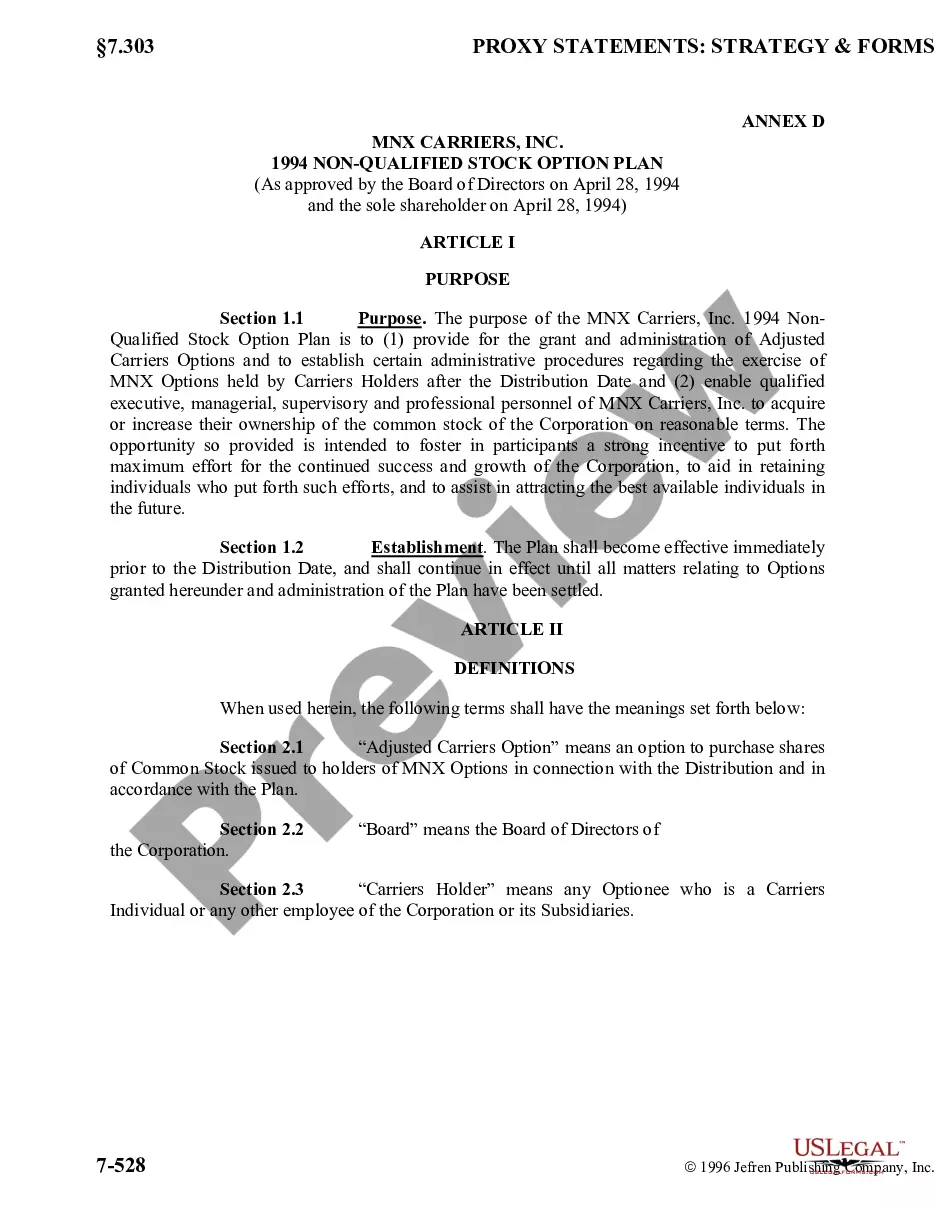
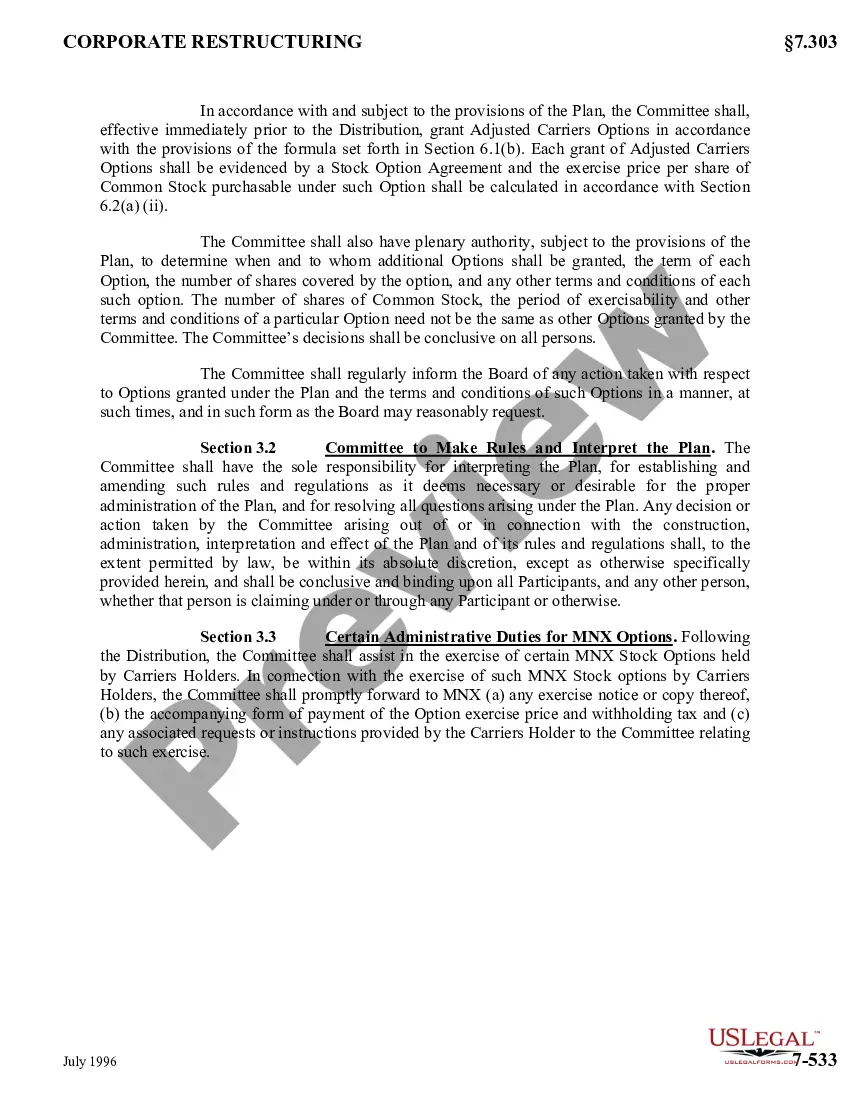
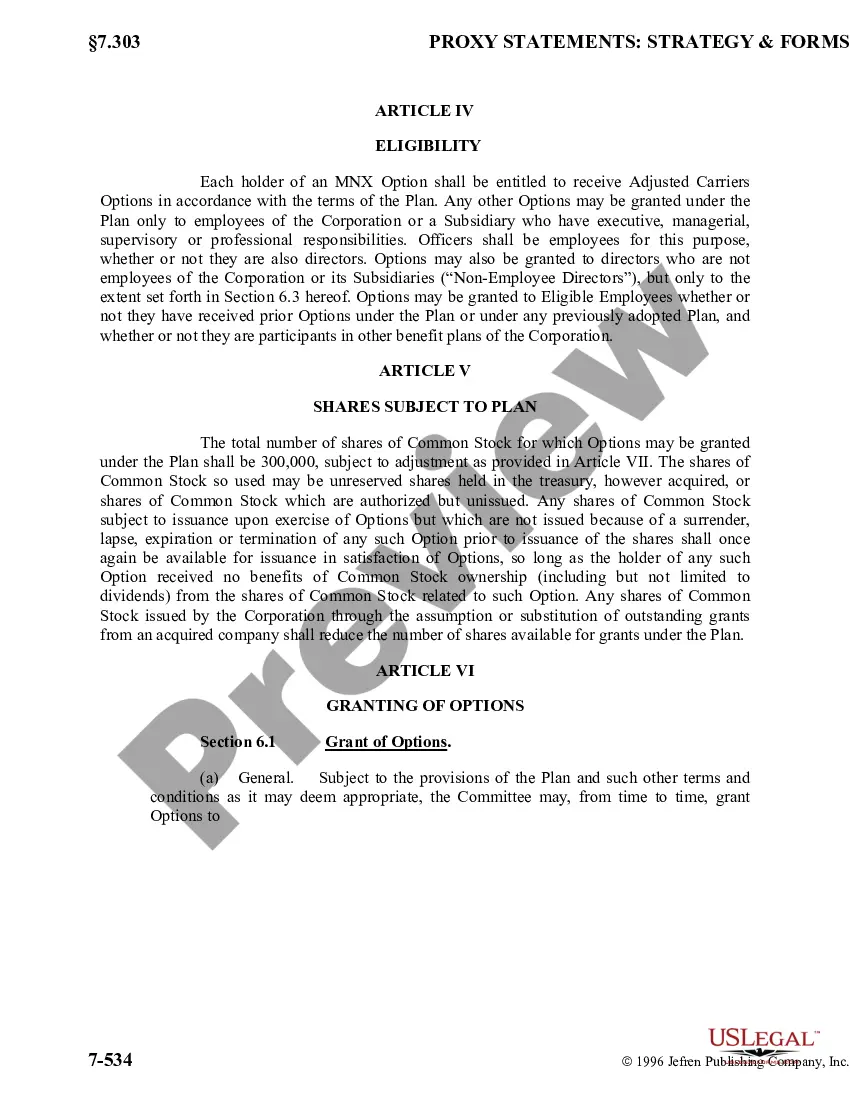
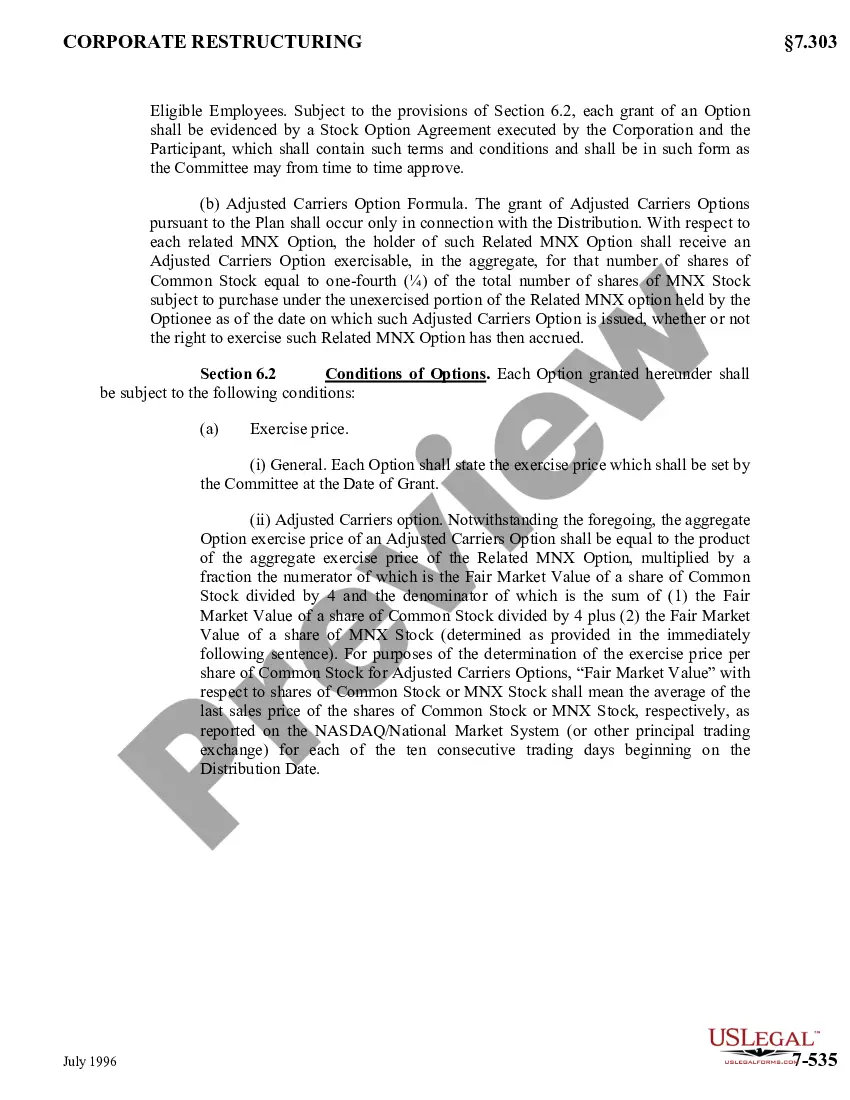
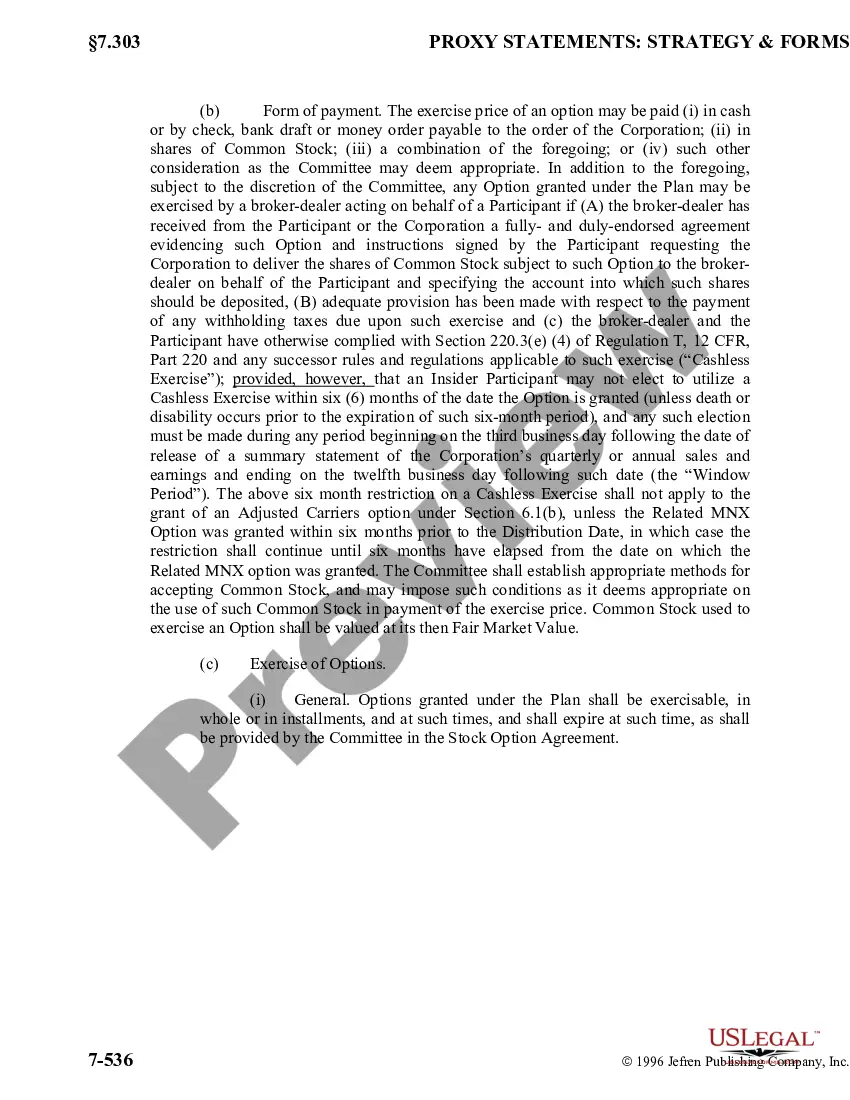
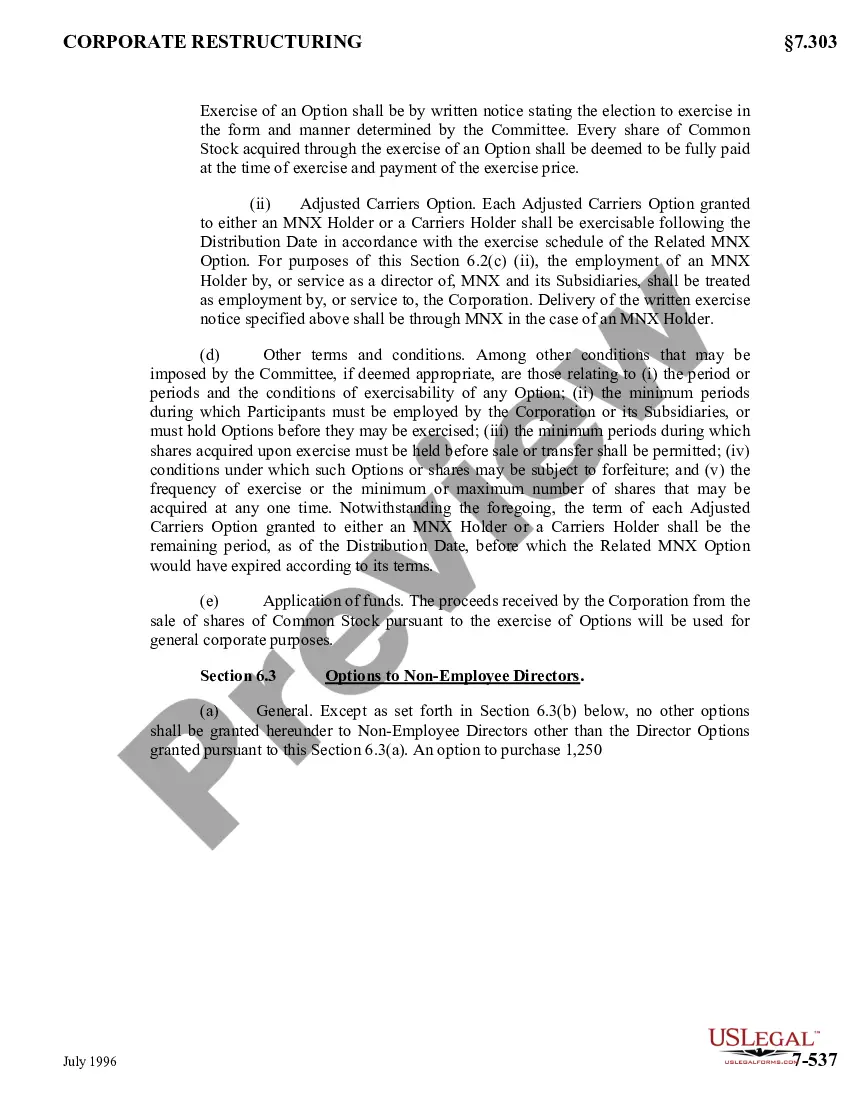
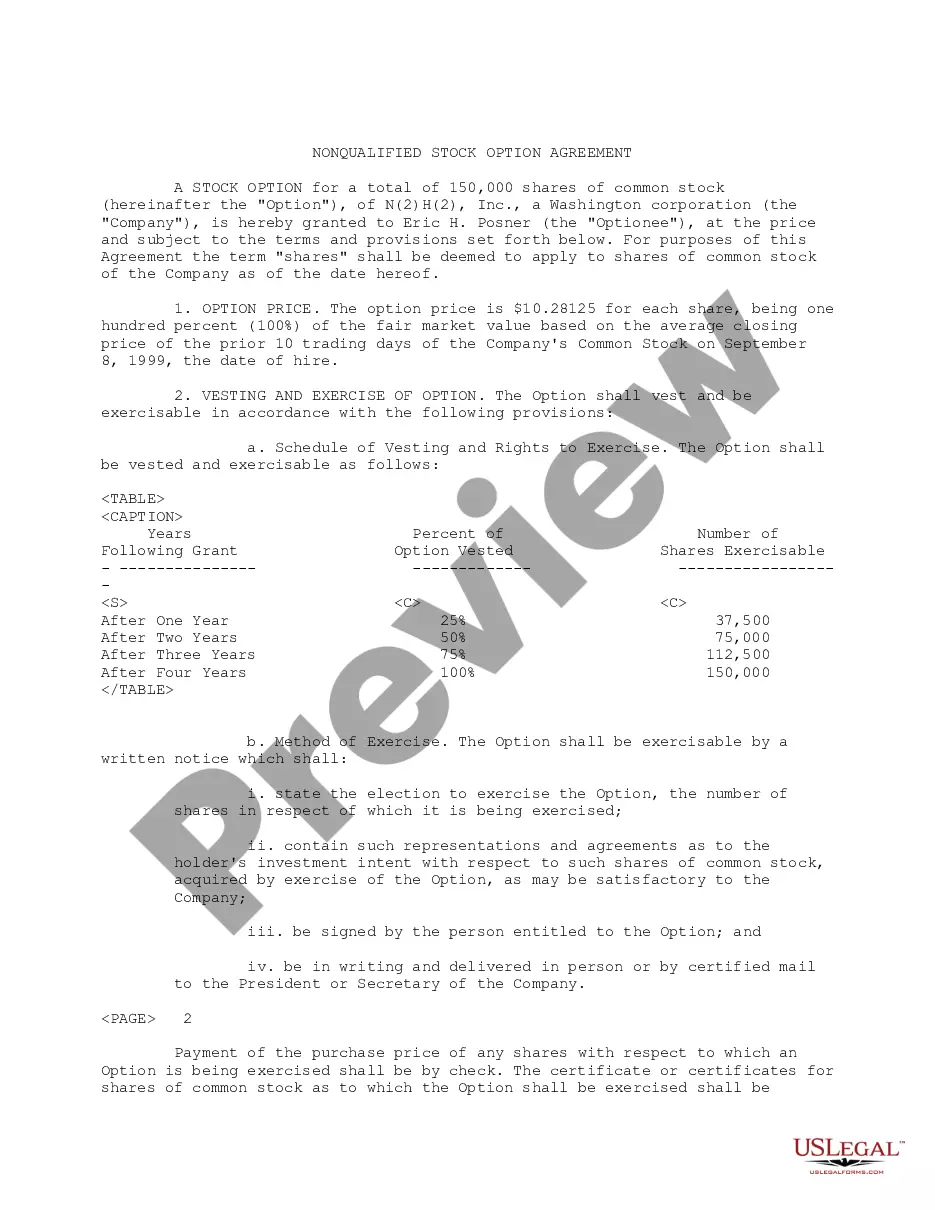
The Nonqualified Stock Option Plan of MNX Carriers, Inc. is a legal document that outlines the grant and administration of stock options for its employees and directors. This plan differs from other stock option types, as it primarily aims to provide incentives for eligible personnel to acquire ownership in the company, enhancing their commitment and performance. This plan has been structured to align with corporate governance and regulatory requirements, ensuring that participants understand their rights and obligations regarding the stock options granted to them.
Main sections of this form
- Purpose and objectives of the stock option plan outlined in Article I.
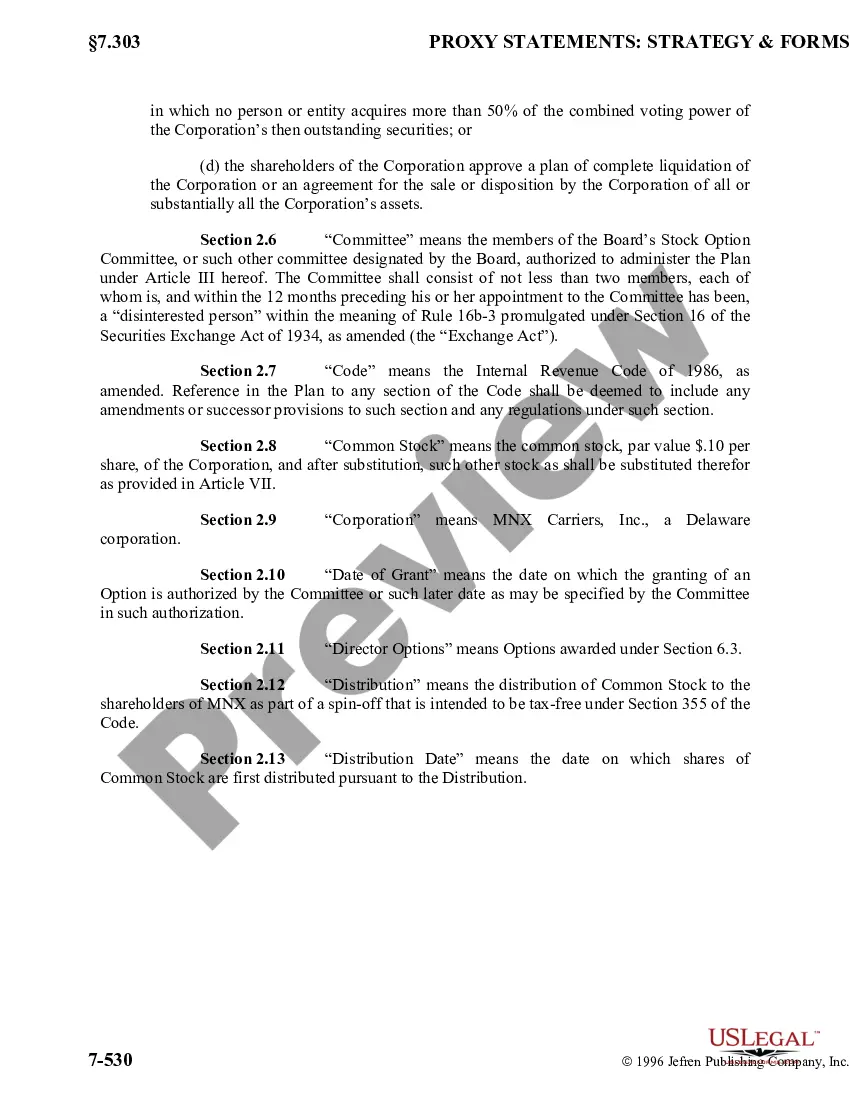
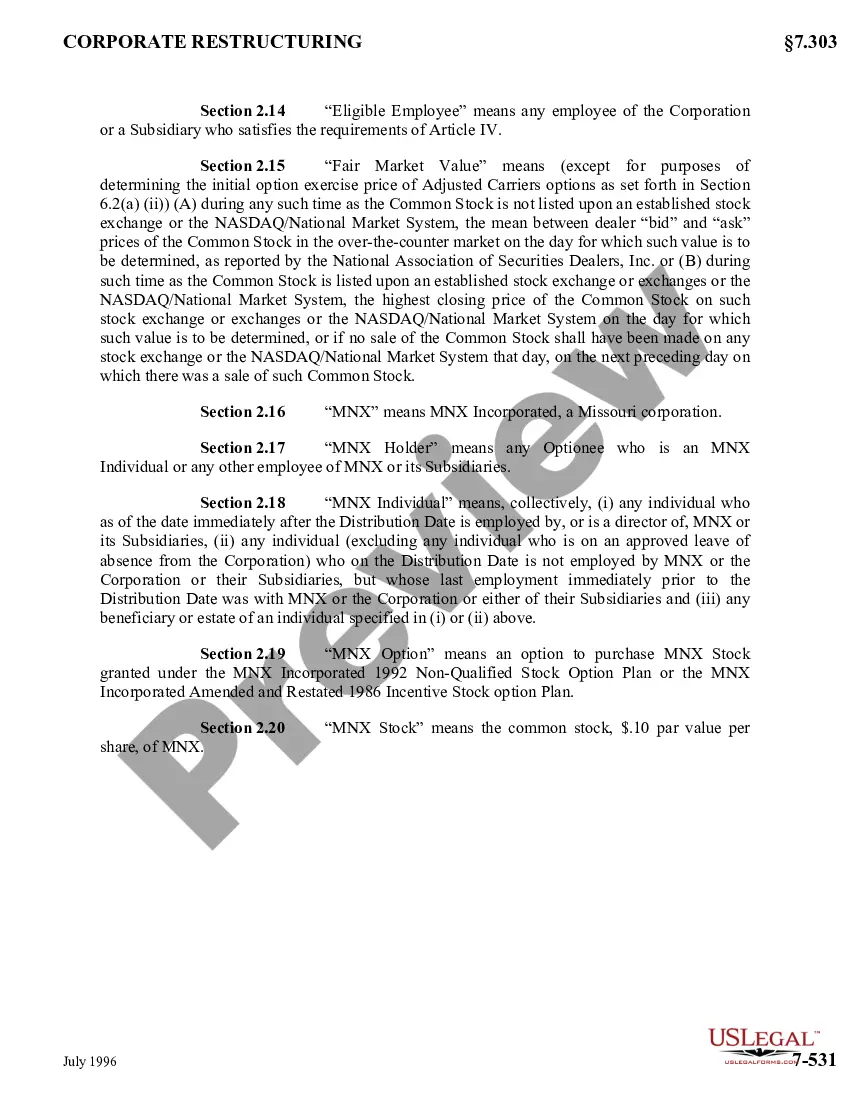
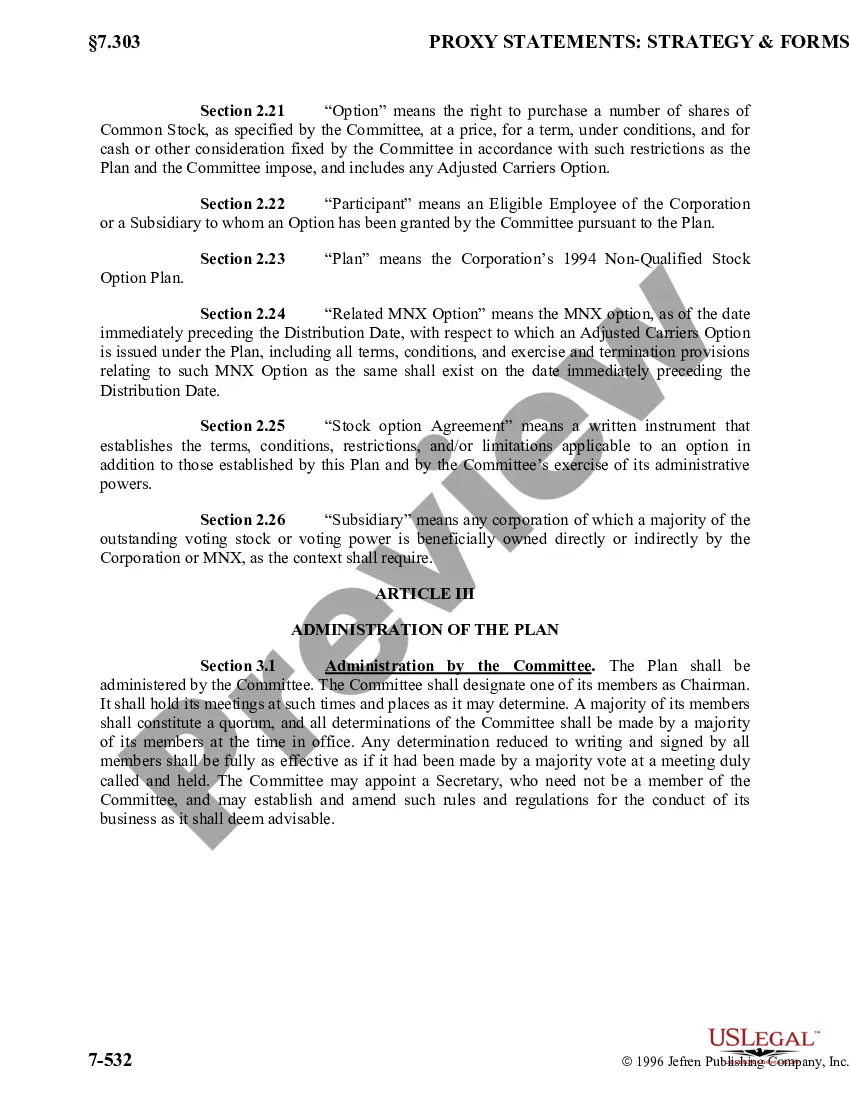
- Definitions of key terms used throughout the plan provided in Article II.
- Administrative procedures for managing the plan set forth in Article III.
- Eligibility criteria for participants detailed in Article IV.
- Guidelines for granting options outlined in Article VI.
- Provisions for adjustments, amendments, and termination of the plan in Article VIII.



When to use this form
This form should be used when a company, specifically MNX Carriers, Inc., wishes to establish a framework for offering nonqualified stock options to its employees and directors. It is essential during corporate restructuring or in scenarios where the company aims to motivate key personnel by providing them with equity participation in the business. This plan is ideal when a corporation seeks to retain talent and align employee interests with those of shareholders.
Who should use this form
- Corporate executives, managers, or key employees of MNX Carriers, Inc.
- Members of the Board of Directors who are entitled to stock options.
- Human resources professionals responsible for implementing employee incentive plans.
- Legal advisors assisting with corporate compliance and governance matters.
Steps to complete this form
- Define the purpose of the stock option plan and its goals.
- Determine eligibility criteria for potential participants, specifying who qualifies for the stock options.
- Outline the administrative framework, including the role of the committee managing the plan.
- Set forth the option grant procedures, including pricing and vesting schedules.
- Detail the procedures for adjustments to the stock options and the plan itself under specified circumstances.
Notarization requirements for this form
Notarization is generally not required for this form. However, certain states or situations might demand it. You can complete notarization online through US Legal Forms, powered by Notarize, using a verified video call available anytime.
Get your form ready online
Our built-in tools help you complete, sign, share, and store your documents in one place.
Make edits, fill in missing information, and update formatting in US Legal Forms—just like you would in MS Word.
Download a copy, print it, send it by email, or mail it via USPS—whatever works best for your next step.
Sign and collect signatures with our SignNow integration. Send to multiple recipients, set reminders, and more. Go Premium to unlock E-Sign.
If this form requires notarization, complete it online through a secure video call—no need to meet a notary in person or wait for an appointment.
We protect your documents and personal data by following strict security and privacy standards.

Make edits, fill in missing information, and update formatting in US Legal Forms—just like you would in MS Word.

Download a copy, print it, send it by email, or mail it via USPS—whatever works best for your next step.
Sign and collect signatures with our SignNow integration. Send to multiple recipients, set reminders, and more. Go Premium to unlock E-Sign.

If this form requires notarization, complete it online through a secure video call—no need to meet a notary in person or wait for an appointment.
We protect your documents and personal data by following strict security and privacy standards.
Avoid these common issues
- Failing to clearly define eligibility criteria, leading to confusion among potential participants.
- Not providing a comprehensive summary of the stock option benefits and risks for participants.
- Omitting procedural details for the exercise of options, which can result in potential disputes.
Benefits of using this form online
- Easy access to editable legal templates tailored to specific corporate needs.
- Secure storage and retrieval options for important corporate compliance documents.
- Cost-effective compared to traditional legal services, allowing for quicker implementation of employee incentive plans.
Legal use & context
- This form provides a legally enforceable framework for granting stock options, following guidelines set forth by federal and state laws.
- It ensures compliance with the Internal Revenue Code regulations governing nonqualified stock options.
- Participants must understand the tax implications associated with their stock options, as these will differ from qualified plans.
Looking for another form?

Form popularity
FAQ
Incentive stock options, or ISOs, are options that are entitled to potentially favorable federal tax treatment. Stock options that are not ISOs are usually referred to as nonqualified stock options or NQOs.These do not qualify for special tax treatment.
1: Exercise and Sell When Your Non-Qualified Stock Options Vest. The vest date is when you (the stock option holder) have the right to exercise non-qualified stock options. Prior to this vesting date, you may not be able to do anything.
What Is a Non-Qualified Stock Option (NSO)? A non-qualified stock option (NSO) is a type of employee stock option wherein you pay ordinary income tax on the difference between the grant price and the price at which you exercise the option.
A qualified stock option is a type of company share option granted exclusively to employees. It confers an income tax benefit when exercised. Qualified stock options are also referred to as "incentive stock options" or "incentive share options."
Depending upon the tax treatment of stock options, they can be classified into qualified and non-qualified stock options. Qualified stock options are also called Incentive Stock Options (ISO). Nonqualified: Employees generally don't owe tax when these options are granted.
If the grant is an NSO, the employee pays federal income taxes on $0.90 of income per share at exercise, even though the employee has not sold any shares. If the grant is an ISO, there is no federal income tax due at exercise.
Once you exercise your non-qualified stock option, the difference between the stock price and the strike price is taxed as ordinary income. This income is usually reported on your paystub.If you hold the shares for less than one year, any gain is taxed at your ordinary income tax rates, which are usually higher.