Purchase by company of its stock
What is this form?
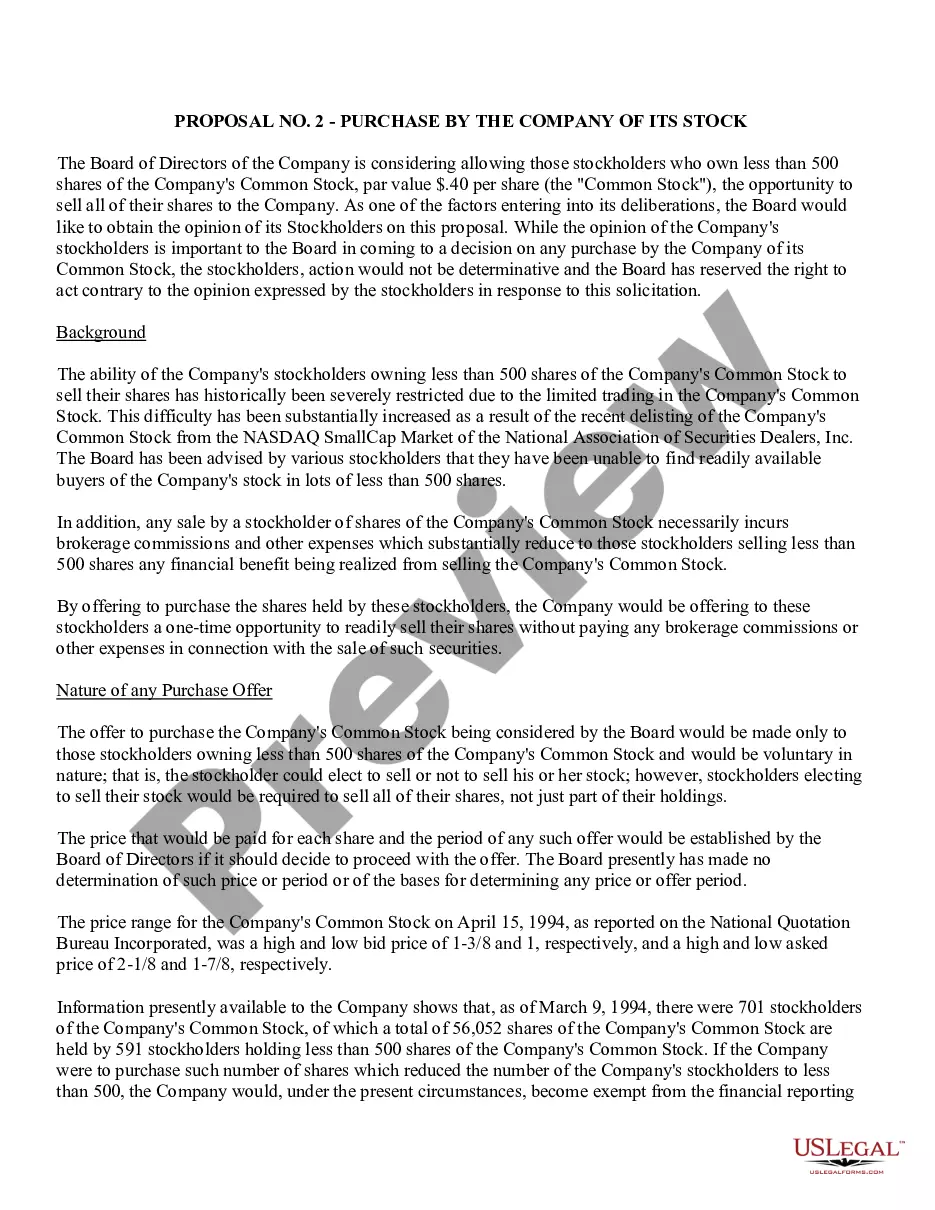
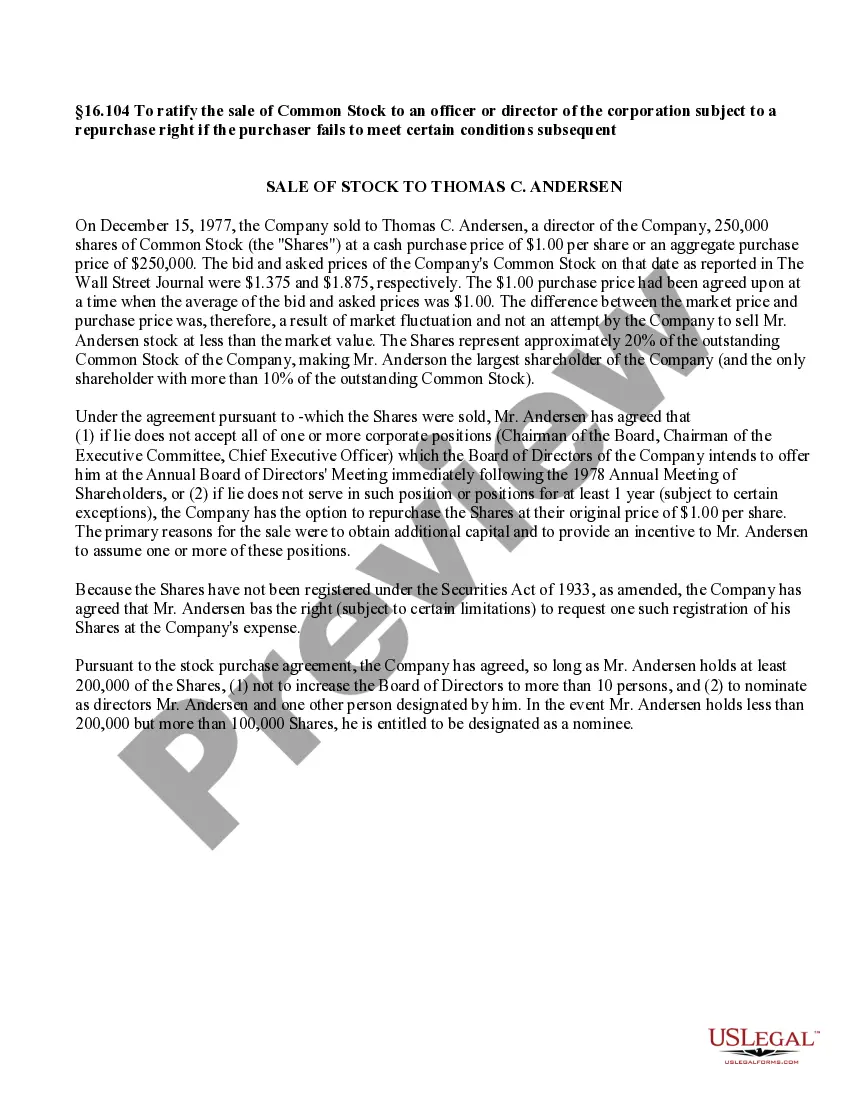
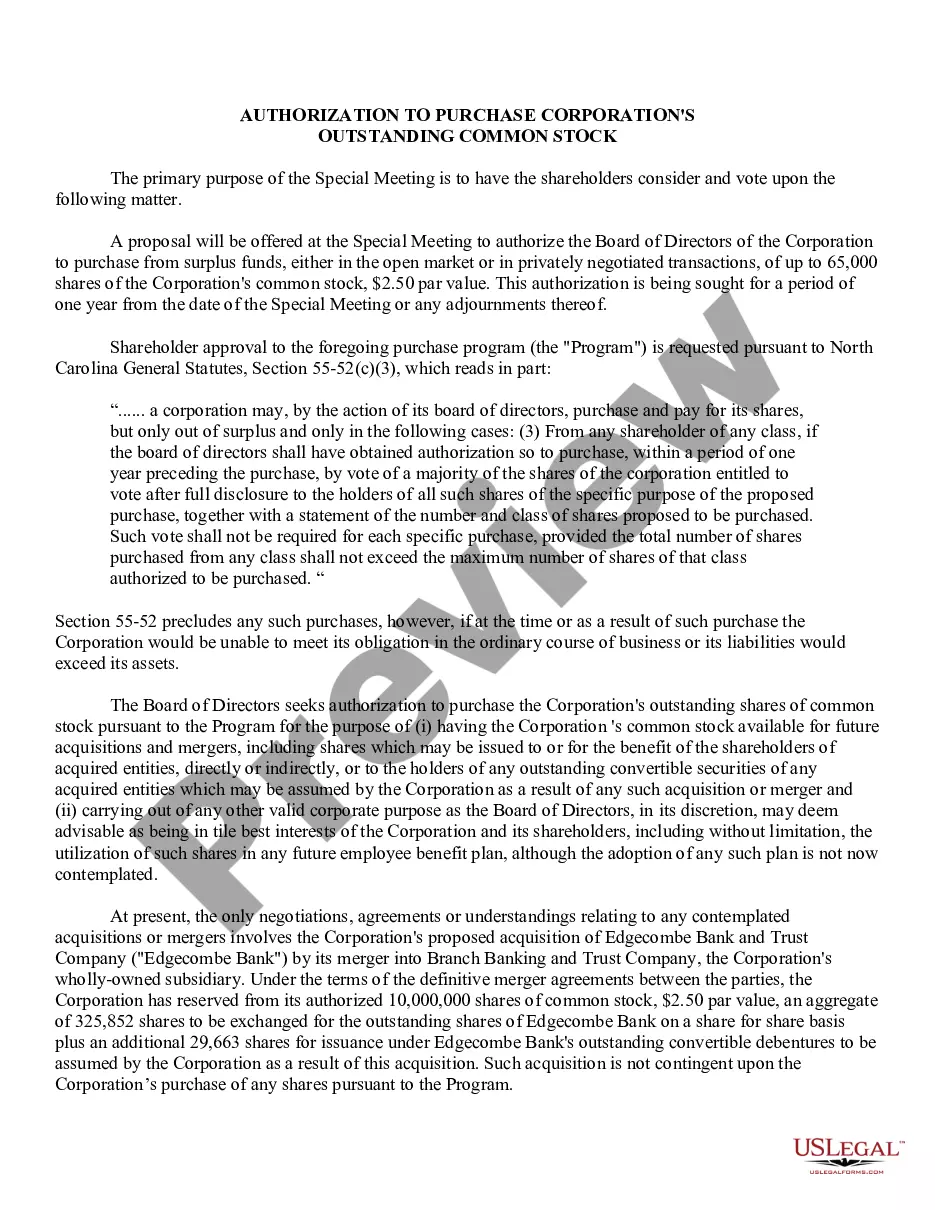
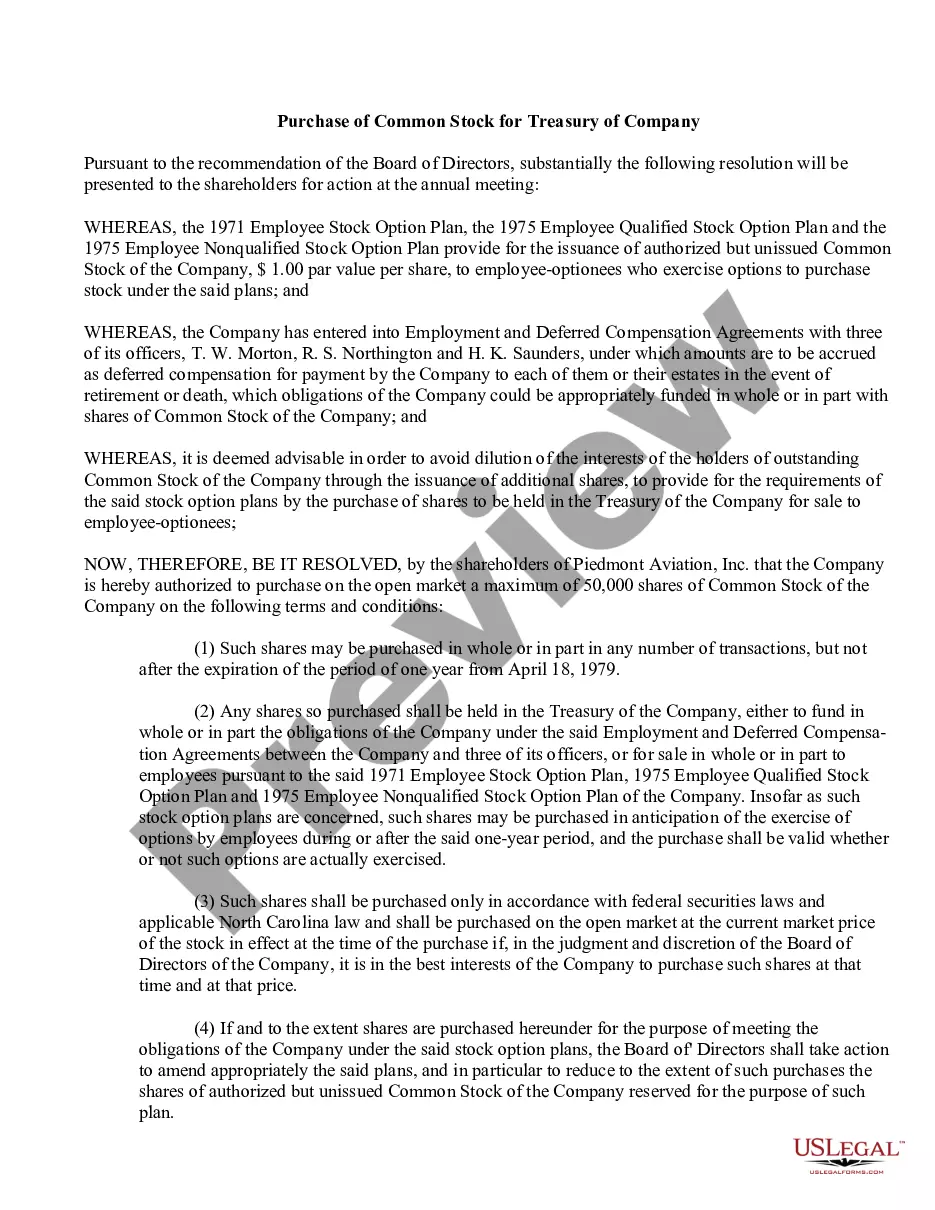
The Purchase by Company of its Stock form is a legal document that outlines the terms and conditions under which a company can buy back its own stock from shareholders. This form is particularly relevant for companies looking to simplify the transaction process for stockholders owning less than 500 shares, allowing them an opportunity to sell their shares back to the company without incurring brokerage fees. Unlike other stock purchase agreements, this form is designed for companies considering voluntary stock buybacks specifically for small shareholders.
Main sections of this form
- Board proposal for stock buyback to shareholders owning less than 500 shares.
- Opinion solicitation from stockholders regarding the proposed purchase.
- Details on the voluntary nature of the offer and requirements for shareholders opting to sell.
- Price determination criteria and timelines established by the Board of Directors.
- Implications of purchasing shares on the company's reporting obligations under securities laws.
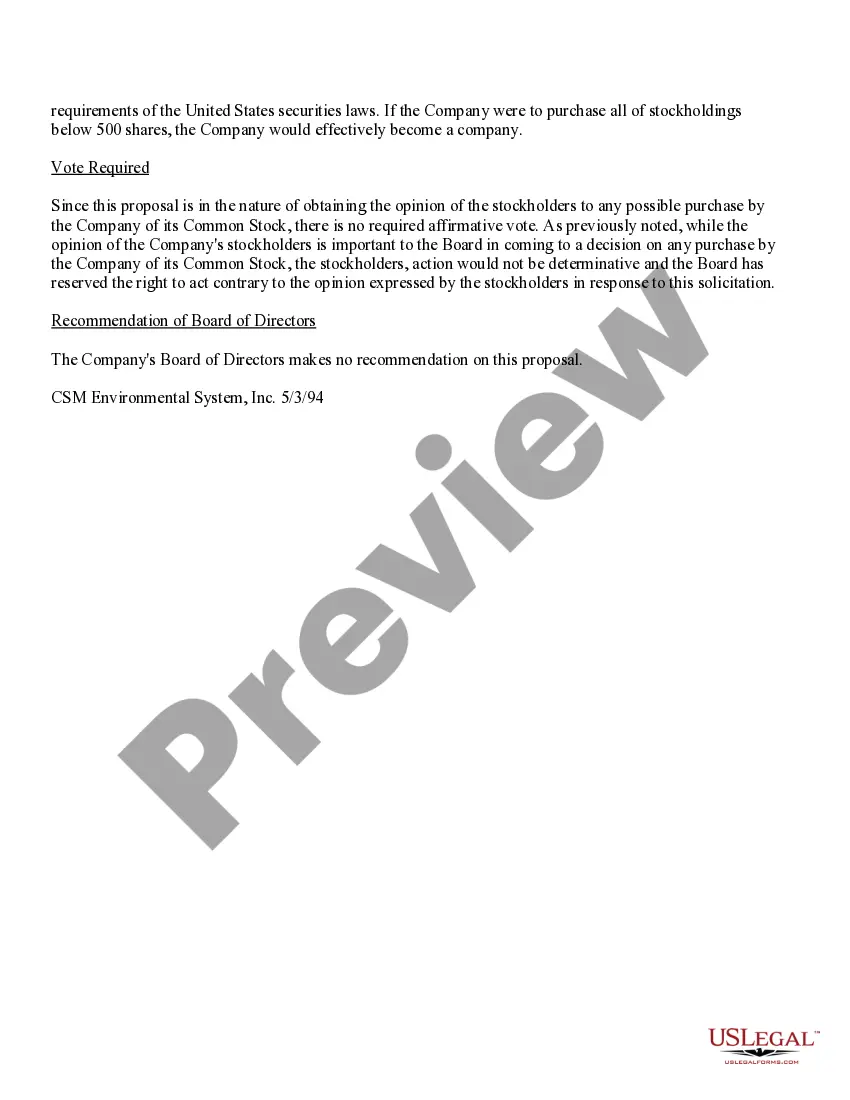
- No required affirmative vote by stockholders regarding the proposal.
Situations where this form applies
This form is used when a company intends to offer to buy back stock from shareholders who hold fewer than 500 shares. It is particularly useful in situations where shareholders are facing difficulty in selling their shares due to limited trading opportunities or when they wish to avoid brokerage commissions and other selling expenses. By utilizing this form, the company and its stockholders can streamline the process and ensure legal compliance during the transaction.
Who this form is for
- Companies looking to repurchase stock from shareholders owning less than 500 shares.
- Board of Directors seeking to gauge stockholder opinions on stock buybacks.
- Shareholders who are interested in selling their shares back to the company.
Completing this form step by step
- Identify the parties involved, including the company and stockholders.
- Review the stock ownership details to ascertain the number of shares held by each stockholder.
- Outline the terms of the buyback, including the share price and the offer period.
- Gather stockholder opinions on the purchase proposal through a survey or direct communication.
- Document the Board's final decision regarding the stock buyback and any necessary disclosures.
Notarization requirements for this form
Notarization is generally not required for this form. However, certain states or situations might demand it. You can complete notarization online through US Legal Forms, powered by Notarize, using a verified video call available anytime.
Get your form ready online
Our built-in tools help you complete, sign, share, and store your documents in one place.
Make edits, fill in missing information, and update formatting in US Legal Forms—just like you would in MS Word.
Download a copy, print it, send it by email, or mail it via USPS—whatever works best for your next step.
Sign and collect signatures with our SignNow integration. Send to multiple recipients, set reminders, and more. Go Premium to unlock E-Sign.
If this form requires notarization, complete it online through a secure video call—no need to meet a notary in person or wait for an appointment.
We protect your documents and personal data by following strict security and privacy standards.

Make edits, fill in missing information, and update formatting in US Legal Forms—just like you would in MS Word.

Download a copy, print it, send it by email, or mail it via USPS—whatever works best for your next step.

Sign and collect signatures with our SignNow integration. Send to multiple recipients, set reminders, and more. Go Premium to unlock E-Sign.

If this form requires notarization, complete it online through a secure video call—no need to meet a notary in person or wait for an appointment.

We protect your documents and personal data by following strict security and privacy standards.
Common mistakes
- Failing to obtain proper stockholder opinions before finalizing the buyback decision.
- Not clearly outlining the terms of the buyback offer, leading to confusion among stockholders.
- Neglecting to comply with local regulatory requirements related to stock repurchases.
- Leaving out important details in the offer, such as price and timeline, which can lead to disputes.
Benefits of completing this form online
- Convenience of downloading and completing the form at any time.
- Editability allows companies to customize the document according to their specific needs.
- Reliability of having a standard legal template drafted by licensed attorneys.
Legal use & context
- This form serves as a foundational document for a company's legal right to repurchase shares from shareholders.
- It may protect the company from potential disputes by clearly defining the terms of the buyback offer.
- The document should be properly executed to uphold its enforceability in a legal context.
Looking for another form?


Form popularity
FAQ
If you are not an employee, you can buy stock from a company directly through either a Direct Stock Purchasing Program (DSPP) or a Dividend Reinvestment Plan (DRIP). By purchasing stock through a DSPP or DRIP, you can bypass brokers and brokerage fees to buy stock directly from your company of choice.
A big advantage of buying stock directly from a company versus a broker is that it's cheap.When you consider opening a DSPP with a company, read the plan brochure or prospectus carefully. There is sometimes a one-time set-up fee and the charges for selling shares are usually higher.
The Shareholders has the Power More than 10 but Less than 25% The overall limit of buy-back is 25% or less of the total paid-up equity capital and free reserves of the company with Approval of Shareholders by General Meeting by Special Resolution.
If you are not an employee, you can buy stock from a company directly through either a Direct Stock Purchasing Program (DSPP) or a Dividend Reinvestment Plan (DRIP). By purchasing stock through a DSPP or DRIP, you can bypass brokers and brokerage fees to buy stock directly from your company of choice.
When one public company buys another, stockholders in the company being acquired will generally be compensated for their shares. This can be in the form of cash or in the form of stock in the company doing the buying. Either way, the stock of the company being bought will usually cease to exist.
A stock buyback, also known as a share repurchase, occurs when a company buys back its shares from the marketplace with its accumulated cash. A stock buyback is a way for a company to re-invest in itself. The repurchased shares are absorbed by the company, and the number of outstanding shares on the market is reduced.
The correct answer is that a buyback of all shares is a liquidation. If there are zero shares, this can only mean the company no longer exists.If the company is undervalued on the market compared to what it can liquidate its net assets for, the shareholders might pursue liquidation.
Choose an order type Placing a "market order," which instructs your broker to buy the stock immediately and at the best available price, is typically the best order type for buy-and-hold investors.
Examples of companies that offer direct stock purchase plans are Walmart, Starbucks, and Coca-Cola. Similar to the brokerage model, investors initiate the direct stock purchase by transferring money from their checking or savings accounts, and the money is used to purchase shares.