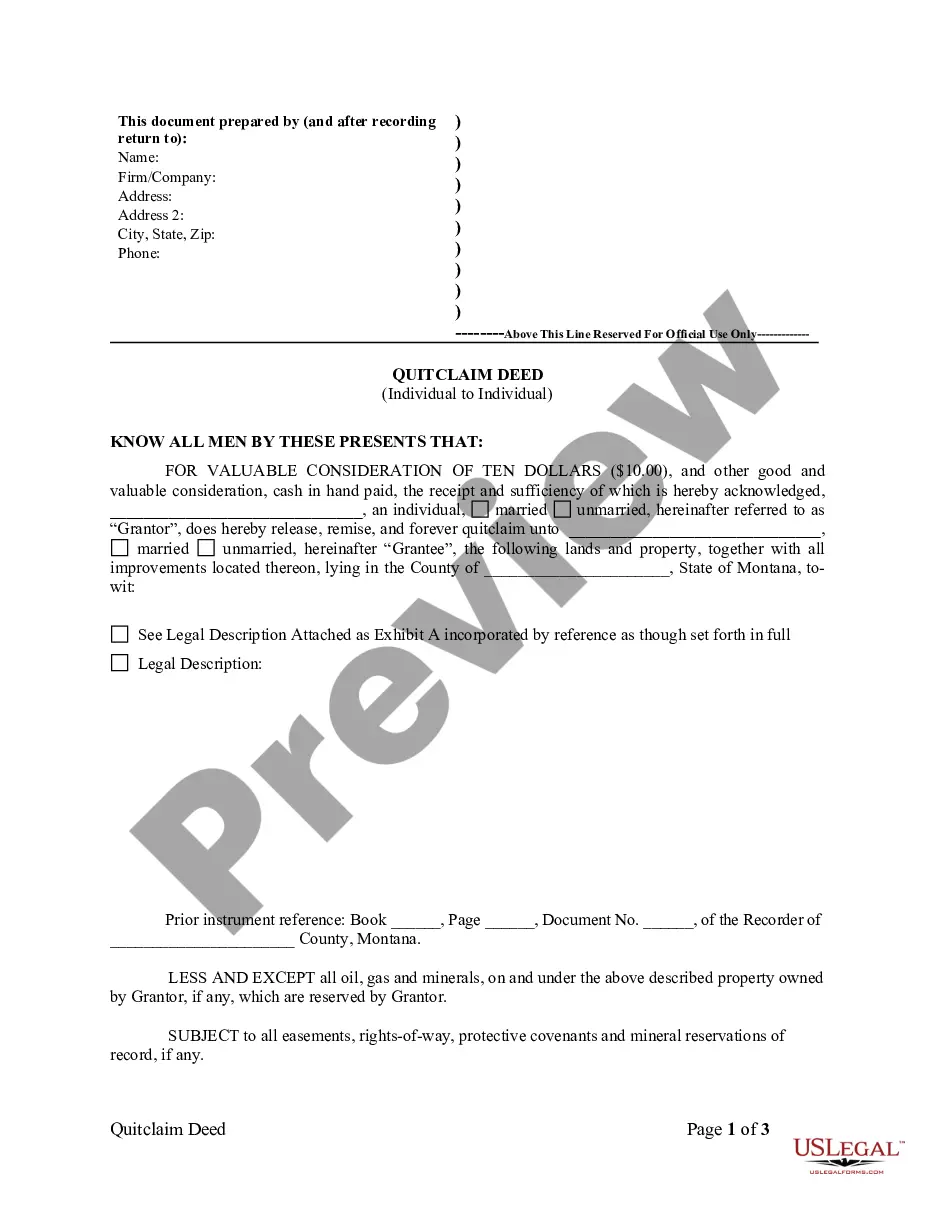
Approval of authorization of preferred stock
Overview of this form
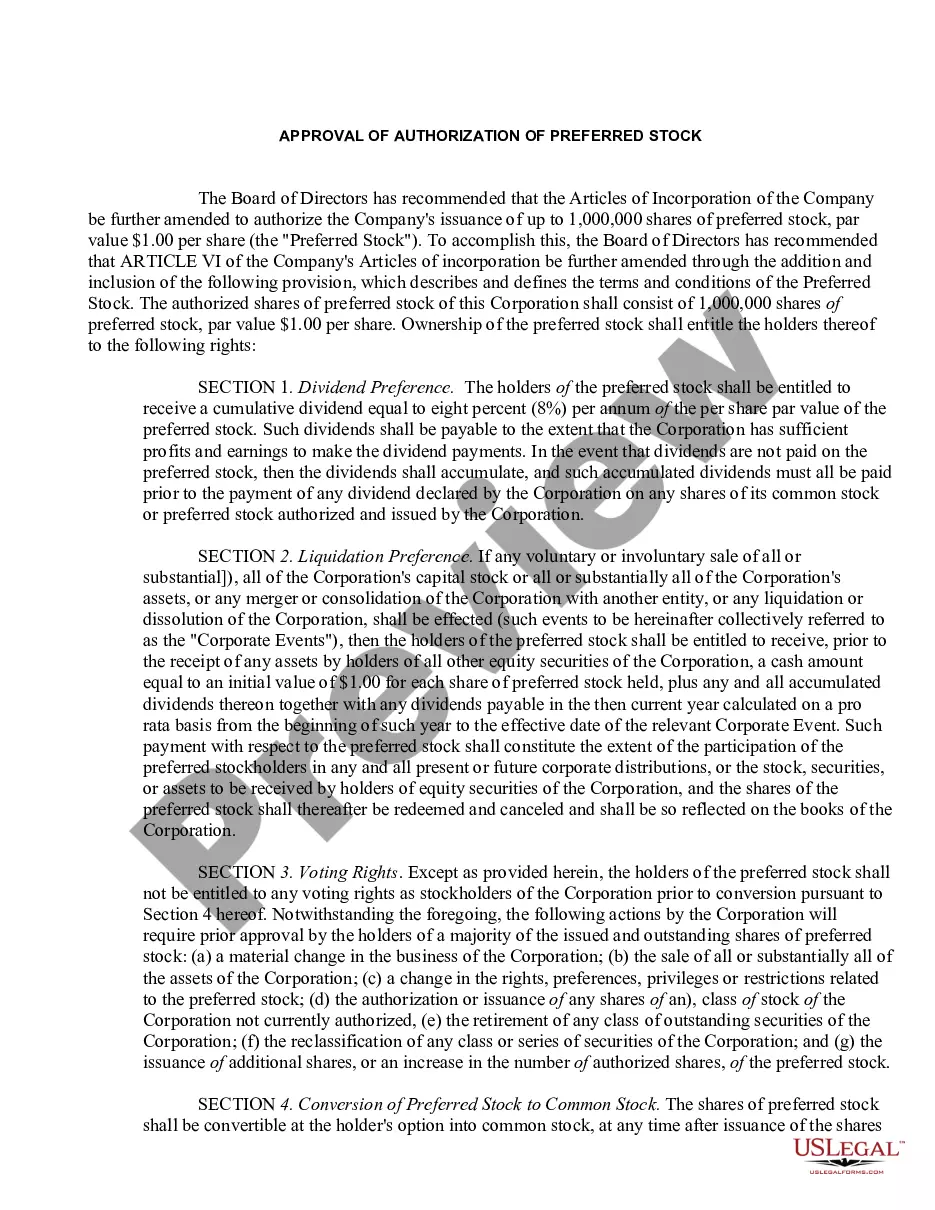
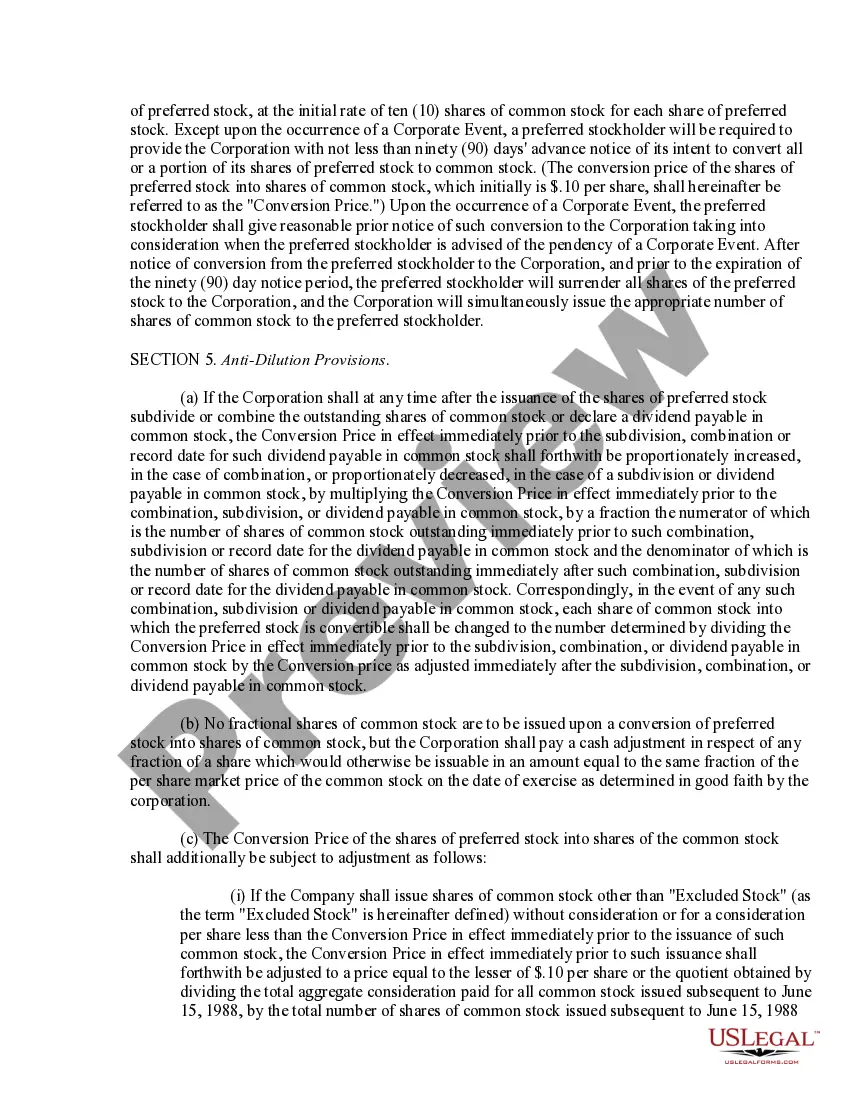
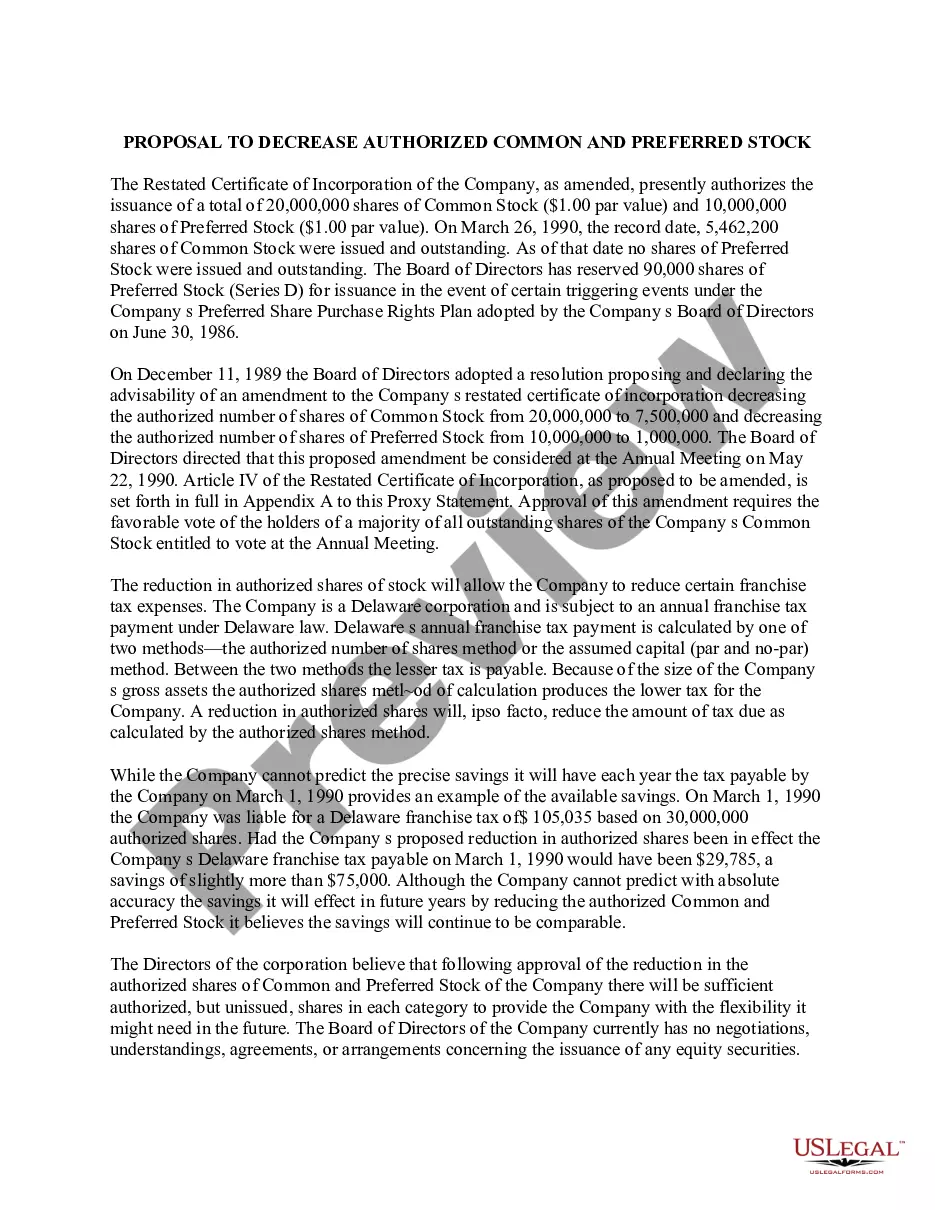
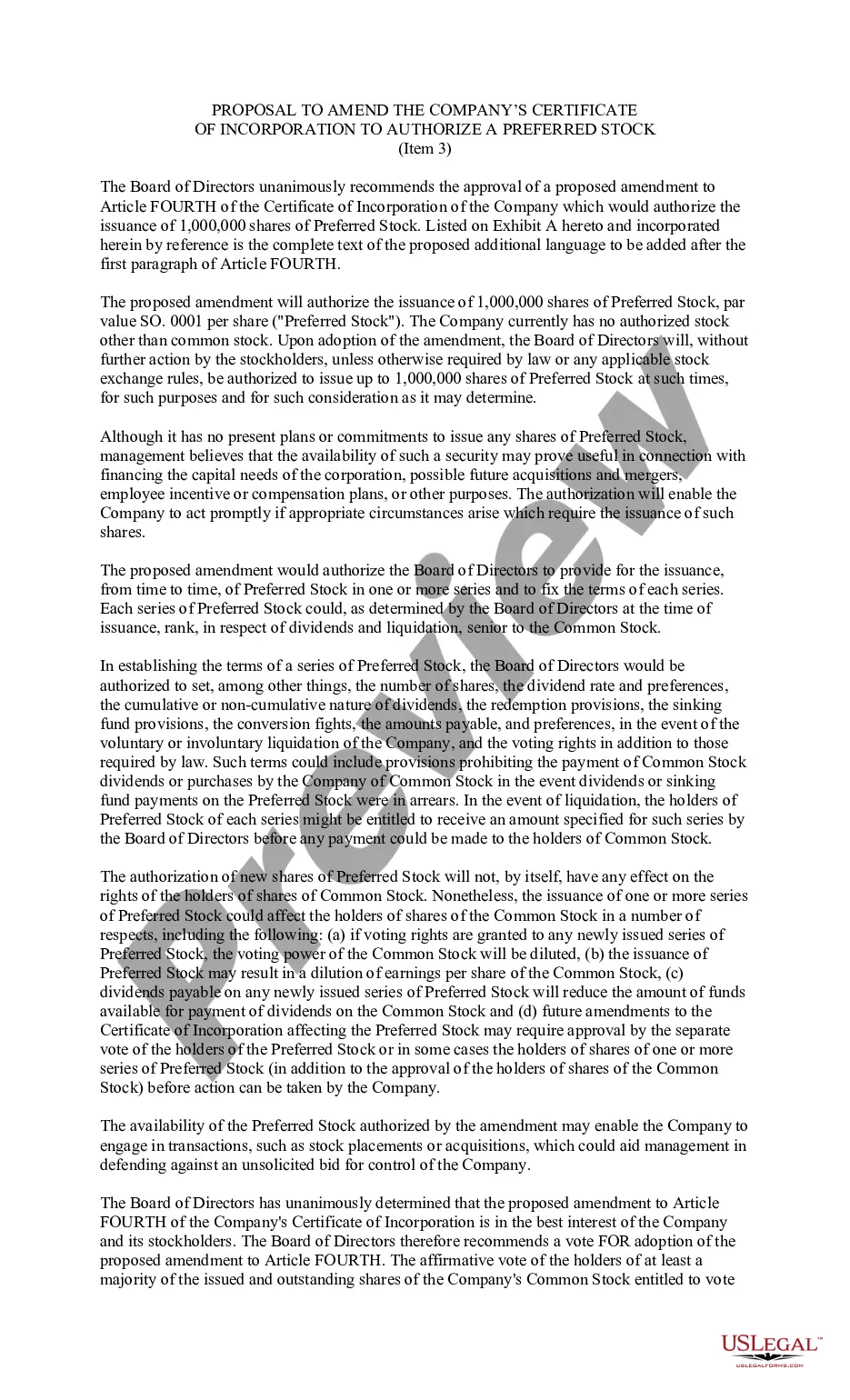
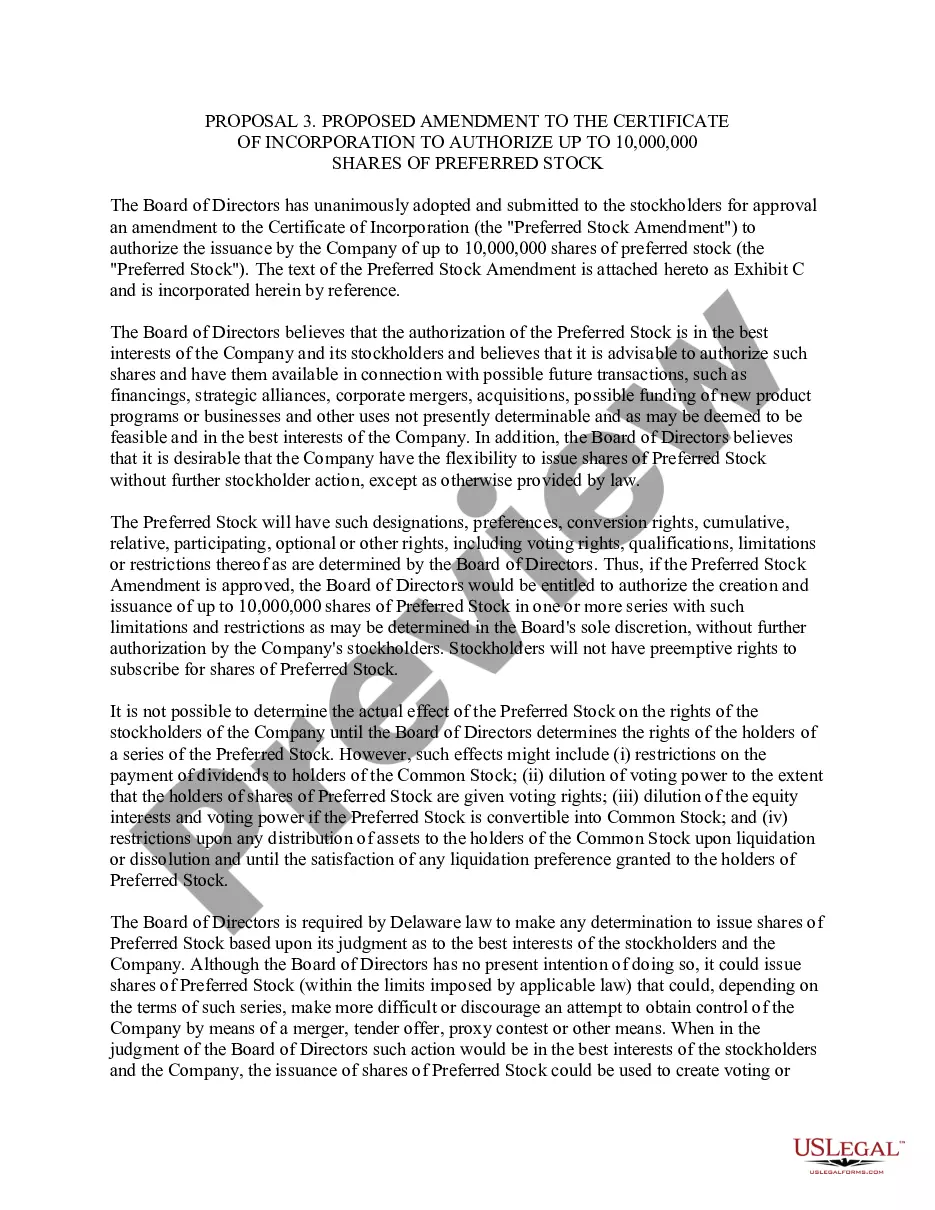
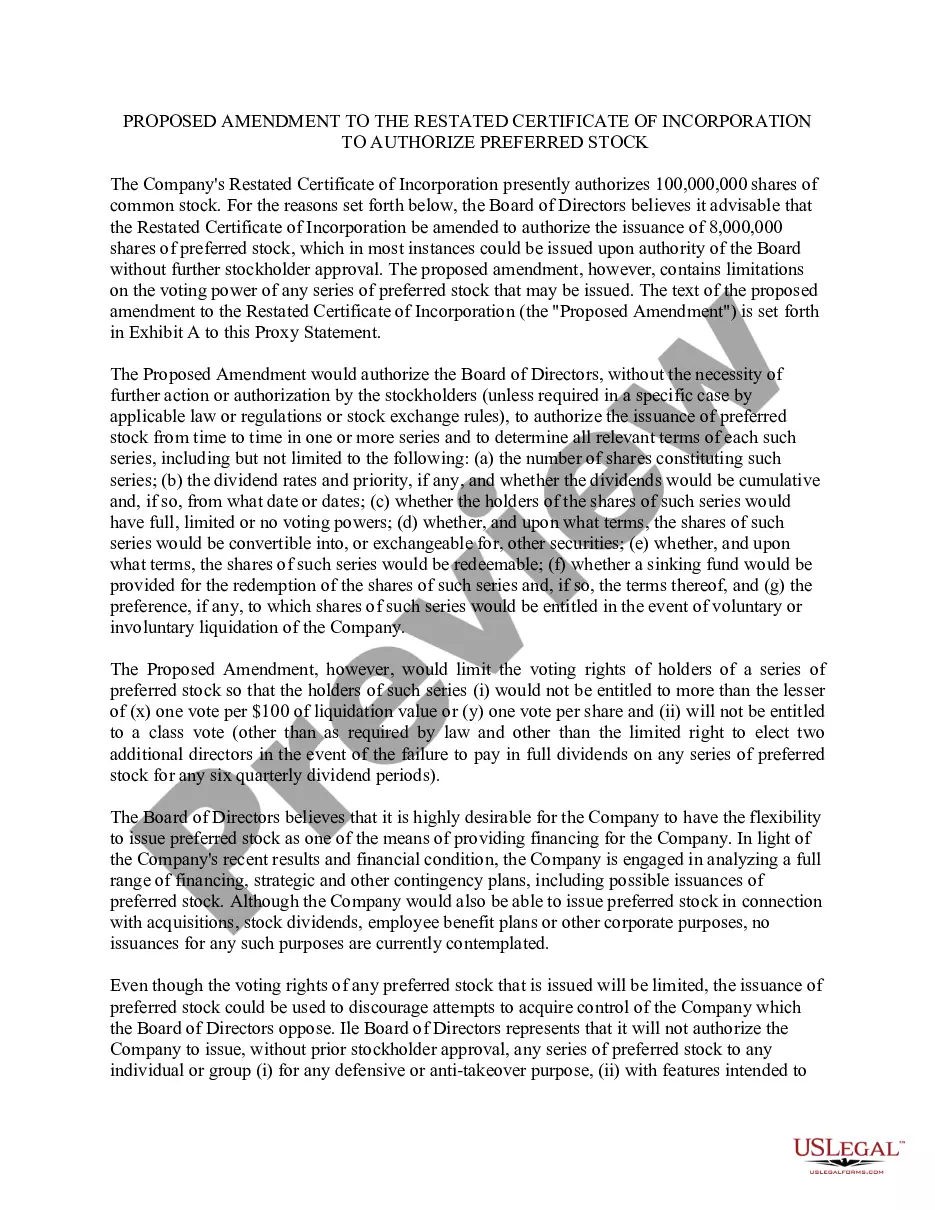
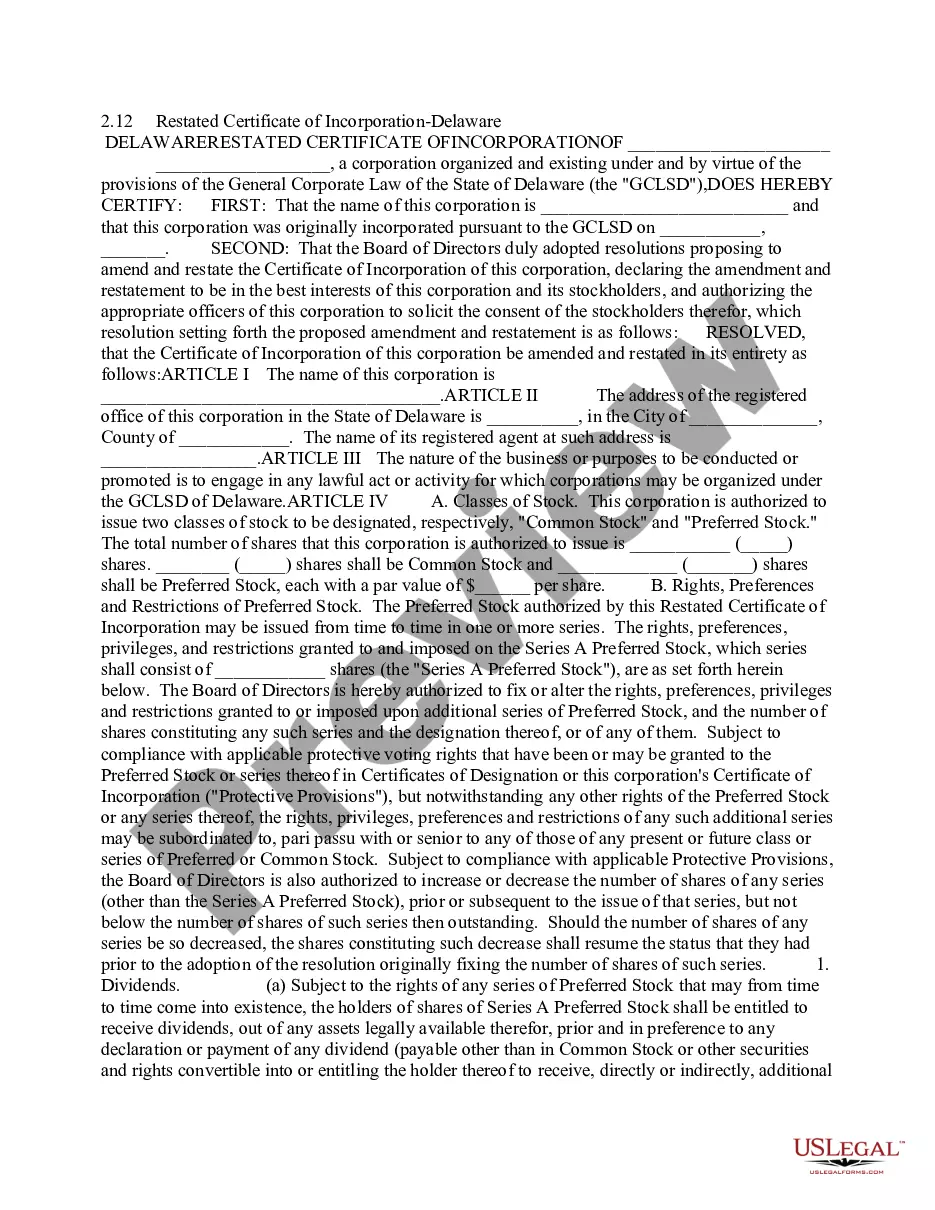
The Approval of Authorization of Preferred Stock form is a legal document used in corporate settings to authorize the issuance of preferred stock shares. This form is essential for corporations seeking to modify their Articles of Incorporation to allow for issuing preferred stock, which comes with specific rights and privileges. Unlike common stock, preferred stock typically grants shareholders dividend preferences and priority in the event of liquidation. This form ensures that all necessary approvals and terms for the preferred stock issuance are clearly outlined, making it a vital tool for corporate governance and finance.
Key parts of this document
- Section 1: Dividend Preference - Outlines the cumulative dividend rate for preferred stockholders.
- Section 2: Liquidation Preference - Details the rights of preferred shareholders in liquidation scenarios.
- Section 3: Voting Rights - Specifies the voting rights (or lack thereof) for preferred stockholders.
- Section 4: Conversion of Preferred Stock - Describes the process for converting preferred shares into common stock.
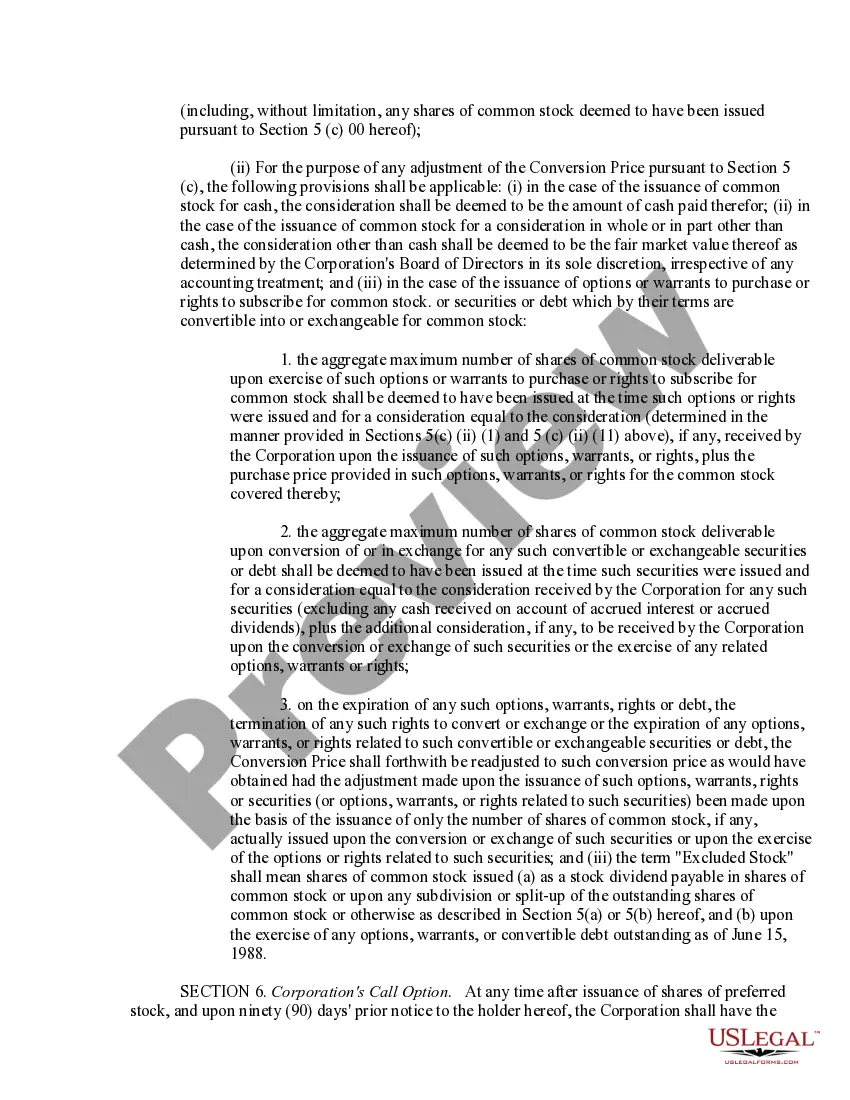
- Section 5: Anti-Dilution Provisions - Establishes safeguards for preferred stockholders against dilution of their shares.
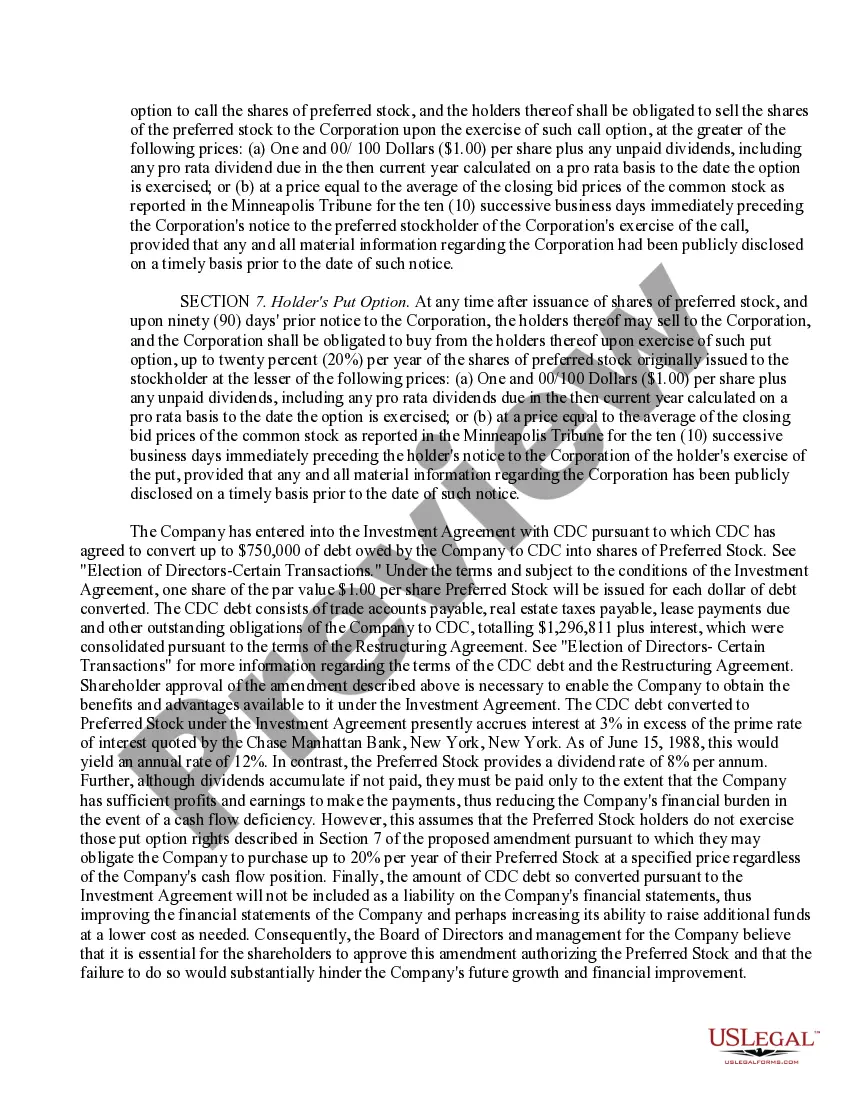
- Section 6: Corporation's Call Option - Outlines the corporation's right to buy back preferred shares after giving notice.
- Section 7: Holders Put Option - Describes the rights of preferred shareholders to sell their shares back to the corporation.

When this form is needed
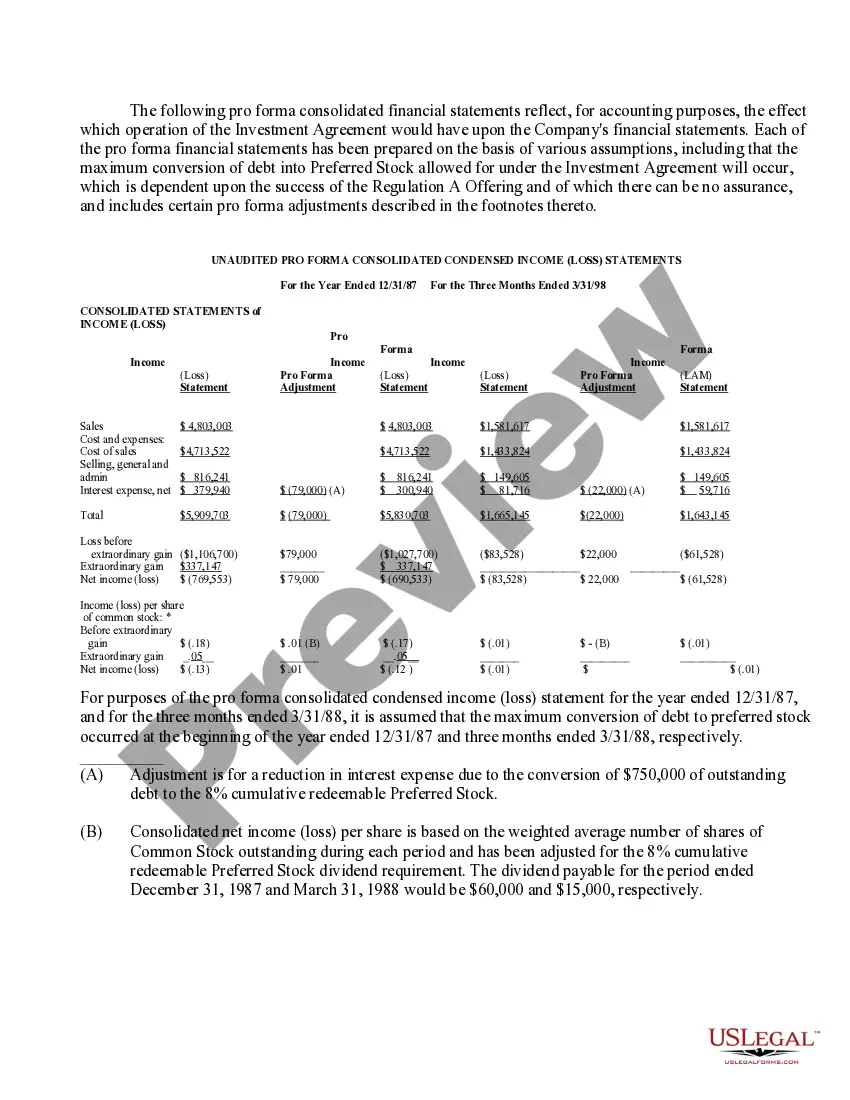
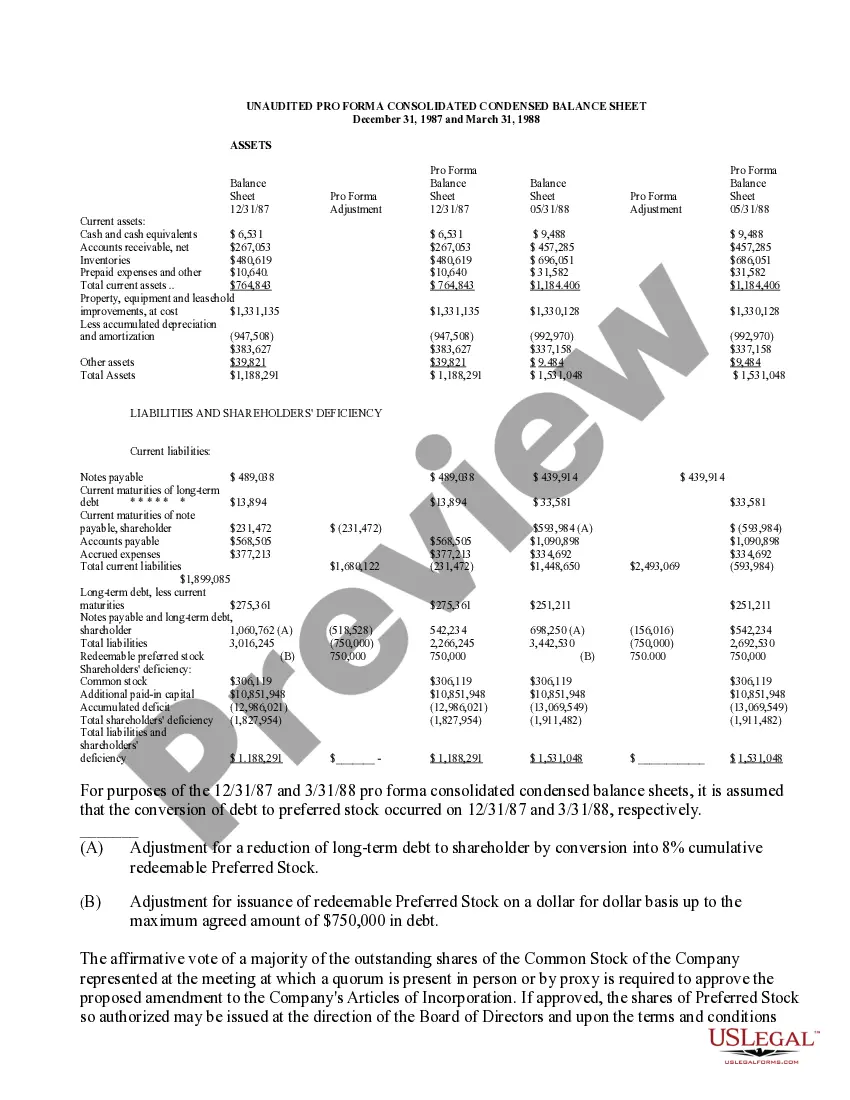
This form should be utilized when a corporation intends to authorize the issuance of preferred stock to raise capital. It is particularly useful in scenarios where the company has outstanding debts it wishes to convert into equity, as in the case of agreements with investors. Corporations may also use this form when they have strategic reasons to create a class of stock that offers certain rights, such as priority dividends or liquidation preferences. If your corporation is considering making structural changes to how it raises funds or compensates investors, this form is crucial.
Who needs this form
- Corporations seeking to raise capital through preferred stock.
- Financial officers or directors who manage corporate restructuring.
- Legal professionals involved in corporate governance.
- Shareholders and investors interested in understanding their rights regarding preferred stock.
Instructions for completing this form
- Identify the corporation and state the legal name as it appears in the Articles of Incorporation.
- Specify the number of shares authorized for issuance and the par value per share.
- Detail the rights, preferences, and privileges associated with the preferred stock.
- Include the voting rights provisions and under what circumstances they may apply.
- Obtain necessary approvals from the Board of Directors and shareholders as required by corporate bylaws.
- File the amended Articles of Incorporation with the appropriate state authorities.
Is notarization required?
In most cases, this form does not require notarization. However, some jurisdictions or signing circumstances might. US Legal Forms offers online notarization powered by Notarize, accessible 24/7 for a quick, remote process.
Get your form ready online
Our built-in tools help you complete, sign, share, and store your documents in one place.
Make edits, fill in missing information, and update formatting in US Legal Forms—just like you would in MS Word.
Download a copy, print it, send it by email, or mail it via USPS—whatever works best for your next step.
Sign and collect signatures with our SignNow integration. Send to multiple recipients, set reminders, and more. Go Premium to unlock E-Sign.
If this form requires notarization, complete it online through a secure video call—no need to meet a notary in person or wait for an appointment.
We protect your documents and personal data by following strict security and privacy standards.

Make edits, fill in missing information, and update formatting in US Legal Forms—just like you would in MS Word.

Download a copy, print it, send it by email, or mail it via USPS—whatever works best for your next step.

Sign and collect signatures with our SignNow integration. Send to multiple recipients, set reminders, and more. Go Premium to unlock E-Sign.

If this form requires notarization, complete it online through a secure video call—no need to meet a notary in person or wait for an appointment.

We protect your documents and personal data by following strict security and privacy standards.
Mistakes to watch out for
- Failing to specify the rights of preferred stockholders clearly.
- Not obtaining the required shareholder approval before filing.
- Overlooking the need for accurate par value assignment.
- Neglecting to include provisions for conversion and anti-dilution clauses.
Benefits of completing this form online
- Convenience of downloading and editing the form at your own pace.
- Access to professionally drafted templates ensuring legal compliance.
- Time efficiency in completing corporate documentation online without waiting for in-person appointments.
- Securely store and access your forms anytime, streamlining the filing process.
Legal use & context
- Amending the Articles of Incorporation is a legal requirement in many states for the issuance of preferred stock.
- This form serves as a record of corporate actions and decisions regarding equity offerings.
- Corporations must ensure compliance with state regulations to maintain the enforceability of preferred stock agreements.
Looking for another form?










Form popularity
FAQ
Par value is the term that applies to all stock, whether it is Authorized, Issued, Treasury, or Outstanding.
How many shares should be authorized in the certificate of incorporation? I usually advise companies to authorize around 10 to 15 million shares of common stock. Around 8 or 9 million shares are issued to founders with a 1 million to 2 million share option pool, for a fully-diluted base of around 10 million shares.
Authorised shares are units of ownership in the company available to be issued to shareholders. Issued shares are the units of ownership already issued to shareholders.No par value means that there is no standard value attached to the shares.
Authorized stock is the maximum number of shares a company can issue.Issued stock is what the company has issued, which is less than the authorized stock. Each share of common stock represents an ownership interest, which is the ratio of the shares you hold to the outstanding shares.
However, a company commonly has the right to increase the amount of stock it's authorized to issue through approval by its board of directors. Also, along with the right to issue more shares for sale, a company has the right to buy back existing shares from stockholders.
Authorized stock refers to the maximum number of shares a publicly-traded company can issue, as specified in its articles of incorporation or charter. Those shares which have already been issued to the public, known as outstanding shares, make up some portion of a company's authorized stock.
If you know the number of shares issued and unissued, or those authorized but not sold to shareholders, you can calculate authorized shares: shares authorized = shares issued + shares unissued.