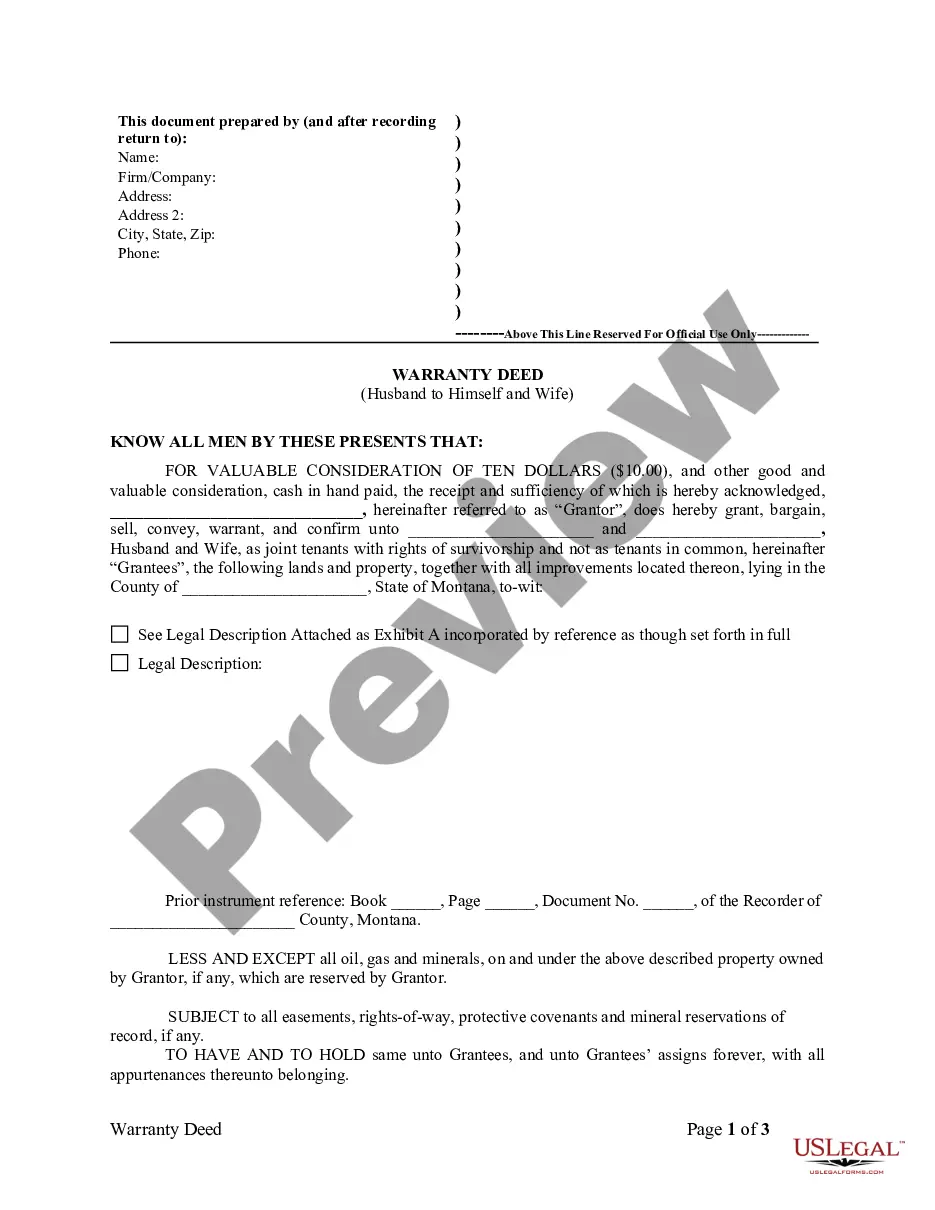
Elimination of the Class A Preferred Stock
What is this form?
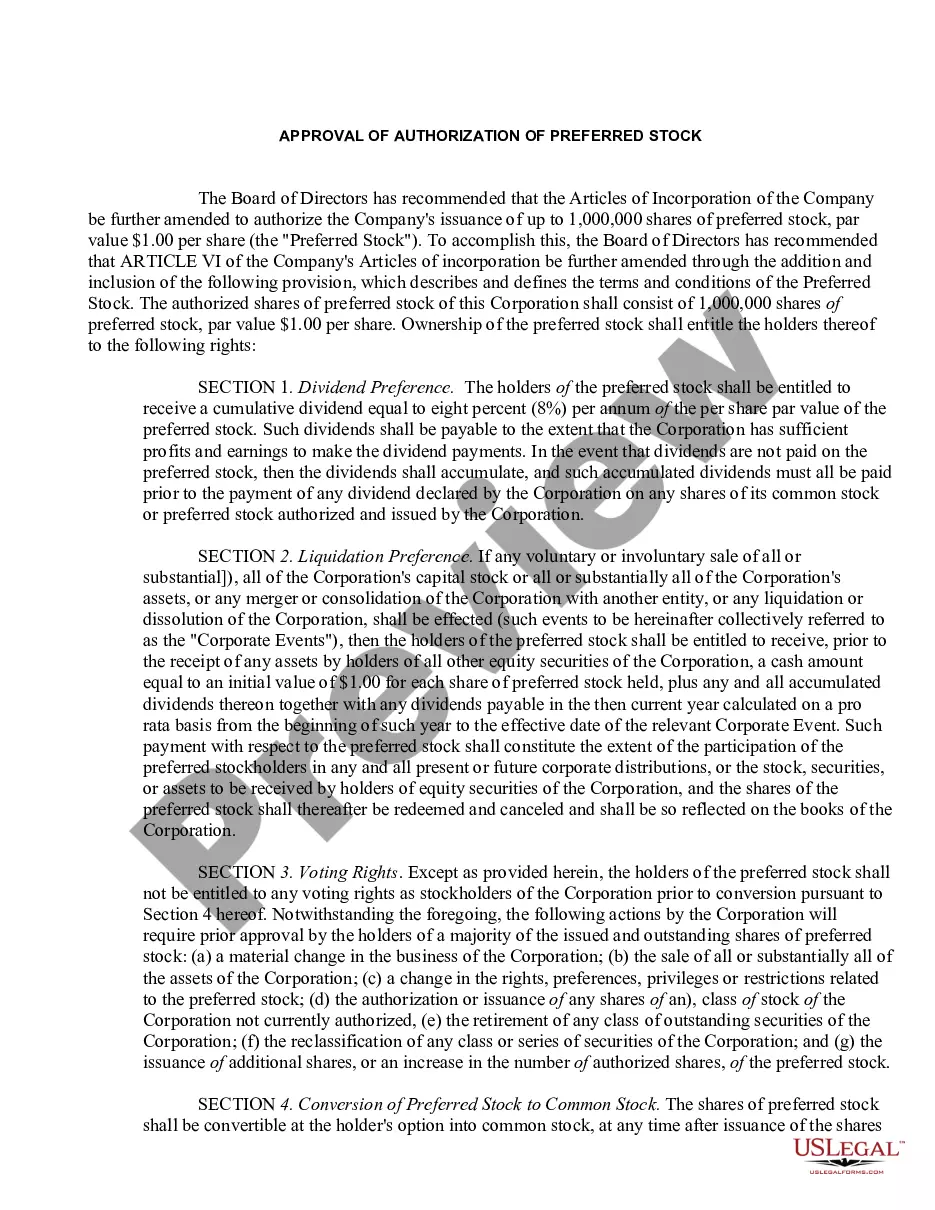
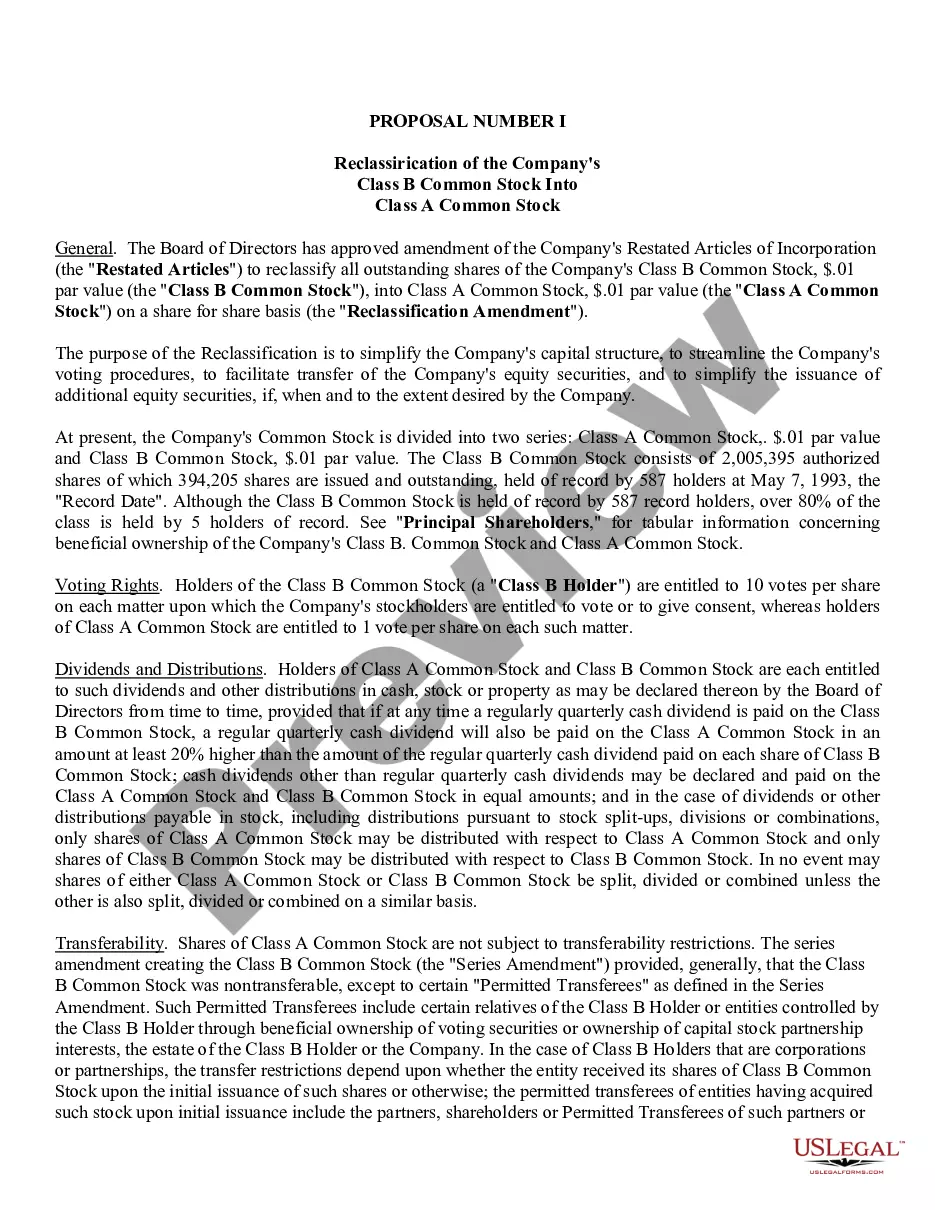
The Elimination of the Class A Preferred Stock is a legal document used in corporate matters to formally remove Class A Preferred Stock from a company's articles of incorporation. This form is distinct from other corporate governance documents because it specifically addresses the elimination of a particular class of stock, rather than creating or altering rights associated with it. It is essential for companies that have determined that the Class A Preferred Stock is no longer necessary for their operations or equity structure.
Form components explained
- Statement of the company's authorized capital stock, including Common and Class A Preferred Stock
- Details on the redemption of outstanding Class A Preferred Stock
- Voting rights and limitations associated with Class A Preferred Stock holders
- Requirements for amending the articles of incorporation to eliminate Class A Preferred Stock
- Recommendation from the Board of Directors to shareholders regarding the proposal
- Required approvals and voting thresholds for the elimination
Situations where this form applies
This form should be used when a corporation decides to eliminate its Class A Preferred Stock due to various reasons, such as the absence of outstanding shares or the limited rights associated with this stock class. Companies may find it necessary to streamline their capital structure or to avoid complications in future financing or corporate actions related to potential shares of Class A Preferred Stock.
Who needs this form
- Corporate officers and directors facilitating corporate governance changes
- Shareholders who wish to understand implications of eliminating preferred stock
- Legal professionals advising corporations on stock-related decisions
Completing this form step by step
- Review the companyâs current articles of incorporation and stock structure.
- Fill in details about the companyâs authorized capital stock and the Class A Preferred Stock.
- Include a statement detailing the reasons for the elimination of Class A Preferred Stock.
- Confirm the voting requirements and include a recommendation from the Board of Directors.
- Prepare the document for distribution to shareholders for voting approval.
Notarization guidance
This form does not typically require notarization unless specified by local law. It is advisable to check with your legal counsel regarding notarization requirements specific to your jurisdiction to ensure compliance with all legal standards.
Get your form ready online
Our built-in tools help you complete, sign, share, and store your documents in one place.
Make edits, fill in missing information, and update formatting in US Legal Forms—just like you would in MS Word.
Download a copy, print it, send it by email, or mail it via USPS—whatever works best for your next step.
Sign and collect signatures with our SignNow integration. Send to multiple recipients, set reminders, and more. Go Premium to unlock E-Sign.
If this form requires notarization, complete it online through a secure video call—no need to meet a notary in person or wait for an appointment.
We protect your documents and personal data by following strict security and privacy standards.

Make edits, fill in missing information, and update formatting in US Legal Forms—just like you would in MS Word.

Download a copy, print it, send it by email, or mail it via USPS—whatever works best for your next step.

Sign and collect signatures with our SignNow integration. Send to multiple recipients, set reminders, and more. Go Premium to unlock E-Sign.

If this form requires notarization, complete it online through a secure video call—no need to meet a notary in person or wait for an appointment.

We protect your documents and personal data by following strict security and privacy standards.
Common mistakes
- Failing to provide sufficient justification for the elimination of Class A Preferred Stock.
- Not adhering to the required voting thresholds, which may differ by jurisdiction.
- Neglecting to inform shareholders adequately about the implications of this decision.
Advantages of online completion
- Convenience of accessing and downloading the form at any time.
- Editability to customize the form according to specific corporate needs.
- Reliability of having a document drafted by licensed attorneys based on current legal standards.
Key takeaways
- The Elimination of the Class A Preferred Stock form is crucial for corporate restructuring.
- It outlines the historical context and eliminates unnecessary stock classifications.
- Approval requires a favorable vote from two-thirds of outstanding shares.
- Consulting local regulations ensures compliance and proper enactment.
Looking for another form?







Form popularity
FAQ
In finance, a class A share refers to a share classification of common or preferred stock that typically has enhanced benefits with respect to dividends, asset sales, or voting rights compared to Class B or Class C shares.In a class A share, the sales load is up front, typically at most 5.75% of the amount invested.
Most preferred shares will have a stated redemption or liquidation value. A company that issues preferred shares may not want to keep paying dividends indefinitely, so it will have the option of buying back the shares at a fixed price.
If the buyout is an all-cash deal, shares of your stock will disappear from your portfolio at some point following the deal's official closing date and be replaced by the cash value of the shares specified in the buyout. If it is an all-stock deal, the shares will be replaced by shares of the company doing the buying.
When more than one class of stock is offered, companies traditionally designate them as Class A and Class B, with Class A carrying more voting rights than Class B shares. Class A shares may offer 10 voting rights per stock held, while class B shares offer only one.
Although preferred stock ETFs offer some benefits, there are also risks to consider before investing. Share prices of preferred stocks often fall when interest rates move higher because of increased competition from interest-bearing securities that are deemed safer, like Treasury bonds.
When a company is bought out by an individual or another company, the purchaser will usually take possession of all of the common or voting stock of that company.As preferred shares are generally not voting shares, it is not necessary that the purchaser redeem or buy them out when taking over a company.
After a preferred shareholder converts their shares, they give up their rights as a preferred shareholder (no fixed dividend or higher claim on assets) and become a common shareholder (ability to vote and participate in share price declines and rises).
A callable preferred stock issue offers the flexibility to lower the issuer's cost of capital if interest rates decline or if it can issue preferred stock later at a lower dividend rate.The proceeds from the new issue can be used to redeem the 7% shares, resulting in savings for the company.