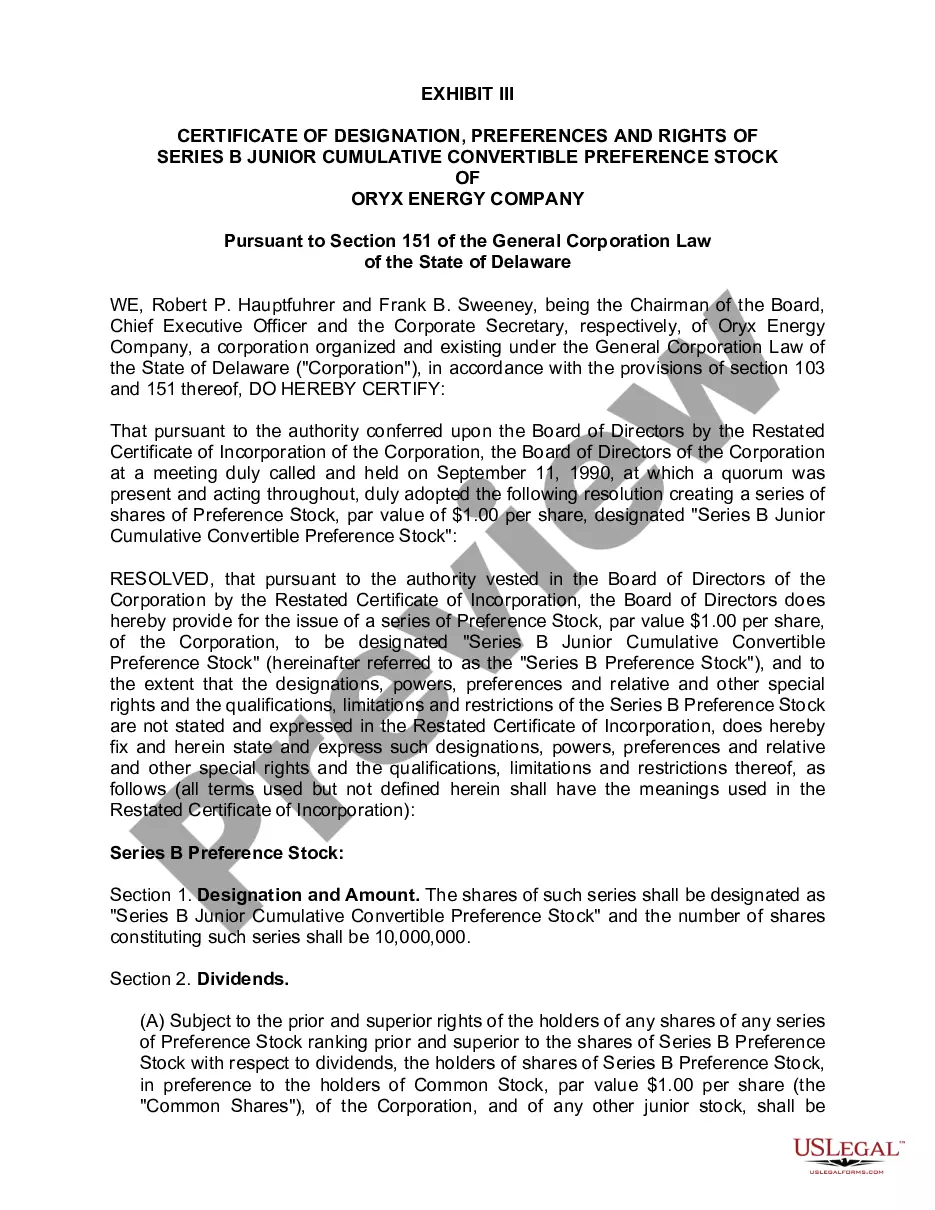
Certificate of designation, preferences and rights of Series A junior cumulative preference stock of Oryx Energy Company
What is this form?
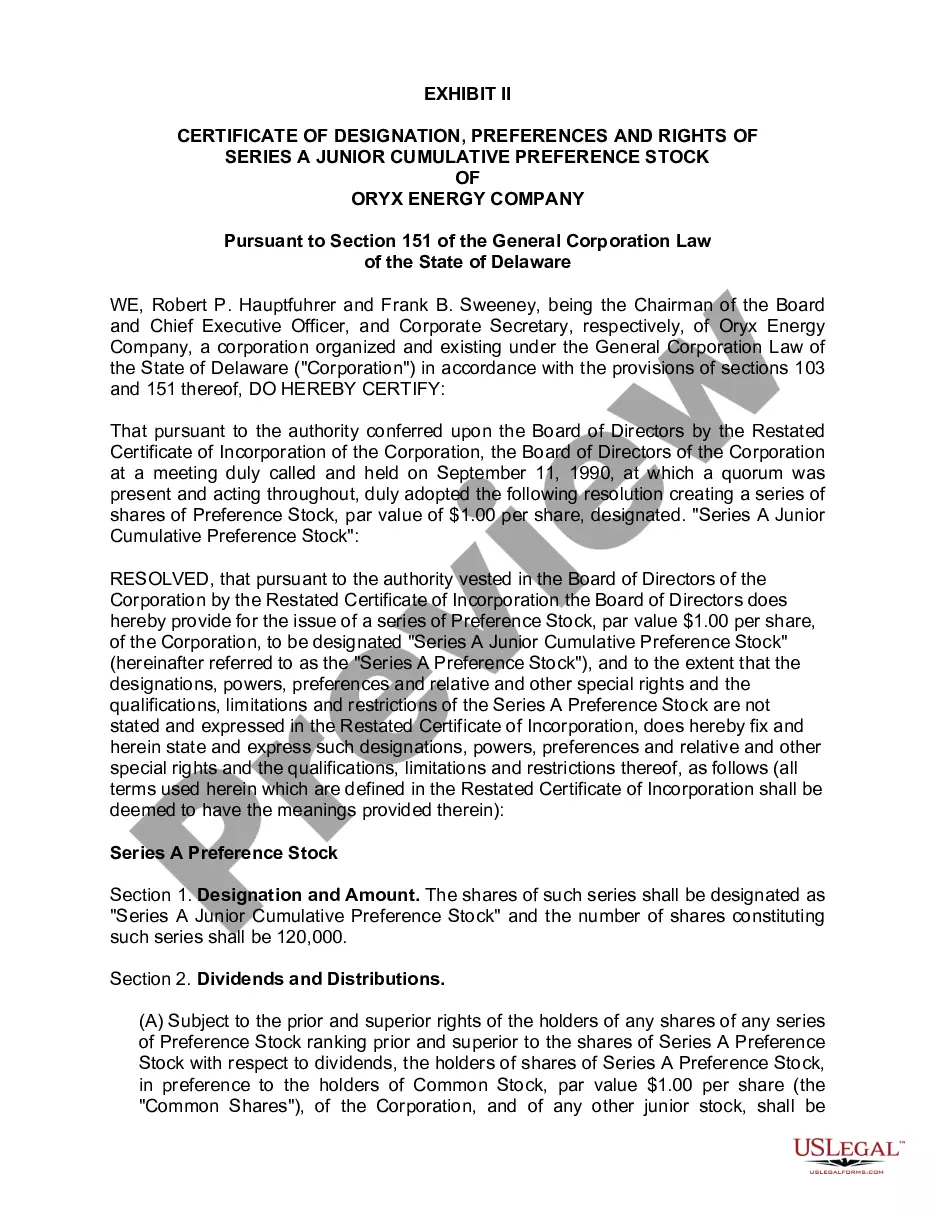
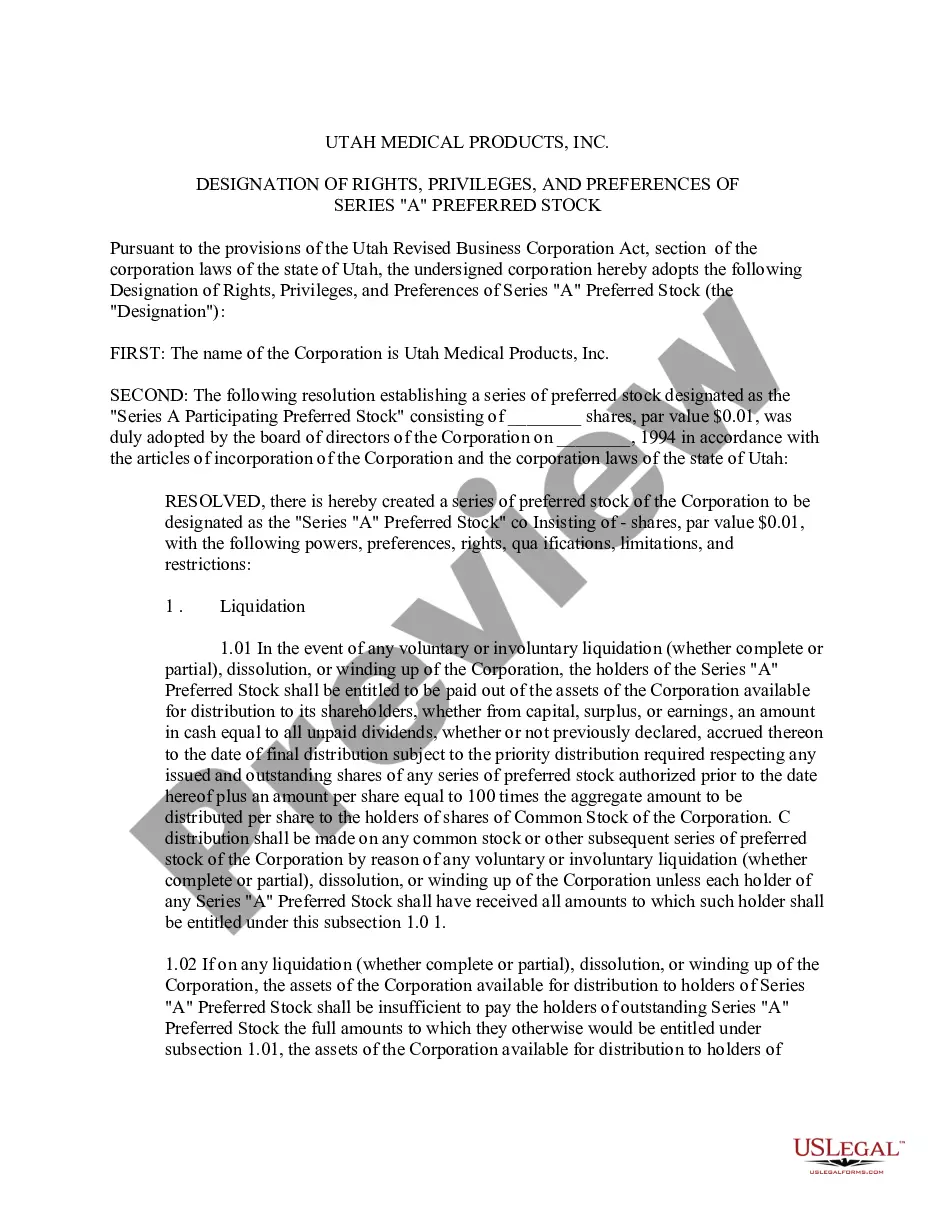
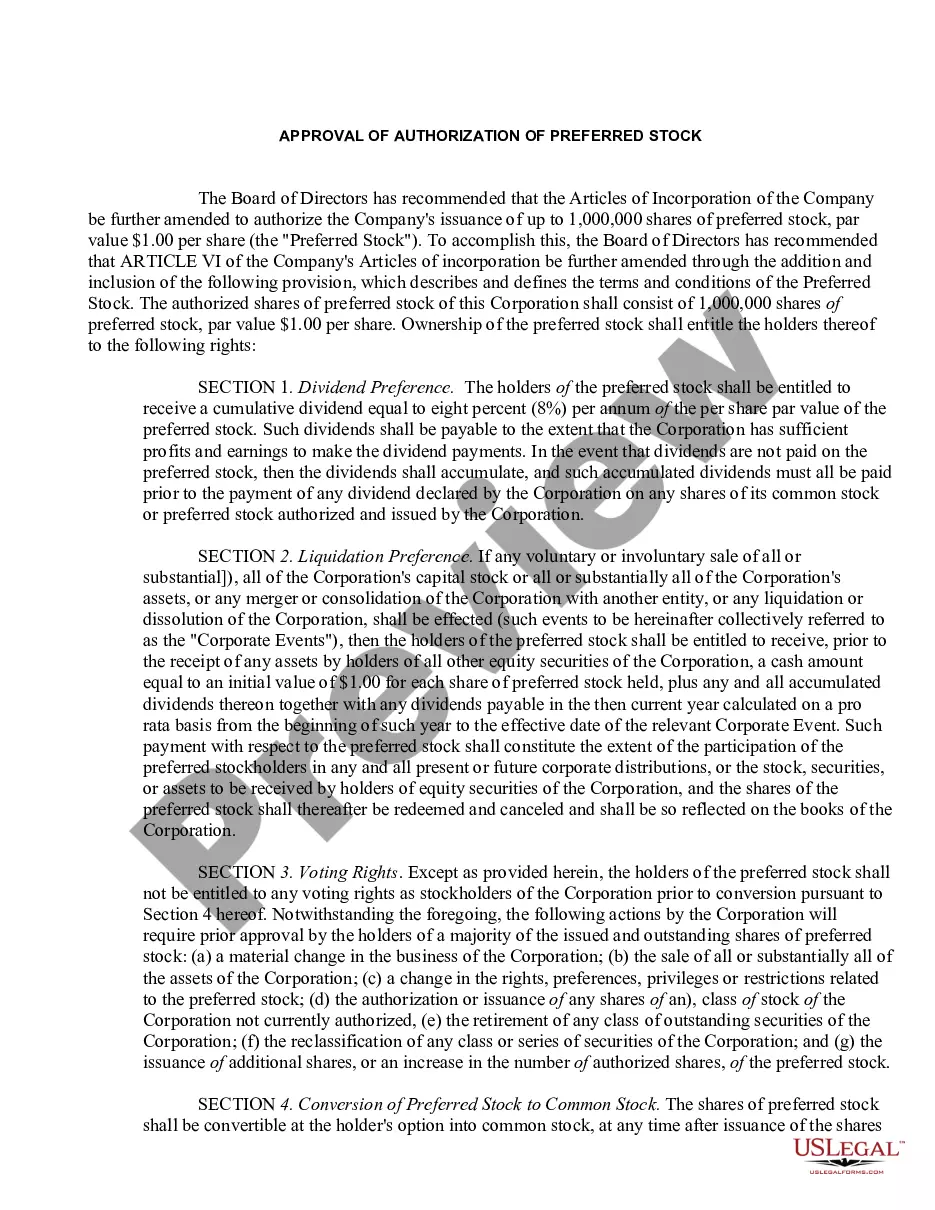
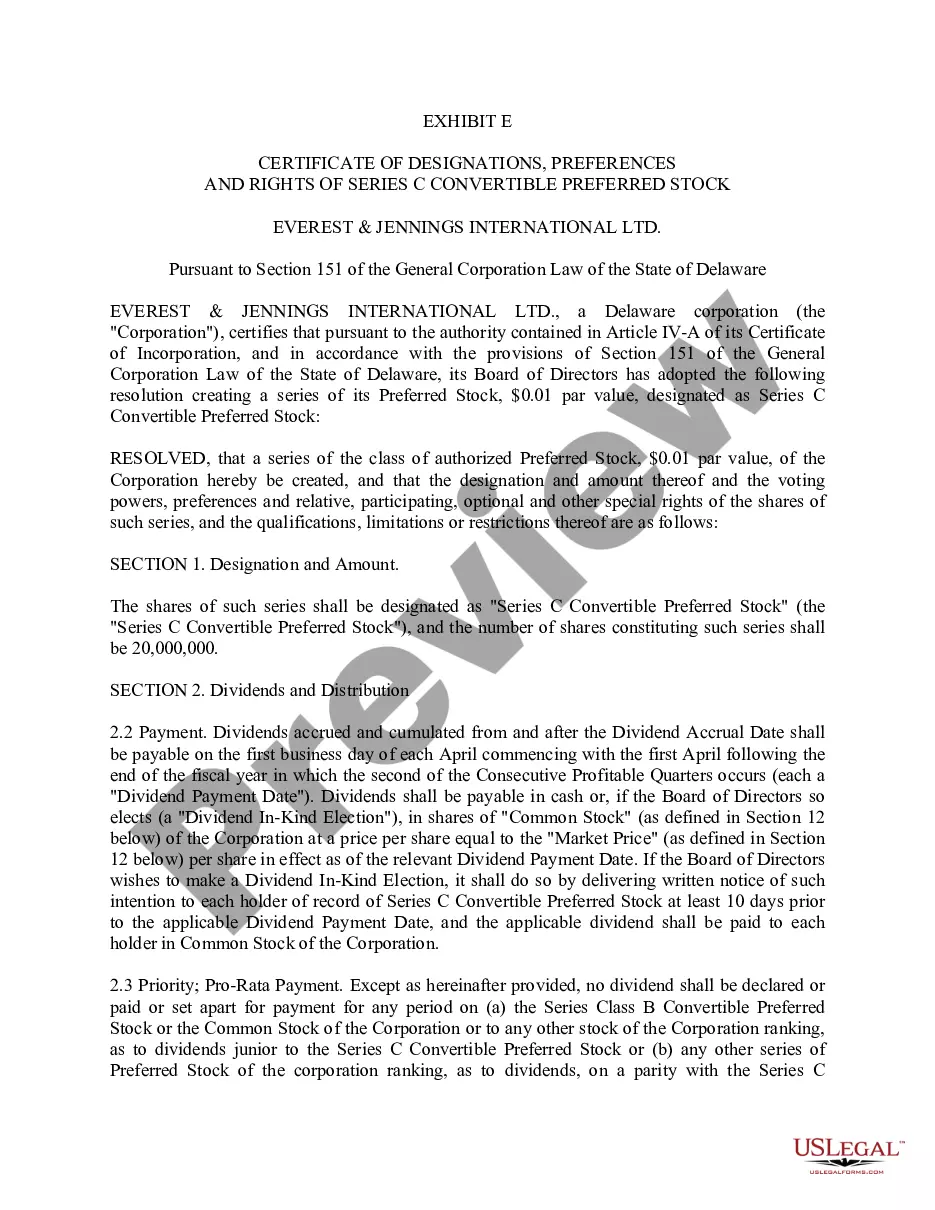
The Certificate of Designation, Preferences and Rights of Series A Junior Cumulative Preference Stock is a critical document used in corporate law. This form establishes specific rights, preferences, and restrictions for a newly created series of preference stock within a corporation. Unlike common stock, preference stock typically comes with preferential treatment in dividend payments and during liquidation events, making this form essential for companies looking to attract investors while managing their capital structure effectively.
Form components explained
- Designation and amount of the Series A Junior Cumulative Preference Stock.
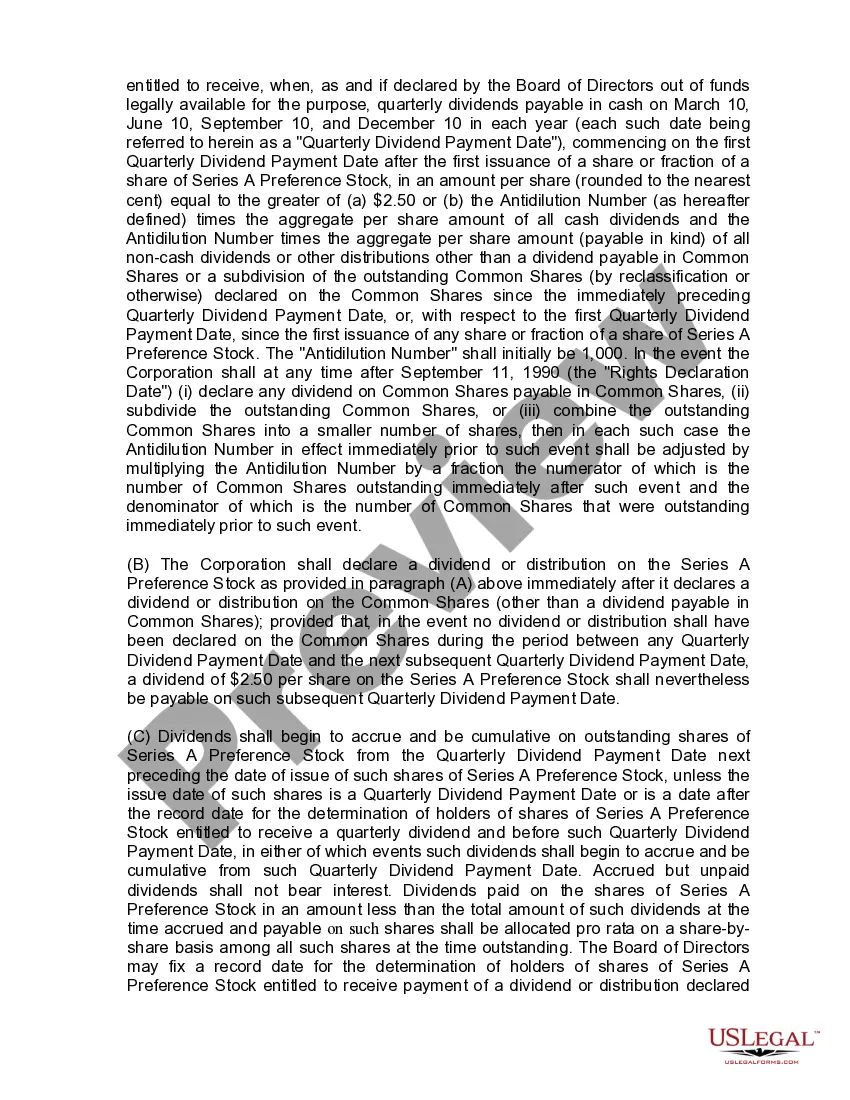
- Details on dividends and distributions including payment schedules and calculations.
- Voting rights assigned to the holders of this type of stock.
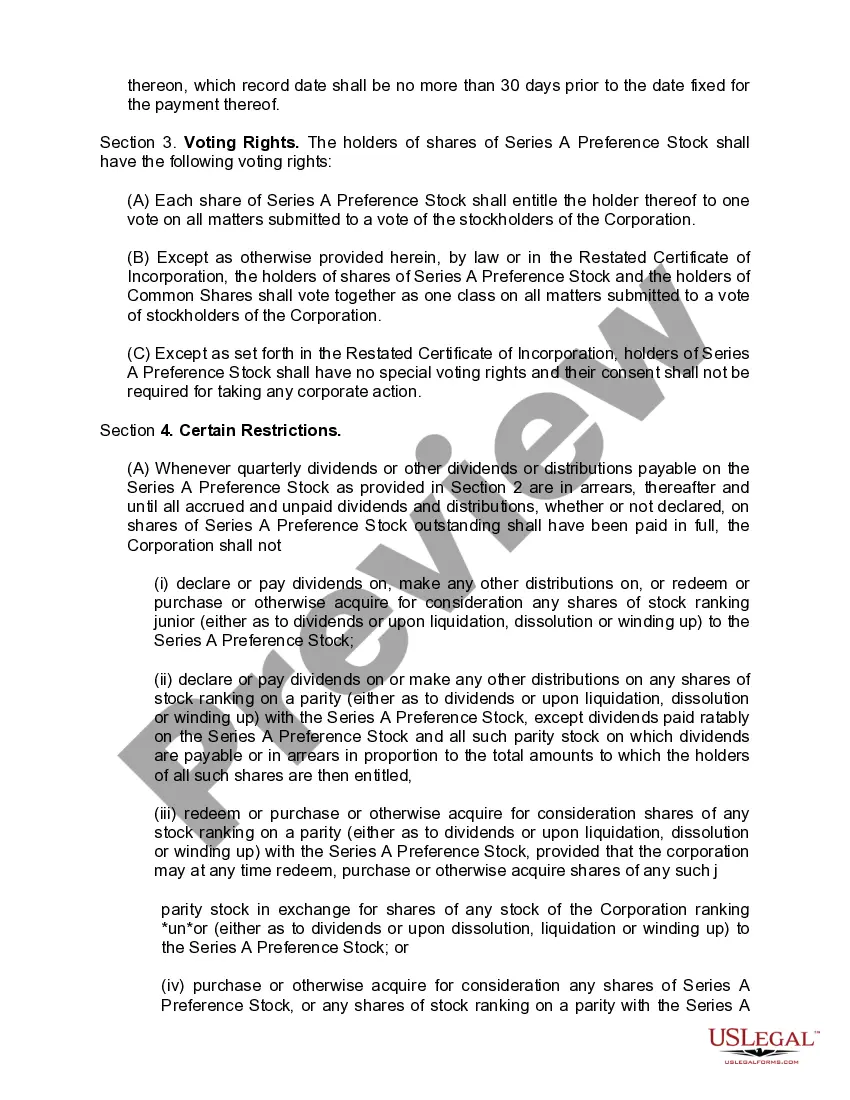
- Restrictions on certain corporate actions if dividends are in arrears.
- Terms for the treatment of reacquired shares and related corporate policies.
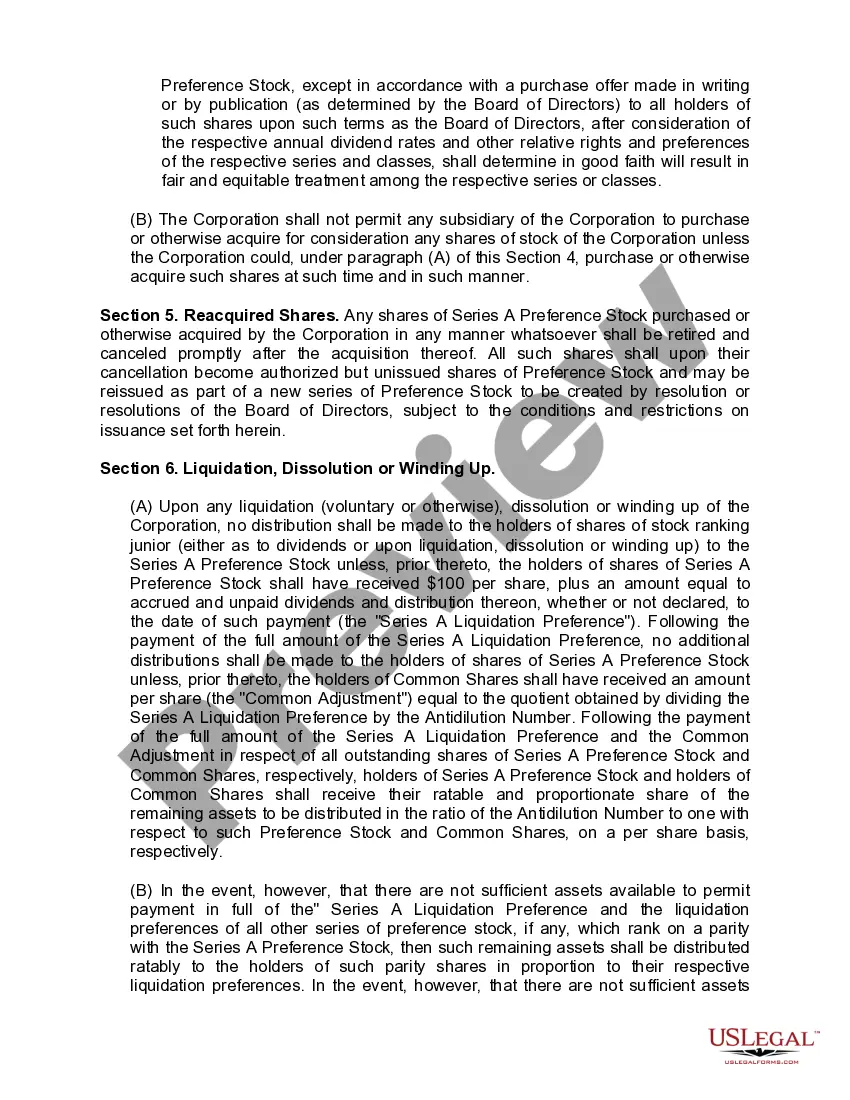
- Liquidation preferences outlining the order of payment in case of company dissolution.

When this form is needed
This form should be used when a corporation decides to create a new series of preference stock, like Series A Junior Cumulative Preference Stock. It is essential in situations where a corporation looks to clearly outline the rights of stockholders, especially regarding dividends and liquidation priorities. Use this form to ensure legal compliance and proper governance in modifying stock structures.
Who can use this document
- Corporate executives and board members involved in capital structuring.
- Legal professionals advising corporations on stock issuance.
- Investors interested in understanding the rights associated with preference stock.
- Corporations looking to document specific stock rights and preferences clearly.
How to complete this form
- Identify the corporation and the specific series of preference stock being created.
- Specify the number of shares to be designated as Series A Junior Cumulative Preference Stock.
- Detail the terms regarding dividends, including payment dates and calculation methods.
- Outline any voting rights associated with these shares.
- Include clauses addressing potential corporate restrictions should dividends go unpaid.
- Ensure the document is signed by the required corporate officers and dated appropriately.
Notarization guidance
Notarization is not commonly needed for this form. However, certain documents or local rules may make it necessary. Our notarization service, powered by Notarize, allows you to finalize it securely online anytime, day or night.
Get your form ready online
Our built-in tools help you complete, sign, share, and store your documents in one place.
Make edits, fill in missing information, and update formatting in US Legal Forms—just like you would in MS Word.
Download a copy, print it, send it by email, or mail it via USPS—whatever works best for your next step.
Sign and collect signatures with our SignNow integration. Send to multiple recipients, set reminders, and more. Go Premium to unlock E-Sign.
If this form requires notarization, complete it online through a secure video call—no need to meet a notary in person or wait for an appointment.
We protect your documents and personal data by following strict security and privacy standards.

Make edits, fill in missing information, and update formatting in US Legal Forms—just like you would in MS Word.

Download a copy, print it, send it by email, or mail it via USPS—whatever works best for your next step.

Sign and collect signatures with our SignNow integration. Send to multiple recipients, set reminders, and more. Go Premium to unlock E-Sign.

If this form requires notarization, complete it online through a secure video call—no need to meet a notary in person or wait for an appointment.

We protect your documents and personal data by following strict security and privacy standards.
Mistakes to watch out for
- Failing to include specific dividend terms or the correct payment schedule.
- Not accounting for the voting rights or restrictions on corporate actions effectively.
- Omitting necessary signatures from corporate officers, or not dating the form correctly.
Why complete this form online
- Convenient access to the form that can be downloaded and customized to fit specific corporate needs.
- Editability allows corporations to easily adjust terms as needed for their unique circumstances.
- Reliable legal language drafted by licensed attorneys ensures compliance with corporate law.
Looking for another form?
Form popularity
FAQ
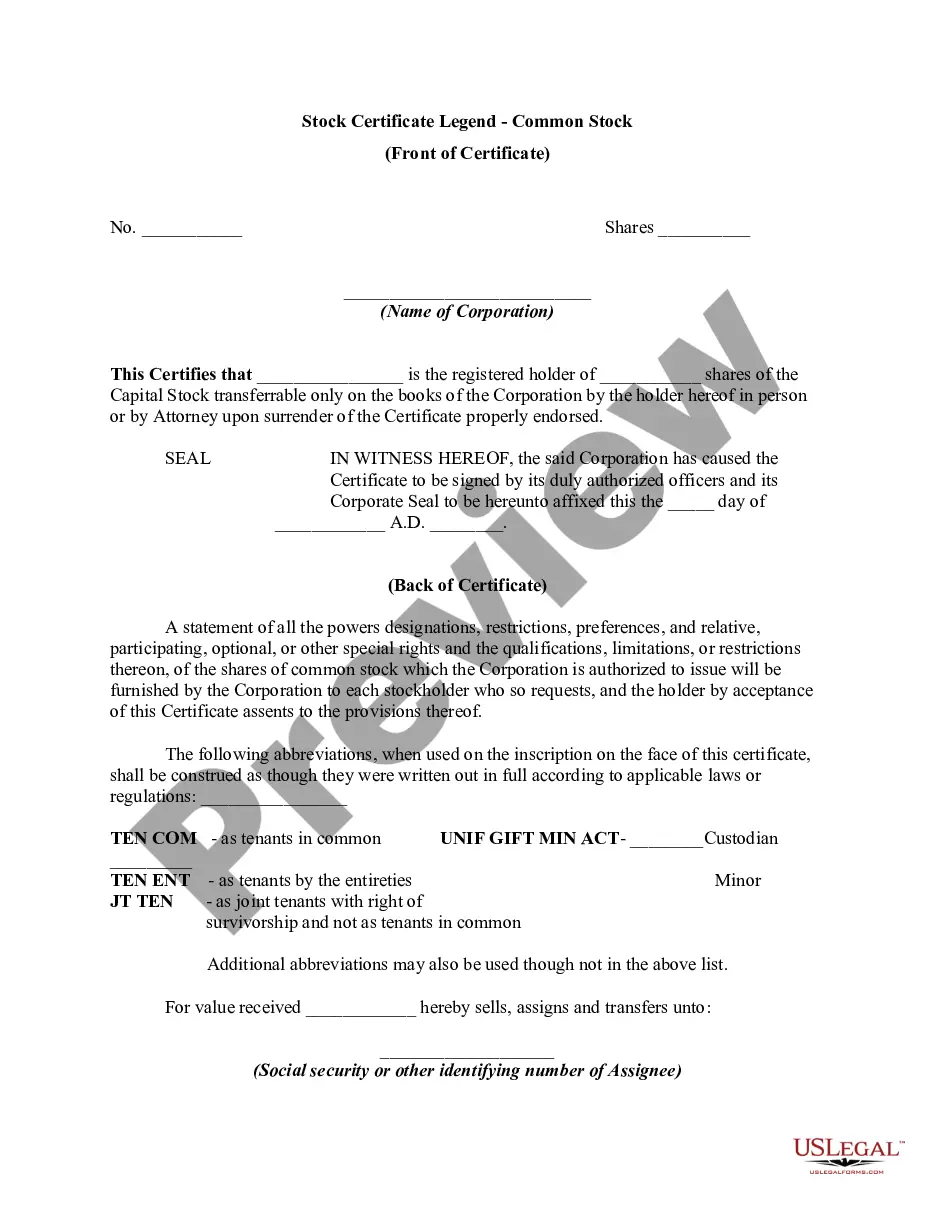
Issuing Stock Certificates A stock certificate is a piece of paper that shows that the investor owns shares in the company. Stock certificate paper is a paper record that shows the investor owns the shares and how many shares the investor owns.The company then mails the certificates to the investors.
Locate the Company. The first step is making sure the company is still in business. Find the CUSIP Number. The secretary of state's office in the state of incorporation must be listed on the stock certificate. Contact the Transfer Agent. Complete the Transfer Form. Place an Order. Keep Old Certificates.
Old stock certificates shouldn't be simply thrown away. They can still have value if they represent an existing or merged company, or if they are valued as collectibles. A little bit of research can help you determine the worth, if any, of your old paper stock certificate.
Certificated stock generally refers to commodity inventory that has been inspected by qualified representatives and determined to be of basis grade for use in futures market trading.In some instances, certificated stock may also refer to share certificates issued by corporations for their shares.
Some companies no longer issue paper stock certificates. However, when you own shares in a corporation that still provides them, you can be issued paper stocks.If the company offers a direct stock purchase plan, you might want to make your investment using this service.
You can sell your shares directly to the transfer agent. If you have possession of the stock certificates, you'll need to sign them and send them to the transfer agent, along with whatever paperwork the agent needs. You'll probably have to include a fee, although some agents may perform this service for free.
Stock Certificates Are No Longer Necessary Today, most of the world's exchanges have either done away with or are phasing out paper certificates. Stock ownership is much easier to prove now thanks to electronic records and electronic communication networks (ECN).