Stock Option Plan of Loewenstein Furniture Group, Inc.
Overview of this form
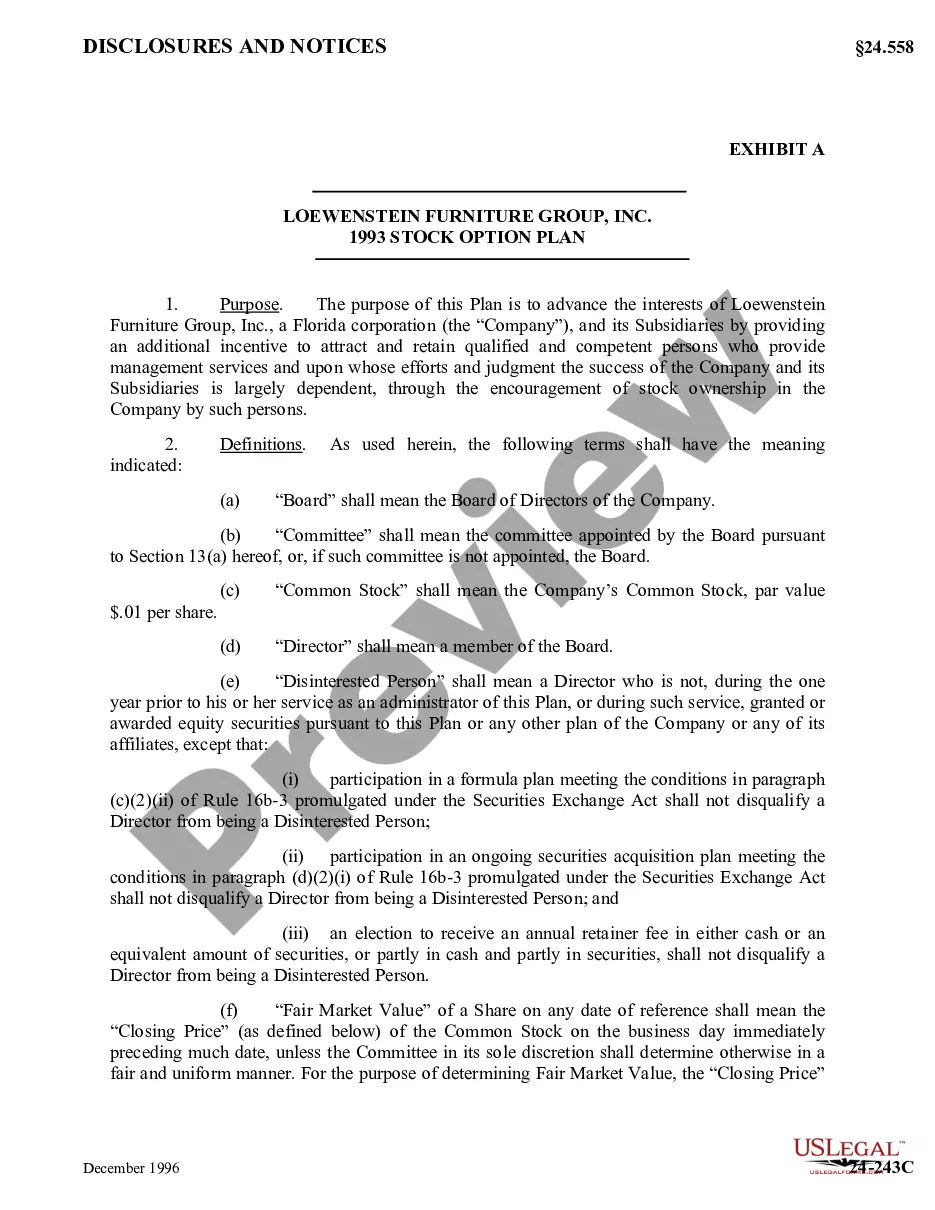
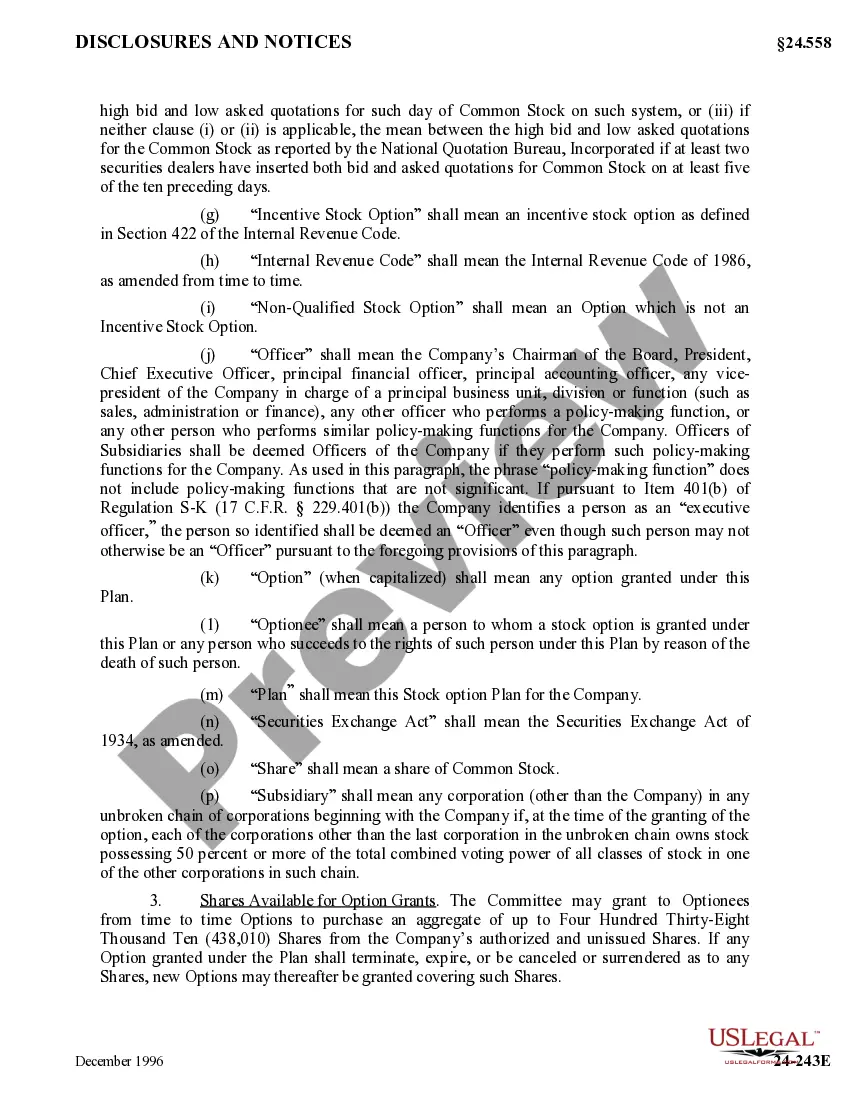
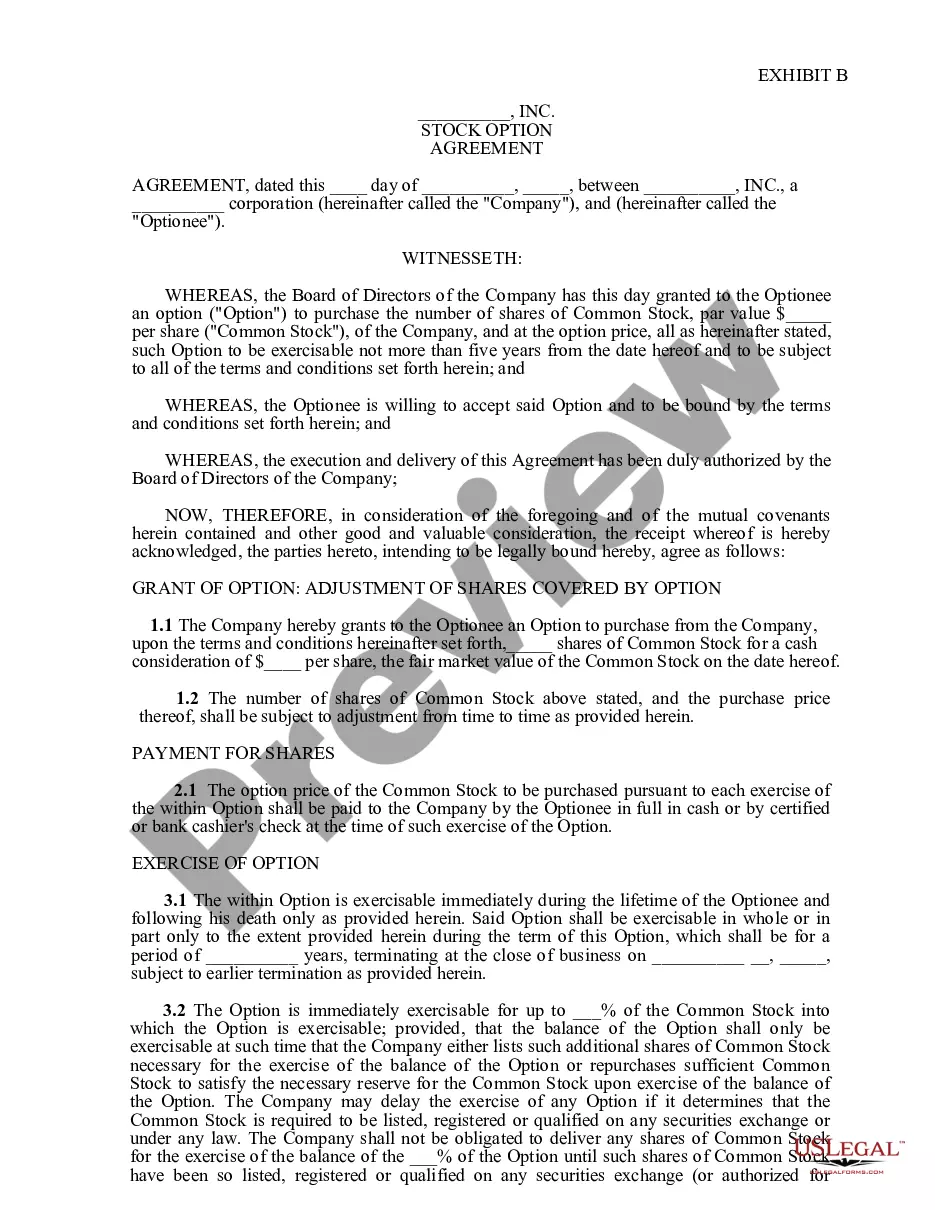
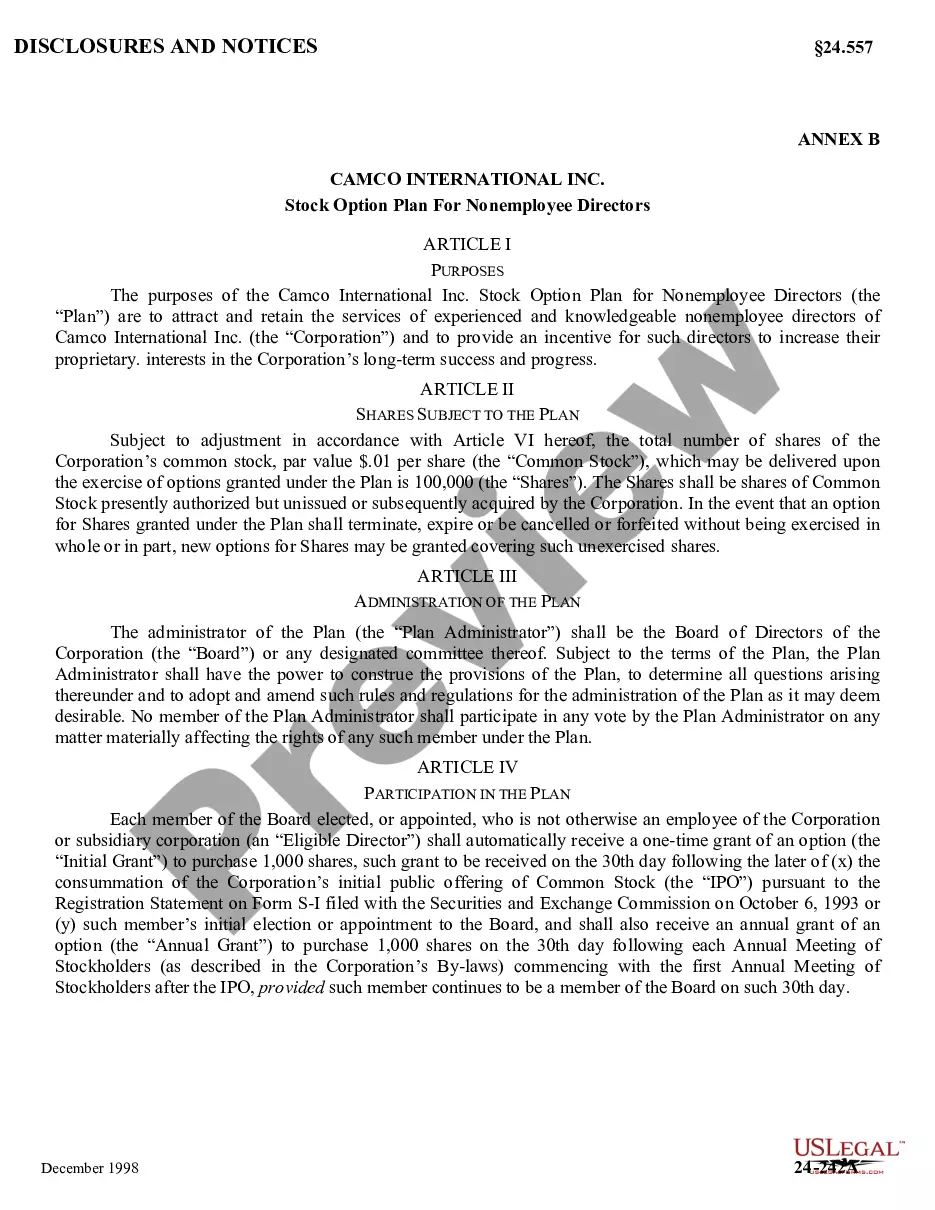
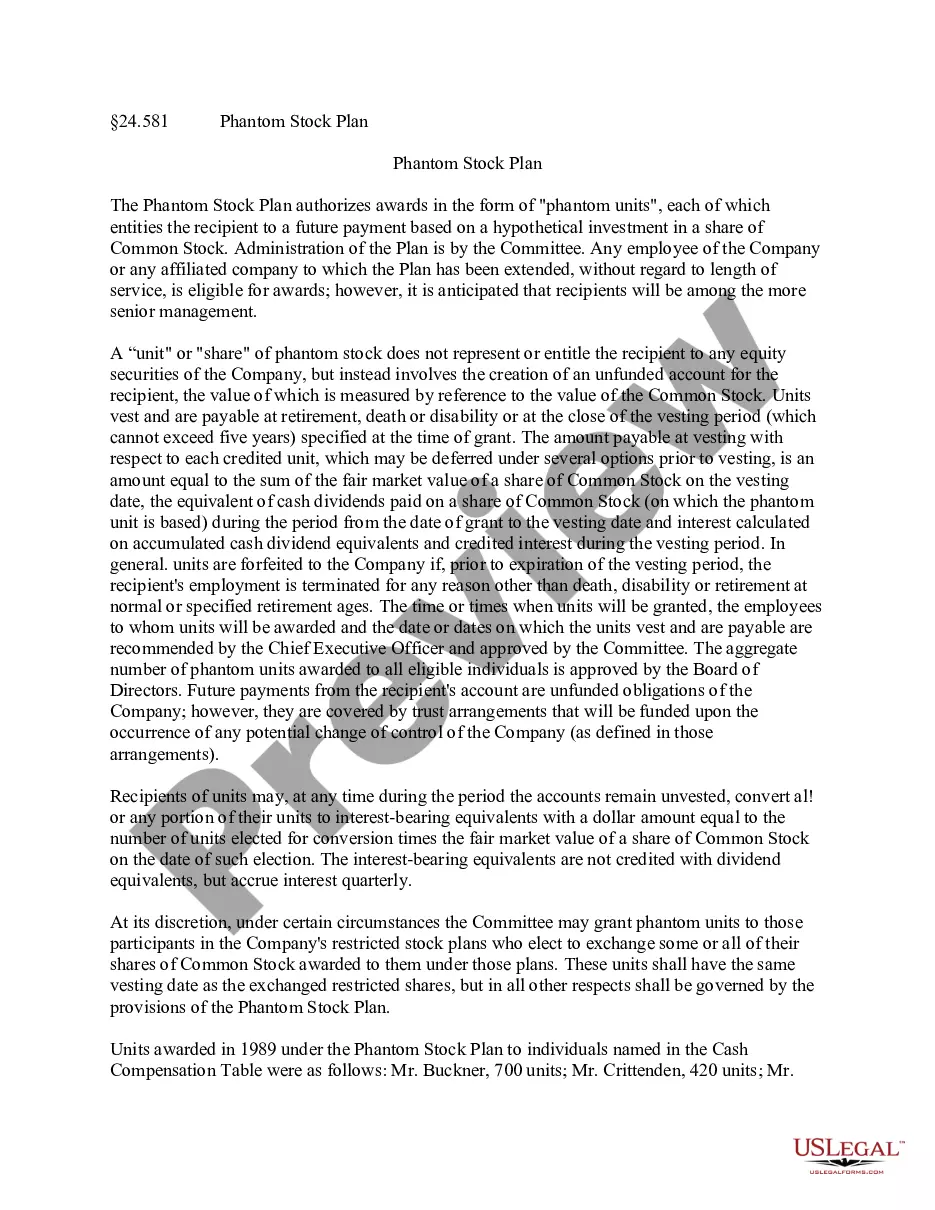
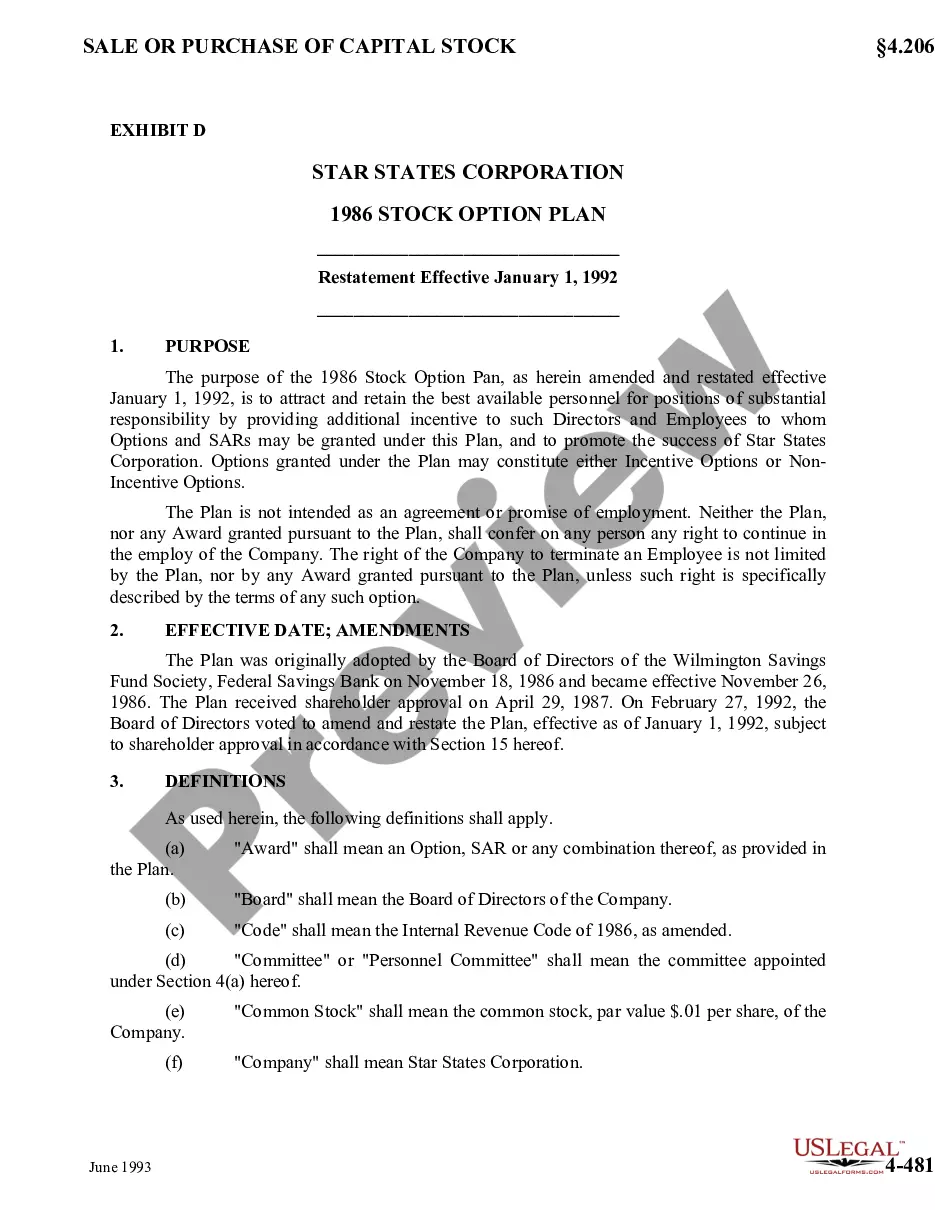
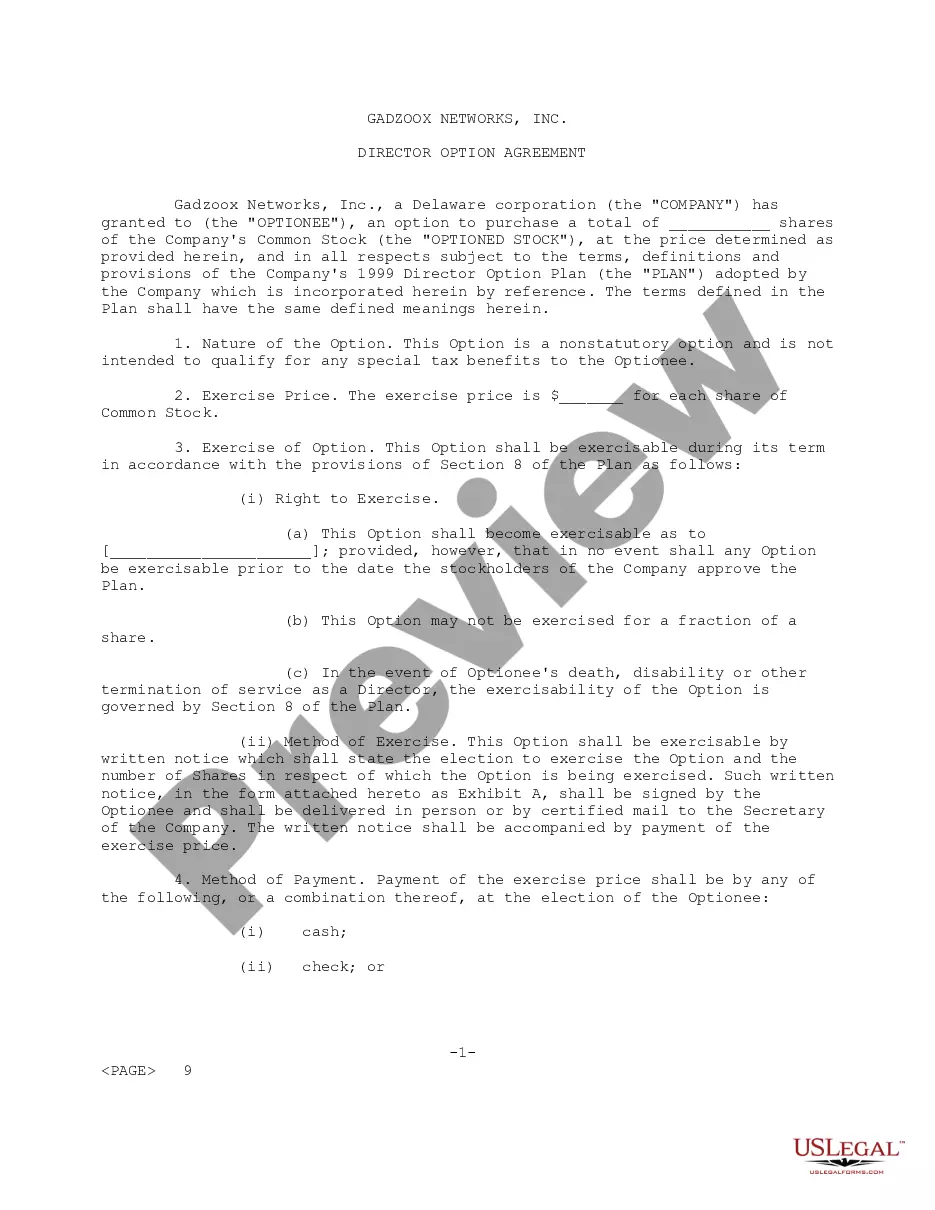
The Stock Option Plan of Loewenstein Furniture Group, Inc. is a legal document that outlines the terms and conditions under which stock options are granted to eligible employees and directors of the company. This specific plan serves to provide incentives for management and key personnel to encourage their ownership in the company, aligning their interests with the success of the organization. Unlike other stock options agreements, this template is tailored to the requirements of Loewenstein Furniture Group, allowing for customization based on the company's needs and compliance with regulations.
Key parts of this document
- Purpose: Establishes the goals of the stock option plan.
- Definitions: Clarifies important terms used throughout the document.
- Shares Available: Specifies the total number of shares available for option grants.
- Incentive and Non-Qualified Options: Differentiates between types of options granted.
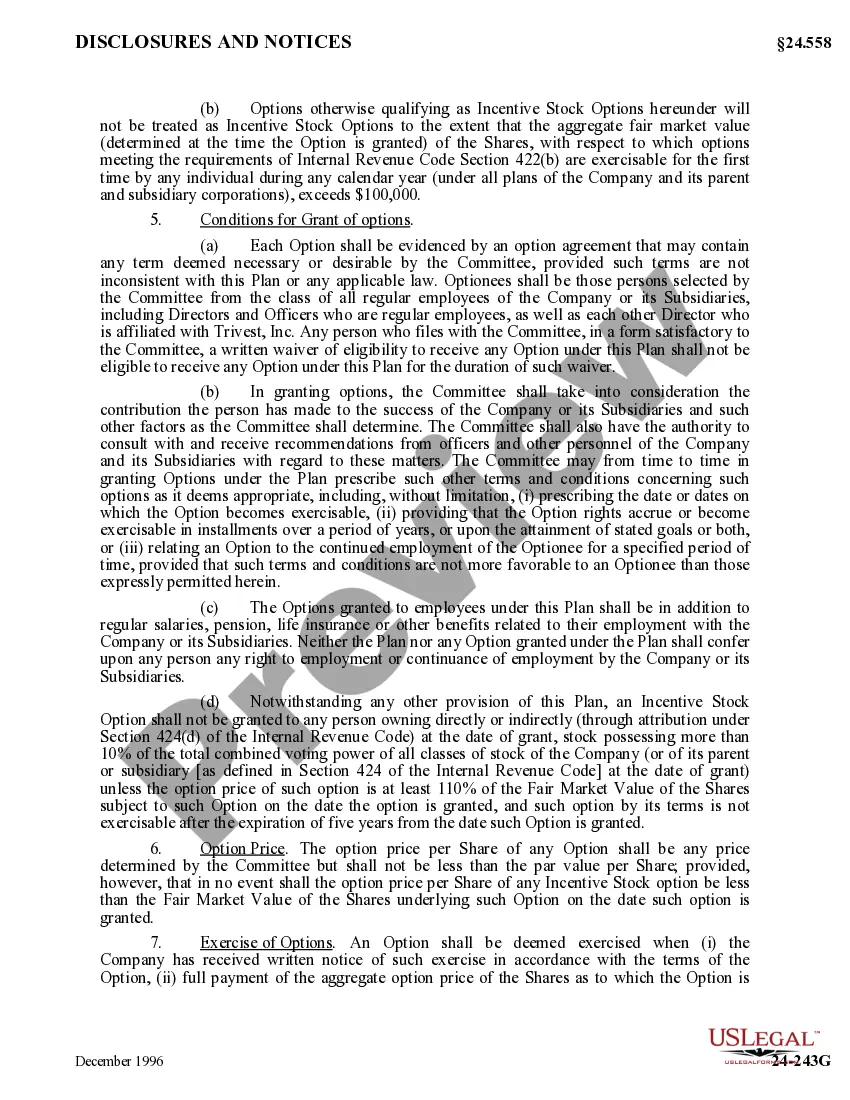
- Conditions for Granting Options: Outlines eligibility and criteria for granting options.
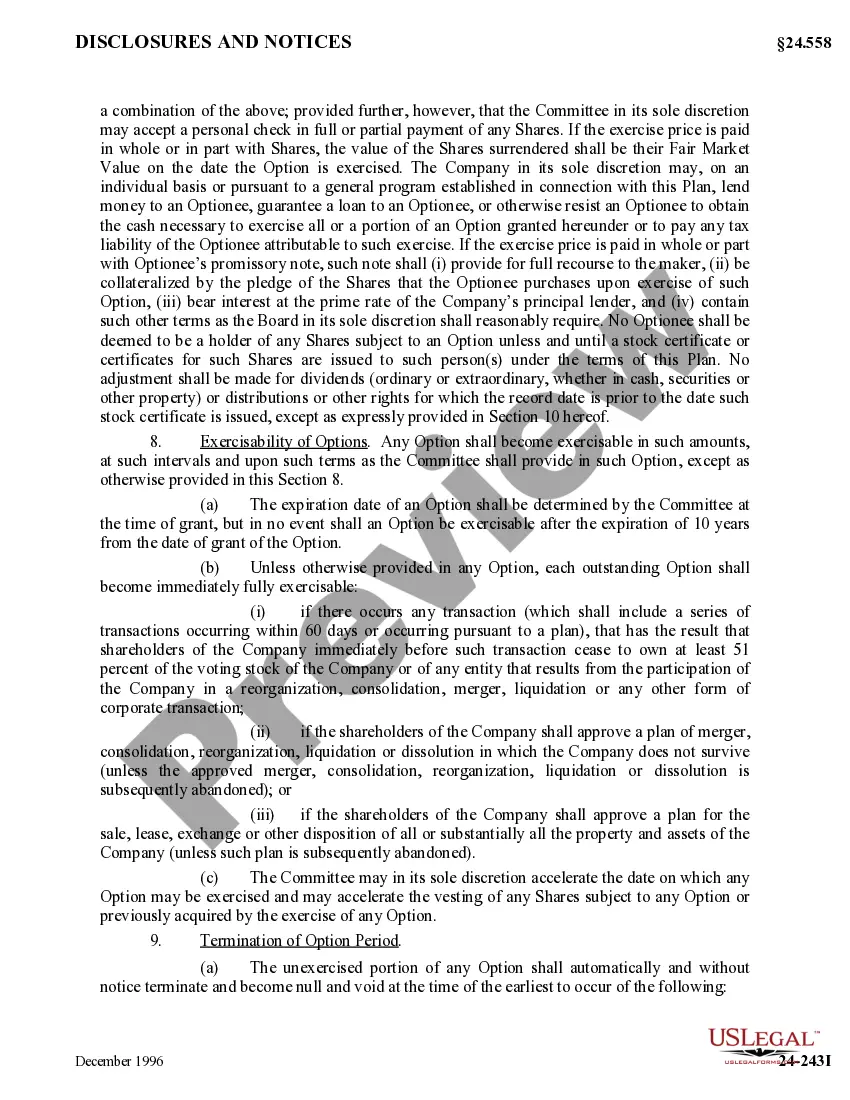
- Exercise of Options: Details how and when options can be exercised.






When this form is needed
This form should be used when a corporation wants to implement a stock option plan to attract and retain key management personnel. It is suitable when the board of directors aims to incentivize employees by offering them the opportunity to purchase stock at predetermined prices, especially in companies looking to motivate their team towards enhancing overall performance and corporate growth.
Who this form is for
- Corporations looking to establish a stock option plan.
- Company directors and officers responsible for managing employee incentives.
- Human resources professionals involved in employee compensation and motivation strategies.
- Legal professionals advising companies on compliance and corporate governance.
Completing this form step by step
- Draft the purpose and objectives of the stock option plan.
- Define all relevant terms to ensure clarity and compliance.
- Specify the total number of shares available for option grants.
- Determine whether options will be classified as incentive or non-qualified.
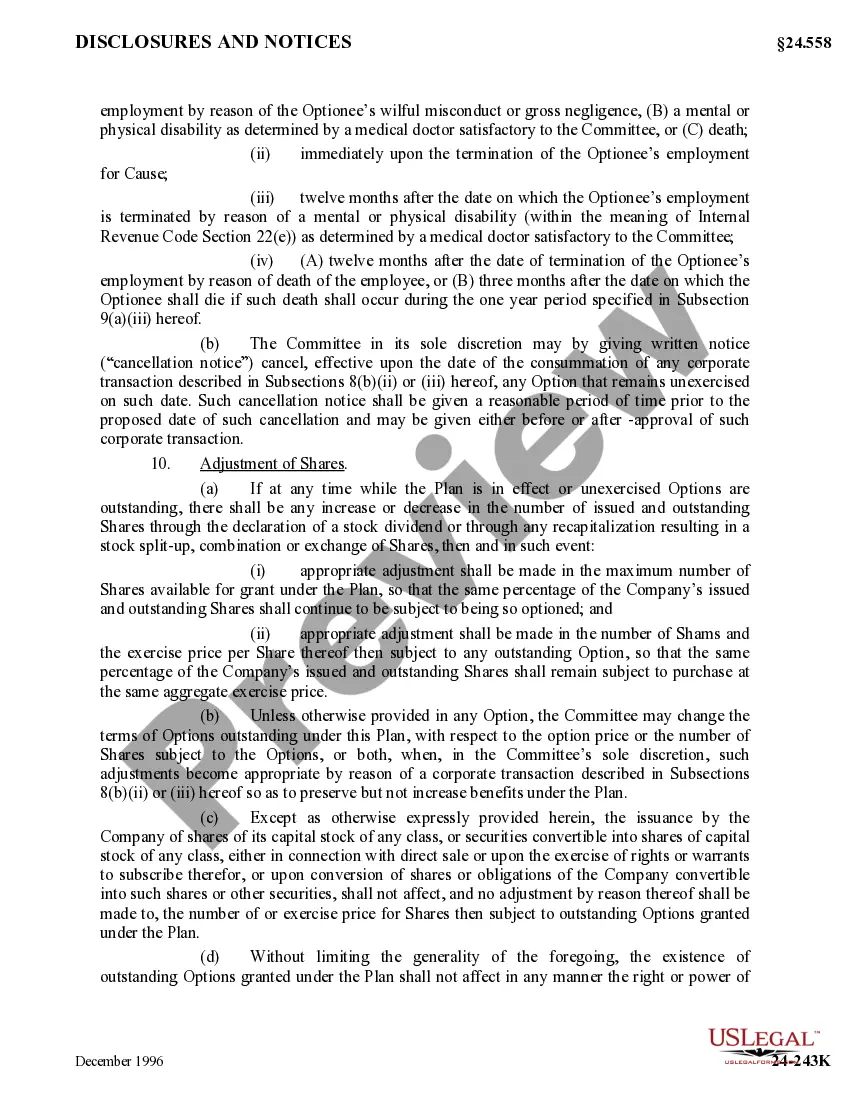
- Outline the conditions for granting, exercising, and terminating options.
- Ensure the document is signed by appropriate parties, typically members of the board.
Is notarization required?
This form does not typically require notarization unless specified by local law. However, it is advisable to have legal documents reviewed by a qualified attorney to ensure compliance with state-specific regulations.
Get your form ready online
Our built-in tools help you complete, sign, share, and store your documents in one place.
Make edits, fill in missing information, and update formatting in US Legal Forms—just like you would in MS Word.
Download a copy, print it, send it by email, or mail it via USPS—whatever works best for your next step.
Sign and collect signatures with our SignNow integration. Send to multiple recipients, set reminders, and more. Go Premium to unlock E-Sign.
If this form requires notarization, complete it online through a secure video call—no need to meet a notary in person or wait for an appointment.
We protect your documents and personal data by following strict security and privacy standards.

Make edits, fill in missing information, and update formatting in US Legal Forms—just like you would in MS Word.

Download a copy, print it, send it by email, or mail it via USPS—whatever works best for your next step.

Sign and collect signatures with our SignNow integration. Send to multiple recipients, set reminders, and more. Go Premium to unlock E-Sign.

If this form requires notarization, complete it online through a secure video call—no need to meet a notary in person or wait for an appointment.

We protect your documents and personal data by following strict security and privacy standards.
Mistakes to watch out for
- Not clearly defining key terms which can lead to misunderstandings.
- Failing to specify the number of shares properly, leading to compliance issues.
- Neglecting to consider tax implications associated with stock options.
- Using outdated language that does not meet current regulations.
Why complete this form online
- Convenience of accessing and downloading the form at any time.
- Editable templates allow for customization to meet specific business needs.
- Instant access to legal documents ensures timely implementation.
- Documents are drafted by licensed attorneys, ensuring compliance with legal standards.
Legal use & context
Adherence to the Stock Option Plan regulations is crucial for legal enforceability. Options granted under this plan must comply with the Internal Revenue Code, particularly regarding the qualifications of Incentive Stock Options to benefit from favorable tax treatment.
What to keep in mind
- The Stock Option Plan enhances employee retention via equity ownership opportunities.
- Important definitions and clauses must be tailored to fit company needs.
- Clear procedures for exercising options are essential for user competency.
Looking for another form?








Form popularity
FAQ
What is a Stock Option? A stock option gives an investor the right, but not the obligation, to buy or sell a stock at an agreed upon price and date. There are two types of options: puts, which is a bet that a stock will fall, or calls, which is a bet that a stock will rise.
To set up an ESOP, you'll have to establish a trust to buy your stock. Then, each year you'll make tax-deductible contributions of company shares, cash for the ESOP to buy company shares, or both. The ESOP trust will own the stock and allocate shares to individual employee's accounts.
Stock options may be considered a form of compensation which gives the employee the right to buy an amount of company stock at a set price during a certain time period. Under U.S. accounting methods, stock options are expensed according to the stock options' fair value.
The stock option compensation is an expense of the business and is represented by the debit to the expense account in the income statement. The other side of the entry is to the additional paid in capital account (APIC) which is part of the total equity of the business.
Stock options are a form of compensation. Companies can grant them to employees, contractors, consultants and investors. These options, which are contracts, give an employee the right to buy or exercise a set number of shares of the company stock at a pre-set price, also known as the grant price.
The future value of your employee stock options will depend on two factors: the performance of the underlying stock and the strike price of your options. For example, if the stock is worth $30 and your option's strike price is $25, your options will be worth $5 per share.
An ESOP will probably cost $80,000 to $250,000 to set up and run the first year and, for most companies with fewer than a few hundred employees, $20,000 to $30,000 annually.
Stock Option Journal Entries Year 1 The stock option compensation is an expense of the business and is represented by the debit to the expense account in the income statement. The other side of the entry is to the additional paid in capital account (APIC) which is part of the total equity of the business.
Oftentimes, stock-based compensation is redeemable at the employee's or employer's option. Stock-based compensation that is redeemable at the employee's option is a considered an employer obligation, and thus a liability while awards that are redeemable at the employer's option are classified as equity.