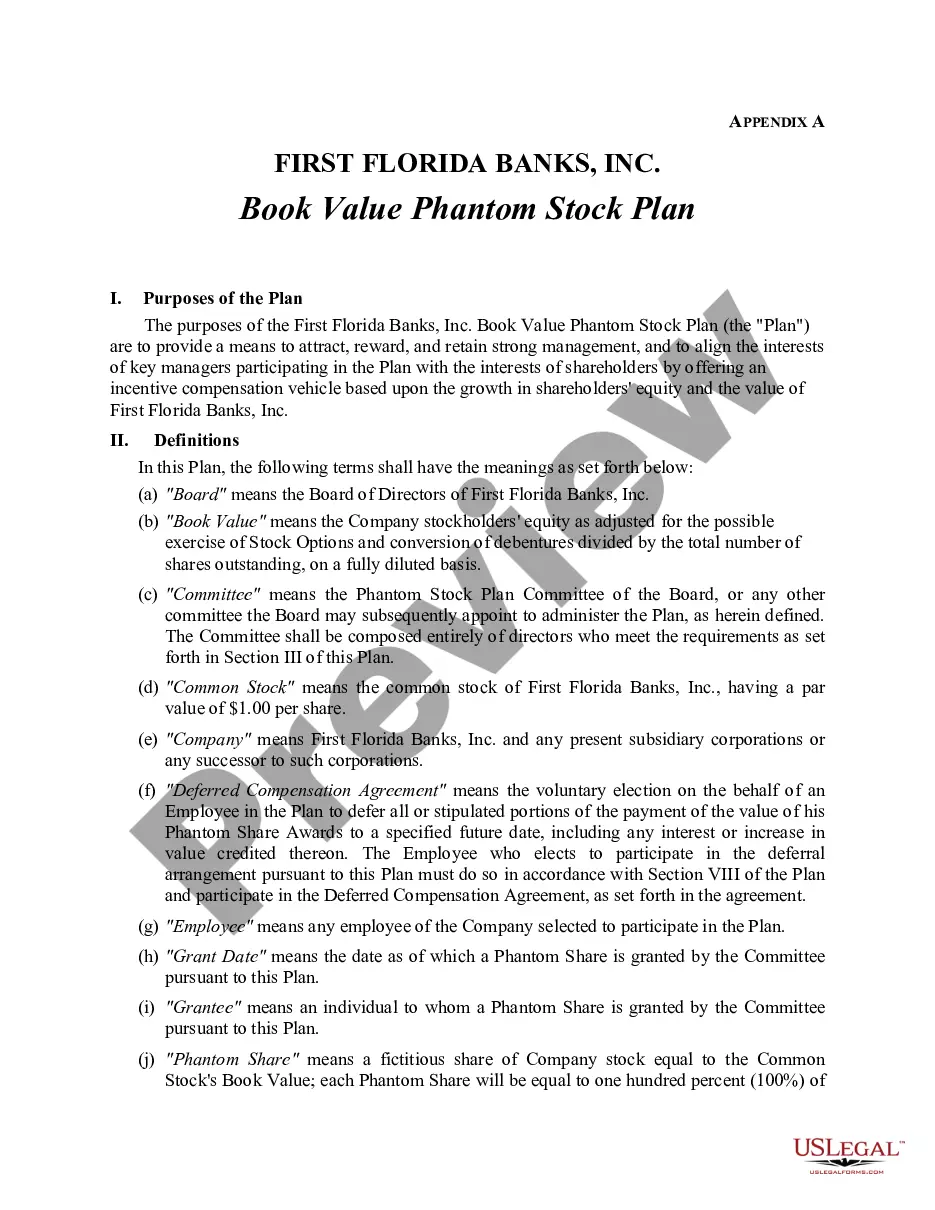
Book Value Phantom Stock Plan of First Florida Banks, Inc.
About this form
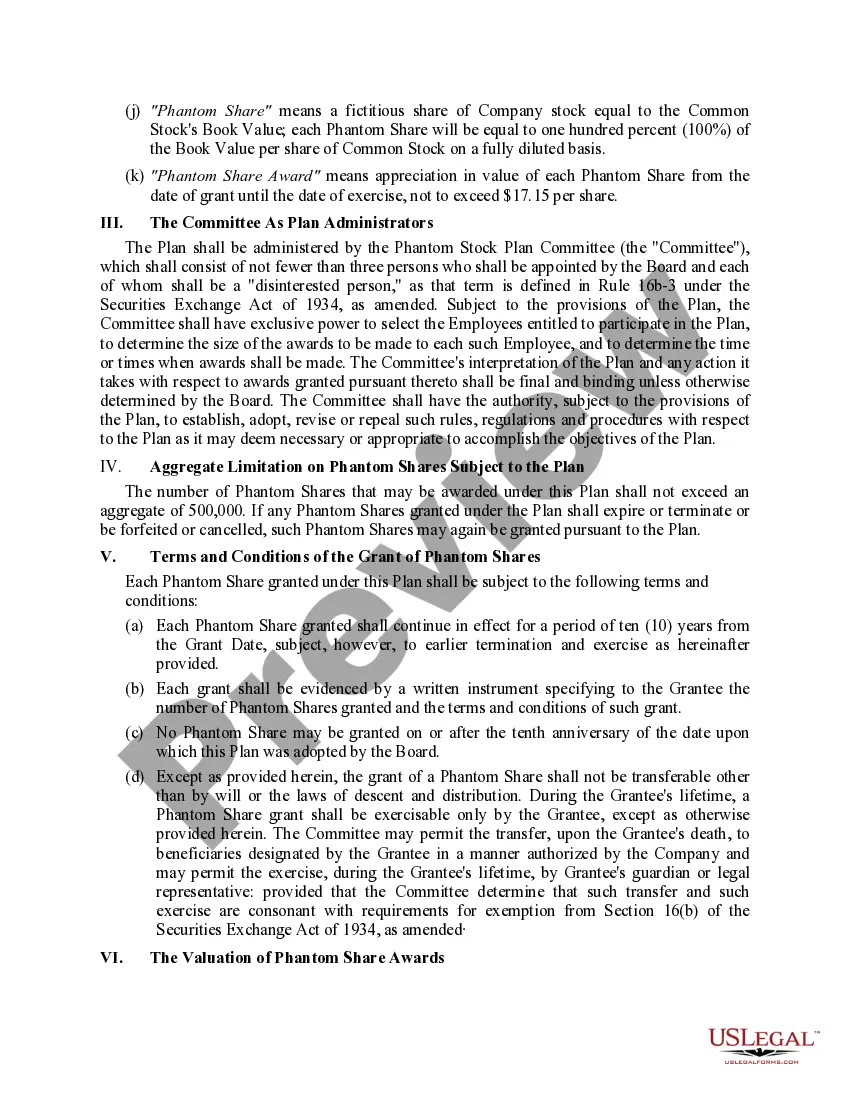
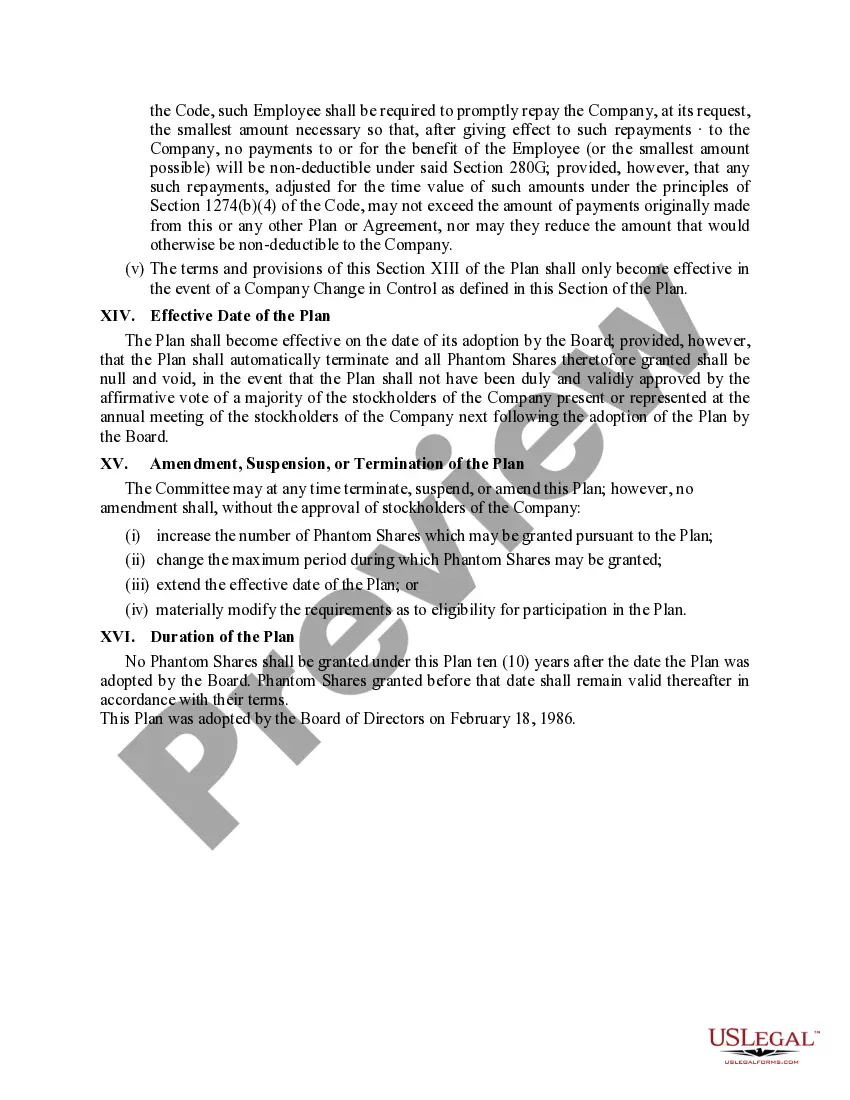
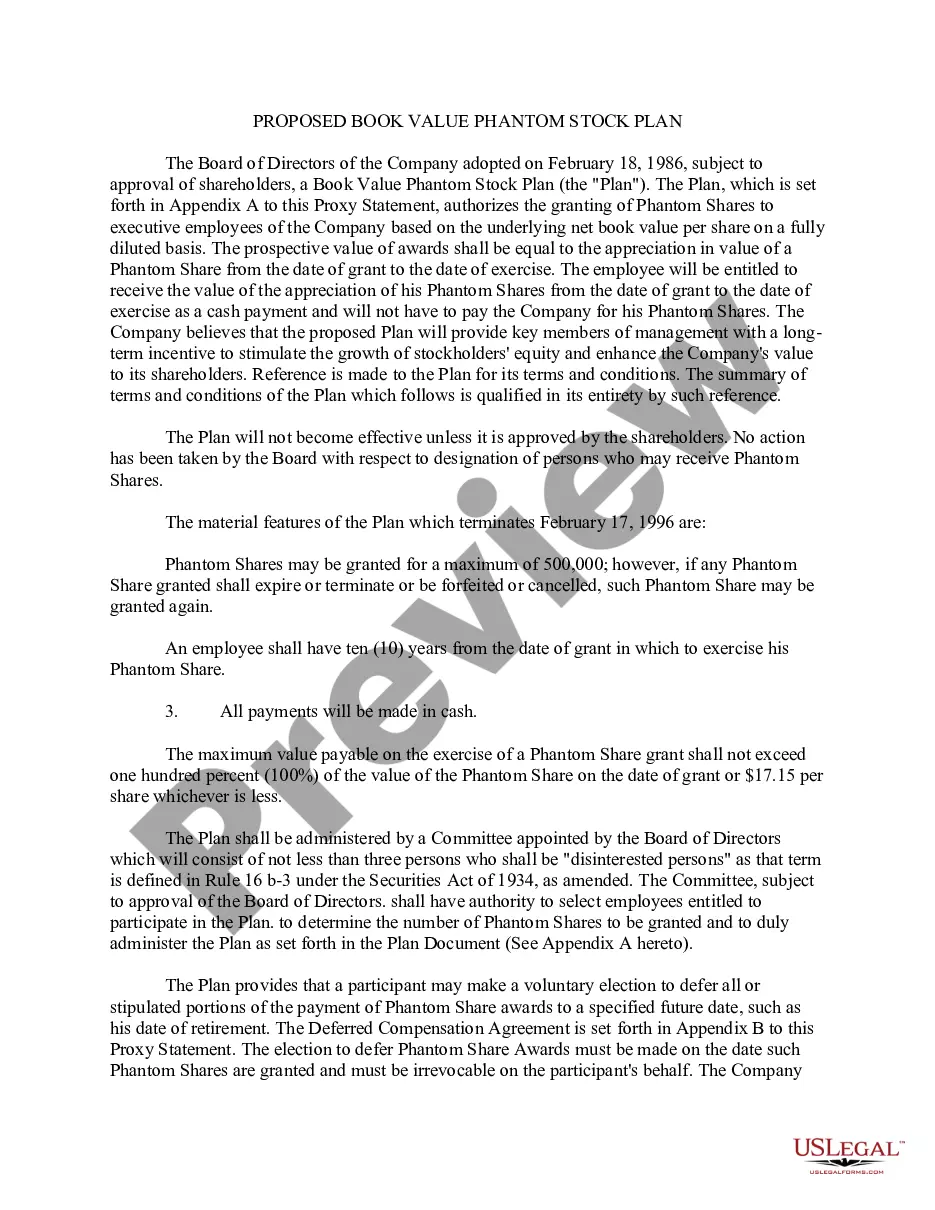
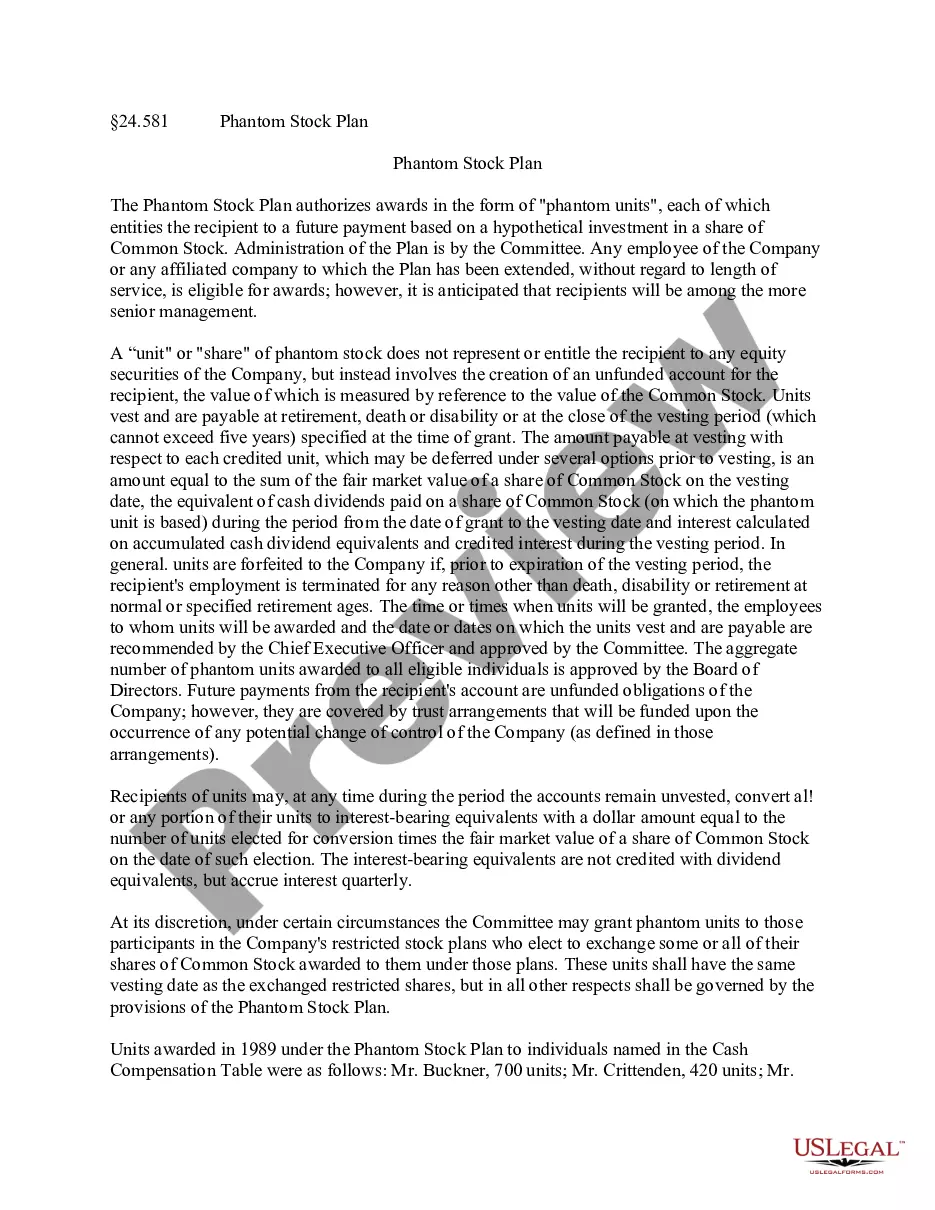
The Book Value Phantom Stock Plan of First Florida Banks, Inc. is a legal document that establishes a compensation program for selected employees. This plan allows the company's Board of Directors to grant phantom stock, which is a type of incentive that mimics the value of actual shares of common stock. Unlike traditional stock options, phantom shares do not require actual ownership of stock, making them a valuable tool for attracting and retaining top management talent while aligning their interests with those of shareholders.
Key components of this form
- Purposes of the Plan: Designed to attract, retain, and reward management talent.
- Definitions: Clarifies key terms like Book Value, Phantom Share, and Grantee.
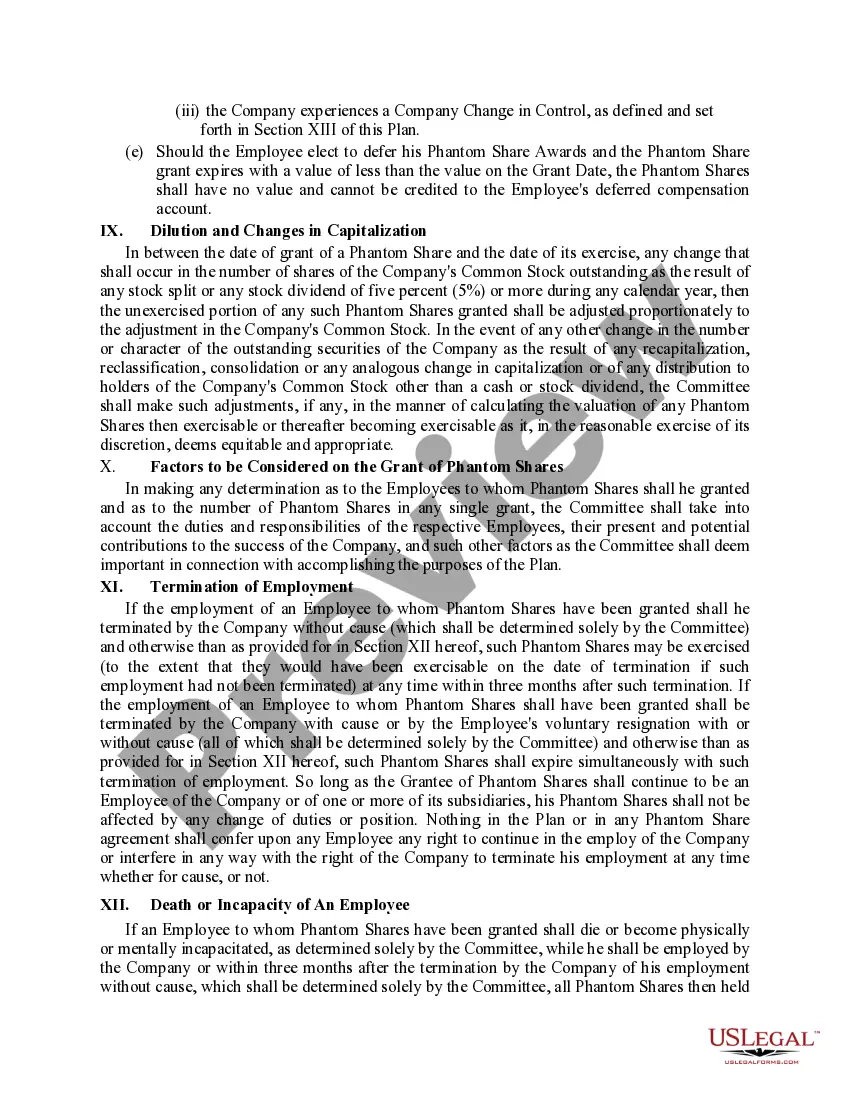
- The Committee: Outlines the board's role in administering the plan and making grant decisions.
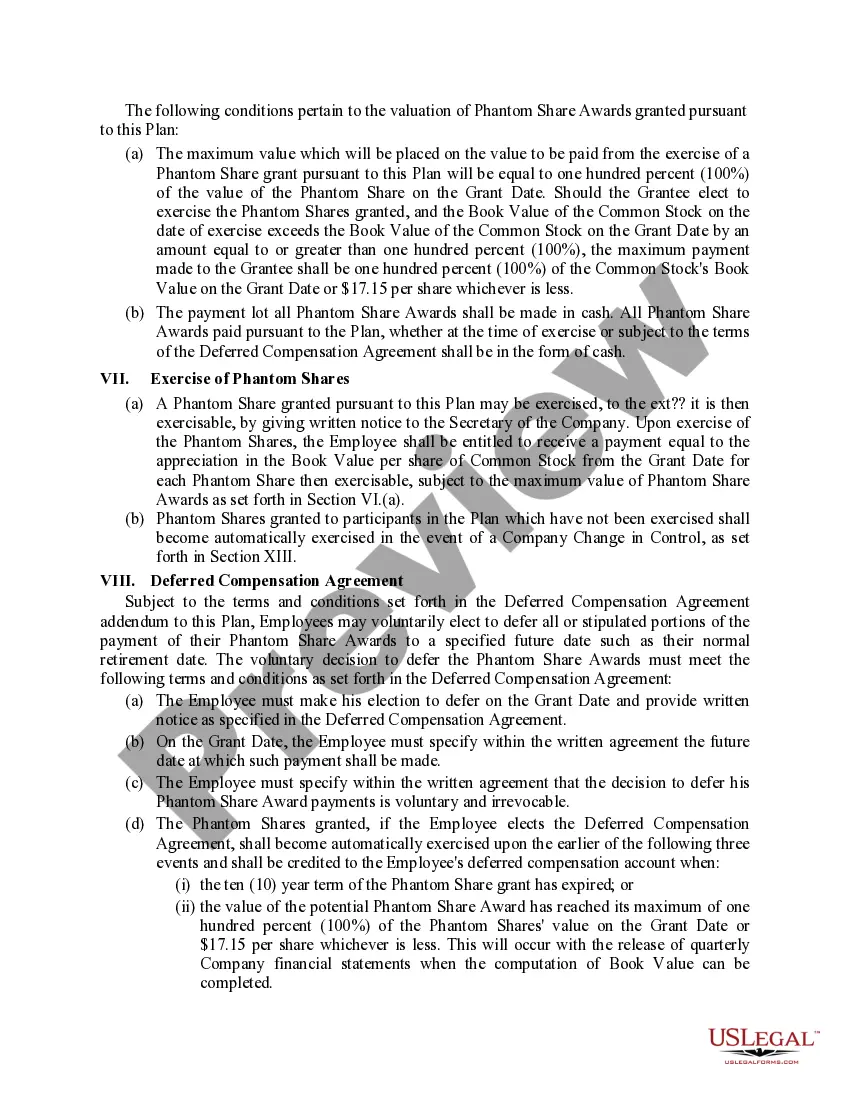
- Terms and Conditions: Specifies the duration and conditions under which phantom shares may be exercised.
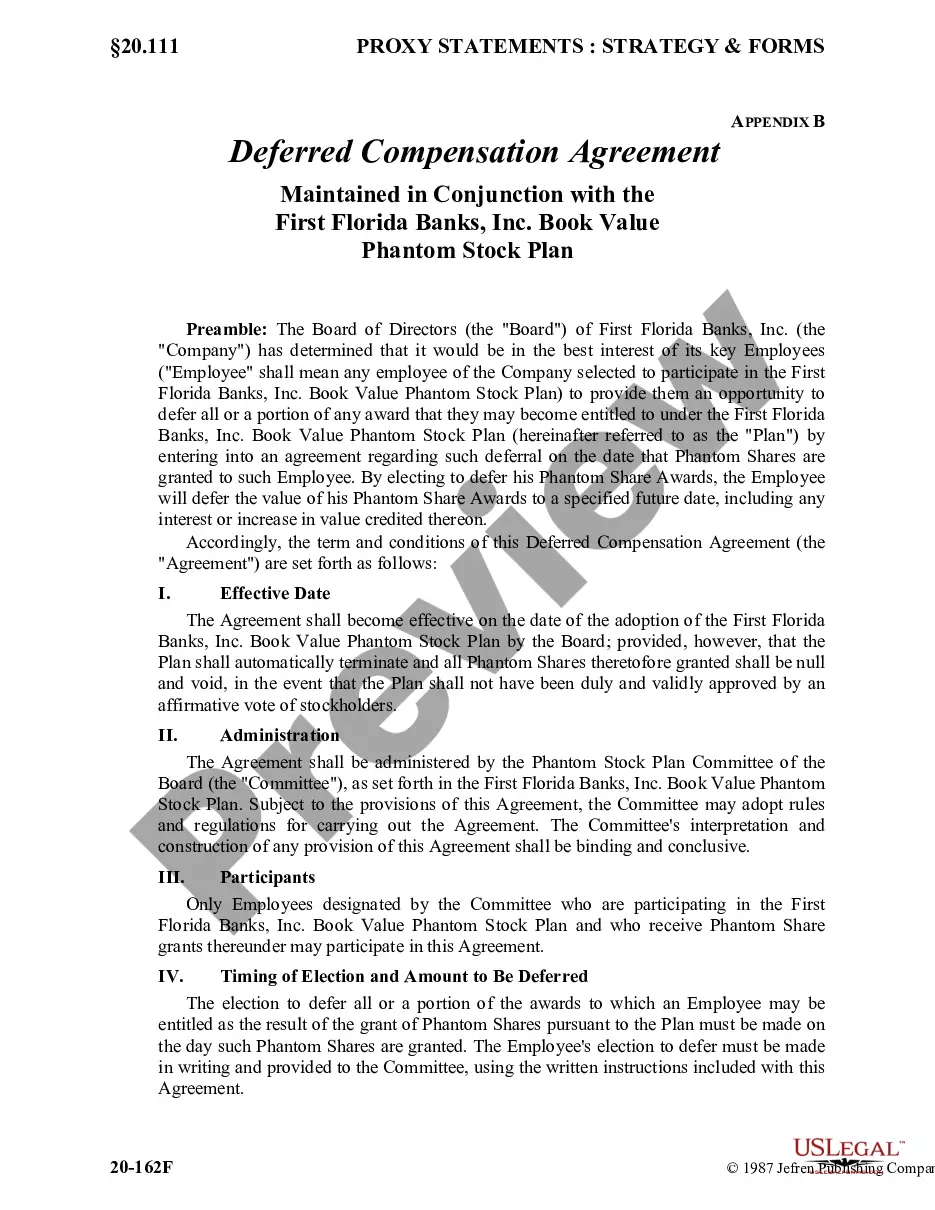
- Deferred Compensation Agreement: Allows employees to defer payment of their phantom shares to a future date.
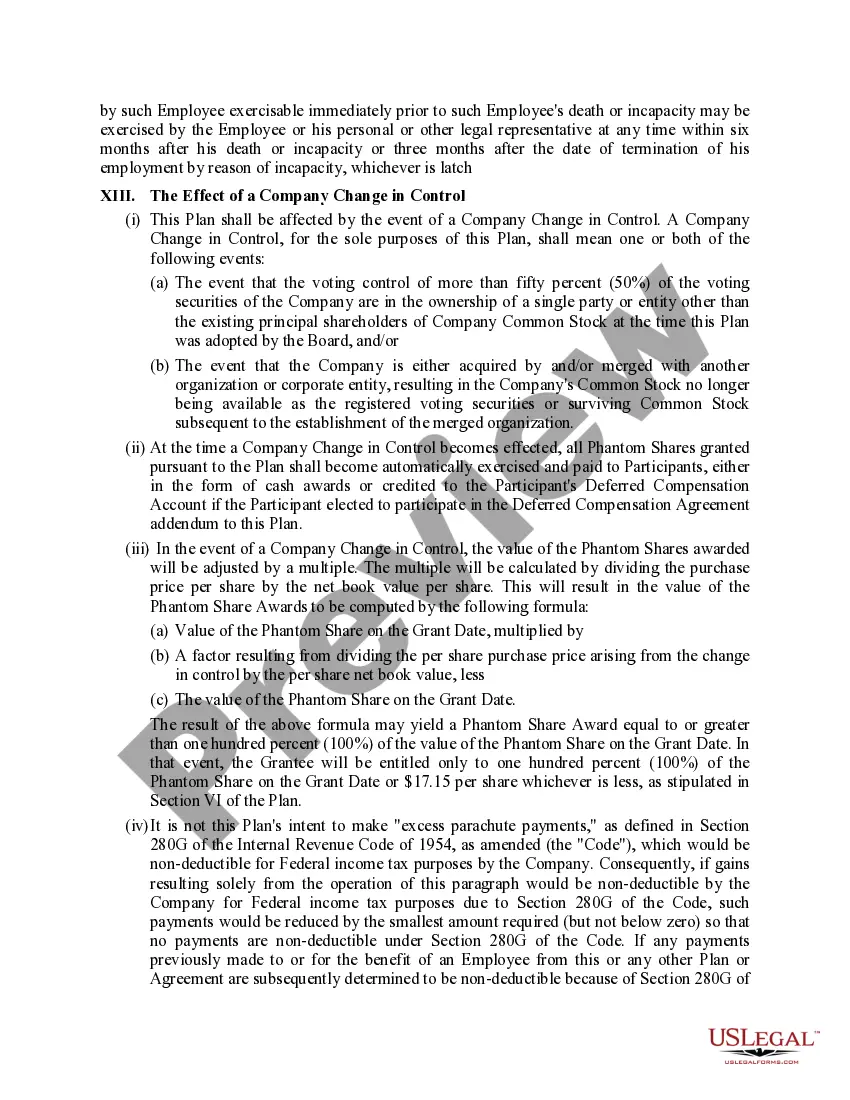
- Company Change in Control: Details the consequences for phantom stock in the event of a change in ownership of the company.
Common use cases
This form is utilized by companies seeking to implement an incentive compensation program that offers employees a stake in the company's future growth without transferring actual stock. It is particularly beneficial during recruitment, performance evaluations, and succession planning, allowing firms to motivate and reward their key personnel based on the company's financial performance and stock value enhancement.
Who should use this form
- Corporate boards of directors looking to establish a phantom stock plan.
- Human resources professionals tasked with designing employee incentive programs.
- Management teams wanting to align employee interests with shareholder value.
- Legal teams needing to draft or review employee compensation plans for compliance.
How to complete this form
- Identify the key personnel who will be eligible for phantom shares under the plan.
- Define the number of phantom shares to be granted and their terms, including conditions for exercises.
- Document the approval of the plan by the Board of Directors and ensure it is properly signed.
- Establish the methods for assessing the company's Book Value to determine the award's valuation.
- Communicate the plan details to all eligible employees to ensure understanding and compliance.
Does this form need to be notarized?
This form does not typically require notarization unless specified by local law. However, always verify with a legal professional to ensure compliance with specific requirements in your jurisdiction.
Get your form ready online
Our built-in tools help you complete, sign, share, and store your documents in one place.
Make edits, fill in missing information, and update formatting in US Legal Forms—just like you would in MS Word.
Download a copy, print it, send it by email, or mail it via USPS—whatever works best for your next step.
Sign and collect signatures with our SignNow integration. Send to multiple recipients, set reminders, and more. Go Premium to unlock E-Sign.
If this form requires notarization, complete it online through a secure video call—no need to meet a notary in person or wait for an appointment.
We protect your documents and personal data by following strict security and privacy standards.

Make edits, fill in missing information, and update formatting in US Legal Forms—just like you would in MS Word.

Download a copy, print it, send it by email, or mail it via USPS—whatever works best for your next step.

Sign and collect signatures with our SignNow integration. Send to multiple recipients, set reminders, and more. Go Premium to unlock E-Sign.

If this form requires notarization, complete it online through a secure video call—no need to meet a notary in person or wait for an appointment.

We protect your documents and personal data by following strict security and privacy standards.
Typical mistakes to avoid
- Failing to clearly define terms and conditions of the phantom shares, leading to confusion.
- Not obtaining the necessary approvals from shareholders or the board, which can invalidate the plan.
- Neglecting to update financial assessments that impact the Book Value calculation.
Benefits of completing this form online
- Convenient access to templates that are easy to download and fill out.
- Editability allows for customization to meet specific company needs.
- Reliable forms drafted by licensed attorneys, ensuring compliance with relevant laws.
Legal use & context
- Phantom stock plans are legally recognized as a form of incentive compensation.
- Properly drafted and executed, this plan can help avoid tax implications associated with direct stock options.
- Ensure that the plan complies with state and federal regulations to enhance enforceability.
Summary of main points
- The Book Value Phantom Stock Plan is an effective compensation strategy to motivate employees.
- Clear communication and proper administration are vital for the plan's success.
- Understanding the potential tax implications is important for both the company and employees.
Looking for another form?

Form popularity
FAQ
Once these two answers are known, the phantom share price is calculated as the former (the value) divided by the latter (the number of shares). The value of the company can be established by a variety of means, including: Stock exchange (for public companies)
A phantom stock plan is an employee benefit plan that gives selected employees (senior management) many of the benefits of stock ownership without actually giving them any company stock. This type of plan is sometimes referred to as shadow stock. Rather than getting physical stock, the employee receives mock stock.
A phantom stock plan is a deferred compensation plan that provides the employee an award measured by the value of the employer's common stock. However, unlike actual stock, the award does not confer equity ownership in the company. In other words, there is no actual stock given to the employee.
A phantom stock plan is an employee benefit plan that gives selected employees (senior management) many of the benefits of stock ownership without actually giving them any company stock. This type of plan is sometimes referred to as shadow stock. Rather than getting physical stock, the employee receives mock stock.
Understand what you are and aren't offering. Set a proper valuation. Create your shares. Decide how to award stock. Set a reward schedule.
1Understand what you are and aren't offering.2Set a proper valuation.3Create your shares.4Decide how to award stock.5Set a reward schedule.
For employees, there's no need to purchase phantom stock shares as regular stockholders must do on the open market. Instead, phantom shares are given to employees with no money changing hands. That's a big benefit to employees, who share in the stock's profits without having to pay for it.