Nonqualified Stock Option Plan of ASA Holdings, Inc.
Understanding this form
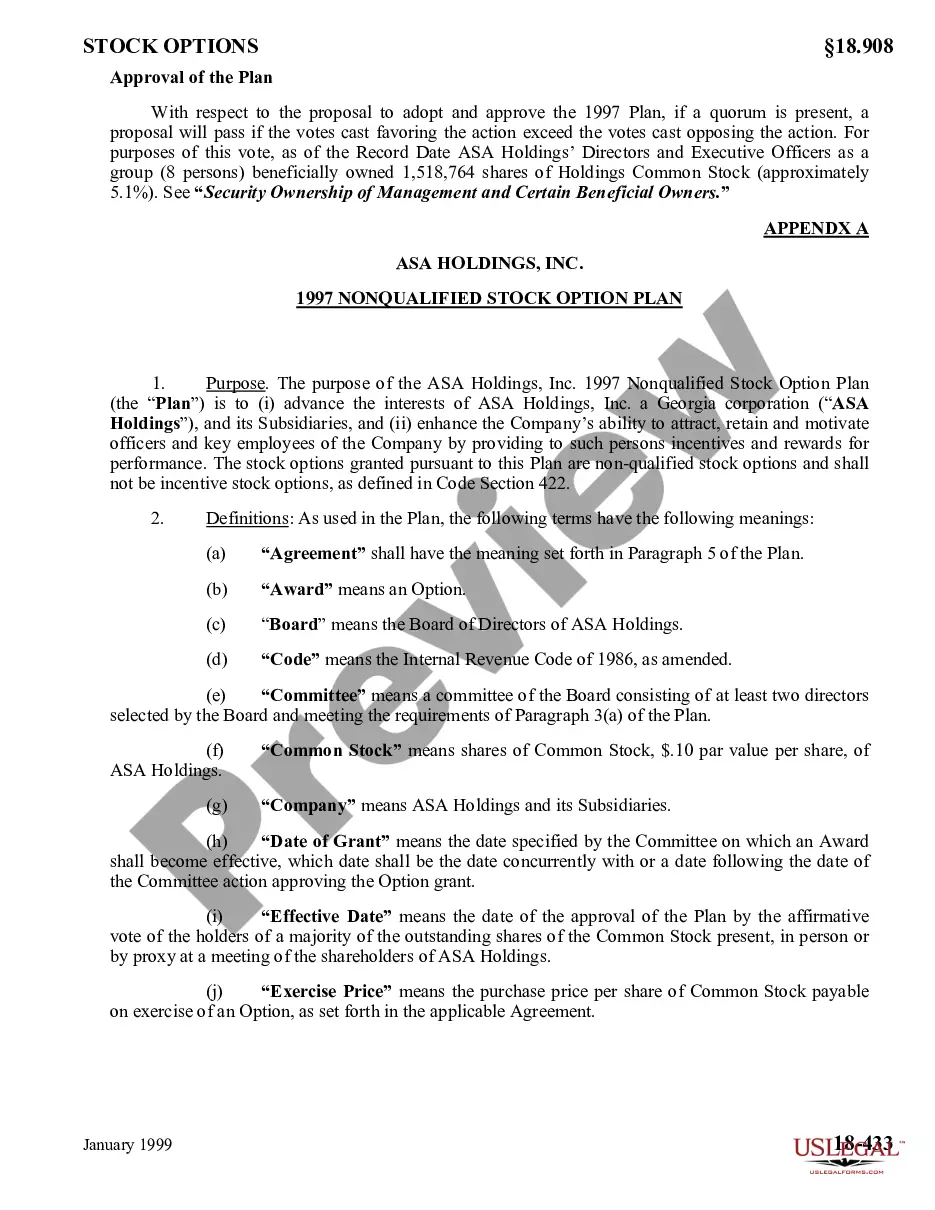
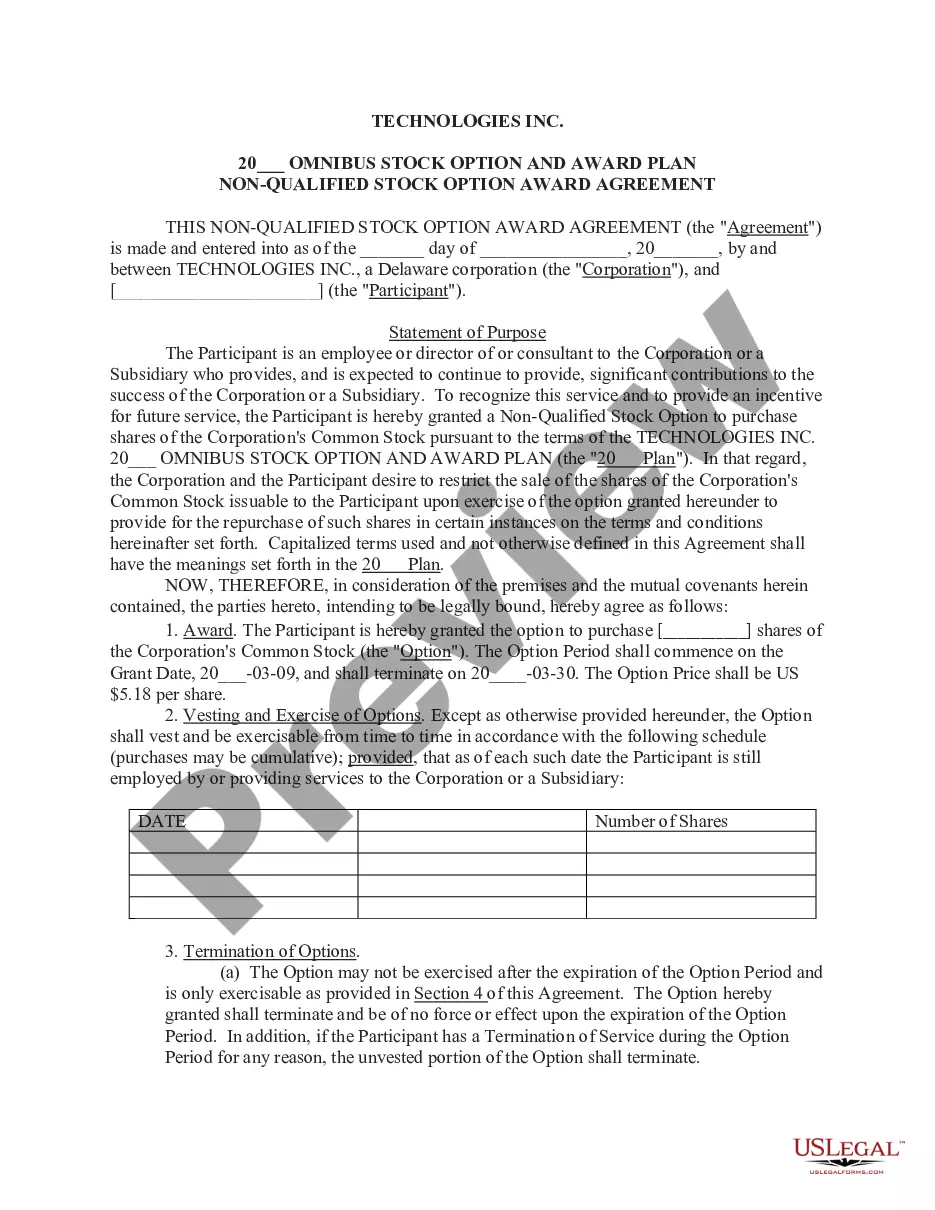
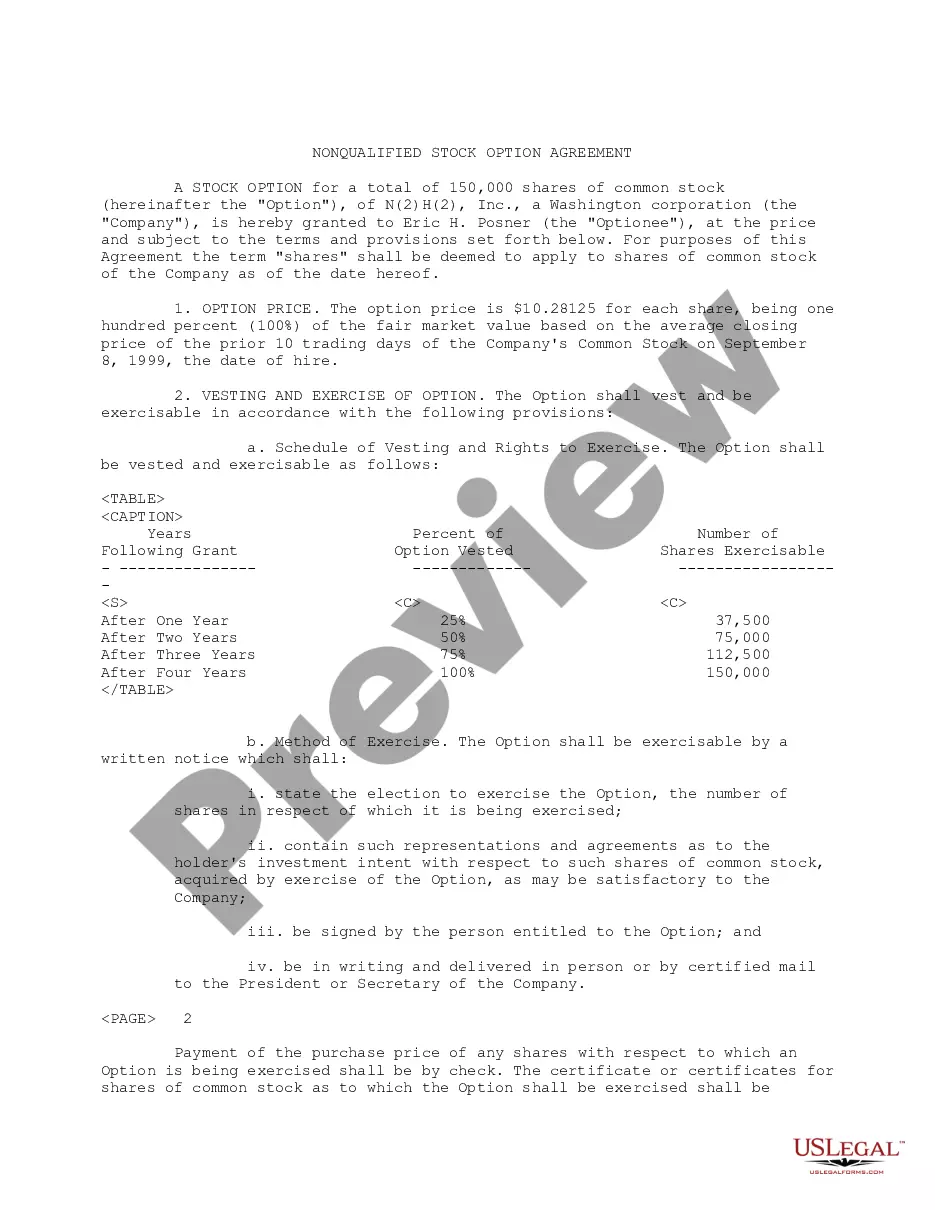
The Nonqualified Stock Option Plan of ASA Holdings, Inc. is a legal document that outlines the terms and conditions under which nonqualified stock options are granted to employees and officers of ASA Holdings. This plan is designed to incentivize and reward employees for their performance, helping the company to attract and retain key talent. Unlike qualified stock options, these nonqualified options do not meet the IRS requirements for favorable tax treatment. Understanding this form is crucial for individuals engaged in corporate management and employee compensation strategies.
Key parts of this document
- Purpose: The primary aim is to advance the interests of ASA Holdings and provide performance incentives.
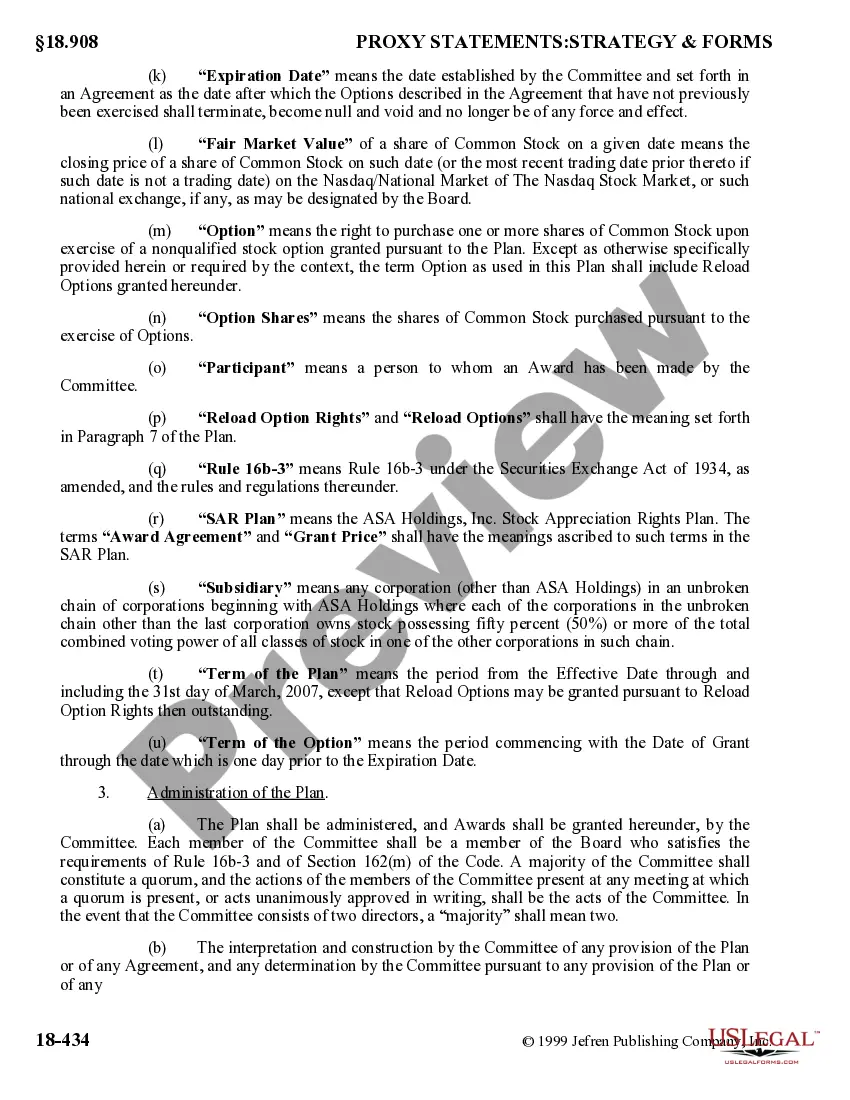
- Definitions: Specifies key terms like 'Award', 'Exercise Price', and 'Expiration Date' to ensure clarity.
- Administration: Details the authority and responsibilities of the committee overseeing the plan.
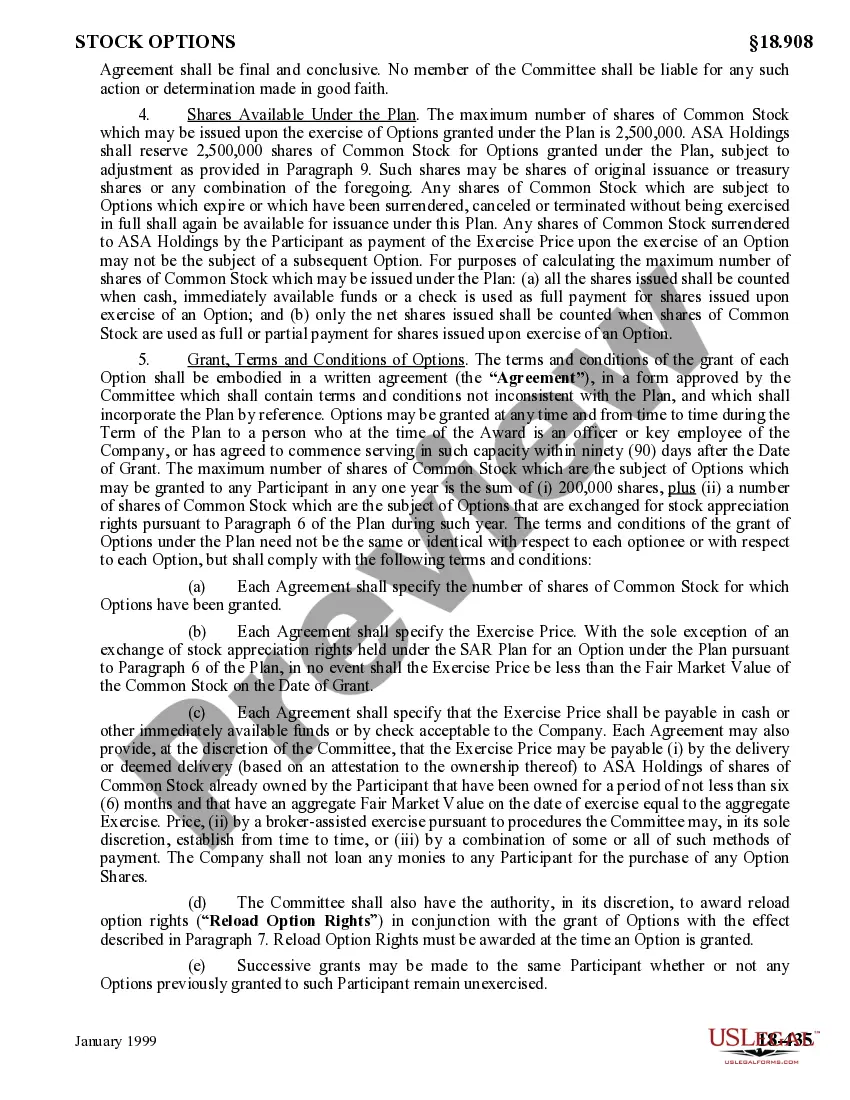
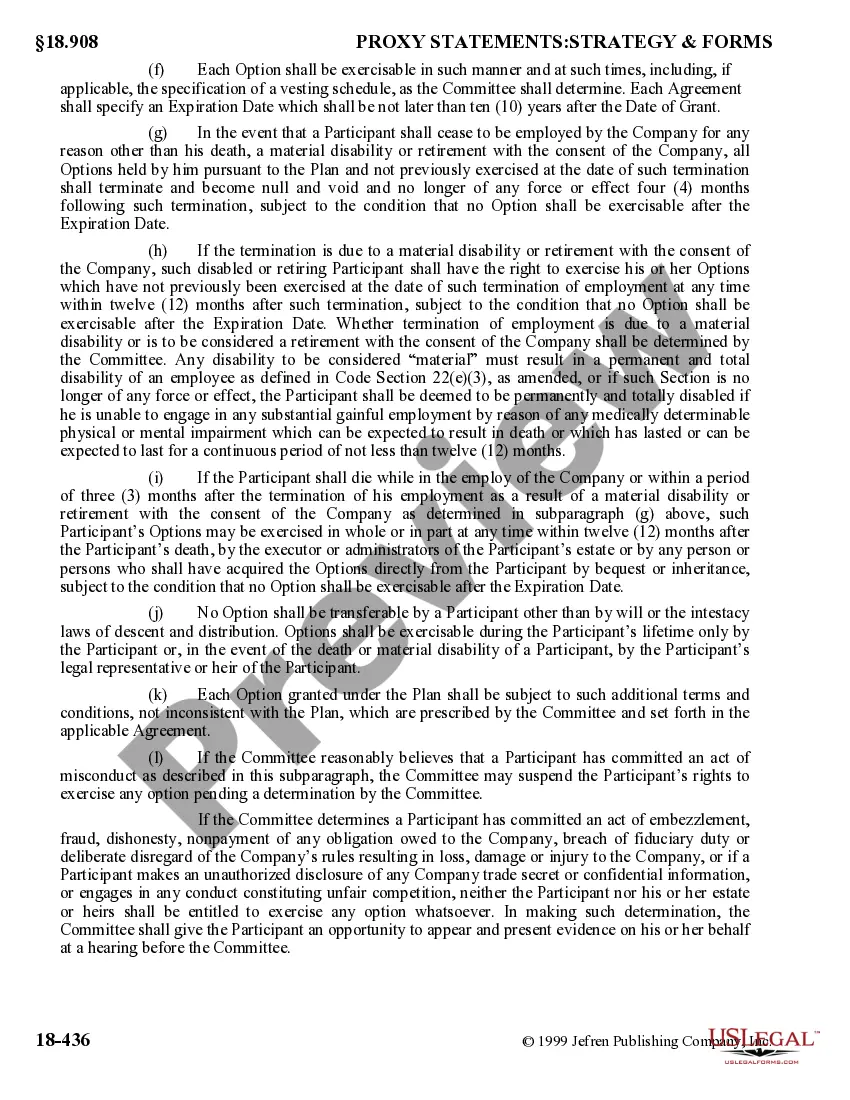
- Options: Outlines how options are granted, exercised, and their maximum limits.
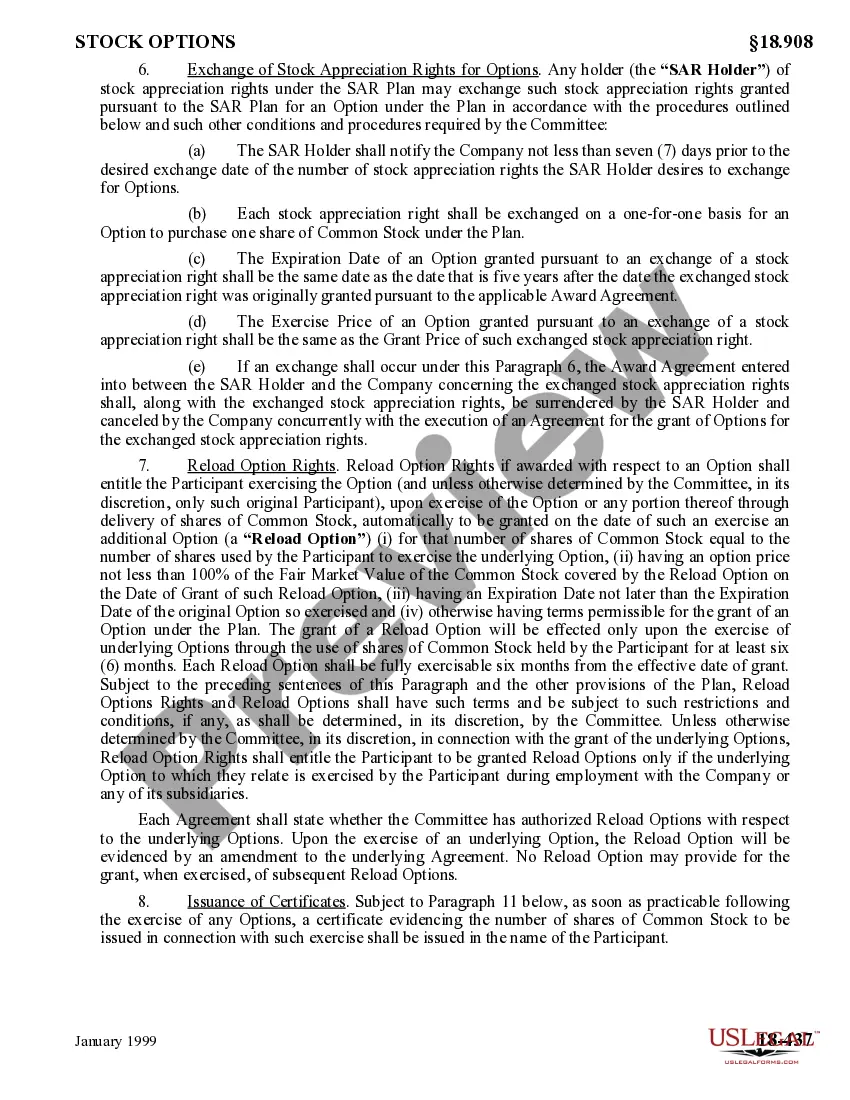
- Reload Option Rights: Describes the conditions under which additional options may be granted when existing options are exercised.
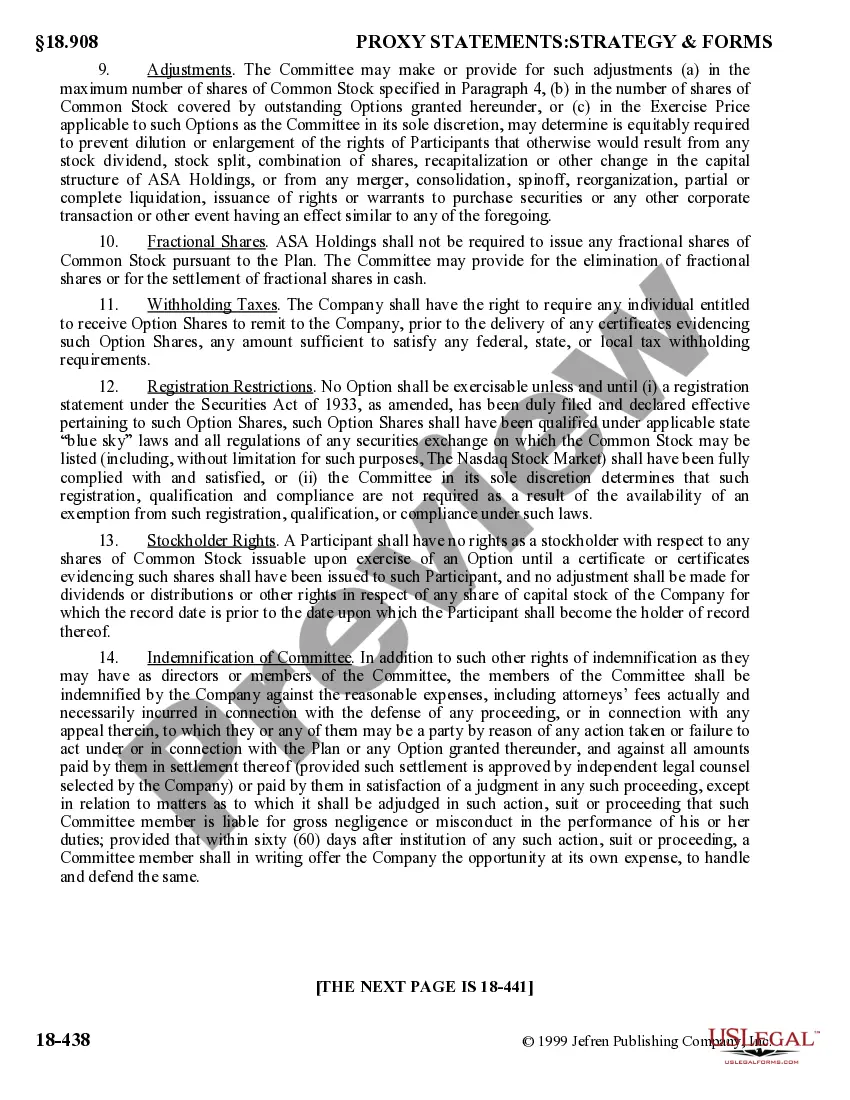
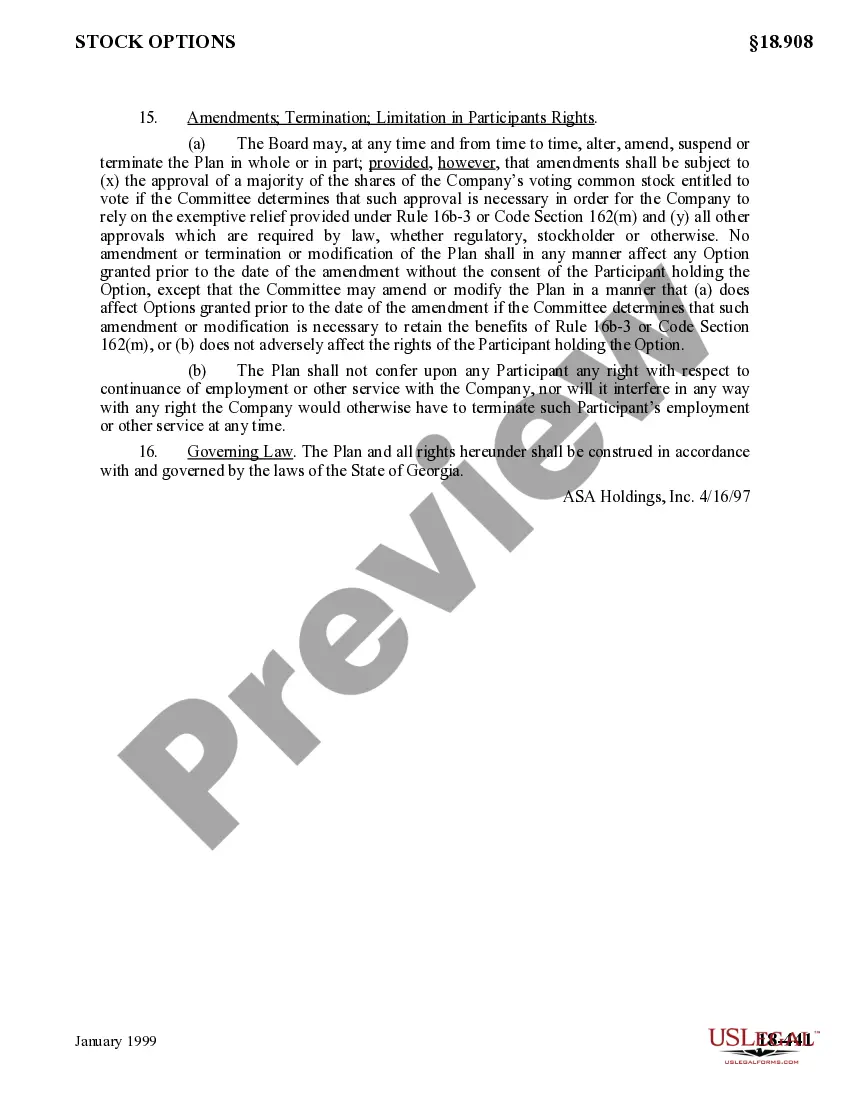
- Adjustment Provisions: Explains how changes in company structure or stock can affect option grants.
Common use cases
This form should be used by corporations like ASA Holdings when developing a nonqualified stock option plan to provide stock options as part of their employee compensation package. It is particularly relevant during times when a company seeks to incentivize performance or retain key employees amid competitive talent markets.
Who should use this form
- Corporation executives and board members who are designing compensation plans.
- Human Resources professionals involved in employee benefits and compensation management.
- Legal professionals advising corporations on compliance with securities laws and employee compensation regulations.
- Employees or prospective employees interested in understanding the terms of their stock options.
How to complete this form
- Identify the parties involved, including ASA Holdings and the eligible employees receiving options.
- Specify the number of shares being granted and document the exercise price in the option agreement.
- Determine the vesting schedule and expiration date for the options.
- Ensure that the agreement includes the required signatures from the committee members.
- Maintain records of shareholder approval where necessary, as specified in the document.
Is notarization required?
This form does not typically require notarization unless specified by local law. It is advisable to consult with a legal professional to determine if specific notarization is needed for your situation.
Get your form ready online
Our built-in tools help you complete, sign, share, and store your documents in one place.
Make edits, fill in missing information, and update formatting in US Legal Forms—just like you would in MS Word.
Download a copy, print it, send it by email, or mail it via USPS—whatever works best for your next step.
Sign and collect signatures with our SignNow integration. Send to multiple recipients, set reminders, and more. Go Premium to unlock E-Sign.
If this form requires notarization, complete it online through a secure video call—no need to meet a notary in person or wait for an appointment.
We protect your documents and personal data by following strict security and privacy standards.

Make edits, fill in missing information, and update formatting in US Legal Forms—just like you would in MS Word.

Download a copy, print it, send it by email, or mail it via USPS—whatever works best for your next step.

Sign and collect signatures with our SignNow integration. Send to multiple recipients, set reminders, and more. Go Premium to unlock E-Sign.

If this form requires notarization, complete it online through a secure video call—no need to meet a notary in person or wait for an appointment.

We protect your documents and personal data by following strict security and privacy standards.
Typical mistakes to avoid
- Failing to specify the correct exercise price in the option agreements.
- Not including adequate definitions for technical terms used in the plan.
- Overlooking the need for shareholder approval when modifying the plan.
- Neglecting to establish a clear vesting schedule for the options granted.
Why complete this form online
- Convenient access to a legally compliant stock option plan template.
- Editable features allow for customization based on specific corporate needs.
- Reliability of the document, ensuring that it meets standard legal requirements.
Legal use & context:
- This plan allows ASA Holdings, Inc. to grant stock options that align employee interests with shareholder value.
- Nonqualified stock options are subject to taxation at the time of exercise, impacting financial planning for participants.
- It is crucial for the organization to follow IRS regulations to maintain the validity of the stock option awards.
Looking for another form?
Form popularity
FAQ
Once you exercise your non-qualified stock option, the difference between the stock price and the strike price is taxed as ordinary income. This income is usually reported on your paystub. There are no tax consequences when you first receive your non-qualified stock option, only when you exercise your option.
What Is a Non-Qualified Stock Option (NSO)? A non-qualified stock option (NSO) is a type of employee stock option wherein you pay ordinary income tax on the difference between the grant price and the price at which you exercise the option.
However, when you sell an optionor the stock you acquired by exercising the optionyou must report the profit or loss on Schedule D of your Form 1040. If you've held the stock or option for less than one year, your sale will result in a short-term gain or loss, which will either add to or reduce your ordinary income.
Once you exercise your non-qualified stock option, the difference between the stock price and the strike price is taxed as ordinary income. This income is usually reported on your paystub.If you hold the shares for less than one year, any gain is taxed at your ordinary income tax rates, which are usually higher.
Employers must report the income from a 2020 exercise of Non-qualified Stock Options in Box 12 of the 2020 Form W-2 using the code V. The compensation element is already included in Boxes 1, 3 (if applicable) and 5, but is also reported separately in Box 12 to clearly indicate the amount of compensation arising from
If you exercised nonqualified stock options (NQSOs) last year, the income you recognized at exercise is reported on your W-2. It appears on the W-2 with other income in: Box 1: Wages, tips, and other compensation. Box 3: Social Security wages (up to the income ceiling)
The Cost Basis of Your Non-Qualified Stock Options The cost basis is equal to the exercise price, multiplied by the number of shares exercised. In our example above, the cost basis is equal to 2,000 shares times $50/share, or $100,000.
Start with Form 8949, Part I, Short-Term Capital Gains and Losses. Check Box C since you did not receive a Form 1099. On Line 1, Column A, Description of Property, enter the name of the company or its symbol, and after that write "call options" and the number of call options you sold.