Stock Option and Incentive Plan of Hurco Companies, Inc.
What is this form?
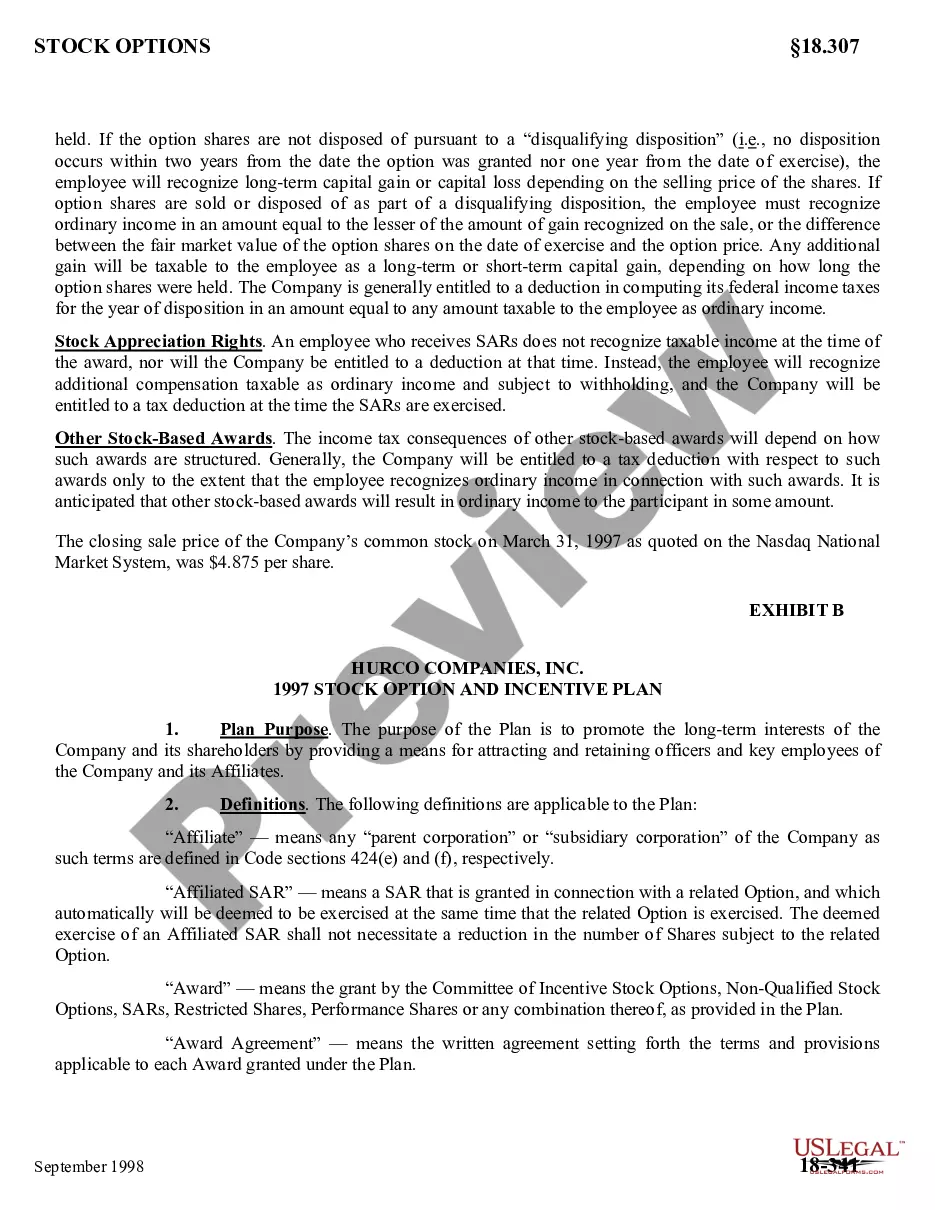
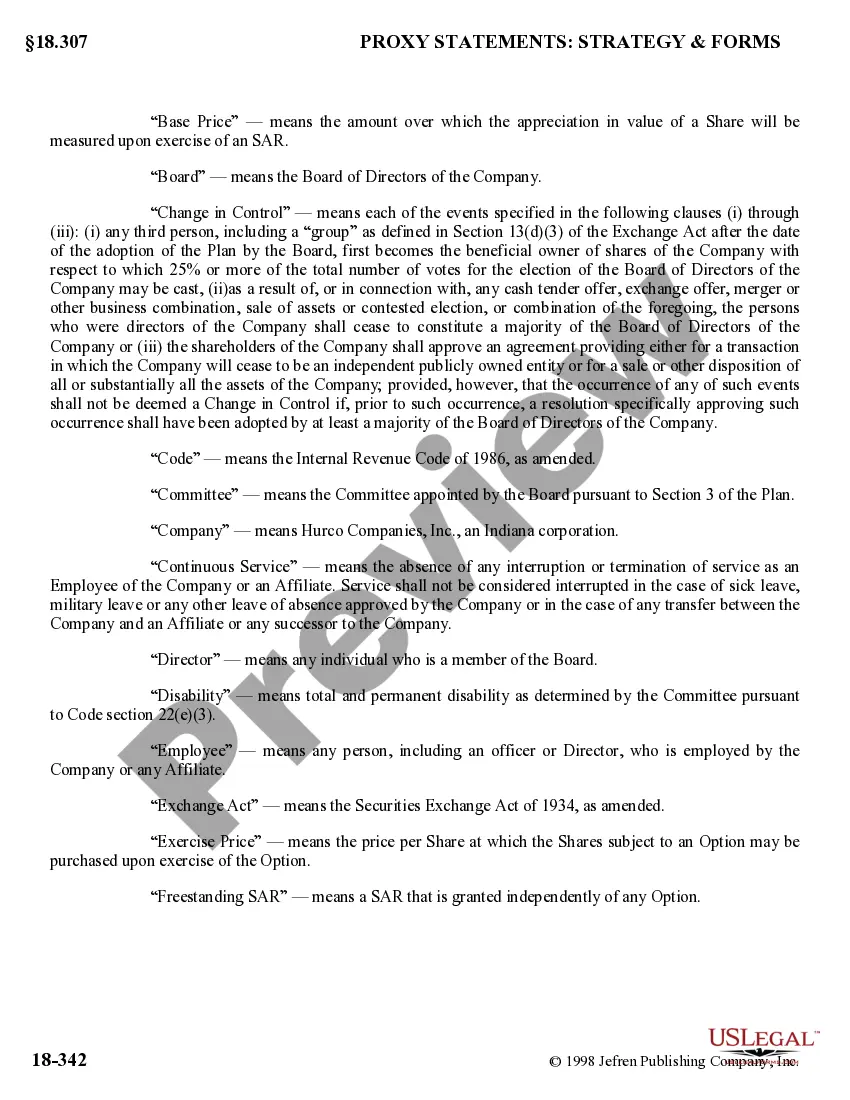
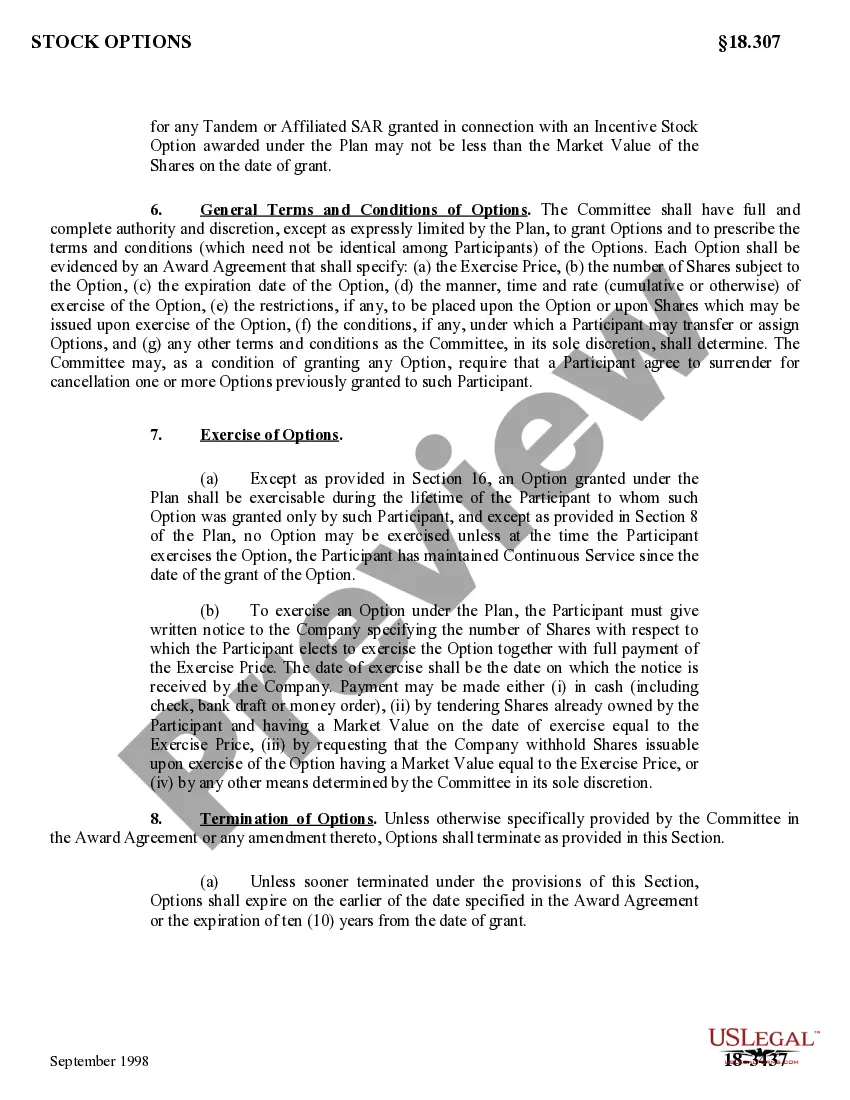
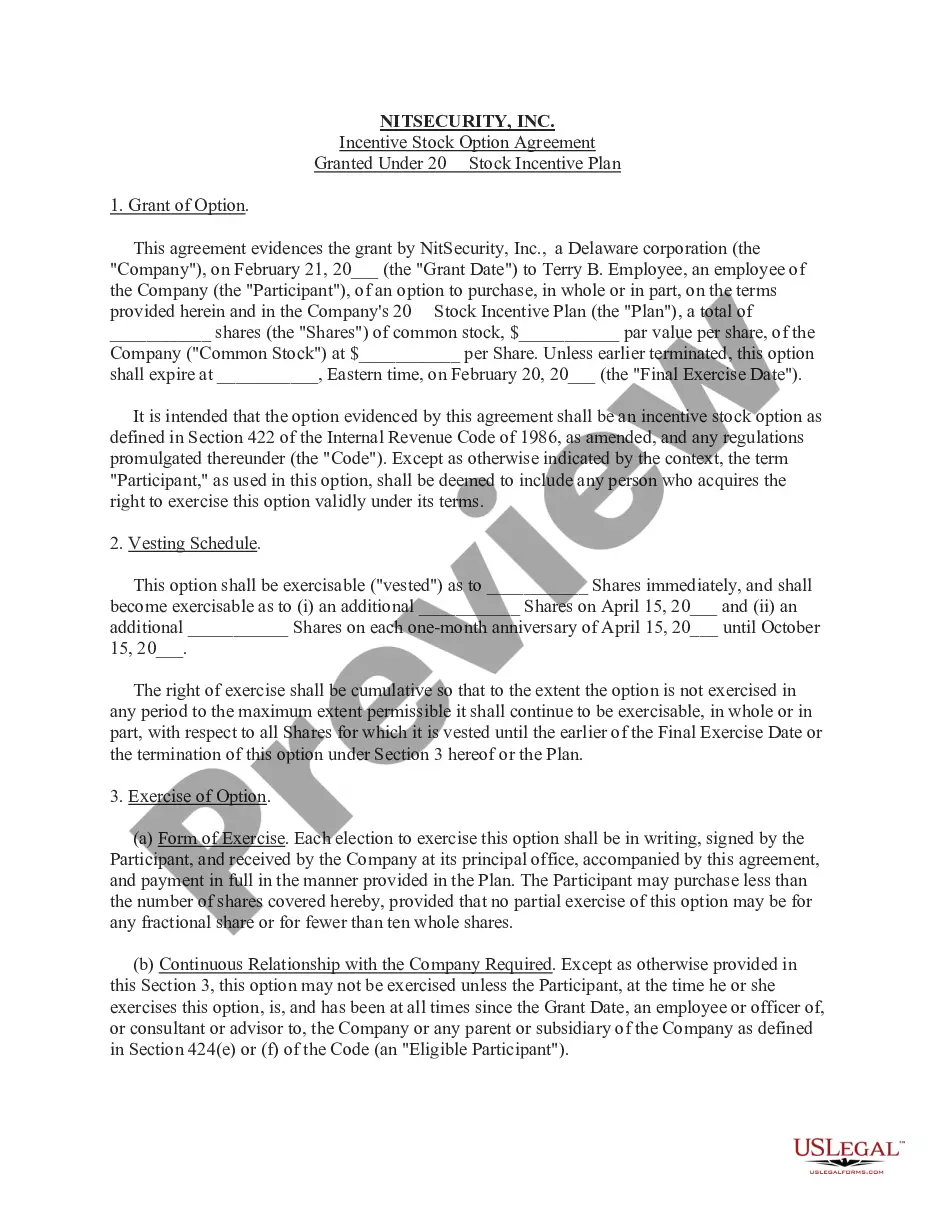
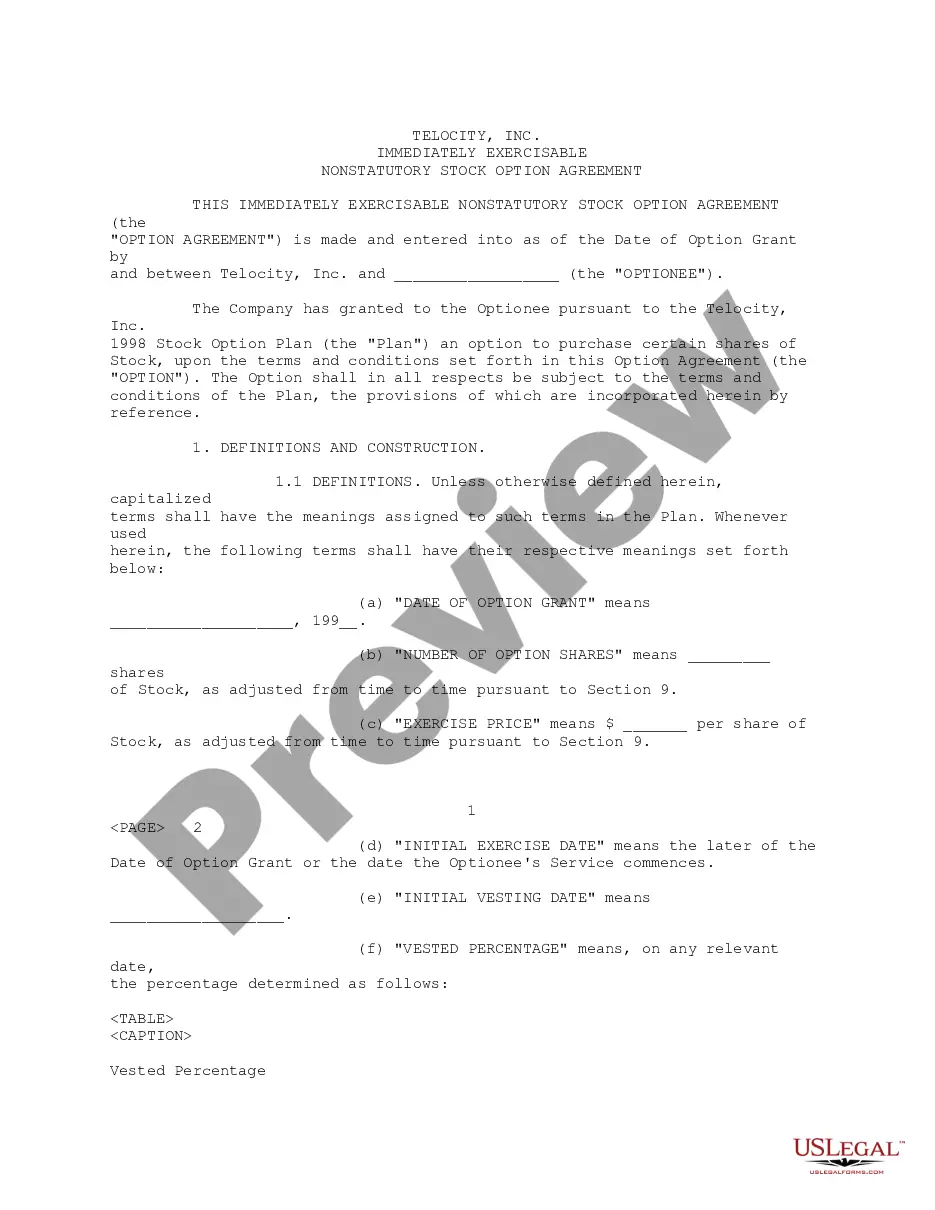
The Stock Option and Incentive Plan of Hurco Companies, Inc. is a formal document that outlines the terms and conditions under which the company can provide stock options and various incentive awards to employees. This plan allows the Compensation Committee to grant various options, including Incentive Stock Options and Non-qualified Stock Options, among others. Unlike other employee benefit plans, this plan specifically focuses on stock-based compensation to motivate and retain key personnel within the company.
Key components of this form
- Plan Purpose: Designed to attract and retain key employees through stock-based awards.
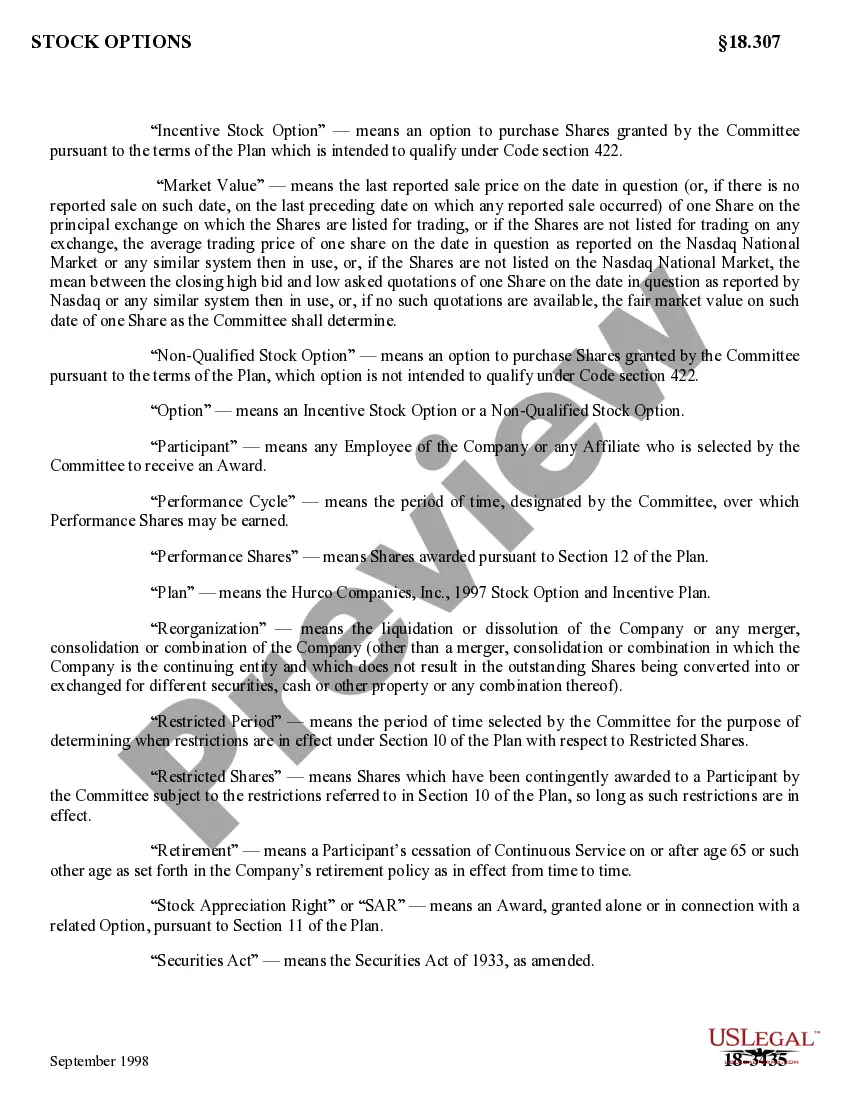
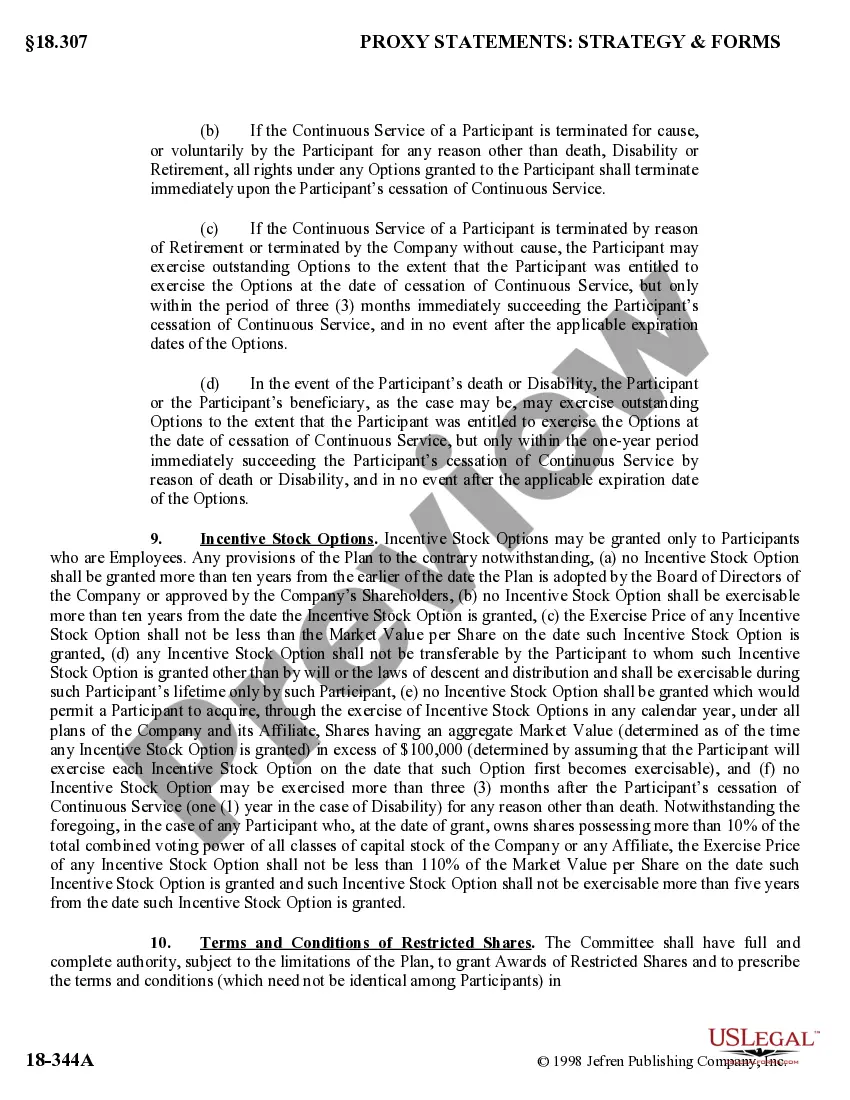
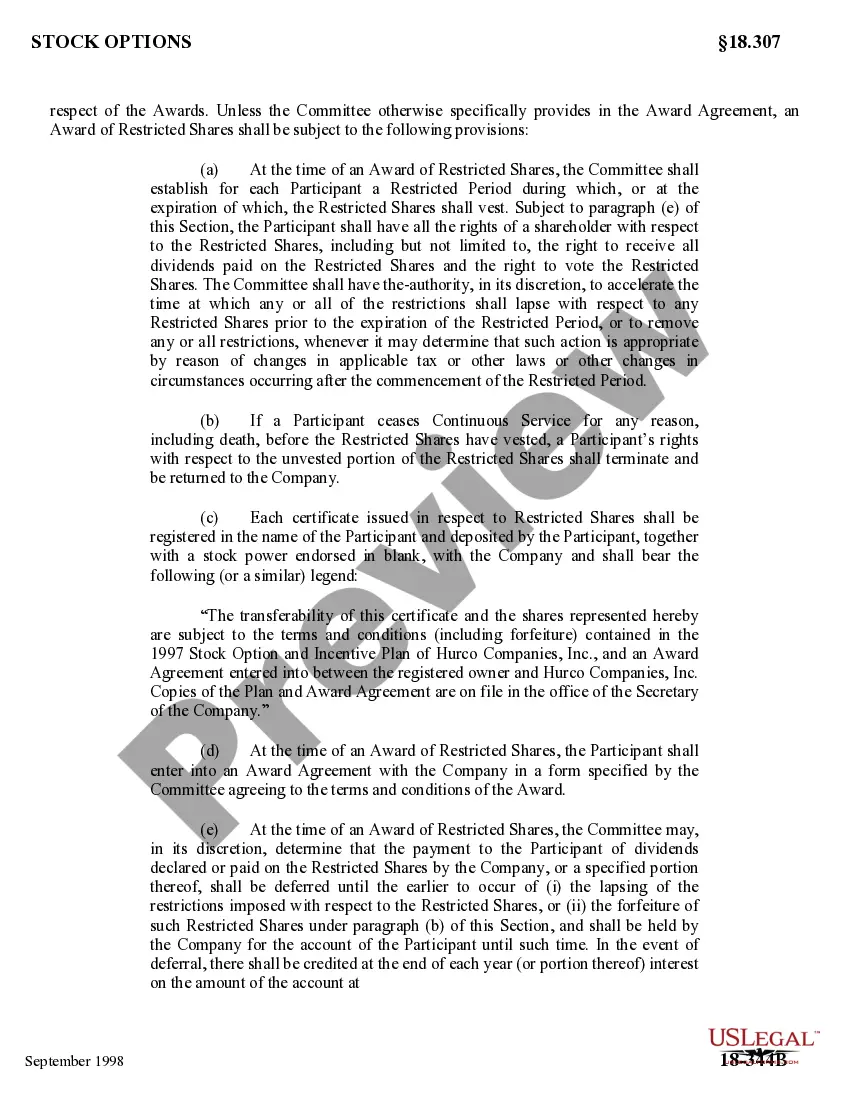
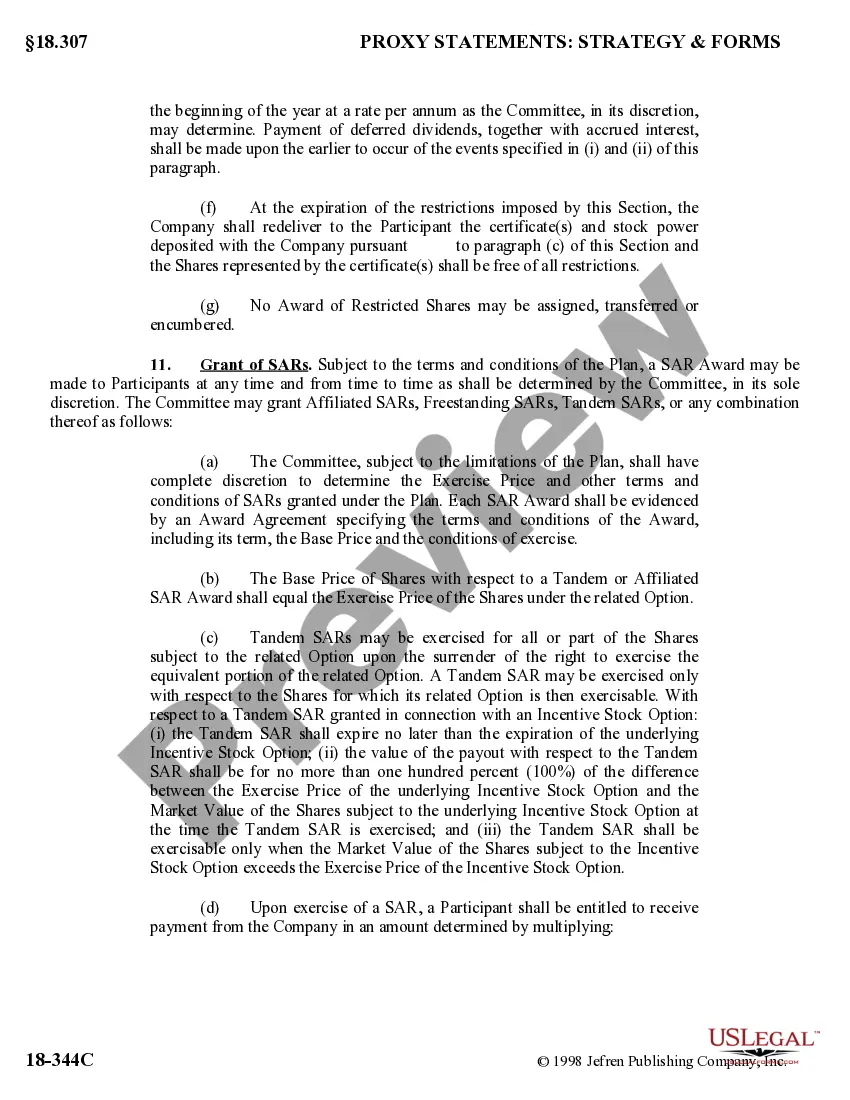
- Award Types: Includes Incentive Stock Options, Non-qualified Stock Options, Stock Appreciation Rights (SARs), Restricted Shares, and Performance Shares.
- Tax Implications: Different tax treatments for options and awards, affecting both employees and the company.
- Termination Conditions: Specifies conditions under which options may expire, especially in cases of retirement or termination.
- Exercise Procedures: Details how and when options can be exercised and the requirements for exercise.



When to use this document
This form is needed when a company, like Hurco Companies, Inc., wants to implement or modify a stock option and incentive program. It is ideal for organizations looking to provide stock-based incentives to attract, retain, and motivate employees. The plan may be particularly relevant during times of company restructuring, growth, or when trying to align employee performance with company goals.
Who should use this form
This plan is meant for:
- Human resources personnel involved in employee compensation.
- Executives and board members of Hurco Companies, Inc.
- Employees eligible for stock-based compensation and awards under the plan.
- Legal professionals advising on employee benefit plans.
Instructions for completing this form
To complete the Stock Option and Incentive Plan of Hurco Companies, Inc., follow these steps:
- Identify the key personnel who will administer the plan.
- Define the categories of awards to be granted (e.g., options, SARs).
- Establish the eligibility criteria for employees under the plan.
- Outline the methods for granting and exercising options.
- Include the necessary provisions for terminating options and awarding shares.
Notarization guidance
This form does not typically require notarization unless specified by local law. It is advisable to check relevant regulations if the plan includes special provisions for employee agreements.
Get your form ready online
Our built-in tools help you complete, sign, share, and store your documents in one place.
Make edits, fill in missing information, and update formatting in US Legal Forms—just like you would in MS Word.
Download a copy, print it, send it by email, or mail it via USPS—whatever works best for your next step.
Sign and collect signatures with our SignNow integration. Send to multiple recipients, set reminders, and more. Go Premium to unlock E-Sign.
If this form requires notarization, complete it online through a secure video call—no need to meet a notary in person or wait for an appointment.
We protect your documents and personal data by following strict security and privacy standards.

Make edits, fill in missing information, and update formatting in US Legal Forms—just like you would in MS Word.

Download a copy, print it, send it by email, or mail it via USPS—whatever works best for your next step.

Sign and collect signatures with our SignNow integration. Send to multiple recipients, set reminders, and more. Go Premium to unlock E-Sign.

If this form requires notarization, complete it online through a secure video call—no need to meet a notary in person or wait for an appointment.

We protect your documents and personal data by following strict security and privacy standards.
Common mistakes
- Failing to clearly define eligibility requirements for employees.
- Not adhering to tax implications associated with different awards.
- Overlooking the specific terms for the exercise of options.
- Neglecting to update the plan in accordance with changes in regulations.
- Confusing the various types of stock awards and their respective rules.
Advantages of online completion
- Convenience of downloadable forms for immediate use.
- Editability allows for customization according to specific company needs.
- Reliability of attorney-drafted templates ensures legal compliance.
- Access to real-time updates on legal changes related to stock options.
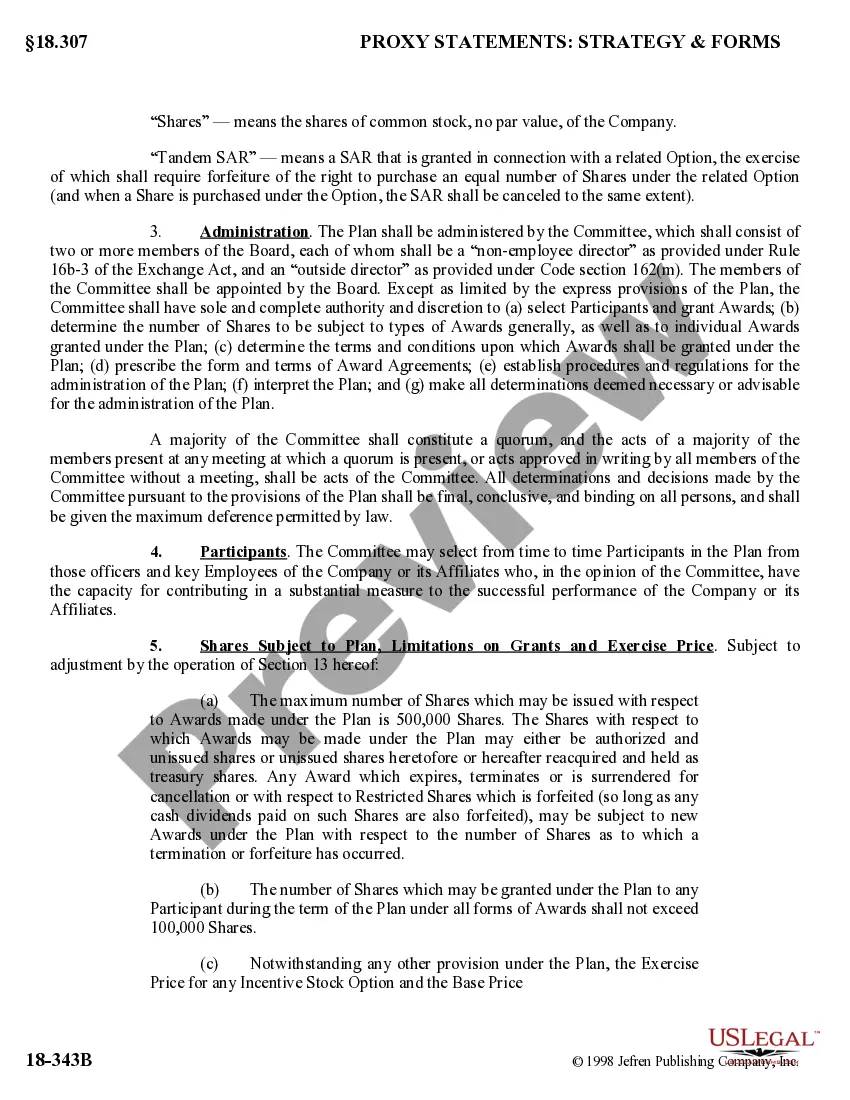
- The plan must be administered by a qualified Compensation Committee, defined as specified in the document.
- Participants have no guaranteed right to awards unless selected by the Committee and specified in an Award Agreement.
- Compliance with tax regulations is critical for both the company and the participants to avoid unexpected tax liabilities.
Quick recap
- The Stock Option and Incentive Plan helps retain and motivate employees by linking their compensation with company performance.
- Understanding the tax implications of different awards is crucial for both the employer and participants.
- It is essential to define clear eligibility criteria and comply with any applicable laws in the jurisdiction of use.
- Award Agreement: The contract that outlines the terms of the stock options or awards granted to employees.
- Incentive Stock Option: A type of stock option that can qualify for favorable tax treatment.
- Performance Shares: Shares awarded based on the achievement of specific performance goals.
- Stock Appreciation Right (SAR): A right to receive cash or stock based on the appreciation of company stock over a specific period.
- Vesting: The process by which an employee earns the right to exercise their stock options over time.
Looking for another form?





Form popularity
FAQ
Companies generally receive no deduction for qualified stock options, so the tax advantage accrues to the employee, not the employer.
For regular tax purposes, the cost basis of the ISO shares is the price paidthe exercise or strike price. For AMT purposes, the cost basis is the strike price plus the AMT adjustmentthe amount reported on Form 6251, line 2i.
Incentive stock options (ISOs), are a type of employee stock option that can be granted only to employees and confer a U.S. tax benefit. ISOs are also sometimes referred to as statutory stock options by the IRS. ISOs have a strike price, which is the price a holder must pay to purchase one share of the stock.
You report the taxable income only when you sell the stock.There is a catch with Incentive Stock Options, however: you do have to report that bargain element as taxable compensation for Alternative Minimum Tax (AMT) purposes in the year you exercise the options (unless you sell the stock in the same year).
Exercise early and File an 83(b) Election. Exercise and Hold for Long Term Capital Gains. Exercise Just Enough Options Each Year to Avoid AMT. Exercise ISOs In January to Maximize Your Float Before Paying AMT. Get Refund Credit for AMT Previously Paid on ISOs. Reduce the AMT on the ISOs by Exercising NSOs.
Incentive stock options (ISOs) can only be granted to employees. Non-qualified stock options (NSOs) can be granted to anyone, including employees, consultants and directors.
RSUs are generally always worth something versus stock options, which can expire worthless if the stock price is below the strike price. Additionally, with RSUs you don't have to come up with the cash to exercise the options if your company doesn't offer some sort of cashless exercise option.
The Optimal Time to Exercise is When Your Company Files For an IPO. Earlier in this post I explained that exercised shares qualify for the much lower long-term capital gains tax rate if they have been held for more than a year post-exercise and your options were granted more than two years prior to sale.
You report the taxable income only when you sell the stock.There is a catch with Incentive Stock Options, however: you do have to report that bargain element as taxable compensation for Alternative Minimum Tax (AMT) purposes in the year you exercise the options (unless you sell the stock in the same year).