Nonemployee Director Stock Option Plan of U.S. Bancorp
About this form
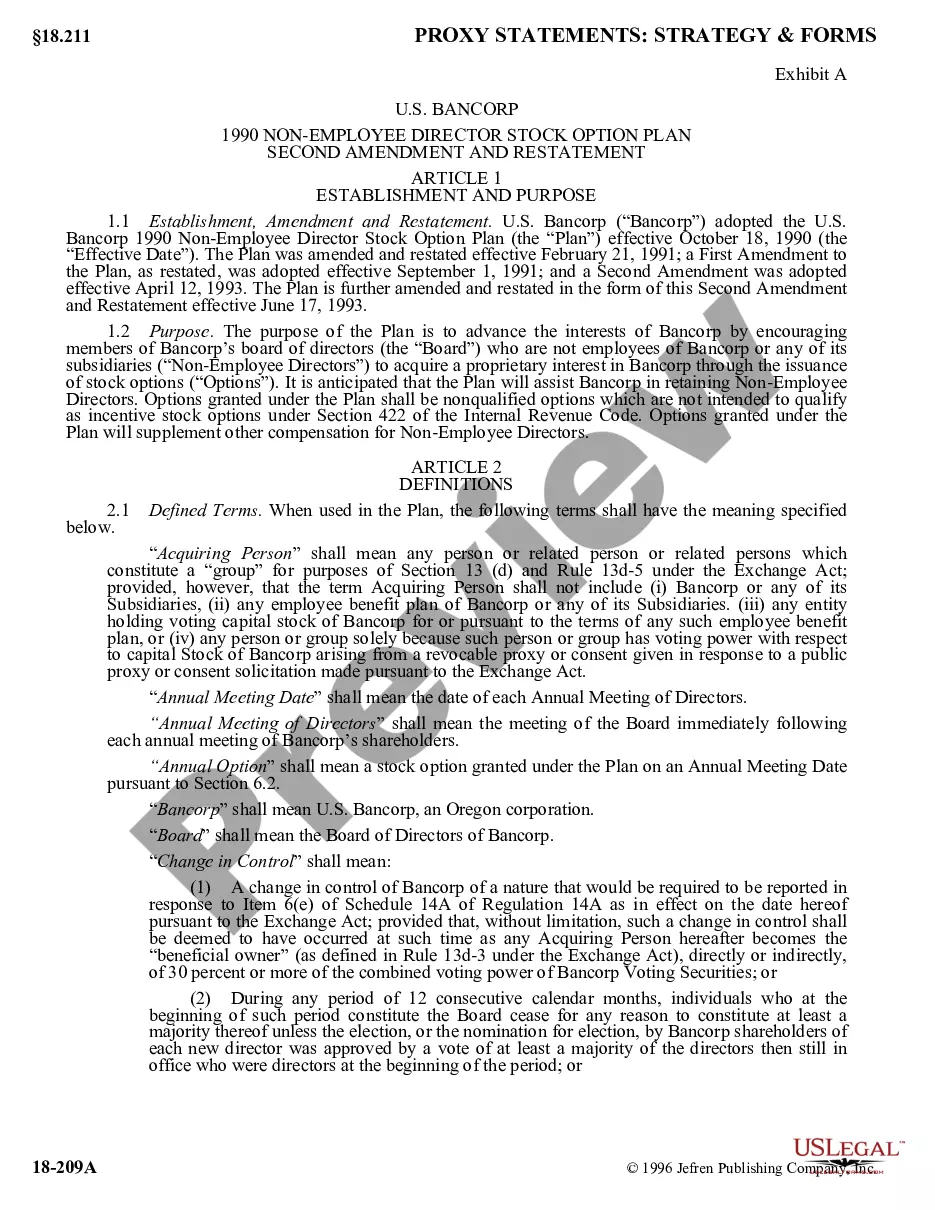
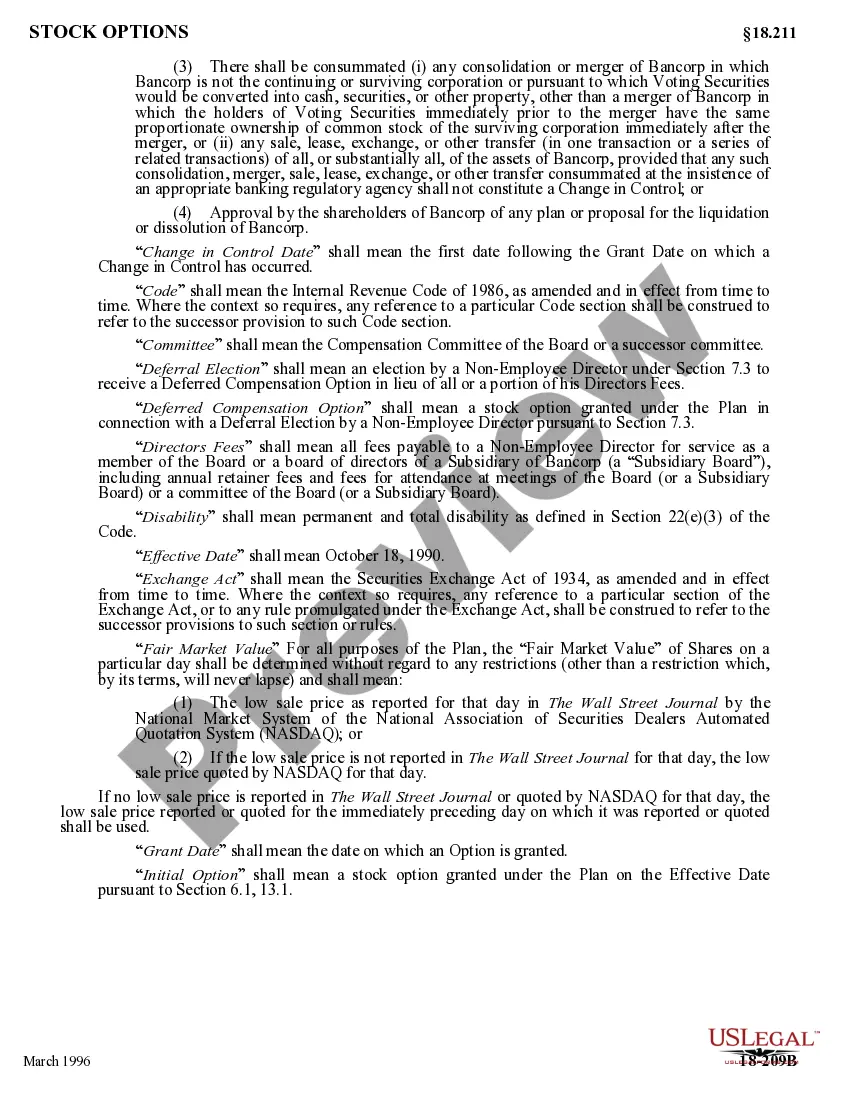
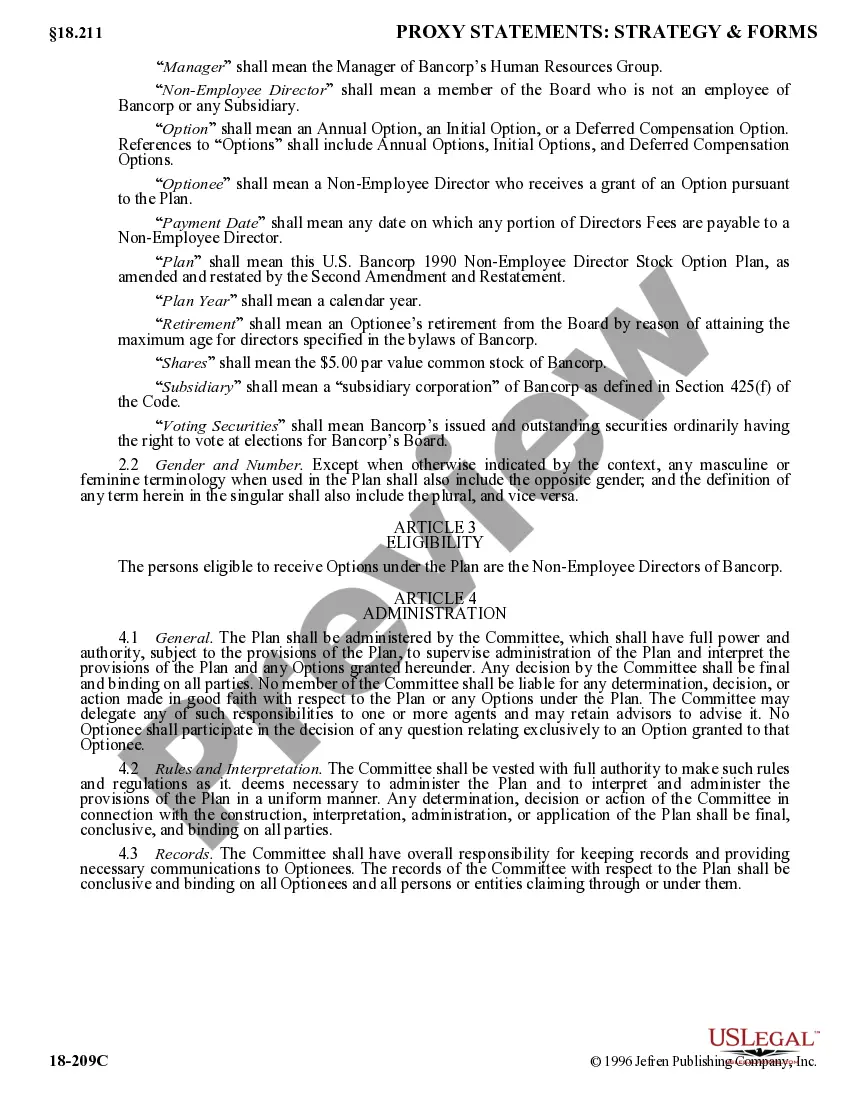
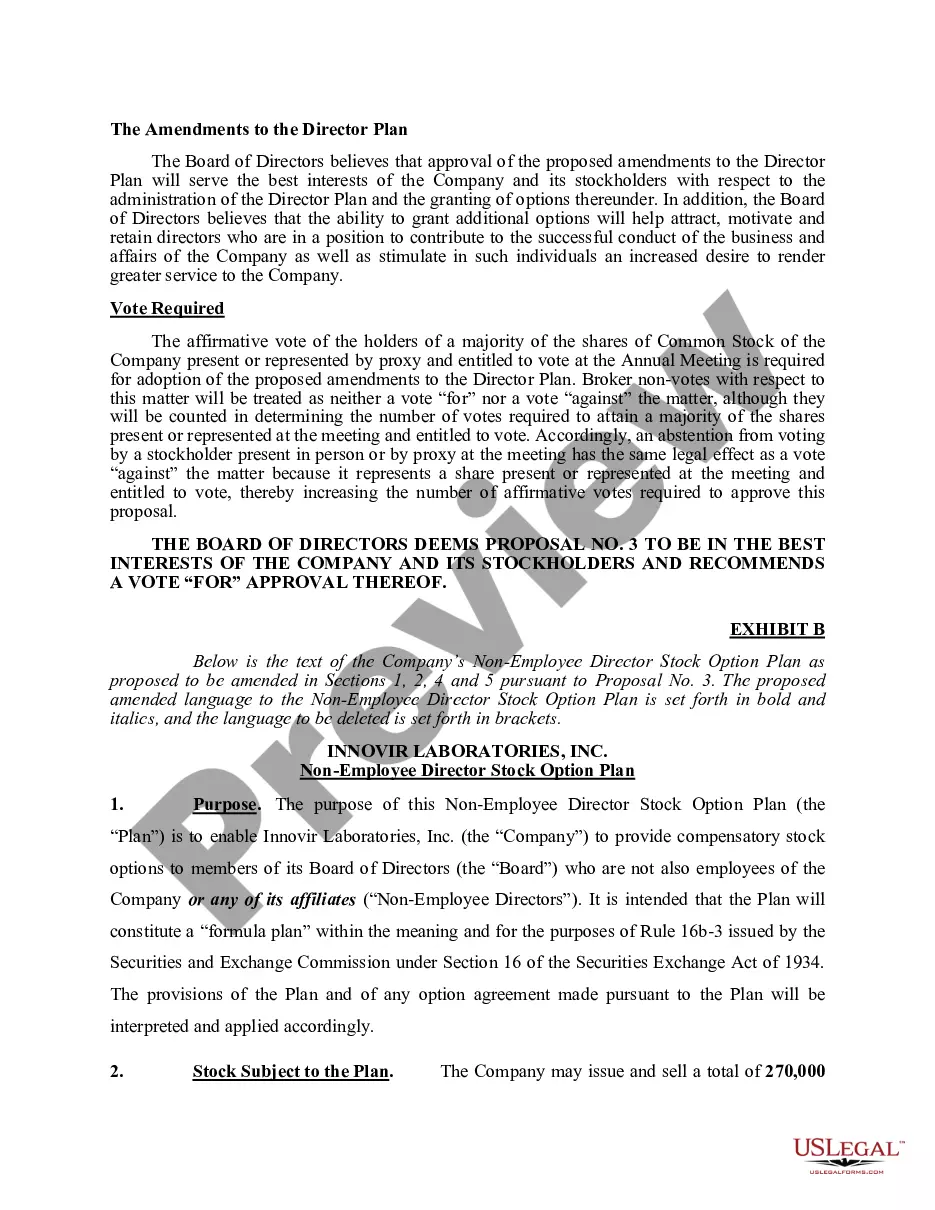
The Nonemployee Director Stock Option Plan of U.S. Bancorp is a legal document that facilitates the granting of stock options to non-employee directors of U.S. Bancorp. Its primary purpose is to provide a means for these directors to acquire equity in the company, thereby aligning their interests with those of shareholders. This plan allows for deferred compensation options, enhancing the flexibility and compensation package for non-employee directors compared to standard director fee structures.
Form components explained
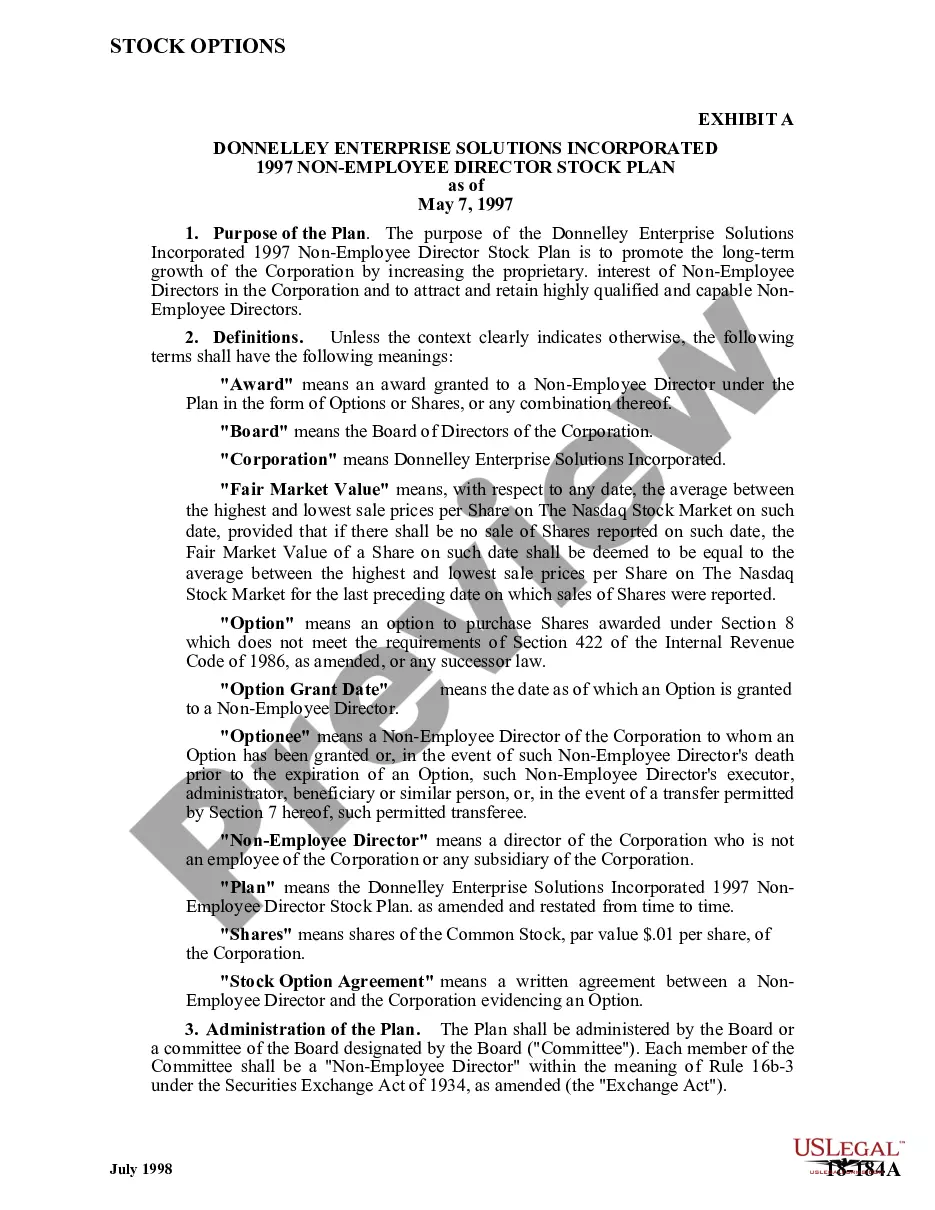
- Establishment and purpose of the stock option plan.
- Eligibility criteria for non-employee directors to receive stock options.
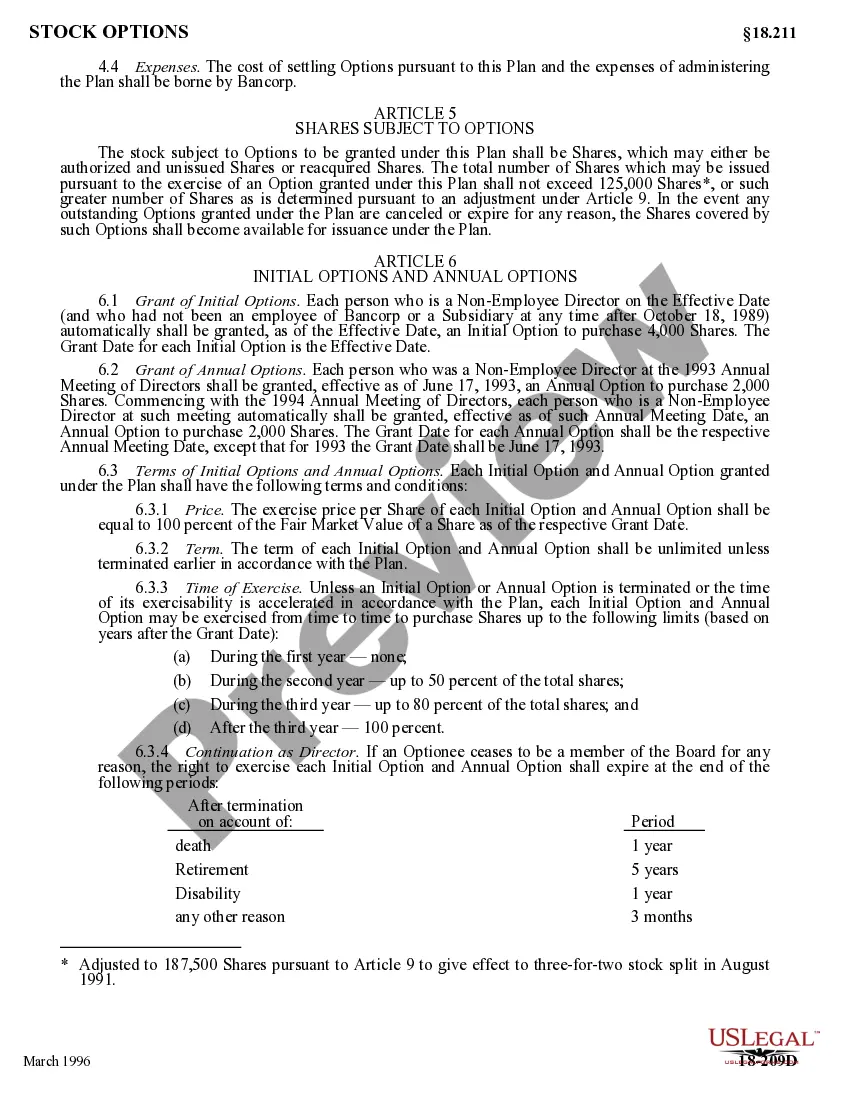
- Details regarding initial options and annual options granted under the plan.
- Specific mechanisms for deferred compensation options.
- Procedures for exercising options and payment methods.
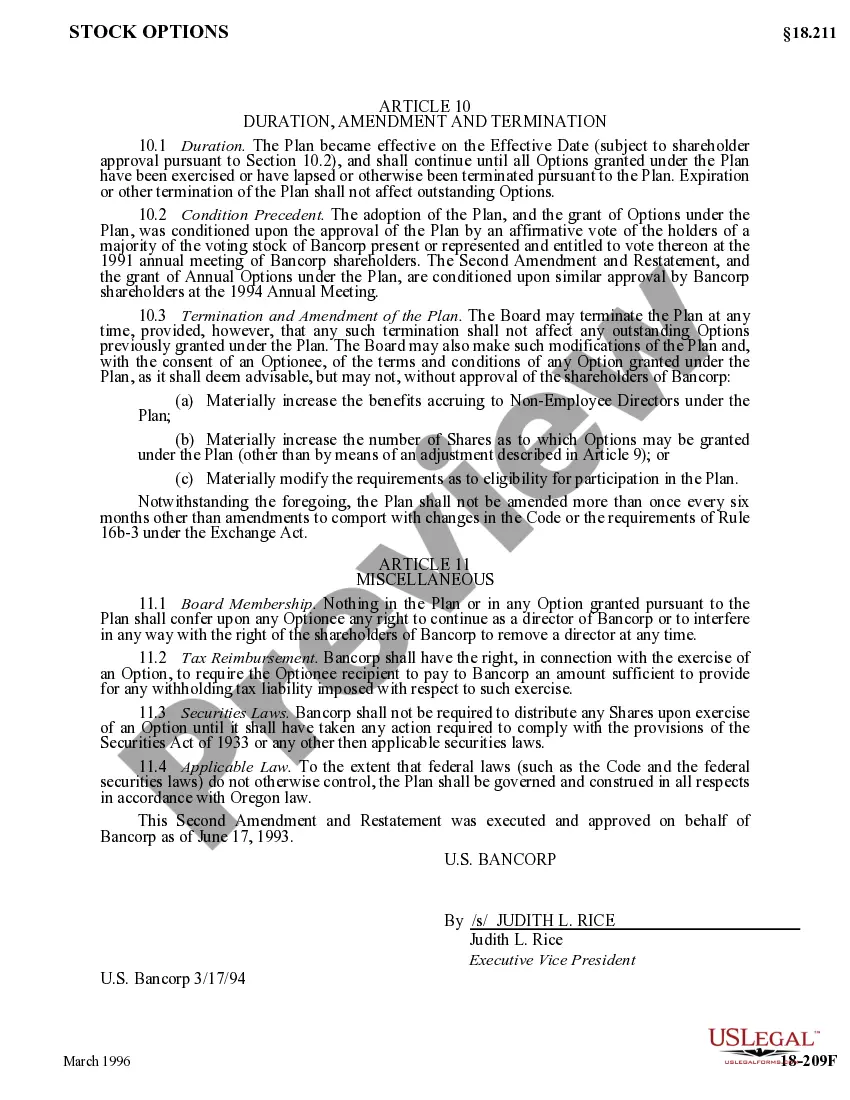
- Conditions for acceleration and expiration of options based on director status changes.






Situations where this form applies
This form should be used when U.S. Bancorp wishes to establish or amend a stock option plan for its non-employee directors. It is particularly relevant during the appointment of new board members, the setting of compensation packages, or when modifying existing options in response to changes in corporate governance or performance measures.
Who needs this form
The following individuals or entities are intended users of this form:
- U.S. Bancorp, as the company offering the stock options.
- Non-employee directors who are receiving stock options under this plan.
- Legal advisors involved in corporate governance matters.
- Human Resources professionals responsible for board compensation structures.
Instructions for completing this form
- Identify the effective date of the plan and any amendments.
- Specify the eligibility criteria for non-employee directors.
- Define the stock option amounts and grant dates for both initial and annual options.
- Outline the deferral options and establish any required elections by the directors.
- Detail the process for exercising options, including payment methods.
- Ensure that the plan is administered by the appointed committee with proper record-keeping.
Notarization guidance
Notarization is generally not required for this form. However, certain states or situations might demand it. You can complete notarization online through US Legal Forms, powered by Notarize, using a verified video call available anytime.
Get your form ready online
Our built-in tools help you complete, sign, share, and store your documents in one place.
Make edits, fill in missing information, and update formatting in US Legal Forms—just like you would in MS Word.
Download a copy, print it, send it by email, or mail it via USPS—whatever works best for your next step.
Sign and collect signatures with our SignNow integration. Send to multiple recipients, set reminders, and more. Go Premium to unlock E-Sign.
If this form requires notarization, complete it online through a secure video call—no need to meet a notary in person or wait for an appointment.
We protect your documents and personal data by following strict security and privacy standards.

Make edits, fill in missing information, and update formatting in US Legal Forms—just like you would in MS Word.

Download a copy, print it, send it by email, or mail it via USPS—whatever works best for your next step.

Sign and collect signatures with our SignNow integration. Send to multiple recipients, set reminders, and more. Go Premium to unlock E-Sign.

If this form requires notarization, complete it online through a secure video call—no need to meet a notary in person or wait for an appointment.

We protect your documents and personal data by following strict security and privacy standards.
Mistakes to watch out for
- Failing to update the plan in accordance with changes in tax laws.
- Not clearly defining eligibility criteria for stock options.
- Overlooking the required approval by shareholders for amendments.
- Incorrectly calculating the fair market value for stock options.
Benefits of using this form online
- Convenient access and editing capabilities from any location.
- Reliability of having the latest legal templates drafted by licensed attorneys.
- Ability to store and retrieve completed forms securely online.
Legal use & context
- The plan must comply with federal securities laws and the Internal Revenue Code.
- It is important that the company member's rights and obligations are clearly defined.
- Options must be exercised in accordance with the established terms of the plan.
Key takeaways
- This plan allows non-employee directors of U.S. Bancorp to receive stock options as a part of their compensation.
- The form outlines the eligibility, administration, and exercise procedures for the options granted.
- Understanding the legal context is vital for compliance and effective use of this stock option plan.
Looking for another form?





Form popularity
FAQ
Trading options on stocks can be used in versatile ways, from hedging and spreading to speculation. Not all stocks, however, have listed options available for trading. You can determine if a stock has listed options by checking with your broker, with an options exchange, or with the options industry council.
When you exercise your non-qualified stock options, the value of the bargain element will be treated as earned income that is reported on your tax return the same way as your regular earned income.
There are two main types of employee stock optionsnon-qualified stock options (NSOs) and incentive stock options (ISOs). One difference between them is eligibility. Companies can grant the former to employees, consultants, and advisors; however, only employees can receive ISOs.
What Is a Non-Qualified Stock Option (NSO)? A non-qualified stock option (NSO) is a type of employee stock option wherein you pay ordinary income tax on the difference between the grant price and the price at which you exercise the option.
Stock options at private companies are often issued with a low strike price. This allows you a chance to buy shares for a low cost, which requires less cash up front.You'll want to know how much cash you may need to purchase shares and to cover the tax bill if you exercise and hold your shares.
Stock options are of two main types. Incentive stock options, generally only offered to key employees and top management, receive preferential tax treatment in many cases, as the IRS treats gains on such options as long-term capital gains.
Qualified stock options, also known as incentive stock options, can only be granted to employees. Non-qualified stock options can be granted to employees, directors, contractors and others. This gives you greater flexibility to recognize the contributions of non-employees.