Trust Agreement between Insituform Southeast Corp. and Trustee
What this document covers
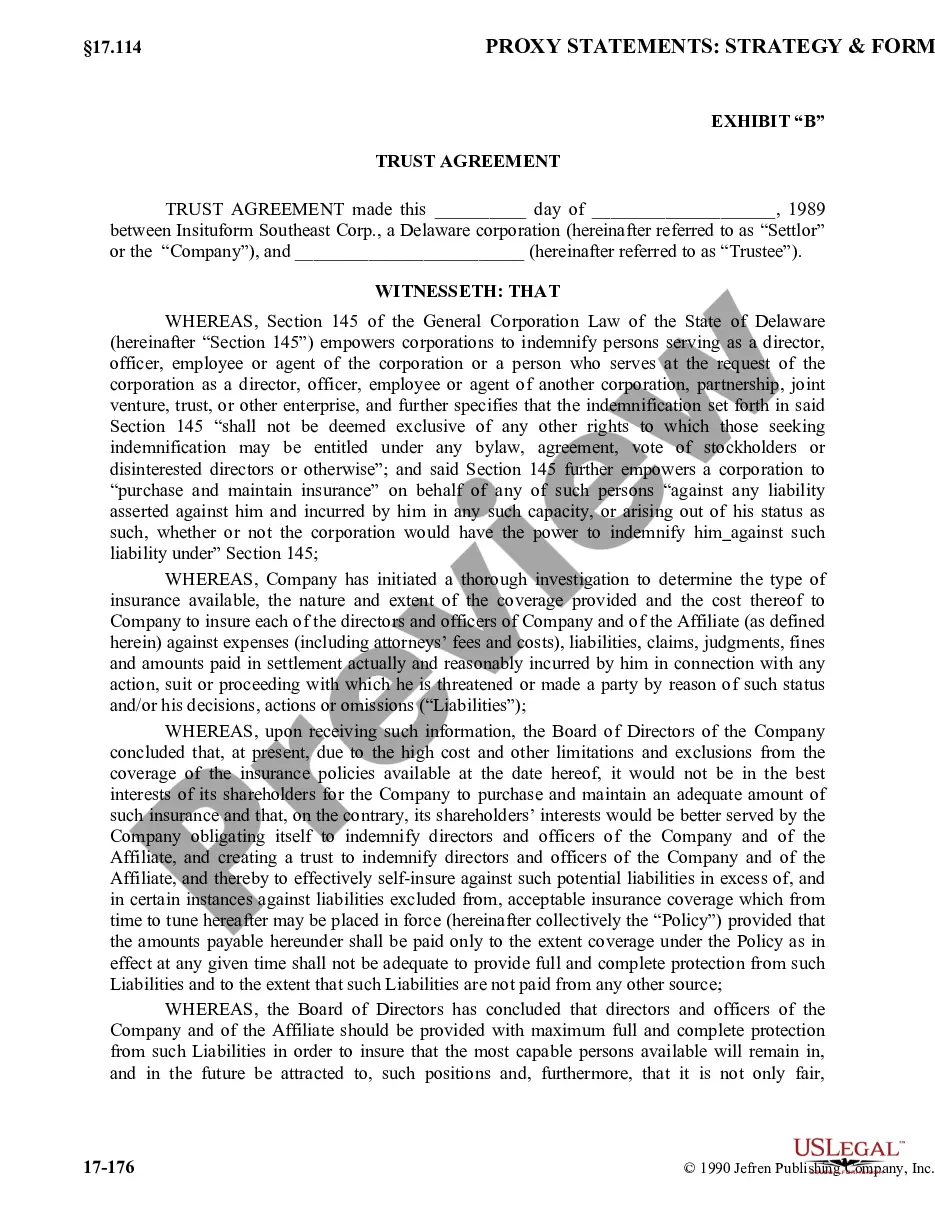
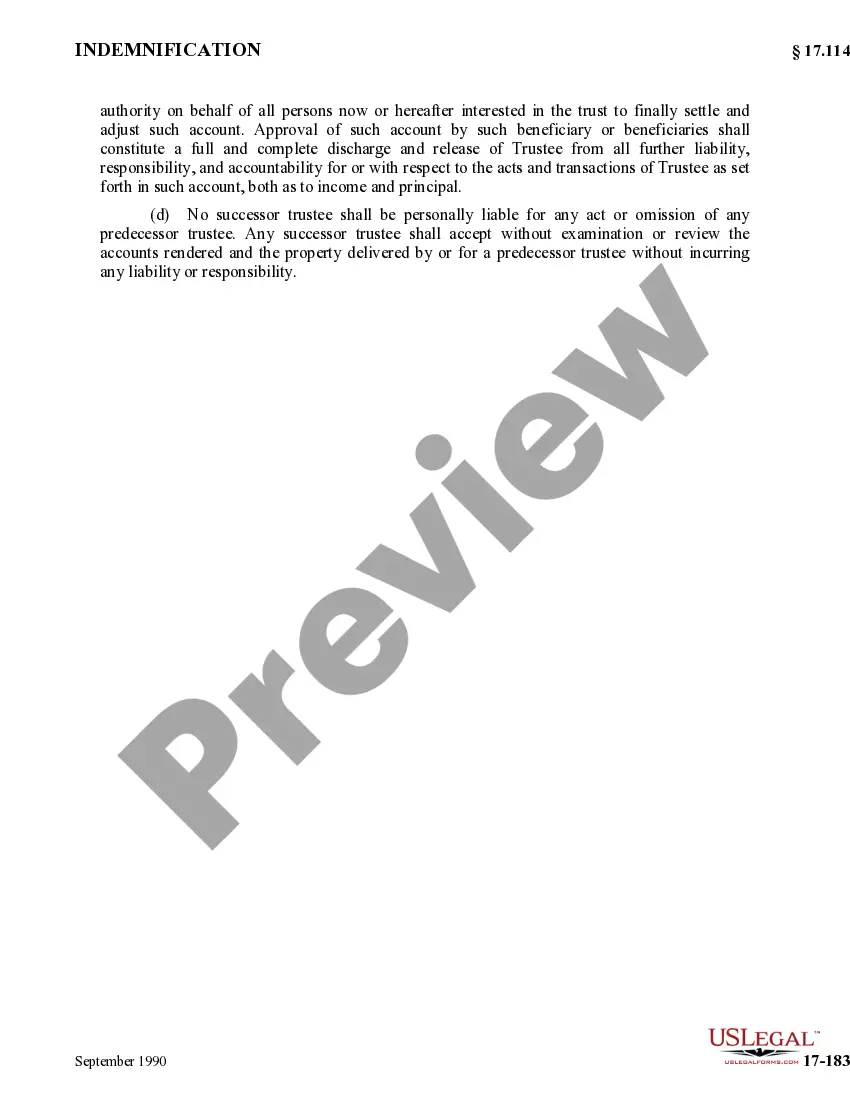
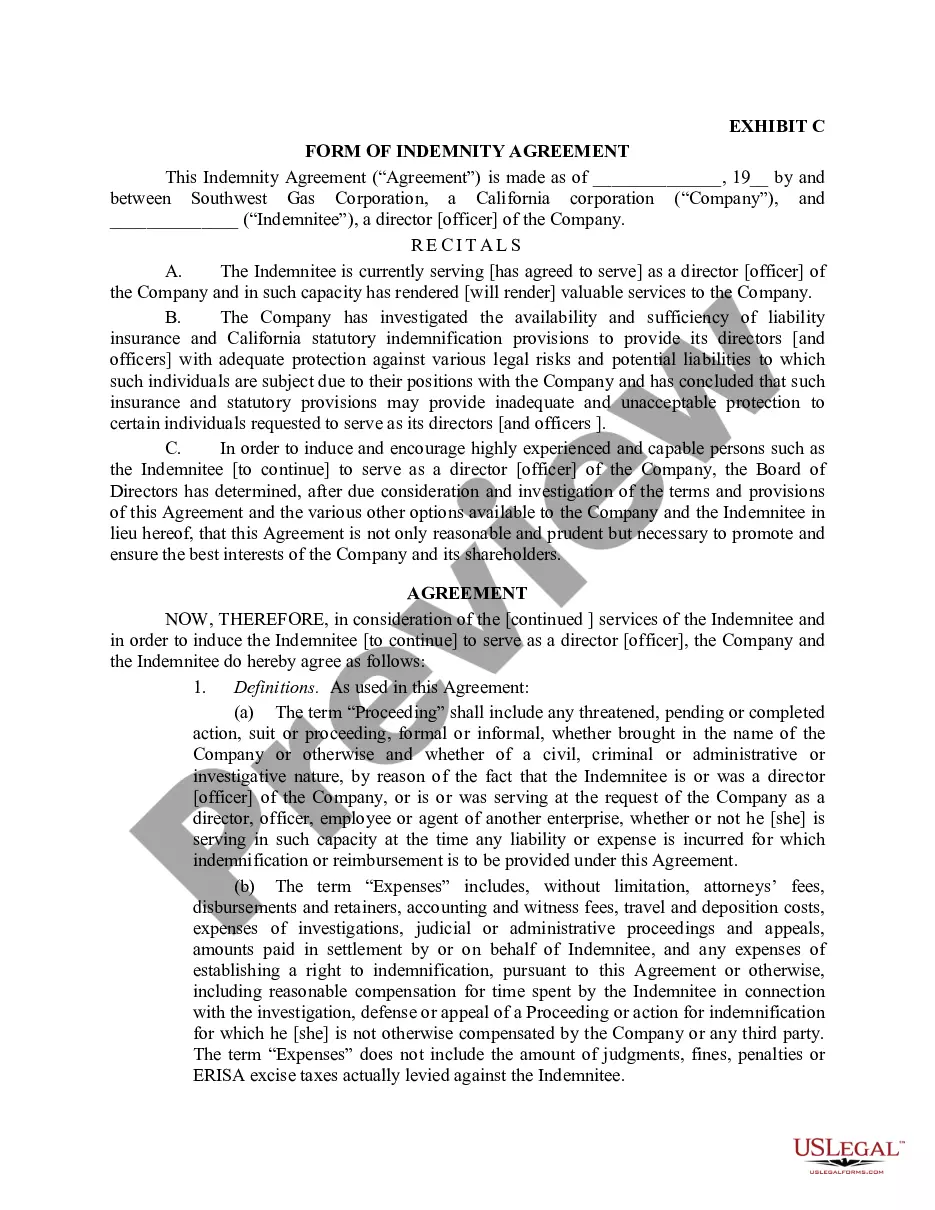
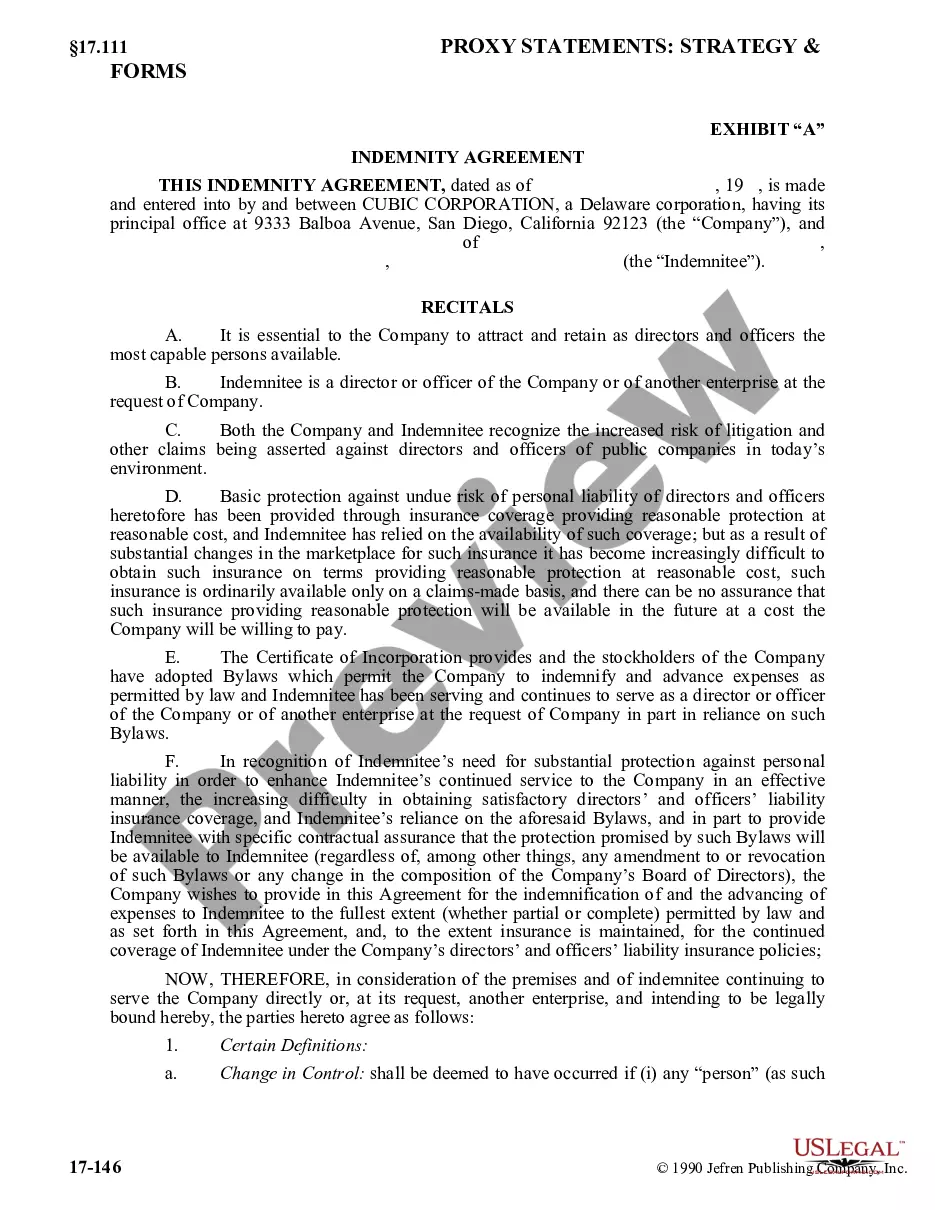
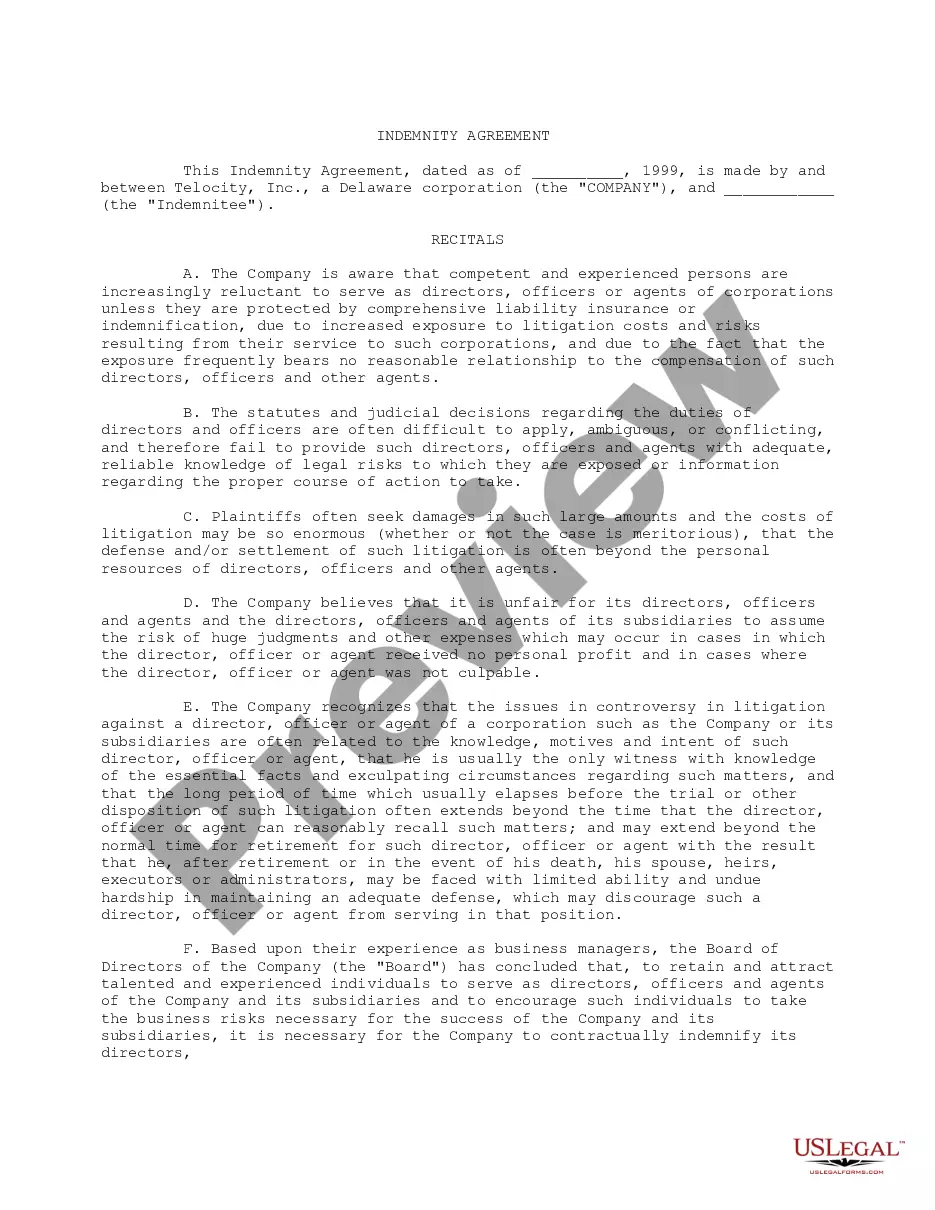
The Trust Agreement between Insituform Southeast Corp. and Trustee is a legal document that establishes an irrevocable trust dedicated to funding the payment of liabilities and expenses related to claims involving corporate directors or officers. This form is used when a corporation wishes to provide financial protection for its leadership against potential legal claims arising from their roles, allowing them to serve without undue concern of personal financial liability. This trust facilitates indemnification, a process distinct from insurance policies, wherein the corporation self-insures against specific potential liabilities.
Key parts of this document
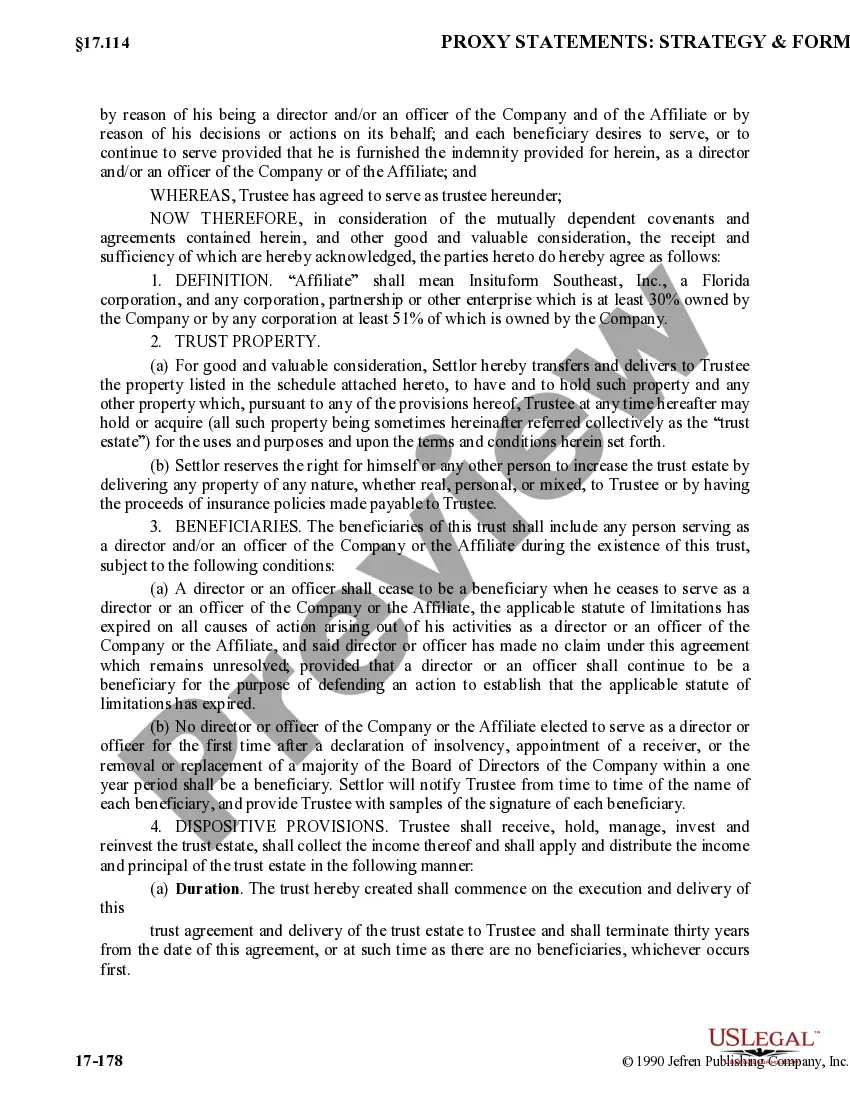
- Definitions of key terms such as "Settlor" (the corporation) and "Trustee".
- Specification of trust property and rights to add additional assets.
- Conditions outlining the beneficiaries, primarily the directors and officers of the corporation.
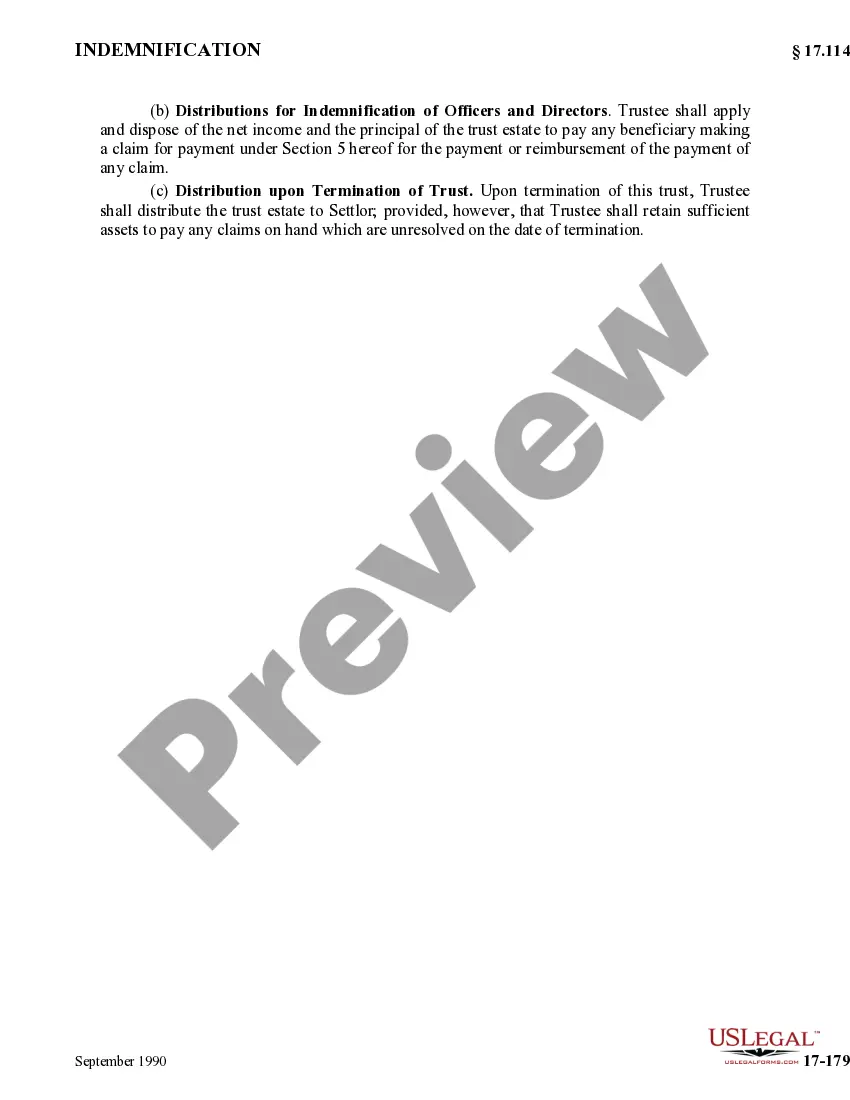
- Dispositive provisions detailing how and when funds are distributed to beneficiaries.
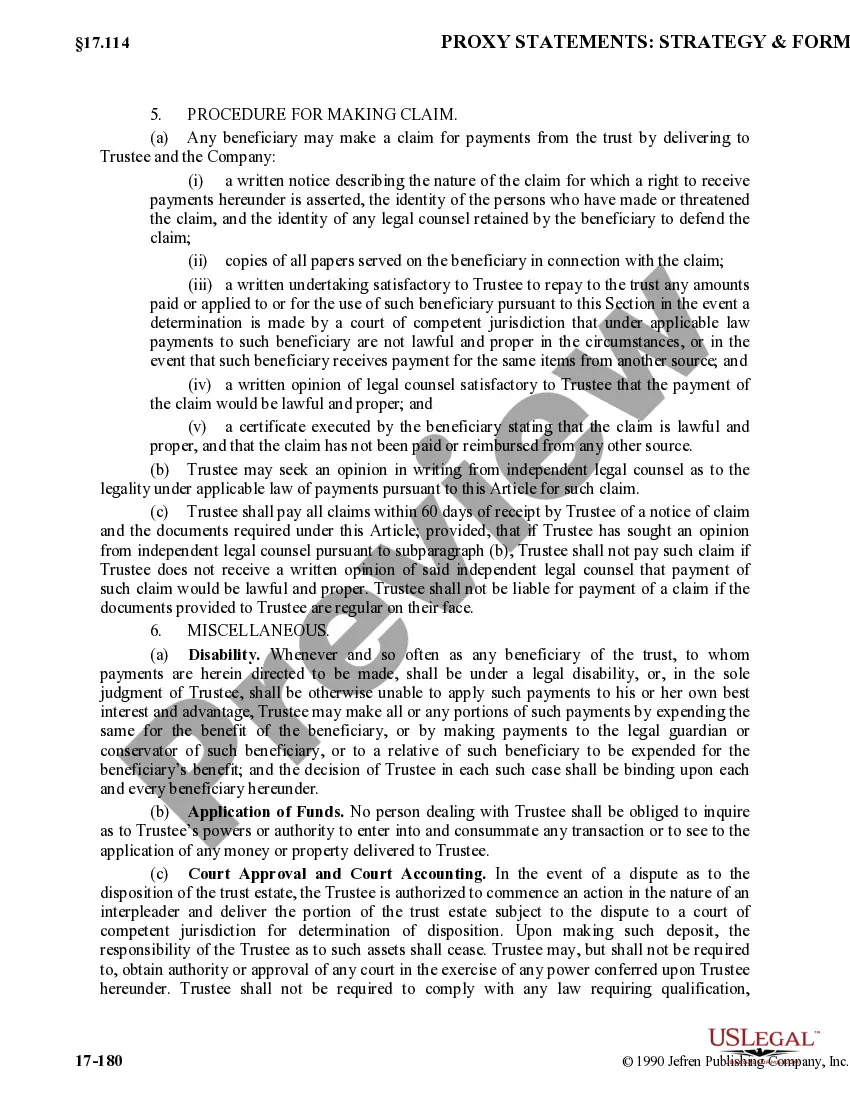
- Procedural guidelines for beneficiaries to submit claims for indemnification.
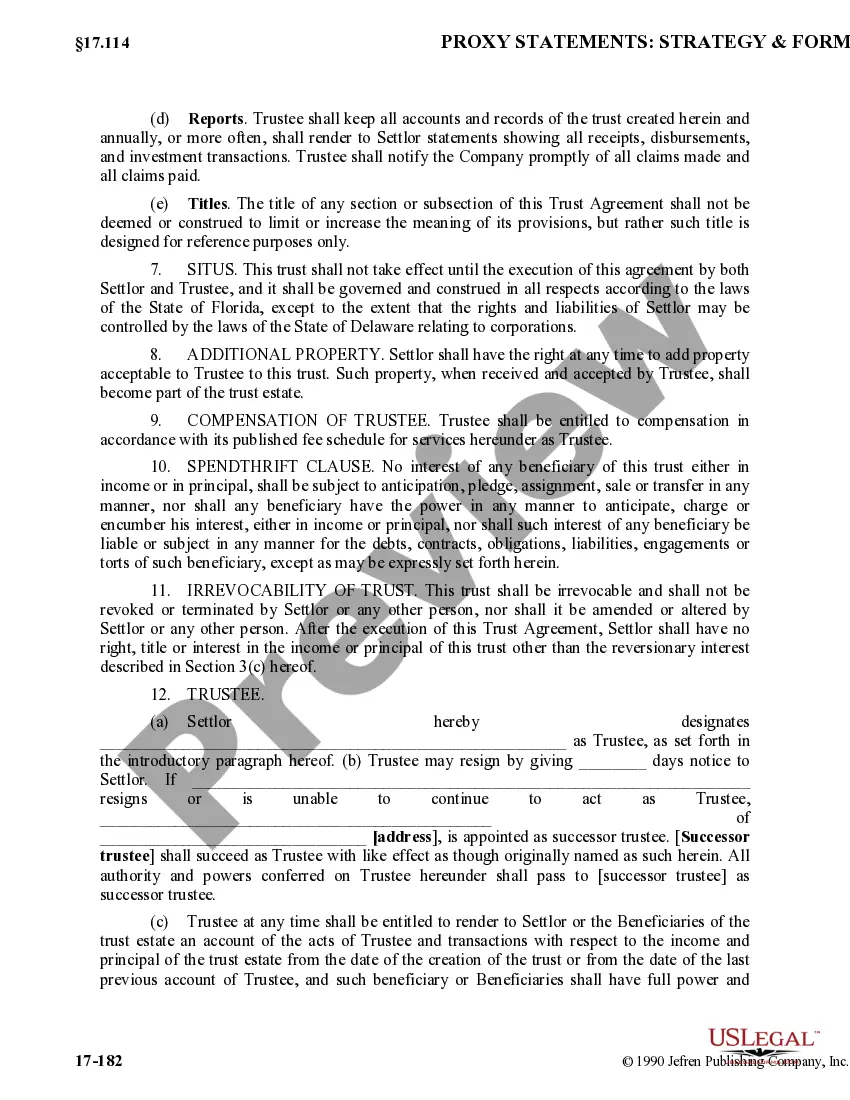
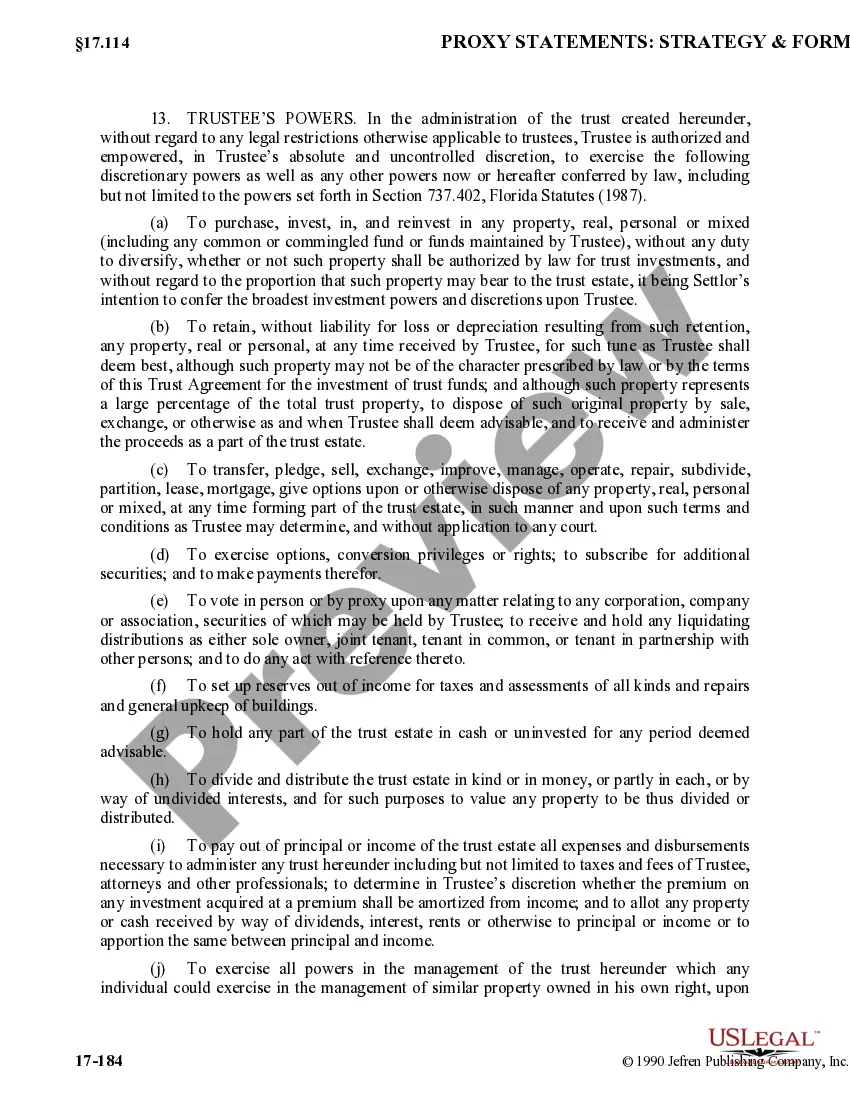
- Miscellaneous clauses covering trustee authority, compensation, and spendthrift provisions.

Situations where this form applies
This Trust Agreement should be used when a corporation seeks to create an irrevocable trust to provide indemnification for its directors and officers against liabilities arising from their corporate duties. It is particularly useful in scenarios where traditional insurance options are inadequate or cost-prohibitive, and it ensures that leadership can perform their roles without fearing personal financial repercussions from legal claims.
Who this form is for
- Corporations looking to establish an indemnification trust for directors and officers.
- Legal advisors assisting corporations in drafting trust agreements.
- Trustees appointed to manage and uphold the trust's terms.
- Directors or officers who wish to ensure their protection against potential legal claims while serving the corporation.
Instructions for completing this form
- Identify the parties involved, including the corporation (Settlor) and the Trustee.
- Specify the trust property being transferred into the trust and attach a detailed schedule of these assets.
- Designate the beneficiaries who will be protected under this trust.
- Include procedures for how claims will be submitted and processed by the Trustee.
- Ensure thorough review and sign the document in the presence of a notary public for legal validation.
Notarization guidance
This form must be notarized to be legally valid. US Legal Forms provides secure online notarization powered by Notarize, allowing you to complete the process through a verified video call.
Get your form ready online
Our built-in tools help you complete, sign, share, and store your documents in one place.
Make edits, fill in missing information, and update formatting in US Legal Forms—just like you would in MS Word.
Download a copy, print it, send it by email, or mail it via USPS—whatever works best for your next step.
Sign and collect signatures with our SignNow integration. Send to multiple recipients, set reminders, and more. Go Premium to unlock E-Sign.
If this form requires notarization, complete it online through a secure video call—no need to meet a notary in person or wait for an appointment.
We protect your documents and personal data by following strict security and privacy standards.

Make edits, fill in missing information, and update formatting in US Legal Forms—just like you would in MS Word.

Download a copy, print it, send it by email, or mail it via USPS—whatever works best for your next step.

Sign and collect signatures with our SignNow integration. Send to multiple recipients, set reminders, and more. Go Premium to unlock E-Sign.

If this form requires notarization, complete it online through a secure video call—no need to meet a notary in person or wait for an appointment.

We protect your documents and personal data by following strict security and privacy standards.
Typical mistakes to avoid
- Failing to clearly define all terms and parties involved in the trust.
- Not specifying the trust property adequately, which can lead to confusion over assets.
- Omitting detailed procedures for beneficiaries to submit indemnification claims.
- Not having the agreement notarized, which may affect its legal standing.
Why use this form online
- Convenience of downloading the form and filling it out at your own pace.
- Editability allows for specific customization to meet corporate needs.
- Access to a legally vetted template drafted by licensed attorneys, enhancing reliability.
Legal use & context
- This Trust Agreement is enforceable under Delaware law, ensuring that the indemnification provisions are upheld.
- It serves as a protective mechanism for corporate leaders against personal liabilities arising from their corporate roles.
- The irrevocable nature of the trust limits the ability to amend or dissolve the agreement, which is crucial for maintaining long-term protection.
Quick recap
- The Trust Agreement establishes an irrevocable trust to protect directors and officers.
- It is essential for corporations opting out of traditional indemnification insurance.
- Clear procedures for claims ensure that beneficiaries understand their rights and obligations.
Looking for another form?
Form popularity
FAQ
Like a will, a trust will require you to transfer property after death to loved ones.Unlike a will, a living trust passes property outside of probate court. There are no court or attorney fees after the trust is established. Your property can be passed immediately and directly to your named beneficiaries.
Put conditions on how and when your assets are distributed after you die; Reduce estate and gift taxes; Distribute assets to heirs efficiently without the cost, delay and publicity of probate court. Better protect your assets from creditors and lawsuits;
A trust agreement is a document that spells out the rules that you want followed for property held in trust for your beneficiaries. Common objectives for trusts are to reduce the estate tax liability, to protect property in your estate, and to avoid probate.
A trust is traditionally used for minimizing estate taxes and can offer other benefits as part of a well-crafted estate plan. A trust is a fiduciary arrangement that allows a third party, or trustee, to hold assets on behalf of a beneficiary or beneficiaries.
Pick a type of living trust. If you're married, you'll first need to decide whether you want a single or joint trust. Take stock of your property. Choose a trustee. Draw up the trust document. Sign the trust. Transfer your property to the trust.
A trust is traditionally used for minimizing estate taxes and can offer other benefits as part of a well-crafted estate plan. A trust is a fiduciary arrangement that allows a third party, or trustee, to hold assets on behalf of a beneficiary or beneficiaries.
Trusts can accomplish a range of goals, including avoiding probate, minimizing estate taxes, and making sure your heirs receive as much of your money as possible as quickly as possible.
Trusts are established to provide legal protection for the trustor's assets, to make sure those assets are distributed according to the wishes of the trustor, and to save time, reduce paperwork and, in some cases, avoid or reduce inheritance or estate taxes.
The trustee is the legal owner of the property in trust, as fiduciary for the beneficiary or beneficiaries who is/are the equitable owner(s) of the trust property. Trustees thus have a fiduciary duty to manage the trust to the benefit of the equitable owners.