Amendment to Section 5c of Employment Agreement with copy of agreement between Company and CEO
Overview of this form
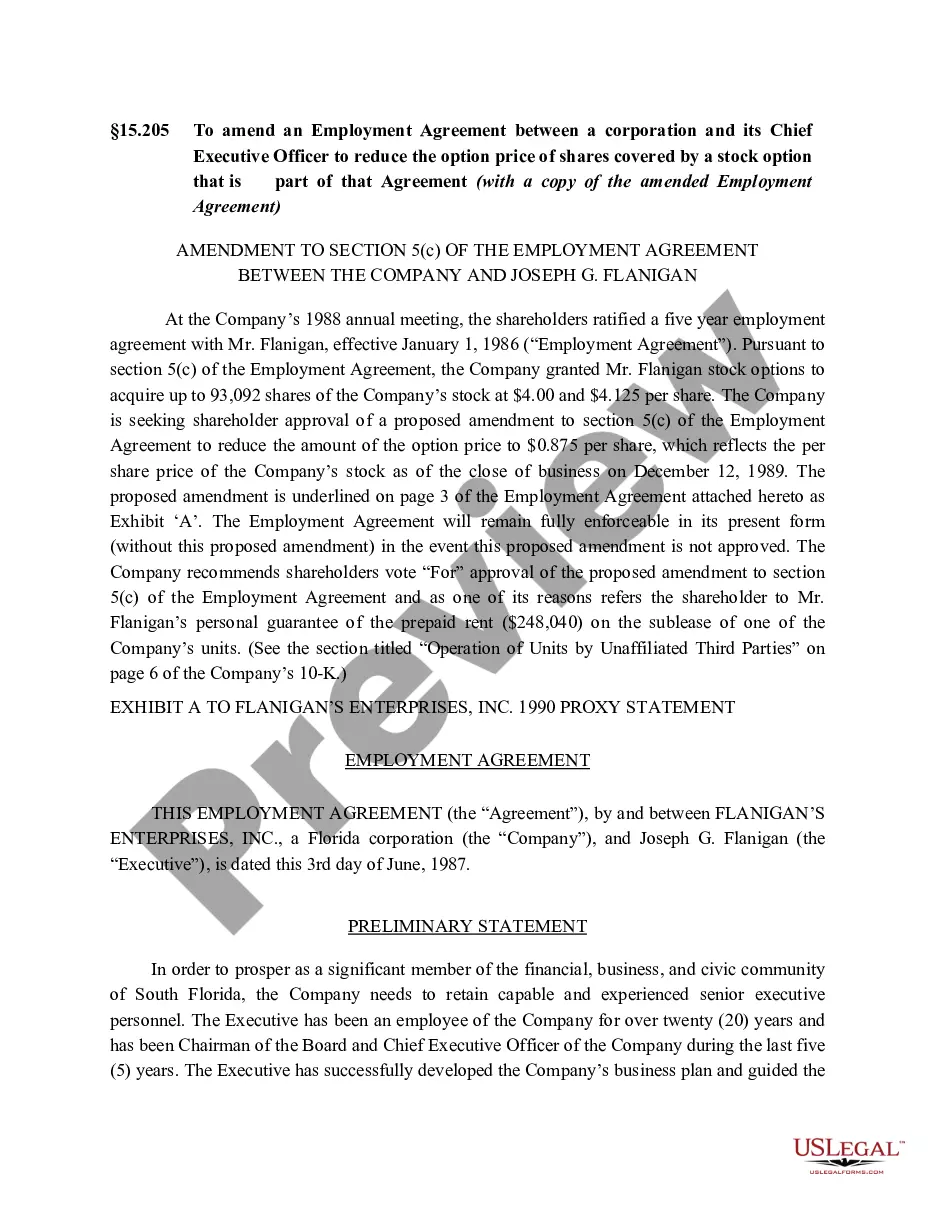
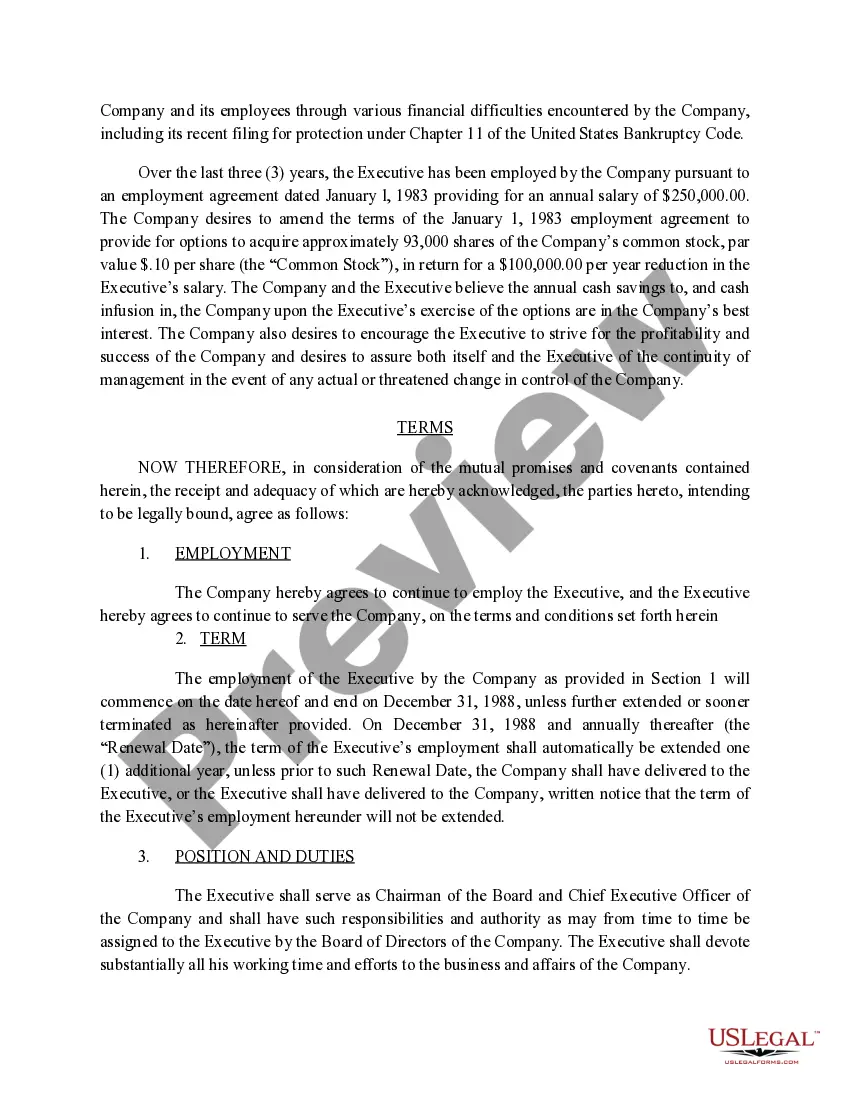
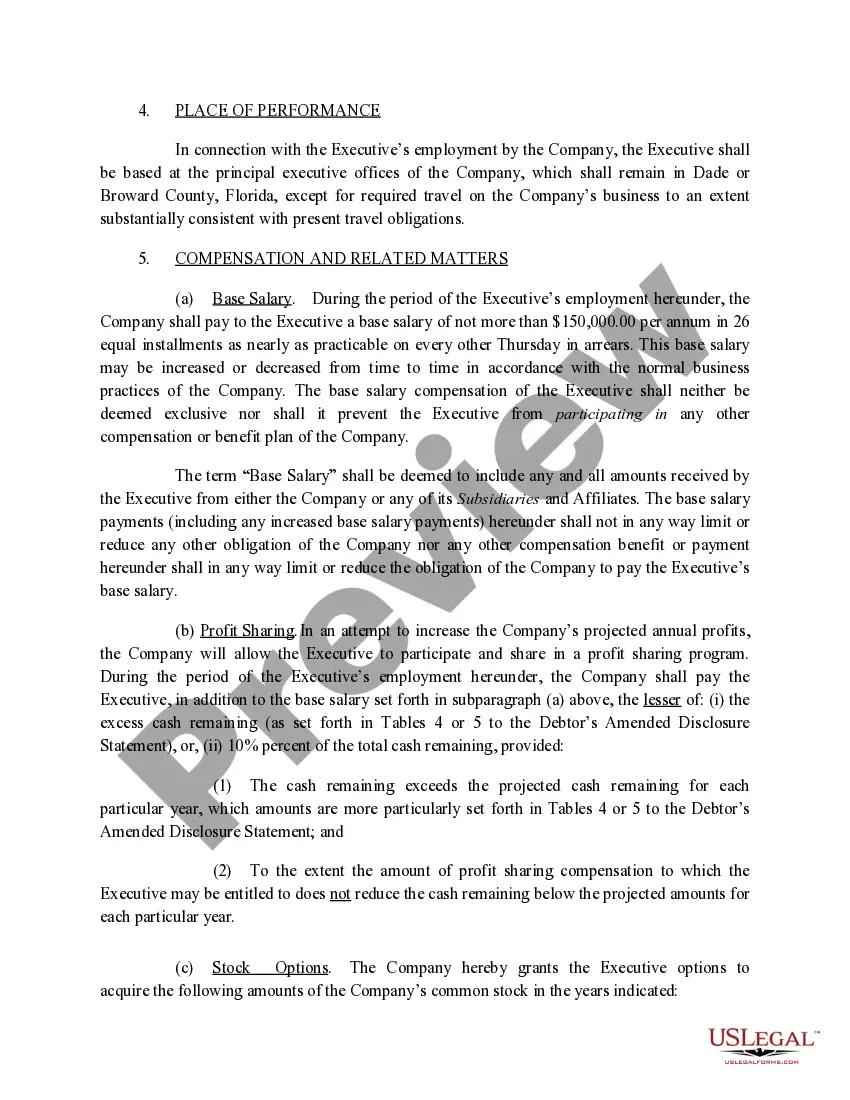
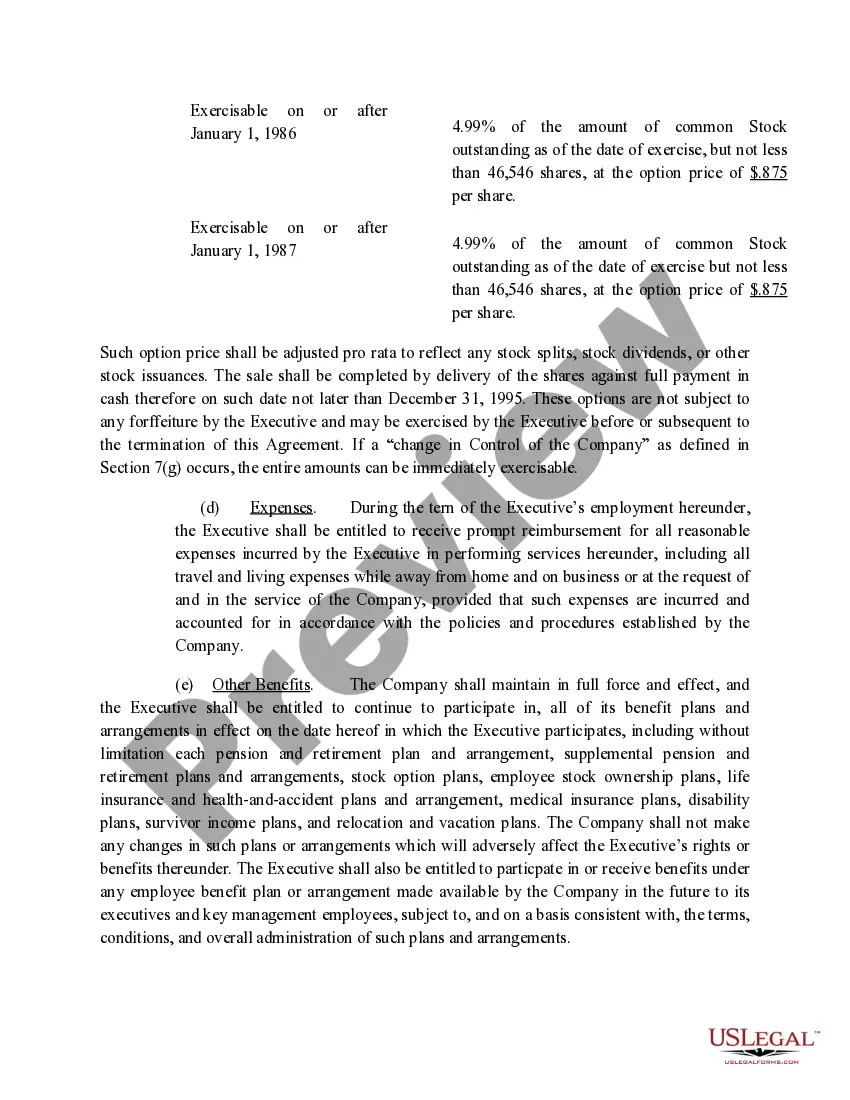
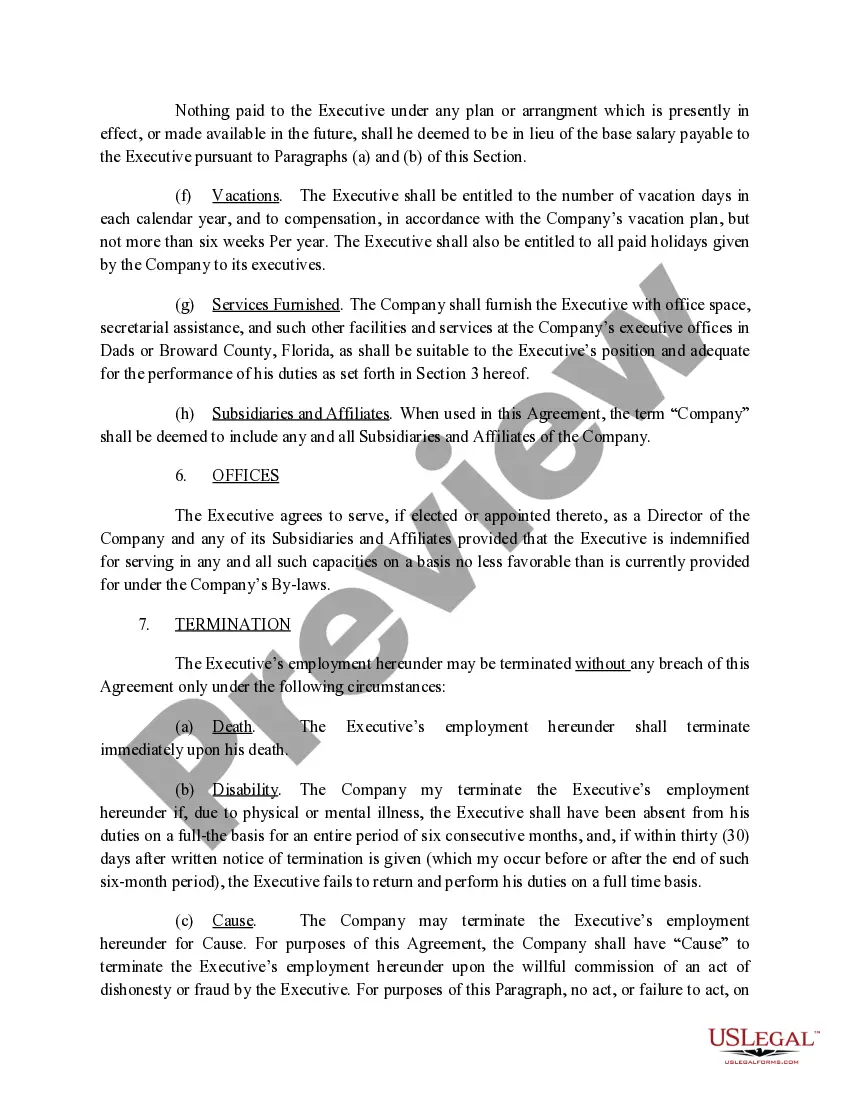
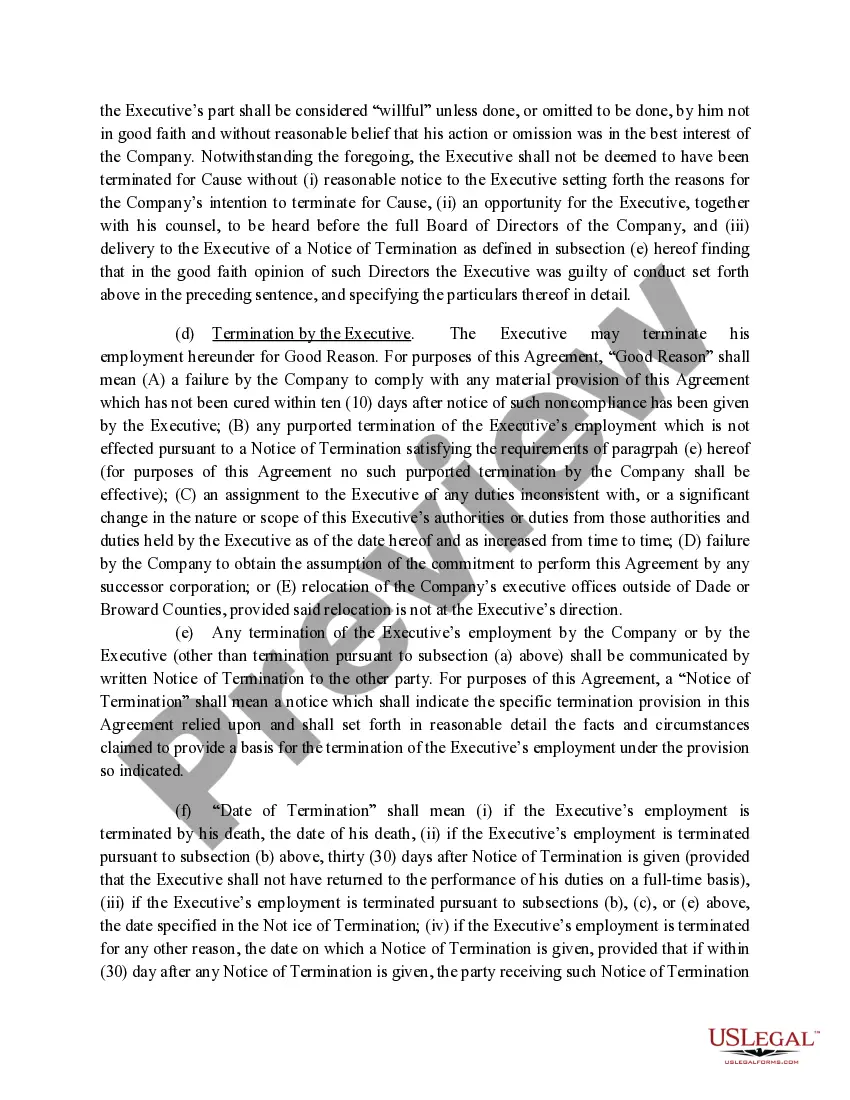
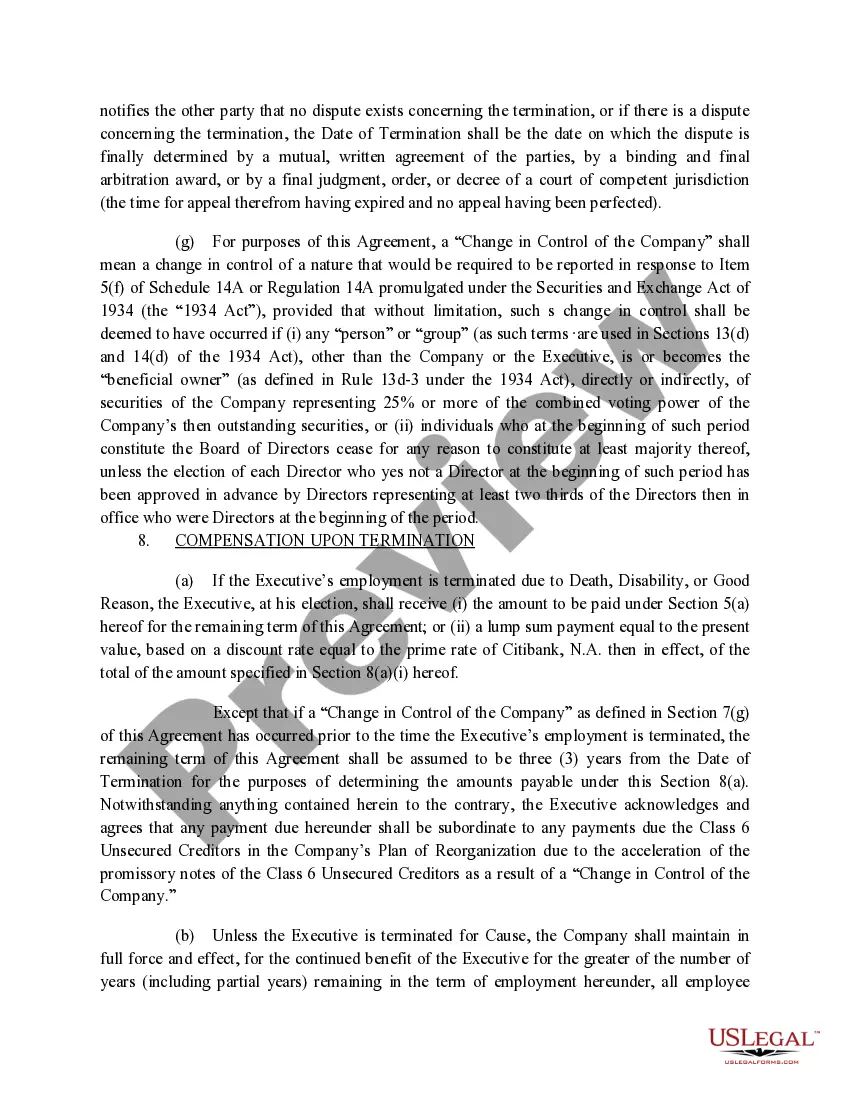
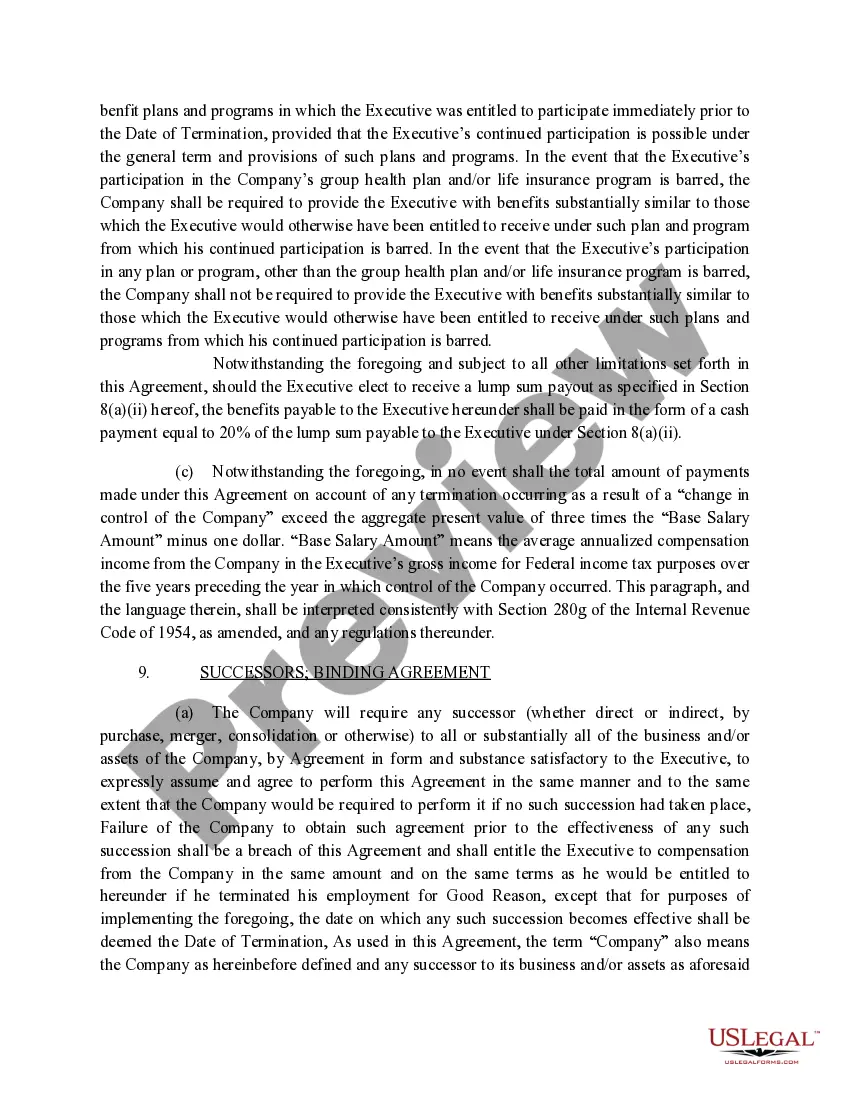
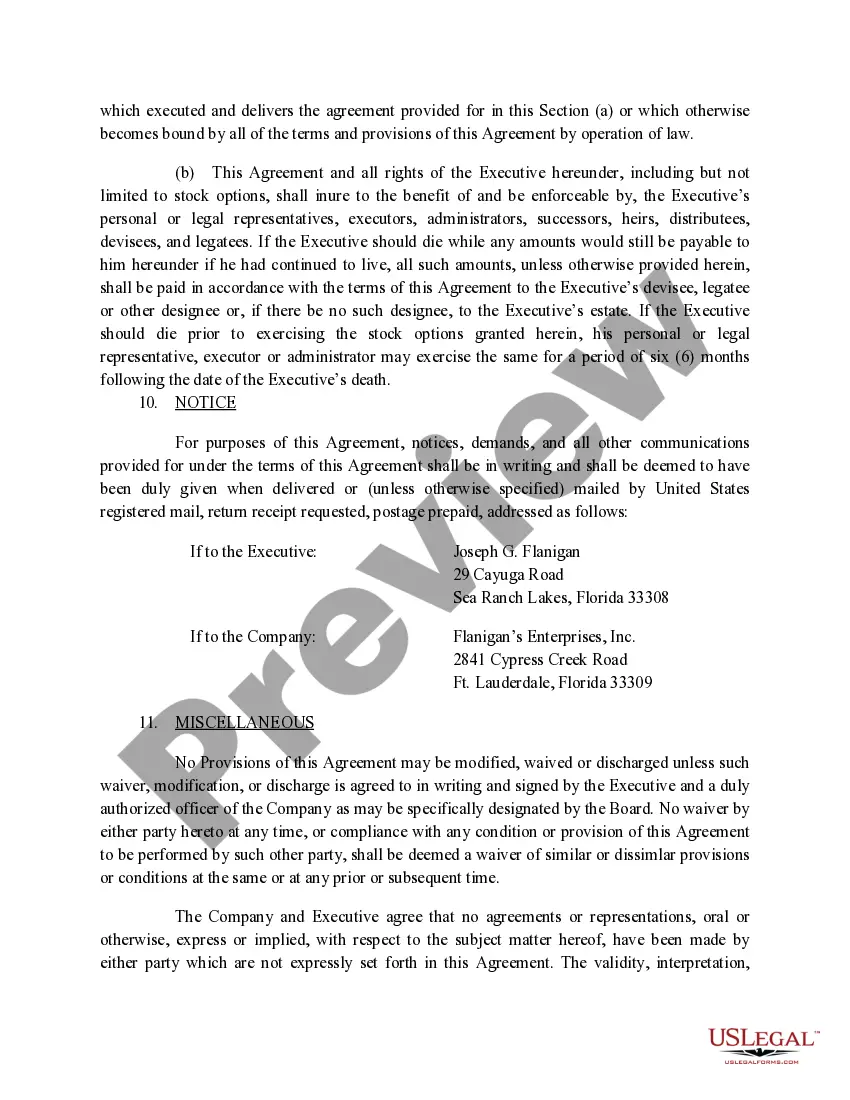
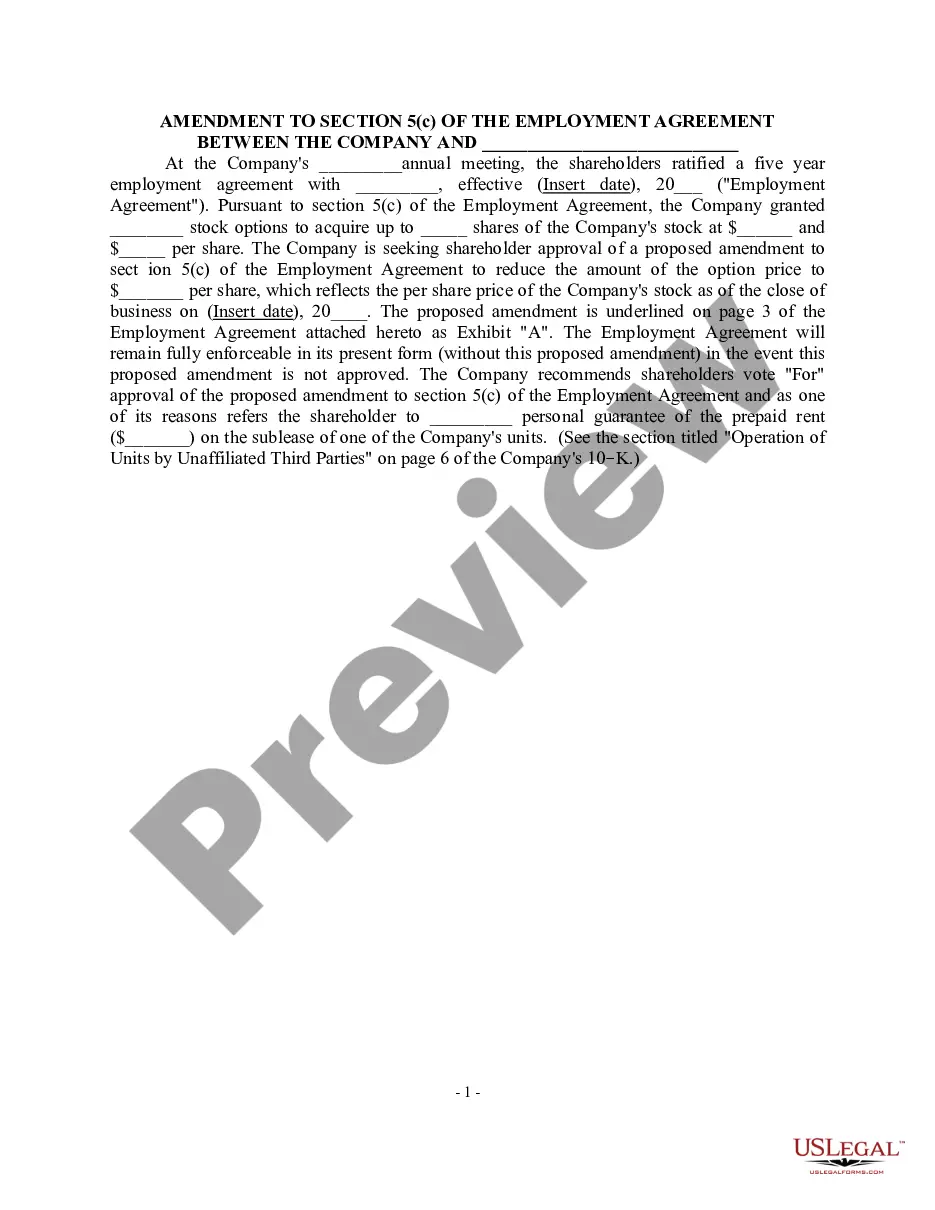
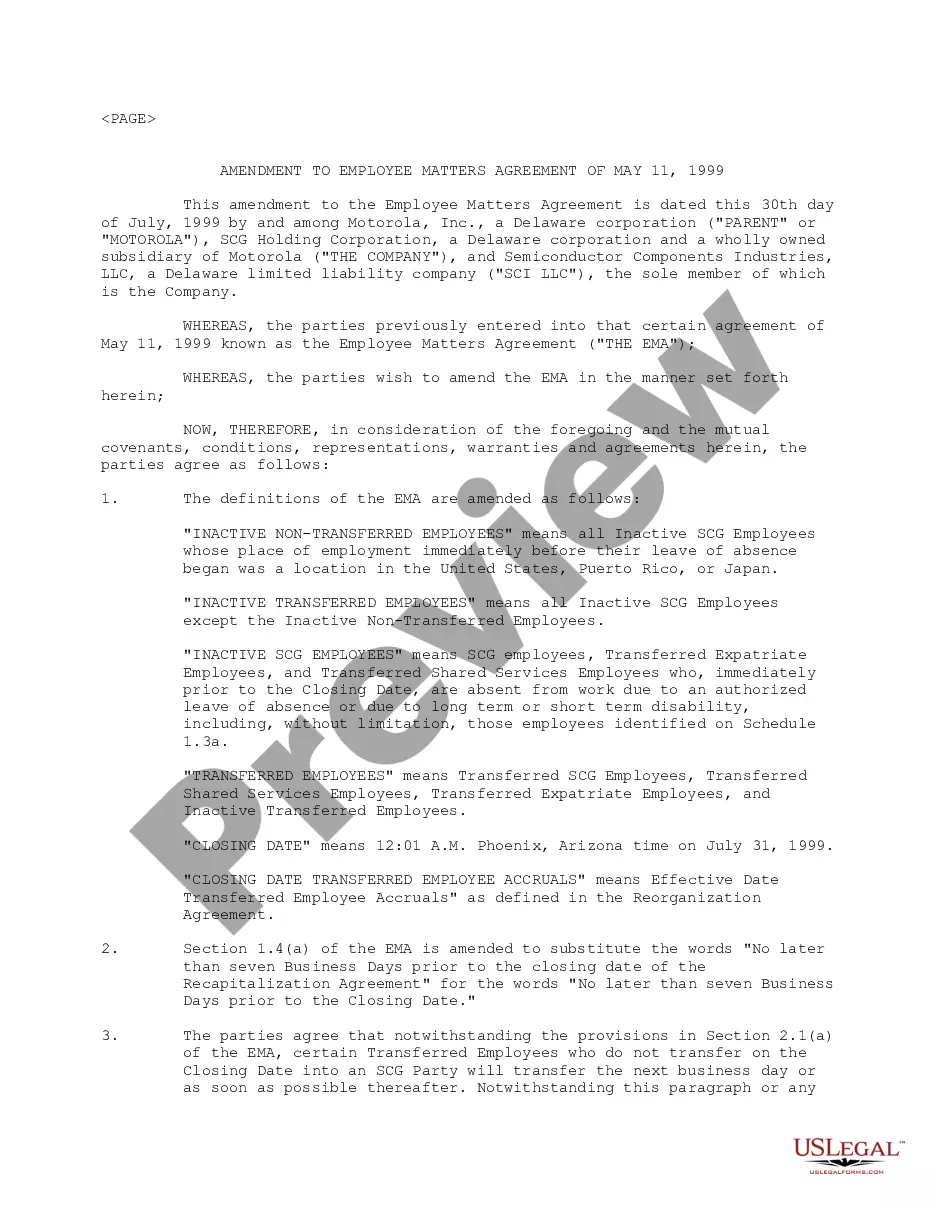
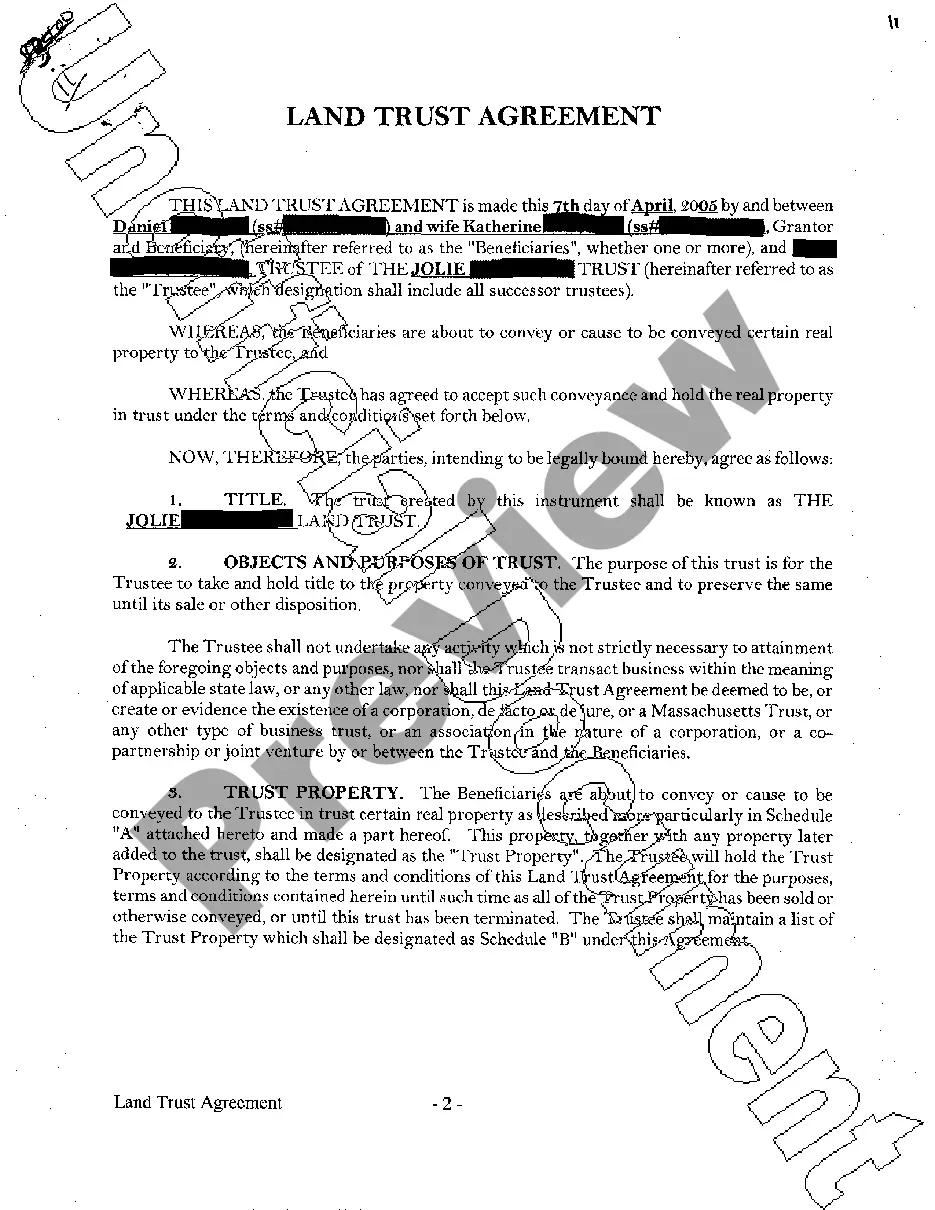
This Amendment to Section 5(c) of the Employment Agreement is a legal document that modifies a previously established employment contract. It allows the company to adjust the terms regarding stock options for an executive, in this case, the CEO. Unlike standard employment agreements, this amendment specifically targets changes in compensation arrangements, making it essential for companies looking to retain key personnel under revised financial terms.
Key components of this form
- Amendment details specifying changes to stock option pricing.
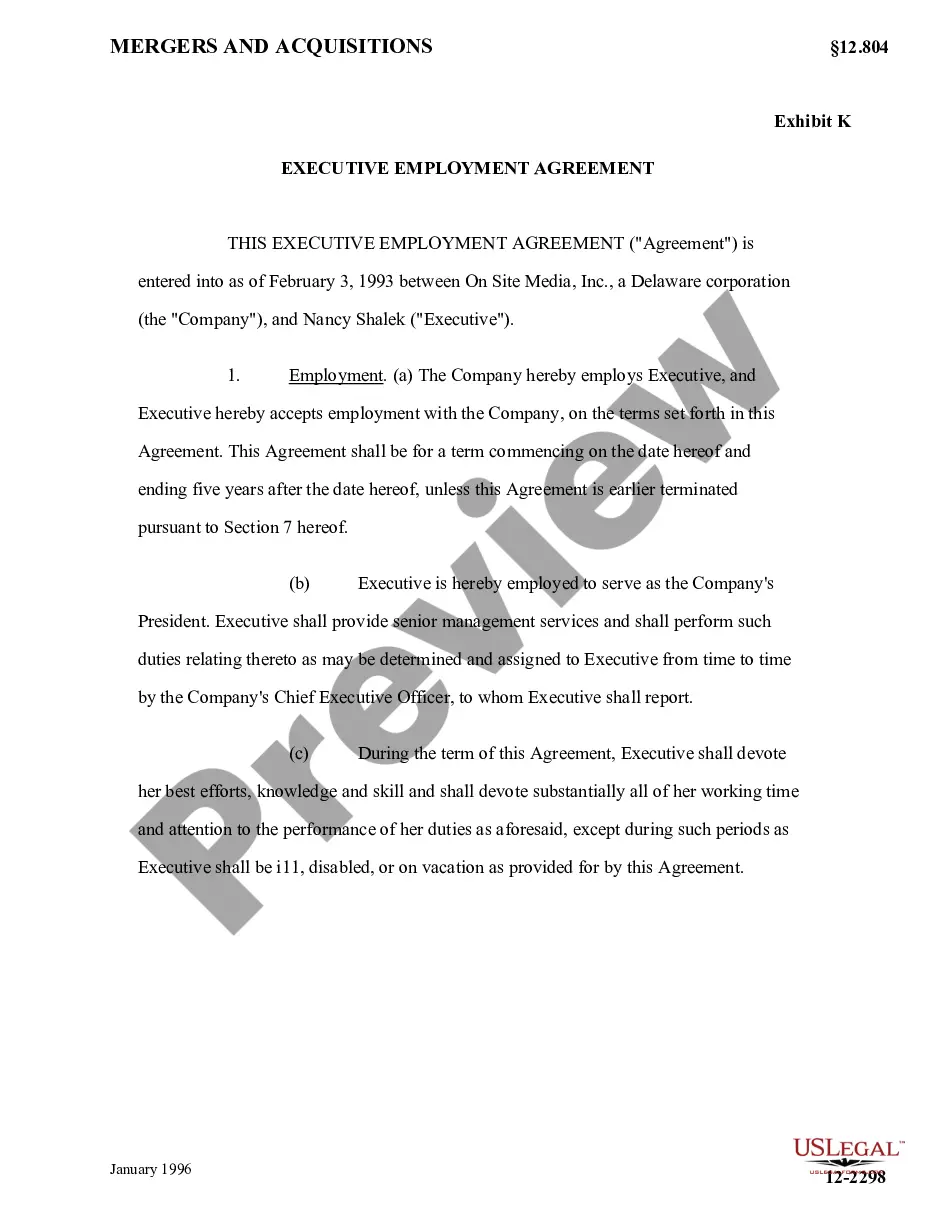
- Reference to the original employment agreement and its effective date.
- Shareholder approval requirements for the proposed changes.
- Provisions regarding the enforceability of the original agreement if the amendment is not approved.
- Ownership rights and responsibilities of the executive related to stock options.


Common use cases
This form should be used when a company wishes to amend the compensation terms of an executive's employment agreement, specifically relating to stock options. Scenarios for use include business restructuring, changes in market conditions affecting stock values, or adjustments needed to retain essential leadership talent. It is also applicable after discussions in shareholder meetings where stock option terms are to be modified.
Who needs this form
- Companies looking to amend existing employment agreements with executives.
- Human resource departments responsible for employee contracts.
- Legal professionals drafting or reviewing amendments to employment agreements.
- CEOs or executives whose compensation terms are being modified.
How to complete this form
- Identify the parties involved, including the company and the executive (CEO).
- Review the original employment agreement to reference the specific section being amended (Section 5(c)).
- Clearly outline the proposed changes to the stock options, including the new pricing per share.
- Include any necessary clauses about shareholder approval and the implications if the amendment is not approved.
- Sign and date the amendment to make it legally binding upon all parties involved.
Notarization guidance
This form does not typically require notarization unless specified by local law. However, verifying local regulations is advisable to ensure that the amendment is legally enforceable in your jurisdiction.
Get your form ready online
Our built-in tools help you complete, sign, share, and store your documents in one place.
Make edits, fill in missing information, and update formatting in US Legal Forms—just like you would in MS Word.
Download a copy, print it, send it by email, or mail it via USPS—whatever works best for your next step.
Sign and collect signatures with our SignNow integration. Send to multiple recipients, set reminders, and more. Go Premium to unlock E-Sign.
If this form requires notarization, complete it online through a secure video call—no need to meet a notary in person or wait for an appointment.
We protect your documents and personal data by following strict security and privacy standards.

Make edits, fill in missing information, and update formatting in US Legal Forms—just like you would in MS Word.

Download a copy, print it, send it by email, or mail it via USPS—whatever works best for your next step.

Sign and collect signatures with our SignNow integration. Send to multiple recipients, set reminders, and more. Go Premium to unlock E-Sign.

If this form requires notarization, complete it online through a secure video call—no need to meet a notary in person or wait for an appointment.

We protect your documents and personal data by following strict security and privacy standards.
Avoid these common issues
- Failing to provide a clear reference to the original employment agreement.
- Not specifying the terms of the changes to the stock options adequately.
- Neglecting to include provisions for shareholder approval where necessary.
- Leaving out signatures from all required parties, which may invalidate the amendment.
Advantages of online completion
- Convenience of accessing and downloading the form at any time.
- Editable format allows for customization to reflect specific needs and requirements.
- Quick legal compliance without the need for in-person consultations.
- Improved accuracy through easy reference to templates provided by licensed attorneys.
Looking for another form?



Form popularity
FAQ
There's something in the contract that allows the change (usually called a 'flexibility clause') the employee agrees to the change. the employee's representatives agree to the change (for example, a trade union)
An amendment is a change or an addition to the terms of a contract, a law, a document, or a government regulatory filing.
Workers' rights encompass a large array of human rights from the right to decent work and freedom of association to equal opportunity and protection against discrimination. Specific rights related to the workplace include health and safety in the workplace and the right to privacy at work, amongst many others.
Alterations on the Contract (or Strikethroughs) You can make changes directly on the contract by using a redline or strikethrough method. Replace an Entire Section with an Alteration. Describe the Amendment in a Separate Document.
A non-variation clause generally provides that no amendment or variation of and to a written agreement will be binding on the parties unless such amendment or variation is reduced to writing and signed by both parties.
Article 15, states: Every individual shall have the right to work under equitable and satisfactory conditions, and shall receive equal pay for equal work.
Writing a Contract Addendum Name the parties to the contract. Indicate the addendum's effective date, using the same date format used in the original contract. Indicate the elements of the original contract that the addendum intends to change. Concisely but clearly describe the desired changes.
Employees of private employers are subject to the private employer's rules, and the First Amendment offers no protection.These types of speech are protected by the National Labor Relations Act and, for example, Title VII of the Civil Rights Act of 1964, rather than the First Amendment.
Despite the absence of an express wording of the 'right to work' in Part III (Fundamental Rights) of the Constitution, it became a 'fundamental right' through a judicial interpretation.- 'right to work' was recognised as a fundamental right inherent in the 'right to life'.