Ratification of Acts
Overview of this form
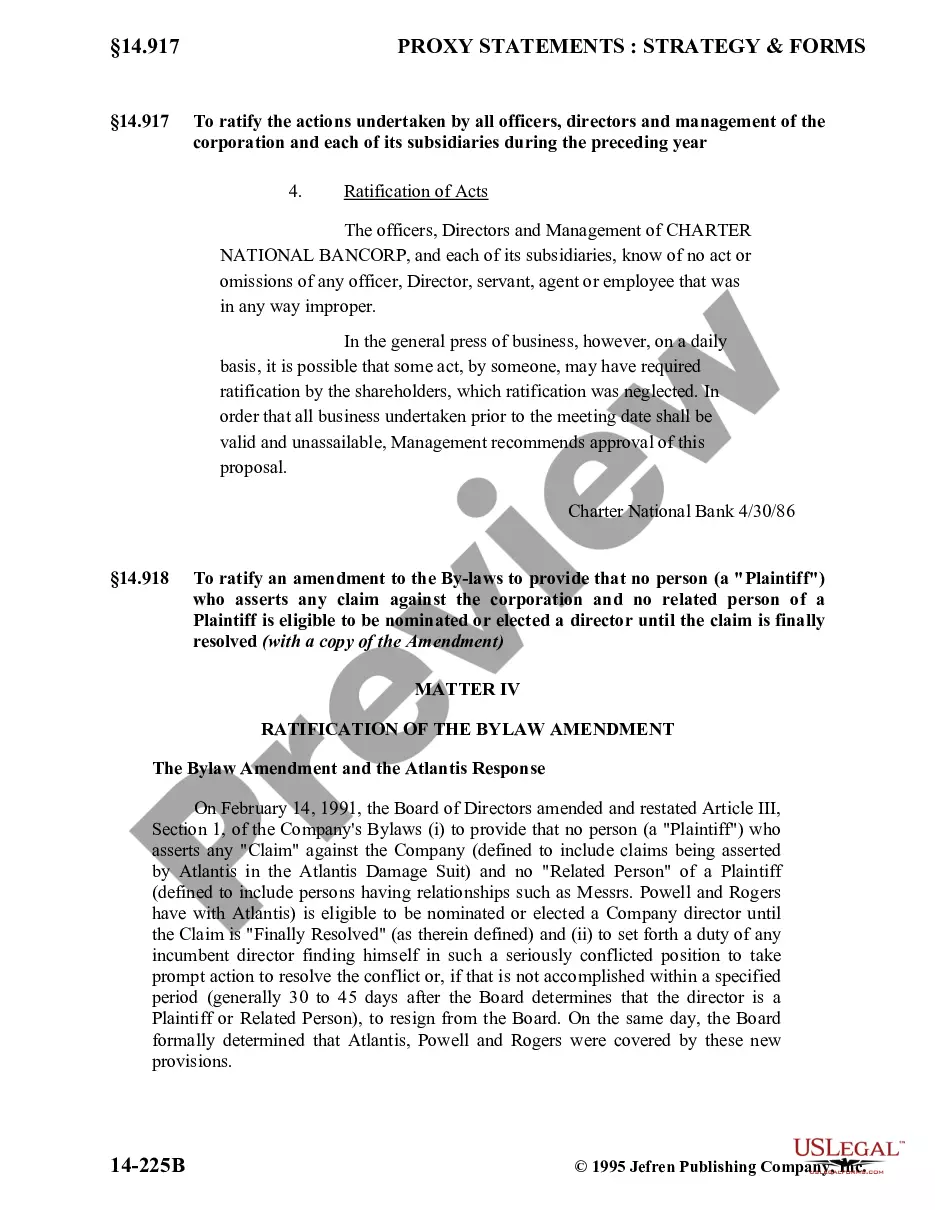
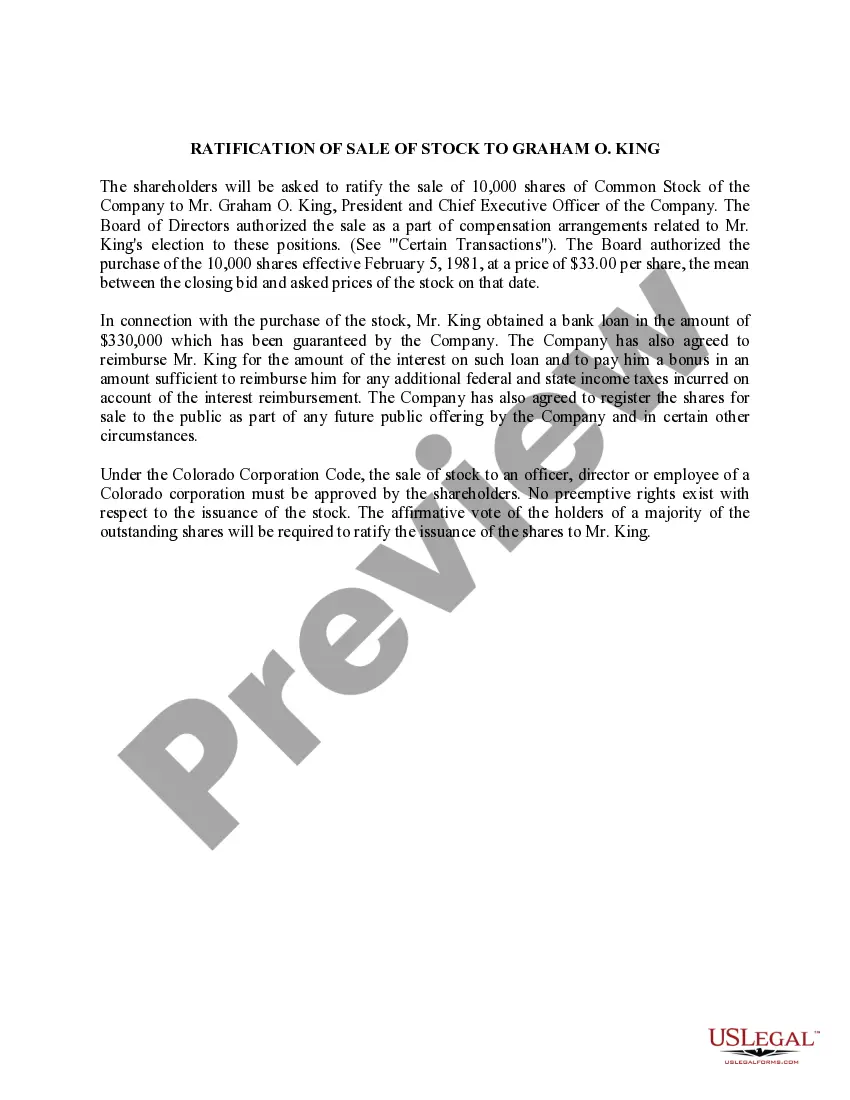
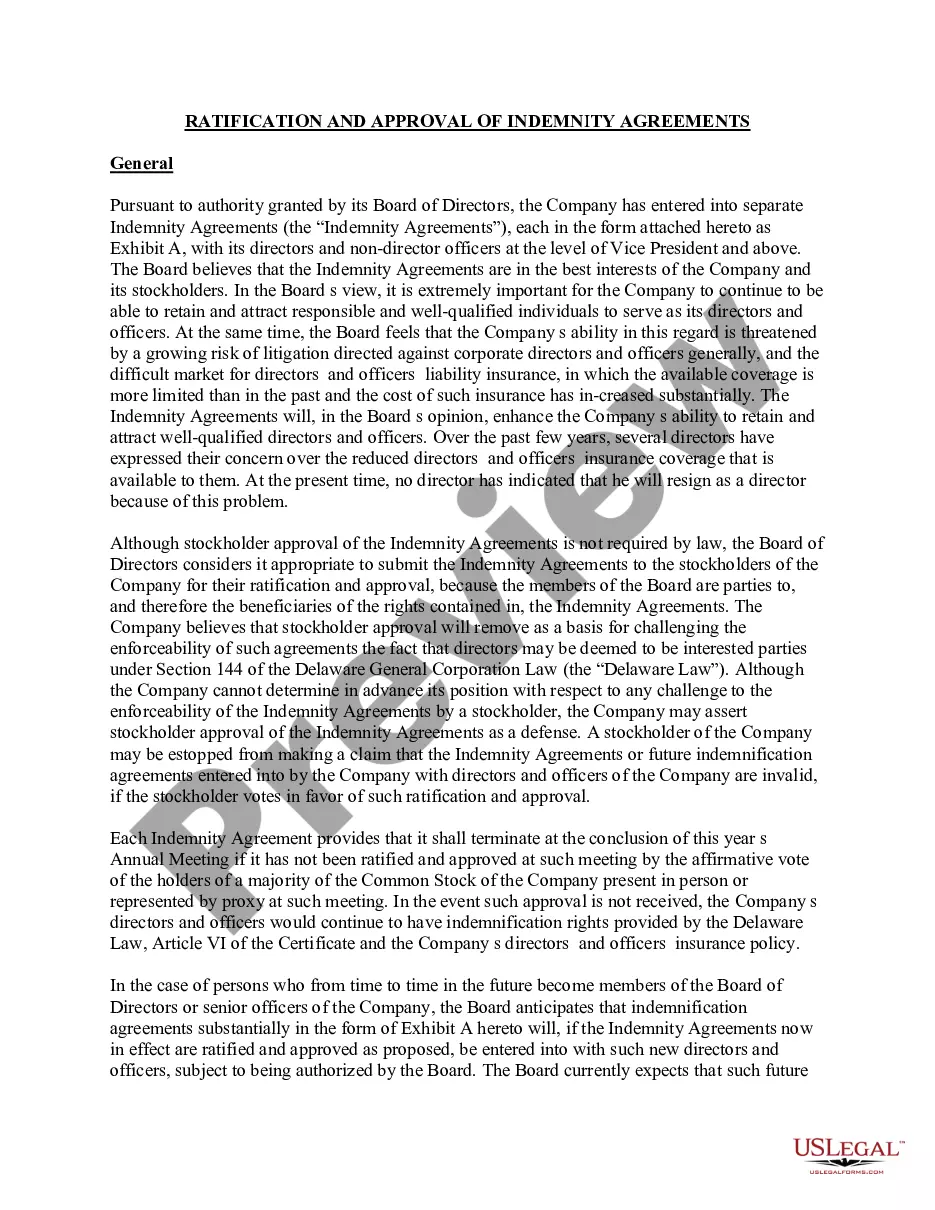
The Ratification of Acts form is a legal document used to officially confirm actions taken by corporate officers or directors that may not have been explicitly authorized. This form serves to ensure that business activities are validated and can withstand scrutiny, particularly when certain actions may require shareholder ratification. It is essential for maintaining the legitimacy of corporate actions and is applicable across the United States.
Main sections of this form
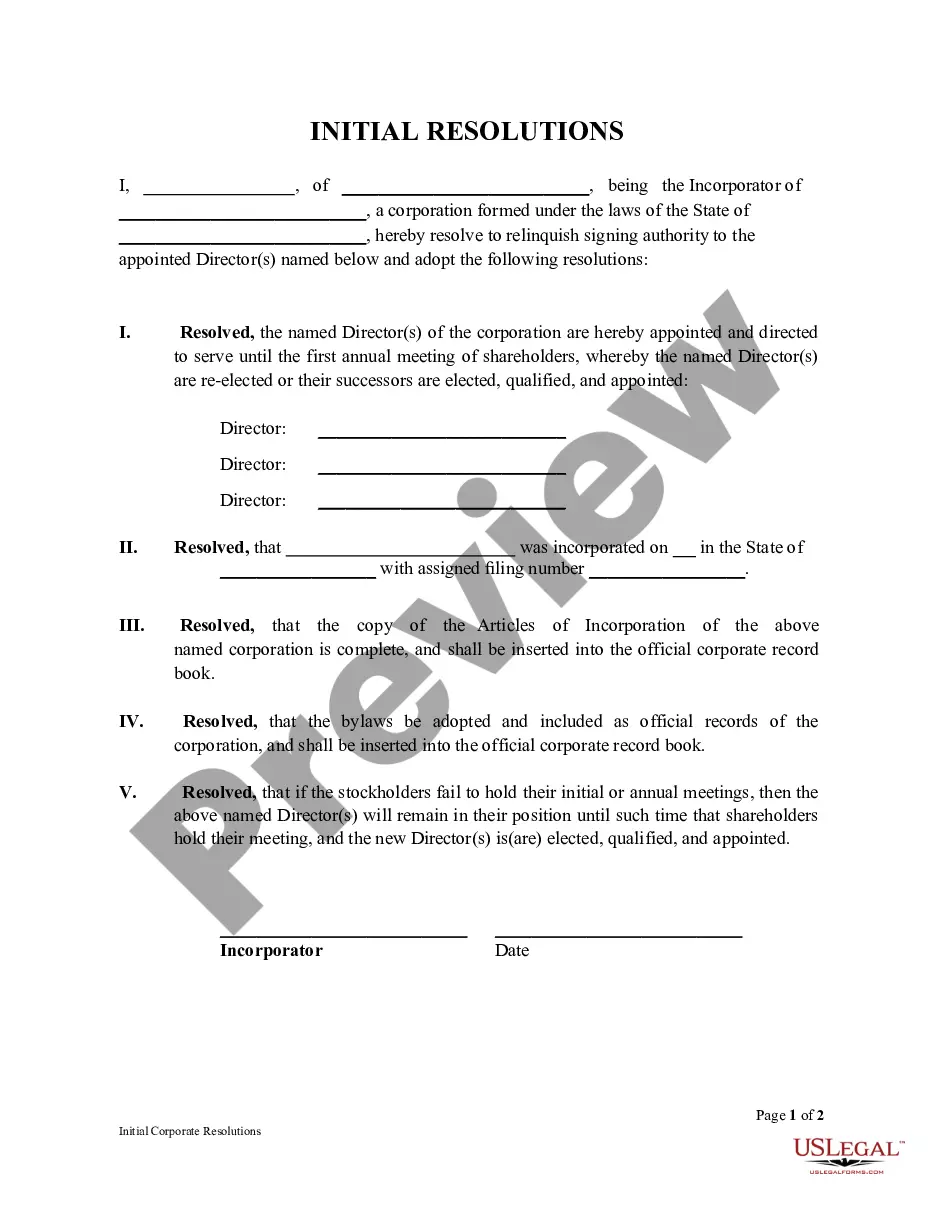
- Section identifying the parties involved, including the corporation and its subsidiaries.
- Clause that states no improper acts or omissions have occurred.
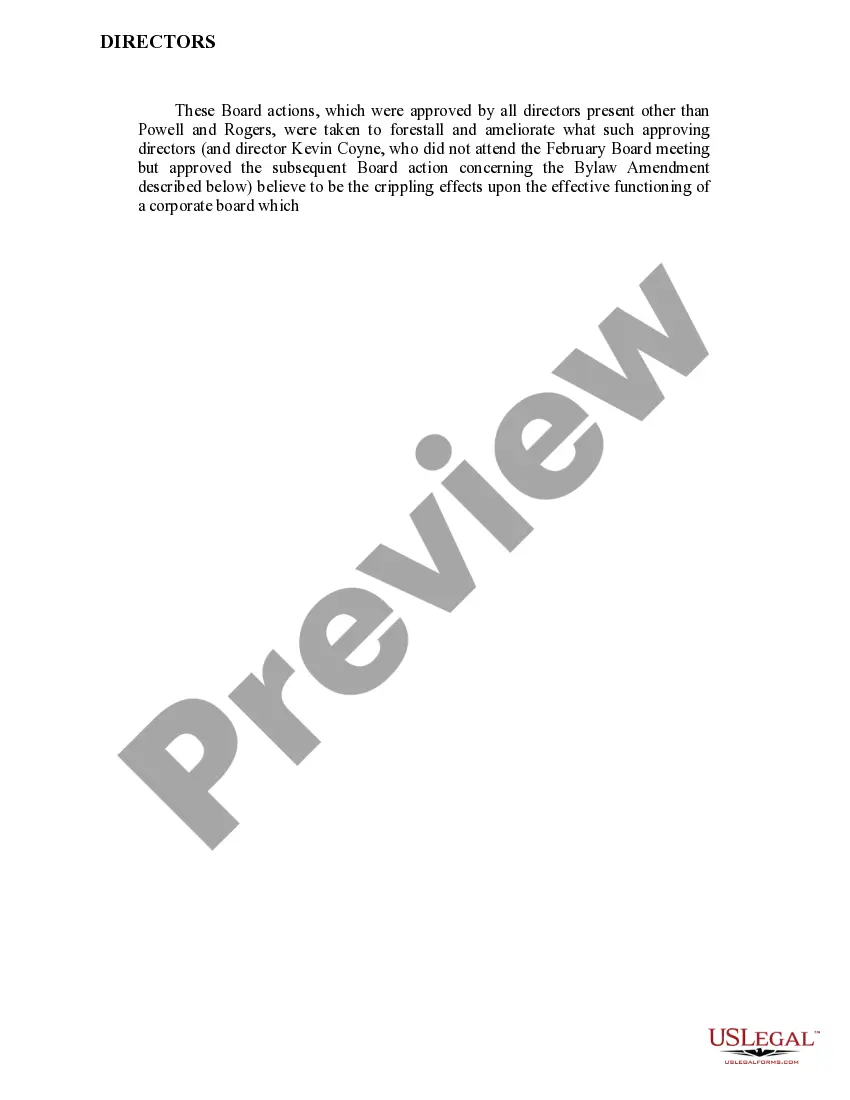
- Details regarding the ratification of any bylaw amendments, including eligibility requirements for directors.
- Signature lines for the acting officers and directors to confirm the ratification.
Common use cases
This form is typically used when a corporation needs to formalize actions that have already been taken by its directors or officers but were not previously ratified by shareholders. Situations may include amendments to corporate bylaws or other critical decisions where ratification is necessary to ensure compliance with corporate governance standards.
Who needs this form
- Corporate officers and directors of a company.
- Shareholders who need to validate past corporate actions.
- Legal counsel assisting corporations in ensuring compliance with corporate laws.
Completing this form step by step
- Identify the corporation and list any subsidiaries.
- Confirm there are no improper acts or omissions by officers or directors.
- Ratify any bylaw amendments and provide details of these amendments.
- Gather signatures from all relevant officers and directors.
- Ensure the completed form is kept in corporate records for future reference.
Notarization requirements for this form
This form does not typically require notarization unless specified by local law. However, it is advisable to consult legal counsel to ensure compliance with any applicable statutory requirements.
Get your form ready online
Our built-in tools help you complete, sign, share, and store your documents in one place.
Make edits, fill in missing information, and update formatting in US Legal Forms—just like you would in MS Word.
Download a copy, print it, send it by email, or mail it via USPS—whatever works best for your next step.
Sign and collect signatures with our SignNow integration. Send to multiple recipients, set reminders, and more. Go Premium to unlock E-Sign.
If this form requires notarization, complete it online through a secure video call—no need to meet a notary in person or wait for an appointment.
We protect your documents and personal data by following strict security and privacy standards.

Make edits, fill in missing information, and update formatting in US Legal Forms—just like you would in MS Word.

Download a copy, print it, send it by email, or mail it via USPS—whatever works best for your next step.

Sign and collect signatures with our SignNow integration. Send to multiple recipients, set reminders, and more. Go Premium to unlock E-Sign.

If this form requires notarization, complete it online through a secure video call—no need to meet a notary in person or wait for an appointment.

We protect your documents and personal data by following strict security and privacy standards.
Avoid these common issues
- Failing to gather all necessary signatures from officers and directors.
- Not including all relevant amendments to the bylaws in the ratification.
- Assuming the form is only valid after a shareholder meeting without proper verification of prior actions.
Why complete this form online
- Convenience of immediate download and access from any location.
- Editability to customize the form to meet specific corporate needs.
- Reliability, ensuring the form is drafted according to current legal standards by licensed attorneys.
Legal use & context
- The Ratification of Acts serves to legitimize actions taken without prior shareholder approval, protecting those actions legally.
- Failure to ratify certain acts may expose the corporation to legal challenges or disputes.
- This form is an essential part of corporate governance and helps maintain the transparency and legitimacy of company operations.
Summary of main points
- The Ratification of Acts form validates previous actions taken by corporate officials.
- It is crucial for maintaining legal clarity and preventing disputes.
- Accessible and customizable, this form aids in proper corporate governance.
Looking for another form?


Form popularity
FAQ
In the context of the United States government, ratification is used in two senses. First, there is the ratification of constitutional amendments. Second, there is the ratification of foreign treaties.
Conditions for Ratification The agent must purport to act on behalf of the principal; The principal must be in existence at the time of the contract; and. The principal must have capacity to enter into the contract.
Ratification is a principal's approval of an act of its agent that lacked the authority to bind the principal legally. Ratification defines the international act in which a state indicates its consent to be bound to a treaty if the parties intended to show their consent by such an act.
Any act done under section 23 of the act cannot be ratified. The ratification must not injure any third party. A minor when he attains the age of majority cannot ratify an agreement he entered into while he was still a minor, since the contract from the beginning would be void ab initio.
A principal can only ratify acts, which the agent purported to do on his behalf. This rule follows that if the agent purports to act on his own behalf the principal cannot ratify. 3. The person ratifying must have contractual capacity.
The Senate ratified the treaty. To ratify is to approve and give formal consent to something. When all the delegates sign a constitution, this is an example of a situation where they ratify the constitution.
The term ratification describes the act of making something officially valid by signing it or otherwise giving it formal consent. For example, ratification occurs when parties sign a contract. The signing of the contract makes it official, and it can then be enforced by law, should the need arise.
Definition from Nolo's Plain-English Law Dictionary Approval or confirmation of a previous contract or other act that would not otherwise be binding in the absence of such approval.