Proposal to Approve Directors' Compensation Plan with copy of plan
What is this form?
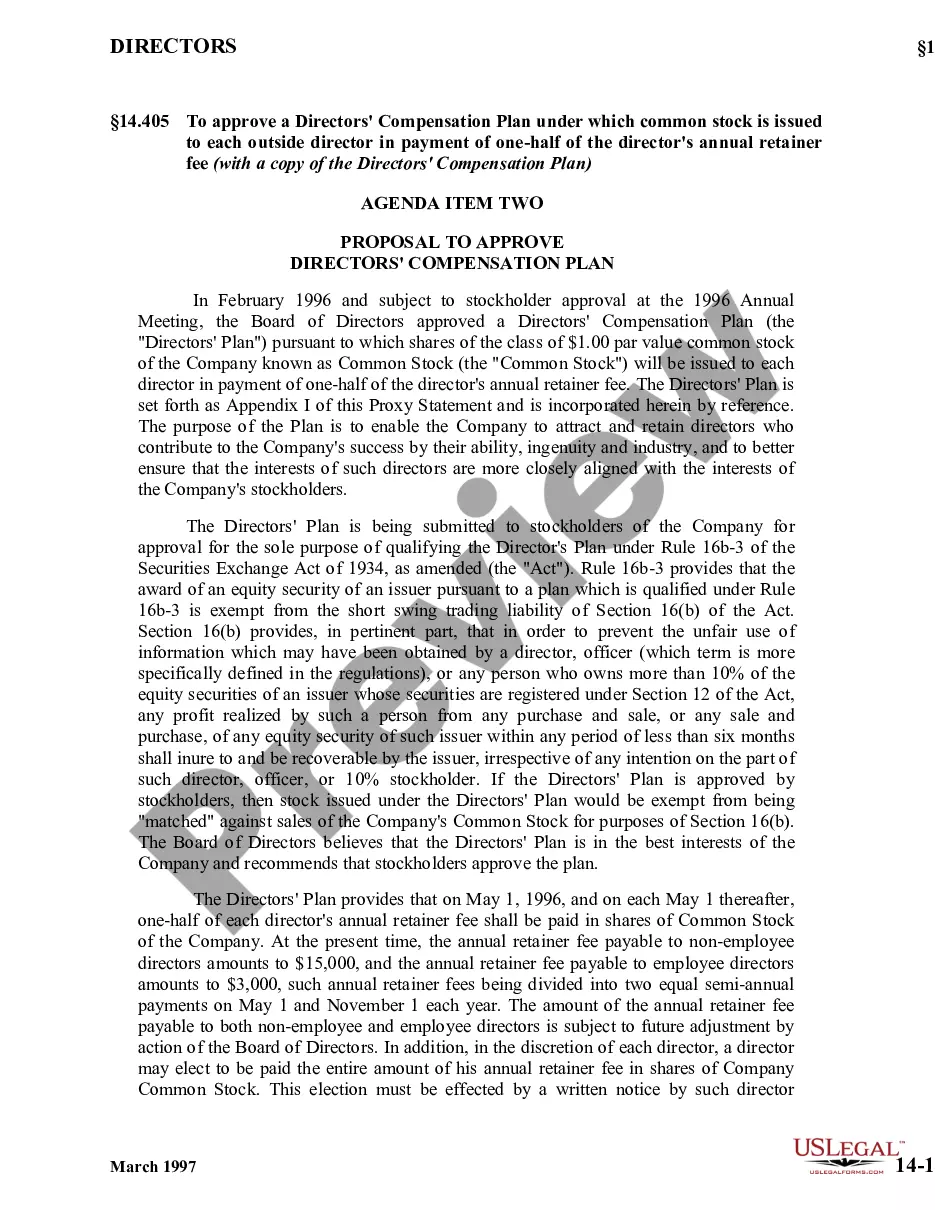
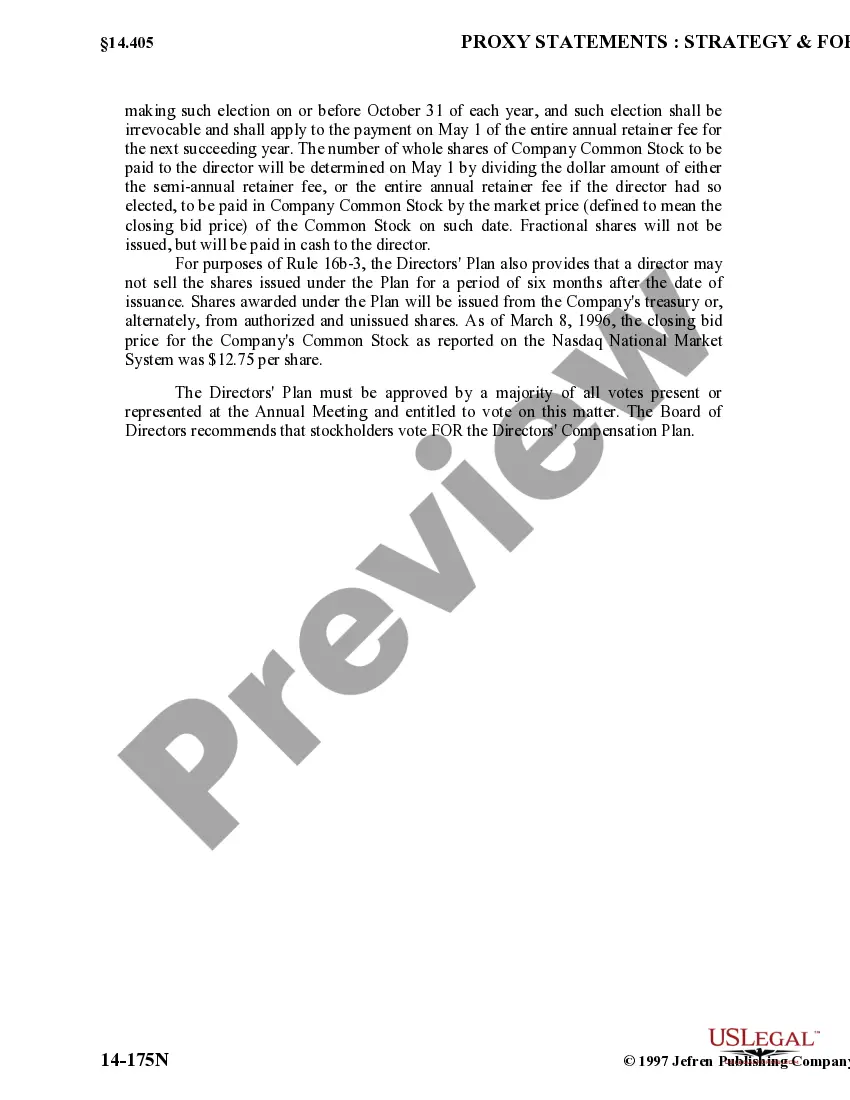
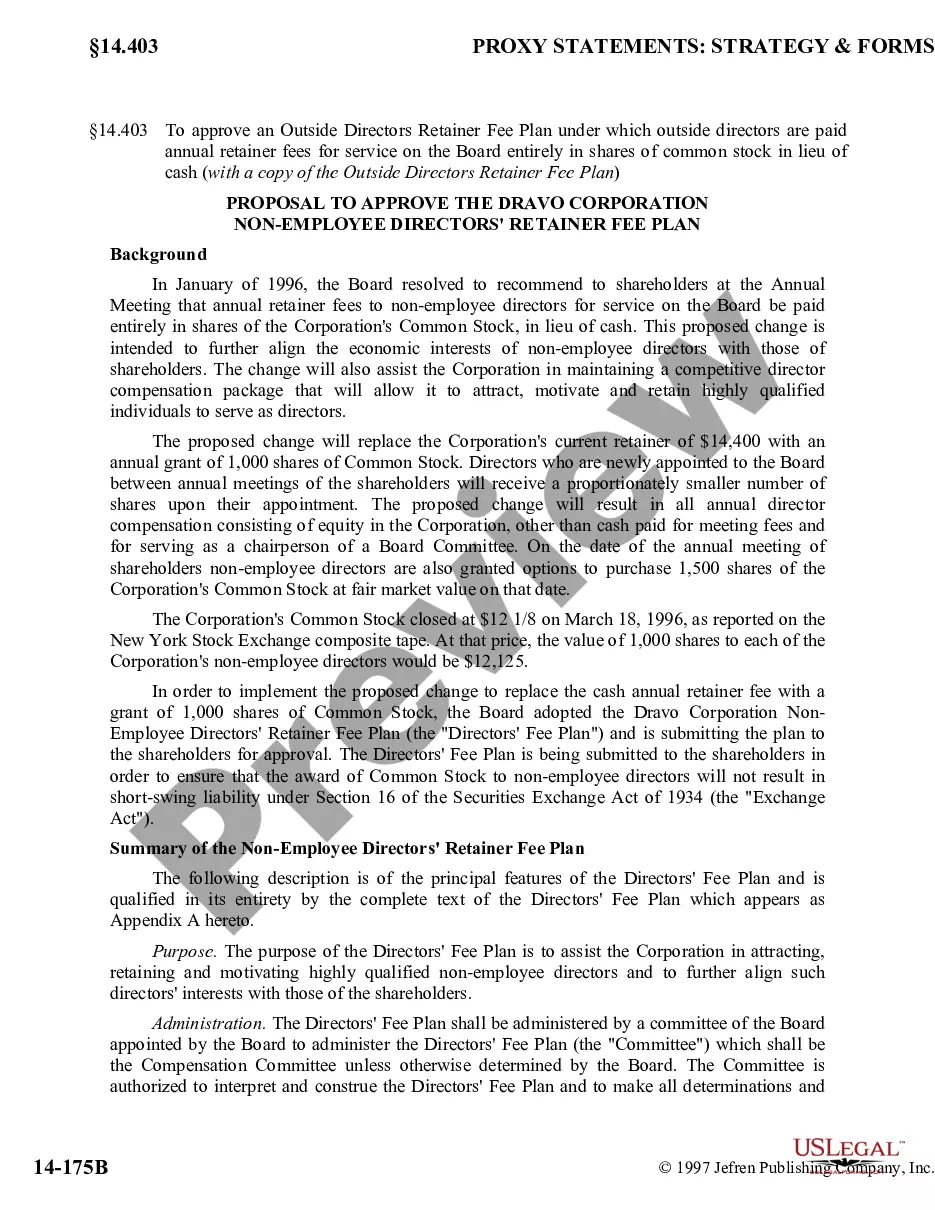
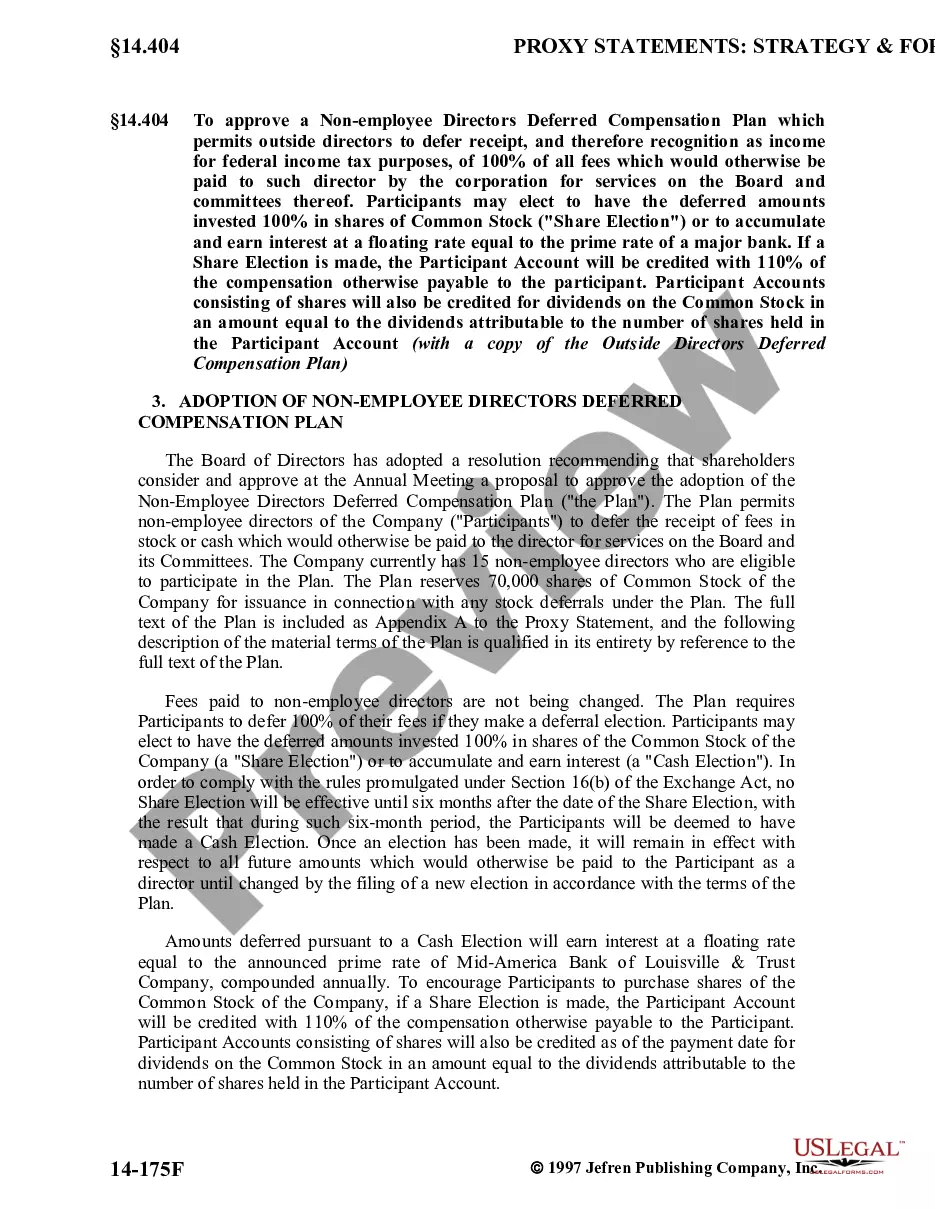
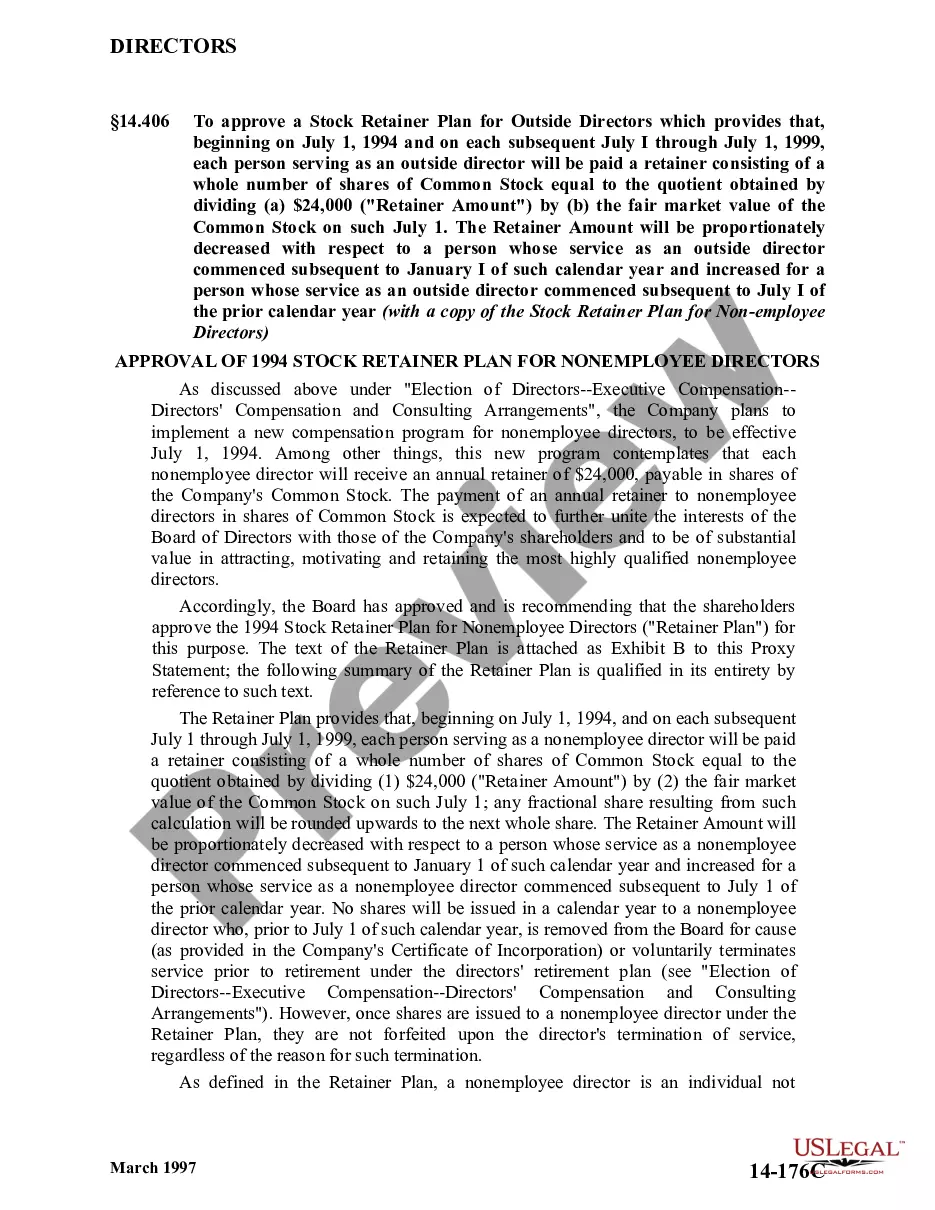
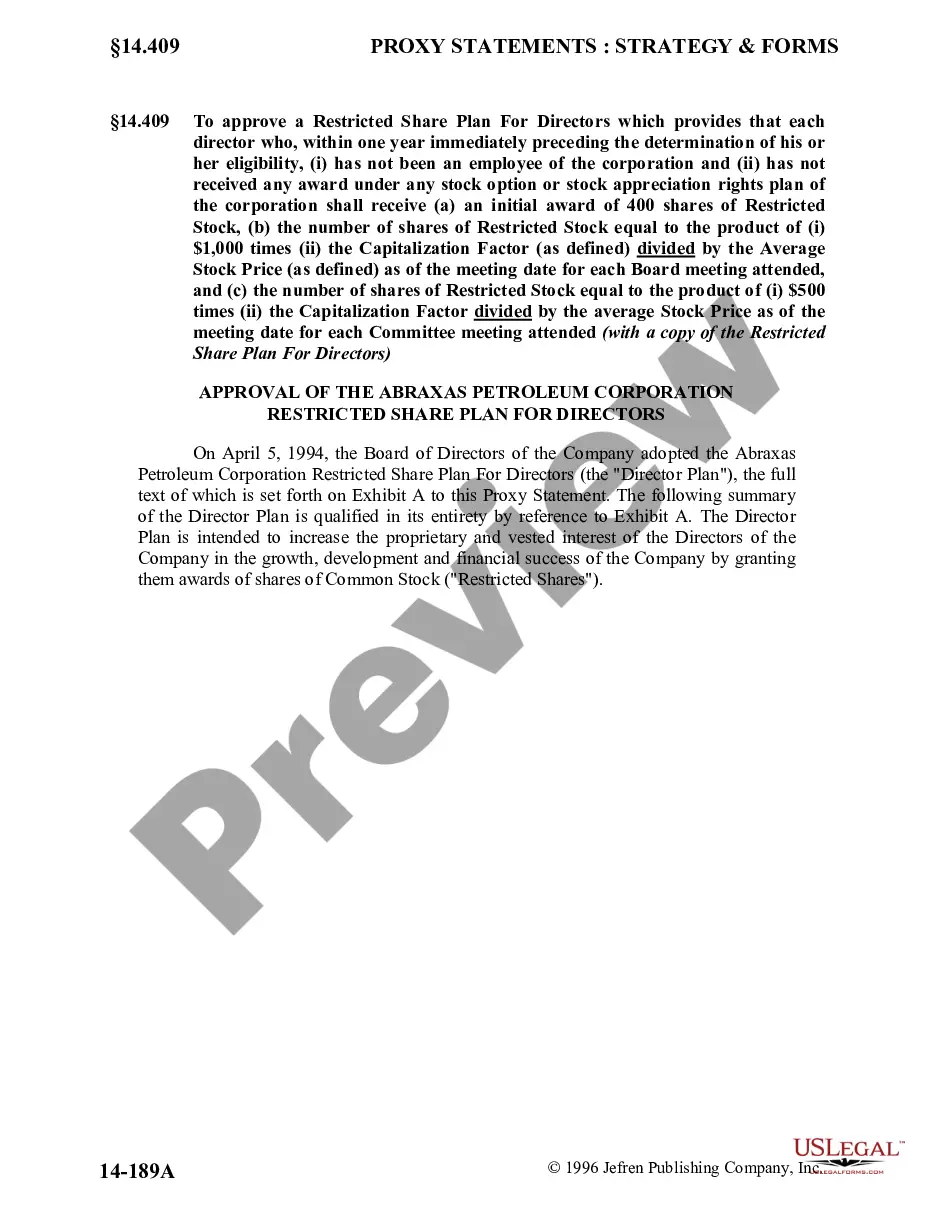
The Proposal to Approve Directors' Compensation Plan is a legal document designed for organizations to detail a plan for compensating directors with shares of common stock. This form allows companies to align the interests of their directors with those of stockholders by offering equity as part of the director's annual retainer fee. It differs from other compensation agreements by specifically involving stock issuance and compliance with securities regulations.
Form components explained
- A proposal outline for stockholder approval of the Directors Compensation Plan.
- The structure of the compensation, including cash versus stock options.
- The role of the Board of Directors in recommending approval.
- Conditions for stock issuance and eligibility for directors.
- Compliance with Rule 16b-3 of the Securities Exchange Act of 1934.

Common use cases
This form is essential when a company's Board of Directors proposes a new compensation plan that includes stock for its outside directors. Use this document prior to stockholder meetings to ensure transparency and compliance with legal requirements, especially when transitioning from traditional cash payments to stock-based compensation.
Who this form is for
- Corporations looking to implement or revise their directors' compensation plans.
- Boards of directors recommending changes to compensation structures.
- Legal teams ensuring compliance with securities law.
- Shareholders wishing to understand compensation proposals before voting.
Steps to complete this form
- Identify the parties involved in the compensation plan (the corporation and the directors).
- Detail the structure of the compensation, specifying stock issuance terms.
- Include the rationale for the compensation plan in line with company goals.
- Outline the voting process for stockholder approval.
- Attach any required documents or appendices for reference.
Is notarization required?
This form does not typically require notarization unless specified by local law. However, it's best to consult with a legal expert to confirm specific requirements based on jurisdiction.
Get your form ready online
Our built-in tools help you complete, sign, share, and store your documents in one place.
Make edits, fill in missing information, and update formatting in US Legal Forms—just like you would in MS Word.
Download a copy, print it, send it by email, or mail it via USPS—whatever works best for your next step.
Sign and collect signatures with our SignNow integration. Send to multiple recipients, set reminders, and more. Go Premium to unlock E-Sign.
If this form requires notarization, complete it online through a secure video call—no need to meet a notary in person or wait for an appointment.
We protect your documents and personal data by following strict security and privacy standards.

Make edits, fill in missing information, and update formatting in US Legal Forms—just like you would in MS Word.

Download a copy, print it, send it by email, or mail it via USPS—whatever works best for your next step.

Sign and collect signatures with our SignNow integration. Send to multiple recipients, set reminders, and more. Go Premium to unlock E-Sign.

If this form requires notarization, complete it online through a secure video call—no need to meet a notary in person or wait for an appointment.

We protect your documents and personal data by following strict security and privacy standards.
Common mistakes
- Failing to include all necessary appendices that clarify the compensation plan.
- Omitting required details on director eligibility and compensation structure.
- Not aligning the plan with state regulations and securities laws.
- Inadequate communication about the implications of stock-based compensation to directors and stockholders.
Advantages of online completion
- Convenience of downloading and customizing the form to fit specific corporate needs.
- Editability allows for quick updates based on regulatory changes or board decisions.
- Access to templates drafted by licensed attorneys ensures legal reliability.
Legal use & context
- The proposal must comply with the Securities Exchange Act of 1934 for proper governance.
- Required majority approval from shareholders at the Annual Meeting ensures binding acceptance of the plan.
- Failure to properly execute the form may lead to regulatory penalties or shareholder disputes.
Summary of main points
- The proposal is vital for aligning compensation with shareholder interests.
- Clear steps towards obtaining shareholder approval are necessary for compliance.
- Proper filling out of the proposal can help avoid common legal pitfalls.
Looking for another form?








Form popularity
FAQ
If you're asking about salary, use the word compensation rather than money and ask for a range rather than a specific number. Likewise, if you want to find out about work-life balance, it may be more useful to approach the topic in terms of office culture.
Pay vs. Performance One of the most popular ways to evaluate executive compensation is by comparing pay and performance. Unfortunately, many executives are given raises and bonuses even when their companies are faltering. Comparing pay to stock performance can help you determine whether executives are overpaid.
Pay employees salary and incentives. Keep the incentive part of your plan simple. Establish SMART goals. Determine what your competitors are paying. Modify salaries based on employees' geographic location.
Achievement of internal goals. Internal pay structures. Pay grade escalation between the CEO and his or her lieutenants that reflects the pay grade levels throughout the organisation. A company's performance compared with its peers.
According to the Center on Executive Compensation, "Executive pay arrangements typically consist of six distinct compensation components: salary, annual incentives, long-term incentives, benefits, perquisites and severance/change-in-control agreements."1 See High-Performing Companies Pay Executives Differently.
Step 1: Do Your Research. Step 2: Understand Your Value Is Not Tied to Your Current Compensation Level. Step 3: Remember That Executive Compensation Is Not Only About Salary. Step 4: Don't Be the First to Name a Price. Step 5: Be Prepared to Provide a Counter Offer.
Starting salary, including benefits package. comparative salary and cost-of-living information. vacation and other leave-with-pay time. salary review schedule. signing bonus, if offered. relocation stipend. spousal/partner assistance in locating a new position.
Start from scratch. Create a job description for each position. Determine the appropriate amount of compensation. Factor in overtime. Identify the benefits and incentives that you will provide. Detail your decisions in a document.