Letter to Client - Withdrawal of Representation
About this form
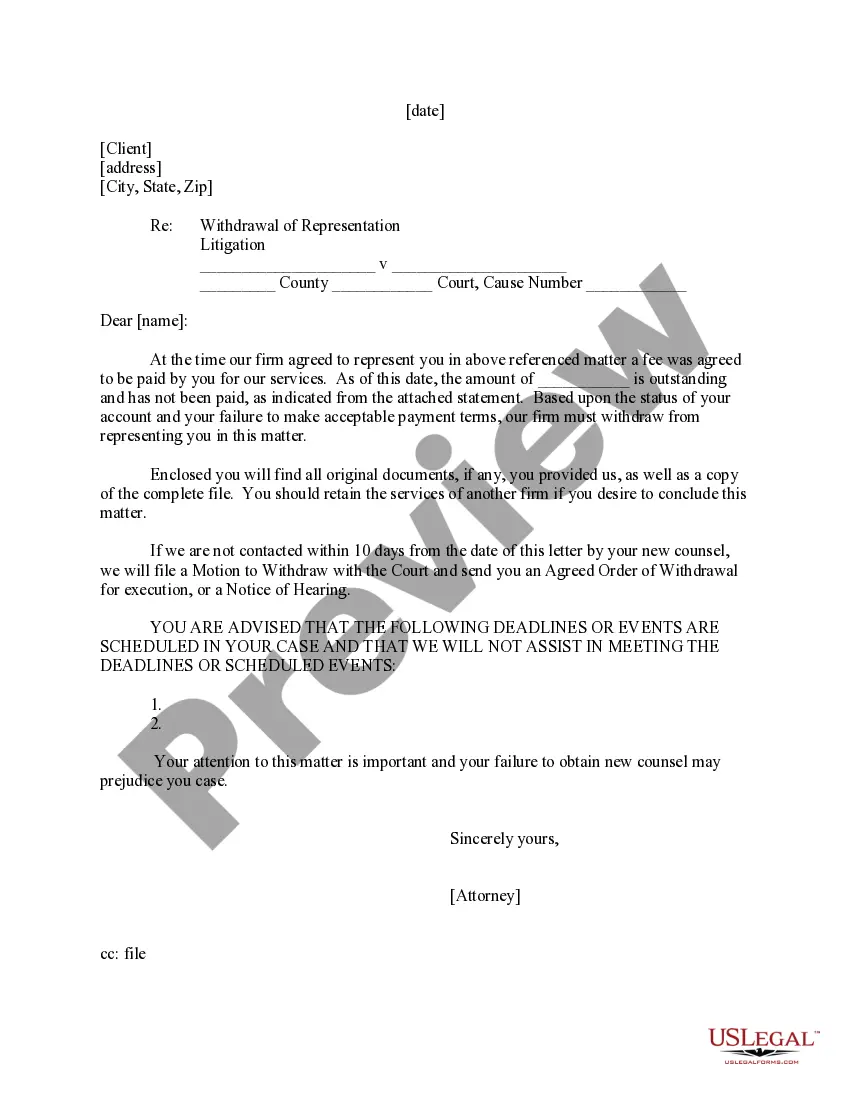
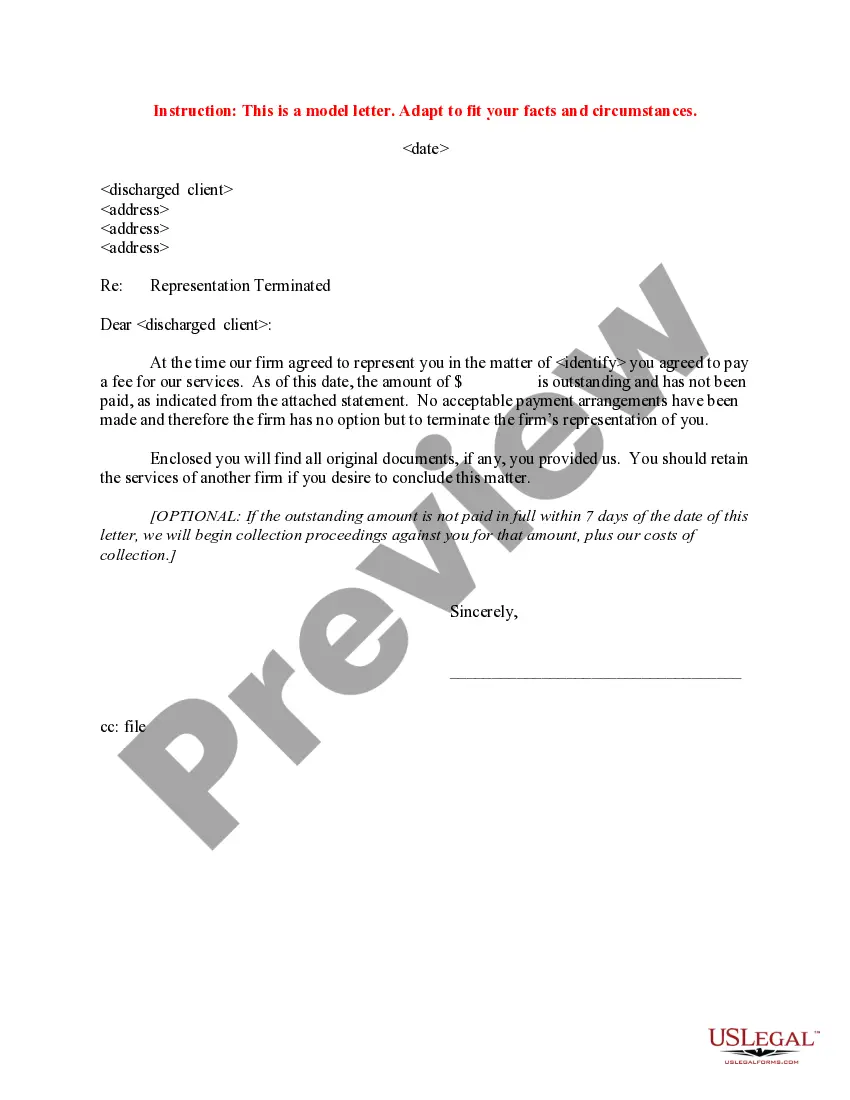
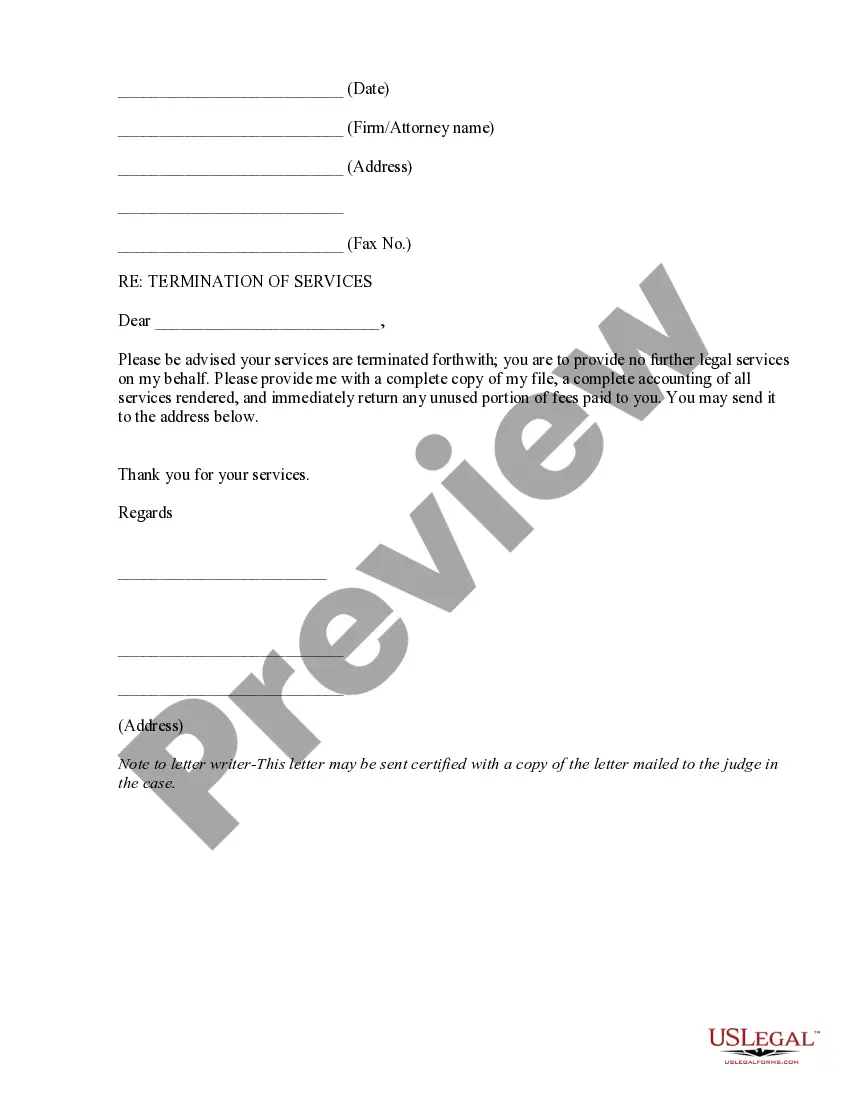
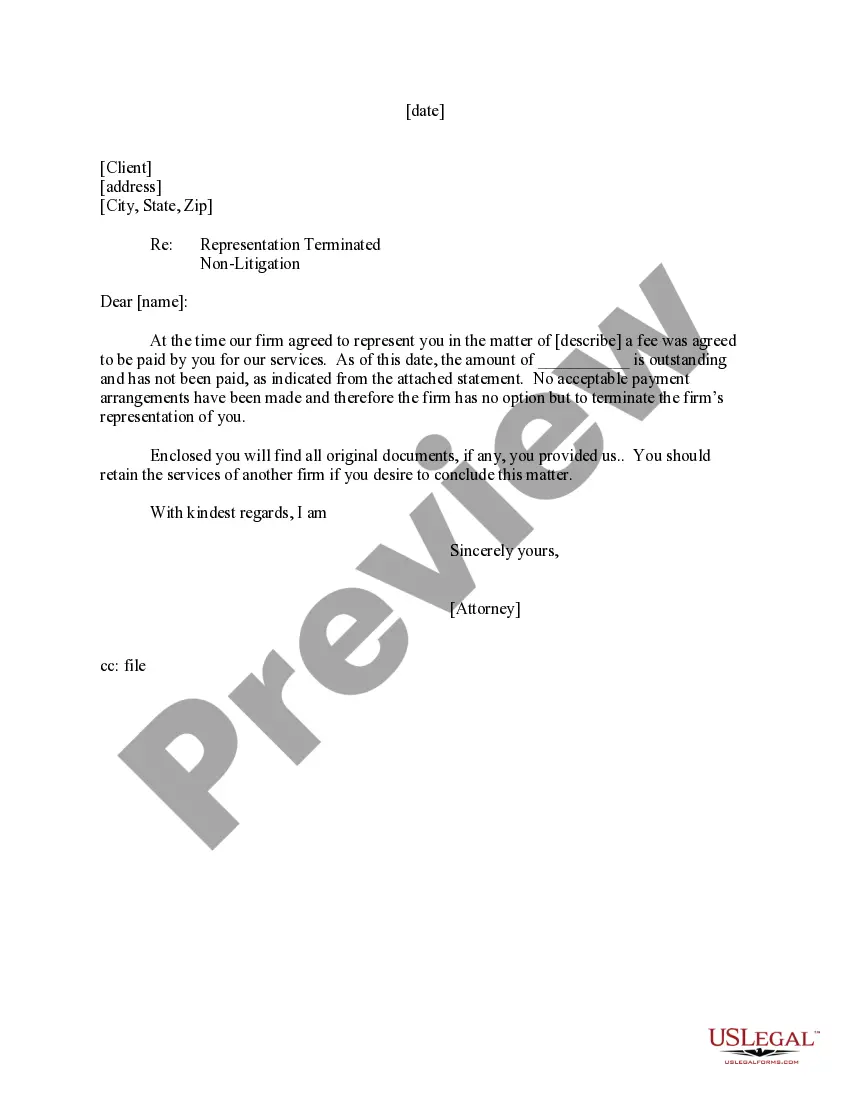
The Letter to Client - Withdrawal of Representation is a formal document used by a law firm to notify a client that it is terminating its representation. This letter outlines the client's outstanding balance and advises the client to seek new legal representation due to unpaid fees. The firm also communicates the necessary steps regarding filing a motion to withdraw with the court if no new counsel is confirmed within ten days. This form is essential when a firm must formally conclude its relationship with a client for non-payment while ensuring the client is informed of their rights and obligations moving forward.
What’s included in this form
- Client contact information and case details, including court and cause number.
- Notification of outstanding balance and reasons for withdrawal of representation.
- Instructions for the client to retain new legal counsel.
- Deadline for contacting the current firmâs new counsel.
- Notice of important deadlines or events associated with the case.

Situations where this form applies
This form should be used when a law firm decides to end its representation of a client due to non-payment or failure to meet payment obligations. It is important to formally document this withdrawal to protect both the firm and the client. Circumstances may include a client's ongoing inability to make scheduled payments, leading the firm to cease further legal work until a new attorney is retained.
Who can use this document
- Attorneys or law firms that need to formally withdraw from representing a client.
- Clients who have been notified of non-payment and need to seek alternative legal representation.
- Legal support staff responsible for client communication and documentation.
How to complete this form
- Fill in the clientâs address and contact information at the top of the letter.
- Specify the case name and court details, including the cause number, for reference.
- Clearly state the amount owed by the client and reference any attached statements.
- Emphasize the requirement for the client to seek new legal counsel.
- Outline the deadline for contacting the current firmâs new counsel.
Does this form need to be notarized?
This form does not typically require notarization unless specified by local law. However, it is advisable to check specific state requirements to ensure compliance.
Get your form ready online
Our built-in tools help you complete, sign, share, and store your documents in one place.
Make edits, fill in missing information, and update formatting in US Legal Forms—just like you would in MS Word.
Download a copy, print it, send it by email, or mail it via USPS—whatever works best for your next step.
Sign and collect signatures with our SignNow integration. Send to multiple recipients, set reminders, and more. Go Premium to unlock E-Sign.
If this form requires notarization, complete it online through a secure video call—no need to meet a notary in person or wait for an appointment.
We protect your documents and personal data by following strict security and privacy standards.

Make edits, fill in missing information, and update formatting in US Legal Forms—just like you would in MS Word.

Download a copy, print it, send it by email, or mail it via USPS—whatever works best for your next step.

Sign and collect signatures with our SignNow integration. Send to multiple recipients, set reminders, and more. Go Premium to unlock E-Sign.

If this form requires notarization, complete it online through a secure video call—no need to meet a notary in person or wait for an appointment.

We protect your documents and personal data by following strict security and privacy standards.
Mistakes to watch out for
- Failing to include the specific cause number and case details.
- Neglecting to mention the outstanding balance clearly.
- Not providing sufficient instructions for seeking new counsel.
- Omitting important deadlines that the client needs to be aware of.
Why use this form online
- Convenience of downloading and filling out the form at any time.
- Editable template allows for customization based on individual case needs.
- Access to legally vetted documents ensures reliability and compliance.
Summary of main points
- The letter serves as a formal notice of withdrawal from representation.
- It is important for clients to be aware of their outstanding balances and legal obligations.
- Clients should act quickly to secure new representation to protect their interests in ongoing cases.
Looking for another form?
Form popularity
FAQ
Yes a lawyer may, generally speaking, refuse to represent a client for any reason they choose (or no reason at all), even (in most jurisdictions) reasons that would be otherwise illegal for someone providing a public service to refuse for (such as racial, ethnic, religious, gender, or other reasons).
Be respectful. Make it simple. Don't feel you must explain or justify. Assign responsibility for your refusal to something else. Stand firm. Refer, refer, refer.
It's not necessary, or suggested, to include a reason for the termination. Tell the client what they need to do to move forward without you and what could happen if they don't. Termination means it's the end. Send the letter via a traceable delivery method. Be wary of terminating a client right before a deadline.
Lawyers typically withdraw for cause from representing difficult clients citing the permissive grounds of the representation 2026 has been rendered unreasonably difficult by the client or other good cause for withdrawal exists. Examples of withdrawal for these reasons include a client that withheld material
The court may request an explanation for the withdrawal, while the lawyer may be bound to keep confidential the facts that would constitute such an explanation. The lawyer's statement that professional considerations require termination of the representation ordinarily should be accepted as sufficient.
Representation of the client does not terminate unless and until the court, after notice and written motion, grants withdrawal. If the court does not allow the attorney to withdraw, the representation must continue.
If you decide to decline representation after research or investigation, you should protect yourself and your client by (1) promptly advising the client in writing of your decision not to take the case or matter; (2) be certain to inform the client of his or her right to contact another lawyer for a second opinion;
First, you can hire a new attorney and ask the new attorney to contact the former attorney and inform the former attorney of his or her termination. Second, you can write a letter to the attorney informing the attorney that you are terminating the attorney client relationship.
It is difficult for a lawyer to withdraw from representing a client. Judges have discretion in appointing guardian ad litem or indigent cases to attorneys. Judges have discretion in appointing guardian ad litem or indigent cases to attorneys.