Agreement to Reimburse for Insurance Premium
Overview of this form
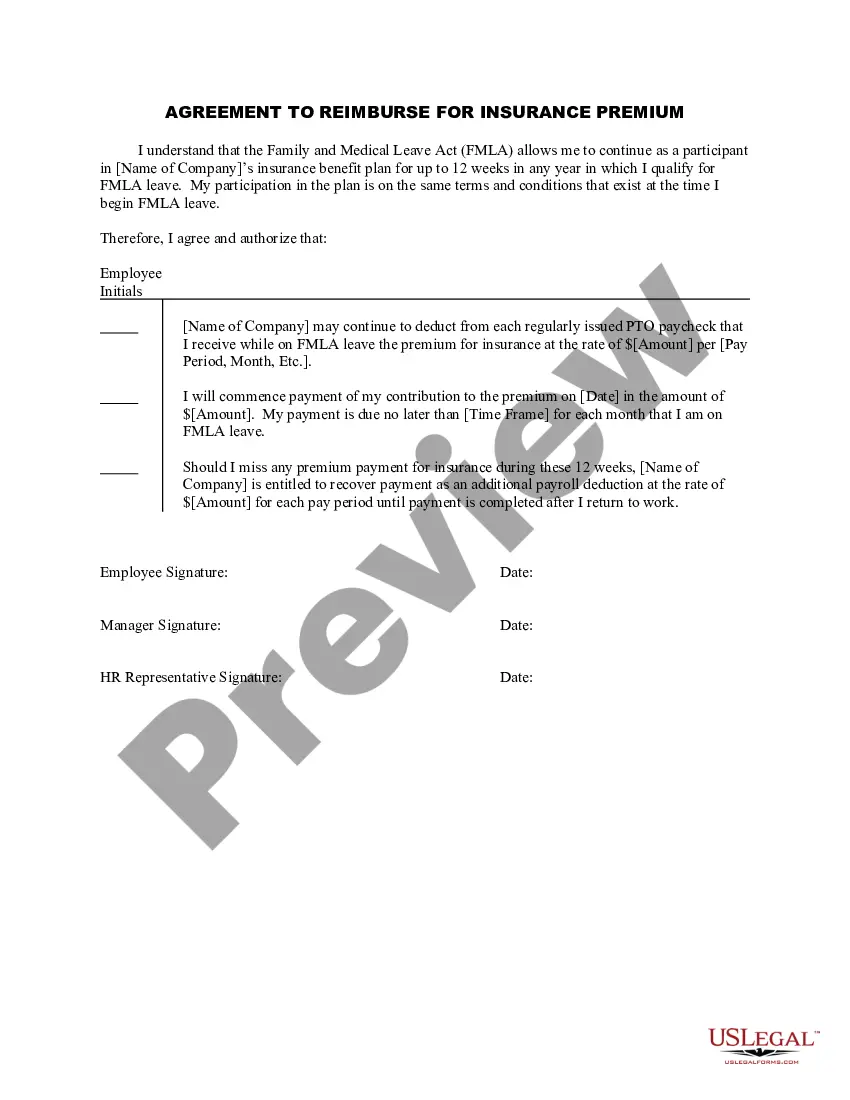
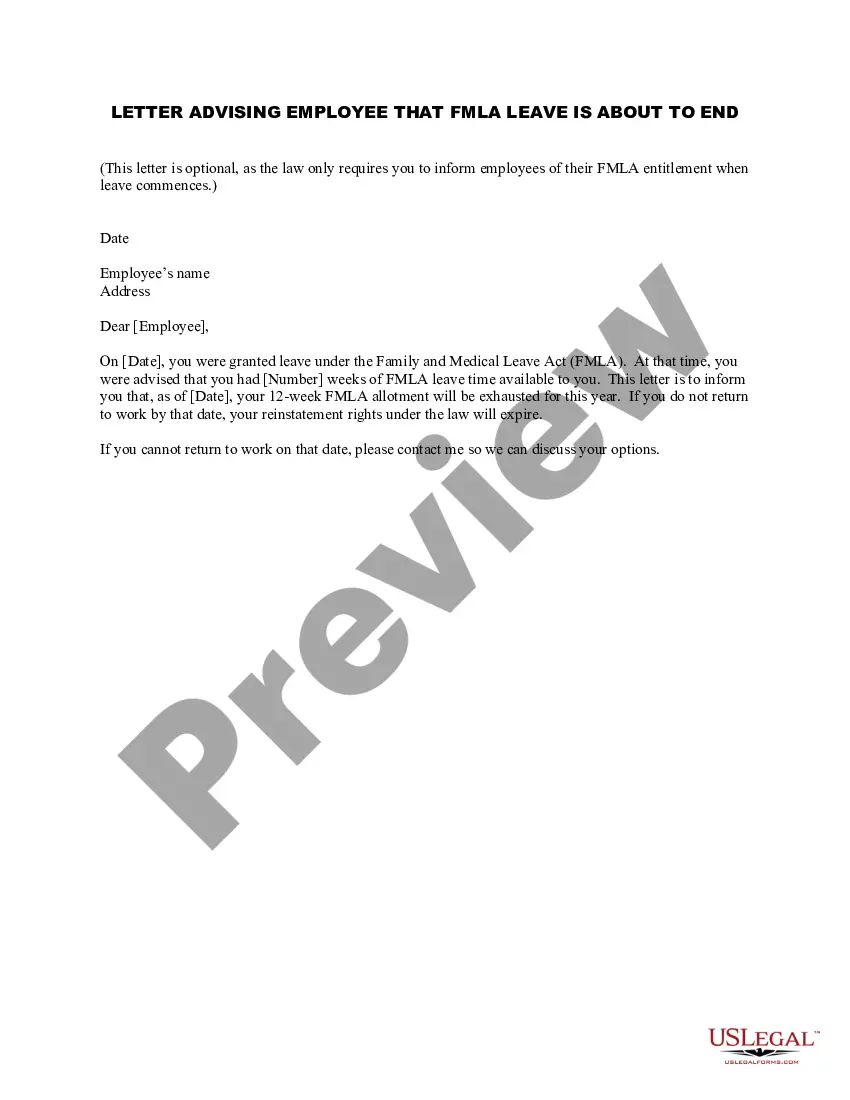
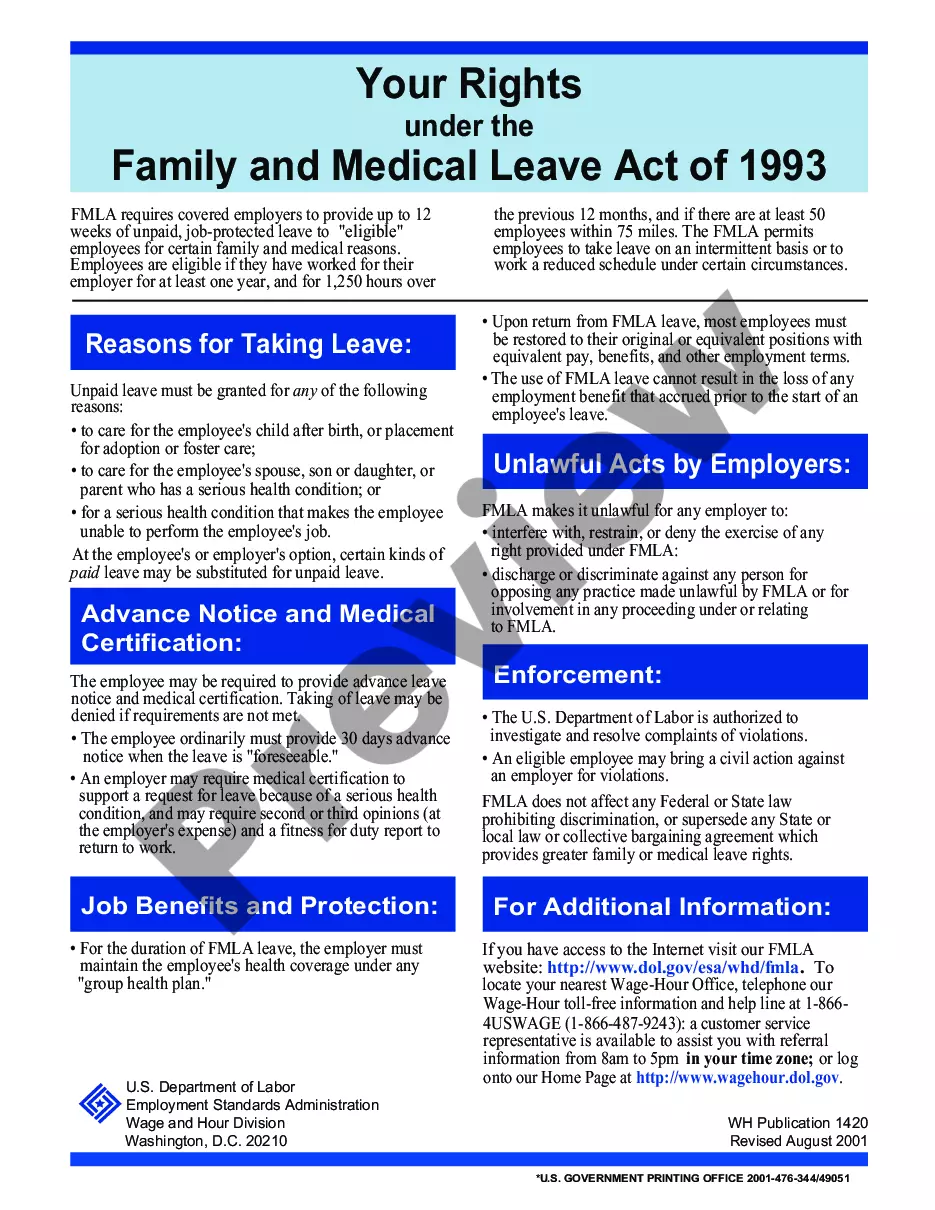
The Agreement to Reimburse for Insurance Premium is a legal document used by employers to ensure that employees continue to pay their insurance premiums while on leave, typically under the Family and Medical Leave Act (FMLA). This form is essential for maintaining consistent health coverage and clarifies responsibilities regarding premium payments during a leave period. Unlike similar forms, this agreement specifically addresses the reimbursement of insurance costs, ensuring that both parties understand their obligations clearly.
Form components explained
- Employee acknowledgment of continued participation in the insurance plan during FMLA leave.
- Details on premium payment amounts and due dates.
- Authorization for payroll deductions for premium payments.
- Consequences of missed payments and recovery methods.
- Signatures of the employee, manager, and HR representative to validate the agreement.

Common use cases
This form should be used when an employee is about to take FMLA leave and needs to ensure their insurance premiums are covered during that period. It is particularly important in scenarios where leave may be taken for personal health issues, the care of a family member, or other qualifying reasons under FMLA. By using this agreement, both the employer and employee can clarify how premium payments will be handled during the employee's absence.
Who this form is for
This form is intended for:
- Employers who offer health insurance benefits to employees and need to manage contributions during employee leave.
- Employees planning to take leave under the FMLA who want to maintain their insurance coverage.
- HR representatives responsible for managing employee benefits and leave requests.
Instructions for completing this form
- Read the agreement carefully to understand the terms and conditions regarding insurance premium reimbursements.
- Fill in the name of the company and the employee's information as required.
- Specify the amount of the premium to be deducted from each paycheck.
- Enter the date when the employee's payments will commence.
- Both the employee and the employerâs representatives must sign and date the document to validate it.
Is notarization required?
This form does not typically require notarization unless specified by local law. It is advisable to check any applicable state regulations to confirm what is necessary for legal validity.
Get your form ready online
Our built-in tools help you complete, sign, share, and store your documents in one place.
Make edits, fill in missing information, and update formatting in US Legal Forms—just like you would in MS Word.
Download a copy, print it, send it by email, or mail it via USPS—whatever works best for your next step.
Sign and collect signatures with our SignNow integration. Send to multiple recipients, set reminders, and more. Go Premium to unlock E-Sign.
If this form requires notarization, complete it online through a secure video call—no need to meet a notary in person or wait for an appointment.
We protect your documents and personal data by following strict security and privacy standards.

Make edits, fill in missing information, and update formatting in US Legal Forms—just like you would in MS Word.

Download a copy, print it, send it by email, or mail it via USPS—whatever works best for your next step.

Sign and collect signatures with our SignNow integration. Send to multiple recipients, set reminders, and more. Go Premium to unlock E-Sign.

If this form requires notarization, complete it online through a secure video call—no need to meet a notary in person or wait for an appointment.

We protect your documents and personal data by following strict security and privacy standards.
Common mistakes to avoid
- Failing to accurately complete the premium amount and due dates can lead to confusion regarding payments.
- Not securing all necessary signatures may render the form invalid.
- Neglecting to inform HR about any changes in payment plans during the leave period.
Why complete this form online
- Convenience of downloading and filling out the form at your own pace.
- Editability allows for quick updates if employee or company details change.
- Access to attorney-drafted documents ensures reliance on legally compliant language.
Summary of main points
- The form ensures employees can maintain health insurance coverage while on FMLA leave.
- Both parties must understand their responsibilities regarding premium payments during the leave.
- Proper completion and signature of the form are essential for enforceability.
Looking for another form?







Form popularity
FAQ
Beginning in 2020, employers may use an individual coverage HRA to reimburse eligible employees' Medicare premiums, subject to certain conditions.
Premium financing is the lending of funds to a person or company to cover the cost of an insurance premium.The premium finance company then pays the insurance premium and bills the individual or company, usually in monthly installments, for the cost of the loan.
If an employee pays the premiums on personally owned health insurance or incurs medical costs and is reimbursed by the employer, the reimbursement generally is excluded from the employee's gross income and not taxed under both federal and state tax law.
"Insurance premium finance agreement" means a promissory note or other written agreement by which an insured promises or agrees to pay to, or to the order of, an insurance premium finance company the amount advanced or to be advanced under the agreement to an insurer or to an insurance agent, in payment of premiums on
As of Jan. 1, 2020, employers can offer an ICHRA, which means they can reimburse employees tax-free for health insurance purchased on the open market. This allows the employer to essentially provide health insurance benefits without maintaining a conventional group health insurance plan.
Either the shareholder or corporation can pay the premiums for personal health insurance. It the corporation pays, they are reported as income on a W-2 wage statement and deductions are taken on a personal income tax form.Generally, health insurance premiums paid by an employer aren't subject to income or other taxes.
HRAs are account-based health plans that employers can use to reimburse employees for medical insurance premiums and other medical expenses. The federal government issued final regulations regarding HRAs in June of 2019, and the IRS issued additional proposed regulations in September.
Taxability of Reimbursements to Employees If an employee pays the premiums on personally owned health insurance or incurs medical costs and is reimbursed by the employer, the reimbursement generally is excluded from the employee's gross income and not taxed under both federal and state tax law.