Initial Training and Orientation Checklist
What this document covers
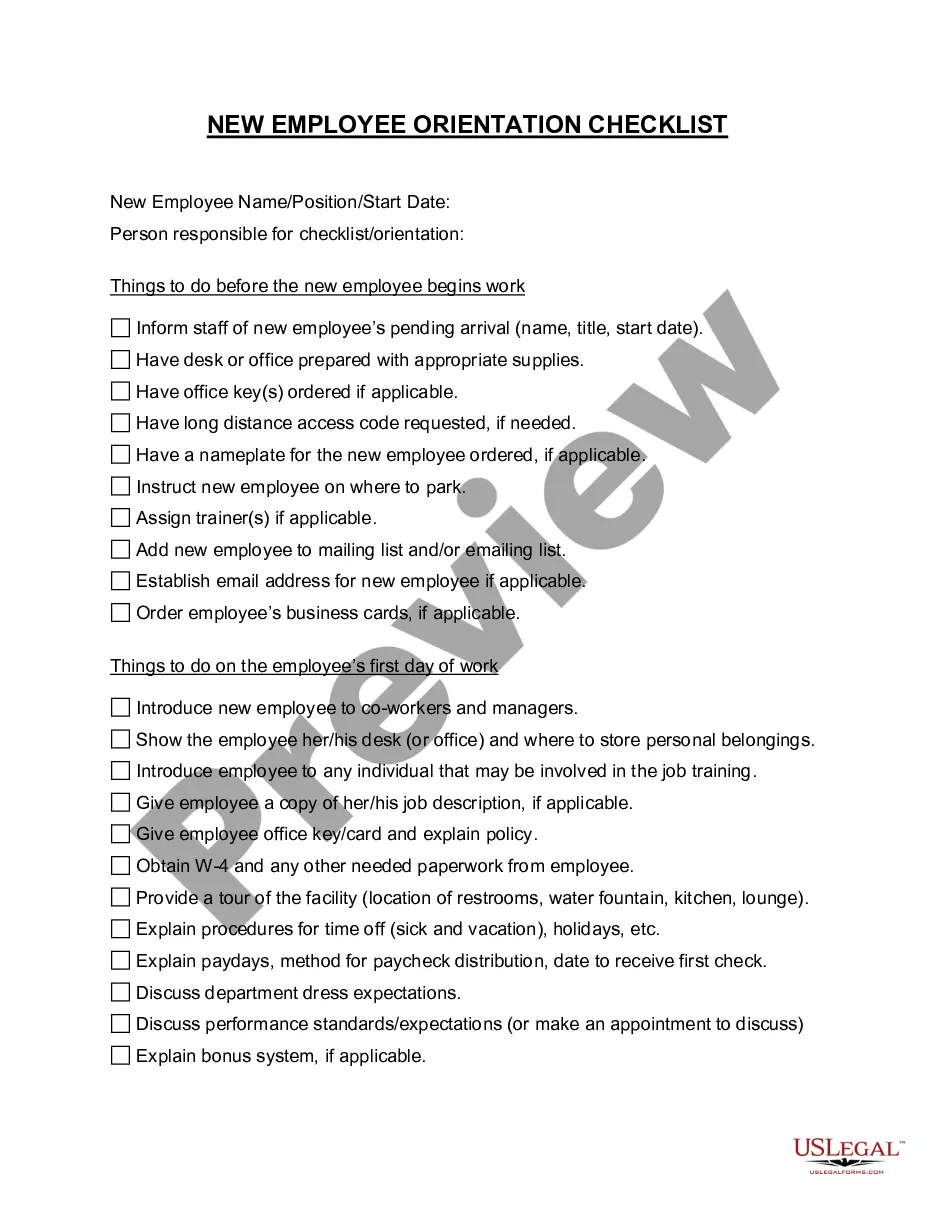
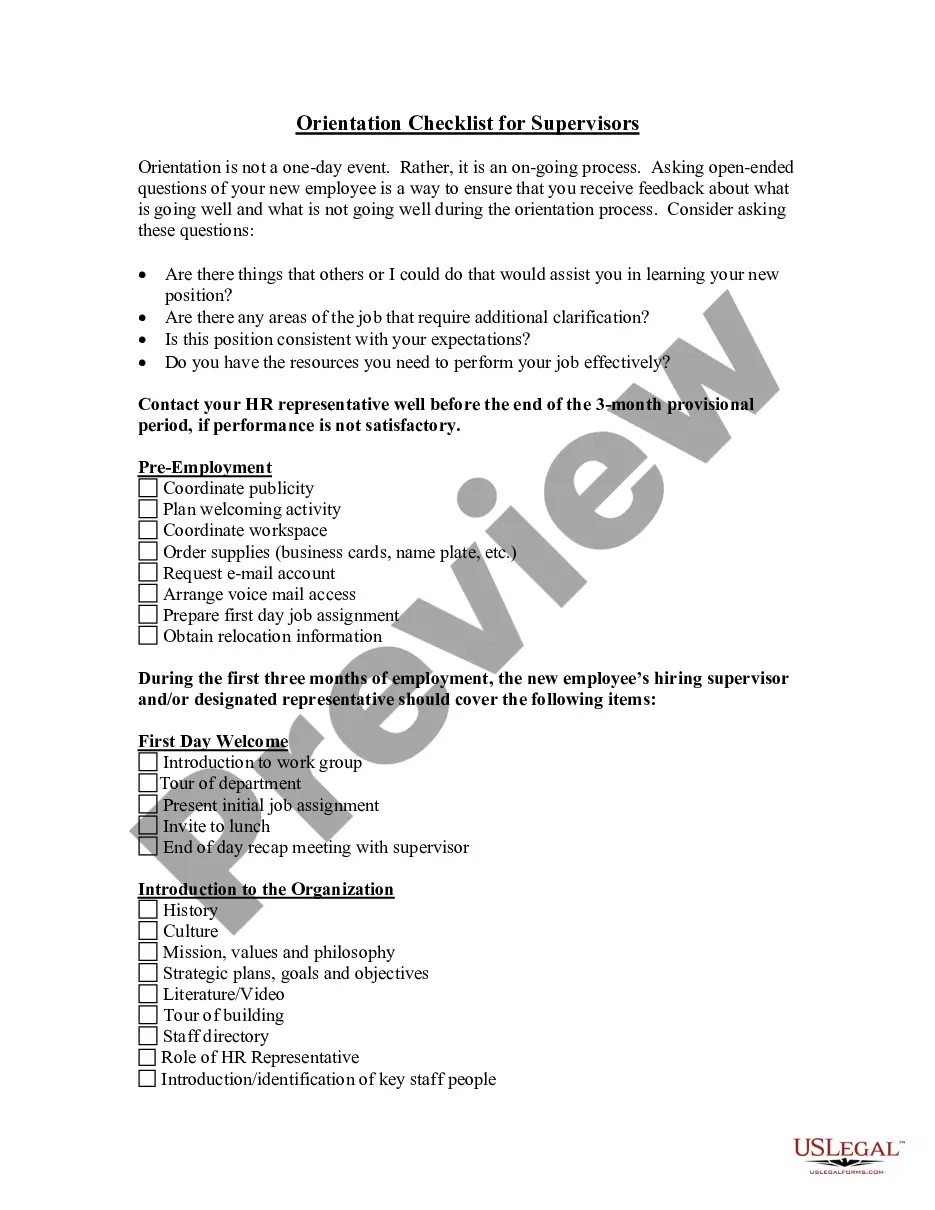
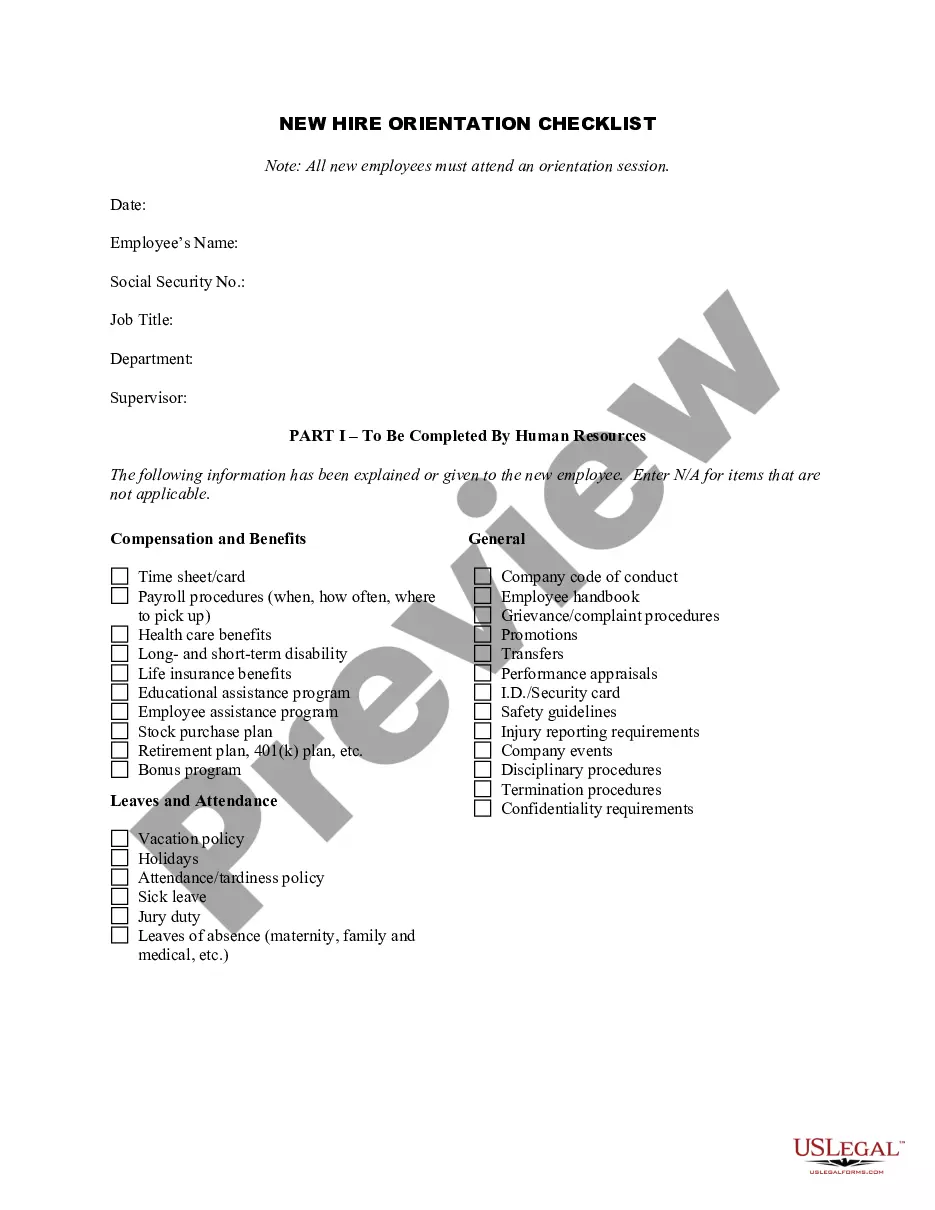
The Initial Training and Orientation Checklist is a crucial document designed to guide employers in providing structured orientation and training to new employees. This form ensures that all necessary topics are covered, facilitating a smooth onboarding process that helps new hires understand their roles, responsibilities, and workplace policies. Unlike generic checklists, this form specifically outlines the key components of initial training tailored for employment settings.
Form components explained
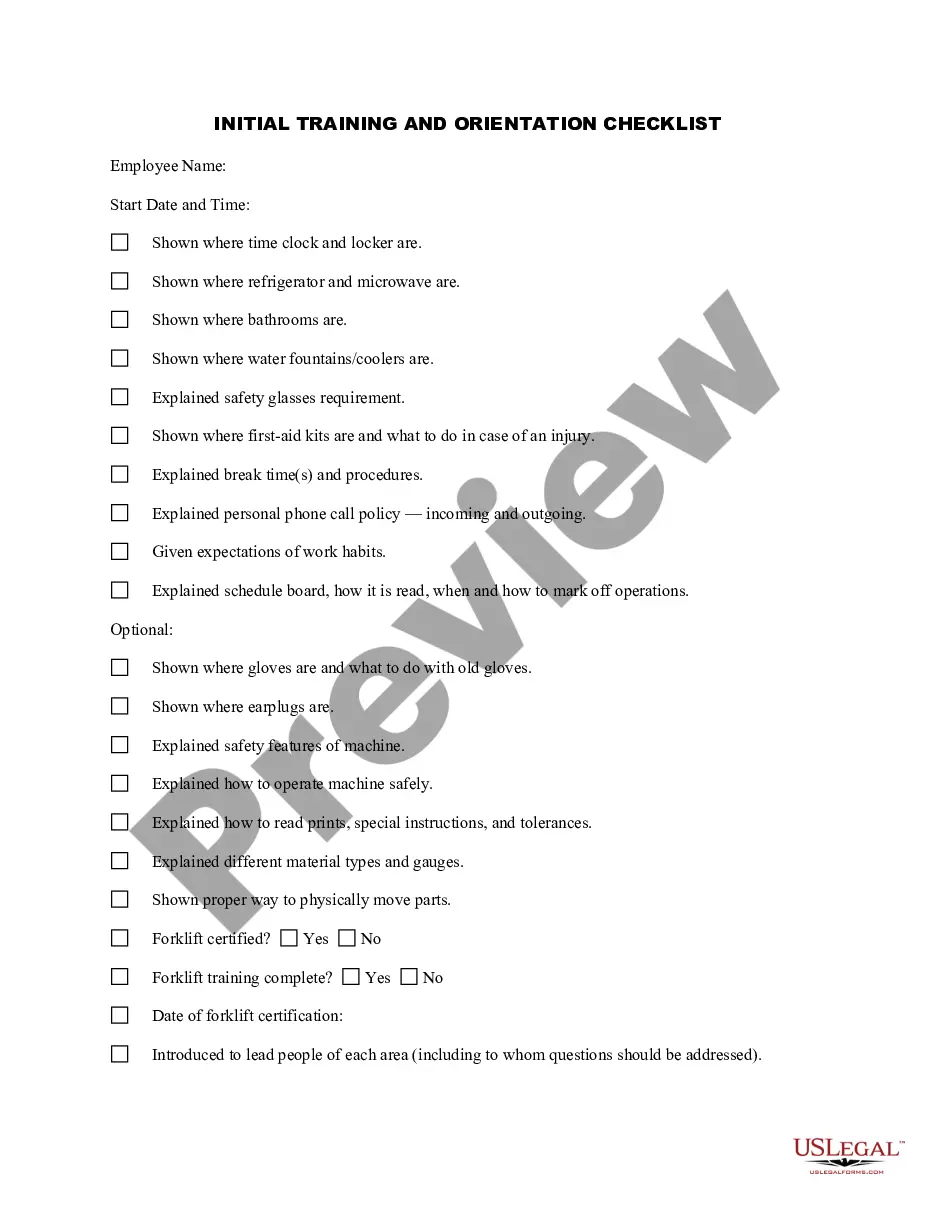
- Employee name and start date fields
- Checklist items for orientation topics covered, such as workplace policies and employee responsibilities
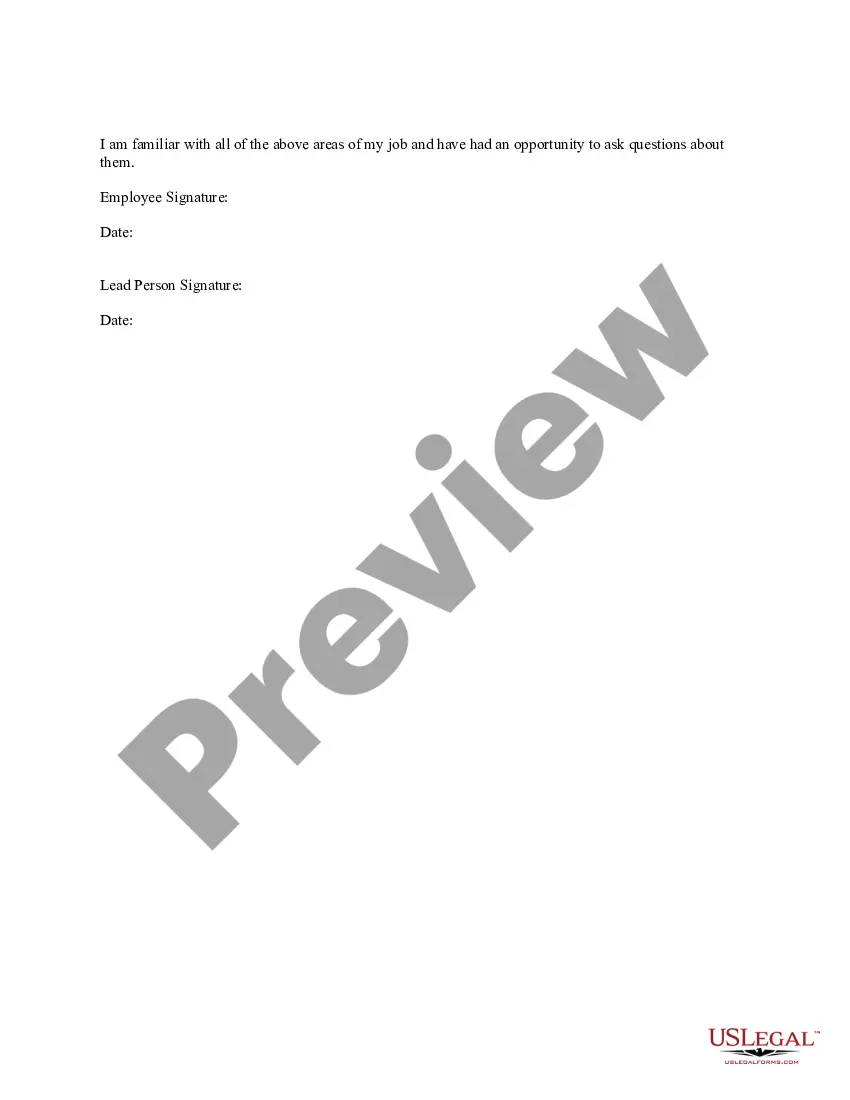
- Signatures for both the employee and the lead person for acknowledgment
- Spaces to confirm understanding of safety procedures and training requirements
- Section for forklift training and certification, if applicable
When this form is needed
This form is essential when a new employee joins an organization. It should be used during the onboarding phase to ensure that the new hire receives comprehensive training and orientation. Employers should utilize this checklist to systematically cover all necessary training topics, making the process efficient and thorough.
Who can use this document
This checklist is primarily intended for:
- Human Resources personnel responsible for onboarding
- Supervisors or managers overseeing new employee training
- Organizations in various industries looking to streamline their training process
Completing this form step by step
- Enter the employee's name and the start date in the designated fields.
- Go through each checklist item and confirm completion by marking checkboxes where applicable.
- Ensure the employee understands each training topic by allowing opportunities for questions.
- Obtain signatures from both the employee and the lead person to confirm acknowledgment of training materials covered.
- File the completed form in the employee's personnel record for future reference.
Does this document require notarization?
This form does not typically require notarization unless specified by local law. It is intended for internal use to document the training and orientation process.
Get your form ready online
Our built-in tools help you complete, sign, share, and store your documents in one place.
Make edits, fill in missing information, and update formatting in US Legal Forms—just like you would in MS Word.
Download a copy, print it, send it by email, or mail it via USPS—whatever works best for your next step.
Sign and collect signatures with our SignNow integration. Send to multiple recipients, set reminders, and more. Go Premium to unlock E-Sign.
If this form requires notarization, complete it online through a secure video call—no need to meet a notary in person or wait for an appointment.
We protect your documents and personal data by following strict security and privacy standards.

Make edits, fill in missing information, and update formatting in US Legal Forms—just like you would in MS Word.

Download a copy, print it, send it by email, or mail it via USPS—whatever works best for your next step.

Sign and collect signatures with our SignNow integration. Send to multiple recipients, set reminders, and more. Go Premium to unlock E-Sign.

If this form requires notarization, complete it online through a secure video call—no need to meet a notary in person or wait for an appointment.

We protect your documents and personal data by following strict security and privacy standards.
Common mistakes
- Failing to cover all items on the checklist during the orientation process.
- Not leaving enough time for new employees to ask questions, resulting in misunderstandings.
- Inadequate documentation of signatures, which can lead to disputes later on.
Why complete this form online
- Convenience of downloading and printing the form for immediate use.
- Editability allows for customization of the checklist based on specific company policies.
- Reliable access ensures that employers can provide the most up-to-date training information to newcomers.
Main things to remember
- The Initial Training and Orientation Checklist is essential for effective employee onboarding.
- Employers should ensure all checklist items are addressed and documented.
- Obtaining signatures is crucial for verifying completion and understanding of the training materials.
Looking for another form?
Form popularity
FAQ
Starting and ending times for work shifts; Times and lengths of work breaks and meal breaks; Overtime procedures and documentation; Procedures for sick days, personal days, and leaves of absence; and. Vacation policy, holiday schedules, and the procedure for requesting time off.
Paperwork and new hire information. Paperwork might not be the most exciting part of orientation, but it is necessary. Welcome and introductions. Office access. Hardware and software. Induction training. HR. Team manager. IT department.
Know who they need to meet. Make sure they know who will be handling their orientation on the first day. Tell them what to wear. Tell them what to bring. Know how the job supports the company mission. Do paperwork outside of the orientation.
Welcome message. Start out by giving new employees a brief introduction to your company and a tour of the workplace (this can include an overview of the company's history, mission, values, and culture).Compensation/benefits.Paperwork.Attendance/leave.Safety/security.Conduct.Training.
The four phases are Onboarding, Initial Development, Ongoing Development and Retention, and Separation.
It refers to the actions a company takes during a new hire's first days to help them: Adjust to their new work environment. Complete tasks required by law. Learn about key company policies. Prepare themselves to take on their job duties.
ØA successful orientation should accomplish four things for new employees: Make them feel welcome and at ease. Help them understand the organization in a broad sense. Make clear to them what is expected in terms of work and behavior.
1Submit a job requisition form to HR.2Complete a background check.3Review the schedule and job basics.4Review job descriptions and duties.5Complete all new hire forms.6Prepare team introductions.7Prepare their work environment.8Prepare for new hire training.