Minnesota Post-Dissolution Custody - Visitation Questionnaire
Understanding this form
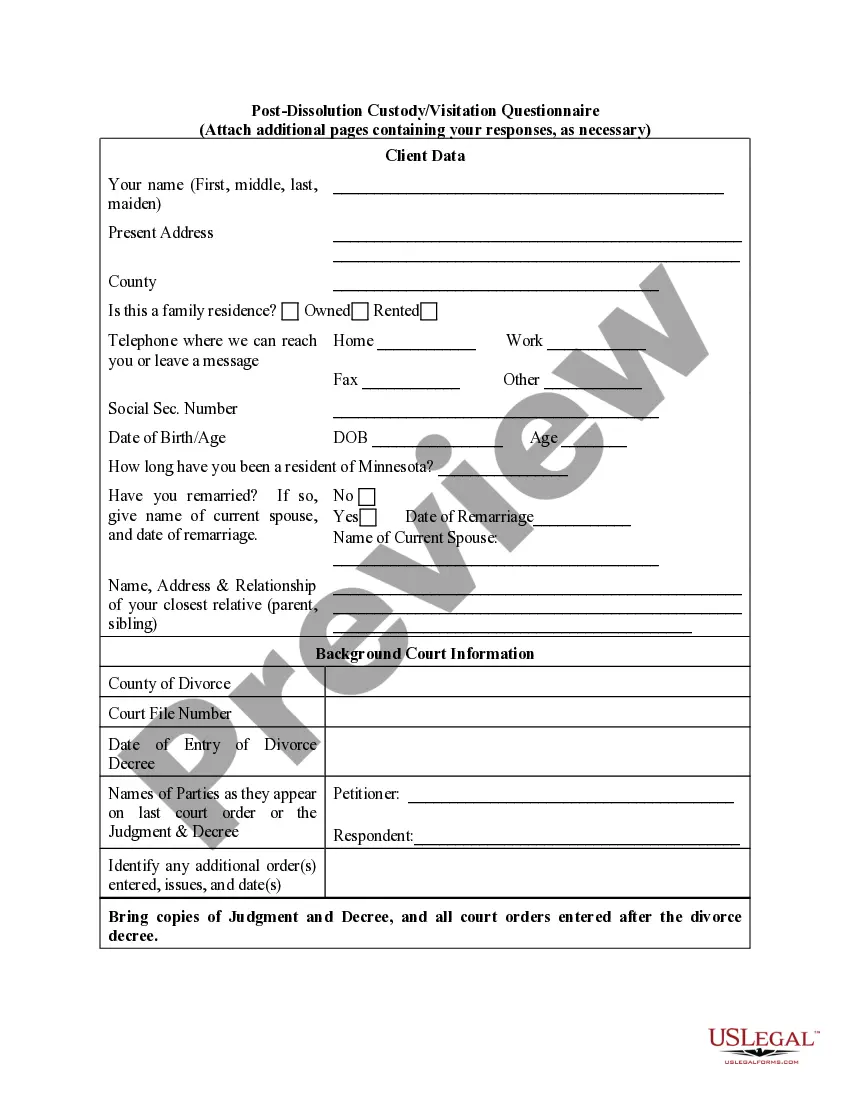
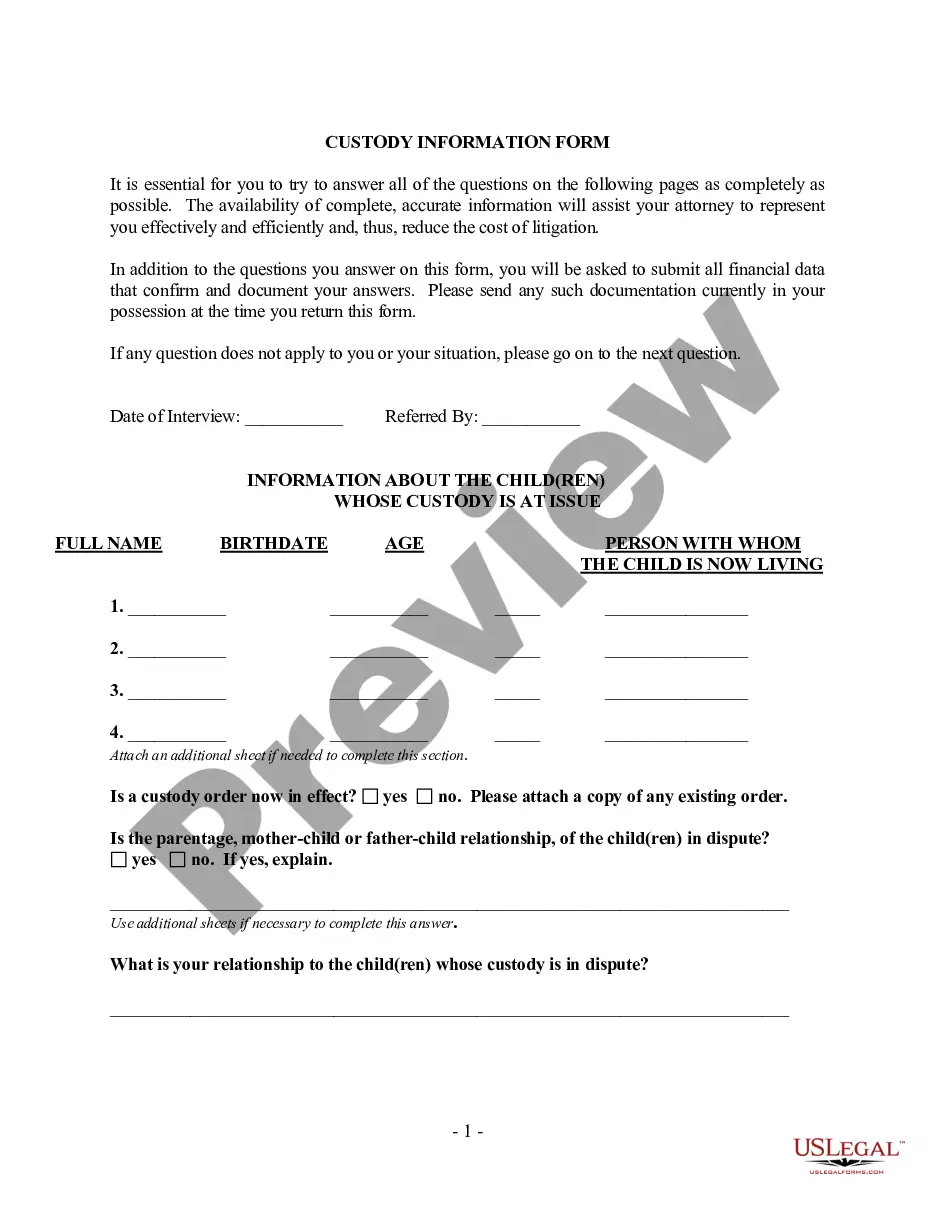
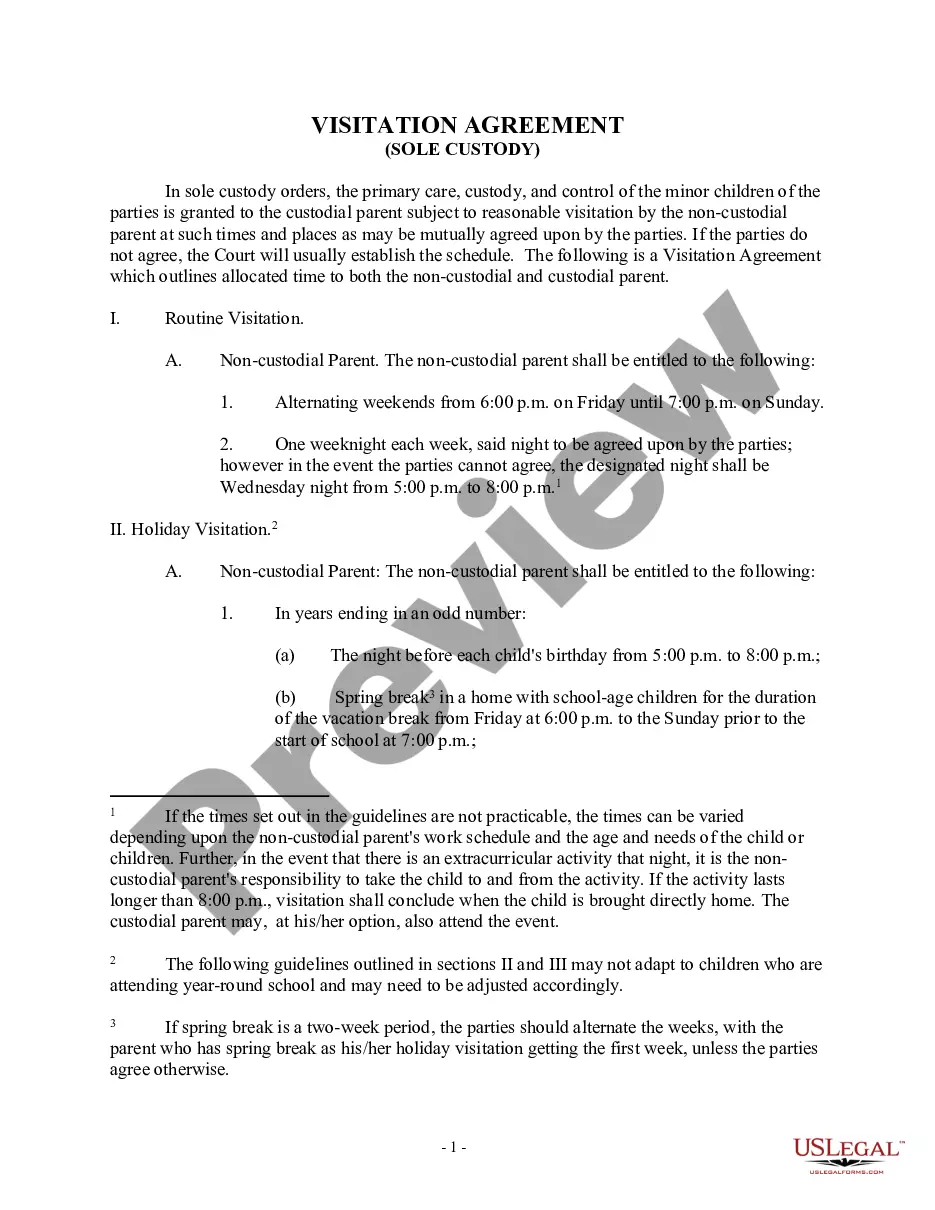
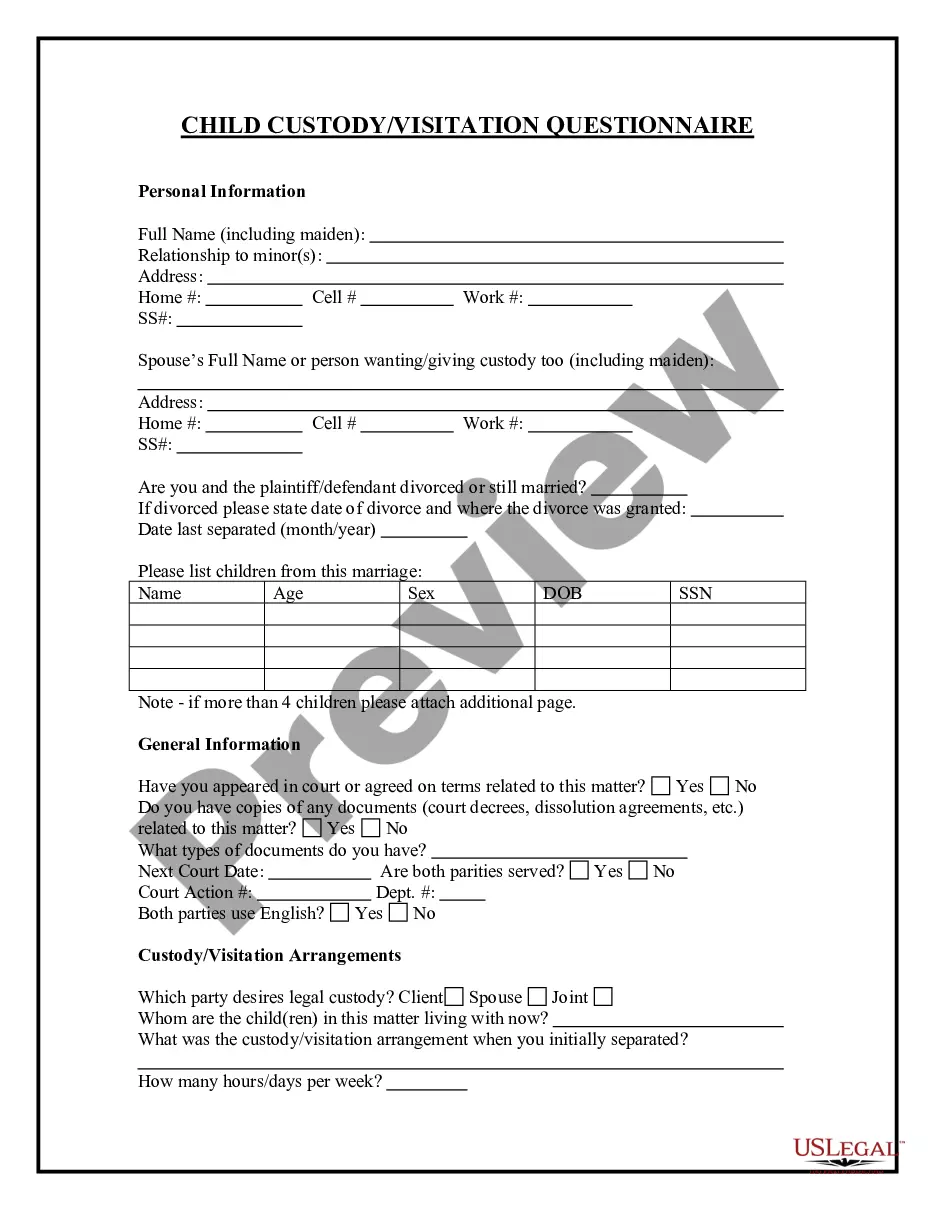
The Post-Dissolution Custody - Visitation Questionnaire is a legal document designed to collect essential information regarding changes in child custody and visitation arrangements following a divorce. This form assists in the process of modifying custody agreements and ensuring that all parties involved are informed and prepared for any adjustments necessary for the child's wellbeing. Unlike other forms focused solely on divorce proceedings, this questionnaire specifically addresses custody and visitation issues, making it a vital tool for parents seeking to make changes post-divorce.
What’s included in this form
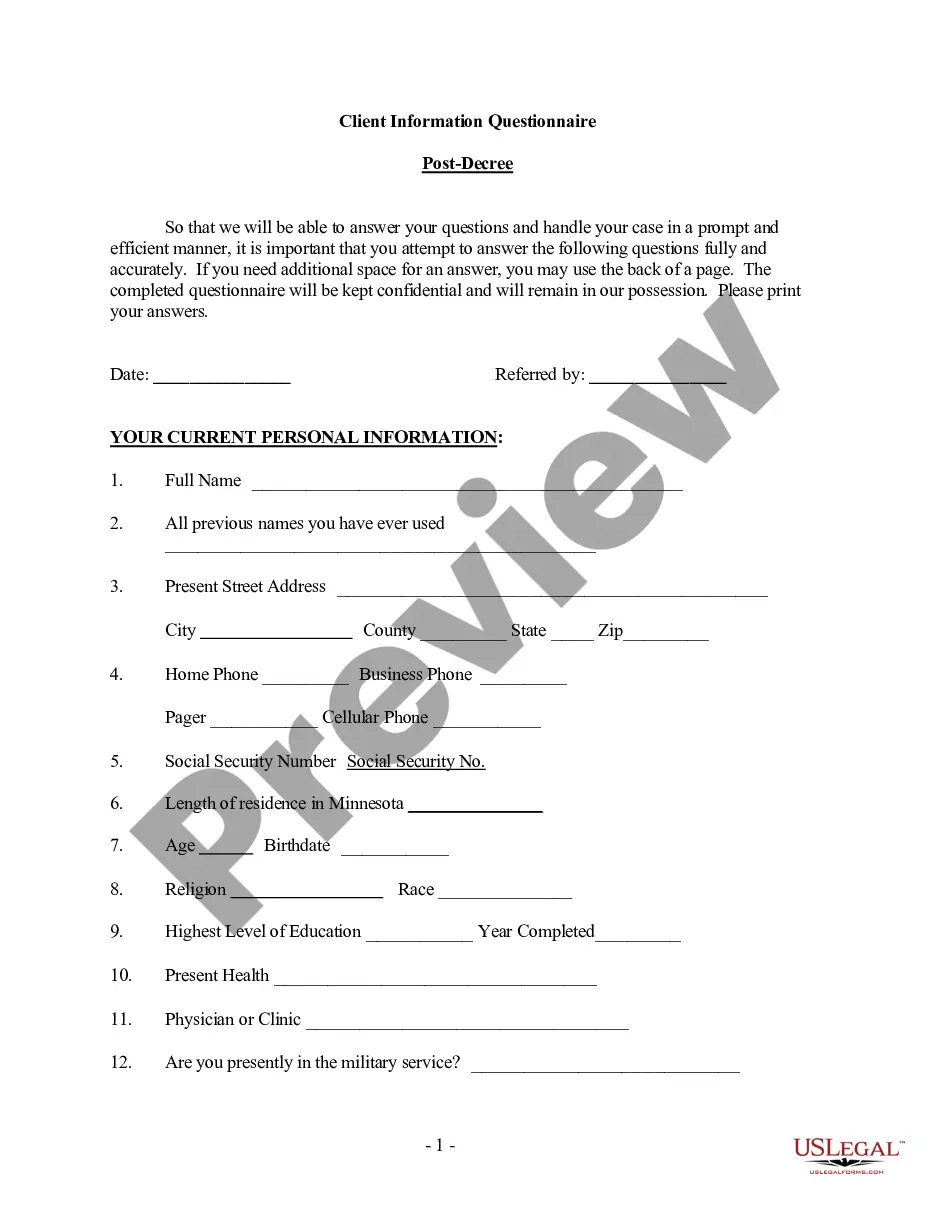
- Client data, including personal information such as name, address, and contact details.
- Background court information, including county of divorce and court file number.
- Details about current family situation, including marital status and information about any new spouses.
- Information about closest relatives to facilitate communication regarding custody issues.
- Fields for documentation of all previous custody orders and related court documents.
When to use this document
This form is necessary when a parent seeks to modify existing custody or visitation arrangements after a divorce. It should be used in instances such as relocating, changes in the parent's circumstances (like employment or marriage), or when the current visitation schedule is not working effectively for the child's best interests. If there are significant changes in a child's needs or circumstances, this questionnaire helps gather the required information to present to the court.
Who can use this document
This form is intended for:
- Parents who have undergone a divorce and wish to modify custody arrangements.
- Parents who are concerned about the current visitation schedule and want to propose changes.
- Guardians or relatives acting on behalf of the parent seeking modifications in custody or visitation.
Instructions for completing this form
- Begin by filling in your personal information accurately, including your full name and contact details.
- Provide your current living situation, indicating whether you own or rent your residence.
- Document relevant court information from your divorce, including the county, court file number, and names of the parties involved.
- State whether you have remarried and provide the name of your current spouse and the date of remarriage, if applicable.
- List details about your closest relative, including their name and relationship to you, for reference in custody matters.
Is notarization required?
This form does not typically require notarization unless specified by local law. However, it is advisable to check with your attorney or local court requirements to ensure that all necessary legal standards are met.
Get your form ready online
Our built-in tools help you complete, sign, share, and store your documents in one place.
Make edits, fill in missing information, and update formatting in US Legal Forms—just like you would in MS Word.
Download a copy, print it, send it by email, or mail it via USPS—whatever works best for your next step.
Sign and collect signatures with our SignNow integration. Send to multiple recipients, set reminders, and more. Go Premium to unlock E-Sign.
If this form requires notarization, complete it online through a secure video call—no need to meet a notary in person or wait for an appointment.
We protect your documents and personal data by following strict security and privacy standards.

Make edits, fill in missing information, and update formatting in US Legal Forms—just like you would in MS Word.

Download a copy, print it, send it by email, or mail it via USPS—whatever works best for your next step.

Sign and collect signatures with our SignNow integration. Send to multiple recipients, set reminders, and more. Go Premium to unlock E-Sign.

If this form requires notarization, complete it online through a secure video call—no need to meet a notary in person or wait for an appointment.

We protect your documents and personal data by following strict security and privacy standards.
Mistakes to watch out for
- Failing to provide complete and accurate contact information.
- Omitting previous court orders or relevant documents when submitting the questionnaire.
- Not updating personal status, such as marital changes, which could affect custody arrangements.
- Overlooking the requirement to add additional pages if responses exceed the space provided.
Benefits of completing this form online
- Convenient access to the form 24/7, allowing you to complete it at your own pace.
- Editable fields that can be tailored to your specific situation without legal jargon hindering clarity.
- Reliable templates developed by licensed attorneys, ensuring compliance with legal standards.
- Instant downloading for immediate use in your legal proceedings.
Legal use & context
- The form is legally binding and serves as a formal request for changes in visitation or custody.
- It is acceptable in Minnesota courts for documenting changes in custody arrangements post-divorce.
- Filing this form does not guarantee the modification of custody; it will be reviewed by the court based on the information provided.
What to keep in mind
- The Post-Dissolution Custody - Visitation Questionnaire is essential for parents wishing to modify custody arrangements.
- Accurate and complete information is crucial for effective legal processing.
- This form specifically caters to post-divorce visitation issues, distinct from other custody forms.
Looking for another form?
Form popularity
FAQ
In Minnesota, there is no specific age at which a child can outright refuse to see a parent. However, the court may consider the child's wishes as they grow older and demonstrate an understanding of their feelings. Typically, children aged 14 and older can express their preferences more strongly, particularly in custody matters. For those navigating the complexities of custody arrangements, the Minnesota Post-Dissolution Custody - Visitation Questionnaire can help clarify the situation and provide a structured approach.
In Minnesota, there is no specific age at which a child can refuse visitation outright. However, the court may consider the child's wishes, especially as they grow older and more capable of expressing their preferences, typically starting around age 12. It's essential to remember that the child's best interests remain the priority in these cases. For parents navigating these complexities, the Minnesota Post-Dissolution Custody - Visitation Questionnaire from USLegalForms can provide valuable insights and help establish a clear visitation plan.
Once you establish legal paternity, the mother cannot move away with the child over the father's objection without leave of court. However, if you do not establish paternity, the mother can move away or deny visitation rights, regardless of the father's objections.
The court can modify a custody order if (1) the child is at least 12 years of age and expresses a preference of which parent he or she prefers to live with in chambers to the court, and (2) it is in the best interest of the child.
In the state of Minnesota, there is no set age where a child can choose which parent to live with, so it is generally left to the parents and the courts, if needed and the older the child, the more weight this opinion (or preference) carries.
The parents of the child in question have the legal right to deny any grandparent visitation rights.Third parties would include grandparents. However, some states allow grandparents to request visitation rights if the nuclear family has been disrupted in some way, such as in cases involving divorce.
Can a child choose not to visit a parent? The mere age of your child will not determine your family law matter. There have been cases before the Court where a 17 year old child's wishes were given limited weight because the basis for this child's decision was not balanced.
In cases where parents can't agree, a judge will decide visitation and custody based on the child's best interests.Both parents are bound by the terms of a custody order. If your child refuses to go to visits with the other parent, you could still be on the hook for failing to comply with a custody order.
In order to be afforded their parental rights, unmarried fathers must establish paternity through a recognition of parentage or court order.The Minnesota Department of Human Services points out that taking this step legally recognizes a man as a child's father and affords him the right to seek custody and visitation.