Minnesota Summons and Complaint regarding Client's unpaid Attorney's Fees
Overview of this form
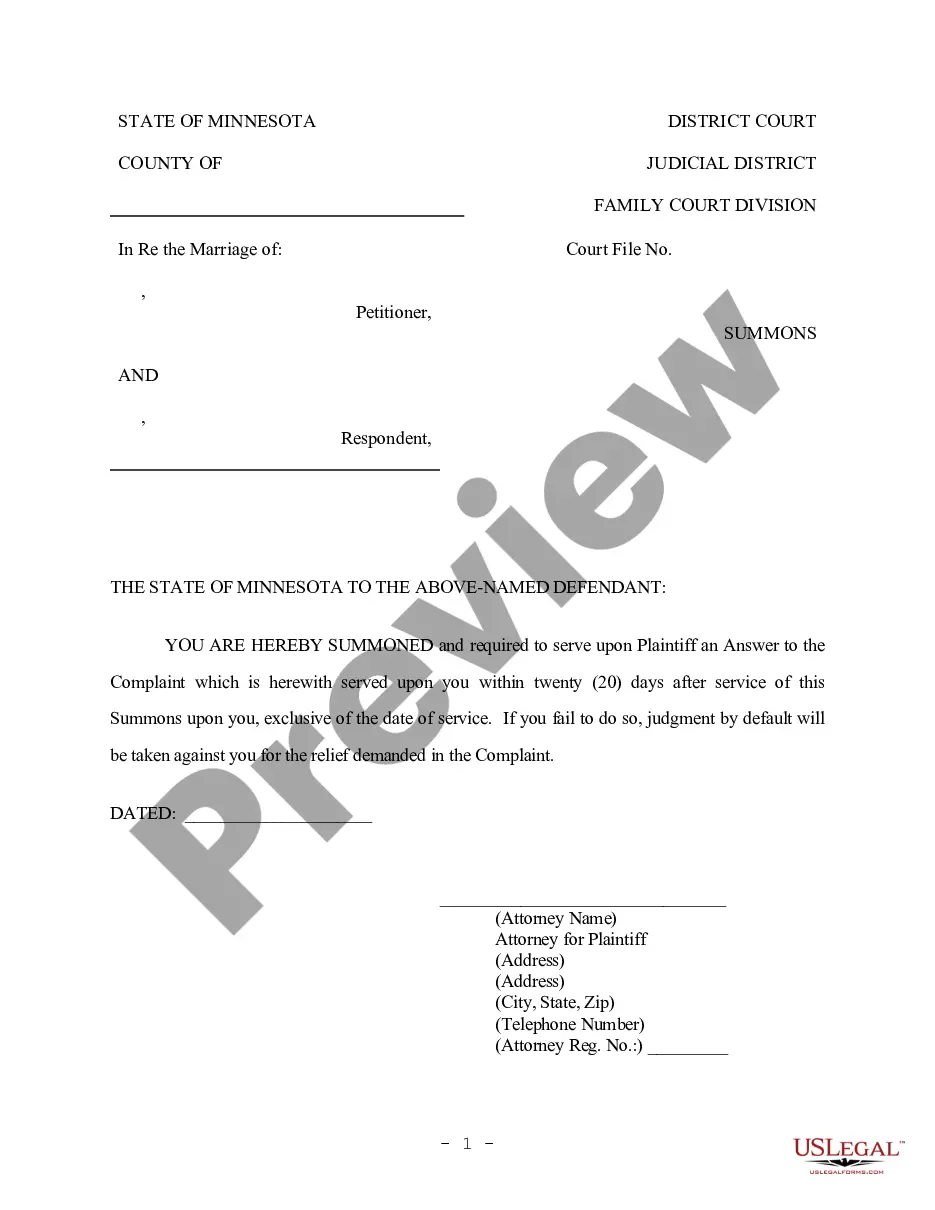
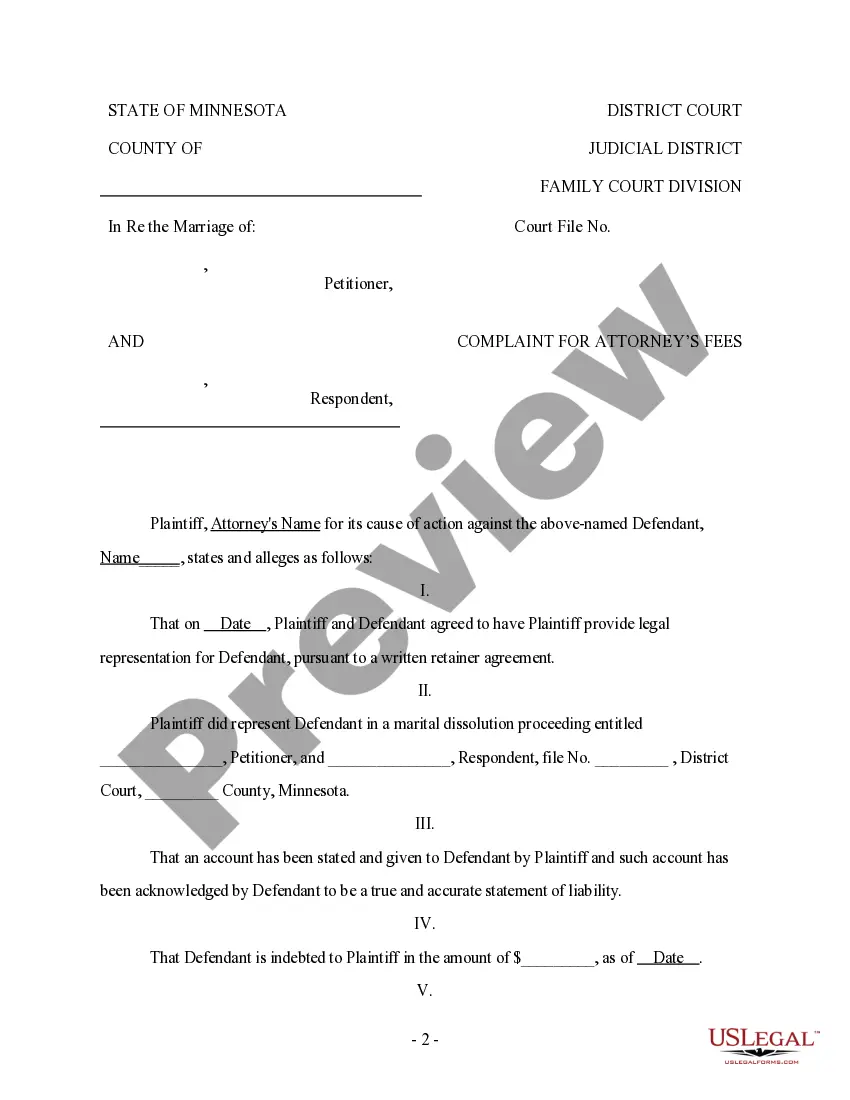
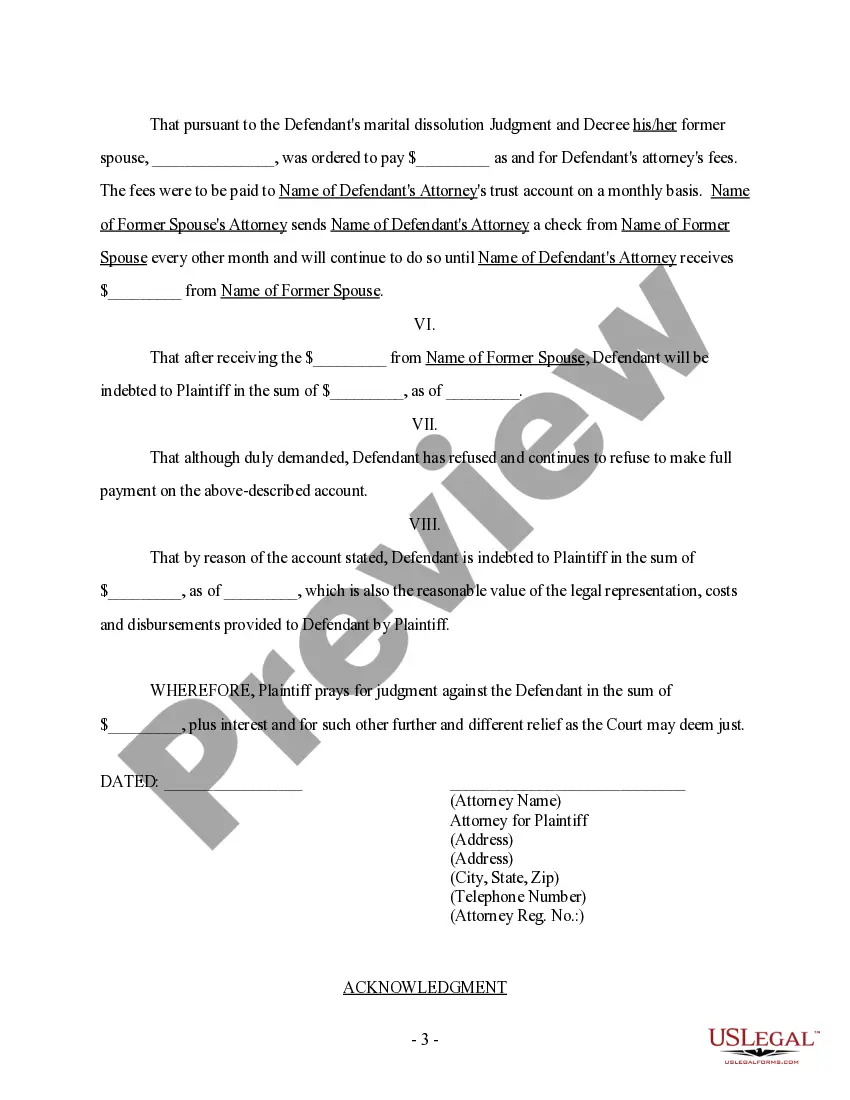
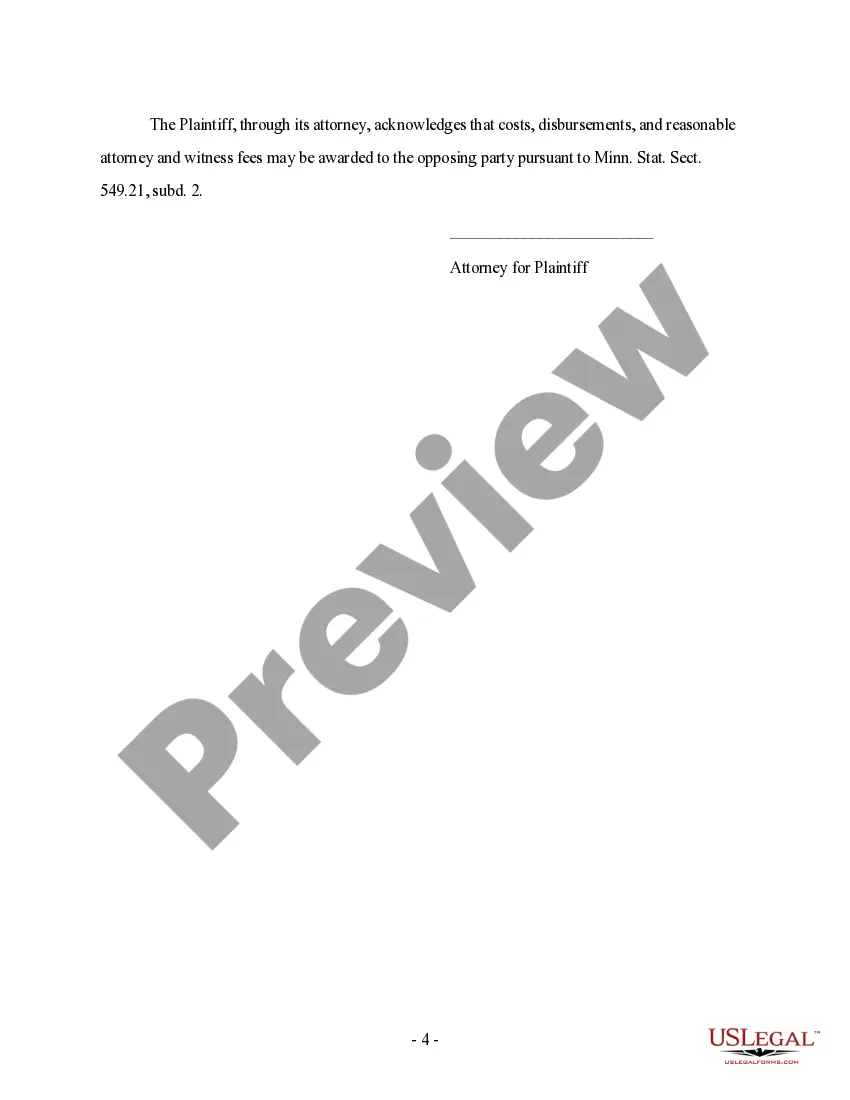
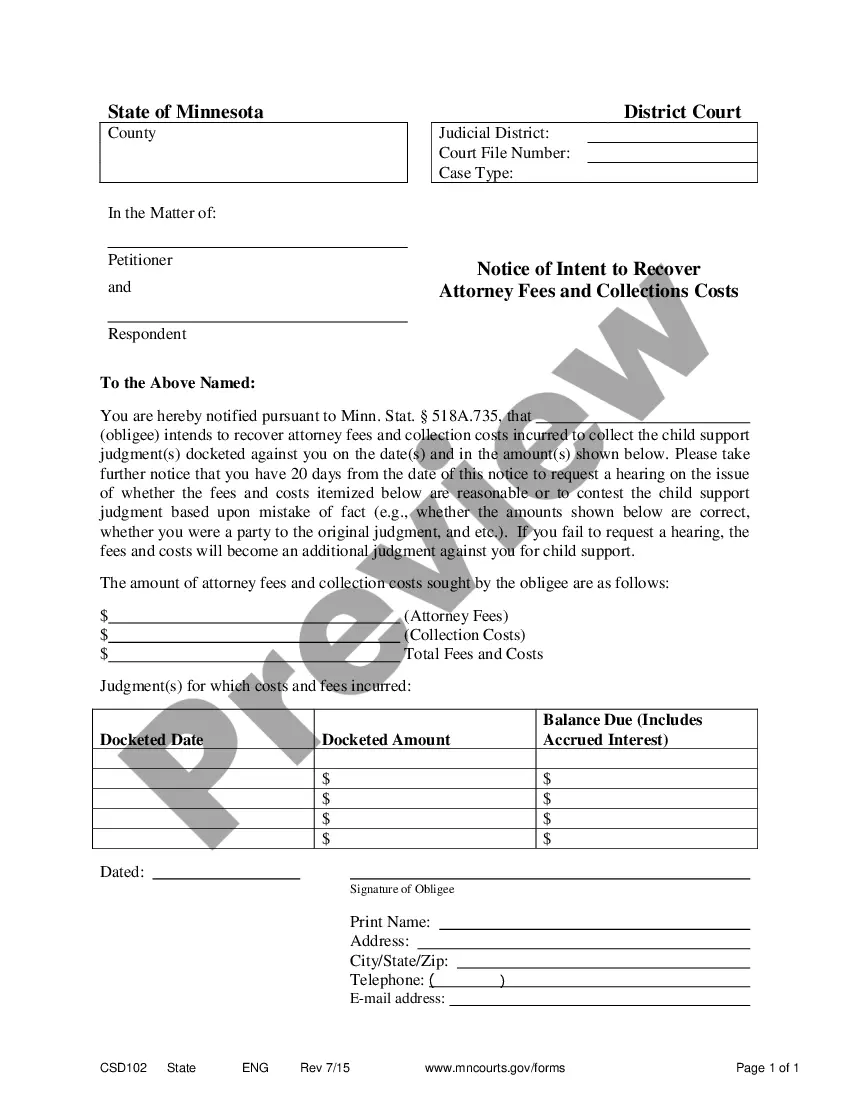
This form is a Summons and Complaint regarding a client's unpaid attorney's fees. It allows an attorney to initiate legal proceedings to recover fees owed for services rendered. The document serves as a formal notice to the defendant that they are being sued, and it outlines the attorney's claims regarding the unpaid fees. This form is specifically designed for situations involving legal representation where payments have not been made as agreed upon.
Key parts of this document
- Identification of parties: Names and addresses of the plaintiff and defendant.
- Summons section: Provides details on the defendant's obligation to respond.
- Agreement details: Describes the original retainer agreement and the services provided.
- Statement of fees: States the amount owed and acknowledges receipt of payments made.
- Judgment request: Specifies the relief sought by the attorney in the lawsuit.
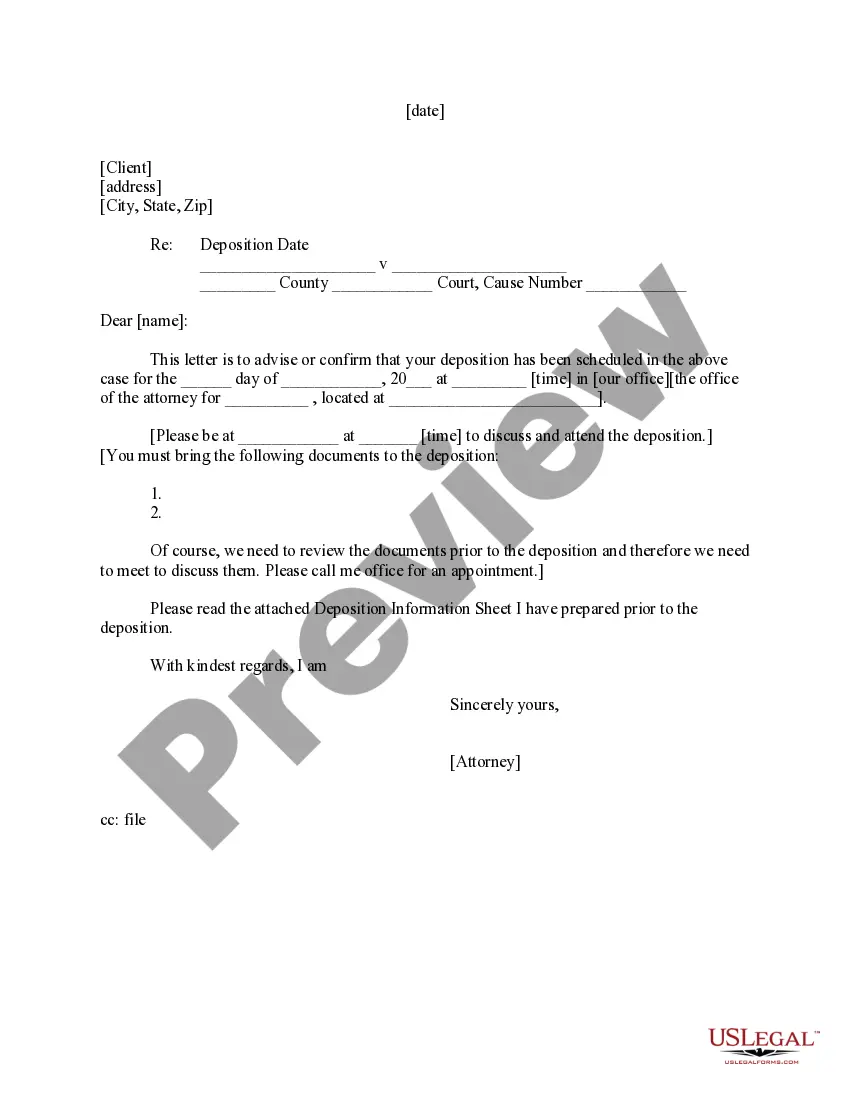
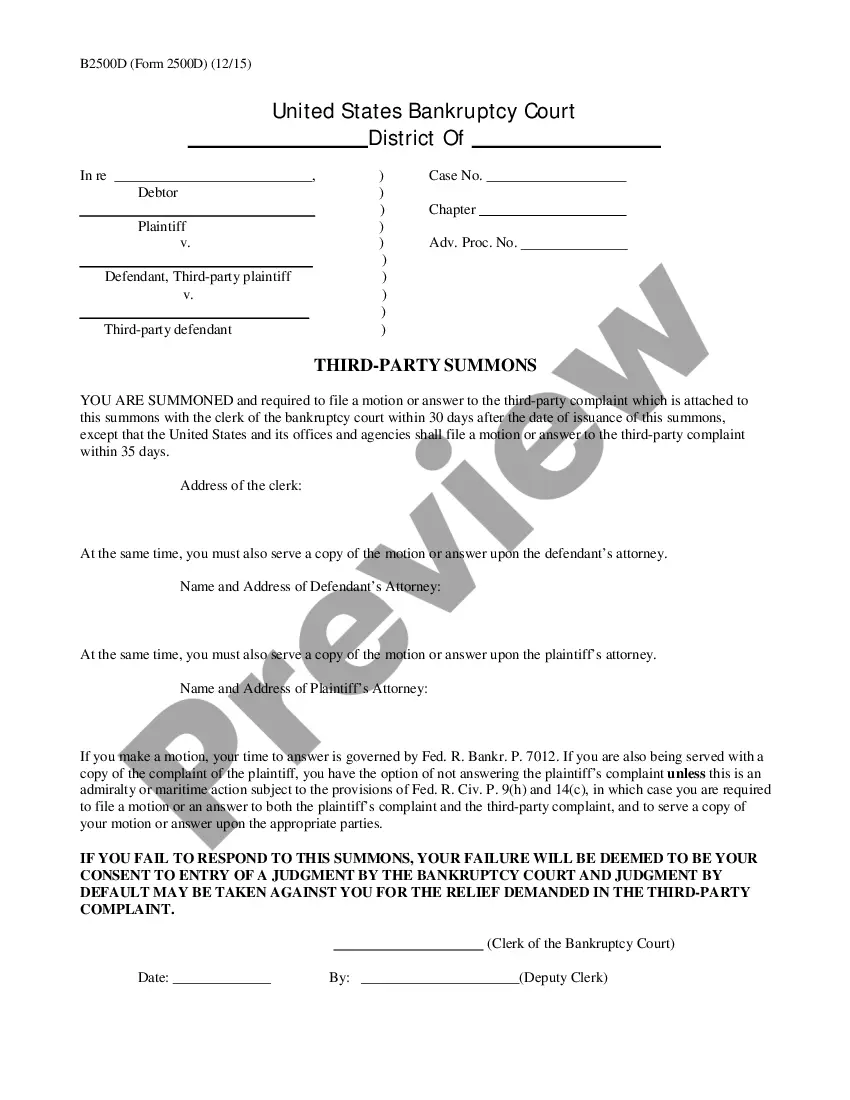
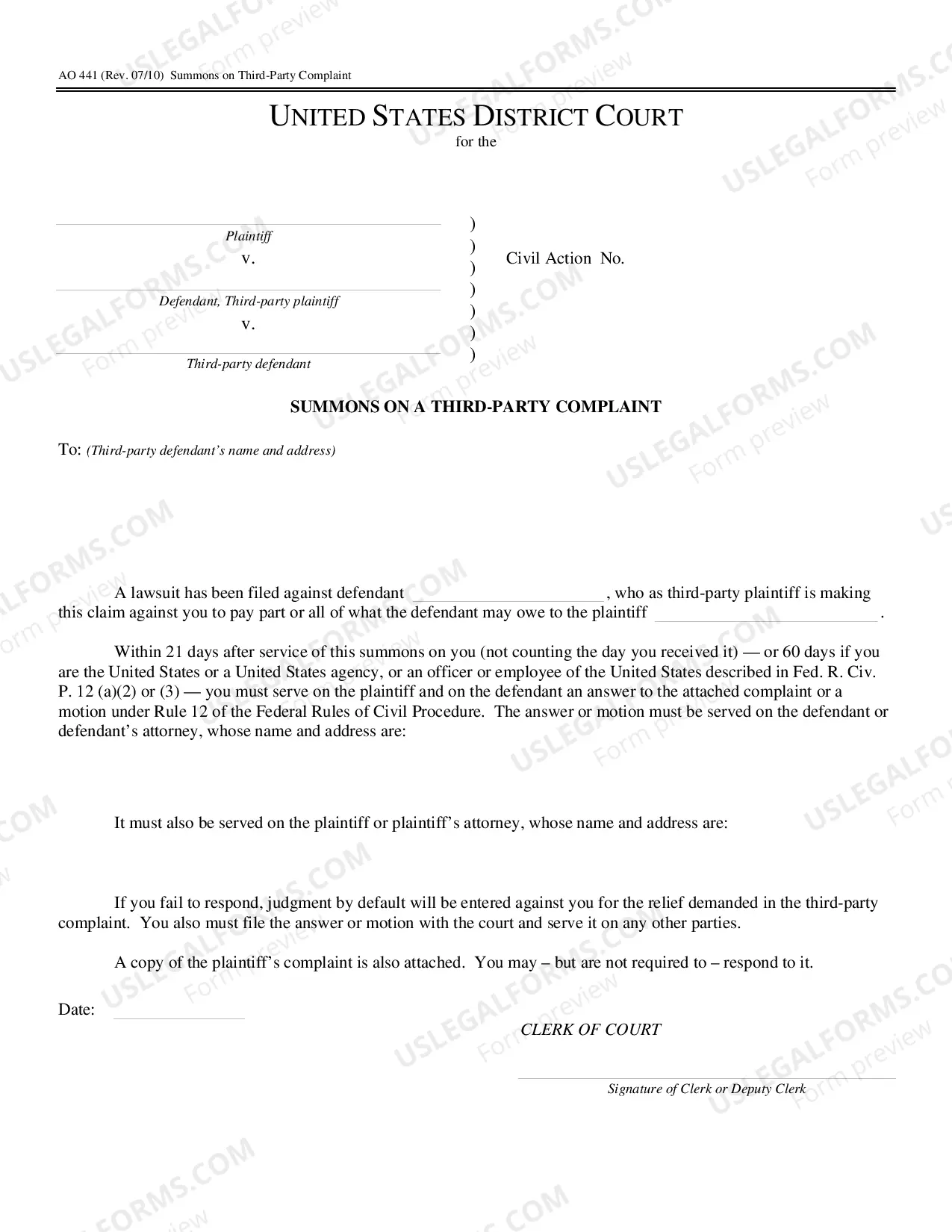
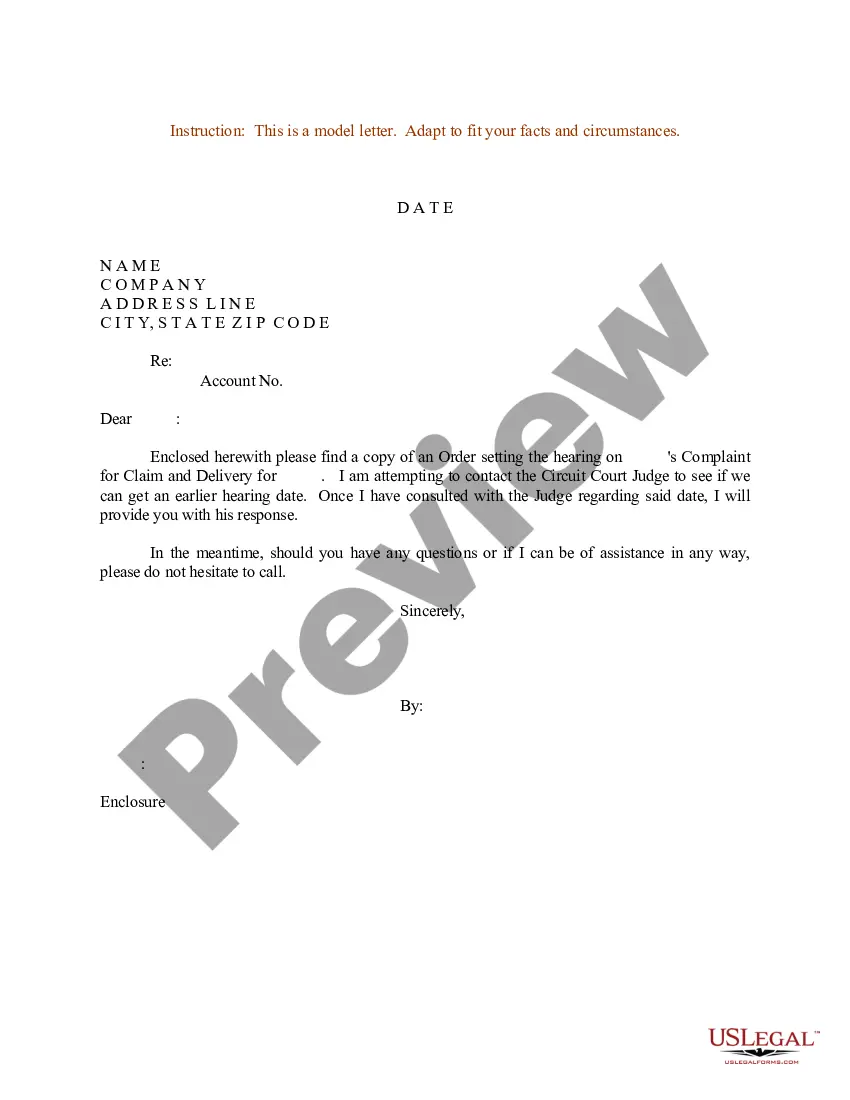
When to use this form
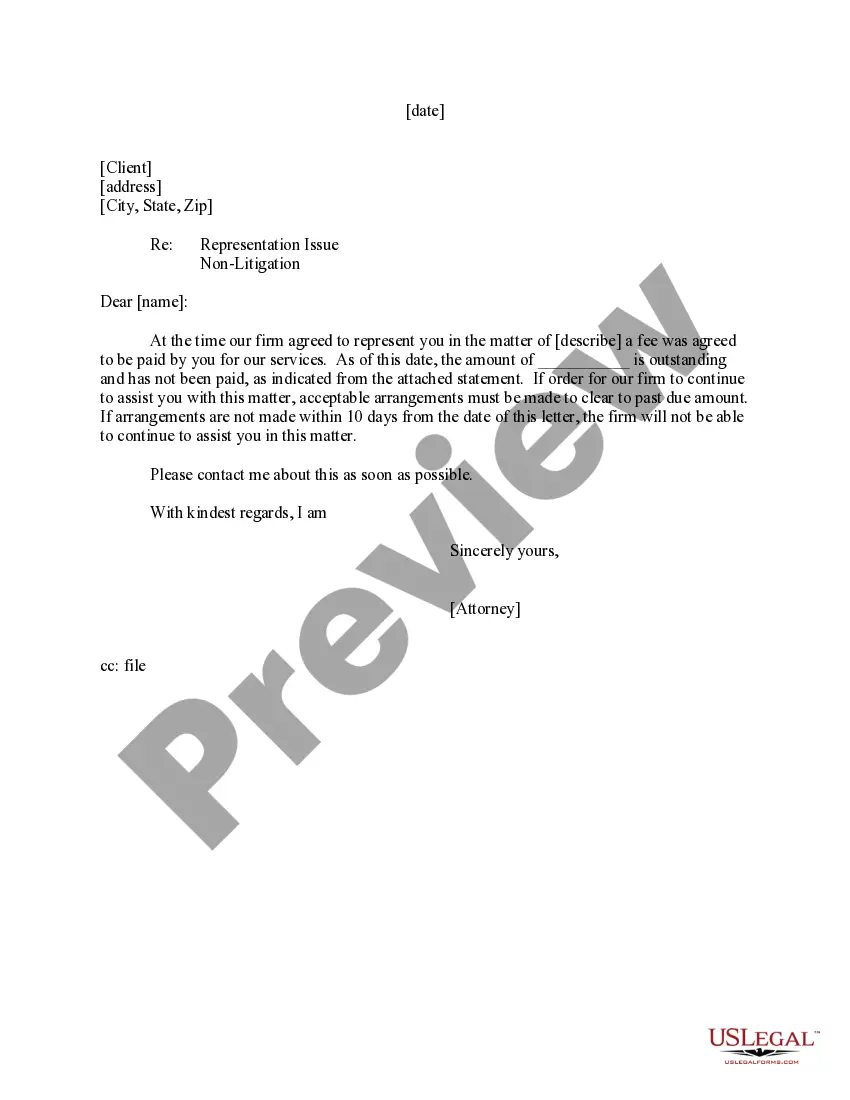
This form should be used when an attorney has provided legal services to a client but has not received payment for those services. It is necessary to file this document when the attorney decides to pursue legal action against the client to recover the unpaid fees, particularly after attempts to resolve the matter amicably have failed. This is common in cases involving family law, personal injury, or other legal fields where retainer agreements are used.
Who this form is for
- Attorneys representing clients who owe unpaid fees.
- Law firms seeking to recover costs incurred during legal representation.
- Clients who are responding to a summons regarding unpaid legal fees and need to prepare an answer.
How to complete this form
- Identify the parties: Fill in the names and addresses of both the plaintiff and defendant.
- Specify the legal services: Describe the legal representation provided and reference the retainer agreement.
- Detail the unpaid fees: Enter the amount owed by the defendant and any payments received.
- State the court information: Include the district court and case file number for the proceedings.
- Sign and date the document: Ensure that the attorney signs and dates the summons section.
Notarization requirements for this form
This form does not typically require notarization unless specified by local law. It is essential to check Minnesota state regulations to confirm if any additional requirements apply before filing.
Get your form ready online
Our built-in tools help you complete, sign, share, and store your documents in one place.
Make edits, fill in missing information, and update formatting in US Legal Forms—just like you would in MS Word.
Download a copy, print it, send it by email, or mail it via USPS—whatever works best for your next step.
Sign and collect signatures with our SignNow integration. Send to multiple recipients, set reminders, and more. Go Premium to unlock E-Sign.
If this form requires notarization, complete it online through a secure video call—no need to meet a notary in person or wait for an appointment.
We protect your documents and personal data by following strict security and privacy standards.

Make edits, fill in missing information, and update formatting in US Legal Forms—just like you would in MS Word.

Download a copy, print it, send it by email, or mail it via USPS—whatever works best for your next step.

Sign and collect signatures with our SignNow integration. Send to multiple recipients, set reminders, and more. Go Premium to unlock E-Sign.

If this form requires notarization, complete it online through a secure video call—no need to meet a notary in person or wait for an appointment.

We protect your documents and personal data by following strict security and privacy standards.
Avoid these common issues
- Failing to serve the defendant properly, which can lead to delays in the case.
- Not providing accurate details regarding the services performed or fees owed.
- Overlooking court filing deadlines after serving the summons.
- Neglecting to sign and date the complaint properly before filing.
Benefits of completing this form online
- Convenience: Easily download and complete the form at your own pace.
- Editability: Modify the form as needed to reflect specific case details before submission.
- Reliability: Use templates drafted by licensed attorneys to ensure legal compliance.
Looking for another form?
Form popularity
FAQ
The typical attorney-fee clause states that if one party breaches the contract, the other party can sue and recover its attorney fees for bringing the suit. If you have a contract dispute or you if you are negotiating a contract, you should pay careful attention to any language on attorneys' fees.
Ask what is included in the hourly rate. You should ask the attorney who else will be working on your case and at what rate each person bills. Ask your attorney whether his or her time is billed differently for trial work versus preparation. Some attorneys charge a higher hourly rate for court appearances.
The American Rule states that each party pays its own attorneys' fees, regardless of who is the prevailing party.There are thus conditions to recover your attorneys' fees in a legal matter, and attorneys' fees are never recovered in California unless a lawsuit has been filed.
The law in California generally provides that unless attorneys' fees are provided for by statute or by contract they are not recoverable. In other words, unless a law or contract says otherwise the winning and losing party to lawsuit must pay their own attorneys fees.
If you are forced to defend yourself in the case, and you prevail, you can collect your attorneys' fees from the party truly at fault. For instance, if you are a general contractor, and one of your subcontractors burns the project down, the owner will probably sue you for the damage.
If you think that you were overcharged by your lawyer, you can apply to have the bill assessed. The Costs Assessment Scheme is used to make sure that legal fees were reasonable, and comparative to the amount, and type, of work carried out. The work must have also been done in a reasonable amount of time.
The Office of the Legal Services Commissioner (OLSC) is a free service that can assist you and your lawyer to negotiate costs. If you are unable to resolve your dispute with your lawyer you can complain to the OLSC within 60 days of receiving your bill, or within 30 days after an itemised bill was issued.
To start the process, complete a fee arbitration request form from the local bar association and submit the filing fee. Include information about the attorney's fees and costs and explain why you believe the attorney's fees are excessive. Attach copies of any documents requested on the form.
If your case is in a court, the usual rule is that the party who loses the case will be ordered to pay legal costs to the party who wins the case. If your case is in a tribunal you are unlikely to be ordered to pay legal costs to the other party, even if you lose the case.