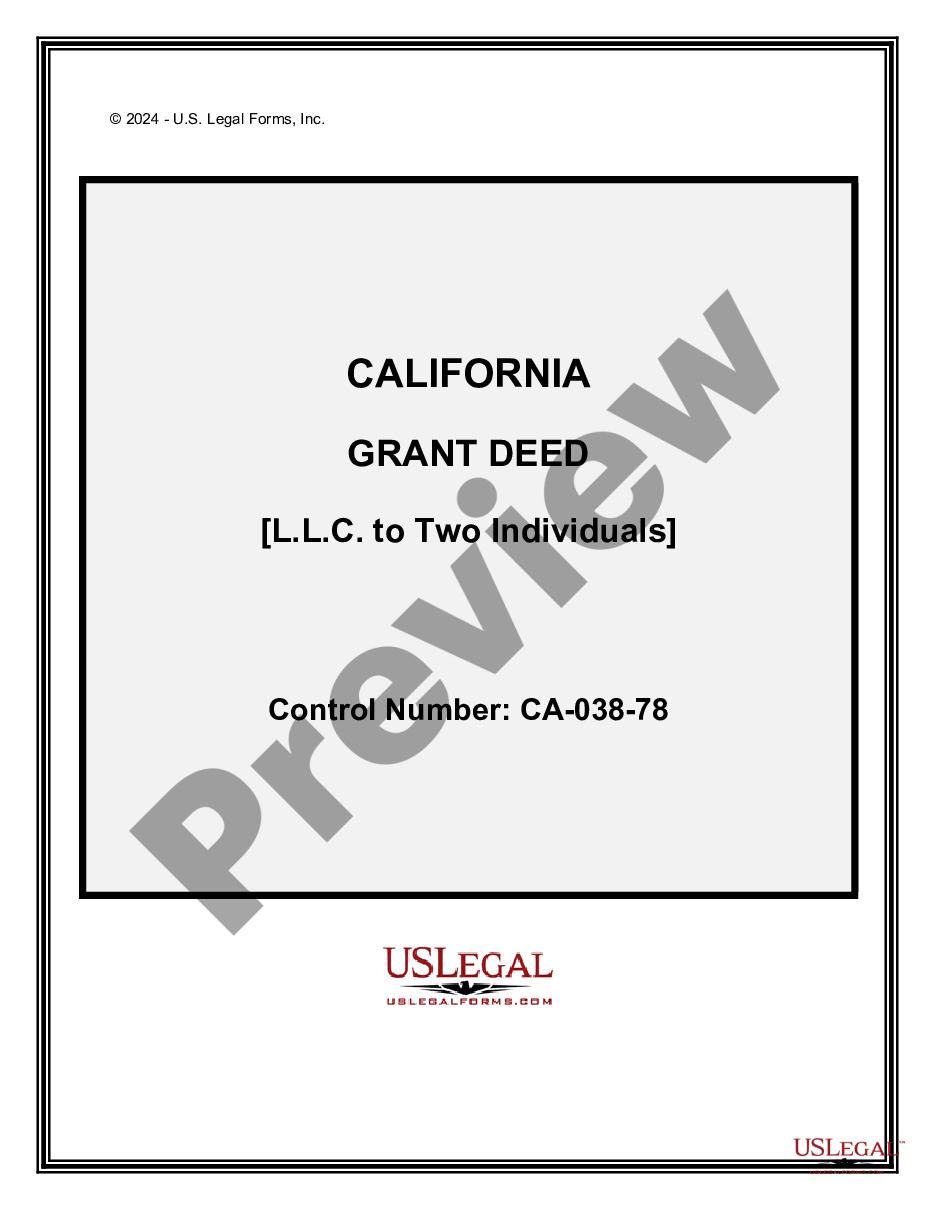
California Grant Deed - Limited Liability Company to Two Individuals
What this document covers
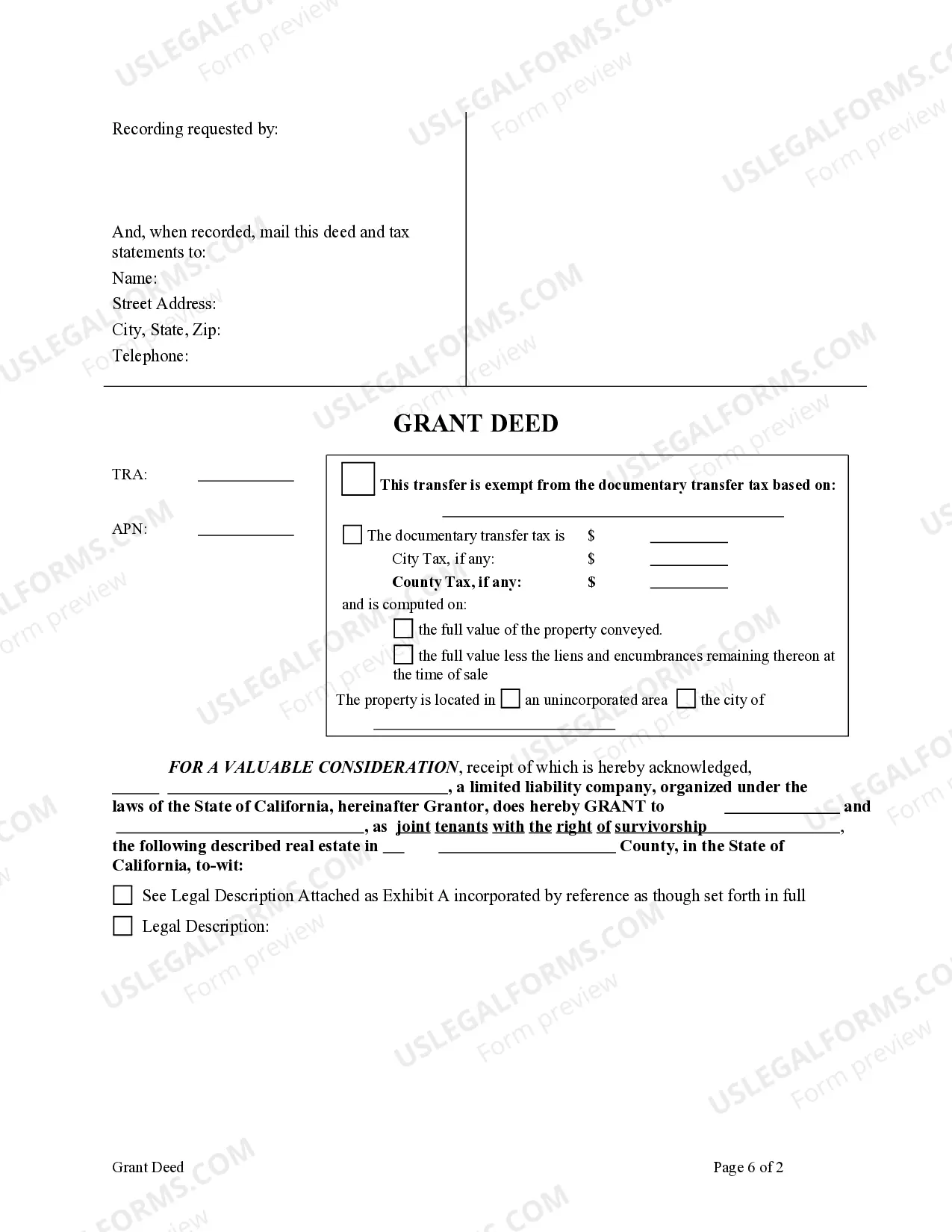
The Grant Deed - Limited Liability Company to Two Individuals is a legal document used to transfer property from a limited liability company (LLC) to two individuals. This form ensures that the transaction complies with state statutory laws, making it distinct from other types of deeds such as quitclaim or warranty deeds. It serves as a formal acknowledgment of the transfer and secures the title for the grantees while documenting the conveyance of property ownership rights.
Form components explained
- Identification of parties involved: Includes the Grantor (limited liability company) and the Grantees (two individuals).
- Property description: Specifies the real estate being transferred.
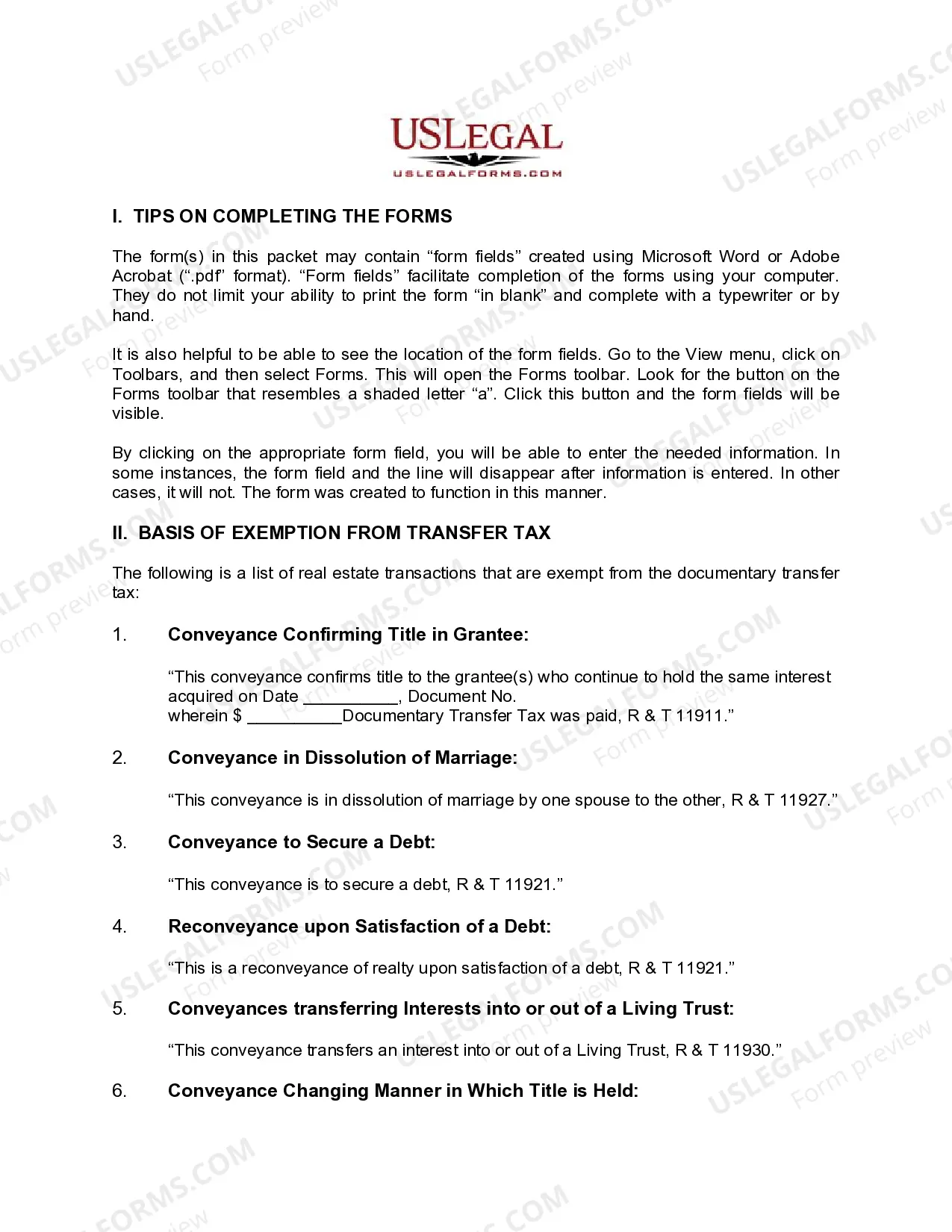
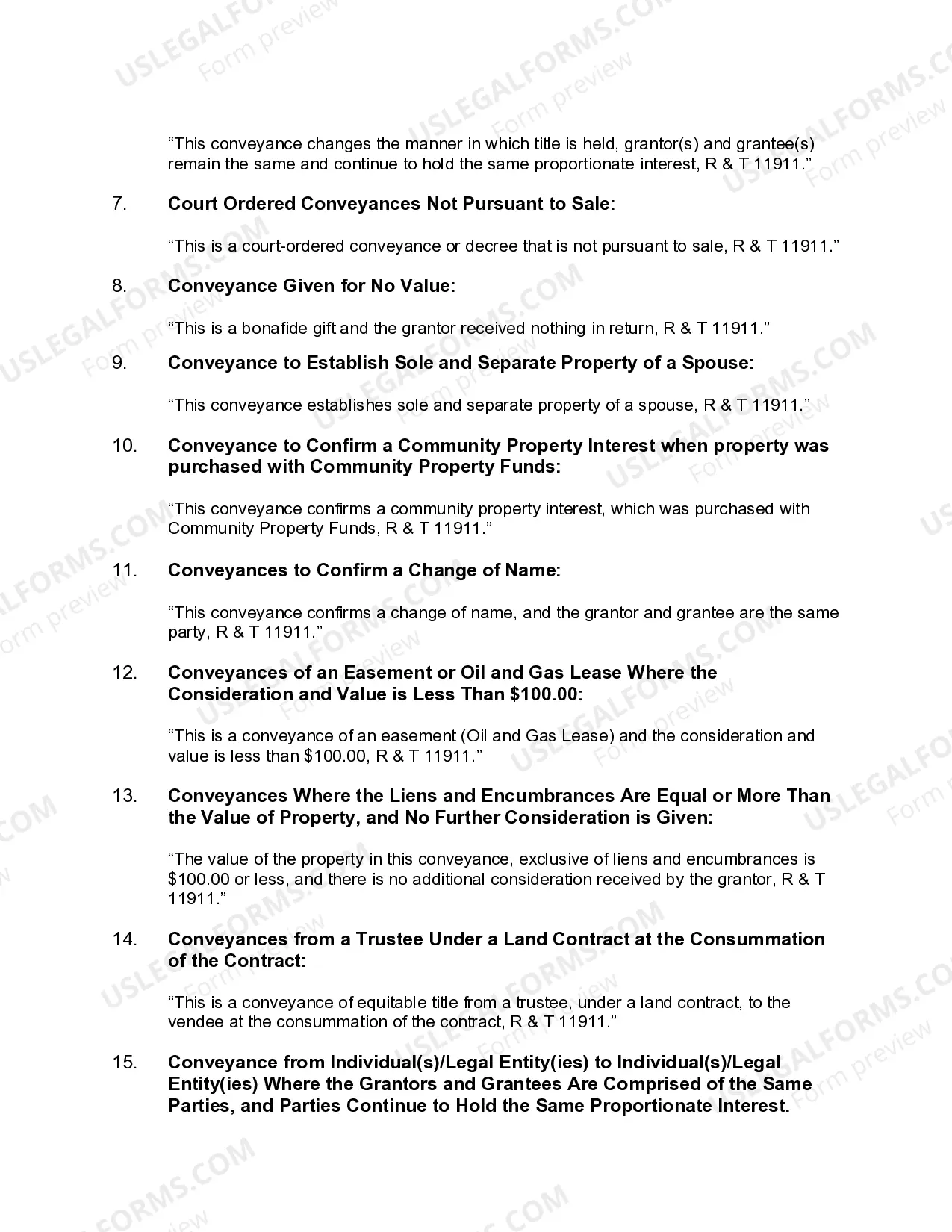
- Basis of exemption from transfer tax: Lists scenarios where the transfer may be exempt from taxation.
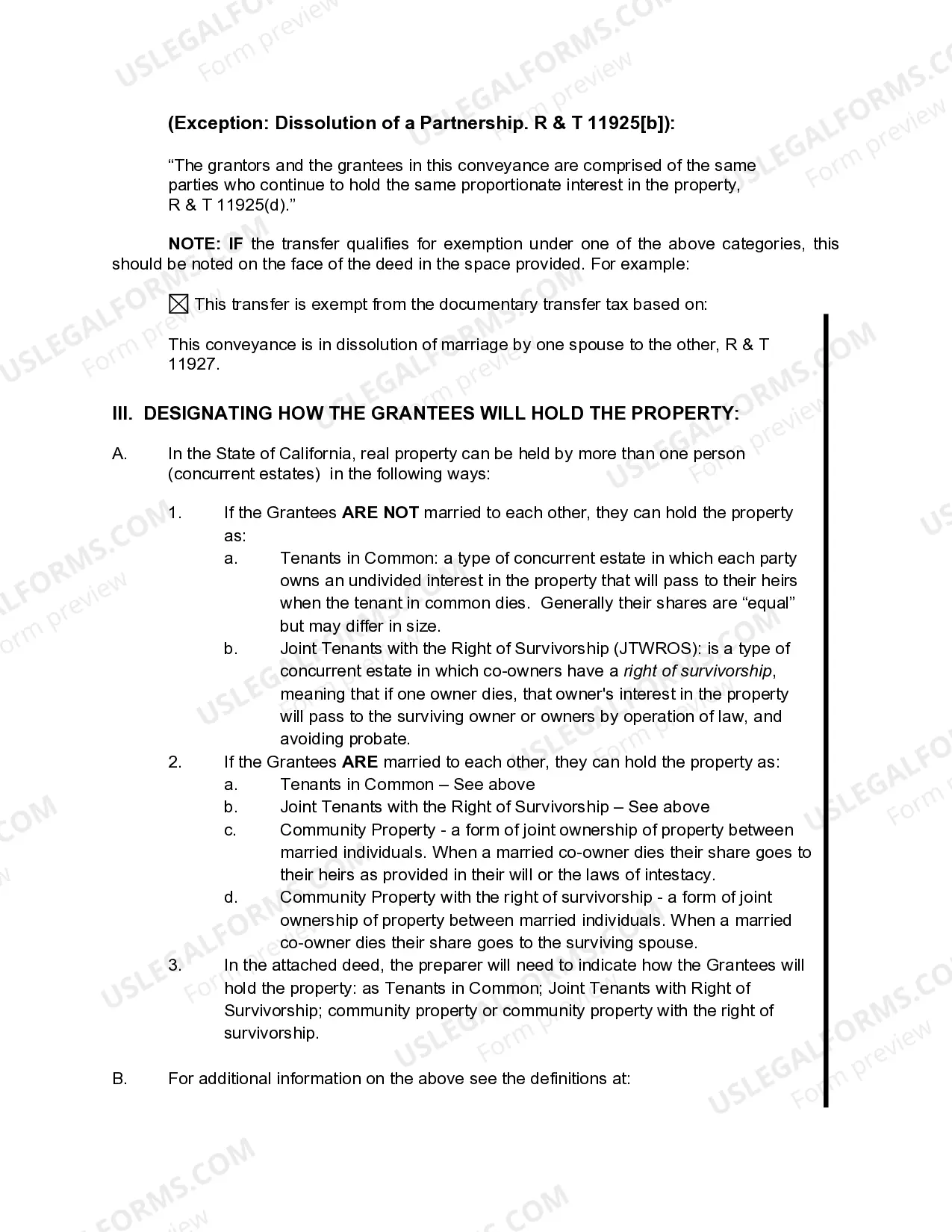
- Designation of how the Grantees will hold the property: Options for holding include Joint Tenancy, Tenancy in Common, and Community Property.
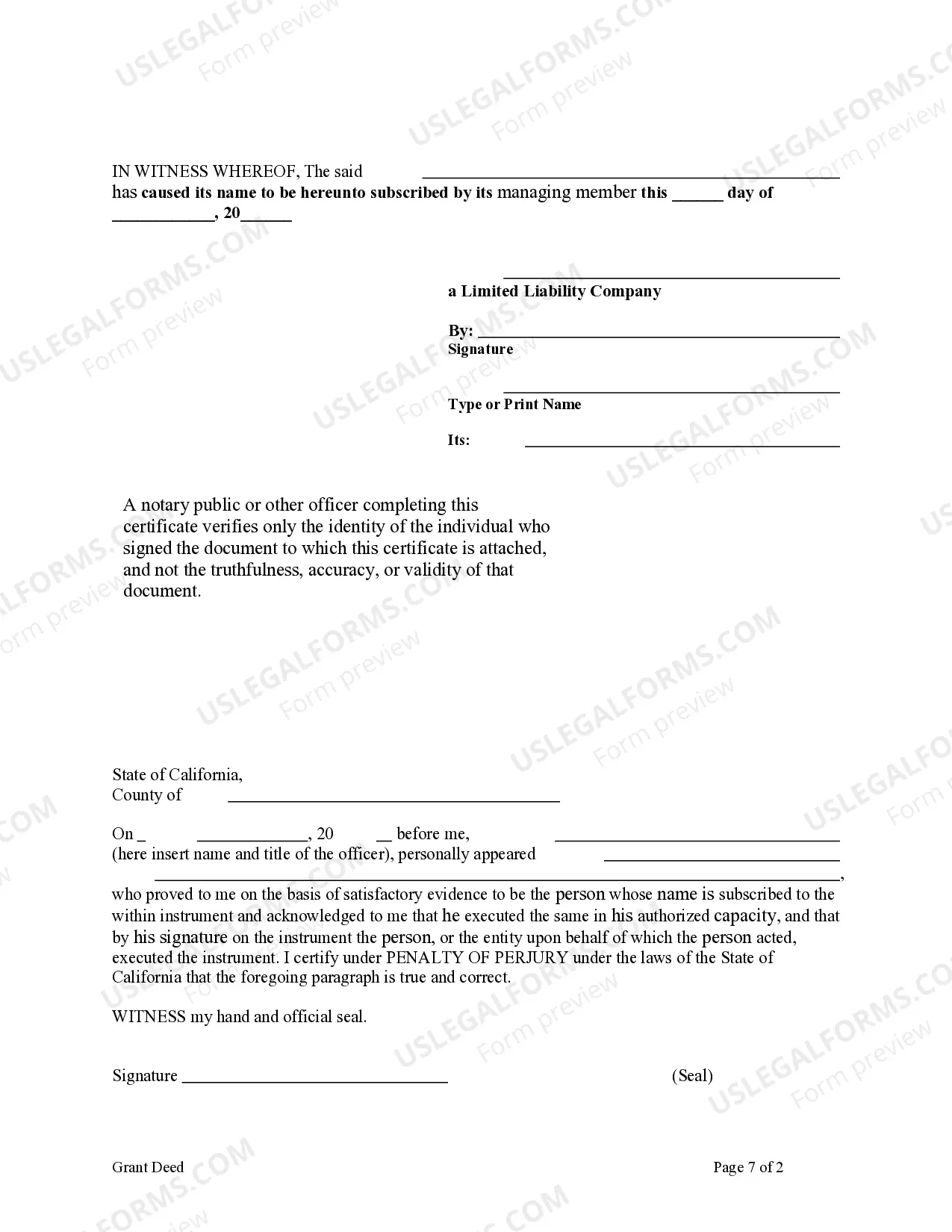
- Signature lines for notarization: Requires signatures from the Grantor and the Grantees, validating the deed.






When this form is needed
This form is commonly used when a limited liability company wishes to transfer real estate ownership to two individuals. It is suitable in scenarios like property ownership restructuring, estate planning, or when an LLC is dissolving or selling its assets. This grant deed is particularly relevant for business owners and partners who need to formalize the transfer of property to ensure clear title is passed to new owners.
Intended users of this form
- Members or managers of a limited liability company overseeing property transfers.
- Two individuals seeking to acquire property from an LLC.
- Real estate professionals assisting clients in property transactions.
- Legal representatives or attorneys facilitating property changes for clients.
How to complete this form
- Identify the Grantor by entering the name of the limited liability company.
- List the names of the two individuals who are the Grantees.
- Provide a complete legal description of the property being transferred.
- Check the appropriate box to indicate the basis for exemption from transfer tax, if applicable.
- Designate how the Grantees will hold the property (e.g., Tenants in Common or Joint Tenants).
- Sign and date the deed, ensuring the form is notarized as required.
Does this document require notarization?
This document requires notarization to meet legal standards. US Legal Forms provides secure online notarization powered by Notarize, allowing you to complete the process through a verified video call, available 24/7.
Get your form ready online
Our built-in tools help you complete, sign, share, and store your documents in one place.
Make edits, fill in missing information, and update formatting in US Legal Forms—just like you would in MS Word.
Download a copy, print it, send it by email, or mail it via USPS—whatever works best for your next step.
Sign and collect signatures with our SignNow integration. Send to multiple recipients, set reminders, and more. Go Premium to unlock E-Sign.
If this form requires notarization, complete it online through a secure video call—no need to meet a notary in person or wait for an appointment.
We protect your documents and personal data by following strict security and privacy standards.

Make edits, fill in missing information, and update formatting in US Legal Forms—just like you would in MS Word.

Download a copy, print it, send it by email, or mail it via USPS—whatever works best for your next step.

Sign and collect signatures with our SignNow integration. Send to multiple recipients, set reminders, and more. Go Premium to unlock E-Sign.

If this form requires notarization, complete it online through a secure video call—no need to meet a notary in person or wait for an appointment.

We protect your documents and personal data by following strict security and privacy standards.
Avoid these common issues
- Failing to properly identify the Grantor and Grantees.
- Omitting the legal description of the property.
- Not stating the basis for exemption from transfer tax when applicable.
- Leaving signature lines unsigned or not notarizing the document.
Why use this form online
- Convenient downloadable access, allowing you to fill it out at your own pace.
- Editability for accurate input of information without the hassle of handwritten entries.
- Compliance assurance with state-specific regulations embedded in the form.
Looking for another form?
Form popularity
FAQ
Individuals often place property in a Limited Liability Company to protect personal assets from liability. An LLC can provide a layer of protection in case of lawsuits or debts. Furthermore, managing property through an LLC can offer tax advantages and more straightforward transfer of ownership in the future. If you're considering this option, explore resources like US Legal Forms to understand the implications of a California Grant Deed involving an LLC.
Transferring property from personal ownership to a Limited Liability Company involves drafting a new California Grant Deed that names the LLC as the new owner. You will need to sign the deed and ensure it complies with California regulations. After signing, file the deed with the county recorder's office to make the transfer official. Utilizing a service like US Legal Forms offers templates and guidance to help simplify this process.
One major disadvantage of placing property in a Limited Liability Company (LLC) is that it can limit your mortgage options. Banks may be hesitant to lend to an LLC, especially if it is newly formed. Additionally, transferring a property into an LLC can incur transfer taxes and administrative fees, which can add to your costs. It's important to weigh these factors carefully before making a decision related to a California Grant Deed involving an LLC.
To remove someone from a California Grant Deed, you need to create a new grant deed that reflects the change in ownership. This new deed must be signed by all parties involved and include necessary information about the property. After crafting the deed, you must file it with the county recorder's office. Using reputable platforms like US Legal Forms can guide you through this process efficiently.
Adding a person to a deed in California involves drafting a new California Grant Deed. This deed must outline who is being added to ownership and must be signed by the current property owner. After completing the document, it's necessary to file it with the county recorder. This formalizes the new ownership and confirms the legal standing of both individuals.
To add a name to your property deed in California, you must complete a California Grant Deed that specifies the addition. You need to clearly identify the current owner and the new individual being added. After signing, you should record the deed with the county clerk's office to make the change official. This process ensures the new ownership reflects in public records.
In California, a grant deed requires specific details such as the names of the grantor and grantee, a legal description of the property, and the signature of the grantor. The deed should also include any applicable acknowledgments. Meeting these requirements helps secure a clear transfer of ownership from a Limited Liability Company to two individuals.
Transferring property from an LLC to personal ownership requires a California Grant Deed. First, draft the deed to specify the transfer from the Limited Liability Company to the individual. Both parties should sign the grant deed, and then file it with the county recorder's office. Using a clear process ensures a smooth transition and protects your rights.
To add someone to a grant deed in California, start by obtaining a California Grant Deed form and filling it out with the necessary information. Once completed, sign it in front of a notary and file it with the appropriate county recorder's office. This can be a straightforward process, but utilizing services like US Legal Forms can ensure you meet all the legal requirements associated with this addition.
The best way to add someone to a deed in California is by completing a California Grant Deed form accurately. Ensure you provide the correct details for both the existing and new owners. It's beneficial to consult an expert or use a resource like US Legal Forms to help you navigate any legal requirements and make the process seamless for you.