Notice of Employee Orientation
Overview of this form
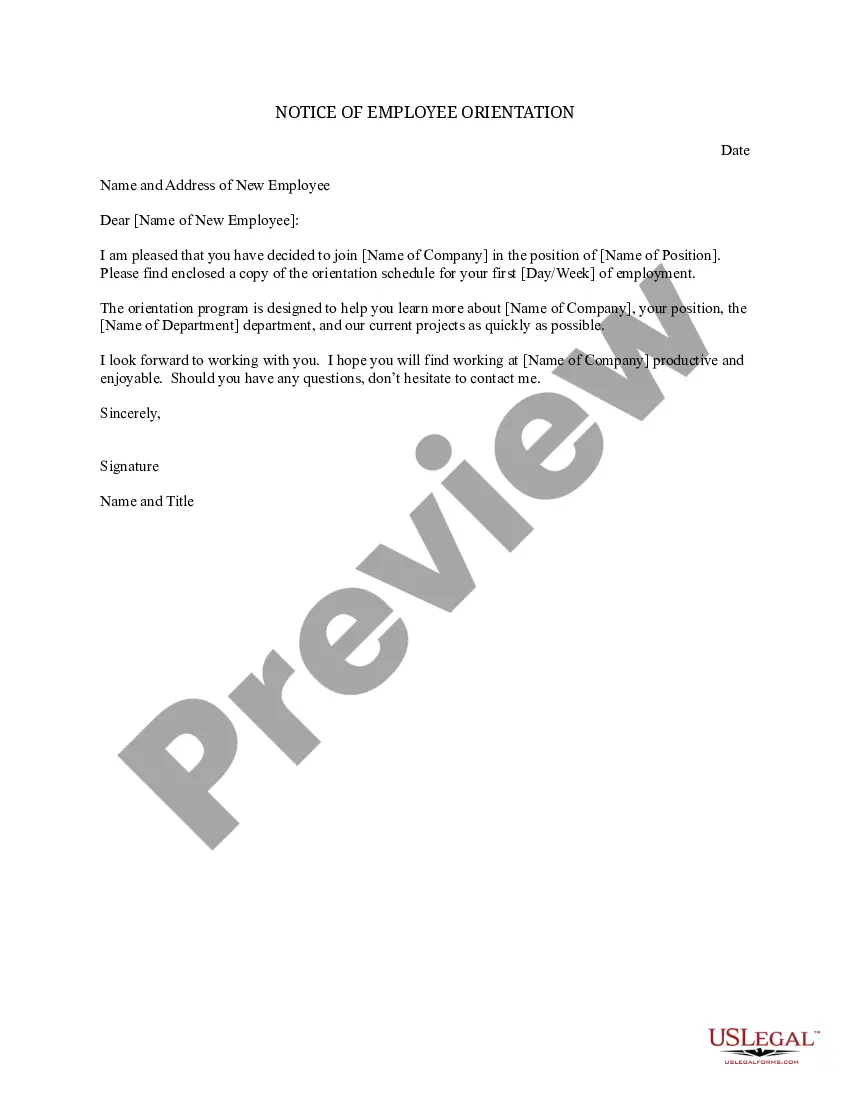
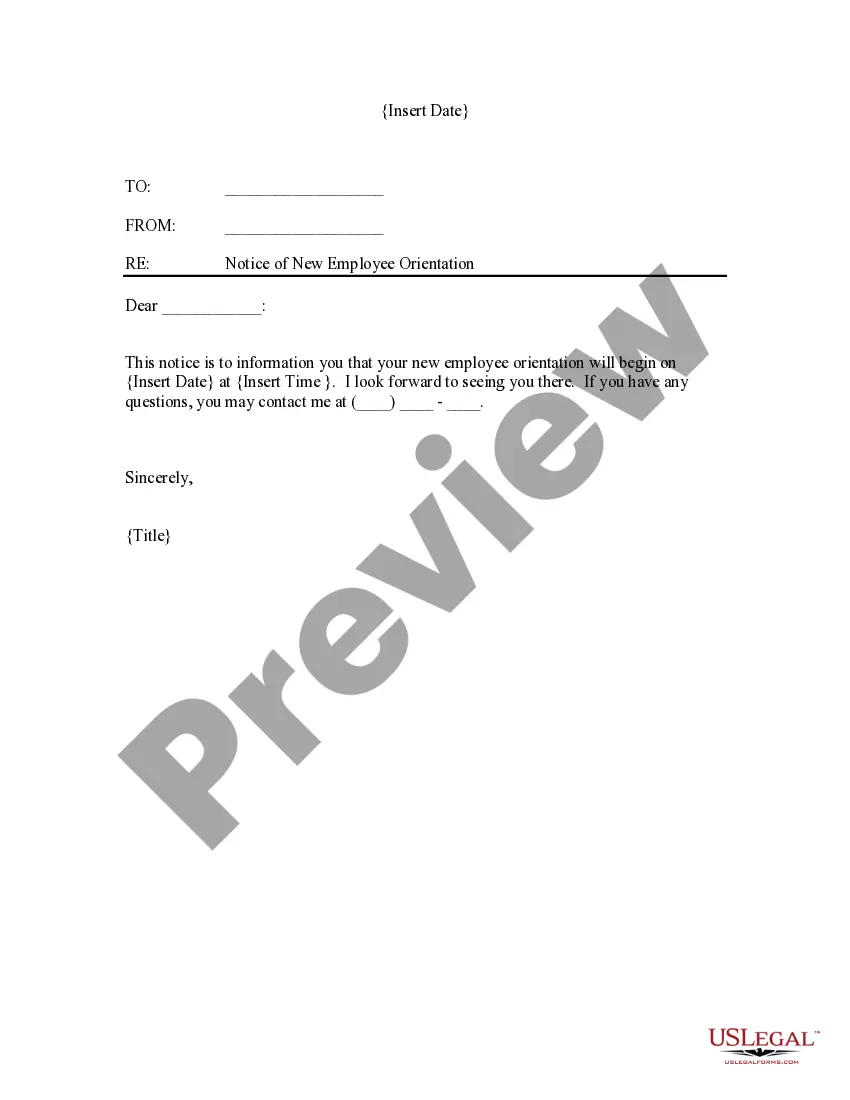
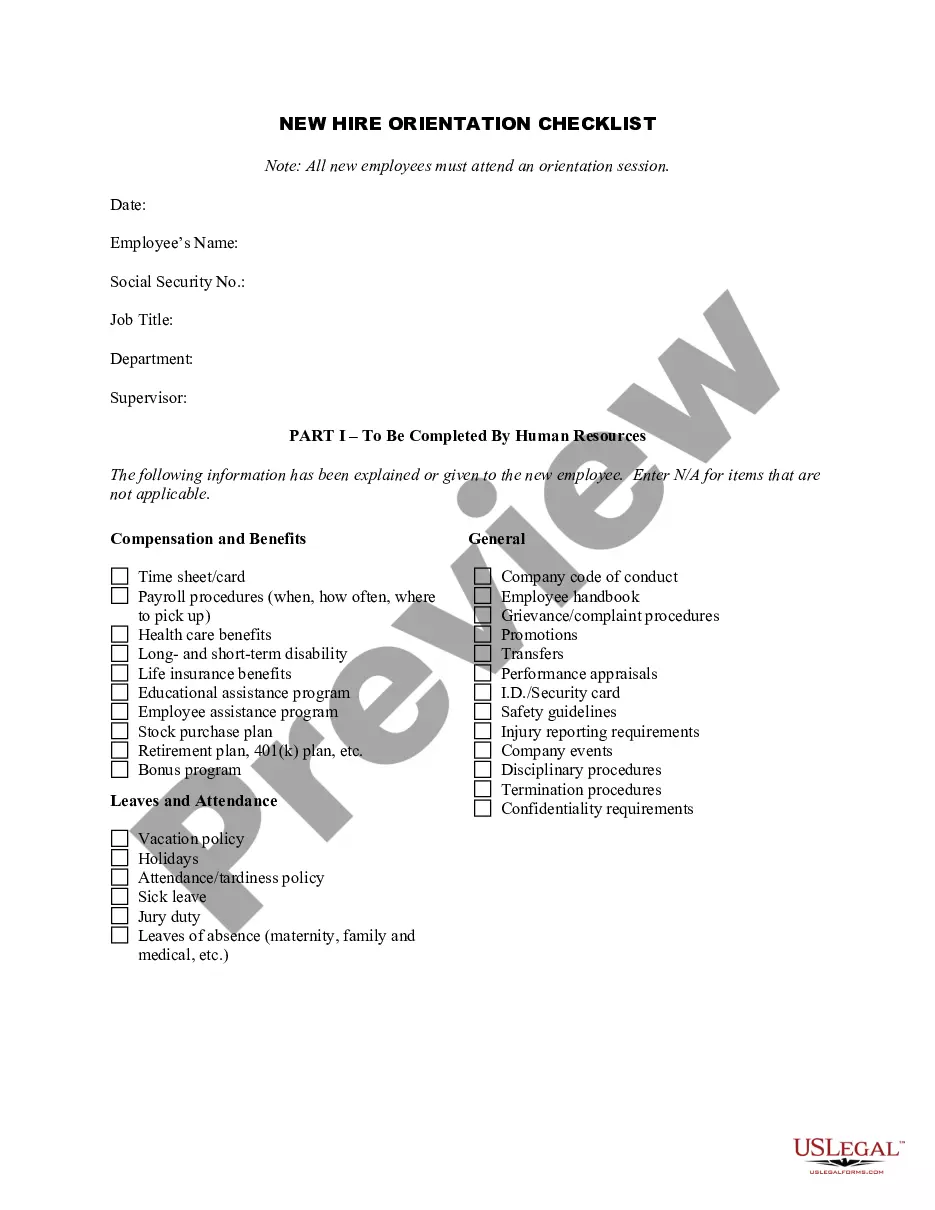
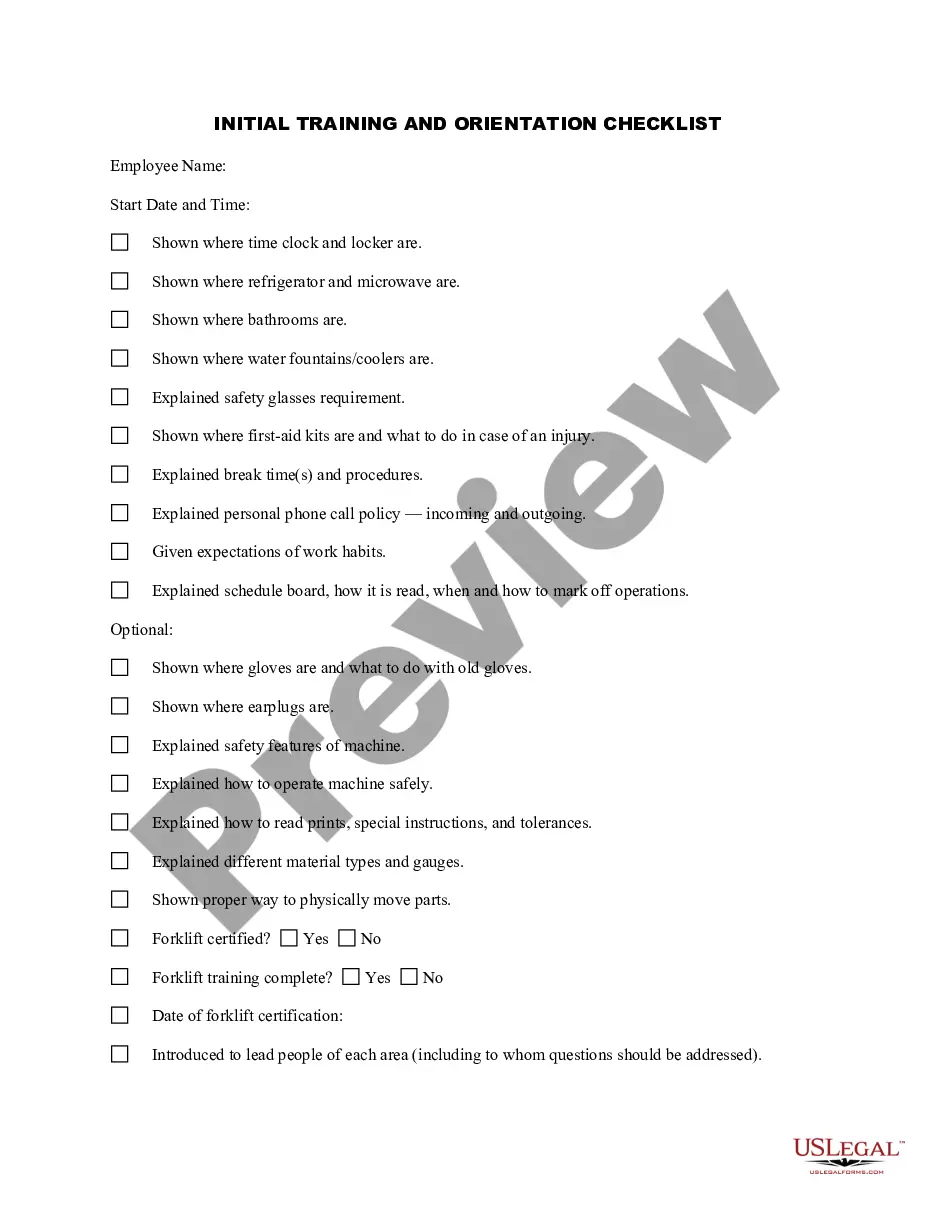
The Notice of Employee Orientation is a document used to inform new employees about their upcoming orientation meeting at a workplace. This form serves to provide essential details such as the date, time, and location of the orientation, as well as any relevant information regarding the employer's expectations. Unlike other employment-related forms, this notice specifically pertains to the introductory phase of the employment journey, helping new hires acclimate to their new work environment.
Key components of this form
- Name and address of the new employee.
- Date and time of the orientation session.
- Location where the orientation will take place.
- Company name and department information.
- A personalized welcome message from the employer.
When to use this document
This form should be used when an organization hires a new employee and wants to formally notify them about their orientation session. It is particularly useful for employers who wish to ensure that new hires are informed and prepared before they start their first day. This form can also be used when there are significant updates or changes to an existing orientation process.
Who should use this form
- Employers who are onboarding new employees.
- Human resources professionals responsible for creating and distributing orientation materials.
- Managers and team leaders involved in welcoming new hires to the organization.
Instructions for completing this form
- Identify the employee's name and address at the top of the form.
- Enter the date and time of the scheduled orientation session.
- Specify the location of the orientation, including any room numbers or specific instructions.
- Provide the name of the company and the relevant department handling the orientation.
- Include a welcoming message and your contact information for any inquiries.
Notarization requirements for this form
This form does not typically require notarization unless specified by local law. It is primarily an internal document meant for orientation purposes.
Get your form ready online
Our built-in tools help you complete, sign, share, and store your documents in one place.
Make edits, fill in missing information, and update formatting in US Legal Forms—just like you would in MS Word.
Download a copy, print it, send it by email, or mail it via USPS—whatever works best for your next step.
Sign and collect signatures with our SignNow integration. Send to multiple recipients, set reminders, and more. Go Premium to unlock E-Sign.
If this form requires notarization, complete it online through a secure video call—no need to meet a notary in person or wait for an appointment.
We protect your documents and personal data by following strict security and privacy standards.

Make edits, fill in missing information, and update formatting in US Legal Forms—just like you would in MS Word.

Download a copy, print it, send it by email, or mail it via USPS—whatever works best for your next step.

Sign and collect signatures with our SignNow integration. Send to multiple recipients, set reminders, and more. Go Premium to unlock E-Sign.

If this form requires notarization, complete it online through a secure video call—no need to meet a notary in person or wait for an appointment.

We protect your documents and personal data by following strict security and privacy standards.
Mistakes to watch out for
- Failing to include the correct date and time of the orientation.
- Not personalizing the message for the new employee.
- Omitting contact information for follow-up questions.
- Assuming the new hire is familiar with the organization, without providing enough detail.
Benefits of completing this form online
- Convenience of quick edits and sharing via email.
- Easier to access and store digital copies for future reference.
- Integration with templates ensures up-to-date information and compliance.
- Time-saving as it eliminates the need for physical printing and mailing.
Main things to remember
- The Notice of Employee Orientation is essential for onboarding new hires.
- It provides vital information about the orientation schedule and workplace details.
- Completing this form correctly ensures new employees are well-prepared for their start date.
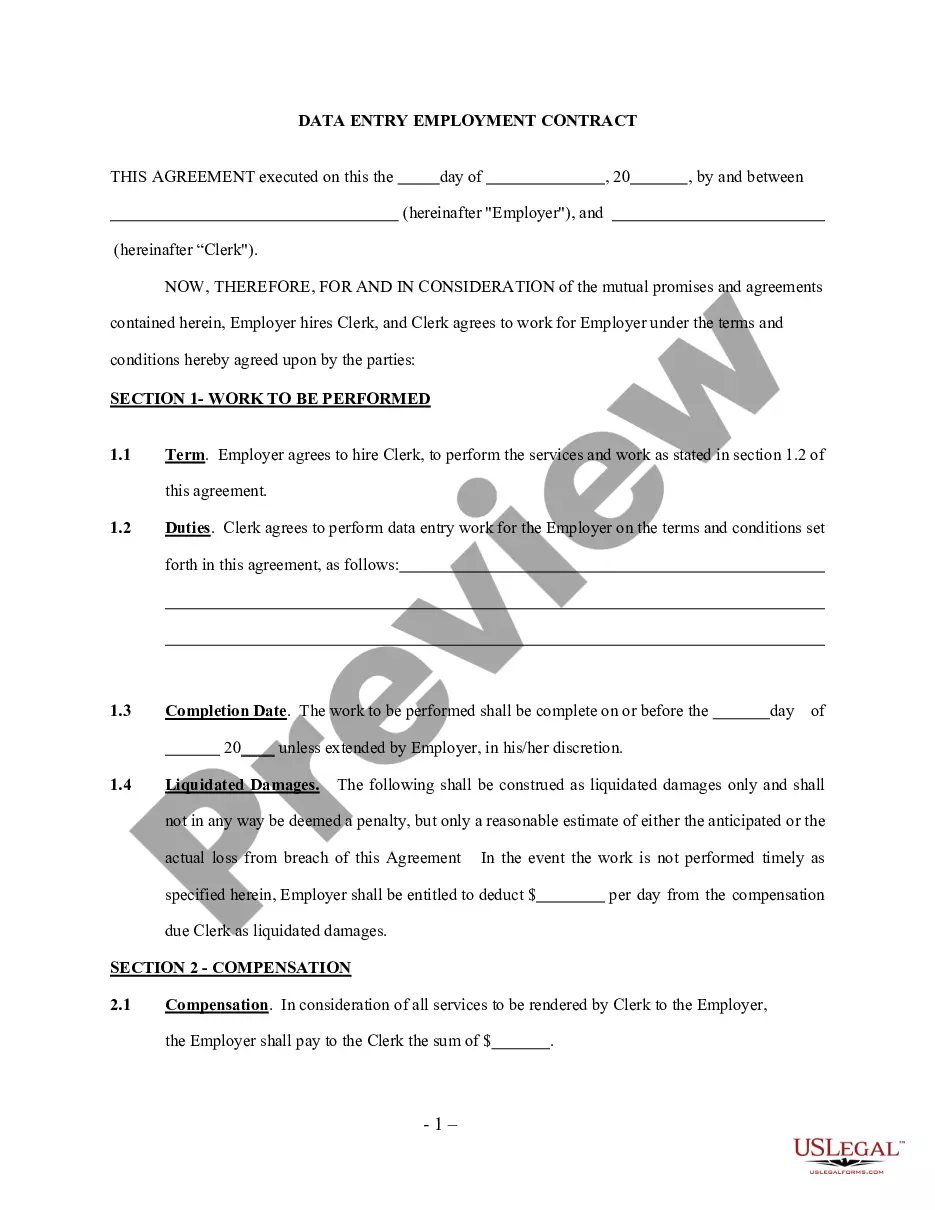
Looking for another form?








Form popularity
FAQ
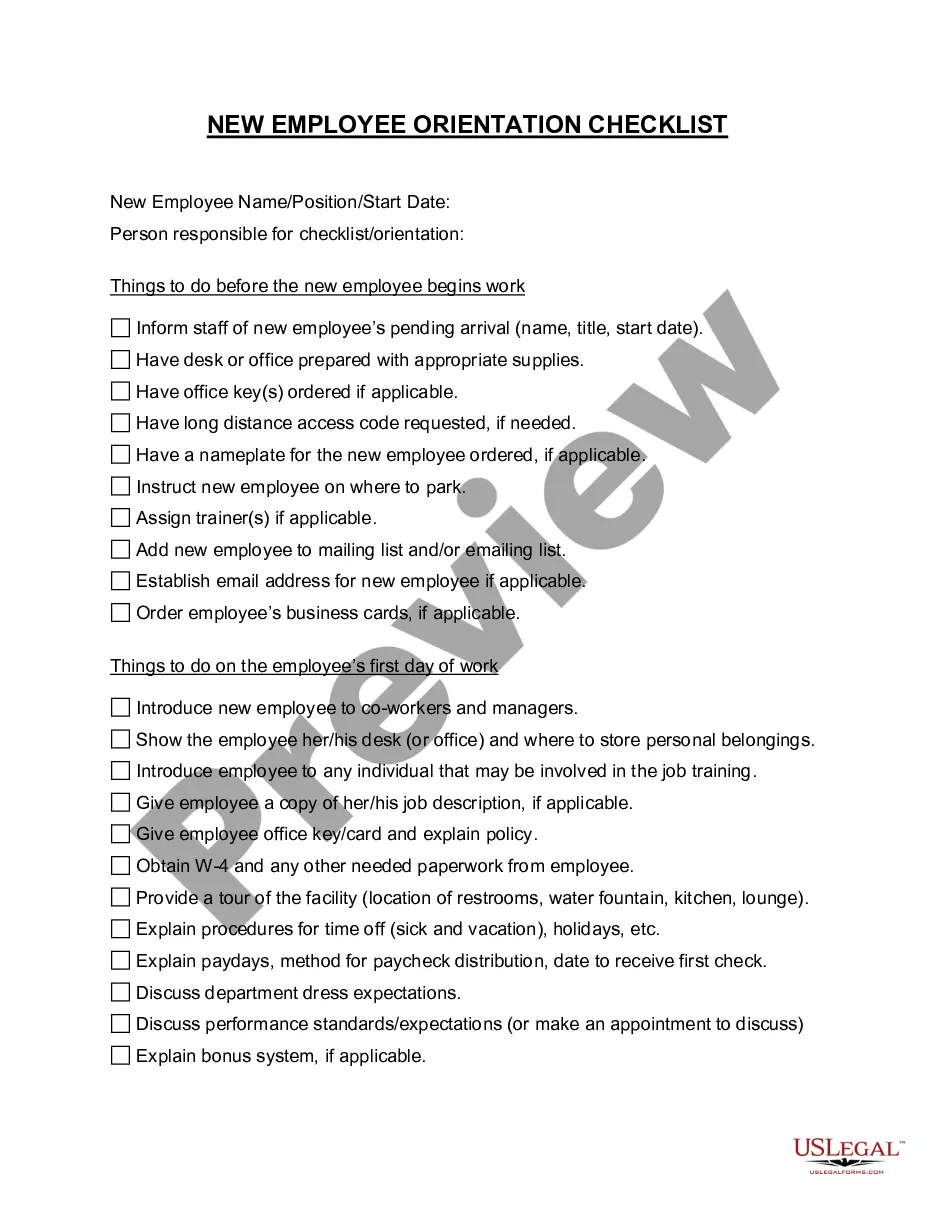
The direct manager of the new hire will most likely take the hands-on duties of orientation. This role plans and prepares a comprehensive orientation that includes: Giving them a tour of the building including locations for office supplies, break room, etc. Introducing them to their colleagues.
In the marketing history there are three types of orientation which are production, sales and marketing orientation.
Safety. The work environment. The new job description. Benefits and benefits eligibility. The employee's new manager and coworkers. Company culture. Company history.
Introduction to the company, its mission, functions and culture. Review of company organizational chart. Employee handbook review. Benefits plan information, discussion and preliminary enrollment.
Orientation typically refers to the process of induction of new hires or the introduction of current employees to new technologies, procedures and policies at the workplace.
Compliance with government rules. Information about the employer's mission, core values and culture. Information about the employer's benefits. Information about critical employer policies.
The two most common types of orientation are portrait and landscape.
Realistic Orientation. Investigative Orientation. Social Orientation. Conventional Orientation. Enterprising Orientation. Artistic Orientation.
Page orientation is the direction in which a document is displayed or printed. The two basic types of page orientation are portrait (vertical) and landscape (horizontal). Most monitors have a landscape display, while most documents are printed in portrait mode.