Sample FCRA Letter to Applicant
About this form
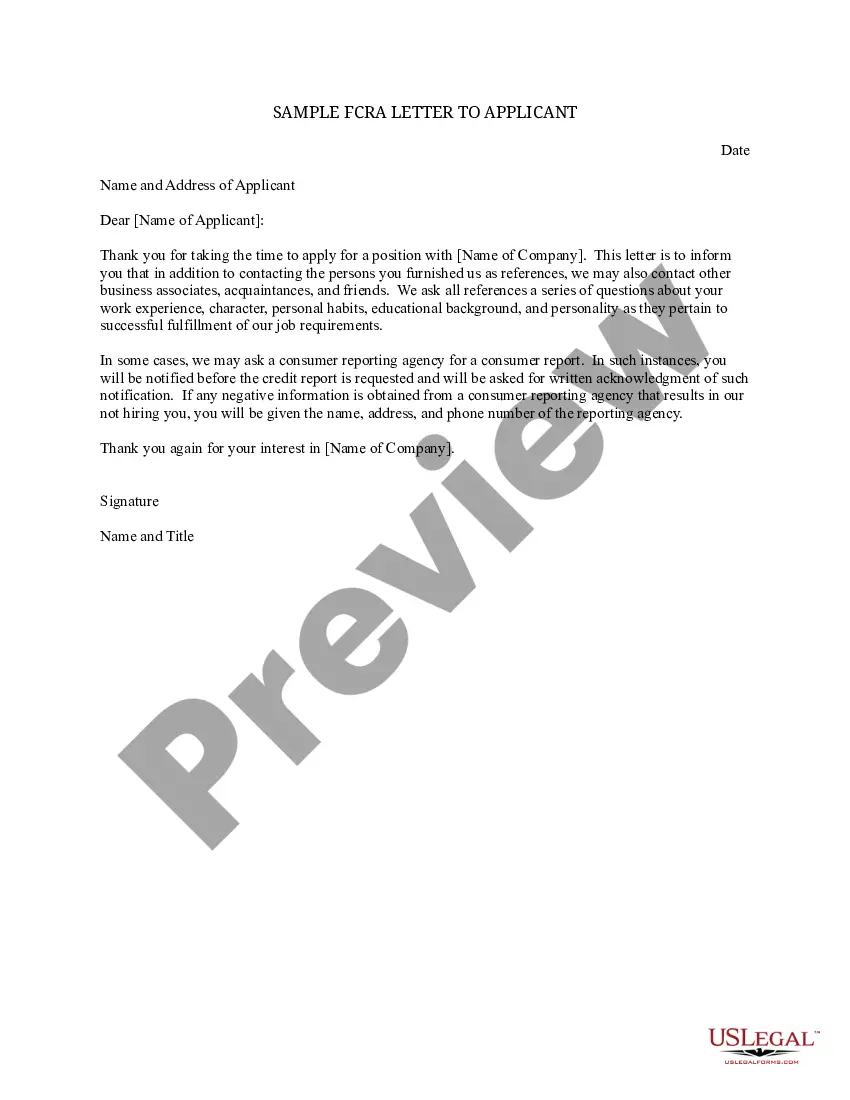
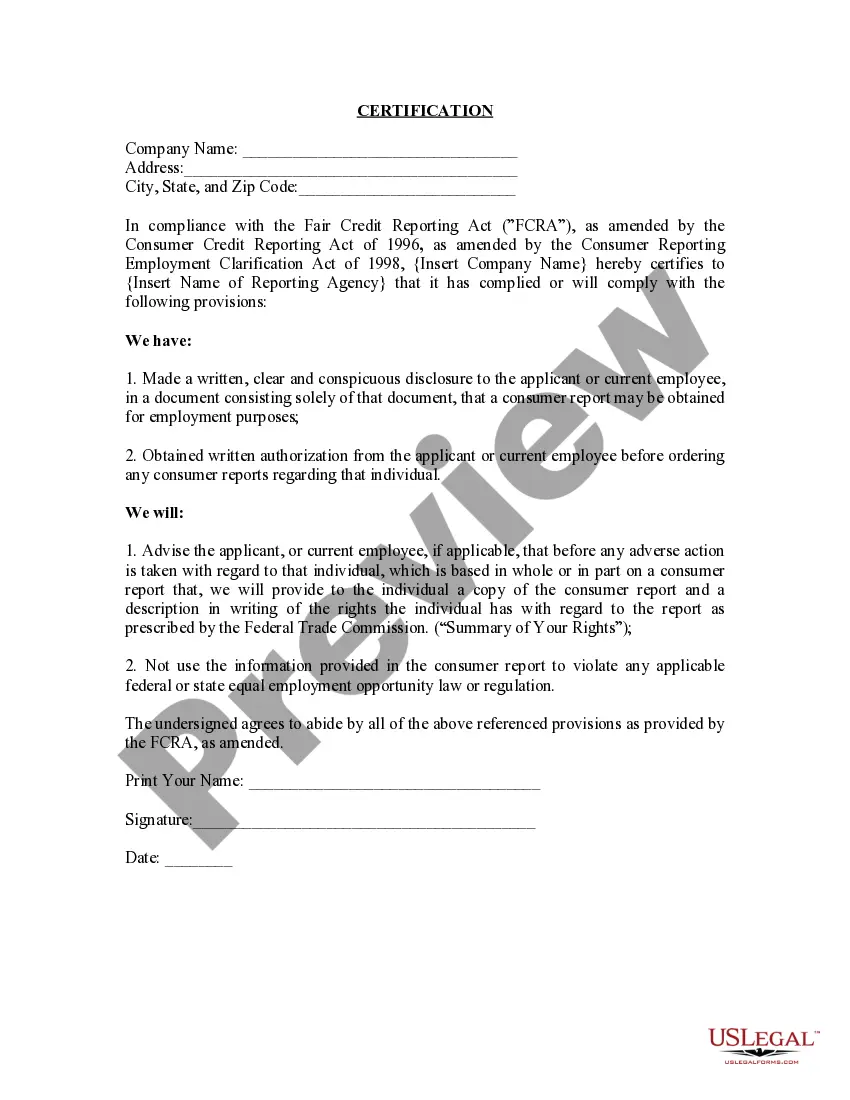
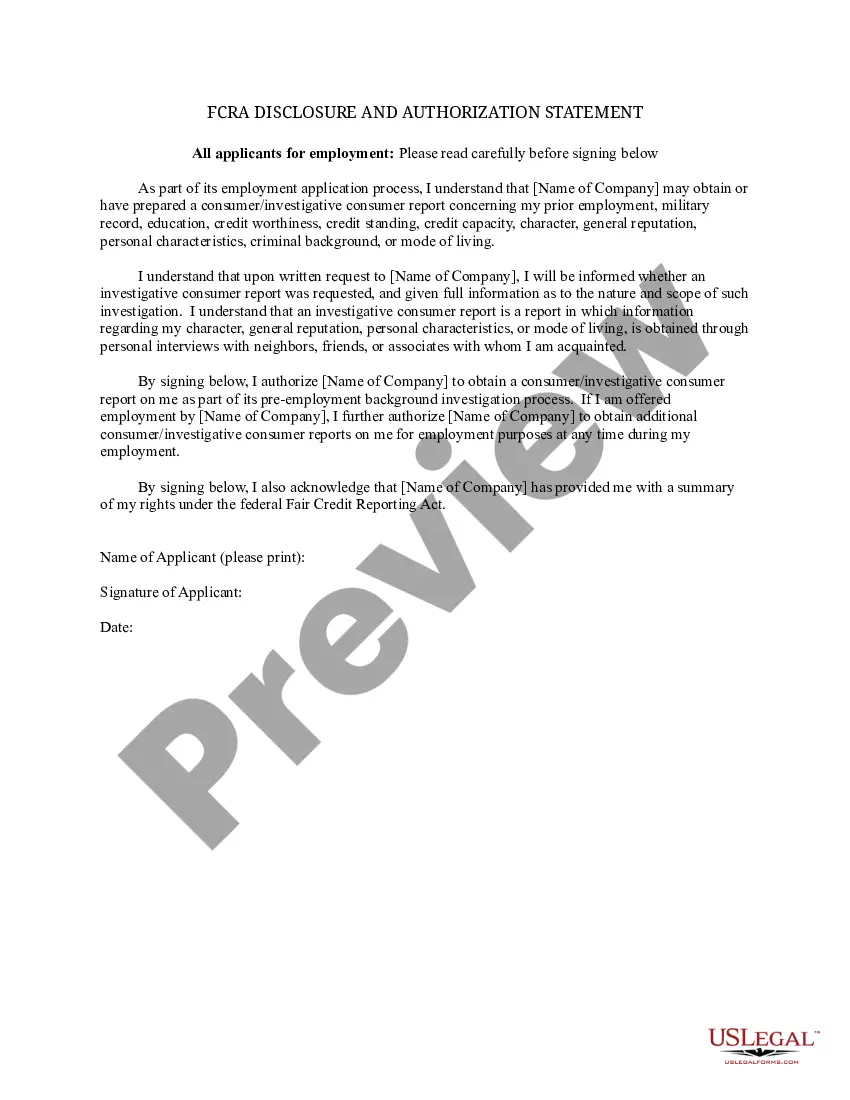
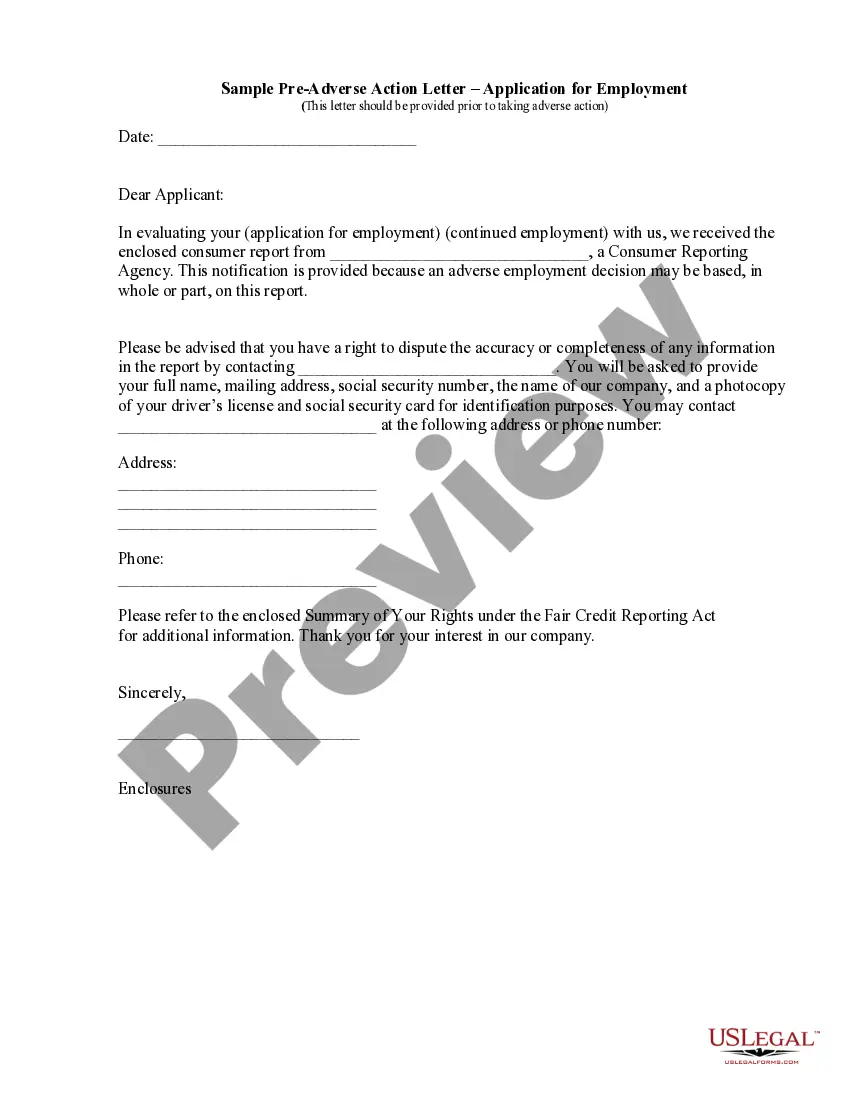
The Sample FCRA Letter to Applicant is a formal document used by employers to notify job applicants that their personal information may be collected from consumer reporting agencies as part of the hiring process. This letter ensures compliance with the Fair Credit Reporting Act (FCRA) by informing applicants about potential credit report inquiries, distinguishing it from other forms such as general reference check requests.
What’s included in this form
- Name and address section for the applicant.
- Statement notifying the applicant about the collection of information from consumer reporting agencies.
- Details on the type of information collected, including references and background checks.
- Notification about the right to receive the contact information of the reporting agency if adverse action is taken based on the report.
- Employer's name and title section for official signing.
Situations where this form applies
This form is necessary when an employer intends to conduct a background check or credit report on a job applicant. It is crucial in situations where the employer requires comprehensive insights into an applicant's character, work habits, or overall professional history that go beyond standard reference checks. Using this form helps ensure compliance with legal requirements under the FCRA and protects the applicantâs rights.
Who needs this form
- Employers seeking to conduct background checks on job applicants.
- HR professionals involved in the hiring process.
- Organizations that utilize third-party agencies for employment verification.
- Any individual or group needing to comply with FCRA mandates regarding consumer reports.
Instructions for completing this form
- Identify all parties involved, including the employer and applicant names.
- Fill in the address details for the applicant to ensure proper delivery.
- Clearly state the purpose of the letter and the types of information that will be requested.
- Include any disclaimers required by the state regarding the applicant's rights under the FCRA.
- Add the signature of the employer or authorized representative, along with their title.
Notarization guidance
This form does not typically require notarization unless specified by local law. It is advisable to check local regulations to ensure compliance.
Get your form ready online
Our built-in tools help you complete, sign, share, and store your documents in one place.
Make edits, fill in missing information, and update formatting in US Legal Forms—just like you would in MS Word.
Download a copy, print it, send it by email, or mail it via USPS—whatever works best for your next step.
Sign and collect signatures with our SignNow integration. Send to multiple recipients, set reminders, and more. Go Premium to unlock E-Sign.
If this form requires notarization, complete it online through a secure video call—no need to meet a notary in person or wait for an appointment.
We protect your documents and personal data by following strict security and privacy standards.

Make edits, fill in missing information, and update formatting in US Legal Forms—just like you would in MS Word.

Download a copy, print it, send it by email, or mail it via USPS—whatever works best for your next step.

Sign and collect signatures with our SignNow integration. Send to multiple recipients, set reminders, and more. Go Premium to unlock E-Sign.

If this form requires notarization, complete it online through a secure video call—no need to meet a notary in person or wait for an appointment.

We protect your documents and personal data by following strict security and privacy standards.
Mistakes to watch out for
- Failing to provide the applicant with advance notice before requesting a credit report.
- Not specifying the type of information being sought.
- Omitting the contact information of the consumer reporting agency.
- Using outdated or informal language that does not meet legal requirements.
Advantages of online completion
- Convenience of quick access and download at any time.
- Editability allows personal tailoring to suit specific needs.
- Reliable legal language crafted by licensed attorneys ensures compliance.
Legal use & context
- This letter serves as a crucial notification under the FCRA.
- Helps protect both the employer and applicant by ensuring transparency in the hiring process.
- Failure to comply with FCRA requirements may lead to legal repercussions for the employer.
What to keep in mind
- The Sample FCRA Letter is essential for employers conducting background checks.
- It informs applicants of their rights related to credit report inquiries.
- Using this form promotes transparency and compliance with the FCRA.
Looking for another form?



Form popularity
FAQ
The name 623 dispute method refers to section 623 of the Fair Credit Reporting Act (FCRA). The method allows you to dispute a debt directly with the creditor in question as long as you have already filed your complaint with the credit bureau and completed their process.
Tell the credit reporting company, in writing, what information you think is inaccurate. Tell the information provider (that is, the person, company, or organization that provides information about you to a credit reporting company), in writing, that you dispute an item in your credit report.
A 609 letter is a method of requesting the removal of negative information (even if it's accurate) from your credit report, thanks to the legal specifications of section 609 of the Fair Credit Reporting Act.
If the employer does not give you enough time to review the report and correct any errorsfor example, if the employer gives you the Pre-Adverse Action letter and then rejects your job application on the same dayyou may have a legal claim against the employer for violating your right to receive notice before the
What is an adverse action letter? With respect to background checks, an adverse action letter is a written notice required by federal law, delivered in hard copy or electronic form, that informs a job candidate he or she will not be hired for a particular position because of the findings in a background check.
The FCRA requires that employers take certain steps with respect to negative information obtained through a commercially produced background investigation.The letter will include a copy of the report and a summary of the candidate's rights under FCRA (2nd issuance if done at time of CBC consent).
Adverse action notices under the ECOA and Regulation B are designed to help consumers and businesses by providing transparency to the credit underwriting process and protecting against potential credit discrimination by requiring creditors to explain the reasons adverse action was taken.
Your letter should clearly identify each item in your report you dispute, state the facts and explain why you dispute the information, and request that it be removed or corrected. You may want to enclose a copy of your report with the items in question circled.
Your full name. Your date of birth. Your Social Security number. Your current address and any other addresses at which you have lived during the past two years. A copy of a government-issued identification card such as a driver's license or state ID.